We need to talk about coding. What are you doing? Why are people still programming out there?
I don't get it. I've been telling you guys, "Stop coding. Apps are dead.
Just knock it off already. " And people keep doing it. And every time I run into one of you guys out there, the most annoying thing is you guys are still broke and poor.
And I ask, "Well, what are you doing? " "Oh, you're coding. " "Okay, well that's why.
" And then ask, well, how many vacations do you get a year if you manage to even have a job? Oh, you get two weeks of vacation per year, maybe with your return to office order. So that's two weeks that you get to actually live per year.
And then you need to get permission just to go to the dentist or to go to the bathroom. Even even Barack Obama gets it. The learn to code movement is over.
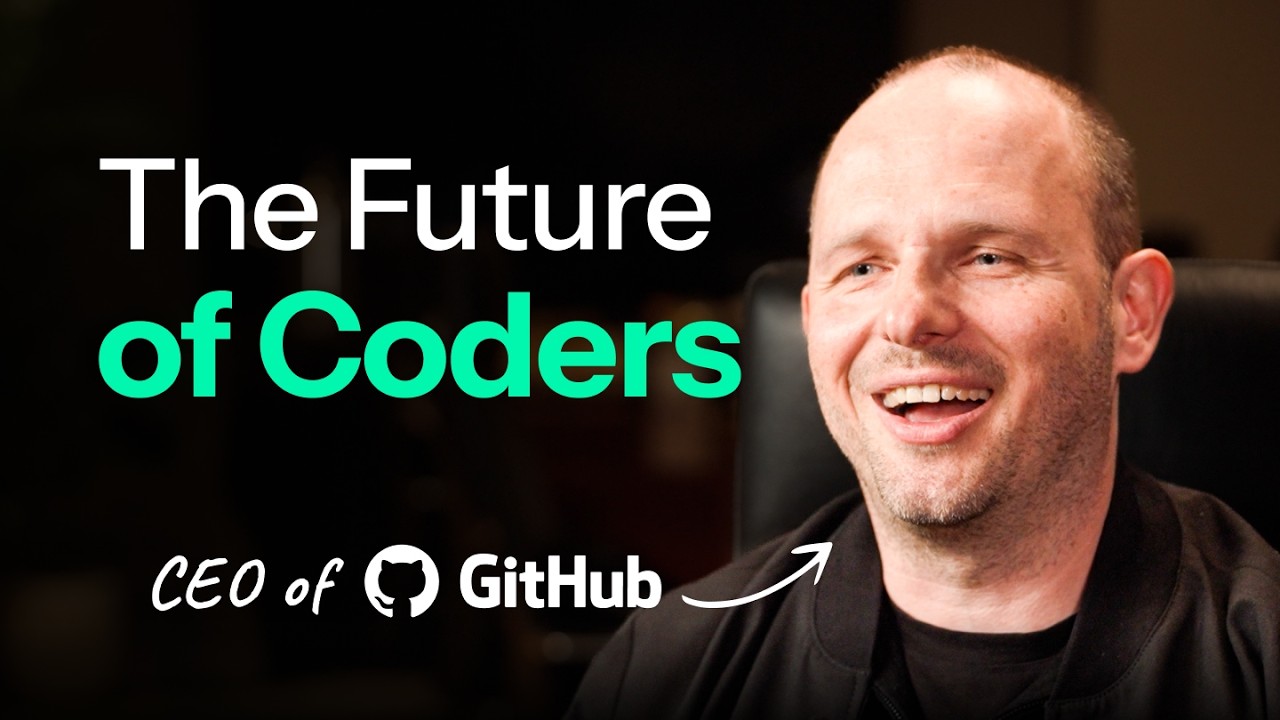
Already the current models of AI, they can code better than let's call it 60 70% of coders. a lot of that work is going to go away. And even Eric Smith, the former CEO of Google, predicts the same.
We believe as an industry that in the next one year, the vast majority of programmers will be replaced by AI programmers. So, strangely, the first question I always ask programmers is what language do you program in? And the correct answer is it doesn't matter.
So, in this article just yesterday, Google is forcing remote workers to come back 3 days a week or lose their jobs. So, the good times in tech are over. and is becoming a real slave grind.
Google is demanding employees return to office if they want to keep their jobs. The latest threats land at the time when Google and many tech peers are looking to slash costs in order to have enough funds for AI. And there have been widespread layoffs and everybody's looking to cut costs.
They're no longer investing in the office and in attracting top talent. They're investing in the chips. And Google co-founder Sergey Brin told AI workers in February that 60 hours a week is the sweet spot for productivity.
And being an exempt worker, "You don't get paid overtime for this. " So, they're just telling everyone, "Hey, 60 hours a week. That's great.
Why not get on the 996 program 9:00 a. m. to 9:00 p.
m. 6 days a week, 60 hours a week? " Actually, that's 72 hours a week.
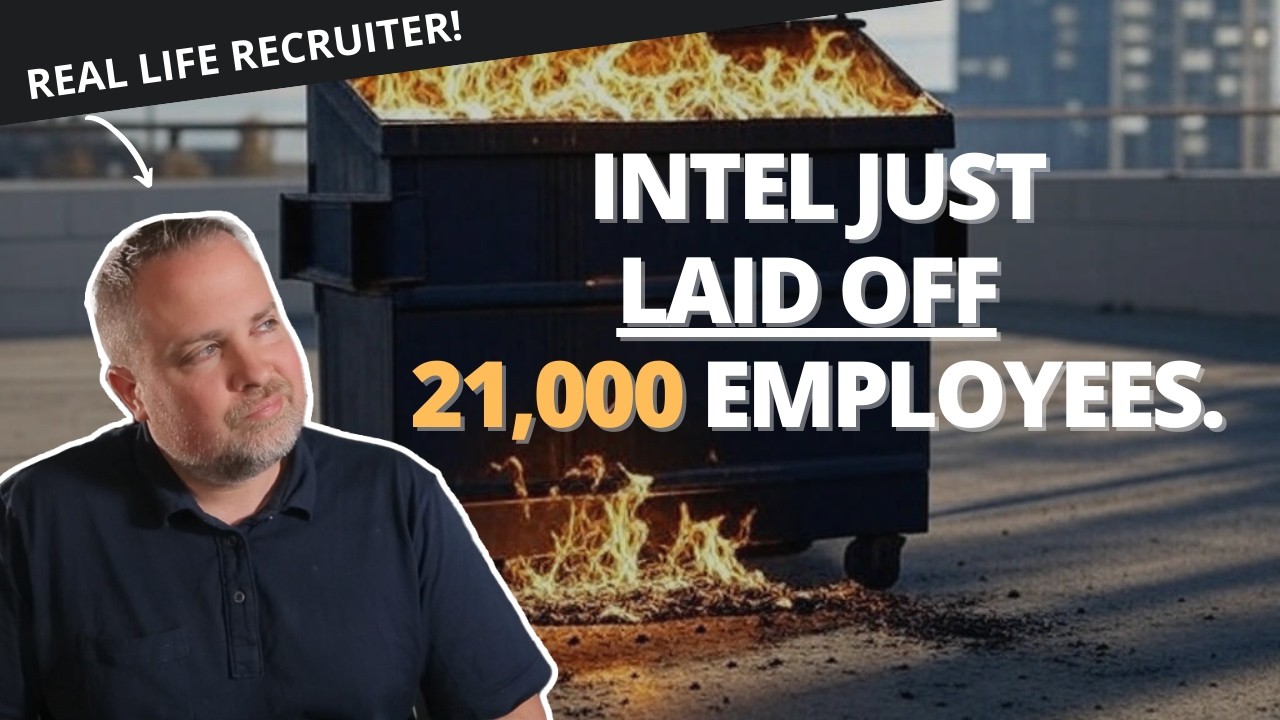
We already know Intel laid off like 20% of their staff, about 20,000 workers. Meta announced layoffs of 100 employees across their virtual reality units. And this is after Meta cut 5% of staff just in January.
So AI is coming after your jobs. And if you check the top post in the Reddit CS career questions, I mean, it's just a blood bath out here for these new CS grads. Why I left big tech and plan on never coming back ever.
So this guy just landed a job at a big tech company. Actually, fortunately for him or her, it would be the peak of their career. they thought.
But it turned out work life balance was a joke. Politics were unbearable. The culture was just constant performance.
It was a grind and it never got better. The pressure got worse. Bar kept moving up and eventually it just broke the guy.
People still glamorized these jobs, but the glory days of the past may be long over. For this person, they don't know if they'll go back to big tech. They just want to feel like a human again.
There's these other post someone gave up after 2 years and just took the easy way out. So after applying to hundreds of jobs, he had no luck. Had to hide his unemployment from his family out of shame for two years and finally it was through nepotism through a family friend that he was able to get a role as a systems engineer.
You got complaints where the f is this industry headed layoffs again and people saying the bar is absolutely insanely high. It's just no offer after no offer. But we can see here Apple has decided to move production of all iPhones, US-owned iPhones from China to India.
So have they decided to reshore jobs to America? No. Why?
Because Americans are just too expensive activists and nobody trust the Americans. So you have not only AI coming after your jobs, you've got the H-1Bs and outsourcing coming after your same jobs. Everybody's competing in the same mess in addition to the Reddit mods who you get to compete with, too.
And you just have to ask yourself, why even throw yourself into this mess of human feal matter known as programming? Now, I'll tell you something else. Tech is stagnant.
It's been stagnant for maybe a decade actually. But this AI thing, according to a report, we have made no progress towards AGI. LLMs are brain dead in our failed quest for intelligence.
Anthropic released a new paper that reveals AI models. Basically, it's just pattern matching. And all of the so-called progress made towards AGI by LLM is actually just progress towards large statistical models that confer a pretense of intelligence.
Another investigation shows even AI agents don't really know what they're doing. They will claim to use a tool when in reality they did not. So, the models are hallucinating.
The AI agents are also hallucinating. Nobody really knows what's going on. met the AI researcher Yan Leoned, we've been wrong every time.
There's been sort of a a repeated uh history over the last 70 years in AI of people coming up with a new paradigm claiming, okay, that's it. You know, this is going to take us to human level AI within 10 years. You know, every time it's turned out to be to be false and he's not even interested in LLM anymore.
I'm not so interested in LLM anymore. You know, more data, more compute generating synthetic data. In my opinion, it's a very kind of simplistic way of uh doing reasoning.
I think there are probably kind of more, you know, better way of of doing this. So, you have to ask yourself, if this AI bubble bursts, where does that leave tech all the way back in the stone ages of mobile first, making iPhone apps again with microtransactions, loot boxes, in-game currencies, dark patterns, 30% app store taxes, no distribution on the App Store. Because if you recall after the mobile era we really made no progress.
We tried web 3, NFTTS, metaverse, VR, AR. All of those blew up in our face. And at that point the tech industry was basically dead.
It should have died already until suddenly AI came along and everybody thought we had something. People were grasping for straws. Now people are realizing we've got nothing.
Google just announced a $70 billion stock buyback on its earnings. you you're supposed to take the money that investors give you and invest it in research development, like make something. Don't just give us back the money.
But essentially, Google just said they don't know what to do with the money. They're not even throwing it into AI chips anymore. They're not using it to hire people, to build self-driving cars, to build new offices, or buy you more cafeteria food.
They're just saying, "Just take the money back. We don't know what to do with it. " And these tariffs and del globalization is going to all of these global tech companies.
We know that Elon Musk said Tesla's optimist humanoid robots will be affected by China's export curves on rare earths. And President Trump just announced that he will not be dropping tariffs on China unless they give us something pretty good, which we know they're not going to do. And there was this announcement.
Trump said he wanted to get some rare earths from Ukraine. But Elon Musk had noted what actually matters is not just having the rare earths. It's the ability to refine the rare earth elements and manufacture magnets.
It's not that the rare earths are scarce. It is that China has what others lack in the heavy industry of refining the minerals. And we need China's manufacturing to do that.
So this whole robotics thing could be dead in the water without the manufacturing capability. It could take us another 20 to 30 years just to rebuild it on shore. Speaking of tariffs, it could be getting worse.
We have a report here that containers shipping from China to LA, it takes about 30 days and there's already been a severe drop. So, the impact of the tariffs takes about 30 days to hit. And we're already seeing shipping containers drop by about 30% year-over-year.
So, the impact of the tariffs will really start hitting around May when we start running out of supplies. And there's predictions we could start seeing empty store shelves as well. People are saying the situation may be like lockdowns again.
You have the Flexport CEO saying ocean container bookings from China to the US are down 60% industrywide. And this is estimated to have a $2 trillion impact on retail goods. So it's a $2 trillion hit to economic activity in our country which will be absorbed by businesses.
And you know they're hanging on hoping that the tariffs clear, but if they don't, we could see layoffs coming in as well and downsizing and bankruptcies. What he's suggesting is preserve cash and be decisive about it. Capital preservation.
You see, in my view, the tech industry got derailed. We were actually on the right path a few years back building web 3, if you recall that, and we were on the verge of a web 3 revolution that would have employed millions of people. It was the thing after web 2.
0 No, except the whole industry was shut down by regulation through enforcement. But we were building DeFi, lending, borrowing, the future of finance, railroad assets, stable coins, tokenization, and this thing could have taken the world by storm. But the whole thing was shut down.
And so then the tech industry pivoted to a bunch of random stuff that didn't work. But we were desperate like metaverse, VR, AR. And then we took a hard left into AI, landing us where we are now at risk of bankrupting these tech companies with their hundreds of billions of dollars of stranded capital.
I think we should have stayed with web 3 because the stable coin revolution looks like it's about to hit within the next one or two years. The stable coins can bring a chat GPT moment to blockchain adoption, reports City Bank. with a $3.
7 trillion market cap by 2030. So that's about 20x from the $200 billion valuation in stable coins currently. So their prediction here is stable coins will become one of the largest holders of US treasuries by 2030, surpassing nation states.
And the incentive is clear for the stable coin issuers. They earn not only on the interest but in fees as well. Tether did $13 billion in profit just last year.
It is one of the most profitable businesses per headcount and this blockchain industry is being built out now. The Federal Reserve just relaxed crypto rules on banks so that they can manage hold custody cryptocurrencies. We have Stripe also now starting to build a stable coin product powered by their bridge acquisition and Stripe is massive.
They power basically all credit card payments on the internet and they will be competing with PayPal and Coinbase which are also doing stable coin products. PayPal has PYUSD. Coinbase is managing USDC.
So, this stable coin thing is going to be everywhere probably by the end of the year. There's massive competition out here. If you want to better understand what Stripe is doing with Bridge, well, Bridge is this company that helps make money move.
They're essentially this infrastructure that orchestrates stable coin conversions between all sorts of currencies. They can move money around the world fast and easy and they take care of regulations and they can help you issue your own stable coin in minutes with global reach. So I have a feeling this is what Stripe is up to.
Their product will launch probably later this year. So this is really where the capital growth and value creation is going in my opinion. We can see unis swap also launched unit chain and this has been growing rapidly over the past week currently at $400 million of TVL.
So we can see unis swap the active addresses has just skyrocketed now approaching that of base L2 so it's a close competitor has already surpassed Ethereum of course Ethereum is going to die mainet so MetaMask announced ETH is no longer required as a gas token when using MetaMask so you can now select any other default gas token for your transactions like using stable coins such as USDC or D and so Ethereum itself is going to be managed out and basically people will forget about Ethereum and not even know what it is later on. It's just too complicated and we're going to move to stable coins. And so going back to unit chain, if you want to get in on this, the reason that there TVL has been skyrocketing is because there has been liquidity mining rewards issued for unis swap where for example, this is a great one.
Provide liquidity to unis swap v4 USDC rap bitcoin on uni chain and you can get 89% APY on this pair. Now this is a farming rewards program. It just has four days left, but they may renew it.
We'll see. And the fact is all of this stable coin traction once funds get on chain will spiral up into Bitcoin as the reserve asset, right? So, nobody wants to store their wealth in fiat.
I mean, look, if you're bullish on stable coins, you can load up the bag on stable coins, too, I guess, but it's probably not going to move by much. Bitcoin is really how you invest within this whole entire space. If you want to get your foot in the door at the startup ground level with zero dilution like Series A investor, angel invested within this industry, you've got a chance to do it with Bitcoin.
And no other tech industry is going to give you an investment opportunity like this. Those are closed usually to private VC firms. The public doesn't even get a chance to invest.
Here with Bitcoin at just 95K, it's going to surpass 100K. It's already done that multiple times and now we are back here at this level with confidence. this time with stronger hands.
And if you take a look at this on the logarithmic chart, you can see the trend is clear. We are still on the same unbroken trend line. And this is going to get to a million overtaking gold as the number one asset in the world as noted by Coinbase CEO Brian Armstrong.
You know, Bitcoin is a better form of money than gold. It's going to be important for governments to hold this over time. It may not it might start with being 1% of their reserves, but I think over time it'll it'll come to be equal to or greater than gold reserves.
So look you guys, the fundamental conflict here is between AI versus Bitcoin. And these two worlds basically don't intersect. AI is capital expenditure and Bitcoin is capital preservation.
And one of these is going to be a bubble because there's just not enough capital in the world for both. And I think we all know which one that's going to be. Uh it's not Bitcoin, by the way.
Or if it is, I guess I'm going down with the ship and this will be famous last words. But I want to remind you about the peasant surfs of the medieval feudal societies who were bound to the land and born into poverty and their status was determined at birth. And if their parents were surfs, they would be surfs.
Their children would be surfs and there's just no economic mobility. And that is where we are at right now living through the Bitcoin revolution at a time when you should be stacking as much as you can for generational wealth. And what you are doing is trying to learn Java.
with your hello world coding tutorials, public static voice string main arcs, doing your React apps, trying to build your websites and apps and blogs and message boards from web 1. 0 or web 2. 0.
And then people say, well, why don't you get into blockchain development? What's wrong with that? Oh, you don't want to do blockchain.
That's too weird. That's too crazy. It's too novel.
It's too much on the frontier. You want to work on technology from 10 years ago. Well, maybe that's why you're poor and I'm not.
Now, that's as long as Bitcoin doesn't crash, of course. But with Bitcoin, it is going to cement into the blockchain our social status and your surfomhood. And you see, there was actually a peasants revolt back in 1381 known as the Great Rising where they fought back against high taxes and financial instability and just being poor in general.
You know the thing about Bitcoin is because it is decentralized, you don't even know who to revolt against. Who are you uprising against? So this blockchain thing which can last thousands of years will solidify our economic and social status for generations to come.
And so if you're poor, your kids will be poor too. And your grandkids will be poor and your whole life will be poor. Your parents will be poor.
Just everything about you will be poor. And you still want to code. And I'm just telling you, it doesn't really matter what you do.
You can code or not code. You can work or not. Born a peasant, you will die a peasant.
And that's just the way things are going to be. And we are going to lock that into blockchain. All right.
So, I hope I made myself clear going forward. If you are a programmer and you are poor, well, that should really be self-explanatory and um it should come as no surprise to you. So, that'll do it for me.
Hope you enjoyed the video. See you in the next one.