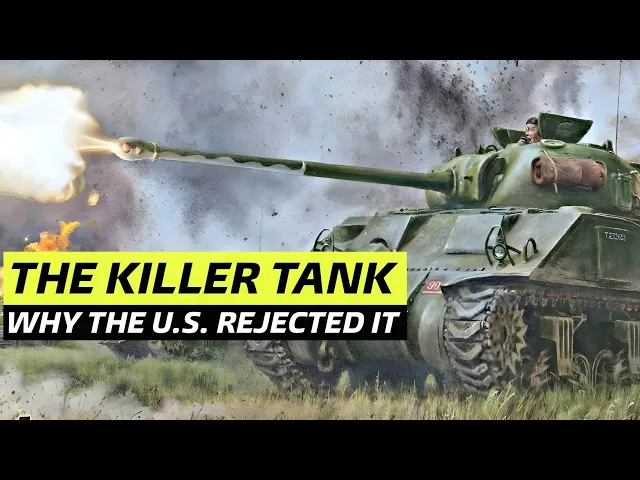
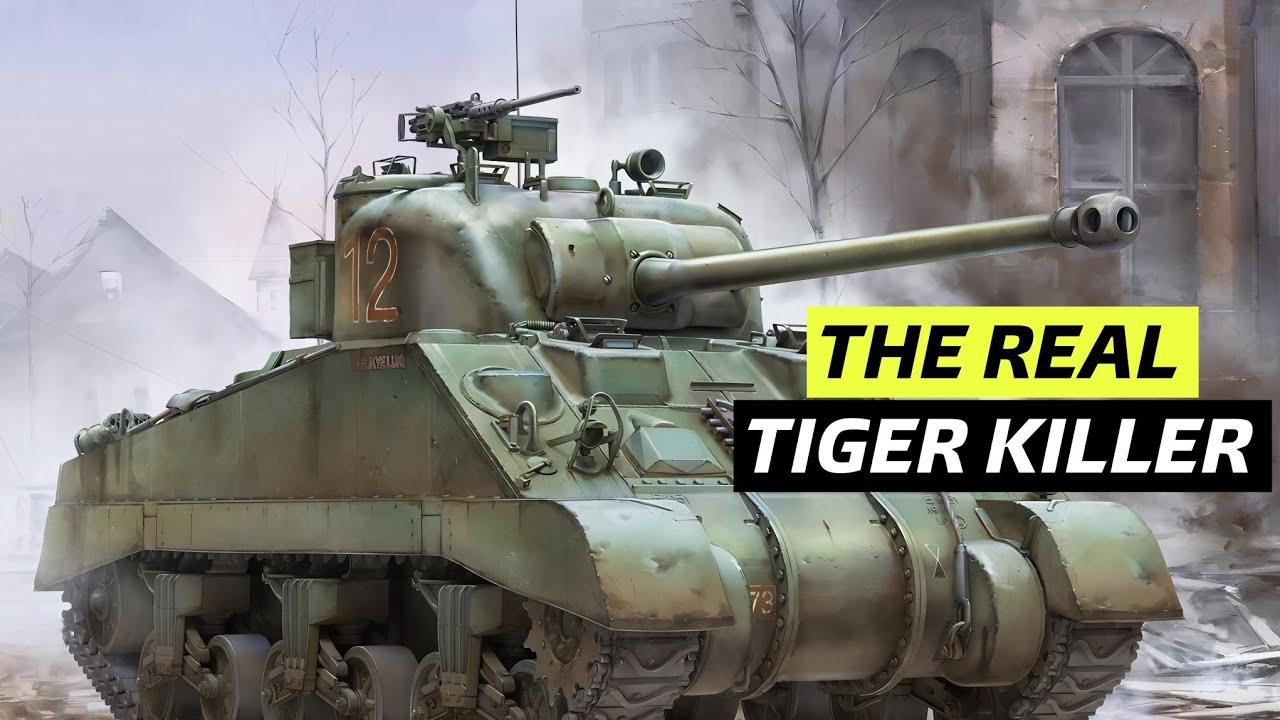
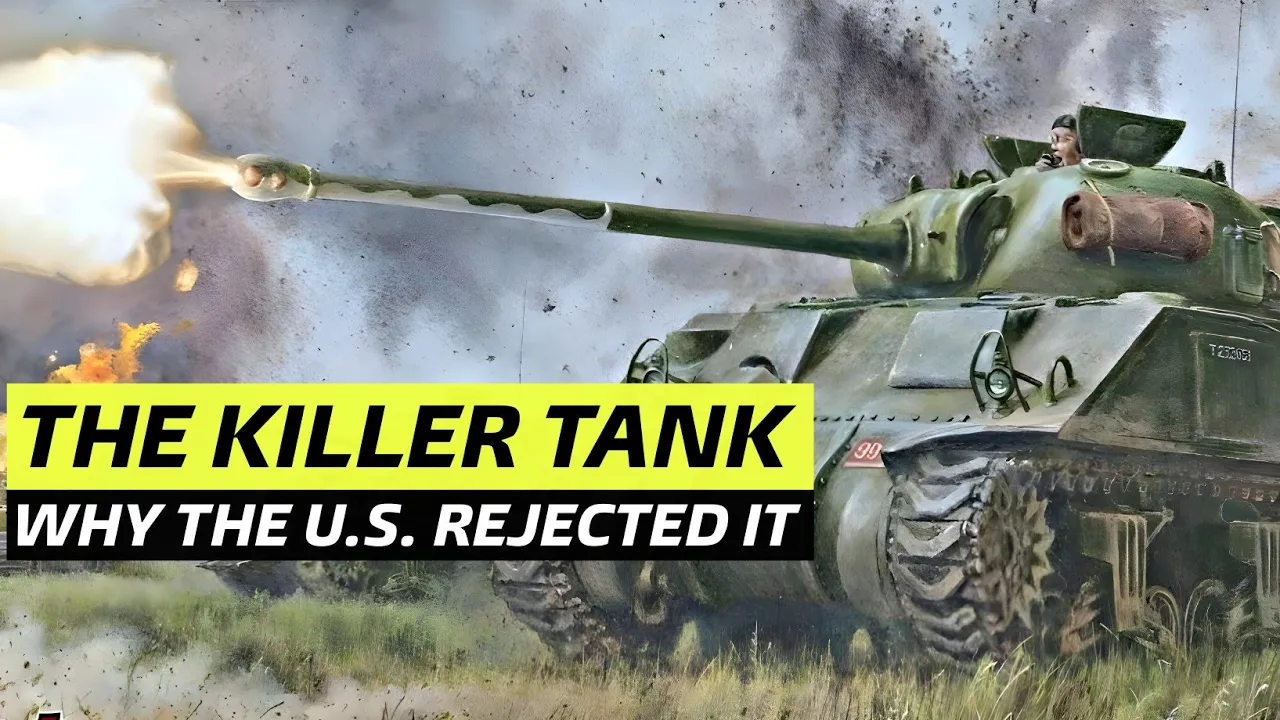
[Music] during the second world war one of the most effective tank killers on the Allied side was the British 17 pounder gun famously mounted on the Sherman Firefly tank this gun and tank combination gave Britain and the Commonwealth Nations a powerful answer to the heavily armored German Panthers and tigers when the British mounted the 17 pounder on the Sherman to create the Firefly they knew they had developed something special they offered the Americans not only 1,000 of their powerful 17 pounder guns per month but also the ammunition to go with it they even offered to
modify the M4 Shermans at us side to carry this game-changing gun but the US declined this offer so why did the US turn down the chance to adopt this deadly weapon in this video we're exploring the reasons behind that decision and the impact it had on the battlefield was turning down the Firefly a missed opportunity or was it a calculated Choice during the North African campaign Britain and the United States faced significant challenges against German panzers of General Irwin ramls Africa core particularly the Panzer 4 and the tiger [Music] one both the British and the
Americans had to adapt their tactics and weaponry to effectively counter these armored threats even the newer British tanks like the Churchill and American Shermans had a tough time penetrating the Tiger's armor frontally tactically British and American forces had to rely on flanking Maneuvers aiming for the thinner side and rear armor of the panzers or wait for artillery and air support to deal with them the 17- pounder gun emerged as the most powerful weapon in the British Arsenal renowned for its impressive armor piercing capabilities the US Army's solution to heavy German armor was based on its
tank Destroyer Doctrine this Doctrine called for tanks to focus on Infantry support and exploitation while tank destroyers Were Meant to engage and Destroy enemy tanks in North Africa this Doctrine faced its first real test but quickly exposed its flaws resulting in significant losses tank destroyers were frequently unavailable when needed and these lightly armored vehicles were highly vulnerable to German Fire by the time the campaign in North Africa ended in May 1943 both Britain and the United States had learned valuable lessons about dealing with German heavy tanks these lessons particularly regarding the need for heavier more
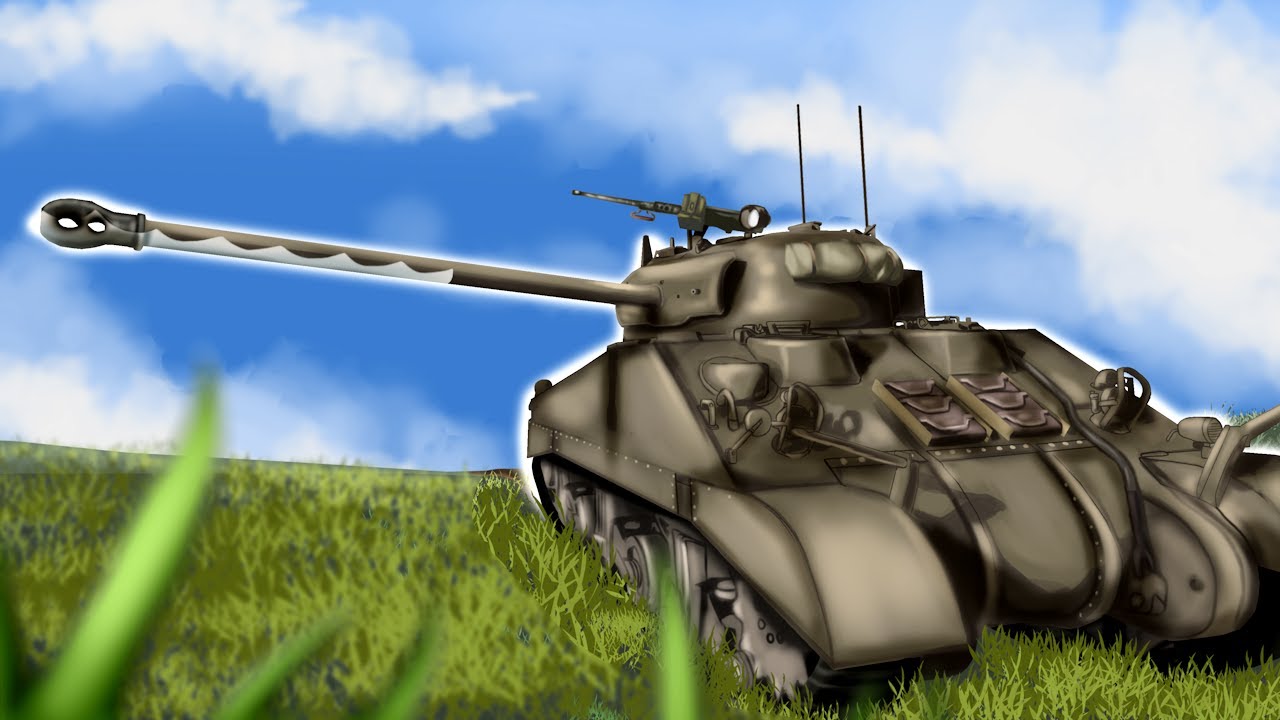
effective tank guns and better coordination between tanks infantry and support units influence future Allied operations in Italy Normandy and Beyond the British continued to improve their anti-tank capabilities leading to the eventual widespread use of the 17 pounder gun while the US continued to develop tank destroyers and upgraded their Shermans with the 76 mm gun as they moved into the European theater the Firefly was a British Innovation born out of the need for a tank with greater Firepower to counter the formidable German pan and tiger tanks the concept was simple but highly effective Mount the powerful
British 17 pounder anti-tank gun into the Sherman's [Music] turret however executing this idea was far from Easy the 17 pounder was much larger than the Sherman standard 75mm gun requiring extensive modifications to fit it into the turret Engineers had to relocate the radio to the hull redesign the gun mantlet and even rotate the guns breach to the back of the turret to make it all work once the challenge of fitting the large 17- pounder gun into the Sherman's turret was overcome the Firefly entered production in early 1944 just in time to equip field Marshall Montgomery's
21st Army group for the Normandy Landings the Firefly quickly became a prized set on the battlefield as its powerful gun could consistently penetrate the armor of the heavy Panther and tiger tanks encountered during the Normandy campaign but the question still lingers why didn't the United States adopt this deadly tank when the British offered it to them there were several reasons first the Americans believed that their new 76 mm gun the M1 would be more than enough to handle the German tanks the 76 mm was an upgrade from the standard 75 mm gun on the Shermans
which struggled against the heavier German armor the US was also developing a 90mm gun which they were testing for their tank destroyer units by the time of the Normandy invasion this gun they believed would provide the punch they needed if the 76 mm wasn't enough while the 90 mm was indeed a powerful weapon the Americans plann to mount it only on tank destroyers not on their Mainline Sherman tanks this would severely limit the number of Tanks capable of engaging German heavy armor perhaps the most critical reason the Americans turned down the Firefly was their belief
that the panther would be used sparingly much like the tiger one had been a specialist vehicle deployed in small numbers the Americans were confident that their 76 mm Shermans and tank destroyers would be enough to counter this limited threat as history would show the US was proven wrong on all accounts when American Tank Crews faced the Panthers and tigers in Normandy they quickly realized that their 76 mm guns were not enough the 76 mm gun could only penetrate the Panther's frontal armor at distances of 500 M or less and it was virtually useless against the
Tiger 1 and tiger 2 meanwhile the British 17 pounder gun mounted on their fireflies could knock out a panther frontally at nearly 800 M and even destroy a tiger one at around 500 m The American's 90 mm gun while almost as effective as the 17 pounder was only reliable up to around 500 M beyond that range the British 17 pounder had the edge and while the Americans reserved the 90 mm for tank destroyers the British were fitting the 17 pounder into everything they could from tank destroyers to Sherman fireflies the British intelligence had estimated that
the Germans would produce approximately 6,000 to 7,000 Panther tanks this accurate intelligence allowed the British to anticipate the significant threat the panther posed prompting the development of countermeasures such as fitting the 17 pounder gun to the Sherman Firefly however despite this critical information being shared with the Americans they downplayed the threat of the panther believing it to be a specialist vehicle that would be deployed in limited numbers like the tiger one a decision that later proved costly in battles like those in Normandy the Sherman Firefly was evaluated by the US Army But ultimately rejected their
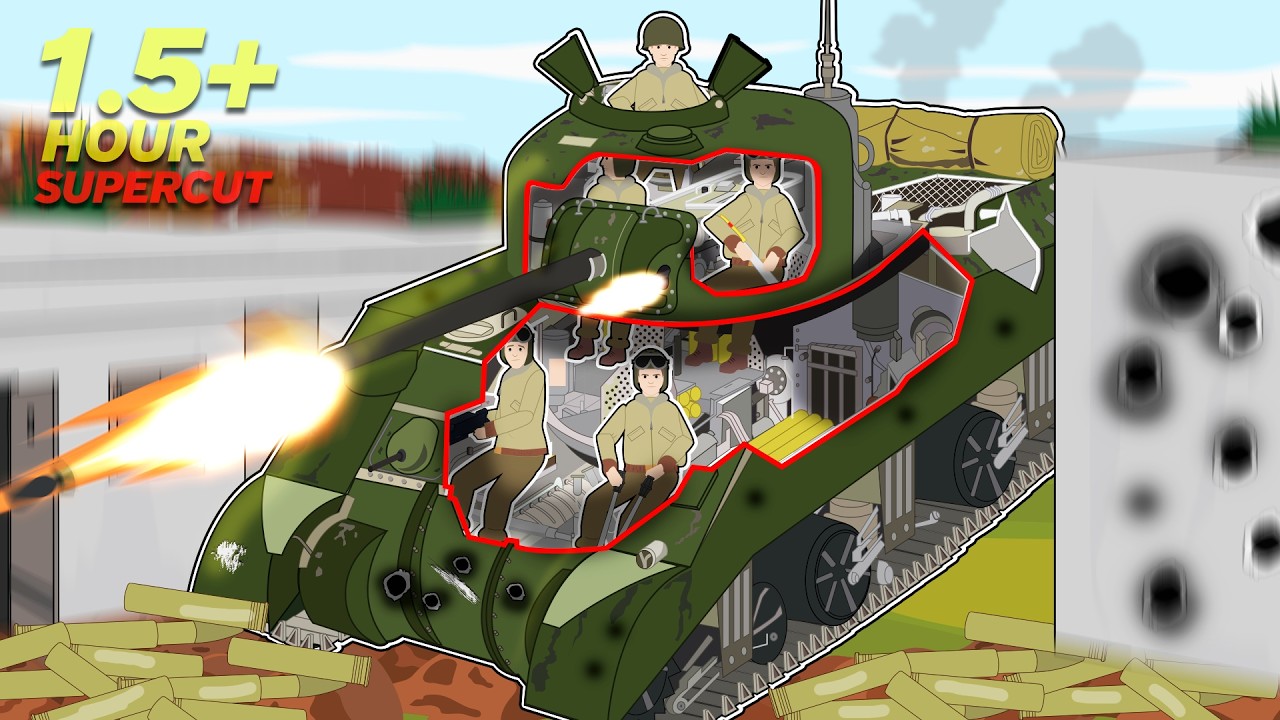
analysis highlighted several valid concerns most notably the 17 pounder gun was too large to fit comfortably in the M4 Sherman's turret making the space cramped and reducing crew efficiency there were also significant issues with the massive muzzle flash which not only blinded the Gunner but also had the potential to ignite nearby Shrubbery getting the enormous 17 pounder to fit in the turret had been a major Challenge from the start converting M4 Shermans into fireflies required significant modification and the US was focused on mass production and logistical efficiency the US Army prioritized having as many tanks
as possible rather than introducing complex conversions keeping the production of Sherman tank simple and uniform made it easier to supply repair and maintain them in the field the Firefly conversion also involved reducing the Sherman's internal ammo storage and required extensive redesign of the turret which added complexity to an otherwise streamlined production line the Sherman standard 75 mm gun offered Superior High Explosive Performance making it ideal for supporting infantry against bunkers and other soft targets for this reason many US tankers preferred the 75 mm Shermans over the 76 mm variants based on these findings the US
concluded that the Firefly was not an effective design a surprising conclusion to the British and Canadian tank Crews who had used it to great effect in Northwest Europe production of the Firefly began in January 1944 and by May 31st approximately 342 Sherman fireflies had been delivered to the 21st Army group for the Normandy Landings British and Canadian tank units were typically made up of 3 75 mm Shermans and one Firefly providing an Ideal Balance between infantry support and anti-tank capabilities by the time of the Normandy invasion American Tank Crews faced a harsh reality their Shermans
were struggling against the Panthers there were 76 mm Shermans sitting in England but the US Army chose not to bring them into the fight until it was too late as the fighting intensified demand for 76 mm tanks skyrocketed and when the second and third SS Panzer divisions rolled in with their Tigers things got even worse the Americans had to rely heavily on air strikes and artillery to level the playing field meanwhile the British facing four full strength Panzer divisions in their sector took heavy losses but at least they had fireflies to fight back later in
the war during the Battle of the Bulge the situation grew so desperate that the Supreme headquarters Allied expeditionary Force requested that 100 Shermans in Britain be converted into fireflies for us use only 20 were shipped out but there's no solid evidence they ever saw combat with US forces the refusal to adopt the Firefly also came down to doctrinal differences the Americans viewed the Sherman as an infantry support tank relying on dedicated tank destroyers to handle enemy armor but this Doctrine proved flawed in North Africa and Italy in contrast the British believed in a combined arms
approach where anti-tank guns would stop enemy advances while their Cruiser tanks would engage and Destroy enemy armor when fa with the need to adapt the US did not change its Doctrine but continued to rely on the existing strategies that had already caused them significant losses the American tank destroyer guns were proven less effective than the 17 pounder long before the Normandy Landings yet the US failed to act decisively to procure or produce this capable [Music] weapon despite repeated testing even in front of generals like Eisenhower and patton showing that the 17 pounder was Superior in
engaging German armor the Americans stuck to their guns in hindsight the American decision to stick with their own gun designs and ignore British intelligence about the Panthers was a costly one the Sherman Firefly proved its worth time and again in British hands and it's hard not to wonder how many US tank crews could have been saved had they adopted this powerful tank sooner in the end the US decision not to adopt the Sherman Firefly was a combination of overconfidence in their own designs a flaw Doctrine and a reluctance to accept a non-american solution the consequences
were costly as American Tank Crews faced some of the toughest battles in Normandy and Beyond without the Firepower they could have had