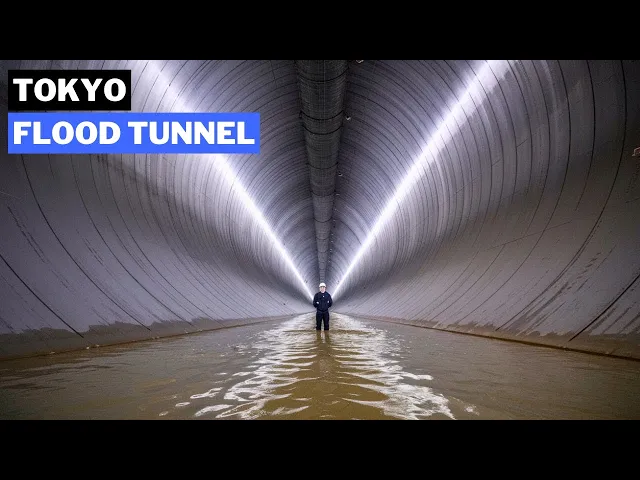
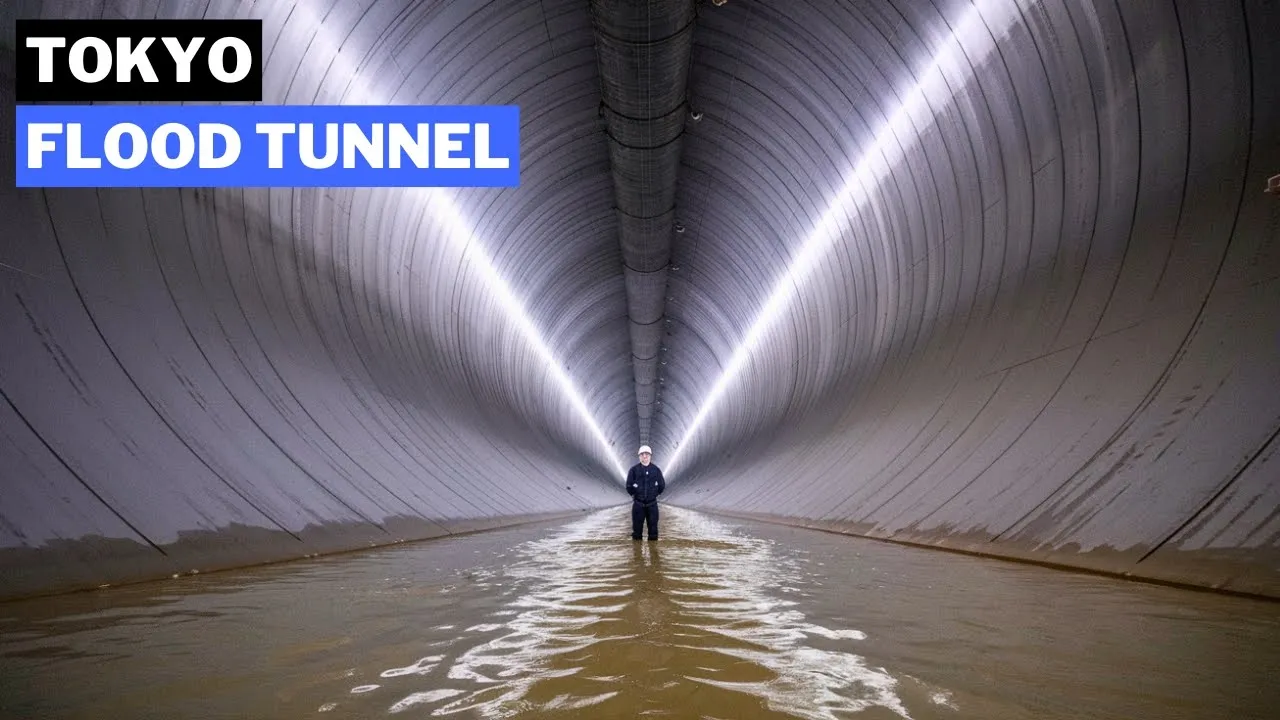
you are looking at the world's largest underground flood diversion facility but calling it large is like calling Mount Everest a hill today I'm here to show you how Japan turned its largest City's greatest weakness into an engineering Triumph Tokyo's geography makes it particularly vulnerable to flooding the city is built on a flood plane with most of its eastern districts sitting below sea level it's like living in a giant bathtub great for ducks not so great for humans Tokyo has a long history of battling floods in fact some of the earliest records of major flooding in
the area date back to the 1600s fast forward to the late 20th century and despite numerous flood control measures Tokyo was still facing significant challenges the city's rapid urbanization had led to more concrete and less natural ground to absorb rainwater exacerbating the problem in 1991 a particularly severe typhoon hit the region causing widespread flooding and billions of yen in damage it was clear that something drastic needed to be done enter the Tokyo flood tunnels project the decision to build these tunnels wasn't taken lightly it was a massive undertaking both in terms of engineering and cost
but the potential benefits far outweighed the challenges the primary goal was to create a system that could handle the excess water from major storms and prevent catastrophic flooding in the city think of it as a giant underground water slide but instead of fun it's funneling away potential disaster but how exactly is it going to do all of this and is one tunnel really going to be enough for what they're trying to do here well let's break it down the metropolitan area outer underground discharge channel is not just a single tunnel but a network of tunnels
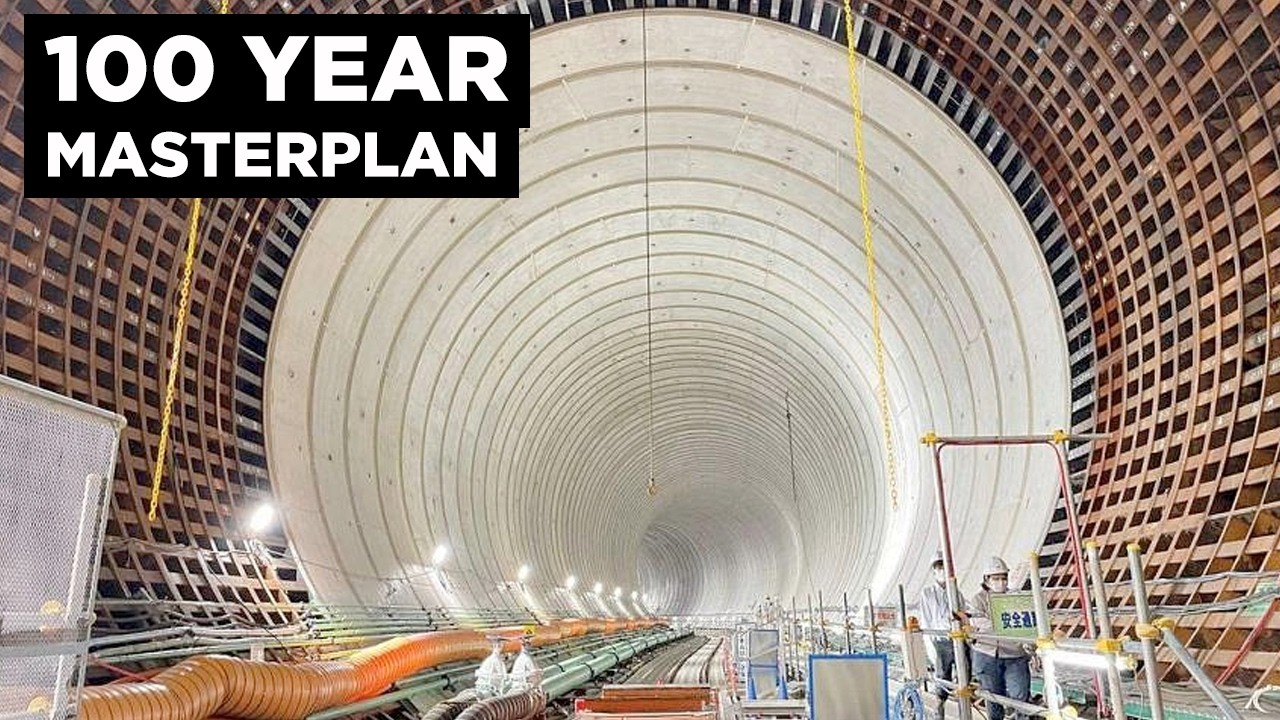
and when I say massive I mean massive the main underground reservoir is about the size of two football fields it can hold a staggering 670,000 cubic M of water that's equivalent to 268 olympic sized swimming pools construction began in 1992 and took 14 years to complete finally opening in 2006 the system consists of five massive silos connected by 6.4 km of tunnels all leading to a huge underground tank nicknamed The Underground Temple now let's talk about some of the key engineering features that make this system so impressive the pressure adjusting water tank this is where
the magic happens it's a massive underground chamber that can withstand the immense pressure of the water flowing into it imagine a giant pressure cooker but instead of making your grandma's stew it's saving Tokyo from floods the tunnel system the tunnels are built 50 m underground and are large enough to accommodate a passenger jet you could theoretically fly a plane through through these tunnels though I wouldn't recommend it the pump system this is the heart of the operation four turbines each weighing 14 tons can pump 200 tons of water per second into the edagawa river that's
like emptying an olympic sized swimming pool in just 3 seconds but it's not just about the size the engineering Precision required for this project is mindboggling every curve every joint and every pump had to be perfectly designed and constructed to withstand the immense forces at play but how exactly does this massive system work let's break it down step by step during heavy rainfall water from swollen Rivers is diverted into the tunnels through massive silos these silos are like giant funnels channeling the water away from the city streets and into the tunnel system the water flows
through the tunnels into the main reservoir the underground Temple once the rain subsides Ides the turbines kick in pumping the stored water into the edagawa river at a controlled rate this system has had a significant impact on flood control in Tokyo since its completion it has reduced flood damage in the City by an estimated 90% in economic terms it's estimated to have saved billions of yen in potential flood damage but it's not just about the numbers for the residents of Tokio especially those in low-lying areas the flood tunnels have provided a sense of security that
was pre previously lacking imagine being able to sleep soundly during a typhoon knowing that this massive underground system is working tirelessly to keep your home dry the impact extends Beyond just flood prevention the tunnels have allowed for more efficient urban planning and development in areas that were previously considered high-risk flood zones it's opened up new possibilities for Tokyo's growth and resilience like any major infrastructure project the Tokyo flood tunnels have faced their share of challenges and criticisms it's not all smooth sailing or should I say smooth tunneling first and foremost is the cost the initial
construction cost a staggering 230 billion yen about $2 billion and that's not including ongoing maintenance costs the system requires a significant amount of energy to operate which has led to questions about its carbon footprint it's a bit ironic we're combating one environmental issue flooding potentially at the expense of another increased carbon emissions additionally some environmentalists worry about the impact of pumping large volumes of potentially contaminated flood water into the edagawa river lastly there's the question of future proofing with climate change leading to more frequent and severe weather events whether this massive system will be enough
to protect Tokyo in the coming decades the tunnels have even become something of a tourist attraction guided tours of the underground Temple are available when the system isn't in operation it's become a unique way for people to understand and appreciate the infrastructure that keeps their City safe looking to the Future there are plans to enhance and expand the flood control system one exciting development is the integration of AI and iot Technologies to predict and manage flood risks more effectively Imagine A system that can anticipate flooding before it happens and automatically adjust its operations accordingly there
are also discussions about expanding the tunnel Network to cover more areas of the city while these plans are still in the early stages they show a commitment to continually improving Tokyo's flood defenses researchers are also looking into ways to make the system more environmentally friendly ideas include using renewable energy to power the pumps and finding ways to filter and clean the water before it's released back into the river system while we've been focusing on Tokyo's impressive flood control system it's worth noting that flood risks are a global concern and recent events have highlighted the urgent
need for innovative solutions worldwide take for example the devastating floods caused by Hurricane Milton in Florida in October 2024 hurricane Milton brought unprecedented rainfall to Florida with some areas receiving up to 18 in of rain severe flooding that overwhelmed existing flood control measures leading to record-breaking River levels and over 1,000 water rescues the Hillsboro River and Cypress Creek shattered previous flood records and the slow draining St John's river reached major flood stage across multiple counties now you might be thinking could a system like Tokyo's flood tunnels have helped in Florida and that's a great question
while every region has its unique geographical challenges the principles behind Tokyo's flood control system could certainly be adapted for other flood prone areas around the world imagine if Florida had a network of underground t and reservoirs to divert and store excess water during hurricanes it could potentially reduce the strain on rivers and drainage systems minimizing flood damage and protecting communities of course it wouldn't be an exact copy of Tokyo's system Florida's geology and climate would require a tailored approach but it's not just Florida that could benefit from such a system think about other flood prone
regions for example Bangladesh a low-lying country frequently affected by Monsoon floods a network of of underground channels could help manage excess water from the numerous rivers that crisscross the country the Netherlands already a Pioneer in flood control they could potentially enhance their existing systems with underground reservoirs to complement their famous dkes and levies Venice Italy as the city battles rising sea levels an adapted version of Tokyo's system could help manage flooding during high tides and storms New Orleans United States a city that is still recovering from the impact of Hurricane Katrina they could explore underground
water storage as an additional layer of protection alongside its Levy system of course implementing such systems would be a massive undertaking requiring significant investment and Engineering expertise however as climate change continues to increase the frequency and severity of extreme weather events these kinds of innovative solutions may become increasingly necessary the recent floods in Florida serve as a stark reminder that our current infrastructure in many parts of the world may not be sufficient to handle the challenges of a changing climate as we've seen this project is not without its critics or challenges but there's no denying
the impact it's had on the safety and peace of mind of Tokyo's residents it's a prime example of thinking big to solve big problems as climate change continues to pose new challenges projects like this may become increasingly important in cities around the world so what do you think could your city benefit from an underground flood control system let me know in the comments below as always thank you so much for watching if you enjoyed this video please don't forget to give it a big Thumbs Up And subscribe for more until then see you soon