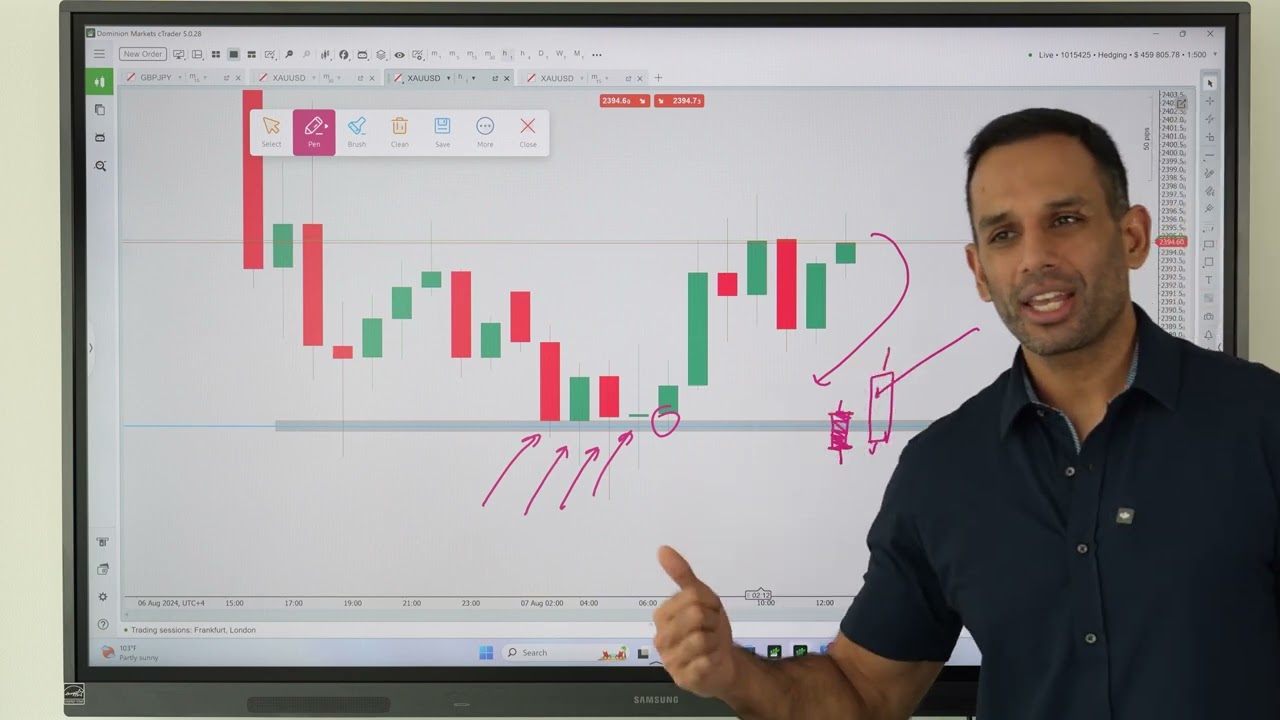
have you ever broken your trading rules and instead of closing a losing trade for a small loss you've left it open and ended up with a much bigger loss if so you've got a secret gambling issue that you didn't even know about welcome back everyone this is lesson two in the minseries for high performance trading and I think you're going to find this interesting and very helpful saying you've got a gambling issue is not clickbait you really do and so do all healthy human beings it's hard wired into us unfortunately it causes problems when you
start trading let me explain when you are in a trade that goes against you into a loss your system rules probably say accept the loss take it the loss is a part of trading move on but you don't stick to your rules your inag Gambler takes over and forces you to take on much bigger risks it's not fear let me explain what's happening and then show you how you can fix the problem in your trip in whenever we are losing we become risk seeking if you think of sports teams when they are losing they start
to take chances they make the riskier plays like throwing the Hail Mary pass and hoping it works it makes sense what have they got to lose they are already behind so they may as well take a chance and if it pays off they go from losers to Winners gambling is their best option this tendency goes all the way back to our early ancestors if they were starving to death and B to die anyway they may as well take the risk of stealing from a neighboring tribe or trying to take down a huge woolly mammoth they're
already behind they've got nothing to lose taking a gamble is their best chance of survival we've all inherited that behavior you'll notice this is the exact opposite of what I talked about in the last video about letting winners run when we're ahead and already winning we become risk averse we avoid it we want to play it safe be cautious and protect what we already have that's why we take profit early but when we're losing we become risk seeking we want to gamble take chances and try and gain more than we currently have that's why we
move our stops to try and recover the thing Traders most often attribute this to is fear fear of losing that's not correct and this is a fascinating and unexpected twist about losses far from being afraid you're actually really optimistic and positive let me explain again go back to your ancestors when they were hungry if they were fearful they wouldn't take risks if they looked at their situation logically they would realize they were weak tired lacking energy and probably didn't have the strength to hunt that dangerous Mammoth Common Sense would tell them to be afraid in
their current State they've got very little chance of winning it's too dangerous and the odds are against them but if that's how they thought they wouldn't take the risk but if they don't take the risk they will definitely die so the brain has a clever solution it tricks them into being optimistic it keeps the real facts hidden from them and convinces them not to be afraid and to actually massively overestimate their chances of success and this is what it does when you are trading when your trade is in a loss if you were genuinely afraid
you'd be even more afraid of the loss getting bigger so you would easily stick to your rules and take that smaller loss but you're not afraid your brain tricks you into being optimistic it makes you overestimate your chances of turning this loss around and backing to being a winner and it does this by using memory recall and prioritization just as I explained in the previous video but of course this time in the opposite direction here's how it works you have two sets of memories of being in losing trades and moving your stop- loss on the
one hand you have memories of the times you moved your stop- loss and then the trade continued to dinged to and you ended up with an even bigger loss this is a negative outcome and then you have the memories of the times you moved your stop-loss and the price turned around and came back into profit this is a positive outcome so the next time you're in a losing position you have a choice do you move your stuff loss or not well the choic is dependent on what you think is more likely to happen but what
you think will happen depends on what you can recall from memory and in a losing situation your brain prioritizes positive outcome memories in other words it serves up a disproportionate number of memories of the price turning around and coming back into profit it's one-sided information hiding the true facts so you now begin to think that reversals backing to profit happen more often and are more likely and of course in that case you will want to move your stop- loss that just makes sense and now your bring reinforces this decision by serving up even more memories
of the times you move the Stop and the trade ended up as a winner instead of a loser all in you're feeling much more optimistic and positive about your choice the evidence your brain has given you clearly makes taking a risk and moving your stop the best decision fear is not the issue just as I explained in the last video about letting winners run what's happened here is a runaway decision flow it's a Cascade of automatic thoughts that lead to one predictable and inevitable decision once again you're on autopilot when you're head and winning the
course of action that is in the best interest for your survival is to play it safe and look after what you already have so your brain does everything it can to make you take that course of action when you're losing and behind the course of action that is in the best interest for your survival is to take risks gamble do anything you can to get out of the hole you are in so your brain does everything it can to make you take that course of action now before I move on I want to stress that
none of this has anything to do with you making mistakes or indicative of poor discipline or bad psychology there's nothing wrong with you in fact what we typically refer to as trading mistakes are proof that you are working just fine and healthy the issue is that when your brain developed its understanding of risk and danger capitalism didn't exist so it's not very good at telling the difference between the risk of losing and winning a few dollars compared to the risks associated with life and death your survival instincts are amazing they're just maladaptive for the trading
environment and the solution is not to have more discipline or control your emotions it's to retrain your brain so that it's an asset for your trading and we start that process using the same technique that I explained in the last video and just to clarify this is just a beginner step later videos in this series will give you much more information and comprehensive strategies but this is a good starting point step one is to have your trading system clearly written out as a plan in front of you every time you trade so you can be
certain what your rules are you've got to be able to remind your memory of exactly what your rules are in the first place to try and stop the Cascades decision flow before it even starts step two is keeping your trading journal up to date and log every single trade and you use this to make a note of all the times you ignore your trading plan and move your stop-loss then step three is a review go through every trade where you broke the rules and you moved the Stop and count how many times the price carried
on for a worse loss and how many times It reversed back into profit so you have an accurate number of each it's a simple as a to of 20 on one side and perhaps 30 on the other what you're really trying to do here is re-educate your long-ter memory you're trying to counteract the ease by which the positive outcomes are prioritized and Rec called and rebalance the memory recoil you have the next time you're in a trade and then step four is to calculate the profit and loss you actually have versus what you would have
got had you stupped to your system again it's re-educating your brain with cold hard facts in black and white you need to train your brain to deliver accurate facts not one-sided this kind of post-trade analysis which should absolutely be part of your regular trading routine is going to build a database of evidence and memories that your brain can accurately recall and present to you in your next trade over time this will help you develop more self-awareness as you trade and take you out of that autopilot next time you're trading and you're considering L the overriding
your trading plan to close the trade early or to move your stoploss notice the opposing thoughts that are in play in a winning trade you'll notice that you are more likely to remember the negative outcomes and think that the trade will reverse against you but in a losion trade you will notice that you are more likely to recall positive outcomes and think that the trade will reverse in your favor just having that self-awareness and recognizing the conflicting thoughts and decision processes you experience under different circumstances is the first major step on the road to recovery
I hope you've enjoyed this video guys if you have please like comment and share and if you're not already please consider subscribing and remember there are another six videos in this series so please keep your eye out for part three and click through to watch that as soon as it's available thanks for watching and I'll see you next time