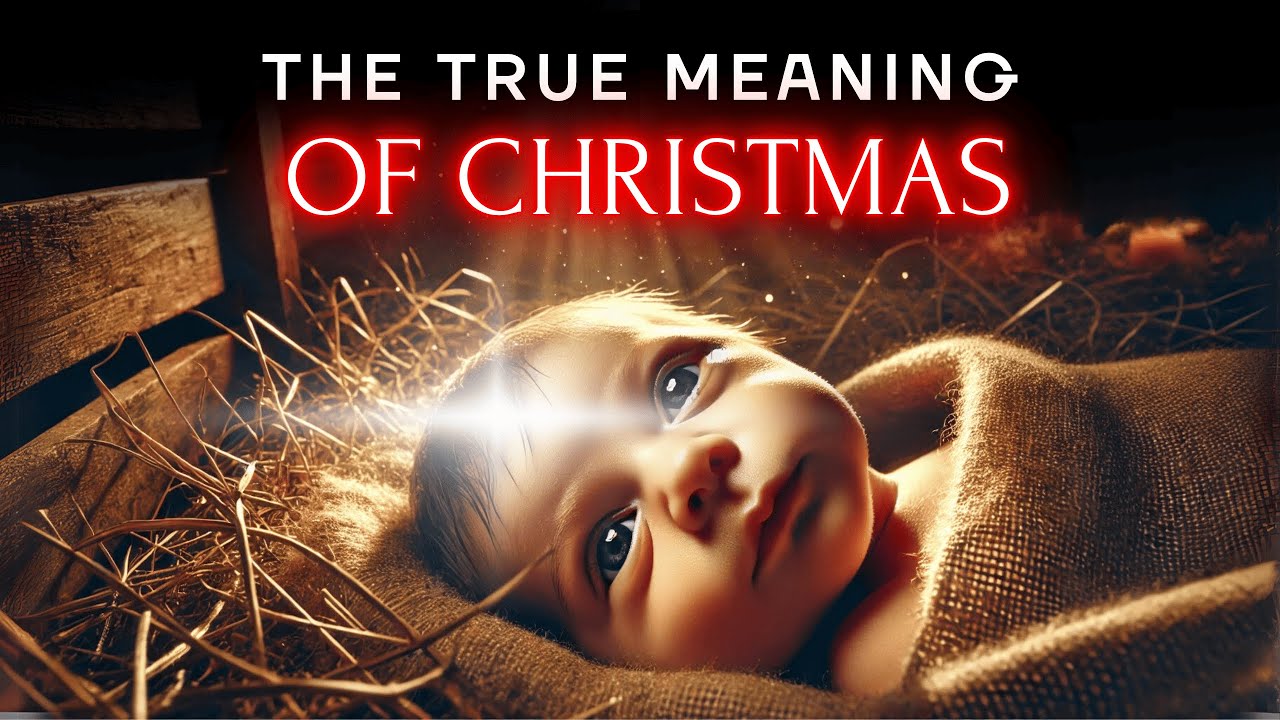
Imagine for a moment the most pivotal night in human history—not just any night, but the one when the Son of God entered the world. Picture the humility: the Savior of mankind born not in a palace of riches, but in a lowly manger. From a young age, many of us have been taught we know the full story of Christmas, but what if we've been misled?
What if the story we've been told doesn't fully align with what the Bible actually reveals? Here's a thought: the birth of Jesus, the ultimate act of God's love, was no random event. It was a divine masterpiece of timing and purpose.
Yet there's a detail that often goes unnoticed: why did December become synonymous with Christmas, and does the Bible truly confirm this date? While countless traditions have shaped our understanding, few have dared to dive into the Scriptures to uncover the deeper truth. For those who believe that God orchestrates everything with precision, this question goes far beyond curiosity; it's an invitation to dig beneath the surface and uncover the divine patterns that link love, prosperity, and God's ultimate purpose.
After all, just as He meticulously planned Jesus' birth, God also has a plan for each of us—a plan that includes spiritual abundance, financial blessings, and a life aligned with His will. Now let me ask you this: what would it mean for you to unlock one of the Bible's greatest mysteries? More importantly, how might that revelation impact the way you approach your own life, your business, and your finances?
Hidden within the pages of Scripture are lessons that can guide you toward a more prosperous and meaningful life. If you're ready to uncover truths that only a few truly understand, step into transformative knowledge. Subscribe to this channel now and join us on this extraordinary journey.
The revelation we're about to explore will forever change how you view Christmas. From the very beginning of the Bible, there's a unifying theme that ties every book and story together: the promise of redemption. Ever since Adam and Eve's fall, God began unfolding His plan for salvation.
But this promise wasn't revealed all at once; it came through clues, prophecies, and narratives that pointed toward a greater purpose—a purpose that would blend divine glory and human humility in one unparalleled event: the birth of Jesus Christ. Take Isaiah 7:14, for example: "Therefore the Lord himself will give you a sign: the virgin will conceive and give birth to a son, and will call him Emmanuel. " Think about this: centuries before Mary was even born, God planted the seed of hope.
Emmanuel, meaning "God with us," wasn't just a name; it was a promise that the Creator Himself would step into humanity's story—a love so profound it defies comprehension. But the Bible doesn't stop there. In Micah 5:2, another piece of the puzzle emerges: "But you, Bethlehem Ephrathah, though you are small among the clans of Judah, out of you will come for me one who will be ruler over Israel, whose origins are from of old, from ancient times.
" Bethlehem, a city devoid of riches or prestige, was chosen as the birthplace of the King of Kings. This reveals a pattern in God's character: He often chooses the unlikely to accomplish the extraordinary. Now consider the context when these prophecies were given.
Israel was fractured, oppressed, and often lost in its own disobedience. The people longed for freedom, for prosperity, and for the restoration of their livelihoods, their businesses, their finances, and their dignity. And it's in this yearning that God speaks, promising a Messiah who would bring not only spiritual redemption but also the renewal of life itself.
Over centuries, prophets continued to speak; each new prophecy was like another stroke in a grand divine painting. But here's the intriguing part: even with all these clues, the people couldn't fully grasp the picture. And aren't we much the same today?
How often do we cling to traditions without seeking the deeper truth? This pursuit of truth isn't just an intellectual exercise; it's a reminder that God's plans are flawless—both for the birth of Jesus and for every aspect of our own lives. Just as He orchestrated every detail of that first Christmas, He has a blueprint for our prosperity, our businesses, and our purpose.
And as we begin to unravel these mysteries, something profound begins to take shape: a deeper understanding that challenges what we thought we knew about Christmas and invites us to prepare for a revelation that will transform everything. The birth of Jesus, as described in the Gospels of Luke and Matthew, is one of the most extraordinary moments in Scripture, yet it is also shrouded in simplicity—a paradox that mirrors the profound humility of God's plan for salvation. Imagine a young couple, Joseph and Mary, traveling to Bethlehem under the weight of an imperial decree, forced to leave their home during a time of Mary's pregnancy.
The reason? A census ordered by Caesar Augustus, as recorded in Luke 2:1-7. The journey to Bethlehem wasn't easy; Mary, carrying the Savior of the world, traveled on rough, unpaved roads.
Upon their arrival, they found no room at the inn—a detail that might seem like an accident of history, but in truth, it underscores the profound humility of Jesus's arrival. The King of Kings, born not in a place of riches, but in a stable, laid in a manger meant for animals. This isn't just a touching story; it's a message that God values love, humility, and purpose over material wealth.
Now let's look at the shepherds in the fields, one of the most vivid details in Luke's account. In Luke 2:8, the Bible tells us that shepherds were watching over their flocks at night when an angel appeared, announcing the good news of Jesus' birth. Here's where things get interesting: in the region of Judea, shepherds typically.
. . Kept their flocks outdoors during warmer months, this small but crucial detail raises questions about the timing of Jesus' birth.
Could this mean he wasn't born in December, as widely celebrated today? The Gospel of Matthew adds another layer of complexity to the story. In Matthew 2:1-12, we read about the wise men (Magi) who came from the East following a star.
Unlike the shepherds, the Magi didn't arrive immediately; their journey was long, possibly taking weeks or months. When they finally found Jesus, he was no longer in a manger but in a house. This timeline further complicates the idea of a single night encapsulating the entirety of the Nativity story.
But why does this matter? Beyond the historical intrigue, these details reveal something profound about God's plan. First, it wasn't rushed.
God orchestrated every moment, from the journey of the shepherds to the star guiding the wise men, to align with His divine purpose. This teaches us patience and trust, reminding us that prosperity—whether in love, business, or finances—doesn't come from shortcuts but from walking faithfully in God's timing. Second, it underscores the inclusivity of God's message.
The shepherds, humble workers often overlooked by society, were the first to hear the announcement of Jesus' birth. The wise men, wealthy and learned, represent another side of humanity. Together, they symbolize how the message of Jesus bridges gaps between social classes, connecting those in humble circumstances with those blessed with riches and influence.
For example, consider your own life—whether you feel like the shepherds, working tirelessly and feeling unseen, or like the wise men, navigating a path of success in business—God's message is for you. It's a reminder that love and purpose are not determined by wealth or status but by aligning yourself with God's plan. But there's something deeper here.
As we unravel the narrative of Jesus' birth, we're left wondering: why does the Bible offer such distinct timelines and events? What do these details tell us about the exact timing of His arrival? These are questions that lead us to the heart of the matter—a revelation that goes beyond tradition and into the very fabric of God's Word.
Now, I want to ask you for something meaningful. Your time is precious, and the fact that you're here tells me you value the profound truths of God's Word. Since we know that spoken words carry incredible power to shape our lives, I encourage you to take a moment and declare something life-changing over yourself: comment below, "I am filled with God's blessings and abundance.
" This simple act of faith is more than just words; it's a powerful step toward aligning your life with His promises. And as a token of appreciation, I'll personally heart every comment. Let's move forward together.
The timing of Jesus' birth is a mystery intertwined with the cultural and spiritual rhythms of the Jewish people. The biblical calendar, rich in symbolism and divine patterns, provides a framework that helps us uncover the true season of the Messiah's arrival. Unlike the Gregorian calendar, the Jewish calendar is deeply connected to God's appointed festivals, each carrying profound significance in His redemptive plan.
One of these festivals, the Feast of Tabernacles (Sukkot), stands out as a key to understanding the timing of Jesus' birth. In John 1:14, we read, "The Word became flesh and dwelt among us. " The Greek word translated as "dwelt" is "skenoō," meaning to tabernacle or to pitch a tent.
This connection has led many biblical scholars to propose that Jesus' birth coincided with the Feast of Tabernacles, a celebration of God dwelling with His people. Think about the symbolism: during Sukkot, the Israelites would build temporary shelters, remembering how God provided for them in the wilderness. Could there be a more fitting time for God Himself to take on flesh and tabernacle among us?
This connection between Jesus' birth and Sukkot isn't just poetic; it's deeply practical. It aligns with the shepherds' presence in the fields, as they would likely still be outdoors during the autumn, not in the colder winter months of December. But why does this matter for us today?
It's a reminder that God's timing is always purposeful. Just as He chose the perfect moment for Jesus to enter the world, He orchestrates the seasons of our lives. Whether in business, finances, or personal growth, there's a divine rhythm we're called to follow.
Trying to rush the process can lead to frustration, but waiting on God's timing brings peace and prosperity. To illustrate this, imagine a farmer planting seeds. If he tries to harvest too soon, the crops will fail.
But when he trusts the natural rhythm of the seasons, the harvest is abundant. In the same way, understanding God's timing helps us align our efforts with His plan. Whether we're managing our finances, building a business, or nurturing relationships, prosperity isn't about quick wins; it's about walking faithfully in God's appointed time.
The Feast of Tabernacles also carries a message of joy and thanksgiving. It was a time when the Israelites celebrated God's provision, both past and present. Similarly, the birth of Jesus is a cause for rejoicing—a reminder of God's immeasurable love and faithfulness.
When we focus on gratitude, whether for our blessings or the lessons learned in challenges, we create space for greater abundance in our lives. But there's more. As we delve deeper into the Jewish calendar, we begin to see how God's festivals are not just historical events but prophetic markers.
Each one points to a key moment in His plan of salvation. Passover foreshadowed the sacrifice of Jesus on the cross, Pentecost marked the outpouring of the Holy Spirit, and Tabernacles may well signify the arrival of God's presence in human form. This alignment isn't coincidence; it's evidence of God's meticulous planning.
It challenges us to ask: are we living in sync with His divine rhythm? Are we prioritizing love, generosity, and purpose over the fleeting pursuits? Of material wealth, true prosperity isn't about chasing riches for their own sake; it's about using our blessings to reflect God's glory and fulfill His mission.
As we reflect on these truths, a deeper question emerges: If the timing of Jesus's birth is so intricately connected to God's greater plan, what other treasures are hidden in the Word waiting to be uncovered? The answer may transform not only how we view Christmas but how we live our lives. As we continue exploring the true timing of Jesus's birth, it's essential to recognize that the Bible does not provide us with an exact date or month.
Over time, however, December 25th became the widely recognized day for celebrating Christ's birth not because of any biblical directive but as a result of historical and cultural developments. In the 4th century, under Emperor Constantine, Christianity rose to prominence in the Roman Empire. It was during this period that December 25th was chosen as the day to commemorate Jesus's birth.
Why this particular date? It aligned with the winter solstice and the Roman festival of Saturnalia, a celebration marked by gift-giving, feasting, and communal joy. Early church leaders, recognizing the deep roots of these pagan customs, sought to reframe the occasion, redirecting attention from pagan gods to the worship of the one true God.
This decision was strategic, offering a way to transition new converts from pagan practices to Christian worship. By assigning the celebration of Jesus's birth to December 25th, the early church provided believers with a meaningful alternative rooted in Christ. However, while this approach helped Christianity grow within a complex cultural landscape, it also introduced the blending of tradition and faith, leaving some aspects open to misinterpretation.
It's crucial to emphasize that the Bible itself remains silent on the exact date of Jesus's birth; neither the Gospels nor any other scripture specifies the day or month. While some have speculated about the timing based on cultural and historical clues, such as the shepherds in the fields during the announcement of Jesus's birth (Luke 2:8), these details only hint at possibilities; they do not provide certainty. Therefore, while December 25th carries deep significance for many believers, it is a tradition rather than a biblically mandated observance.
What scripture does reveal, however, is far more profound than any specific date: the truth that Jesus came into the world to save us, fulfilling God's promises of redemption and hope. This realization prompts reflection on how we celebrate and honor Christ. Are we focusing on traditions or the transformative truth of His love and sacrifice?
It's not the day of celebration that matters most, but the posture of our hearts and our dedication to living in alignment with God's purpose. So while the traditions surrounding Christmas hold historical and cultural value, they also remind us to seek the deeper truths in God's Word. The Bible doesn't tell us the exact day or month of Jesus's birth, but it leaves us with something infinitely greater: the assurance that God's timing is always perfect and His love for us knows no bounds.
This challenges us to ask: Are we honoring Jesus in our daily lives, in our priorities, and in how we steward the blessings He's given us? These are the questions that lead us beyond speculation and into a closer walk with Him. So if it's not December 25th, when is Jesus's birthday?
While the Bible does not specify the exact day or month of Jesus's birth, some biblical clues and cultural contexts have led scholars to propose certain times of the year as more likely than others. These educated guesses are based on historical evidence, agricultural practices in ancient Israel, and the descriptions found in the Gospels. However, it's crucial to remember that these are interpretations and theories, not explicitly stated in scripture.
One of the most widely discussed possibilities is that Jesus may have been born in the early autumn, during or near the time of the Jewish Feast of Tabernacles (Sukkot). This theory arises from John 1:14, which says, "The Word became flesh and made His dwelling among us. " The word "dwelling" in Greek is "skanu," meaning to "tabernacle.
" Some scholars see this as a symbolic link between Jesus's birth and Sukkot, a festival celebrating God's presence with His people. Additionally, shepherds were likely still in the fields at night during the autumn, as many mentioned in Luke 2:8, before colder winter months forced them to bring their flocks indoors. Another proposed time frame is spring, possibly around the Passover season.
This idea is based on the significant connection between Jesus's life and the Passover. For example, His crucifixion took place during Passover, and some speculate that His birth could align with this symbolic season of deliverance. Springtime would also allow for shepherds to be in the fields with their flocks, as described in Luke.
Winter, specifically December 25th, is less likely according to many scholars. This is because, in the colder months, shepherds in Judea would typically shelter their sheep overnight rather than keeping them out in the open fields. The selection of December 25th as the date to celebrate Christmas was not based on biblical evidence but rather tied to Roman traditions.
As discussed earlier, there is also the possibility of a summer birth, though this theory is less commonly supported. Some scholars point to the census mentioned in Luke 2:1-3, suggesting it could have occurred during a time when travel was easier and less hindered by harsh weather, likely spring, summer, or early autumn. Ultimately, while these theories are fascinating and offer meaningful symbolism, it's essential to emphasize that the exact timing of Jesus's birth remains uncertain.
The Bible does not give us a specific date or even a definitive season. These interpretations are drawn from historical and cultural contexts rather than explicit scriptural references. The most important truth we hold, regardless of the date, is that Jesus was born as the fulfillment of God's plan for salvation.
While scholars and historians continue to explore the details, what truly matters is the significance of His coming. God's love made manifest for humanity—a gift that transcends seasons and time. The timing of Jesus' birth was no accident; it wasn't just a historical event or a coincidence of Roman censuses and Jewish customs.
It was a meticulously planned moment in history, orchestrated by God Himself, with significance that is far beyond a single night in Bethlehem. In Galatians 4:4-5, the Apostle Paul writes, "But when the set time had fully come, God sent his Son, born of a woman, born under the law, to redeem those under the law, that we might receive adoption to sonship. " This passage reveals something extraordinary: Jesus' arrival was not only purposeful but perfectly timed.
The set time wasn't just about the historical context of the Roman Empire or the Jewish traditions; it was about God's divine plan to bring love, redemption, and salvation to the world. Let's take a step back and consider what this means. The Roman Empire was at its height, connecting vast regions through its roads and communication systems.
The Jewish people were yearning for deliverance, living under oppression and clinging to promises of a Messiah; spiritually, humanity was ready. The stage was set for God to intervene in a way that would change everything. This teaches us an invaluable lesson about God's timing.
How often do we feel impatient, wondering why our prayers for financial stability, love, or a breakthrough seem unanswered? But just as God sent Jesus at the perfect time, He also has a perfect time for everything in our lives. The key is trusting His plan, even when the waiting feels unbearable.
Think of the shepherds in the fields; they weren't looking for a Savior that night; they were simply tending their sheep. Yet, they were the first to hear the heavenly announcement. In the same way, God's plans often unfold when we least expect them.
He meets us in our humility, in our routine moments, and shows us the path to His purpose. But God's purpose doesn't stop with us; it extends to how we interact with the world around us. In Jesus' birth, we see a pattern of generosity and love—gifts that are meant to be shared.
The wise men brought treasures of gold, frankincense, and myrrh, symbolic of Jesus' kingship, priesthood, and sacrifice. These gifts remind us that the blessings we receive are not just for our own benefit, but to honor God and bless others. This is especially relevant today in a world obsessed with riches, business success, and financial prosperity.
It's easy to lose sight of the true purpose of wealth. God doesn't oppose wealth, but He calls us to use it wisely to advance His kingdom, care for the poor, and provide for our families in ways that reflect His love. True prosperity comes when our resources align with His greater purpose.
For example, consider how you approach a financial challenge. Instead of viewing it as a setback, what if you saw it as an opportunity to deepen your trust in God? Prayerfully seeking His guidance in your finances can lead to solutions you might never have imagined.
It's in these moments of surrender that we experience His provision, just as the shepherds and wise men did when they followed His leading. As we reflect on the divine timing of Jesus' birth, we're reminded that God's plans are always good, even when we can't see the full picture. The birth of Jesus wasn't just about a baby in a manger; it was about God stepping into humanity's story to offer hope, redemption, and a future filled with His promises.
And here's the thing: this story doesn't end in Bethlehem; it continues in your life and mine as we learn to trust God's timing and embrace His purpose for us. But how do we truly understand this purpose? How do we deepen our faith and grow closer to the Savior who came for us?
If this story is already stirring your heart, imagine what it would mean to truly know Jesus and uncover the incredible life He has planned for you. Understanding His purpose isn't just about knowing the Bible; it's about building a relationship with Him that transforms your faith, your perspective, and your ability to overcome life's challenges. I know this because I've been there.
I've faced moments of doubt, seasons of financial hardship, and times when it felt impossible to stay faithful. But one resource changed everything for me: a powerful ebook titled "How Knowing Jesus Changes Everything. " It's not just another book; it's a guide to help you develop a deeper connection with God, even in the hardest times.
This ebook will show you how to build unshakable faith, find peace in the midst of difficulties, and understand God's plan for your life. It's an indispensable tool for anyone who wants to grow spiritually and experience the love and prosperity that comes from living in alignment with God's purpose. And here's the best part: I want you to have access to this life-changing resource.
The link to the ebook "How Knowing Jesus Changes Everything" is pinned in the top comment below this video. Take this step today and let it guide you toward the faith, joy, and blessings God desires for you.