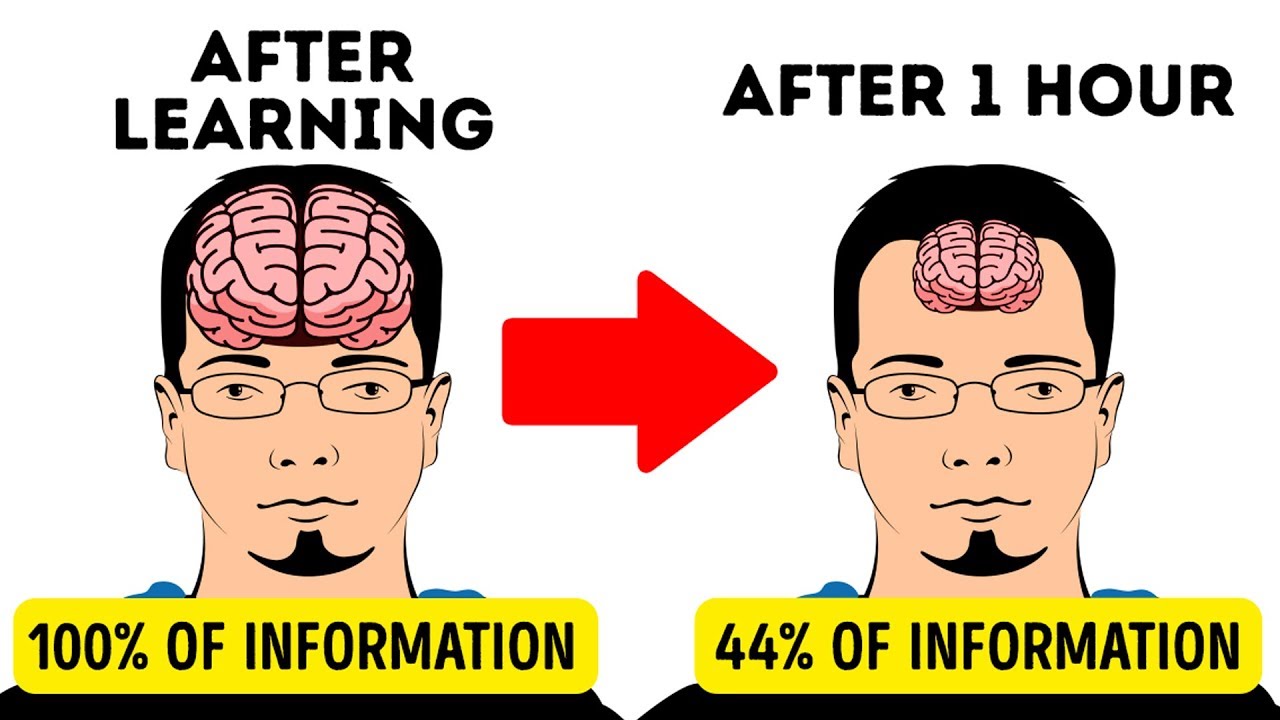
I used to take terrible notes by the time I finish I retained barely anything so I tried to review them again and my retention went up a little bit but the notes were trash to begin with so I'd review them again and again sometimes it helped but sometimes it didn't this was an unreliable way to study and I just kept wondering how many reviews does it take to get to this point well it turns out that's the wrong question to ask entirely I had it completely backwards the real question is how do I make this
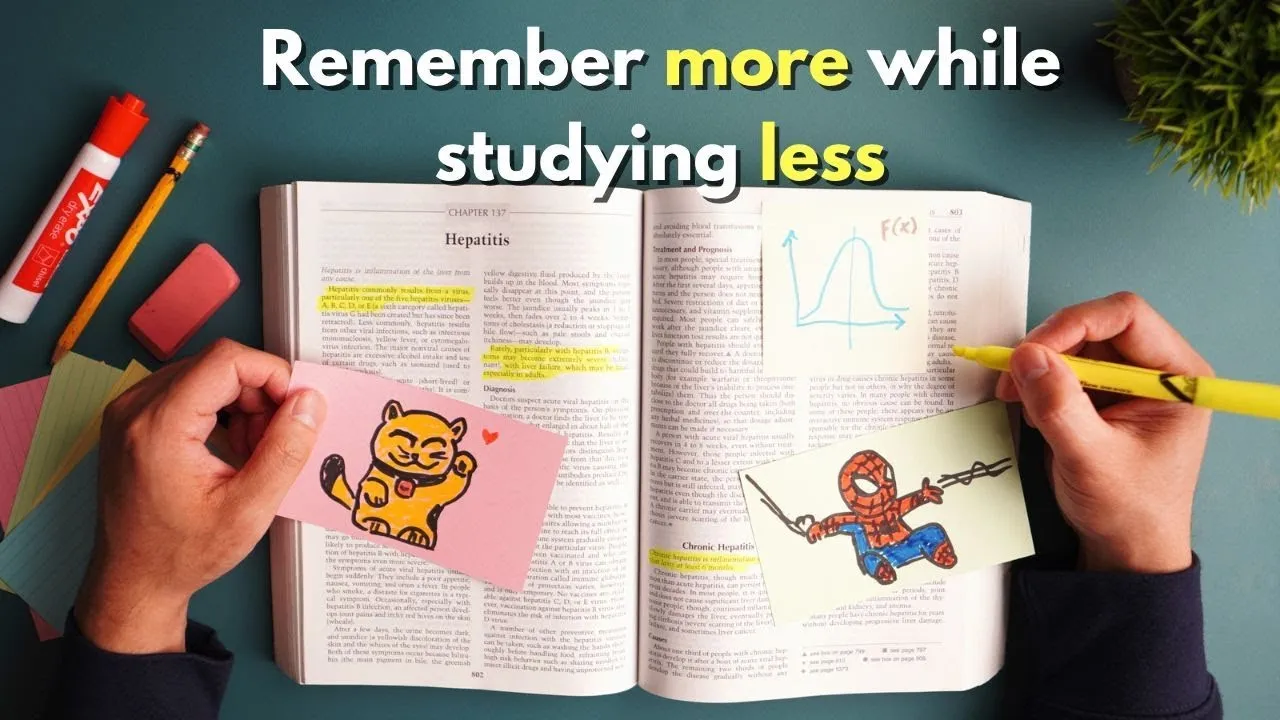
very first view as effective as possible eliminate the need for multiple reviews entertain as much as possible from the very beginning Well turns out there's a lot of ways but today we're focusing on a method called associations associations can happen in many ways like if you have tons of information on the page you can associate them down to two or three groups depending on their characteristics this is called chunking or if you have a giant paragraph of information you can associate it with a single image that is fasted for the brain to interpret and understand
this is called visualization associating things together can take many forms but fundamentally it's just about connecting ideas together because ultimately we just want to condense and process our messy notes into study material that we can actually use for review so here's a simple framework that will help you associate complex Topics in a way that's easy to remember step one is to simplify the concept and step two is to associate the idea to something similar that you already know an easy way to simplify something is to break it down so that even a child can understand
it apparently half of American adults have a reading level below sixth grade so let's just say a child is someone who is fifth grade or less basically you don't want to use fancy language you want to leave out the names of complicated key terms terms you want to keep the details out step two is to find prior knowledge you have that is similar to the idea and Associate them together so the way that memory works is that you want to take this new unknown piece of info you want to connect it to a bunch of
other information that you already have in your Web of Knowledge and a memorable way to make these connections is by using familiar imagery analogies or stories so let's go through some examples and I'll make a lot more sense okay so for this example I'm going to use associations to better understand and remember chronic obstructive pulmonary disease or COPD so let's take a look at the notes Here COPD is a group of lung diseases characterized by inflammation and constriction of the Airways leading to symptoms like dyspnea okay let's just stop right here for a second imagine
having to read this entire paragraph every time you want to review this topic that's way too much reading is going to take way too long but that's what a lot of students do without even realizing so the goal is to condense this paragraph down with associations so Step One is simplify and already I see way too many big words here that a fifth grader would not understand so let's simplify those inflammation basically means damaged constriction is tight or blocked symptoms is what you feel dysmia is trouble breathing chronic is over a long period of time
so irritants smoking hazardous chemicals I'm just going to group these all together and just say smoking we want to keep it simple for now and all these other details aren't really necessary to explain the core concept so let's leave it out so I've simplified this entire concept down to the idea that COPD is a disease where your lungs are damaged and blocked making it hard to breathe lots of smoking can cause this and that's it a fifth grader should be able to understand that let's move on to step two similar ideas one of my favorite
examples of imagery is from med school my Critical Care attending always talked about the lungs being like inflatable balloons because when you blow air into them they expand and when you exhale the air out they collapse so when I'm solving problems or figuring out how certain diseases affect the lungs I always imagine a balloon inflating and deflating so why don't we add an analogy here so if you can imagine breathing through like one of those paper towel rolls it's probably not that hard because the tube is wide but if you constrict or Shrink that tube
down to the size of a straw it becomes a lot harder to breathe through that's the analogy of a constricted Airway right you're trying to breathe through a straw now imagine having to blow up a balloon through a straw right that's terrible but people with COPD just have to go through life breathing like that because their lungs have been so damaged this analogy is really going to help me remember this disease let's add a story one of the most common causes of COPD is smoking you can imagine that if you inhale toxic stuff into your
lungs constantly sooner or later you're going to damage your lungs right that's a logical story that should be easy to remember I could also Imagine a smoker smoking a cigarette and Associate that cigarette with breathing through a straw since that imagery looks kind of the same to me and I've actually used this in the hospital to diagnose lots of patients when I see a patient coming in and they're wheezing and they're unable to breathe I automatically imagine them breathing through a straw and I automatically ask them have you ever smoked because that helps me figure
out what kind of lung disease I'm dealing with here so the overall goal of associations is to condense your notes from pages of text to more simplified Expressions this makes it way easier to make study guides that are just efficient to review so for example it can make mind mapping or flash cards way more efficient I can replace the text with my associations and instantly make my review sessions much faster so after you've gotten a handle on associations you can check out this video here because we show you how to string together multiple associations in
a way to remember massive amounts of information