Muzzle flashes lit up the night as bullets ricocheted off rusted shipping containers in an old Mexican port facility. El Marino Loko crouched low, his silhouette ghostlike in the darkness. His team of Mexican federal agents laid down suppressive fire, pinning the Cartel’s traffickers behind a barricade of crates loaded with contraband.
"He’s here. " The words came from somewhere in the shadows. Whispers spread like wildfire among the traffickers, laced with panic.
The chief trafficker’s voice trembled as he signaled his men to stop firing. An unnatural silence followed, broken only by the distant crash of waves against the dock. One by one, El Marino's men vanished into the shadows.
The trafficker glanced around, his breath shallow and erratic. The stillness was suffocating, sweat beaded on his brow, fear had gripped him. Then, everything changed in an instant.
A blur of motion from behind- a flash of steel glinting faintly in the moonlight. The crowbar came down hard. The sharp crack of metal meeting bone echoed through the port.
The boss staggered, his world spinning violently, before crumpling to the ground. Before he could scream, he was swallowed by the darkness. Several months later in a dingy safehouse across town, the traffickers' phones buzzed simultaneously.
A photo message lit their screens: their boss, stripped of dignity, sitting cuffed in garish red lingerie, flanked by grinning federal agents. Another ping. The text bore only five words: "You're next.
- El Marino Loko. " It wasn’t just rumor- it was his signature move. This was El Marino Loko.
A shadow, a hunter, a legend in Mexico’s brutal cartel war. Join us today to hear his story on today’s episode of The Infographics Show. It was past midnight when Erick Morales Guevara, better known as El Marino Loko, stalked the silent streets of Tampico.
The faint hum of a helicopter’s rotor blades overhead signaled the Navy’s presence. Morales moved with precision, his tactical gear blending into the darkness. Tonight’s target was Silvestre Haro Rodríguez, alias "El Chive," a notorious leader of the Gulf Cartel.
Morales’ intel suggested El Chive was holed up in a heavily fortified compound, surrounded by armed guards and a maze of security measures. As the team breached the compound, chaos erupted. Gunfire erupted in the courtyard as El Chive’s men scrambled to defend their boss.
Morales’ voice cut through the din, barking orders as his team swept through a series of rooms. Within minutes, El Chive was cornered, a mix of fear and fury etched on his face. But it wasn’t the arrest that would make headlines.
Morales walked into the cartel leader’s personal quarters and spotted an urn on the mantle- the ashes of El Chive’s late father. With cold, calculated malice, Morales knocked the urn to the ground, scattering its contents across the floor. He turned to a family photograph from the wall, scrawled a crude drawing of women’s clothing over it.
The psychological blow was as deliberate as the raid itself. Word of the humiliation spread quickly. El Chive, enraged, put a price on Morales’ head: three million pesos.
But for El Marino Loko, this was just another night in the war against the cartels. The Mexican drug war of the 2010s was a descent into chaos, a time when entire cities became killing fields and human life was reduced to a grim statistic. In Durango, the horrors of cartel violence were unearthed in the spring of 2011, when authorities discovered mass graves containing the remains of 145 people.
These graves were not hidden in the dense wilderness but scattered around the city, a chilling testament to the impunity with which the cartels operated. The victims were men, women, and even children, many of whom bore signs of torture. Their stories would remain untold, their lives swept away in a war where silencing the opposition- whether rival gang members or innocent civilians- had become as routine as the setting sun.
This discovery shocked the nation, but it was just one of many atrocities that defined this bloodstained chapter of Mexico’s history. Elsewhere, in the border city of Nuevo Laredo, the drug war’s brutality played out in an unrelenting cycle of violence. In 2012, 23 people were killed in a single 24-hour period, their bodies left as warnings to anyone who dared to challenge the cartels.
Some were hanged from bridges, their corpses displayed like grotesque trophies. These acts were designed to strike fear into the hearts of law enforcement and civilians alike. But Nuevo Laredo was no exception, it was merely another battlefield in a larger war.
That same year, the rural town of Ruiz, Nayarit, witnessed its own bloodbath when a convoy from Los Zetas ambushed and killed 29 members of the rival Sinaloa Cartel. The ambush was ruthless and methodical, a demonstration of the cartels’ military-style tactics and their capacity to wage war on an industrial scale. By the end of President Felipe Calderón’s term in 2012, the official death toll had reached at least 60,000.
Yet, these numbers were only part of the story. Independent estimates put the figure at over 120,000 by 2013, with an additional 27,000 people classified as missing, their fates unknown. Entire communities were torn apart by kidnappings, extortion, and forced disappearances.
In towns like Jilotlán de los Dolores, clashes between Federal Police and cartel groups like La Familia Michoacana often left double-digit death tolls, with little distinction made between combatants and bystanders. Families lived in fear of violence erupting at any moment, children grew up in neighborhoods where murder was a daily occurrence, and corruption eroded trust in the very institutions tasked with protecting them. The war’s death toll wasn’t just a number; it was a measure of the soul-crushing despair that engulfed a nation under siege.
Amid this chaos emerged a shadowy figure- El Marino Loko. His reputation wasn’t just built on the drug lords he took down, but on the public humiliations he made them endure. Erick Morales Guevara was born on October 9, 1982, in Reynosa, Tamaulipas.
From the moment he opened his eyes, it was clear that life in Tierra Caliente would be a crucible of survival. Cartel violence didn’t hide in the shadows- it played out in the open, in broad daylight. Murders, kidnappings, and executions were everyday occurrences.
The cartels ruled with absolute control, deciding everything- from the movies shown in local theaters to which businesses could operate. Morales grew up watching his neighbors- and even family friends- fall victim to cartel violence. His father and mother, however, were determined to shield him from the violence.
They instilled in him a strong sense of right and wrong, emphasizing the importance of education and hard work. Morales had been protected by his father, kept safe from the cartel’s violence. But everything changed the day a cartel foot soldier got into a fight with his father- and killed him.
That moment didn’t just scar Morales; it shaped the man he would become. Years later, Morales confided in a friend, ‘I will never forget that day- the day he took my father’s life. Since then, I promised that every damn criminal I caught, they would burn in my hands.
” Drven by his vow, Morales enlisted in the Mexican Navy Marines as soon as he was of age. The training was grueling, but Morales excelled, graduating with distinction. Over time, he climbed the ranks, learning advanced tactical skills and earning a place in the Fuerzas Especiales, or FES, Mexico’s elite special forces unit.
The FES was a breed apart, tasked with high-risk operations against cartels, terrorists, and other threats to national security. Morales honed his expertise in urban warfare, reconnaissance, and psychological operations. His time in the FES solidified his reputation as a soldier willing to do whatever it took to achieve his mission- a trait that would define his career.
Mexico’s drug war exploded in 2006 when President Felipe Calderón deployed the military to combat the cartels. What followed was a decade of unprecedented violence. By 2010, Tamaulipas and Nuevo León were among the most dangerous states, with cartel violence spilling into every facet of life.
Erick Morales Guevara’s journey to becoming “El Marino Loko” began in an unexpected setting- the officers’ and captains’ casino of the First Naval Zone in Tamaulipas, where he worked as a dishwasher. At the time, Morales was just a young recruit, working to prove himself while enduring the notoriously harsh demands of the Mexican Navy. The days were grueling, the work unremarkable- until the night that changed everything.
A visibly intoxicated and belligerent lieutenant stumbled into the kitchen and, for reasons known only to him, targeted Morales with a stream of slurred insults. Morales, ever the professional, tried to defuse the situation, but the lieutenant’s temper boiled over. The officer swung a wild punch, and Morales had no choice but to defend himself.
With reflexes honed from his military training, Morales grabbed the nearest object- a fork- and lunged at the officer. The attack wasn’t fatal, but the wound left the officer screaming in agony and Morales dragged away by his stunned peers. The story of the "crazy dishwasher who fought back" spread like wildfire through the naval base, earning Morales a mix of notoriety and grudging respect.
When it came time to renew his contract with the Navy, Morales faced an unexpected roadblock. During the mandatory psychological evaluation, he was failed by the attending psychologist- a former friend of the injured lieutenant. The rejection wasn’t based on Morales’ mental fitness but on petty retaliation.
Rather than wallow in frustration, Morales leaned into the label. Soon, the nickname “El Marino Loko” was born, at first as a joke but soon became a badge of honor. It came to represent his defiance of authority, his unshakable resolve, and his unconventional approach to justice.
While the Navy viewed him as an eccentric, his peers saw him as a fearless and resourceful fighter willing to go to any length to protect himself and his comrades. This reputation would follow him into the streets of Tamaulipas, where he would take on an even more fearsome identity. On the streets, among criminals, Morales was known by another name: Senor.
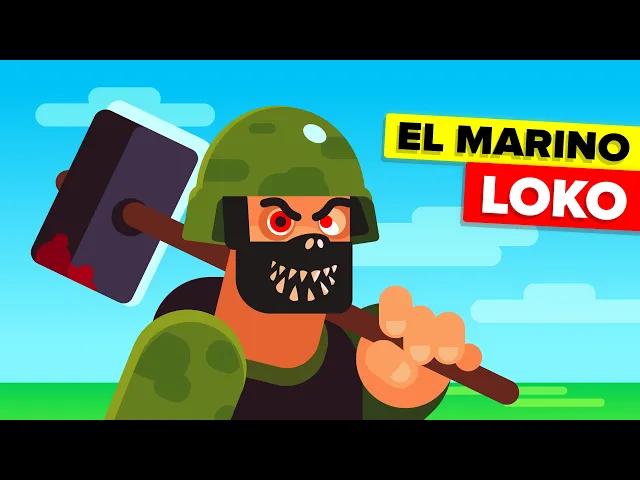
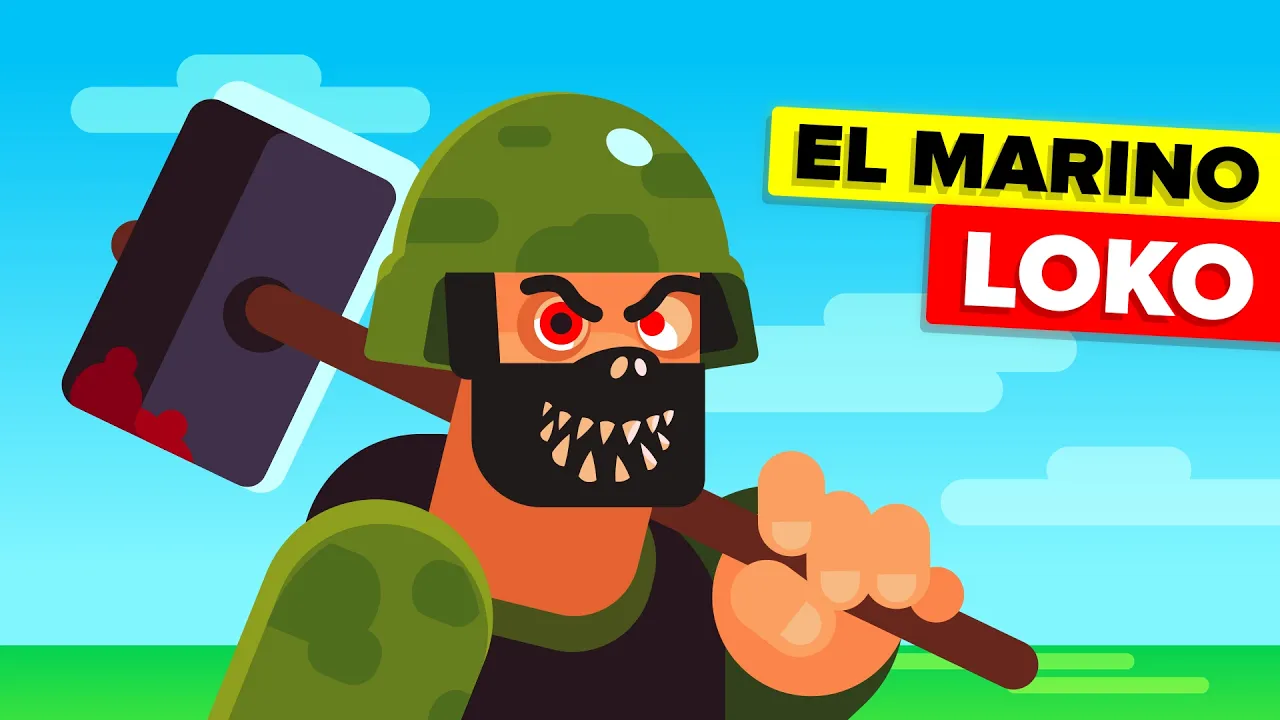
Thor. It wasn’t his imposing presence or his reputation for brutality that earned him the nickname- it was a reference to his weapon of choice. While most operatives relied on firearms to enforce the law, in one engagement Morales allegedly wielded a hammer.
The legend of Senor Thor solidified itself during operations in Coatzacoalcos, Veracruz, where Morales and his team dismantled a notorious kidnapping ring. Acting on intelligence, they stormed a nondescript house in a quiet neighborhood, searching for suspects linked to a string of abductions. The operation began as expected- tactical, methodical, and disciplined- but chaos erupted when one of the kidnappers bolted from a back room, brandishing a pistol and screaming for his accomplices to fight back.
Flashbang grenades detonated in the confined space, filling the house with deafening noise and blinding light. Gunshots rang out, bullets ricocheting off walls as the kidnappers launched a desperate counterattack. In the chaos, Morales made an unusual decision.
Due to legal complications surrounding the use of lethal force in such operations, he holstered his firearm and grabbed his hammer instead. With a roar that cut through the chaos, Morales charged at the gunman, hammer raised high. It arced through the air with crushing momentum, a blur of raw power, before landing squarely on the kidnapper’s head.
The man crumpled like a felled tree, lifeless before he hit the ground. Stunned by the sight of a hammer-wielding officer in the middle of a gunfight, the remaining kidnappers surrendered without further resistance. The operation was a resounding success, and Morales’ actions that day cemented his identity as Senor Thor in the underworld’s collective consciousness.
Among his comrades, he was celebrated for his courage and resourcefulness, while among criminals, he became the subject of hushed whispers and fearful glances. To them, the hammer wasn’t just a weapon- it was a symbol of Morales’ unpredictable and relentless approach to justice. In Reynosa, Tamaulipas, the legend only grew as Morales used the hammer in another operation, this time smashing through a reinforced door to rescue hostages.
With every swing of his hammer, Senor Thor delivered a brutal reminder to his enemies- justice, in his hands, was swift and unforgiving. Inspired by the stories of other anti-cartel figures like Miguel Angel Felix Gallardo or “El Padrino”, Morales adopted a psychological approach. His goal wasn’t just to dismantle cartel operations but to break their aura of invincibility.
In the city of Tampico, whispers of El Marino Loko’s methods were enough to terrify even the most hardened criminals. One such tale involved a cartel operative known as El Mimido. Morales had tracked the man to a lavish estate hidden in the hills.
The raid was swift and brutal, with Morales’ team of Marines dismantling the cartel’s defenses like clockwork. El Mimido was captured, along with several of his hitmen. But instead of the usual protocol, Morales had something different in mind.
Using a collection of women’s clothing found in the estate, he dressed El Mimido in a revealing dress, complete with makeup smeared hastily across his face. The hitmen were subjected to the same treatment. Then came the ultimate indignity.
Morales forced them to kiss each other while his team captured the moment on video. The footage, leaked to social media, sent shockwaves through the cartel’s ranks. El Mimido’s reputation was shattered, and his humiliation became a cautionary tale.
For Morales, it was another victory in his unorthodox war against the cartels. Morales had joined the Mexican Navy at a young age, drawn by a sense of duty and a desire to protect his homeland. But the reality of the drug war was far more complex.
The lines between law enforcement and criminality often blurred, with corruption infiltrating even the highest ranks. Morales, however, was different. He believed in justice but understood that traditional methods were ineffective against cartels that thrived on fear and brutality.
By 2012, Morales’ exploits had become the stuff of legend, amplified by the rise of social media. Videos of his operations spread like wildfire. The American media channels chronicled his actions, painting him as both a hero and a rogue operator.
One viral clip showed Morales’ team intercepting a convoy of cartel vehicles. The operation was textbook- precise, efficient, and brutal. But it was the aftermath that captured attention: true to Morales’ M.
O. , the captured traffickers, stripped of their bravado, were paraded in women’s underwear, their humiliation broadcast for all to see. The caption read: "This is what happens when you mess with El Marino Loko.
" El Marino Loko’s methods sparked fierce debate across Mexico. To some, he was a hero- a man who struck fear into the cartels and brought hope to a desperate nation. His knack for dismantling criminal networks and humiliating cartel leaders turned him into a legend among citizens longing for justice.
But his unorthodox tactics also drew sharp criticism. Human rights groups accused him of crossing ethical lines, and his actions raised questions about the legality of his operations. Was he a necessary evil in an unwinnable war, or did his methods undermine the very justice he sought to uphold?
Even today, opinions remain deeply divided, with some viewing him as a symbol of resistance and others as a rogue vigilante. The cartels were less forgiving. Morales became a marked man, his name appearing on narco mantas- banners used by cartels to issue threats.
Death threats multiplied, and each operation became a gamble with ever-higher stakes. For El Marino Loko, many of his feuds endured years beyond the initial encounter. His feud with El Chive dragged on for years, fueled by the drug lord’s seething rage over Guevara’s defacement of his father’s portrait and the desecration of his ashes.
El Chive’s retaliation came swiftly. A public narcomanta (banner) appeared dangling from a pedestrian bridge in Tampico. Its words dripped with venom and challenge: "This is for you, Erick Morales.
Dog, I know where you live, but I want you, not your family. I'm not a pig like you. " The cartel boss accused Morales of stealing bribes, claiming he had taken over £310,000 during a raid.
The banner was signed by the Gulf Cartel's Tampico branch and included a dire warning: if authorities continued their operations in the region, the cartel would turn the city into a "battlefield. " For Morales, the challenge was personal now, a high-stakes game of cat and mouse where every move was scrutinized by allies and enemies alike. As the months passed, Morales focused on dismantling El Chive’s operations in Tamaulipas.
His raids became relentless, striking at safehouses, warehouses, and supply routes, but El Chive remained elusive. The drug lord, a cunning and resourceful leader, always seemed one step ahead. The frustration mounted, but Morales pressed on, driven by a sense of justice and the knowledge that his very presence kept the cartel off balance.
Yet fate intervened in a way that denied Morales the final victory. In August, just as Morales had been reassigned to southern Mexico, El Chive was arrested- not by Senor Thor, but by state police. The arrest came during an ill-timed hospital visit to one of his injured lieutenants.
Desperate, El Chive attempted to bribe his way out of custody, offering three vehicles to the arresting officers. The bribe failed, and the once-feared Gulf Cartel boss was transferred to Mexico City. The capture of El Chive marked a symbolic end to the feud, but it was an unsatisfying conclusion for Morales.
The man who had taunted him, who had turned their battle into a public spectacle, had been brought down not by the hammer of justice but by a twist of circumstance. Yet even in this bittersweet outcome, Morales found solace. His relentless pursuit had forced El Chive into hiding, destabilizing his operations and hastening the downfall of the Gulf Cartel in Tamaulipas.
For all his successes, Morales knew that justice was never clean or complete. The Gulf Cartel, a once-dominant force, had been crippled but not destroyed. But its roots ran deep, fed by decades of smuggling, extortion, and bloodshed.
Its shadow lingered, entwined with the rise of its brutal offshoot, Los Zetas. From his new post in southern Mexico, Morales watched the news of El Chive’s capture, the weight of unfinished business pressing heavily on his mind. By 2018, Morales disappeared from public view.
Some believed he was killed, while others speculated he had gone underground. Despite his disappearance, reports of Morales’ activities persisted. In Michoacán, arrests of traffickers dressed in women’s underwear bore his unmistakable signature.
Witnesses claimed Morales had formed a clandestine anti-cartel group, operating in the shadows to continue his mission. In the streets of Tamaulipas and beyond, Morales' name still lingers, whispered in both fear and admiration. To some, he is a symbol of resistance against the cartels, a warrior who wielded justice with a hammer and refused to bow to corruption.
To others, he is a thorn in the side of a system that remains broken- a reminder that even the most relentless champions cannot fight alone. Today, many still clamor for the return of El Marino Loko. They remember the man who stood against the cartels, who humiliated drug lords, and who, despite the odds, refused to let fear dictate his actions.
His story stands as a testament to the complexity of justice in a land where the line between hero and outlaw is often blurred. It serves as a sobering reminder that even the most extraordinary individuals cannot bring closure to a war that refuses to end. What do you think of El Marino Loko’s story?
Was he a hero, an outlaw, or something in between? Share your thoughts in the comments? Now go check out the Undercover Agent Who Spent 24 Months In A Mexican Cartel or click on this video instead.