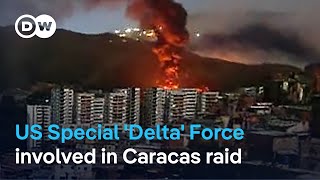
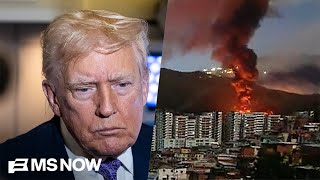
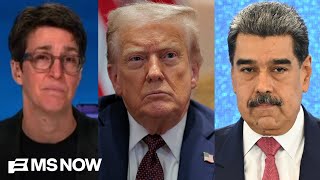
from what you heard in that news conference. How do you describe overall this operation? Well, Alex, we're only 12 hours afterward.
But it's clear that it was a tactical success. U . S.
Special Forces, U . S. military, U .
S. intelligence community are second to none in terms of their capabilities. And going in there and snatching Maduro and his wife, I think is certainly consistent with my assessment of the continued professional capabilities of the CIA and the U .
S. military. But that was a tactical success.
And I think a lot of questions now are, what's the day after plan? And they were very vague during that press conference as far as what's going to happen. It says that we're going to run the country.
And so Secretary Rubio said, make no mistake about it. This was a law enforcement operation. Well, that might have been the trigger for it.
But it's far, far more reaching than that in terms of what's going to happen. The U . S.
is going to run this country now. The U . S.
is going to be in charge of this. And it's clear with the comments that were coming out from Donald Trump, was that it's all about oil and wealth. If Venezuela did not have its oil wealth, I'm sure nothing like this would have happened.
And if they just decided to go in and snatch Maduro, and then say over to the Venezuelan people, okay, now get your house in order. That would be one thing. But this is about regime change.
This is about U . S. invasion that is now triggering this U .
S. control over the country. And I'm sure it's going to be roundly condemned and criticized, not just by the global community, but some of our closest allies and partners.
This is unprecedented in so many respects. And yes, people will draw analogies to the situation in Panama, basically 35 years ago or so. But in that instance, there was a U .
S. Marine that was killed before it happened. There was a large U .
S. military presence in the country that was basically under risk. And also the Panamanian General Assembly had declared war in the United States.
None of those triggers happened here. So it's very clear that Donald Trump sees this as an opportunity to seize the country, the wealth of Venezuela. And as he said, the American people, as well as the Venezuelan PEOPLE ARE GOING TO BENEFIT FROM THIS, BUT WE'RE GOING TO BE TALKING ABOUT VENEZUELA FOR A LONG, LONG TIME TO COME AND I AM JUST, YOU KNOW, PUZZLED AS TO HOW THEY'RE ACTUALLY GOING TO EFFECTIATE THIS REGIME CHANGE.
I ALWAYS LIKE TO DRILL DOWN AND TRY TO GET DETAILS, LOGISTICS, JOHN. SO THE QUESTION TO YOU, THESE ARE BIG THINGS. THE PRESIDENT SAYS THAT THE UNITED STATES WILL RUN THE COUNTRY.
HOW DOES THAT EVEN HAPPEN? WHAT DO THEY Do they have somebody who's a representative, an appointee, an ambassador that steps in? Does this also require CIA to stay embedded there in Venezuela?
Because you know that there will be there in Venezuela because you know that there will be opposition to whatever happens from the United States, if not from the people themselves, if they feel liberated, certainly from supporters of the Maduro regime. Yes, these are all excellent questions, Alex, and these are the ones that members of Congress should be pounding on their desks now asking the Trump administration, what is going to happen? How is this actually going to take place?
But for the U . S. to run this country, you would think that there's going to be U .
S. boots on the ground. There are still a lot of elements of the Venezuelan system that support the Maduro, sort of chavista, sort of philosophy.
The Interior Minister Cabello and the Defense Minister Patrino, they are very much, you know, the pillars of the institutions within Venezuela. And I don't believe that the Venezuelan people are going to just unanimously just embrace this U . S.
takeover. There are a lot of differing views within Venezuela. Yes, a lot of people are going to be very glad that Maduro is gone.
But the question is, what are they for? We know what they may be against, but what are they for? And this is going to be a real, real tough slog.
We know that democracy or the democratic building process is very, very messy. Look at what's happening here in this country and to try to do this in Venezuela now when you have a system that really has been been in place for several decades and just trying to turn it around. Democracy and an open and free society is not like a light switch that you can just flip.
And so, again, I think there are a lot of questions. And again, 12 hours into it, yes, we can all be happy that there were no U . S.
military forces that were killed in the action, at least what is said so far. But there are a lot of questions and a lot of equities that are, I think, are going to be at stake in the days, months and even years to come. John, how dangerous of a period are we entering right now?
Well, I think the situation in Venezuela has been very unstable for many years. I mean, crime has been quite rampant. But again, you have these various security forces and you have these motorcycle gangs, the colectivos, that really run around the country.
And so, I think there's going to be a lot of jockeying, for position, both in terms of political position, security capabilities and so on. And so I do think that if U . S.
military boots are going to be on the ground, they have to anticipate that there will be some some Venezuelans who are going to be very much opposed to what is viewed as American imperialism. And this sense that, you know, might makes right is something that maybe within the Trump administration it resonates positively. But I think there's also going to be a lot of concern in the neighboring countries that if it happened in venezuela it can happen in other countries as well and i really do think the international community really needs to be raising questions this basically is the equivalent of what donald putin did in ukraine uh in terms of legitimizing an invasion of a neighboring country because they see some risk there what signal does this send to xi jinping in china as far as taiwan is concerned there are a lot of implications of this a lot of implications for the situation in venezuela and but also many implications of the global community and i don't think the global community wants to have a u .
s administration that is basically pursuing its own version of vigilante justice internationally. And I do think that there really needs to be a real serious congressional look and scrutiny of this, not in terms of just what happened, but what is going to happen in the future?