As humans, we play a wide variety of games, ranging from basketball to chess to video games to poker. The question every game designer needs to ask themselves is Why are we so fascinated with these games? The commonly accepted answer is that we play games to have fun.
But what exactly is fun? On the neurological level, fun is a boost of dopamine that we get when we learn something new. Or a task giving us a feeling of pleasure and satisfaction.
Thanks to evolution, we're programmed to enjoy learning in the same way as we enjoy eating. This is because over the years learning has greatly improved our chances of survival. If this wasn't the case, then mankind would have become extinct long ago, attempting to hog all the tigers.
However, learning in games is different from learning and reality games present us with an environment where we can freely learn without the pressure of suffering through the consequences of our actions. As a result, games can be unpredictable without causing the players severe anxiety, or at least sometimes in contrast to real life, where our actions have consequences. And so we tend to prefer a calmer and more predictable experience.
So from this, we can say that theoretically fun and games comes from being able to learn, improve and achieve without the real life consequences. Now, you might be asking if we have fun and games because we're learning, then why are some games boring and why two games that are fun eventually become boring? This is because as humans, we're natural pattern learners.
From the moment we are born until the day we die, our brain is constantly looking for new data to reinforce existing patterns or learn new ones. This is the mechanism which we use to learn how to exist in this world. During this time, whenever we run out of things to learn, typically we get bored However, in games to play, it doesn't only become bored if they have learned all the available patterns, but also when the patterns of the games don't match the player's personal interests.
When the patterns are so simple that they seem trivial, when they're so difficult that they can't even be identified when they're revealed too slowly or too quickly, or when the player finds a way to cheat, they always find a way to cheat. So up until now, we've established that games are fun when they teach players to learn patterns which match their personal interests at a good pace without providing ways to cheat. As the creative director for the Star Wars Galaxy, RAF Costa described in his famous book, A Theory of Fun, all the possible patterns and games can be placed into one of six categories which have all been helpful for people at some point throughout evolution.
The first of these categories is the calculation of odds and prediction of events This pattern applies to any game involving probability. A good example of this is backgammon, where players need to roll the dice and then make a prediction of the best possible moves to win the game. This category has many applications in real life where you need to weigh the risks against the rewards, such as going to college or going straight to work.
The second category is social status patterns which have to do with pushing yourself and others up and down the ladder by signaling your own value to others around you. This pattern involves a variety of positive and negative emotions and is arguably the most dangerous and addictive pattern in 21st Century video games. A good example of this is the Overwatch competitive ladder.
People get joy by seeing others go down the ranks whilst elevating their own. How many times has a friend made a joke at your expense stating that their rank is higher than yours? The third category is spatial reasoning.
These are patterns which require players to think ahead of time and determine possible results of an end game puzzle. This is done by analyzing what the possible moves are and figuring out what needs to be done to complete the puzzles. The fourth category is memory.
These patterns involve recalling and managing complex chains of information such as when counting cards and blackjack. The fifth category is visceral responses, which occur when we have a physical reaction to a nonphysical experience. Shooter games fall under this category, and the final category is teamwork, which involves working with others to achieve a goal.
This pattern is widely used in multiplayer games. These categories are universally helpful patterns to learn and have also been helpful in human evolution. Consider how useful teamwork and memory were when humans were cavemen if they hadn't utilized these then they wouldn't have been able to hunt for food in video games.
These patterns are implemented through the use of building blocks known as game mechanics in combination with gameplay paradigms. An example of a game mechanic is moving a piece on a chessboard, whereas game paradigms sometimes referred to as the core dynamics within a game define the actual victory condition, such as taking your opponent's keying in chess. The Holy Grail is a game that provides never ending challenges, requires a wide range of skills to succeed, and has a difficulty curve that perfectly adjusts to the player's skill level.
Over time. This is why many great games with everlasting popularity are competitive head to head games because having other opponents provides an infinite number of challenges with a continuous range of difficulties However, this doesn't mean that every head to head game will thrive despite the vast number of games, new games typically only slightly improve upon previous competitors. This is due to game design is commonly being culprits of on originality.
They play more games than the average player. Sample mechanics from those games and use them to build their games. When this happens, games don't introduce new ideas and thus wither away as people have previously learned the mechanics which the game teaches and so they get bored in order to make games fun.
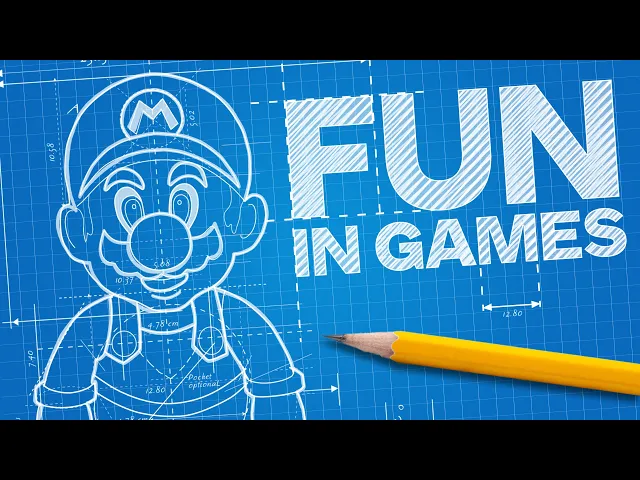
Designers need to find new dimensions to add to the gameplay. This isn't achieved by adding more weapons to a battle royale, but rather by coming up with innovative ways to combine different mechanics. Take Super Mario, for example.
Changing the blocks into hexagons isn't a big change and is not likely to teach the players new things. However, take that same game and add a new dimension to it, such as having to control the character in two separate worlds. Simultaneously, and the pattern changes completely.
However, even with innovation, it's impossible for any game to appeal to everyone. This is due to the variation between people's preferences People with different natural strengths will gravitate towards patterns which they can solve. This is why some people prefer sports over Scrabble and vice versa.
A common method game design is used to tailor their games to their audience is by matching the games personalities to that of the players. For example, people who enjoy gathering resources and building up abilities may enjoy roleplaying games, whereas people who are very active will play games that allow them to move their physical body. So far, we've talked about games in abstraction, what they teach their building blocks, and why they're enjoyable.
However, many games are more than just abstract rules. They may feature characters stories and more games use these fictional metaphors to add variations to an underlying game. However, these metaphors are often ignored by players who prefer to focus on the underlying patterns.
For example, checkers has a metaphor of royalty. There is a king me move and the pieces have crowns. However, players usually focus on finding the pattern of moves which will help them achieve victory rather than its real backstory.
The best test of a game's fun is playing it with no graphics, music, sound effects or story. If this is fun, then all the added features will amplify the fun. If it's not fun, then no amount of features will make it fun.
If you're currently making a game, then I challenge you to answer these questions about your game in the comment section of this video. Next time, we'll discuss how games create strong feedback mechanisms for fun using beautiful esthetics and visual effects. I hope I find your sub and maybe even like on this video today.
Don't forget to tell somebody you love them and I'll see you in the next one.