importance of faith without scrutiny. As they mature, these teachings become deeply ingrained, shaping their identities and worldviews. The consequences of this conditioning can be profound, influencing decisions, relationships, and life trajectories.
To break free from these constraints, individuals must engage in deep self-reflection and critical thinking. It requires a willingness to confront uncomfortable questions about the beliefs that have been instilled in us. What if our desires for happiness, fulfillment, and success are not sinful but essential aspects of our human experience?
What if liberation comes not from adhering to imposed moral codes but from embracing our authentic selves, with all our complexities and contradictions? Exploring the teachings of ancient civilizations and uncovering hidden truths may provide a roadmap for reclaiming our relationship with morality and spirituality. By examining the stories and rituals that have shaped human consciousness, we can discern the ways in which control has been exerted and the wisdom that has been lost in the process.
This journey toward understanding does not reject all aspects of religion; rather, it seeks to separate the essence of spiritual truth from the layers of human-made doctrine that often obscure it. In this quest for understanding, we can recognize the value of diverse perspectives and the importance of dialogue across cultures and belief systems. By embracing ethical pluralism, we acknowledge that there is no single, absolute truth; instead, we can appreciate the richness of human experience and the myriad ways individuals seek connection, meaning, and understanding in their lives.
Ultimately, the path to liberation involves reclaiming our agency and allowing our moral compasses to be guided by introspection and informed understanding rather than unquestioned allegiance to tradition. In doing so, we pave the way for a more authentic existence, one where spiritual and moral truths are not merely inherited but actively chosen and cultivated. Embracing this journey holds the promise of profound personal and collective transformation, leading us away from a life dictated by fear and control toward one marked by freedom and self-realization.
the notion that their actions are constantly being observed and evaluated. The fear of divine punishment and the promise of eternal reward become deeply embedded psychological mechanisms that guide behavior even into adulthood. Even those who later distance themselves from religious institutions often carry the imprint of these early teachings, manifesting as ingrained guilt, rigid moral absolutism, or a subconscious need for external validation.
The concept of religious morality has functioned as a tool for imposing social order, reinforcing conformity and discouraging individual questioning. Religious institutions position themselves as intermediaries between humans and the divine, claiming exclusive access to moral truth. This arrangement makes it possible for those in power to dictate not only laws but also the inner moral compass of entire populations.
With concepts such as sin, redemption, and divine retribution, individuals are conditioned to regulate their own behavior through fear, guilt, and obligation. The emergence of monotheistic religions intensified this process, consolidating moral authority into a singular, omnipotent deity whose judgment was inescapable. In this framework, personal autonomy is surrendered in favor of obedience, and morality becomes less about individual ethical discernment and more about adherence to institutional doctrine.
As societies evolve, the function of religious morality shifts, but its influence remains pervasive. While traditional religious dogma may lose direct authority in some regions, its ethical structures continue to shape political ideologies, social norms, and legal systems. The moral codes originally dictated by religious institutions become so deeply entrenched in cultural consciousness that they are accepted as universal truths, rather than recognized as constructs designed to serve specific institutional interests.
This makes it difficult for many to conceive of ethics outside of a religious framework, as morality has been systematically presented as inseparable from divine decree. However, by understanding how these belief systems have been constructed and perpetuated, individuals can begin to separate genuine ethical principles from institutionalized moral control. This awareness allows for a reclamation of personal autonomy, encouraging critical thought, self-guided moral reasoning, and a freer, more conscious approach to human ethics.
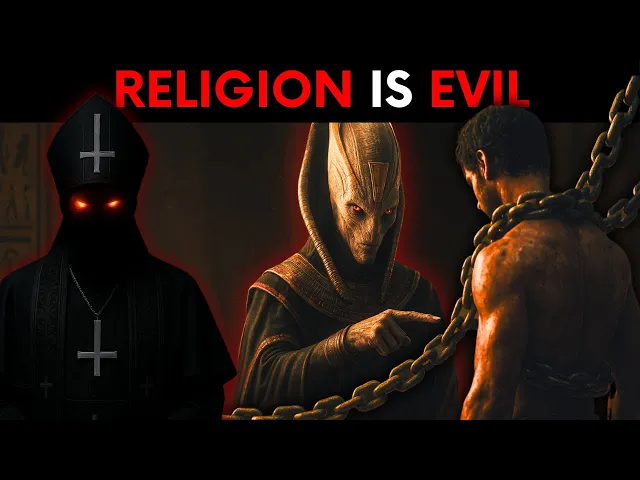
Dogma has been one of the most powerful instruments of control wielded by religious institutions throughout history. By establishing absolute truths that cannot be questioned, religious authorities create a rigid framework in which individuals are compelled to conform or face dire consequences, whether in this life or the next. At the core of this system is the concept of sin, a mechanism that ensures compliance by instilling guilt and fear.
Sin is presented as an inherent flaw in human nature, something that must be constantly atoned for through obedience, self-denial, and devotion to religious institutions. This manufactured moral debt keeps individuals in a perpetual state of self-surveillance, where their thoughts and actions are filtered through the lens of religious expectation. By defining morality in terms of sin, religious dogma forces individuals to seek external validation for their worthiness, making them dependent on the institution for redemption and moral direction.
Closely tied to the idea of sin is the notion that suffering is a necessary path to salvation. Religious dogma frequently portrays hardship, sacrifice, and self-inflicted deprivation as virtuous, reinforcing the belief that enduring pain is a sign of spiritual strength. This ideology is not merely a moral teaching but a strategy for submission, one that discourages individuals from challenging authority or striving for personal empowerment.
By glorifying suffering, institutions discourage dissent and promote passivity, ensuring that followers remain within the prescribed order. The promise of salvation, often deferred to an afterlife, becomes a justification for present suffering, convincing individuals to accept injustice, inequality, and personal hardship with the expectation of divine reward. This cycle of submission is deeply ingrained in many religious traditions, where figures of martyrdom and sacrifice are upheld as the ultimate examples of faith and virtue.
This system exploits the human capacity for hope, redirecting the natural impulse for self-improvement into a promise of future redemption rather than immediate change. Dogma also plays a crucial role in redefining the concepts of good and evil to serve institutional interests. By establishing moral absolutes that align with their own authority, religious institutions position themselves as the sole arbiters of righteousness.
Actions that reinforce institutional power are framed as virtuous, while those that threaten its control are condemned as evil. This manipulation of morality allows institutions to dictate human behavior in ways that benefit their own agendas, whether through political influence, social engineering, or economic gain. Historically, religious decrees have justified wars, conquests, and inquisitions under the guise of moral imperatives, demonstrating how dogma can be weaponized to maintain dominance.
Those who conform to religious dogma are rewarded with community acceptance and spiritual validation, while those who challenge it face social ostracization, eternal damnation, or worse. Over time, this system creates a culture where independent thought is not only discouraged but actively suppressed, as individuals internalize the belief that questioning religious authority is synonymous with moral failure. Furthermore, religious dogma does not merely impose rules; it constructs an entire psychological framework that shapes identity and self-perception.
By instilling the idea that moral worth is contingent on adherence to religious law, institutions create an artificial dependence on spiritual authorities. This system fosters a cycle of internalized oppression, where individuals police their own thoughts and behaviors to avoid condemnation. The notion that morality is inseparable from religious doctrine reinforces the idea that human beings are inherently flawed and incapable of determining right from wrong without divine guidance.
This undermines personal autonomy and critical thinking, ensuring that religious institutions retain their influence over both the individual and society at large. This also extends to the manipulation of familial and social structures, where obedience is encouraged through generational indoctrination, reinforcing traditional hierarchies that serve institutional control. The perception of morality, rather than being an innate and universal truth, is deeply shaped by cultural and religious narratives.
These narratives vary across societies, demonstrating that what is deemed moral in one context may be considered immoral in another. The intertwining of morality and religious dogma means that ethical values are often dictated not by objective reasoning but by traditions designed to reinforce authority. This leads to moral relativism, where concepts of good and evil become tools that shift according to institutional needs, rather than principles that genuinely serve human well-being.
By understanding that morality is a social construct, individuals can reclaim their ethical autonomy, moving beyond imposed doctrines and developing a moral compass guided by reason, empathy, and personal integrity. By recognizing how dogma has been constructed and imposed, we can begin to dismantle. psychological chains that have constrained human potential for centuries.
The process of breaking free from dogmatic control requires critical examination of the origins of religious morality and the motivations behind its enforcement. Understanding that moral frameworks are not inherently divine but socially constructed allows individuals to reclaim their ethical autonomy. True spiritual and intellectual liberation begins with the courage to question, challenge, and redefine morality on one's own terms, free from the constraints of institutional doctrine.
The path to freedom lies not in blind adherence but in the conscious pursuit of knowledge, self-awareness, and an understanding of the historical forces that have shaped belief systems. Only by deconstructing these narratives can individuals break the cycle of psychological and spiritual subjugation, forging a path toward true self-determination. The image of a judgmental, punitive God is one of the most enduring constructs of religious institutions, shaping not only theological beliefs but also the psychological framework of entire societies.
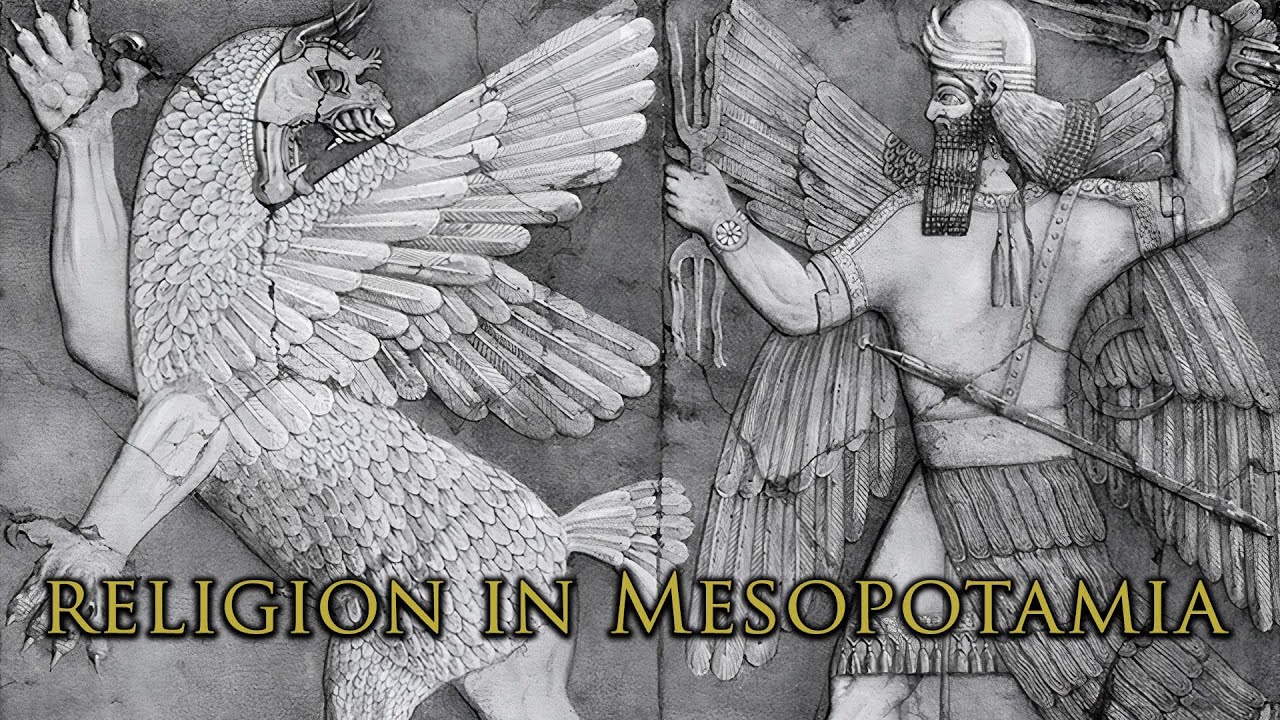
This concept did not arise naturally but was deliberately crafted to serve as an instrument of control. Early civilizations, particularly in Mesopotamia, viewed their deities as powerful but not necessarily moralistic in the way later religions would define. The gods of Sumer and Babylon were often depicted as rulers, lawgivers, or cosmic architects rather than omniscient moral judges.
However, as religious institutions centralized authority, they anthropomorphized the divine, giving it human-like qualities such as anger, vengeance, and the need for obedience. This shift transformed the perception of the divine from a complex, multifaceted force into an all-seeing enforcer of absolute laws, ensuring that individuals not only believed but feared the consequences of disobedience. One of the most effective tools in maintaining this system of divine judgment was the introduction of the concept of hell and eternal punishment.
Ancient Mesopotamian cultures did believe in an underworld, but it was not originally a place of torment for moral transgressions; rather, it was a shadowy existence where all souls, regardless of their deeds in life, would eventually go. The transformation of this neutral afterlife into a realm of horrific suffering was a later development, strategically designed to reinforce religious obedience. The notion that failing to comply with religious dogma would result in eternal suffering created a powerful psychological deterrent against questioning authority.
It instilled a pervasive fear that followed believers throughout their lives, making religious morality inseparable from personal security. This fear was not just about the afterlife; it was a means of controlling behavior in the present, ensuring that individuals internalized religious law as an unquestionable reality. Fear, more than faith, has been the cornerstone of religious control.
The omnipresent threat of divine punishment, whether in the form of personal misfortune, social exclusion, or eternal damnation, ensures conformity to institutional doctrine. This fear is deeply embedded in cultural traditions, taught from childhood, and reinforced through rituals, prayers, and communal expectations. It discourages independent thought, as questioning the established order is equated with inviting divine wrath.
In many religious traditions, doubt itself is framed as a sin, making it nearly impossible for adherents to escape the psychological grip of the system. The power of fear as a control mechanism is so strong that even those who move away from formal religious practice often carry its psychological imprint, experiencing guilt, anxiety, or existential dread when confronted with alternative perspectives. Religious institutions have further manipulated the perception of God by presenting Him as an unrelenting judge whose wrath must be appeased.
This image fosters a culture of guilt and self-condemnation, making individuals feel perpetually unworthy and in need of redemption. The idea that humanity is inherently sinful reinforces the need for an external savior, a doctrine that deepens the reliance on religious authority. This punitive vision of God is mirrored in the way societies governed by religious doctrines often embrace punitive measures, emphasizing retribution over restoration.
A punitive God creates punitive people—those who judge, condemn, and punish others in the same way they believe God does. This belief system has justified centuries of war, violence, and oppression under the guise of divine justice. Another dangerous distortion is the portrayal of God as a distant, indifferent force.
This conception leaves believers feeling abandoned, struggling to reconcile suffering with the idea of an all-powerful being. If God is detached from human affairs, then human suffering appears meaningless, fostering apathy and resignation. This image of a distant God discourages engagement with the world, leading to moral complacency and a lack of compassion for others.
However, to maintain control over believers, religious institutions have introduced a counterpart to this distant God—the figure of Satan, the deceiver, the eternal enemy of faith. The devil serves as the ultimate scapegoat, a convenient explanation for any doubts, independent thoughts, or moral questioning that arise. Whenever someone begins to challenge doctrine, question the actions of religious leaders, or seek spiritual truths outside of institutional teachings, they are warned that such thoughts are the work of the devil attempting to lead them astray.
This narrative ensures that questioning authority is not seen as an exercise of free will but as a dangerous flirtation with evil. Furthermore, the concept of hell and eternal punishment is deeply tied to this dynamic—any deviation from religious obedience is framed as a path toward damnation, where Satan waits to claim rebellious souls. This system effectively traps believers in a cycle of fear, ensuring that they remain obedient not out of love or spiritual fulfillment, but out of terror of being cast into darkness.
The notion of an exclusive God compounds these distortions, fostering religious elitism and intolerance. Many religious institutions promote the belief that their doctrine alone is the path to salvation, using this exclusivity to consolidate power and discourage exploration of alternative spiritual perspectives. This leads to the dehumanization of those outside the faith, making it easier to justify exclusion, discrimination, and even violence in the name of religious purity.
The concept of divine exclusivity serves to divide humanity rather than unite it, reinforcing hierarchical structures that prioritize obedience over genuine spiritual connection. By understanding how these distorted images of God have been deliberately constructed, we can begin to dismantle the psychological barriers that have kept humanity bound to cycles of fear and obedience. Recognizing the origins of these oppressive doctrines allows us to challenge their validity, reclaim our spiritual autonomy, and embrace a broader, more empowering vision of our place in the universe.
True spirituality is not about fear, exclusion, or submission to an institution; it is about inner growth, self-discovery, and the pursuit of a higher truth beyond dogma and control. Only by breaking free from these manipulative constructs can we begin to experience a more authentic and liberating spiritual journey. Religion has never existed in isolation from power and politics.
Throughout history, religious institutions have aligned themselves with ruling authorities, using morality as a tool to shape societal structures and reinforce hierarchical control. The intertwining of religious morality with political power is not accidental; it is a calculated strategy that has allowed religious leaders to influence governance and justify policies that serve institutional interests. By positioning religious laws as divine mandates, rulers and clergy have ensured that obedience to the state is equated with obedience to the divine.
This fusion of faith and authority creates a population that is more easily controlled, as questioning political rule becomes synonymous with questioning sacred law. Those who dissent are not only seen as political rebels but also as heretics, threatening both earthly order and spiritual salvation. One of the most devastating consequences of this fusion has been the justification of wars, conquest, and persecution in the name of religious belief.
From ancient times to modern history, countless conflicts have been framed as battles between righteousness and evil, allowing institutions to rally mass support for their political and territorial ambitions. Religious narratives have provided a moral pretext for violence, portraying invasions, colonization, and forced conversions as divine missions rather than acts of domination. This pattern is evident across cultures and eras, from the expansionist campaigns of early Islamic caliphates to the European conquests of the Americas, where indigenous populations were subjugated under the banner of religious salvation.
The rhetoric of holy war has continuously served as a means to justify atrocities while maintaining the moral high ground in the eyes of believers. Historical events such as the Crusades, the Inquisition, and the close alliances between church and state illustrate how religious institutions have actively participated in, and benefited from, systems of oppression. The Crusades, framed as divine missions to reclaim sacred lands, were in reality political and economic endeavors that granted the church vast influence over European monarchies and the redistribution of conquered wealth.
The Inquisition, while publicly presented as a means to preserve religious purity, functioned as a tool for silencing dissent, consolidating power, and eliminating political rivals under the guise of spiritual authority. Even in more recent history, the alignment of religious institutions with state powers has reinforced oppressive structures, such as the church’s role in justifying colonial rule, supporting totalitarian regimes, or opposing social progress that threatens institutional dominance. Modern examples further demonstrate the strategic use of religion in politics.
In certain nations, religious institutions have closely aligned with political authorities, legitimizing government policies and reinforcing nationalist ideologies. In some cases, religious leaders have justified military actions and political decisions as necessary defenses against external moral corruption, rallying believers behind ideological warfare. In other regions, a blend of religious fundamentalism and governance has been used to frame policies as divine imperatives, influencing debates on social issues and reinforcing societal divisions.
Elsewhere, governments have pursued aggressive policies to mold religious institutions to fit state ideology, altering sacred doctrines to align with political narratives and suppressing religious minorities under the pretext of maintaining national unity. Even in my country, Brazil, one politician used religion to impose a hierarchical order. He had a slogan: "Brazil above everything, God above everyone.
" This made many religious followers believe that Jair Bolsonaro, former president of Brazil, was a kind of messiah. However, his public policies proved to be far from this ideal. These instances illustrate how religion continues to serve as a powerful instrument for consolidating political control and shaping societal norms to benefit those in power.
This pattern is not new, but it continues to evolve in increasingly sophisticated ways. The Roman philosopher Seneca, a prominent Stoic thinker who authored "Letters from a Stoic," once observed: "Religion is regarded by the common people as true, by the wise as false, and by rulers as useful. " Seneca believed that much of human activity is trivial unless guided by deliberate reflection, and he emphasized the importance of using reason to overcome desires, fears, and external influences.
His statement about religion reflects a deep understanding of its role in shaping societal structures—not as a means of spiritual enlightenment, but as a tool leveraged by those in power. Religion, once a foundation for community values and spiritual growth, is now frequently repurposed as a tool to sway public opinion, justify policies, and fortify the influence of ruling powers. The illusion of divine legitimacy offers political figures an unassailable shield, making their authority appear unquestionable and their decisions morally justified.
Through mass communication, propaganda, and the reinforcement of traditionalist narratives, political leaders leverage religious faith to manufacture consent, ensuring that dissenters are viewed not only as political opponents but as enemies of the sacred order itself. This dangerous conflation of faith and governance leaves little room for objective discourse, as questioning the system is framed as an attack on deeply held spiritual convictions. The manipulation of faith for political ends has created a cycle in which religious morality is molded to fit the interests of those in power, rather than serving as an authentic guide for human ethics.
This dynamic has made it difficult for individuals to separate genuine spirituality from the institutional frameworks that have co-opted it for control. The ancient Mesopotamian texts provide an alternative perspective on the relationship between divine beings and rulers. Unlike later monotheistic traditions that centralized religious authority, the Sumerian and Babylonian narratives depict gods who interacted with humanity in complex ways, often driven by their own motives rather than rigid moral judgments.
Understanding the historical use of religion as a tool of power allows us to critically examine modern institutions and their continued influence over politics. By questioning the alignment between religious morality and political agendas, we can begin to separate faith from institutional control, reclaiming spirituality as a personal and liberating experience rather than a mechanism of subjugation. The more we uncover the historical realities of religious manipulation, the more we empower ourselves to break free from narratives designed to keep us in submission, allowing for a future where belief is a path to enlightenment rather than a justification for oppression.
One of the most deeply ingrained misconceptions promoted by religious institutions is the idea that spirituality and material wealth are inherently opposed. This belief has been perpetuated for centuries, creating a false dichotomy where. .
. one must choose between being spiritually enlightened or financially successful. By presenting material wealth as a corrupting force and glorifying poverty as a sign of purity, religious dogma has shaped societal attitudes toward prosperity, instilling guilt in those who seek financial independence.
However, this notion is not a universal truth but rather a strategic narrative designed to reinforce dependence on religious institutions. If followers are conditioned to view wealth as a moral failing, they become less likely to seek personal empowerment and more likely to remain subservient to religious authority. Religious institutions have historically discouraged financial independence because economic autonomy translates to personal freedom.
When individuals are financially self-sufficient, they are less reliant on the church or religious organizations for support, guidance, and security. Many religious traditions promote the idea of tithing or charitable giving, often suggesting that wealth should be relinquished in service of the divine. While generosity and helping others are valuable principles, the institutional enforcement of financial sacrifice has often served to enrich religious organizations rather than truly uplift communities.
Throughout history, clergy and religious elites have accumulated vast fortunes while encouraging their followers to embrace modesty and self-denial. This dynamic ensures that the flow of wealth remains concentrated in the hands of religious authorities, further solidifying their influence over believers. The distortion of spiritual teachings to impose psychological limitations is another key aspect of this strategy.
Many religious texts contain wisdom that, when interpreted correctly, can empower individuals to achieve both spiritual and material abundance. However, institutionalized religion often reinterprets these teachings to emphasize submission, suffering, and renunciation. Concepts such as humility, detachment from worldly possessions, and self-sacrifice are frequently emphasized in a way that discourages ambition and self-improvement.
This not only limits individuals' potential but also creates an internal conflict where success is viewed with suspicion and guilt. Those who break free from these imposed limitations often experience a sense of betrayal or fear of divine punishment, further reinforcing the cycle of financial and psychological dependency. At the same time, there exists a contradiction within religious institutions that both condemn wealth and exploit it for their own benefit.
While believers are taught to embrace poverty as a virtue, many religious organizations amass enormous financial power, constructing lavish places of worship, acquiring land, and wielding economic influence over entire communities. This selective application of financial ethics exposes the underlying hypocrisy in the message that material success is incompatible with spirituality. On the other hand, religious doctrine has also been weaponized to promote the prosperity gospel, an ideology that falsely claims that wealth is a divine reward for faith.
This narrative distorts spiritual teachings by suggesting that financial success is a direct reflection of one’s righteousness and devotion to God. It preys on the vulnerable, promising them material abundance in exchange for unwavering faith and generous financial contributions to religious institutions. However, a deeper examination of religious texts contradicts this notion.
Many scriptures emphasize struggle, sacrifice, and humility as fundamental aspects of spiritual growth. For example, passages such as: "Blessed are those who are persecuted for righteousness' sake, for theirs is the kingdom of heaven. Blessed are you when others revile you and persecute you and utter all kinds of evil against you falsely on my account.
Rejoice and be glad, for your reward is great in heaven, for so they persecuted the prophets who were before you. " And: "Indeed, all who desire to live a godly life in Christ Jesus will be persecuted. " Reinforce the idea that devotion to faith does not equate to material wealth or worldly success.
Instead, religious texts often highlight the value of endurance, resilience, and inner strength in the face of adversity. The prosperity gospel, therefore, is a modern distortion that manipulates believers into seeing wealth as a divine right rather than a byproduct of practical effort and economic systems. True spiritual growth does not require self-imposed suffering or financial limitation; rather, it involves aligning personal success with ethical and conscious living, creating a balanced existence where material and spiritual well-being coexist.
Recognizing the false opposition between spirituality and prosperity allows us to reclaim our right to abundance without guilt or fear. Spiritual fulfillment does not come from deprivation but from the ability to live freely, pursue knowledge, and cultivate both inner and outer wealth. When we detach from the limiting narratives imposed by religious institutions, we open ourselves to a broader perspective—one where success and spirituality are not enemies but complementary forces that, when balanced, lead to a richer, more fulfilling life.
The story of humanity’s origins, as told by mainstream religious traditions, is a fragmented and heavily altered narrative that has been reshaped over centuries to fit theological agendas. However, long before the emergence of monotheistic religions, the ancient Sumerians inscribed their own version of creation on clay tablets, detailing a history that challenges the foundations of conventional religious belief. The portrayal of the Anunnaki as "gods" has been one of the most significant distortions in religious history.
Over time, their identities were molded to fit the evolving religious structures that sought to centralize divine authority. In their original context, the Anunnaki were not distant, omnipotent figures but rather beings of great power who walked among humans, influencing their development in tangible ways. Some were seen as benefactors, bestowing wisdom and technology, while others were described as rulers who imposed their will upon humanity.
As religious traditions evolved, these multifaceted beings were reinterpreted through the lens of monotheism, with their attributes divided into separate figures of good and evil, order and chaos. The transition from polytheism to monotheism necessitated the simplification of divine roles, leading to the creation of a singular deity who embodied both judgment and mercy. This restructuring erased the nuanced relationships described in Sumerian texts, replacing them with a rigid moral framework that positioned humanity as inherently sinful and in need of salvation.
One of the most profound shifts that occurred in this transformation was the redefinition of divinity itself. In the Sumerian accounts, the Anunnaki were not concerned with absolute moral law or eternal judgment. They engaged with humanity not as distant deities but as active participants in human affairs, guiding, teaching, and sometimes manipulating events to serve their own interests.
This view of divinity as interactive rather than authoritarian was gradually replaced by the monotheistic model of a singular, omnipotent god who demands obedience and punishes transgression. The transition to a judgmental god served institutional purposes, reinforcing structures of power and control. The fear of divine punishment became a.
. . Tool to ensure societal conformity, while the promise of salvation was used to maintain dependence on religious authorities.
True spirituality has long been obscured by the institutional frameworks of religion, which have sought to define and control humanity’s connection to the divine. Religion often presents itself as the sole legitimate path to spiritual understanding, yet faith and religion are not synonymous. Faith is a deeply personal experience, an internal connection to something greater than oneself, while religion is an institution that imposes structure, doctrine, and rules upon that experience.
The conflation of the two has led many to believe that spiritual enlightenment can only be achieved through adherence to religious dogma. However, by questioning these imposed narratives, we uncover the possibility of a spirituality free from external control—one defined by personal exploration rather than institutional decree. The awakening to a free consciousness begins with the ability to separate spiritual truth from religious conditioning.
Many beliefs instilled from childhood—ideas of sin, guilt, obedience, and judgment—are constructs designed to regulate human behavior. Detaching from these imposed structures allows individuals to experience spirituality on their own terms, without fear or limitation. This process does not necessitate rejecting all religious teachings but rather discerning what is authentic and meaningful from what has been manipulated for control.
Ancient wisdom, including teachings found in Mesopotamian texts, suggests that spirituality was once understood in a more expansive way, embracing knowledge, discovery, and direct personal experience with the divine. The path to true spirituality is not about submission but about reclaiming the autonomy to seek answers beyond the confines of doctrine. At the core of this journey is self-knowledge, the key to true freedom.
Religious institutions have often discouraged introspection that might lead to independent thinking, framing curiosity as dangerous and equating faith with unquestioning acceptance. Yet, the pursuit of self-knowledge is a powerful step toward liberation. Exploring one's own thoughts, emotions, and desires without the constraints of imposed morality fosters an understanding that resonates with one's spirit.
This process requires deep reflection, a willingness to challenge conditioned beliefs, and openness to perspectives that may contradict traditional teachings. The ancient Sumerians, through their texts and myths, recognized the importance of self-awareness and the pursuit of wisdom. Their narratives often emphasized the role of knowledge in human evolution, portraying divine beings as bearers of understanding rather than enforcers of blind faith.
This suggests that the truest form of spirituality is not one of rigid belief but of continuous learning and self-discovery. True spirituality cannot be confined to rituals, symbols, or the repetition of prayers and mantras. The search for truth begins when the mind is completely free—free from the past, free from the burdens of tradition, and free from the limitations imposed by organized systems of belief.
True spiritual living is not about following external authorities but about cultivating deep awareness, understanding, and compassion. To be spiritual is to be free from fear, from sorrow, from the psychological prisons created by ideology and doctrine. It is only in this freedom that genuine love and intelligence can arise, unclouded by bias or attachment.
Rebuilding our relationship with spirituality independently means forging a path that aligns with our own experiences, insights, and inner truths. Without the constraints of institutional religion, spirituality becomes a journey of personal empowerment rather than submission. This does not entail rejecting the divine but redefining how we engage with it.
Whether through meditation, exploration of ancient wisdom, contemplation of the cosmos, or personal experiences of transcendence, spirituality can take countless forms. The key is that it remains a personal journey, unshaped by fear, coercion, or the expectations of external authorities. True spirituality is not found in doctrine but in the ability to connect with the universe, others, and oneself in ways that foster growth, understanding, and liberation.
By stepping beyond religious dogma and embracing a path of free consciousness, we reclaim our ability to seek the divine in ways that are meaningful to us. Ancient texts remind us that spirituality was never meant to be confined to rigid laws or institutions—it was always intended as an exploration, a quest for deeper truths that transcend human-imposed limitations. Freeing ourselves from the constraints of organized religion opens the door to a higher state of awareness, where spirituality is no longer about obedience but about understanding, connection, and ultimate liberation.
By challenging the dominant religious narratives, we can begin to reclaim our own spiritual autonomy, separating faith from institutional control. The path to true spirituality is not found in blind adherence to doctrine but in the pursuit of self-knowledge and free consciousness. To break free from the constraints of religious manipulation, we must embrace critical thinking and the willingness to question everything we have been taught.
This journey requires us to analyze not only the teachings of religious institutions but also the beliefs we have internalized—beliefs about morality, wealth, suffering, and salvation. When we recognize that many of these ideas have been designed to maintain control rather than to guide us toward enlightenment, we gain the power to redefine our own spiritual path. True freedom does not come from obedience but from the courage to seek truth on our own terms.
Now is the time to step beyond the limitations imposed by religious dogma and embrace a broader, more empowering perspective on spirituality. We are not bound by ancient laws that no longer serve us, nor are we destined to live in fear of divine punishment. The knowledge preserved in the Mesopotamian texts, along with the insights of countless other ancient traditions, reminds us that spirituality is meant to be a journey—one of exploration, understanding, and personal growth.
The ability to choose our beliefs, rather than accept them without question, is the foundation of true enlightenment. It is through this questioning that we liberate ourselves from centuries of imposed morality and reclaim our right to spiritual autonomy. The path forward is one of awareness, inquiry, and self-empowerment.
By breaking free from fear and embracing knowledge, we open the door to a deeper, more authentic connection with the universe and with ourselves. The choice is ours to make—will we continue to follow the paths dictated to us, or will we forge our own? If your answer is to choose your own path, join me on this journey.
Choose your next video, hit the like button, share this content, and subscribe to the channel. See you in the next video!