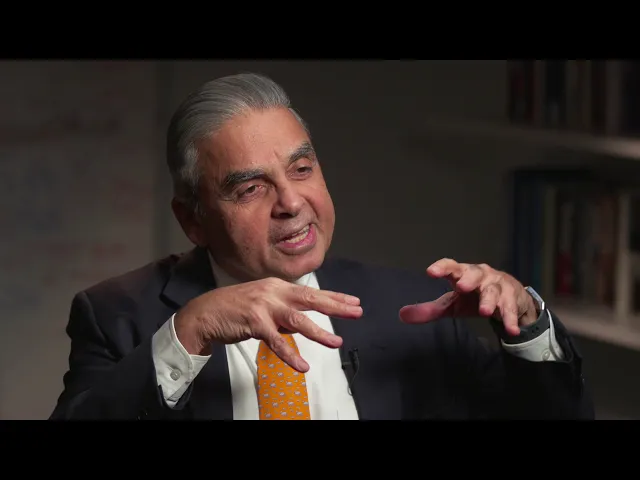
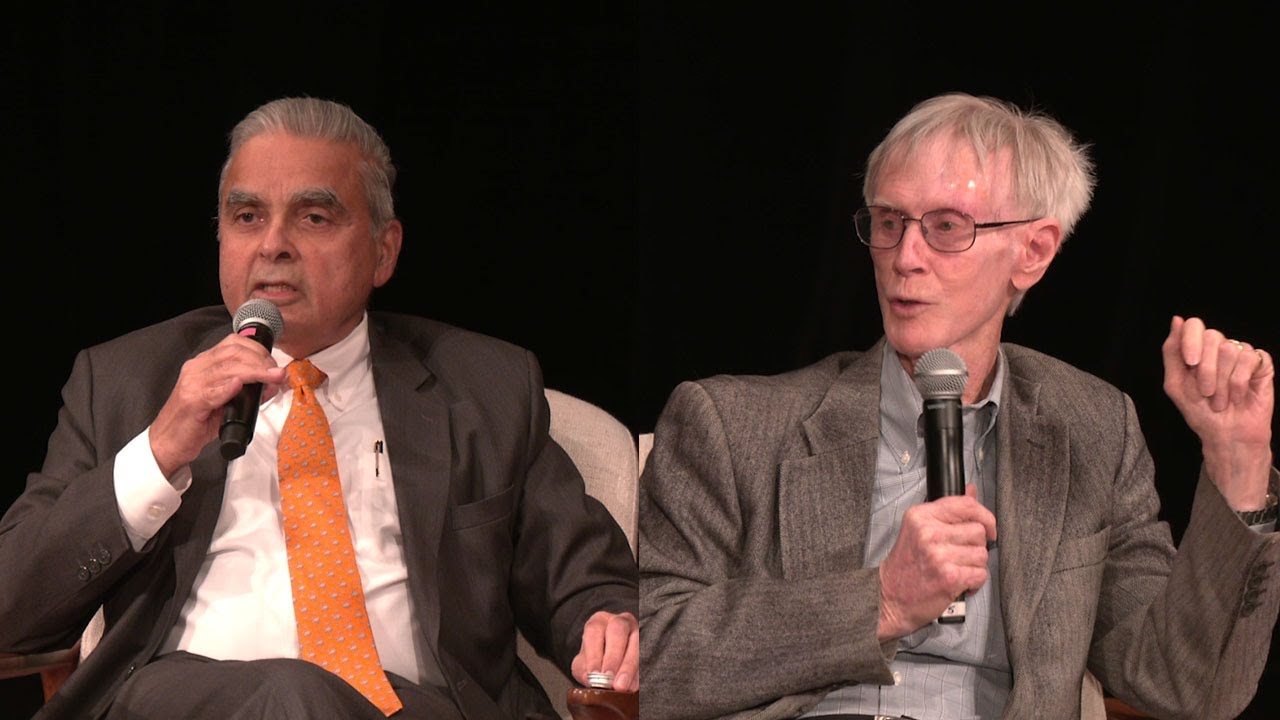
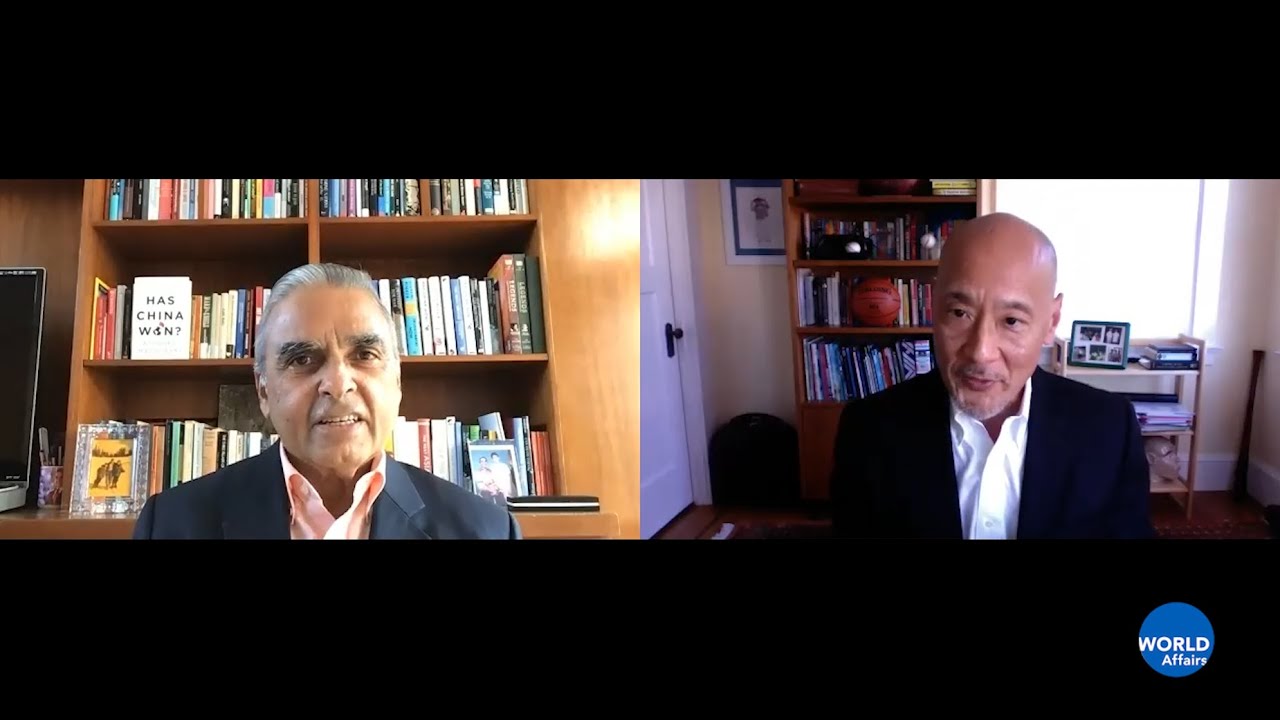
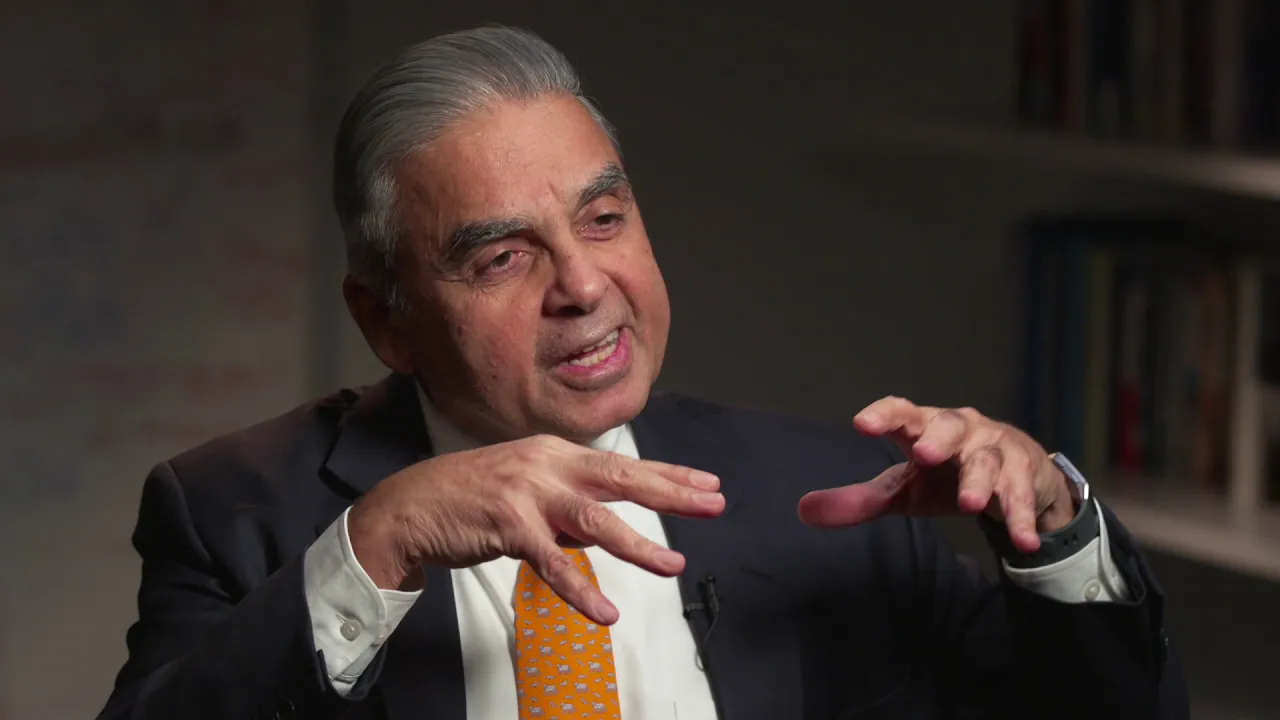
I'm here today with dr. Kishore Babu bunny he is the distinguished fellow at the Asia Research Institute of the National University of Singapore we're here to discuss his new book has China won the Chinese challenge to American primacy thanks for joining us my pleasure I can't think of a more important playing field on planet Earth to zoom in and explore than the one you have chosen what inspired you to write this book well I you know I see a great tragedy coming and it's a completely unnecessary tragedy there's coming geopolitical contests between the United States
and China and the basic message of my book is a very simple one which is that a joke political contests between the United States and China is both inevitable and avoidable so I try to explain in the main part of my book why it's inevitable and why also the United States should really think very hard and deep before he plunged us into this geopolitical contest for China so we're where did the pressure amount that put us on this inevitable trajectory which is so dangerous and they speak to both American and Chinese contributions well I think
it's clear that both sides have made strategic mistakes that in some ways led to the eruption of this geopolitical contest but in a more fundamental way the geopolitical contest was actually in some ways inevitable because the history teaches us a sort of 2,000 year logic which to some extent Graham Allison is captured in his book destined for war that whenever the world's number one emerging power which today is China is about to overtake the world's number one power today's and United States that's inevitably that your political contest breaks out and then both get locked into
a kind of a struggle but of course the the other question is what sort of triggered it now and the trigger was caused by strategic mistakes made by both China and the United States in the case of China what I try to document in the book is that there was for a long time a very powerful constituency in the United States the American business community that was so engaged with China making lots of profits from China and therefore that constancy always applied the brakes whenever the United States seemed to be heading towards a struggle against
China what's interesting they used to have these Treasury reports and where they are currency manipulators yeah that's right and they always stopped sure exactly you're absolutely right and that actually is the demonstration of the points going to make and what happened was that this time around when Donald Trump launched his straight wall the logical thing should have been for the American business community say stop you have a lot of stake with China instead they just stepped aside and allowed the trade war to carry on against China so that was China's big strategic mistake but as
I tried to document in the book the mistake made by the United States was in many ways much bigger and it was a bigger mistake because the United States decided to launch a major geopolitical contest against China without first working out a comprehensive long-term strategy on how you deal with a country that has I've got a population that's four times bigger and the United States is only 250 years old that's in 12 years old China has been around 2,200 years and then what is shocking is that no thought was given to this at all and
this insight was given to me actually aside women in the book by Henry Kissinger you know kind of one-on-one lunch I had with him at his club and so that that's what led me to investigate further about one of the potential other mistakes the United States is making in proceeding with this geopolitical contest so the goal of my book is actually to help the United States help Americans to think very hard and very deep before they take on an assignment which future historians will marvel that they they just jumped in two feet first without thinking
hey what am I getting myself into mm-hmm why since inside of American political economy there's almost a page from the PlayBook of Bismarck if you can't solve your problems inside look outward and pick an enemy to unify your people and the problems which you psyche very eloquently in the book of more than half the population having a declining standard of living since 1980 none is really quite quite daunting quite distressing yes you see what I what I what I try to point out in the book is that the there are lots of misconceptions that Americans
have about their own strengths and about China's weaknesses you know so for example it is taken as a given right it's like a geological certainty that when a thriving democracy takes on a geopolitical struggle against a communist party system the thriving democracy will always win as it demonstrated in the first world war against the Soviet Union but then if you dig deeper and you try to understand what is the core situation of American society today and the core situation of Chinese society you discover that the United States is actually having to deal with some major
structural challenges and one of the key structural challenges is that the the average income of the bottom 50% yes five zero percent of the American population has been sliding down over a thirty-year period and as I try to analyze in the book this is not just an accident this is a result of deep structural forces in American society that have moved America away from being a thriving democracy to what's becoming a plutocracy and by contrast China in the 30-year period where the average income of the bottom 50% in America has been sliding down thus in
the same 30 year period the bottom 50% in China have had their best 30 years in 3000 years so at a time when the Chinese people are experiencing the most amazing improvements in their standard of living he must remember also for most of Chinese history the bottom 50% struggled to survive they would die in famines and civil wars and they had a very rough life in the last 30 years they have access to education housing health care trouble in a way they never ever had before in their lives so after China has gone through the
best 30 year period ever under the Chinese Communist Party the United States is telling the Chinese people why don't you get rid of it in this communist part and the Chinese if I scratching their heads excuse me I know I've had the best 30 years and the Chinese Communist Party is succeeding because while in theory it is still a communist party it is a communist party that is the exact opposite of the Soviet Communist Party because the Soviet Communist Party was run by all upper Attucks the Chinese Communist Party may possibly be the most meritocratic
political party in the world and the selection process results in the best minds running China today you met some experience you know you know wrong genre you know you know you know how brilliant this people are right so by by going into this old ideological reflex and saying hey democracies can always overcome communist parties the United States hasn't done a deeper analysis and realized that this is not a contest within a democracy and a communist party system it's a contest within a plutocracy and a meritocracy you you talked about it being a party of representation
how that is maintained whether that is stable it was still true for the last 30 years yes you see the at the end of the day running China keeping a country of 1.4 billion together every day is a massive challenge which is why for most of Chinese history China has more often being divided than United so the periods like what China's experienced the last 30 years of the strong central government delivering phenomenal improvement in living standards to his people it's very rare in Chinese histories and so if you compare the record in governance of the
Chinese Communist Party especially after ding shopping launches four modernizations 40 years ago in 1979 it's quite amazing what China has accomplished and the Chinese must always measure the record of their governance not against what other countries have achieved but what has been achieved in Chinese history and no Chinese government in ever in Chinese history has improved the living standards of the Chinese people as much as the Chinese Communist Party has and you're right I called it the Chinese civilization party because the main goal of the Chinese Communist Party is not to promote or to export
communist ideology the main goal of the Chinese Communist Party is to revive Chinese civilization and bring it back to the standing and respect that it used to enjoy in the world for over 2,000 years and and and the key driving force in the Chinese mind which I think every American should be aware of is that the Chinese are acutely aware that they went through something like maybe hundred and fifty years of national humiliation starting from the opium war of 1842 probably you know going up to the Japanese occupation and so on so forth so they've
gone through a lot of humiliation and their desire therefore is to regain the respect that China used to enjoy and it is somewhat sad that just at the moment when the Chinese people feel that hey we are now finally achieving something meaningful that's the time when America decides to slap China and the only thing they remember is you see they're trying to humiliate us and the scar tissue in the United States echoes of the Cold War these would be the USS so that's right and in your book you do a very nice job of showing
why the Chinese challenge is very different than the Soviet challenge terms of weaponization in an arms race in terms of ideology they're just many aspects that you yeah disaggregate yeah well I think you know the the reason why I encourage Americans to think deep is that if they look very carefully at the track record of what China is doing and what the Soviet Union is doing right it is actually quite shocking that in the geopolitical contest today between China and United States instead of China behaving like the Soviet Union it is the United States that's
behaving like the Soviet Union because I explained in the book in one chapter ir s-- can america make u-turns so for example the contest between United States and China will not take place in the military sphere it will be in a nuclear war with the United Center in China there will not be a winner and a loser that the looser and looser so logically it should be in the interests of the United States therefore to reduce its defense budget and take the money and invest in R&D because that's where the real contest is but the
United States cannot reduce this defense budget because no matter how brilliant a defense secretary you have whether it's ash Carter or general matters because the the the process of deciding where to spend money is locked in by the US Congress and allocations are made to each constituency by the congressman and therefore the defense budget is large irrational and unnecessary and if the United States was serious about taking on China if you cut his defense budget into half but that's impossible and in that so it's like the old Soviet Union that also couldn't cut this defense
budget in strong words over there so so in that sense the the United States hasn't thought very hard and very deep about how different this contests with China is whereas by contrast the Chinese are quite happy they're growing the defense budget but at a fixed percentage of the GNP and not increasing it and the Chinese are very happy that America is 13 aircraft carrier fleets because each aircraft carrier fleet is draining millions of dollars away from the US Treasury everyday and paradoxically in military terms and aircraft carrier today is a sitting duck and as an
American professor Tim Colton of Harvard told me it just takes a hundred thousand dollar hypersonic missile to bring down a billion-dollar aircraft carrier so it doesn't make sense anymore so clearly you need to have a fundamental strategic reboot in American thinking and I'm in that sense I'm trying to be helpful to America they think very hard about what are the big changes you need to make one of the things that haunt people who are talking about quote new economic thinking and technology it's the interface between this rivalry between the US and China mm-hmm digital commerce
platforms and cybersecurity mm-hmm and the story goes these are my friends at MIT in talking that if you set up a digital platform it aggregates a lot of information mm-hmm hackers they are able to use Virtual Private Networks and disguise their identity and their whereabouts mm-hmm so a hacker can be in Saskatchewan in Canada hypothetically pretend to be New York attacking Shanghai mm-hmm or being Armenia pretending to be Beijing attacking Washington DC that's right I've talked to leaders in both countries some very high leaders they recognize mm-hmm that given all the other tensions and rivalry
and scar tissue from history and potential for misunderstanding that they do not have a way to verify let's say you make an agreement we both pledged our trust to abide by the cooperative behavior with the success in the presence of disguised hackers you can't verify whether that's the case and people are struggling now to try to figure out how to overcome this because if you balkanize yeah the Internet and the trading systems you're accelerating that polarization into competing systems and I don't know how to answer that but I think it's a fantastic yeah question to
be explored it is you're absolutely right and and this is where one of my key recommendations in the book is that if you want to find solution that would be of course many challenges in their relations within the analysis in China not just in cyber security will be in law the sea maritime areas and many many other areas the best solution is to look for multilateral solutions and in the area of cyber security and cyber warfare it's good to agree on one common set of rules I'll give you a simple example you know with nowadays
with a good hacker can in theory unleash the waters of a dam right and then can you imagine the thousands of people who will die when the dams suddenly bus right so why not agree on one set of multilateral set of rules at least agree on the rules first of course implementing in your right would be a challenge but I agree we will never attack a dam we will never attack a hospital we will never paralyze the electricity of a city we will never sort things so you have these common sets of areas where you
agree right and of course frankly they will make perfect sense for American military to hack into a Chinese destroyer of course that's fair game right in the vice versa - so that's fair game but let's make sure you carve out areas and we say in these areas you don't do anything but of course the interesting exception to all this and as you know since you're a monetary person I point out that the real Achilles heel of the United States is the fact that the US dollar is the global reserve currency and that as you know
the French then Finance Minister Valda get just status thing says an exorbitant privilege enables Americans to live beyond their means so it's in America's national interest to preserve the US dollar as the global reserve currency but by weaponizing it the United States has created incentives for countries to move away losing each other you know and it is conceivable for China to use blockchain technology to create not necessarily a new monetary system but just a platform that enables countries to trade with each other without having to use the US dollar yes and the minute the US
dollar is no longer the dominant currency in global trade we can still of course remain strong in the financial sphere but once the critical part of the system where it's no longer essential for global trade disappears if the US dollar becomes vulnerable and if it is no longer global reserve currency then American standards of living will go down and that's another example of where it is in the interests of analysis and China to work together thank you for joining us thank you very much thank