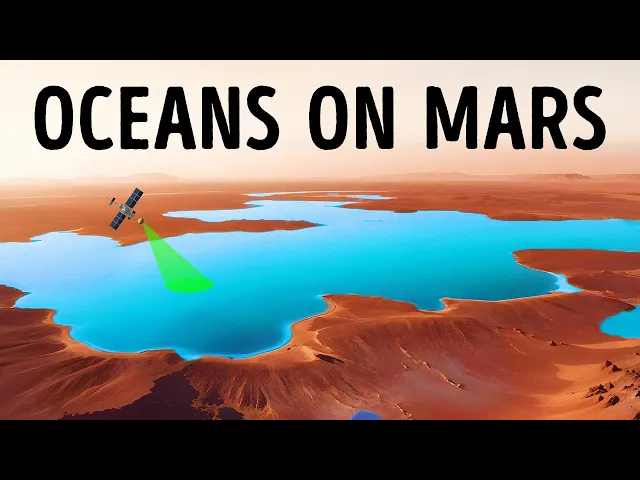
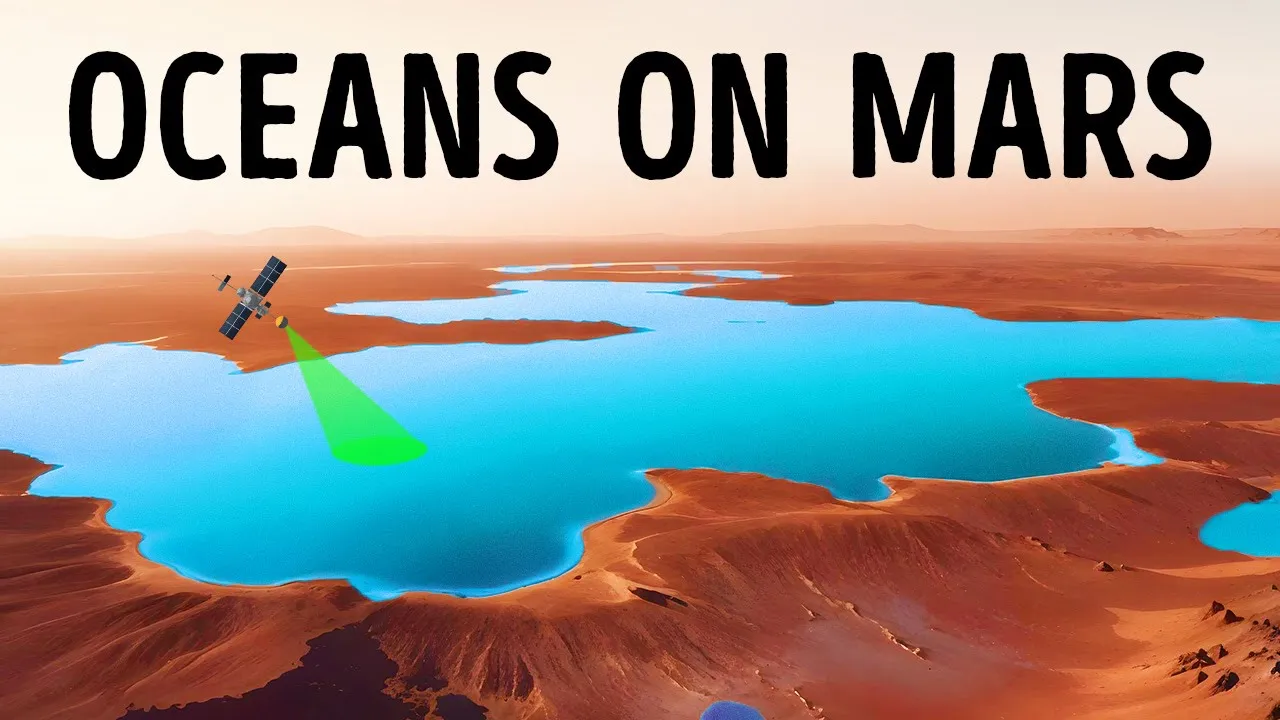
recently scientists have made an astounding discovery that can change the entire course of Mars exploration apparently there are oceans of liquid water on the red planet so the future looks bright we could use this water to support future missions and then even relocate to Mars since we wouldn't need to worry about where to get this precious liquid right well there's one big problem these oceans of liquid water are in Mars so deep inside that we aren't likely to get there at least that's what a new analysis of seismic data collected by the Mars inside Lander
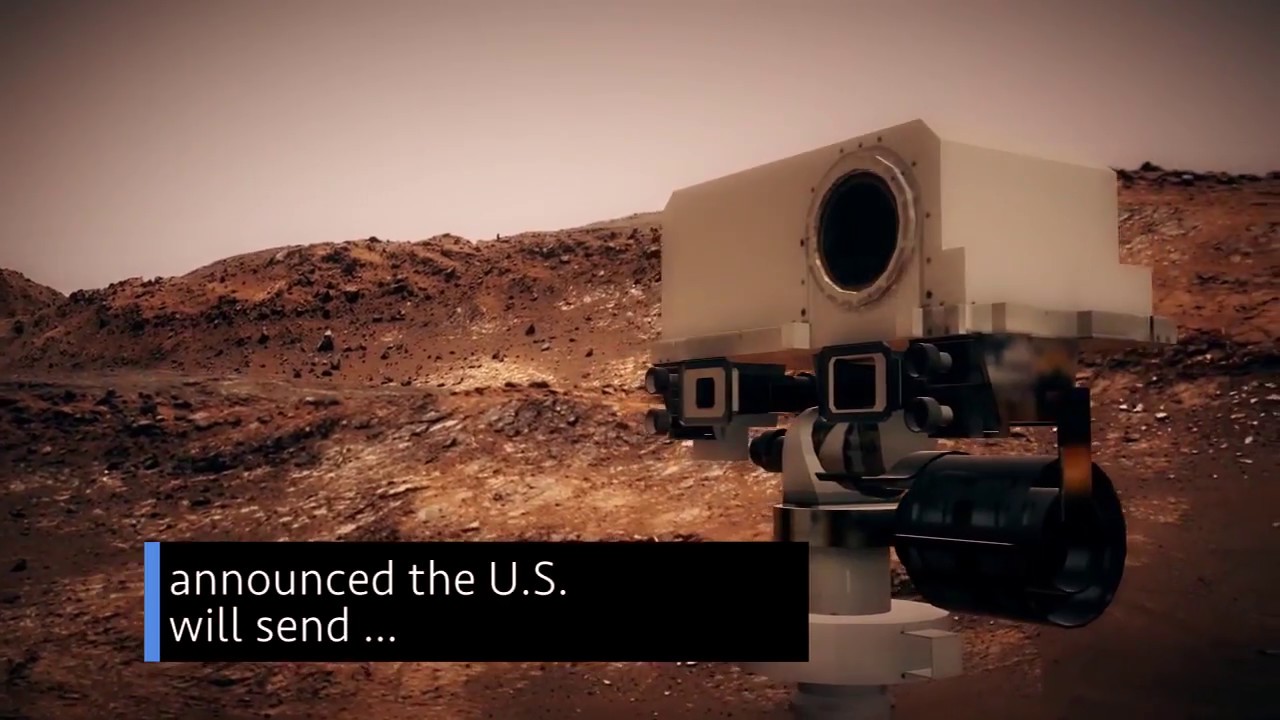
claims huge reserves of liquid water seem to be the best explanation for some seismic quirks of the red planet so all this precious water is out of our reach but we need to find it to solve the puzzle of the Aquatic history of our blushing Dusty neighbor and the first thing we need to do is identify where the water is and how much of it the planet is hiding navigation has confirmed that the parachute has deployed and we are seeing significant deceleration now our rovers are scurrying about on the surface of the red planet Gathering
all the available data on the planet's surface geology and it's getting increasingly obvious that Mars was once covered with water many factors from Martian terrains to ancient dry lake beds and Deltas suggest that there was a time when the planet was quite sppy these days there there's still some water on and right below the surface of Mars but it's in the form of ice and nowhere near what Mars had in the ancient past to understand how much of it could have been on the red planet billions of years ago we must know where all this
water went there are two spots where the water could have gone into space or toward the interior of Mars then it could have been isolated as either liquid reservoirs or ice deposits currently we don't have any way of measuring how much water once leaked away but now we finally can find out more about the gooey center of the red planet all thanks to the Mars inside Lander it isn't operating anymore but from November 2018 to December 2022 it was listening to the hums and rumbles and monitoring the activity below its feet the thing is acoustic
waves generated by mic activity deep inside the planet can change according to the composition and density of the material these waves are moving through and scientists can get a lot of information analyzing the behavior of seismic waves in this case they used a model similar to those used to map underground oil fields and aquafers on our home planet then with the help of this model they analyze the data gathered by Insight on Mars they discovered that the best explanation could be that there was a layer of fractured rocks whose cracks were filled with water deep
under the surface of the red planet that layer could be at a depth of 7 to 12 mil that's why it would be extremely tricky for future missions to get to it and still the new discovery could help us understand the Martian water cycle confirming the existence of a large reservoir of liquid water can help us sneak a peek at what the climate on Mars used to be or what it could be like one day and if once Mars had a lot of water it could have been habitable in the ancient past and might become
habitable in the future water is crucial for Life as we know it so underground waterer reservoirs on the red planet could already be habitable maybe while we're talking tiny microorganisms or even some tentacled creatures are living their lives in the comfort of their underground home on Earth super deep Minds do host life and the bottom of the ocean with its immense unbelievable pressures isn't lifeless either so far we haven't found any evidence of Life on Mars but for now it sounds like this place has the potential to sustain life inside data has shown that there
isn't likely to be a lot of water ice in the upper crust of the planet at least in the region around the Lander but if it turns out that there is a water-rich layer deep below the surface and stretching around the entire globe of the planet then there would be enough water to fill ancient ocean beds and even more now Mars isn't the only place outside Earth where there is water or where we might one day find water take the good old moon for example on Earth's natural satellite water can be found all over the
surface but it's not the water you might be imagining on the moon water remains mostly As Ice and it's distributed unevenly for example the poles of the Moon are the regions that never receive sunlight this is the reason they're extremely cold and it's no wonder there's a lot of ice there the ice in these areas is often mixed with the lunar soil and hiding deep below the surface then there's incus the sixth largest moon of Saturn in reality it's not that large just 314 M across in other words this moon is small enough to fit
inside Arizona o we should try that well interestingly when the Cassini space probe first arrived at Saturn researchers were expecting Inus to be a Frozen ball of ice but what they saw was plumes of icy particles and water vapor erupting from geysers on the moon's surface it was clear that there was a massive Ocean between the Moon's Rocky core and its icy shell then there's Jupiter's moon Europa scientists think that this world is one of the most promising places in the solar system when it comes to searching for new life forms that's because Europa has
a huge saltwater ocean as deep as 40 to 100 Mil and even though it's under a layer of ice that is likely to be 10 to 20 mi thick it's still potentially habitable astronomers believe that plumes of water might erupt from cracks in the ice shell and release the contents of the moon's ocean into space the temperature pressure and chemistry are very different on Europa and astronomers aren't sure yet how the ice behaves there that's the main reason they haven't figured out yet how deep or large the water reservoirs on Europa are and how long
they need to refreeze but out of all the places where we could find water in the universe the most bizarre is probably open space in 2011 two teams of astronomers discovered a cloud of water floating freely among stars it was the largest and farthest Reser of water ever detected so this massive cloud of water vapor surrounds a black hole but not just any black hole this one's a quazar located 12 billion Lighty years from Earth the conditions around this quazar must be really special to create such an enormous amount of water This Cloud contains 140
trillion times the volume of all the water on Earth that's enough to give every person on the planet a whole planet's worth of water 20,000 th times over sounds wild doesn't it but there's something even cooler astronomers think this water Cloud formed just 1.6 billion years after the universe began this discovery is yet another sign that water has been around all over the universe even in its early days but here's the kicker until they found this scientists had never detected water vapor so far back in time sure there's water in our Milky Way galaxy but
most of it's frozen Sun solid and eyes this discovery really pushes the boundaries of what we know about water in the universe that's it for today so hey if you pacified your curiosity then give the video a like and share it with your friends or if you want more just click on these videos and stay on the bright side