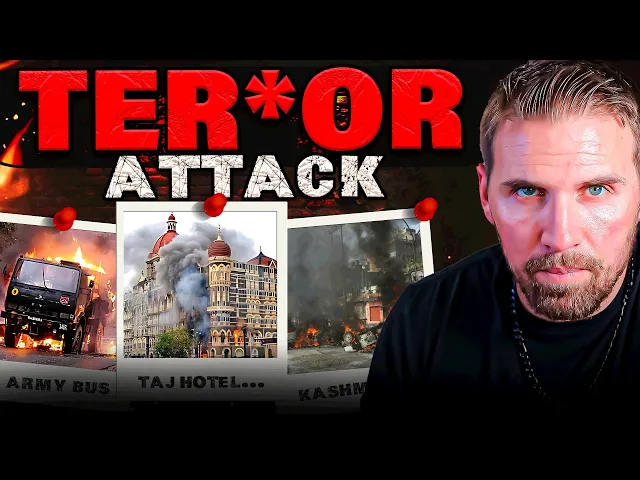
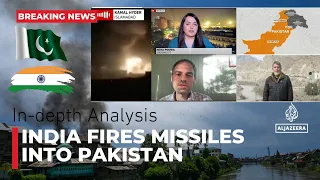
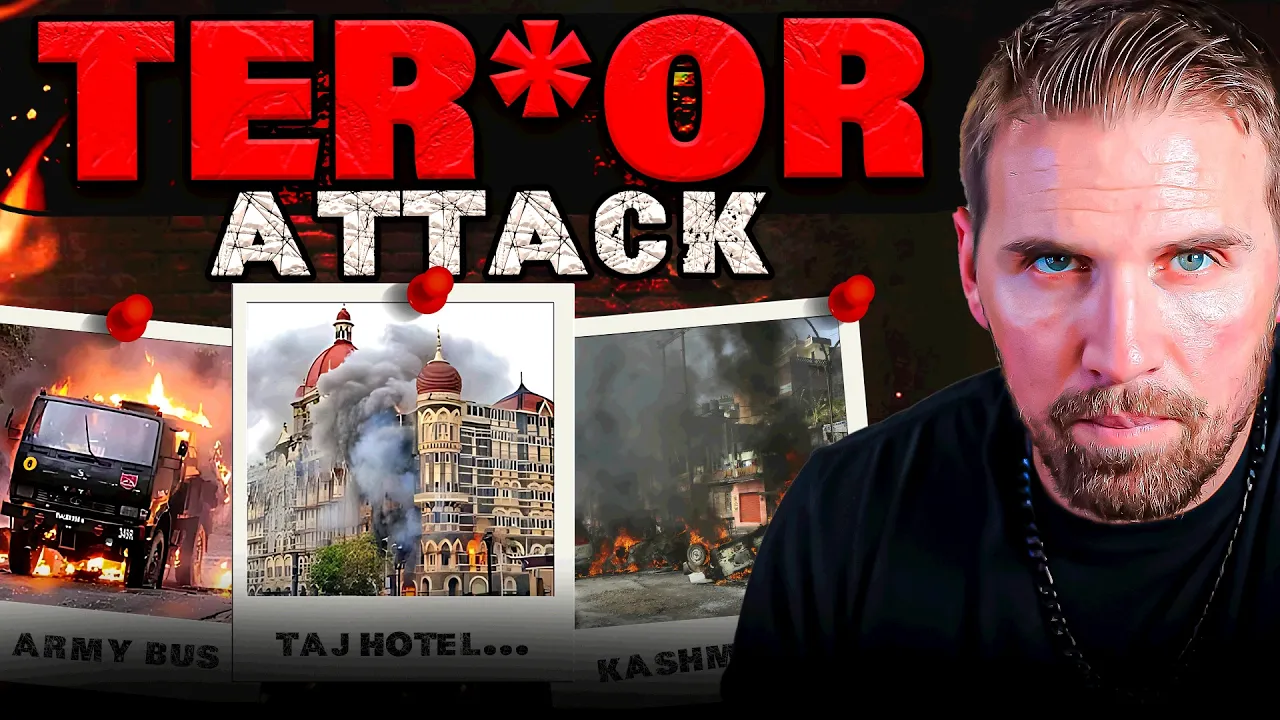
In April 2025, a peaceful tourist town in Kashmir turned into a nightmare. 28 people reported to have been killed after gunmen opened fire on tourists in Indian administered Kashmir. A group of armed terrorists stopped travelers and began asking one terrifying question.
Are you Hindu or Muslim? If the answer didn't match, they opened fire. 26 innocent tourists were killed.
One woman crying over her husband's body begged the attackers to shoot her too. And the terrorists laughed, telling her to go tell India's prime minister. Since that moment, India's people are furious.
The army is on alert. Pakistan is getting nervous. And now the big question is, is the next war loading in 2025?
Let's go back see how it all began. At the time of independence in 1947, British India was divided into two separate nations. India which had a Hindu majority population, Pakistan created as a homeland for Muslims.
But the split wasn't as clean as drawing a line on a map. It was violent, brutal, and deeply personal. Over 15 million people were forced to move.
Muslims from India to Pakistan and Hindus and Sikhs from Pakistan to India. Entire families uprooted. Trains filled with refugees arrived slaughtered.
Neighborhoods that had coexisted for centuries turned on each other overnight. It became one of the biggest and bloodiest migrations in human history with over a million people dead. That trauma didn't just vanish.
It turned into resentment. And the cracks only got deeper. One of the biggest cracks, a paradise called Kashmir.
Kashmir was and still is one of the most breathtaking places in the world. Snowcapped peaks, peaceful lakes, lush green valleys, a literal heaven on earth. But politically, it's been a hell.
When the British left, they gave over 560 princely states like Kashmir a choice. Join India, join Pakistan, or stay independent. The ruler of Kashmir, Maharaja Haris Singh was a Hindu.
But most of the people in Kashmir were Muslim. The Maharaja wanted to stay independent, not join either India or Pakistan. But then in October 1947, tribal militias from Pakistan backed by its army launched an invasion into Kashmir to force it into Pakistan.
In panic, the Maharaja turned to India for help. India agreed. But on one condition, Kashmir must officially become part of India.
The Maharaja signed the instrument of assession legally joining Kashmir to India and Indian troops flew in to push back the attackers. Just like that, the first Indopac war began. That war ended in 1948 with a ceasefire brokered by the United Nations.
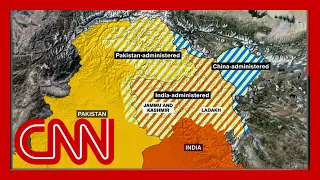
But the damage was done. Kashmir was now divided. India controlled about 2thirds of the region.
Pakistan controlled arrest which it still holds today as PAC or Pakistan occupied Kashmir PK. The UN called for a referendum to let the people of Kashmir decide their future but that vote never happened and since then Kashmir has remained the bone of contention in every major conflict between the two nations. India and Pakistan have fought four wars in total.
1947-48 the first war right after partition over Kashmir. 1965 another fullscale war again over Kashmir. 1971 the most devastating war but this time not about Kashmir.
It was about East Pakistan where India supported the independence movement that eventually created Bangladesh. 1999 cargo war Pakistani soldiers and militants disguised as locals infiltrated Indian territory in the cargo region. India launched a massive counterattack operation and pushed them back.
In each of these wars, India emerged stronger militarily. But the cycle of hatred and mistrust never broke. And when war didn't work, Pakistan tried something else.
By the early 2000s, a new kind of war had begun, a shadow war. Terrorism became the weapon of choice. Instead of soldiers crossing the borders with tanks, militants crossed quietly with backpacks, guns, and suicide vests.
Attacks on civilians became a tool to destabilize India, especially in Kashmir. One of the most horrific examples, Mumbai 2611. On the night of November 26th, 2008, 10 terrorists from Pakistan arrived by boat on the shores of Mumbai.
Armed with AK-47s, grenades and explosives, they split into teams and launched simultaneous attacks across the city. The Taj Mahal Hotel, the Oberoy Trident Hotel, Cafe Leapoid, a Jewish community center, Shivaji train station for nearly 60 hours. Mumbai turned into a war zone.
More than 170 people died, including American, Israeli and British citizens. Over 300 were injured. The only surviving attacker Amal Casab was captured alive.
His interrogation revealed detailed planning and training, all traced back to Pakistan-based terror group Lashkar Ita. Then came Puama in 2019. A suicide bomber rammed a vehicle full of explosives into a convoy of Indian paramilitary forces in Pulwama district, Kashmir.
40 soldiers were killed instantly. It was the deadliest attack on Indian security forces in decades. The terror group Jash E Muhammad based in Pakistan claimed responsibility.
India's response swift and bold. In the early hours of February 26th, 2019, Indian Air Force jets crossed the border and bombed a terror training camp in Palakat, Pakistan. This was unprecedented.
The first air strike on Pakistani soil since 1971. Pakistan responded by sending its own jets leading to a short but intense dog fight. One Indian pilot Inhanandan Varthaman was captured but returned two days later as a peace gesture.
The world watched nervously. Two nuclear armed nations one spark away from disaster. But the situation deescalated for the moment.
Still the attackers never fully stopped. Crossber terrorism continued. Sleeper cells were busted.
Indian security forces worked round the clock to prevent further strikes. But everything changed on April 22nd, 2025 with a horrifying incident in Bahalam, Kashmir. The scenic town of Bahalgam nestled in the Kashmir valley is known for its tranquil beauty, horse rides through pine forest and peaceful rivers.
Every year it's a draw in thousands of tourists from across the country and abroad. But that day became a killing field. Tourists, like always, had arrived to enjoy the mountains.
Vehicles can't go deep into the region, so most visitors hop on horseback and local guides to explore. Among them was a woman from central India accompanied by her husband. Their horse guide chatted with them.
But something about him was off. He wasn't just asking friendly touristy questions. He started probing.
Where are you from? Have you read the Quran? Are you Hindu or Muslim?
The woman tried to brush it off, but then she heard him whisper on a call. Go with plan B. Guns are in place.
Panic surged through her veins. She discreetly messaged India's intelligence tip line, a hotline most tourists wouldn't even know about. But before the agency could act, it was already too late.
Around 6 to seven armed men dressed like locals suddenly appeared out of nowhere. Not military uniforms, civilian clothes, horses, and hidden weapons. But what they carried wasn't small arms.
It was fullblown automatic weapons. They started pulling terrorists off horses, shouting at them, "Are you Hindu or Muslim? " If Muslim, read the Quran.
If not, they opened fire. Bullets flew in all directions. Screams echoed through the valley.
The attackers didn't care if there were women, children, or elderly. Anyone who couldn't answer in the way they wanted was shot. 26 innocent tourists died on the spot.
One woman lost her husband right in front of her eyes. Through tears, she shouted at the attackers, "You killed him. Kill me, too.
" But the response was chilling. One of the terrorists sneered and said, "No, go tell your prime minister what happened today. " And then he laughed.
A laugh that still rings in the ears of many Indian who heard her testimony. The country erupted in grief. And then in fury across social media, protests, news channels, there was only one question.
How long will we tolerate this? This wasn't just a terror attack. This was psychological warfare, a brutal reminder that terrorism in Kashmir isn't gone, it's just evolved.
And once again, all eyes turned toward Pakistan. Because here's the truth. Attacks like these aren't random.
They don't come out of nowhere. These are trained operatives supplied, funded, and sheltered not by rogue street gangs, but by organized networks, many of which have found safe havens across the border. India's intelligence agencies began tracing the attacker's origins.
Early reports suggested ties to a radicalized splinter group operating out of Pakistan administered Kashmir. The government didn't realize all the details, but what came out was enough. And India's response, it wasn't immediate missiles or strikes.
It was something smarter. Enter the water war. Let's rewind to the 1960s for a moment.
India and Pakistan signed the Indis waters treaty brokered by the World Bank under it. Pakistan would get unrestricted access to the Indis, Jalum and Chinab rivers. India would control the Ravi, Vas and Sutledge.
This was meant to prevent disputes over water, a resource both countries rely on heavily. But post pahalum, India began reviewing the treaty and in a bold but silent move, India started diverting excess water that traditionally flowed into Pakistan. Not cutting off water but minimizing the outflow legally within treaty terms.
It was a message. You keep sending terror, we'll stop sending rivers. In agriculture dependent Pakistan, where 70% of the water comes from these rivers, this hit hard.
The government issued press releases, held emergency meetings, and called it a violation. But legally, India hadn't broken anything. It had simply stopped playing nice.
Meanwhile, back at the line of control, things got hotter. Literally, small gunfire exchanges began almost daily. Reports surfaced of drone intrusions, sniper activity, and unmanned surveillance aircrafts being taken down.
But that wasn't all. For the first time in over a year, Indian Air Force fighter jets began routine patrols across northern air zones, especially near the borders. Troop movement increased.
Tanks were spotted near Ford bases. Special forces began training drills close to the border. This wasn't war, but it wasn't peace either.
Pakistan already reeling from an economic crisis, a falling currency and skyrocketing inflation suddenly had to prepare for something it wasn't ready for, escalation. While Indian military analysts discussed precision response and surgical strikes, Pakistani generals were seen holding late night emergency meetings and the civilians, they were lining up for basic groceries. As flower prices doubled and fuel became scarce, public trust in the government hit rock bottom.
But did that stop the military elite? Not really. Pakistan's leadership has often operated with the mindset of strategic depth, keeping the India conflict alive to justify its military control over internal affairs.
But this time with international pressure building and their economy in freef fall, their bluff might just be called. At this moment, India hasn't launched a full-blown military strike, but the chess board is set. Tensions are the highest they've been in years.
Troops are alert. Borders are hot. Diplomats are working overtime.
And across both countries, citizens are wondering, is this the start of something big?