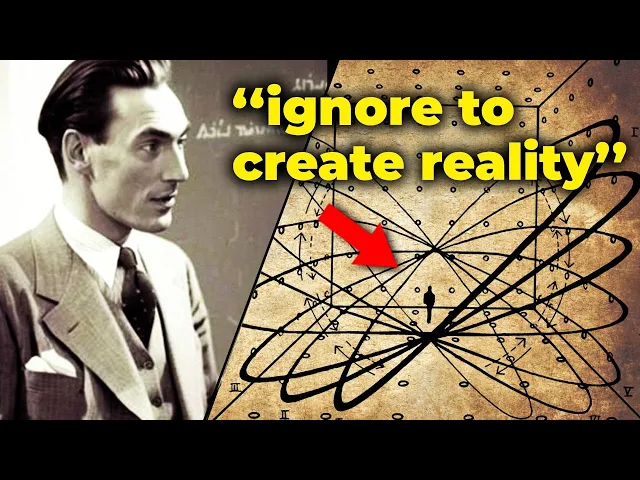
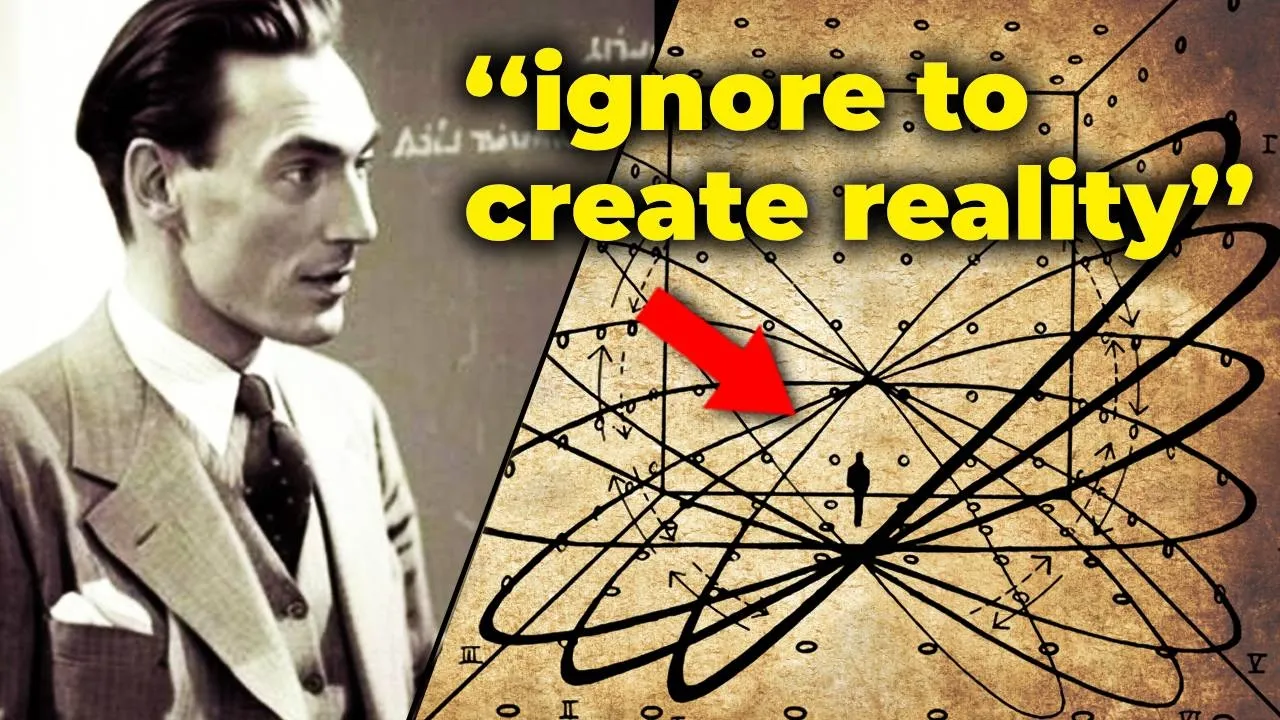
Imagine a world where reality is not what you see, touch, or hear, but something far deeper and more powerful. This is one of Neville Goddard's teachings; he unveils a truth most people can't grasp, revealing that to reach your desires, you don't need to struggle with reality; you need to ignore it. But how do you ignore something that's everywhere?
You see, feel, and hear reality is a reflection of what's inside. This may sound bold or even impossible, but God's philosophy teaches us that our physical reality is nothing more than a reflection of our inner thoughts, beliefs, and emotions. It's as if we're living in a grand illusion, and by shifting what we focus on inside, we can completely reshape what we experience on the outside.
As strange as it may sound, ignoring reality is key to changing it. Instead of fighting what we dislike in our lives, Goddard suggests we direct our energy to what we want, living as though it's already true. To him, the world around us, no matter how real it may seem, is a result of past thoughts and feelings.
So, to cling to what currently exists is to remain stuck in an endless loop, replaying old stories and disappointments. The power lies not in changing reality directly but in moving our attention to a version of life we wish to experience. He explains that when we become so absorbed in our desired reality that it feels real, the outside world has no choice but to mirror that inner shift.
In his teachings, there's a profound sense of faith—the kind of faith that's woven through parables and spiritual beliefs across centuries. In the Bible, God points to the phrase "faith is the substance of things hoped for, or the evidence of things not seen. " This is not merely blind optimism but an active practice, a relentless devotion to seeing the unseen until it becomes visible.
To ignore reality in this sense is to trust so deeply in your vision that the world molds itself around it. This is what Goddard meant by living in the end—feeling the truth of your desires fulfilled as if they are already yours, even when the world tells you otherwise. When you start this practice, the mind rebels; doubts arise, whispering that this is nothing more than wishful thinking.
But remember, every great leap forward, every invention, and every act of courage and love began with a vision that defied reality. Like the alchemists who believed lead could turn to gold, Goddard's philosophy invites us to see the world as malleable, ready to bend to the strength of our focus. He believed that imagination was a creative force—the very essence of divinity within us, capable of transforming the impossible into reality.
Yet, it's not just a matter of imagining something once and hoping for a miracle. Goddard urges us to make this inner vision a constant reality in our minds, to immerse ourselves in the feeling of what we desire until it becomes our natural state. Through stories and parables, he brings this practice to life.
In one story, he shares the tale of a man who desperately wanted a better life but couldn't escape his hardships. Instead of focusing on his desires, he replayed scenes of lack, reinforcing his suffering. But as he learned to close his eyes and see himself as successful, healthy, and fulfilled, his life began to shift.
His outer world, which once seemed to trap him, slowly transformed to match the abundance he held within. For Goddard, ignoring reality doesn't mean escaping it; it means shaping it by turning away from the limiting beliefs that have kept you bound. Learn to ignore reality.
How can you look away from bills, struggles, or heartbreak when they scream for attention? This is where Neville Goddard's approach turns radical. Ignoring reality doesn't mean denying it, but instead, learning to turn down its volume so the voice of your desires can rise to the surface.
It's like tuning into a different station on a radio; you don't erase the static; you simply choose to listen to a new frequency. Goddard believed that our senses are the main obstacles in creating a new life. We're conditioned to think seeing is believing, but in his philosophy, believing is seeing.
Reality is not a prison; it's a reflection that can be shifted with focused intention. So, instead of wrestling with reality, he teaches us to embrace the power of imagination, which he describes as the spiritual center within every person. This part of you holds the power to look past what your senses show and see only what you want to exist.
So how do you do it? One of the keys lies in crafting scenes of fulfillment within your mind and feeling them as deeply as possible. Goddard calls this "the art of mental conversations," where you carry out entire scenes and dialogues in your imagination that affirm your desired reality.
Instead of replaying the usual worries or complaints in your mind, he urges you to mentally rehearse moments that feel aligned with your dreams. If you want abundance, feel yourself immersed in the ease of financial security. If you desire love, imagine the warmth of being cherished and understood.
At first, this may feel unnatural or even forced, like pretending to be someone else. But here lies the beauty of Goddard's philosophy: the more you repeat these scenes, the more natural they feel. He encourages us to let these scenes become second nature, as if they are memories you're calling to mind, not fantasies.
Over time, they will root deeply enough that they begin to color your emotions and actions. Instead of reacting to life from a place of lack or fear, you start responding with the confidence and calm of someone who already lives the life they desire. To help with this process, Goddard uses a simple but powerful approach.
Practice. He calls to assume the feeling of The Wishful filled. This isn't just positive thinking; it's a commitment to live within a world where your desires are already factored.
He asks us to take moments, especially before sleep, to affirm with absolute conviction that what we desire is real and present. This specific time, he explains, is when the mind is most receptive to new beliefs. By imagining your desire fulfilled and living within that feeling as you drift off to sleep, you are planting seeds deep in your subconscious that will blossom into new realities.
You may wonder, "What if nothing changes? " But Godard's teachings remind us that doubt is just another form of reality we are being called to ignore. He challenges us to hold our vision steady, even when outer signs seem contrary.
When doubts come knocking, we turn back to our internal world and reconnect with the vision we're holding. It's like training a muscle: the more you practice, the stronger your ability becomes to ignore reality and focus on what truly matters. Over time, ignoring reality becomes second nature—you no longer respond to the immediate pressures around you with anxiety or fear.
Instead, you carry an inner calm and a quiet confidence, knowing that your vision is powerful enough to reshape even the most stubborn aspects of life. This journey requires patience, but as you master the art of ignoring reality, you begin to witness miracles—those little shifts in life that can't be explained logically but reflect the undeniable power of your inner world. In truth, this practice isn't about manipulating circumstances but about becoming the type of person who naturally attracts and lives in alignment with their desires.
By holding on to this inner vision and refusing to settle for the status quo, you transform yourself from the inside out. Reality, as Neville Godard saw it, is as pliable as clay in the hands of the mind that knows how to mold it. Next, Godard mentions the law of assumption as a key principle in learning to ignore reality.
The law of assumption: when you genuinely expect a good result, your mind becomes more open to seeing the silver linings of opportunities or solutions that you might have missed while in a more doubtful state. This shift in perspective doesn't just influence how you see the world; it reshapes how the world responds to you. The essence of making the law of assumption work is in anchoring your mindset deeply in positivity.
It's about wholeheartedly trusting that what you desire is unfolding here and now. This trust becomes a foundation supporting all the good that flows your way. Without this commitment to belief, you're likely to fall back into familiar patterns of doubt and disbelief, which subtly signal that you're still holding on to the old limiting view of yourself and your world.
To strengthen this mindset, embracing positive affirmations can be incredibly powerful. Small, intentional reminders throughout the day help anchor you in this new state of certainty. A few simple affirmations, like "I am capable," "I'm attracting my desires," or "I am resilient," can gradually shift your self-image until these statements feel like undeniable truths.
Repeating these affirmations regularly can turn them from hopeful phrases into powerful beliefs that shape your reality. Another tool for cultivating the law of assumption is becoming aware of your inner dialogue. Often, we're so accustomed to our own thoughts that we overlook the negative patterns hiding in plain sight.
These patterns might show up as quiet doubts, subtle criticisms, or even deep-seated fears that have accumulated over the years. By paying attention to this internal monologue, you'll start to recognize the moments when old beliefs creep in, giving you the chance to replace them with the assumptions you want to embody. When you tune into these thought patterns, you gain the power to reshape them and align your mind with your deepest desires.
Next is the principle of the inner treasure. It's true that projecting a sense of abundance can attract wealth, yet there's a hidden paradox in the art of manifestation that even experienced manifestors sometimes overlook. If you cling too tightly to a desire for money, that intense longing can actually repel it.
This might seem contradictory, but here's the core of it: when we're overly focused on what we lack, like money that isn't yet ours, we're unwittingly magnifying that state of absence. Imagine holding on to water; grip it too hard, and it slips right through your fingers. This is how the energy of financial desire works: the more we obsess over what we're missing, the more that lack defines our experience.
Consider the emotions that arise when you think, "I need more money. " Often, these feelings are rooted in frustration, anxiety, or even fear. Though these emotions are natural, they are vibrations of scarcity.
Since energy draws in like energy, focusing on lack draws in more lack. It's as if, by fixating on the absence of money, we're sending out a signal that's met with more of the same absence. But there is a way to desire wealth without falling into the scarcity trap.
The real key lies in how you hold that desire. Rather than fixating on what's missing, it's about nurturing an energy of abundance right now. Imagine two people seeking financial freedom.
The first constantly frets over bills, imagining a hefty bank account out of a place of desperation, wondering when relief will come. The second person, though also focused on increasing their wealth, cultivates a sense of gratitude for what they already have, feels a calm certainty, and finds joy in moving toward their goals without obsessing over the how and when. Which one do you think will attract more wealth?
It's the second person, because their energy resonates with abundance, not lack. This is the essence of manifesting—becoming a match for what you desire, not chasing it. A place of worry or fear, the energy of money is more than just numbers on a screen or cash in hand.
It's a force that, when understood, can transform your financial landscape. By shifting how you think and feel about money, you begin to unlock a powerful ability to shape your reality. This transformation doesn't have to be slow; when you fully commit to these practices, your mind's natural capacity to adapt and grow can move you quickly from a scarcity mindset to one of abundance, creating space for financial growth and new possibilities.
So, how do you make this shift? The answer lies in something called detached alignment. Detached alignment is about holding your dreams lightly, experiencing the joy, freedom, and excitement of the wealth you seek but without clinging to a fixed outcome or rigid timeline.
You become aligned with the energy of wealth, but you release the need to force it into your reality. In practice, this could mean focusing on the wealth you already have—whether that's a steady paycheck, an unexpected windfall, or the simple resources you enjoy daily. Gratitude for what you currently possess shifts your energy from lacking to receiving, from scarcity to satisfaction.
When you acknowledge what you already have, you open yourself to receive more because you're showing the universe that you're already living in alignment with abundance. Let's look at a belief that is not often discussed but is deeply powerful—the idea that everything we desire already exists within us. This concept, known in ancient teachings as the inner treasure, suggests that all the joy, abundance, and peace we long for aren't things we need to find or get from the outside world.
Instead, these qualities are like hidden treasures waiting to be uncovered within ourselves. Many mystics have spoken about this inner wealth, but one name stands out: Rumi, a Persian poet and mystic. Rumi lived centuries ago, yet his words carry the same spark of truth that resonates today.
Rumi often described our lives as a kind of dream where we mistakenly search for answers outside ourselves while the real treasures lie hidden within. He once wrote, "You wander from room to room hunting for the diamond necklace that is already around your neck. " Rumi's words encourage us to stop searching outside and instead turn inward, where all that we need—including wealth and peace—can be found.
This brings us to an old parable that illustrates this idea well. It's known as the story of the beggar and the treasure chest. Once upon a time, there was a beggar who sat by the side of a road, holding out his hands and asking for money.
He did this day after day, hoping to gather enough to eat and survive. One day, a wise man walked by and saw him begging. The wise man looked at him and said, “What are you sitting on?
” The beggar looked puzzled and replied, “Just an old box, but it's empty. ” The wise man urged him, “Have you ever looked inside? ” The beggar shook his head; he had never thought to open the box.
But at the wise man's insistence, he lifted the lid, and to his astonishment, the box was filled with gold coins. All along, he had been sitting on a treasure and didn't even know it. This parable teaches a lesson that aligns perfectly with what we're exploring here.
The beggar symbolizes any of us when we feel a lack or when we chase after things we think will fill the emptiness we feel. The box, of course, represents the hidden wealth that we carry within—our own ability to create abundance, joy, and peace. Just like the beggar, we can often overlook our inner resources, thinking that happiness or fulfillment lies somewhere outside us.
When we combine this idea with the concept of detached alignment, the effect can be transformative. Detached alignment, as we discussed, means releasing the tight grip on our desires. If we already feel full and complete, we no longer need to chase after things in a state of desperation.
And when we let go of that desperation, we allow space for what we desire to flow into our lives effortlessly. Imagine if, like the beggar, we stopped and looked inside—not just in a figurative sense but truly explored our potential to create love and manifest. What if we practiced gratitude for that inner wealth every day?
When we wake up in the morning, instead of starting with thoughts of what we lack, we could say, “I am full. I am already enough. I am wealthy beyond measure.
” This shift not only changes how we feel about our desires but also brings us closer to realizing them. It all starts and ends in your mind. The key to this entire journey is one simple yet profound act: being in your head.
Daydream, drift. It's not about what's happening around you in the physical world right now because that's not the reality you're creating. It's simply a phantom, a temporary illusion.
What's real is the world you're shaping inside your mind. You must focus on the reality you desire and imagine it vividly. It's almost as if the external world doesn't exist when you're immersed in your internal world of imagination.
Even if the reality outside doesn't yet mirror the life you envision, keep your attention firmly on what you want. Ignore everything that doesn't align with the reality in your mind. The outside world doesn't have to make sense right now because it's simply catching up to your thoughts.
Your internal world is where everything begins, and from there, it will eventually flow into the external world like a river finding its way through the landscape. This process requires patience. You must be willing to let the external reality run its course, knowing that it will gradually conform to what you've been building internally.
And while it's doing that, your… Your job is to stay firmly planted in your mind. Create, pretend, act as if. Dive deep into your thoughts and emotions, as they are the building blocks of the world you're about to see.
Here's where the magic happens: when the external world finally begins to reflect what you've been imagining. When you begin to see evidence of your inner creations coming to life, that's when you know it's all working. This is the confirmation you've been waiting for; it's the tangible proof that your inner world is shaping your outer world.
That evidence will reinforce your belief and strengthen your trust in the process. But what if you don't see the evidence right away? What if it feels like nothing is shifting, or the reality outside still seems disconnected from what you've been imagining?
This is when your faith becomes the most powerful tool you have. In moments like these, remember that nothing works overnight. Trust that every moment you spend focusing on the reality you want is a step closer to it becoming your true experience.
Stay the course, even when the evidence seems invisible. Keep pretending, keep imagining, keep living as if your desired reality is already here. The external world must catch up with the internal one, and it will.
You will see the shift, and when it happens, you'll look back and realize that all of your persistence, your patience, and your unwavering belief were absolutely worth it. So keep your faith strong, even when you can't see the results right away. Stay in your mind, stay in your imagination, create, and live in the reality you desire.
Soon enough, the world will respond; it always does. You just have to let it. I hope you enjoyed the video.
If you did, feel free to subscribe to the channel. Thanks for watching!