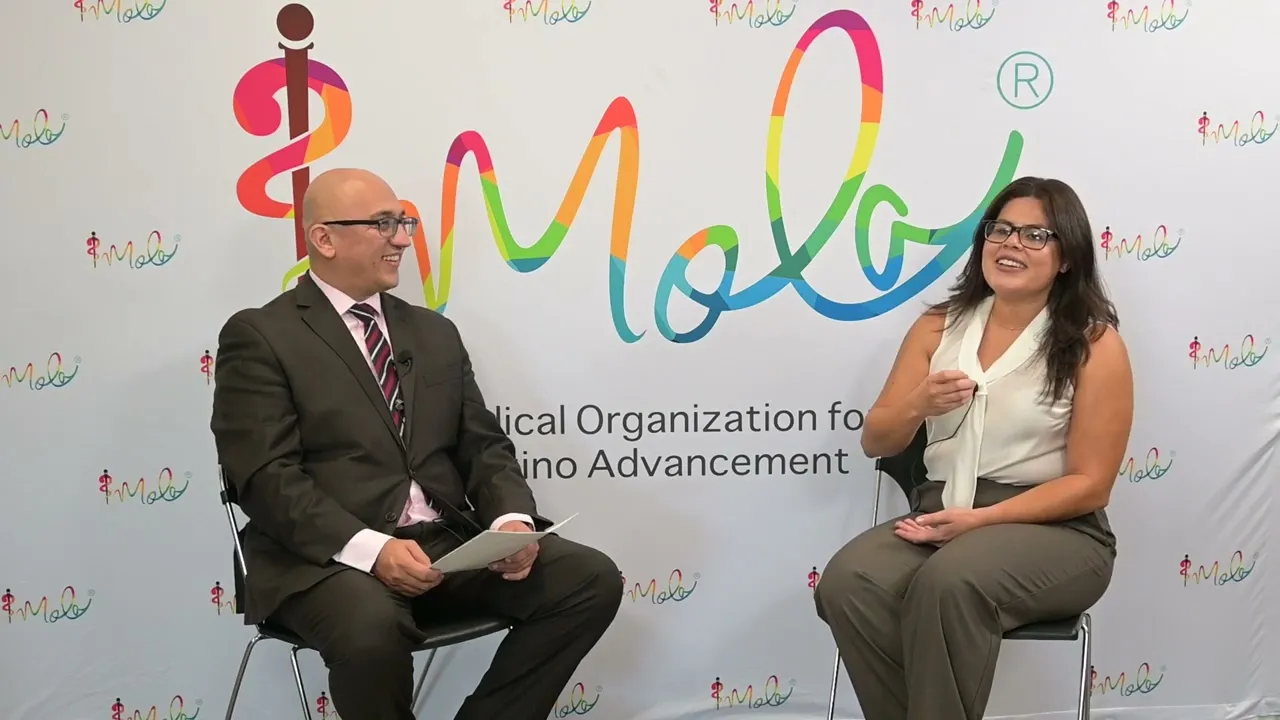
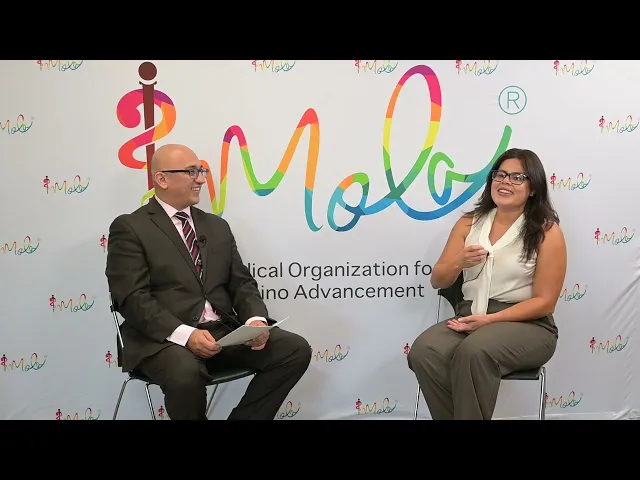
[Music] hello and welcome back to this m and nams Conference series of live streaming uh interviews with me is Dr Arisha martinz are gracias hi you had a very inter interesting conference a few moments ago tell us a little bit about that yeah so I was one of the keynote speakers and the motivation for the talk that I gave was to really think about why is it that we are all in here in this space uh what is the work of diversity Equity inclusion in healthcare spaces but more spaces generally and what are the unique
contributions that Leo Healthcare practitioners and Allied health professionals can bring to the work around Health Equity for latinx communities and Beyond I'm talking about that Health Equity diversity equity and inclusion it's been kind of Under Fire on the last few years why is it important that our medical professionals and students understand the the importance of this yeah definitely it's been a trying time we see the sea change of Dei becomes popular and then it becomes under attack so part of it is thinking about this is a long struggle like we're we're going to have to
sort of persevere um um but also recognizing that the tools and the tactics that we use are going to have to evolve so part of our strategy has to be getting more people in positions of power and at seats at the table across Healthcare and social systems but one of the points that I Tred to emphasize is also thinking about what are the values that we're bringing the strategies that we're using how do we think about Health Equity more broadly and compassing Beyond just Healthcare um so that way we can really be mindful of the
ways in which we're moving through spaces and get more bang for our buck or more bang for our seats um when we're in those spaces because if we're if we're sort of up against these challenges then we have to be very tactical in the ways that we're doing this work and the struggle that that we've seen goes to that because uh sometimes uh organizations uh they may have good intentions of you know doing this diversity equity and inclusion and it ends up uh being tokenism just having someone there for the sake of having them but
how can someone who is at that position of making a change do it yeah definitely you know one of the ways that we think about it is how we as a researcher we call it operationalizing or how do we measure or how do we have targets for what does it mean to execute on these principles and so for example when we hire faculty we think about okay you say you support Dei show us how is it in the pedagogical tools that you use is in it the types of students you're training is it in sort
of the deliverables of the impact of the work and so for those of us working in these spaces it's uh not only bringing those Folks at the table who expose those values but clearly how do you document what you're doing and what the impact of that work both for individuals and organizations but organizations at large who say you know we support these values show us either in the dollars in the initiatives um in the activities that you're engaging in because we can't just again the performance of these values is one thing but the uh the
actualization of the work is so the impact has to be meure we have to measure the impact just like we measure impact of everything else we got to measure the impact of this work that we're doing um and be strategic about it and you've done a lot of research on this uh on your research what is the the trending disparity that you have found in lck health yeah so I focus on a lot of different Health outcomes uh partly because I'm interested in what we call things on the right side of the equation so health
is on the left side but we're interested in things like immigration policy poverty policy uh workpl exposures how do all those social factors matter for People's Health um and a lot of the work that I use focuses on women's health and birth outcomes uh because it tells us a lot about the health of a population when we focus on the health of children and women and babies um and so what's troubling for me is we find a lot of evidence that the health of latinx women and their infants declines the more time they spend in
the US and across generations and for us this is sort of what we call a paradox because while Latinos might be advancing in education or socioeconomic status Healthcare access sometimes in some of these data we find that their health is eroding so a lot of the work that I do tries to think about systems of race and racism in the US that impact Latinos and so we look at those pieces on the right side of the equation to think about why is Health eroding and how do we think and place that in a larger system
of social inequality that impacts in the US perfect and if someone who's watching this interview right now says okay I really want to learn more about that I I I want to talk to uh Dr Martinez how can they reach out to you yeah you can look up my website it's called embodying racism lab and there you'll find a lot of more information about the work that we're doing my background and there's a link to contact us and happy to chat with anybody about the work that you're doing and how we can be helpful and
in community amazing is there anything else you would like to add no but go vote I guess yeah right well we'll be right back thank you thank you [Music]














![Nat King Cole, Bing Crosby, Frank Sinatra, D.Martin🌟Classic Christmas Music [12 Hour Fireplace Loop]](https://img.youtube.com/vi/Mc_KC93VfXQ/maxresdefault.jpg)