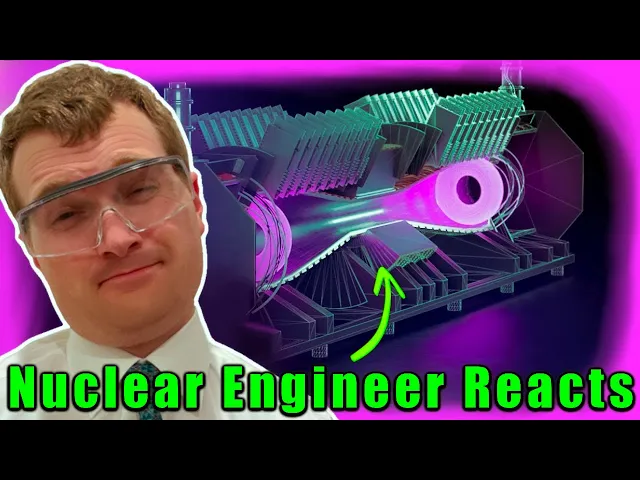
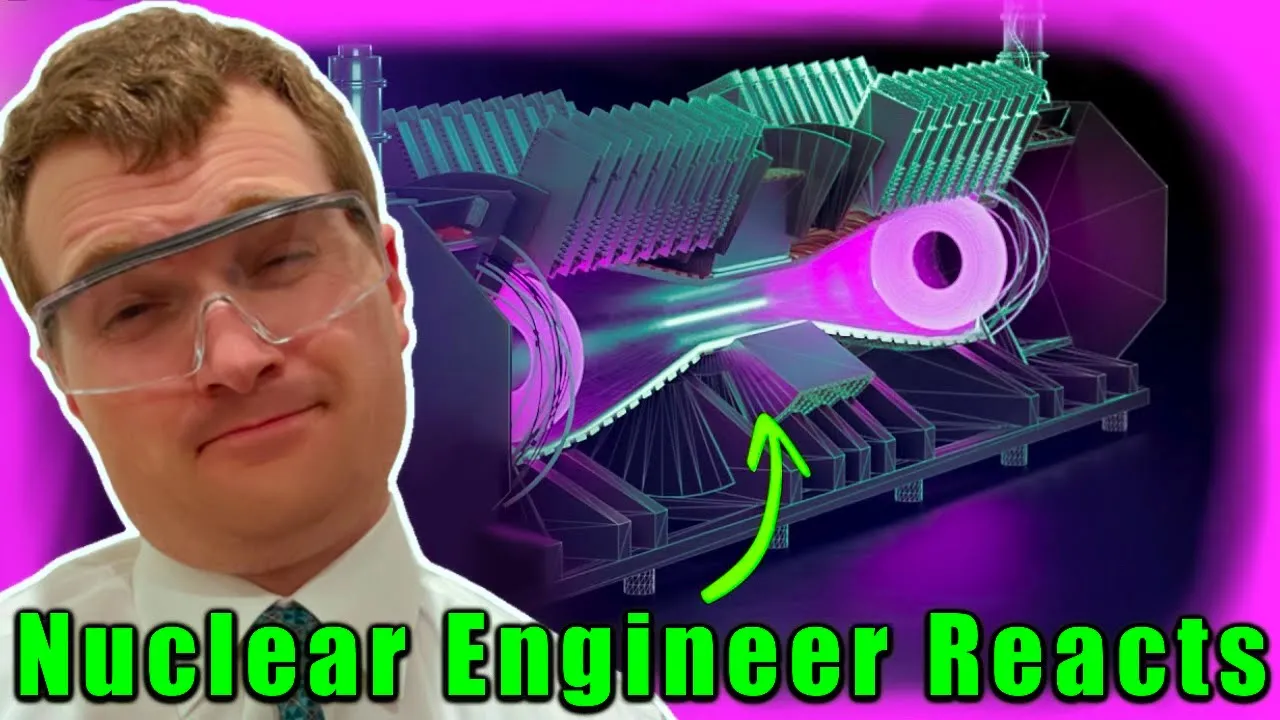
generating electricity directly from the magnetic field cradling the fusion reaction at the center of the machine really I have all kinds of questions about that like today we are looking at a very heavily requested real engineering video this one is called nuclear fusion is changing or a better way or a new way to achieve nuclear fusion for those of you who don't know me I'm Tyler folse I'm a nuclear engineer it's a little over 10 years of experience in the commercial nuclear power industry from engineering to operations to emergency response I don't claim to know everything there is nuclear but I can certainly share some knowledge check this out the images you are seeing right now have been a closely guarded secret for years this is the first time footage of this technology has been shared publicly really a closely guarded secret helan is that much of a secret why do they have their own YouTube channel and why are they publishing their 2020 results I think real engineering is just being a little bit more dramatic a technology that has the potential to change the course of human history a privilege helon energy granted us when we visited their facility what I am sharing right now is going to be studied by nuclear physicists around the world trying to reverse engineer the world changing machine why are they letting you upload iton sixth generation nuclear fusion generator this fusion generator is unlike any other using a completely novel approach to to achieve nuclear fusion adapting knowledge developed for ION propulsion in Space the generator forms two mirrored rings of Plasma on either end of a reactor and in a tenth of a thousandth of a second they fire them at each other sequentially activating powerful magnets to squeeze and compress the Rings towards the center where they Collide converting the astonishing kinetic energy of the ions traveling at 300 km/ second into thermal energy raising the plasma temperature to tens of millions of degrees hot enough to overcome the electromagnetic repulsion keeping the ions apart and allowing them to fuse now tens of millions of degrees that sounds low to me I mean that's comparable to that of the Sun the sun's 15 million de C when I think of magnetic confinement the numbers I'm thinking of are in the hundreds of millions of degrees now it's not impossible to induce Fusion at temperatures low it kind of depends what they're fusing but it's going to be a much less efficient process you're going to you're not going to produce nearly as much energy at a relatively lower temperature than you would as temperature goes up so makes me wonder if this is going to work on a so let's see how they're going to get around that forming new atoms and releasing a tremendous amount of energy in the process this isn't the world of fairy tale this is already happening I watched the Bri pink flash of fusion multiple times inside the control room of Trenta safe away from the gigawatts of power surging through the capacitor banks of the reactor it became mundane pretty quickly did he say multiple gwatt I mean if it's a pulse you can get into the gigawatt range because you're dividing by a really small number kind of like how pulse lasers work how you can have megawatt as a laser tattoo remover that's a lot different than generating gwatt plus levels of power over the course of 18 to 24 months like a commercial nuclear fion plant fundamental concept of how these systems work is unlike most fusion and here we inject a fusion Target we call this one a field reverse configuration then using pulsed magnetic fields to very high pressures we compress that fusion plasma up to Fusion conditions one of the challenging Parts is how do you get that Target that initial Fusion fuel into the compression chamber and do it in a repeatable symmetric um uh high energy way and so one of the things that we pioneered was a concept of merging field reverse configurations merging these plasmas where on we actually have a symmetry on either side of the machine we have these injectors we call them the formation section interesting he said how new it was I mean he mentioned so field reverse confinement Fusion that this isn't the first one now it'll be interesting to see what he has that's different but it's been in development since the 1950s just like a lot of other Fusion projects have been in this uh experimental stage for quite some time I mean the main advantage of this sort of thing compared to say a tokc design is the geometry is easier to work with with more compact magnetic geometry so it's a lot more stable presumably easier for the reactor operator to to manage and this is based on the concept of magnetic reconnection where basically the magnetic fields break and then reconnect so it creates a an energy balance allowing them to achieve that level of stability that's one of the key things involving nuclear fusion is you have to maintain confinement for a long enough time in order to achieve ignition but they still have a lot of the disadvantages that all Fusion reactors have like expensive materials challenges achieving the net positive energy output and this particular one it looks tiny compared to say a tox so it'd be interesting to see what they run into as they scale this thing up they take all that kinetic energy that we put into them when we accelerated them and they stop they stagnate converting that kinetic energy into temperature into thermal energy and that starts the fusion reaction we then can compress it all the way up to the full Fusion conditions okay yeah that's basically how Fusion Works high temperature high pressure and confinement time the actual plasma generation happens on this end right the plasma generation happens right here interestingly enough so over here we're standing in front of what is called the diverter this is what happens after the reaction interes um here is our formation section here is where we initially inject our neutral gas so the gas is ejected from a flow manifold a fuel manifold here where we puff in gas in a neutral gas um that's just at room temperature this gas fills this chamber over the course of several thousandths of a second at this point room temperature it's very low pressure um a Fusion fuel mix of dyum and helium 3 so dyum and helium 3 that is less reactive than dyum tridium which happens naturally in the Sun and is more commonly used so lower temperature and lower reactivity how much power is this thing supposed to produce how are they getting away with such low numbers cuz this I can see how you get gwatt pulses but where's my uh hundreds or thousand thousands of sustained megawatts a version of of Fusion fuel that that that helon and very few others do but what that enables us to do is form a closed magnetic topology a closed plasma object that we can do things to we can actually do work on um and so uh at that point we now have a closed field reverse configuration in this formation section we then start to pulse these magnetic field coils at high at high pressure you notice here the bolts the pressure everything goes up because here's where we really do the fusion yeah you're going to need a big pressure vessel for something like that or a vessel capable of withstanding a lot of pressure not saying how much pressure it is interestingly enough if we've done everything right this FRC this that we've injected into the main compression section has met its mate that we made symmetrically on the other side and what they do is those two Collide those two plasmas Collide and here's really important part they stop they stagnate they take all that kinetic energy we added all that velocity and we turn that into thermal energy it super heats up and if you've done everything right in the middle of this you have a system that's on the order of 10 to 20 million degrees sitting in this main compression section ready to do Fusion so now you rapidly as fast as modern technology will allow we increase the magnetic field to high pressure compressing that fusion plasma all the way up to Fusion conditions over 100 Milli degre there's 100 Fusion starts Fusion begins large amount of fusion is happening 100 million still sounds a little low not as low as 10 million but usually 150 million 200 million there is some that are experiments that are even into the single digit of billions um dyum fusing together with helium 3 to form helium 4 and an extra hydrogen and both of those two particles are very high temperature now they're born inside the fusion PL yeah the electrons aren't going to be doing that you're you're heated up to plasma State you're going to have electron soup and nucleus so basically positive and negative charges applying pressure back on these magnetic fields that works just like in a piston where in a piston you compress the fusion the you compress the fuel it begins to burn it then gets hotter it pushes back on that piston it's good analogy all electromagnetically this is a truly Innovative concept with tokmak reactors like the massive eer reactor being built in France right now electricity is created by converting the kinetic energy of neutrons expelled during Fusion to heat by slowing them down in the blanket walls this heat is then transferred to highpressure water to create High Press steam which turns a turbine attached to an electric generator that rapidly rotates a magnetic field around copper wires the same way that fision plants produce energy the same way that coal and natural gas plants produce energy this this sort of concept has been around for centuries taking electricity from Steam generates an electric current helon is skipping steps one through four and going straight to moving a magnetic field around copper wires generating electricity directly from the magnetic field cradling the fusion reaction at the center of the machine really I have all kinds of questions about that like plasma is hot how do you not melt the conductors also it isn't known for its stability relative to creating nice clean alternating current in a sinusoidal and predictable manner so what kind of electricity is this going to be and is this even going to be usable by the grid operator and safety concerns ultra high energy ionizations crazy temperatures and those are just kind of the basic ones I'm I wonder how efficient this process would be when you got something at millions of degrees going on the order of ambient wire temperatures huh the fusion reaction occurs the energy it generates begins to push back on the magnetic field confining it moving it as David said like a piston it's this changing magnetic field that will generate helion's electricity skipping all the initial steps needed to boil water and turn it I mean I appreciate the Innovation behind using centuries old steam turbine technology but I'd really like to have those questions answered should in theory make it vastly more efficient while also unlocking the major benefits of a superior nuclear fusion fuel mixture one of the problems with tokmak reactors is their choice of fuels the fuel mixture of choice for tokumx is dyum and tritium the availability of dyum is not a problem it's everywhere this is a bottle of heavy water water with two dyum atoms instead of two regular hydrogen atoms cheap and safe I can even drink it however tritium as we spoke about relatively cheap not as cheap as a bottle of water I want to say I'm not up to date on current commodities pricing but I think a bottle of water is going to be on the order of of a few hundred bucks of of heavy water so relatively cheap but I wouldn't drink too much of the stuff because of its higher density and it may adversely affect uh some of your internal systems just dealing with that extra water load but you can drink a little bit of it and be fine just don't drink gallons of the stuff detail in our last video is extremely rare we only have about 20 kg of it in global reserves and a single commercial scale toac is expected to burn through 300 G of it a day if you want to see my reaction to uh real engineering's video on tokka Max I think he titled it the problem with nuclear fusion I'll pin it down below and I go into more detail about some of those challenges but the short version on that is we haven't needed that much of it so we haven't had the need to produce it it's kind of like in 1945 almost the entire world supply of uranium 235 was used for the little boy weapon note that the fat man used plutonium as its main active ingredient but now we got whole bunch of uranium 235 that we use for nuclear power plant bit of a chicken and egg sort of thing but I get what he means about not using tridium however these dyum helium reactions and maybe that's actually why they called this company helon is because they're using helium 3 instead of tritium the big problem though is the dyum trium reaction releases so much more energy so with Helen we're talking about 100 million de so that's 10us 1 billion Kelvin on this graph we're talking almost two orders of magnitude difference so 100ish times less power you'll also see on this graph that the dyum helium 3 reaction gets a lot more you just need to make the thing more hotter more hotter technical term maybe in order for the derium helium 3 reaction to just give you that much more energy us about 2 months of operation with the world's entire current Supply tokomak generators will manufacture tritium on site using a lithium breeding layer when the high energy neutrons from our nuclear fusion reaction collide with the lithium in the reactor wall the lithium splits into tritium and helium this is a reasonable solution but 80% of the energy of the trium fusion reaction is carried by those high energy neutrons so those electrons still crack me up effectively wasted all of our energy to get back to square one to combat this the first layer of tokomak walls will be made of burum a neutron multiplier which creates two neutrons when struck by one Neutron giving us one Neutron to create ium and one Neutron to generate heat however brillium is extremely expensive the entire annual Global Supply is just enough to build a single tokomak generator brillium also contains uranium impurities which will be encountering the high energy neutrons too making the buril blanket dangerously radioactive over time I could just make a little Fusion fishion Hybrid no just purify the burum that's how you get around that I mean that's not insurmountable compared to the other challenges of fusion like again producing more energy than than it costs which will make disposing of it expensive this all points to one massive problem tokomak reactors are going to face the exact same issues as nuclear fion energy they will be too expensive and won't be able to compete with cheaper forms of electricity yeah I talked about that a lot more in a different video I'm just going to add it to the pin comment down down below and say that statement is wrong for a whole mess of reasons the first the first one being the cost difference between technology that we know works and we know works very well versus something that doesn't exist yet of comparing fision to fusion and Renewables being a quick short-term solution But ultimately have a lot of disadvantages compared to nuclear in terms of reliability this is why helon is using using a completely different fuel mixture so helon approach diffusion use a dyum and a helium 3 fuel dyum is really common it's part one part in 500 I don't get what's so novel about a lot of this design I haven't the only thing I heard that was weird and new was the direct conversion of the plasma to electricity which I wonder if they've tried that aspect have they tried to just even turn on a few light bulbs with it but everything else like using duum and heal it's not it's not unique all water it's in the coffee you drink um and safe and and and and readily abundant and low cost as well we buy it in uh Compressed Gas cylinders it's already purified but you could imagine doing the purification yourself it's pretty straightforward the helium 3 however is ultra rare um and in fact while helium 3 was theorized in the early days of fusion as being the best Fusion fuel because of its Rarity there haven't been a lot of approaches that have used F helium 3 or demonstrated helium 3 to our knowledge trento was the first system interesting him talking about Rarity so similar problems with the hole with tridium I actually don't know off the top of my head which is more rare but it's kind of the big thing is just the energy difference that seems like the bigger issue to me about that did bulk helium dyum helium 3 Fusion for a power generation application one thing helon has done is we patented a helium 3 process of creating helium 3 of taking two Dums found commonly in nature and it high pressure in a fusion system ironically fusing them together to form helium 3 taking one more dyum fusing that with the helium 3 to make helium 4 and that make that's what makes electricity I mean that's that's a good idea to have basically you know making your own stuff on site I know so much simpler example a lot of the reactor grade water at the nuclear plant that I worked at they has to have an exceptional amount of Purity using being heavily demineralized so the whole mineralization system that comes just from wellwater basically have that water purification plant on site that supplies the uh reactor as well as all of its support systems with the high Purity water that it needs so this aspect makes sense if you're going to use something that is typically hard to come by making it on site does does make sense in certain situations now not every commercial nuclear power plant has that a lot of that just kind of depends on where it's located so it's only the reaction of dyum with helium 3 that generates the the dyum with the duum generates some amount of electricity a small amount it generates about um 1/8 of the of the dyum helium 3 reaction and uterum helium 3 generates on the order of 100th interesting though if we go back to this graph detarium tarium actually produces a bit more at your low 100 million Dee temperature now you bring it you bring it up more into what is that intersection point 300400 million something like that at that point is when detarium helium 3 actually scales more but no if you're using duum duum at at a at a low temperature you're actually making more energy what influences that so it influences the amount of power output per reaction is is the actual Atomic physics that's happening where when two deuteriums combine um they they have a few reactions but the one we care about most will create a a helium 3 and that that helium 3 will have a lower Mass deficit so the amount of of missing Mass um of that that final product so E equals MC SED and that mass deficit is the amount of energy that's released in terms of the particles are created and their temperatures and so dyum helium 3 has a larger Mass deficit when it forms helium 4 and so you end up with more um energy trapped in that that that helium for as well as in the other proton that is made again temperature matters a lot in Fusion he kind of he kind of glossed over that a bit one interesting thing so he mentions of the E equals mc^ S I mean that that is one similarity that a fusion has to fision is it's really really the Delta mc² the change in mass energy is what the energy the heat that actually comes from these nuclear reactions that we are using to generate electricity whether you do it with fision or Fusion it's pretty cool pure MC squ would involve completely annihilating the reactants in the case of a matter antimatter reaction now if you thought Fusion was expensive it still is but antimatter is even more there's quite a lot to break down there as David said the energy released depends on the mass difference in the final reaction but how we can capture that energy changes with the products that are created too two types of fusion can occur when fusing two duum atoms at one creates a helium 3 atom and a neutron most of the energy of that Fusion event is carried away by that Neutron tokomak reactors generate electricity by converting the kinetic energy of neutrons to heat in their walls but helion's energy capture system can't generate electricity with neutrons because they have no charge helon needs charged particles to push back against the magnetic confinement to generate electricity that Neutron just flies right through the magnetic jail the helium 3 however carries about 0. 82 Mega electron volts of useful energy that the generator can capture in a second possible reaction Dums can create a proton and a tritium with the proton carrying 3. 2 Mega electron volts of energy and the tritium isotope carrying 1.
01 so here's the challenge I'm not sure again what this plasma generator efficiency is of converting that to electricity I do know that it is not 100% but here we're talking each individual reaction okay less than a mega electron volt a bit more each uranium 235 fion generates 200 Mega electron volts and the efficiency for a steam turbine is about 33% it can vary a bit most steam Cycles use uh moisture separator reheaters in in order to split the steam out to optimize the thermal efficiency of the steam cycle you'll never see a plant at scale that does not have something like that because each individual percentage point is worth many millions of dollars over time that it's well worth the uh increased Capital cost of buying feed water heaters and moisture separator reheaters I don't know this this whole process doesn't seem very efficient because you're getting less per reaction and they haven't said what their efficiency of this uh plasma electricity extraction is yet but even if it was 100 you're still dealing with energies on the order of 200 times less per reaction or or it'd be 200 times less per reaction so divided by three that would be um 60 something times less not looking very good this generator will capture as much energy as possible from these particles before exhausting them through the turbo molecular pump in the diverter section tur regaining an electron and becoming hydrogen and the radioactive tritium being transferred to remote storage proteum technically right but never heard anyone call hydrogen 1 proteum here it will beta Decay into helium 3 but this process takes 12. 3 years to occur when it finally does Decay that helium 3 can be fed back into our generator so helon has two Pathways to create helium 3 for their primary Fusion energy reaction when dyum and helium 3 combine they create a helium 4 atom and a proton releasing 18. 3 Mega electron volts more than the 17.
6 Mega electron volts released from duum and tritium reactions and on a mass basis four times more than a uranium fision reaction so they're multiplying it through take into account how much more massive the uranium is that's true a a different way of looking at things but true now does it make more well you're going to have to increase your temperature generate your fuel right where you need it is a huge Advantage but David ctle had an interesting alternative um it's a very good business case of you could do it that way or you could do it where you have one dedicated facility and all it does is fuse dyum and make Fuel and then put it in a bottle separate it from all gases and then sh to your generators and have the generators just make electricity and not deal with the fuel processing I think that's a good outstanding business decision that we we don't know um one of the things that you have to keep in mind is when you do the dyum fusion that's when you make the neutrons so the neutrons come from the duum dyum fusing together um and so there's some really maybe advantageous things of separating those two machines one thing they have not talked about yet was the neut was Neutron shielding cuz neutrons are still being produced in these reactors and neutron is very high dose for a given amount of energy it's about 5 to 20 times worse as what it would do to the human body depending on the energy level of the neutrons and in this case they would be pretty high so probably towards the upper end of that considering the temperatures are so much higher than anything you would see in a in a fision reactor now I can understand for this little small experiment of unspecified power output but if this thing's going to get Scaled up multi hundred megawatts or thousands of megawatt of reactor you're going to need some shielding because it's going to be producing that many neutrons you can't have plant operators walk right next to this thing now this isn't a waste concern these neutrons are going to be when the reactor is operating and the neutrons will just slow down or get absorbed by something usually in concrete hydrogenous uh densely pecked material such as concrete is what's used for protection against neutrons that's where the shield walls and keep in mind in a commercial fion nuclear power plant there are three walls one being around the actual reactor vessel two being around the reactor coolant system that's also known as the biowall where you're not going to send any people in while the reactor is operating because the dose rates are too high and the third being the reactor containment building I think these guys are pretty early and they haven't built anything at scale yet but those are some challenges they're going to need to consider one of those advantages is prolonging the life of our generator the high energy neutrons from the duum dyum reaction can damage our generator this is a huge problem for tokomak generators because 80% of the energy in the duum tritium reaction is carried by the neutron but the neutron generated when two duum atoms fuse has five times less energy reducing the damage it can do however they are thermal neutrons can still cause embrittlement or activation of things in the field and thermal neutrons we're talking well below a well below a kilo electron Vault let alone Mega electron volt so still that's it's still going to be a concern damaging if we could design a cheaper more robust reactor purely to create our fuel products that could be economically beneficial especially if there are multiple generators that all need fuel supplies replacing one fuel generator that can feed 10 energy generators is a lot cheaper than replacing 10 Hybrid fuel and energy generators so there are many benefits from moving away from dyum and titium but the dyum and helium 3 reaction does require higher temperatures yes and this does pose an engineering challenge especially as helium progresses to their commercial scale reactor so right now we're building Polaris their seventh generation system uh the goal is that it will demonstrate electricity production for the first time um come online in 2024 the the stepping stone between our seventh generation system we're building Polaris and the eighth generation system is a lot of the no way I mean I know it's 2024 now but no way those neutrons you're going to have to C to clear just the regulatory hurdles alone for building something at scale is going to take a few years I know it sounds like I'm poo pooing this idea I'm really not I I want it to succeed I want to see nuclear fusion but that that goal just is not realistic I'm sorry it's just not I wish it was but it's not around the system that we want to turn up the power output the yield even further we want to make sure we're taking that the electricity that we're recharging capacitors with turning that into 60 htz AC and putting that on on the grid and then also repetition rate that's a big one that's a big if that's the electrical equivalent of your crazy plasma thing that's going at um of having your race car going 250 mes hour and then having it immediately turn into your driveway and stop it's actually harder than that but that's that's kind of what I thought of my initial thought going from operating a very few seconds to now operating multiple times of seconds is another engineering jump leap we have to make in some of the the thermal engineering structural engineering and gas Handling Systems what do you think is going to be the the biggest challenge in making that jump I think any if you ask any engineer or scientists on my team you're actually going to hear a different answer for what is the hardest thing that we're trying to solve um yeah that sounds it that just means there's a lot of challenges that is exactly what that means and I I totally understand that that mentality my personal belief in in building the steady operating systems that we built in the past is it comes into the thermal operation of these systems where as things start to heat up they change the structural mechanics change magnets the way the the fusion plasma actually actually the wall temperature changes as it changes in temperature we saw that on our earlier subscale systems and so we expect to see that on the big scale systems too and so understanding that predicting that and then engineering all the mechanisms in place for that I think are going to be some of the most exciting engineering challenges that we're solving right now um and so we're hiring those teams to to do to to solve those problems right now were there any surprising learning moments recently that you've discovered with Trenta there are some exciting things that we learned on Trenta that were unexpected we were really worried early that the timing accuracies of merging these two high-speed plas over a million miles and compressing them working on getting their alignment um that that would be really a tough Challenge and what we found that is in practice is actually quite a bit easier than the theory or the basic computation simulations would actually show that we can with a lot of essentially um Freedom merge these and get really good results that are really repeatable some of the things we did find however that are a little bit more challenging is as these plasmas got hotter and we got above 10 million degrees and got to the 100 million degrees um what we found is that there's probably some other effects good effects where we're producing more Fusion than we may be predicted but the fusion plasma um interacts with that might be why they're working with such low temperatures they're a bit hesitant to turn that up the vacuum chamber a little bit more than what we thought as well and so what we're having to do for future systems is build them just a little bit bigger about 25% bigger than what we' originally planned 25% a lot and so there's some engineering iteration that has to happen as we discover the the advanced physics and and the engineering of implementing these systems in practice this is another one of the benefits of helon system it's a much smaller generator than other generators like eer tokomak which makes it they just said they had to build it bigger it's an advantage but it doesn't work unless you build it well that's funny far easier as larger machines will be more expensive to build making the capital cost of learning a much larger barrier Polaris is their seventh generation system and it's 25% bigger precisely because of the lessons learned from Trenta the physics of fusion is a new frontier there are few textbooks to learn from helon is helping write the first textbooks I know what he means but as far as the technology and the theory it's none of it's even remotely knew but the weird thing to me is is about the generator more so than the actual fusion part he's just using a less common fuel because it's CU it's just not as energy dense I mean try putting regular unlet it in a fighter jet and see how it works and one of the things they discovered is that gyro orbits are larger than they expected a gyro orbit is essentially the radius at which those fuel ions orbit around magnetic field lines it's affected by the temperature and thus the speed of the ion ions and the magnetic field strength helon discovered with Trenta that these orbits are larger than simulations calculated which meant the ions could impact the generator walls and given their temperatures this was a nogo so Polaris is yeah yeah remember when I said that about nice stable clean AC power yeah 5% larger to account for this discovery Polaris will also be the first generation to begin capturing electricity but that's a lot easier said than done and will'll need the very latest Electronics to work quickly enough under Trent Stacks upon stacks of capacitor Banks 90% of Trent's power goes towards generating the huge currents needed to generate its magnetic fields wow the magnets that form and push the plasma forward run at 100,000 amps while the main compression coils at the center of the machine run at 1 million amps that's a lot main generator at a nuclear power plant we're talking on the order of single digit thousand knowing that kind of current from the grid is impossible so Trenta needs a way to store power locally and discharge it quickly to achieve the necessary current batteries can't discharge that quickly so helon is relying on capacitor Banks yeah we took a look beneath Trenta to learn more about them so what you're seeing here this is actually one capacitor unit um and so if you're used to other electronics a Capac each of these boxes is one unit each of those boxes is is one capacitor that has several kles worth of energy storage in it that's big most capacitors can fit in your hand and capacitors yeah he's right capacitors do discharge a lot faster than than batteries do we have hundreds of those capacitors that all in parallel in a modular way make the main bank with the size of this capacitor Bank you would think it holds an astounding amount of energy but the total capacity of the bank is just 10 10 million Jew the equivalent energy of about 22 bananas or in terms of a typical Tesla battery pack that's 2.