[Music] hey guys and welcome back this is mike and his whiteboard and this is a brand new segment where we take concepts and we construct them visually so if you've missed previous segments we've got a lot of great content you can check out nine shows at the top of the page scroll down to mike and his whiteboard and we've got all of them there great stuff for beginners and advanced people as well so today we're also going to get into bulls and bears and we're going to talk about the difference between being long short and
bullish and bearish so we talked yesterday about in the money and out of the money and how when i was starting trading i thought that in the money when i was selling options would be a good thing because i thought in the money would mean i would be in the profit which is not the case when we're selling so today we're actually going to break down being a bull being a bear and also being long and short in different scenarios where being short something doesn't necessarily mean you're a bear and being long something doesn't necessarily
mean you're bull so let's get right into it so when we're talking about being long or short and especially on the taste trade network you might hear tom or tony say i'm long this underlying or i'm short this underlying so in that sense what they're talking about is this essentially they are bullish or bare so if they're long a certain underlying that must mean that they're long stock or they have long deltas and they're going to be bullish on that underlying so when we're long essentially what is going to be happening is we're going to
be owning something so for this example we're going to be notifying this with a plus sign so it's just the opposite when we're talking about short so on the network if you hear someone say i'm short sp y or i'm short the s ps normally that's going to mean that they're bearish in that situation however there are situations where being short something does not necessarily mean that we're bearish but for simplicity's sake we're going to signify being short with a minus sign and we're going to get into this we're going to give some examples and
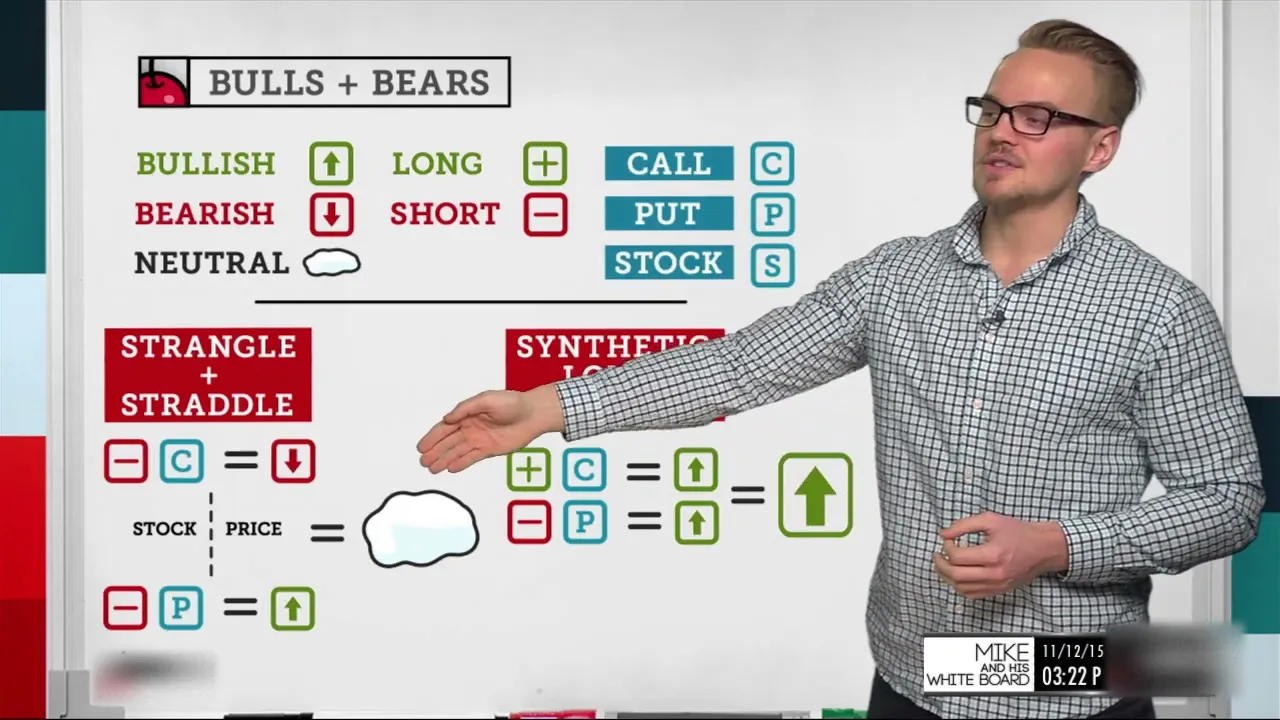
show you exactly how this could be and how we can be long something and bearish or short something in bullish so let's go to the next slide here and we'll break down bullish neutral and bearish so bullish essentially means that we want the underlying to go up so if i'm bullish something i want that underlying to skyrocket through the roof because if i have a position on and i have a bullish position in that underlying if the stock price goes up that's going to be good for my position if i'm neutral then that must mean
that i basically don't really have a directional assumption and a little bit up or a little bit down isn't going to hurt me either way and we do have a lot of great strategies such as strangles straddles iron condors that exemplify that neutral bias so as you can see with the graph here it doesn't really matter as long as the underlying stays in a certain range i'm going to have that neutral bias or neutral assumption and bearish is going to mean that i want that underlying to go down so for whatever reason maybe it's hit
all-time highs and i place a position that's bearish i'm going to want that underlying to go down to be profitable in my bearish position so as you can see here from the graph we want that position to go down so what i want you to take away from this slide is the up arrow being bullish the sideways arrow being neutral and the down arrow being bearish so let's go to the next slide and we'll talk about a few examples and show you how this these certain things are bullish and bearish so i'm going to keep
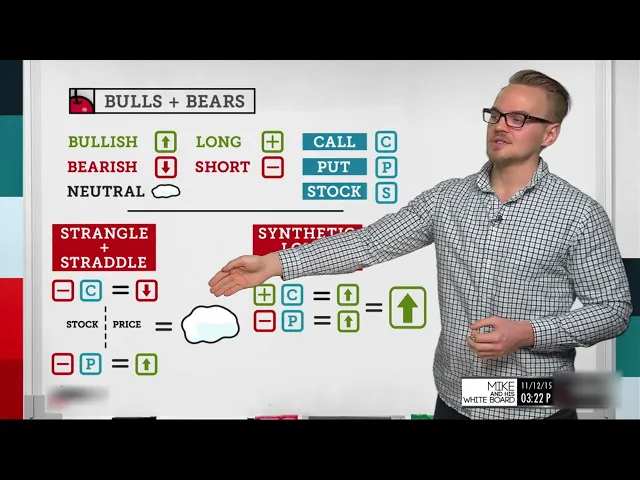
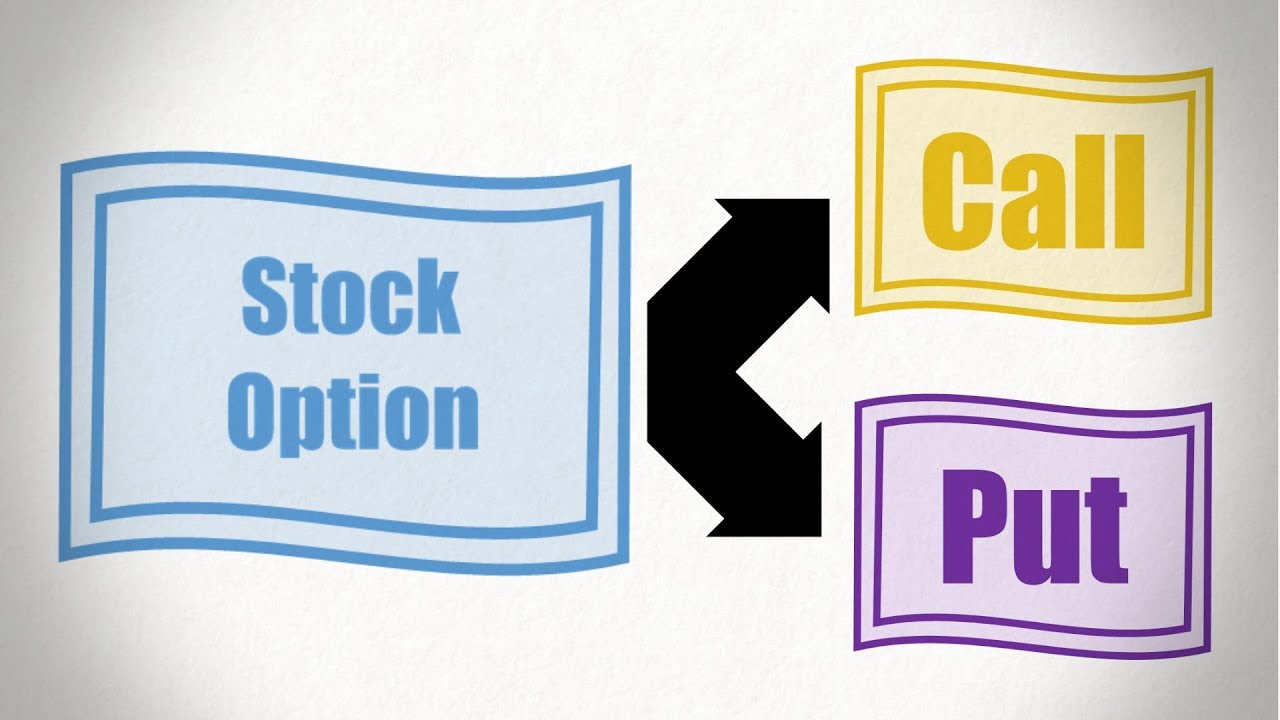
this legend up here for the next few slides and we're going to use combinations of bullish long short bearish and neutral and we're also going to throw in the calls puts and stock so we're going to see all these symbols we're going to mash them together and we're going to see how these things create bullish or bearish positions so when we're talking about calls which is the right to buy 100 shares of stock if i'm long a call that means i'm bullish so if i buy a call at a certain strike price that gives me
the right to buy 100 shares at that strike price so if i get the right to buy shares at a certain strike price and now the stock price skyrockets that's going to be good for me so if i'm buying a call i'm going to be bullish if i'm selling a call however i'm going to be neutral to bearish and the reason why i threw in the neutral here is because there's more ways to win if i'm selling premium instead of buying it so in a previous whiteboard we covered buying versus selling premium and we basically
talked through how buying a call there's only one way i can be successful on that trade and that's if the underlying does go up past my breakeven price however if i'm selling a call the underlying can stay the same it can go up just a little bit or it can go down and i can be directionally right in which case i would be success successful on that trade so with selling the call it's going to be neutral to bearish and with buying a call it's going to be bullish so same thing with buying and selling
stock these two are pretty straightforward so stock if i buy it obviously i want it to go up because i buy it for a certain price i wanted to sell it for a higher price to reach that profit so if i'm buying stock i'm going to be bullish and if i'm selling stock i'm going to be bearish so when it gets tricky is if we go further on this slide here is with puts so puts it's not so clear cut so if we throw up the puts here we can see that if i'm long a
put i'm actually bearish so this is the first differentiation between being long and bullish and short and bearish so if i'm actually long a put i'm going to be bearish because being long a put gives me the right to sell 100 shares of stock at a certain strike price so if i own that put and the stock price plummets i still have the right to sell the shares way up here at that strike price that i purchased to put at so for that reason alone i'm going to be bearish on that underlying and especially with
buying puts like we talked about in buying versus selling premium there's only one way for me to be right when i'm purchasing a put and that's if the underlying actually does go down that's the only way i'm going to be successful it has to go down past my break-even point however if i'm selling a put i'm selling the right for someone else to sell their shares to me so with that said i'm going to be bullish to neutral so again since i'm selling this premium i have more than one way to be right i can
be right if the stock price stays the same because if i sell an out of the money put or put below the stock price if that stock price doesn't move at all that put's still going to be out of the money and at expiration it will be worthless but i'll still be reaping that full profitability so if the stock price doesn't move at all with a put i'm going to be profitable and if it goes up i'm going to be profitable as well and usually in a quicker fashion because my put would then be more
out of the money and i'll be able to keep that original credit that i received so this has been a breakdown for these certain uh individual options now let's see what happens if we start to combine these on the next slide here so for strangles and straddles and we're talking about the strangles and straddles that we do here at tastytrade so we're talking exclusively selling premiums so we're talking about selling strangles and selling straddles so reviewing the previous slide we talked about how if i'm short a call that means that i am bearish so if
i'm sure to call i want the underlying to either stay the same or go down however if i'm short at put then i'm essentially neutral to bullish so what happens is if i have a stock price at a certain level let's say this stock price is at 100 if i sell an out of the money call at 120 above the stock price and if i were to do that alone then i would be neutral to bearish however if i sell a put let's say at the 80 strike price so i'm basically selling an out of
the money call above the stock price selling an out of the money put below the stock price if i was just to sell that put alone i would be neutral to bullish but when i make that combination and create that profitability range now i have a fully neutral trade so i've got a out of the money call 20 points above the stock price and an out of the money put 20 points below the stock price so in selling both of those options i'm creating a profitability range now instead of the stock price only going down
or only going up the stock price can go anywhere between 80 and 120 by expiration and i'll be able to keep that credit received as long as the stock price does not breach any of my strikes i'll be able to keep that credit received so now i create that neutral profitability range so that's an example of strangle and straddle now let's talk about synthetic long stock so not all the time we're going to be looking to just purchase stock outright we might look to become synthetic long or synthetic short for whatever reason so an example
of synthetic long stock is purchasing a call or being long a call which is a bullish assumption and combining that with selling a put which is also a bullish assumption so basically what this does is it allows me to get that one for one profitability if i'm buying the call and selling a put it's pretty much going to be a pretty close trade to zero debit if i'm right at that strike but uh what we're talking about here is basically just bullish or bearishness so if i'm buying a call and selling a put and they're
both barrett or both bullish i should say then this situation is going to be a synthetic long stock position which is essentially bullish but what i want to point out is i'm short a put and long a call so again when we're talking about being short something and long something it does not necessarily mean that it's bullish or bearish so let's get to some takeaways here and we'll wrap it all together so the first takeaway is bullish we want the underlying to increase so if i'm bullish on something i basically have a position on or
i have an assumption where i want that underline to increase because it's going to reap the benefits of my profitability in my portfolio if that does happen on the flip side if i'm bearish i want that underlying to decrease so if i have a short position like a short call or a short call spread anything at all or if i have a long put i can still be bearish and i want that underlying to decrease so long does not necessarily mean bullish so again if i'm long a put i'm bearish i don't want that underlying
to keep going up because if i'm long and put and the underlying goes up then that put's going to expire worthless and inversely short does not necessarily mean bearish so if i'm short a put i'm actually bullish or neutral to bullish so it doesn't mean that it's going to be bearish in any way and that's one key thing that was super beneficial for me when i was learning just making this differentiation and separating the words bull and bare and long and short so basically the takeaway here is that options are versatile instruments that allow us
to choose direction in different ways so unlike buying futures outright or buying stock outright where we're just buying it and we're long or selling it and we're short we can actually sell things to become bullish and buy things to become bearish with options so this has been bulls and bears thanks so much for watching hopefully you enjoyed it if you've got any questions or feedback shoot me an email um or shoot me a tweet at dodea at thanks again we'll see you on tuesday [Music] what's up youtube thanks for watching our video if you like
this video give it a thumbs up click below to watch more videos subscribe to our channel or go live to tastytrade.com that sorry [Music]