all right guys so let's talk a little bit more specifically about Trends so trending days trending periods uh what we talk about with Trends compared to ranges is that they're marked by again imbalance lack of symmetry value migration so remember within a range what we have is normally we have a great degree of value overlap so what we have is essentially price is confined to a given area over time we don't really see too much deviation with regard to this value area whereas a trend what we see is value migration so we're paying attention to
the value area and over time we're seeing that this value area is constantly being redetermined at new prices so the concept of a trend is it's a Divergence of price away from value so price is constantly falling into a level of imbalance there is a great degree of one-sidedness so typically you know buyers are very much a controller sellers are very much in control and we're moving from a period of imbalance to periods of semi balance back to periods of imbalance and so forth so the volume obviously is one thing that we're going to be
keeping a close eye on so volume in favor of the impulsive move dropping when there is a pullback but there are a few other things that we're going to be paying attention to during a trend as well so unlike in a Range where we said that getting involved at the midpoint so if we look at something like this range over here where we have a range that's beginning to form after this trend if we're trading a range what we said was that getting involved at the midpoint let's say we're intraday trading getting involved at the
midpoint without the presence of a strong Trend so imagine that we did not have this very large leg upward without the presence of a strong Trend or one side of the market being more dominant than the other getting involved at the midpoint is not necessarily a good idea it might be where there is a ton of liquidity so we'll look at this example right here just combining all these to form a composite if you don't understand what a composite is make sure that you watch the composite video that follows this but getting involved at the
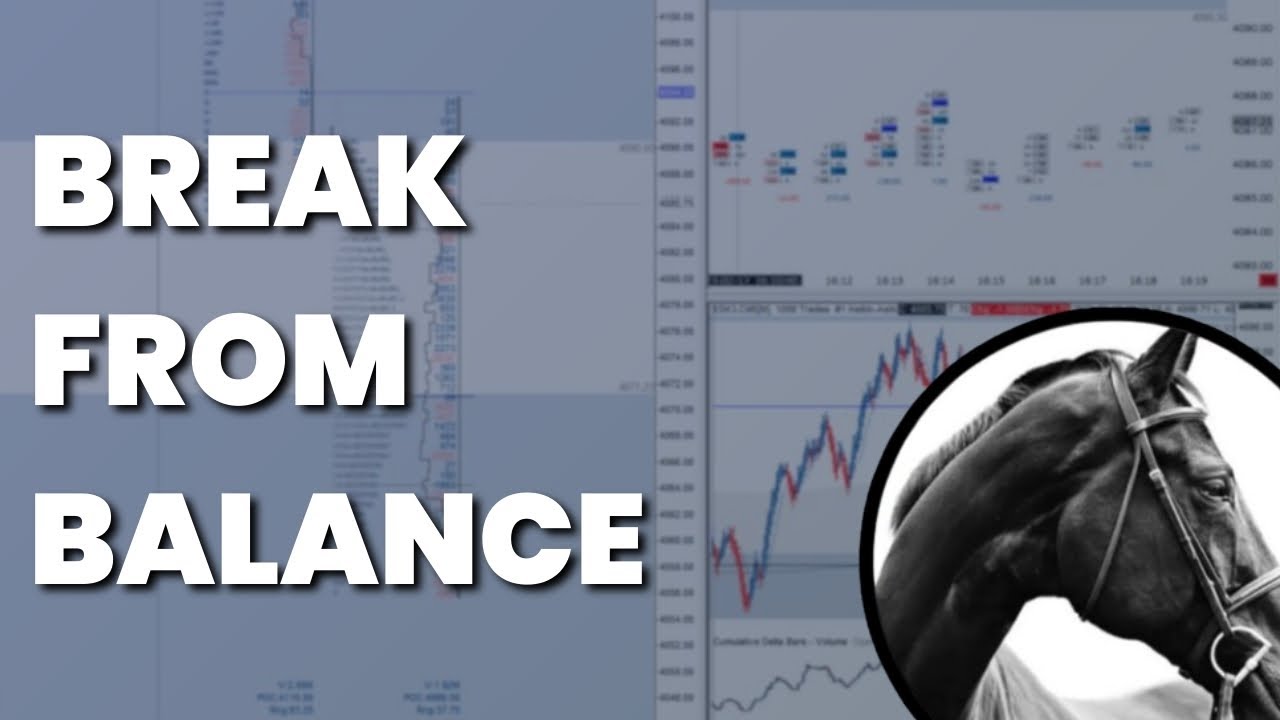
midpoint where the most liquidity is this is an area where you can get flat footed when we are in ranging in bracketed conditions because again this is the most agreed upon area there's not really any imbalance in the market we are marked by a market in Balance okay so in a trend there's a bit of a different story so when we have the presence of a strong Trend so we're looking at ultimately we have a break from balance down here multi-week range we break upward we have a very impulsive candle a lot of one-sidedness there's
a ton of volume in this move this looking on the TPO obviously not looking at any other chart right now but there's a ton of volume and momentum behind this move in the presence of a strong Trend unlike a range or a very balanced Market getting involved at the midpoint or getting involved at the point of control is actually a decent level for risk reward okay so if we have a very strong move up and we have a pullback to the midpoint of a range let's say for example we're looking at this very impulsive move
we balance out we have this period of consolidation for a day after which after a trend you're going to expect some level of consolidation before you have continuation getting involved at the midpoint is not a bad idea so we see that the market attempts to make a move upward and instead the market after that failed attempt revisits the point of control so if we imagine what this looks like for example we'll just put the drawing over here there we go okay so really quickly if this is a range what we're saying is that as we
talked about in the range videos the best area for risk award is to get involved at the extremes right this is a mean reverting environment there's no presence of a strong Trend okay maybe we've been consolidating for a prolonged period of time and we have a very defined range getting involved here is not necessarily a good idea this is where most of the chop occurs uh there's not a whole lot of directional certainty over here so if let's say that your ideas that we are going to treat this as support right we're coming back down
here you think that this is going to be treated as support you know you define your position maybe a stop under the midpoint this level in anticipation revisiting the high but instead price is continuing to mean revert and blows through your position and this is obviously just one simple example but the idea is within the range the best area to get involved is at the extremes when there is the presence of a strong Trend meaning we're coming from a very impulsive leg any type of consolidation will be treated in anticipation of continuation right unless there
are some obvious signs of failure obvious signs of absorption we're going to be looking for continuation especially if this has just broken from a previous range so if we were stuck in a previous range and we've just broken from a previous range what we're saying now is that in the presence of a strong Trend getting involved at the midpoint is actually a good level to get involved okay for continuation after this pullback getting involved at the midpoint at least we could Define our risk based on the low of this structure which is this micro range
of forms after this impulsive move and this is a good area that we can actually get involved in a trend in this in this situation in particular it's actually decent to Define to rather Define our risk and we have a little bit more directional certainty the same idea if we are moving down there's a great degree of impulsiveness and conviction and we temporarily range getting involved at the midpoint in this case breakdown below the next high let's say in this case that we break down below the next high and price is continuing downward getting involved
here is decent because at least we could Define our risk based on this most recent High okay which is again this is just all occurring within this micro range so it is a range but it's occurring in the presence of a very strong trend so in the presence of a strong Trend unlike a range right midpoints are decent areas for entry okay and especially points of control where fair value was established in this brief period of consolidation after an impulsive move has been made okay so also to remember as we reiterated in the first video
what we should be doing is paying attention to shifts in value okay so within a trending period so over the course of let's say again price leaving a prolonged range and we finally have some impulsive move outward with conviction what we want to be paying attention to is value migration so to make sure that the value area is constantly moving with this trend ideally you would want to see that if we're starting off to be in this very compressed state that we begin to expand as the trend continues right to indicate that the ranges of
prices are continuing that value is not confined to any one given area and then we're seeing no longer any kind of value overlap so different Trends might be defined by different levels of strength if we see that for example we have a situation where we have a day like this and then we have the value area the following day being much further out than this day we would say that this trend is potentially stronger than something where we have a good level of overlap okay so for example let's just draw another example if we had
an example of a trend like this where you have your value area right here and then the next day's value area is overlapping we would say that this trend is weaker than a trend that looked like this where you had their value areas very scattered apart and moving with much directional certainty and this is because when we're looking at something like the value area this is what we're going to be monitoring to see whether or not the trend is beginning to slow so what we're going to be paying attention to is when we have a
certain level of value overlap again okay so this is one of the signs that the trend is coming to an end at least temporarily and we're going to start reestablishing any kind of baseline from this point but what we can see is through the period of this trend there's a strong directional move upward we had value getting away from previous day's value quite considerably you know you could look at the value compared to the previous high as well that would give you some indication that this this trend is exceptionally strong but what we're doing is
paying attention to a shift so what we have over here is finally a case where value area is up here and the following day that we open up the value error is completely outside to the downside in the opposite direction of the trend so we're paying attention to a rising value area and it's also important to pay attention to the rising point of control so you want to pay attention to make sure that the volume is constantly being re-established at higher levels this is the same concept as paying attention to the value area as well
one thing that we definitely want to pay attention to is our close in relation to where the volume came in so rather our close in relation to where the point of control is so when we start to see that we close well below the point of control so we're looking at where price spent the most amount of time and then underneath that we have where price transacted the most amount of volume when we start to see that we close well below that this is an indication that the trend is coming to a halt okay and
for reasons that we'll get into once we start covering more stuff in order flow but this is an indication we might have some level of trap participation at the highs where there's a ton of transactions that occurred up here but price did nothing to stay above that level and rather close lower so we have two very strong indications over here that at least we are like they're going to continue or rather likely from this point cease to continue this trend and to fall into some level of consolidation or bracketed Market or potentially an area of
balance over time so the last thing to point out uh just brief point is that low volume nodes as well so when we're looking at for example when we're looking at a trending day so we have a day like this where it is not necessarily doesn't look like a trending day at the bottom but we have a strong directional move upward low volume nodes in this case in the presence of a strong Trend because we know that we're coming from a strong Trend here after consolidation we're continuing this trend low volume nodes are good areas
to get involved as well okay so we see that if we open up the structure again we have one move upward okay another move upward this low volume node within this level above the point of control these are good areas to start looking for positions as well okay so getting involved at low volume areas the same idea as getting involved at the midpoint within these structures just represent good or rather potentially good entry opportunities