our lives are better because of them welcome to Miz Mojo and today we'll be counting down our picks for the top 10 female scientists there have been lots of initiatives to increase the number of women in science for this list we're looking at women who've made significant strides in scientific advancement from geneticist to physicists to environmentalists all types of scientific study are represented by the females whose research has benefited Humanity here which means they must be scientists by trade those talented women who are mathematicians philosophers or Engineers are not included I I solved a crossword
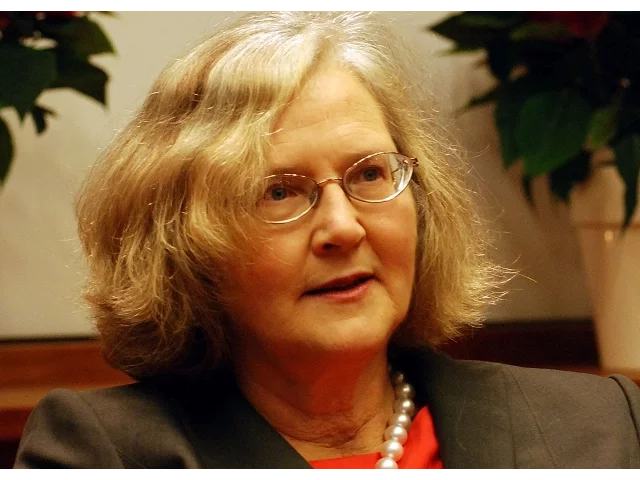
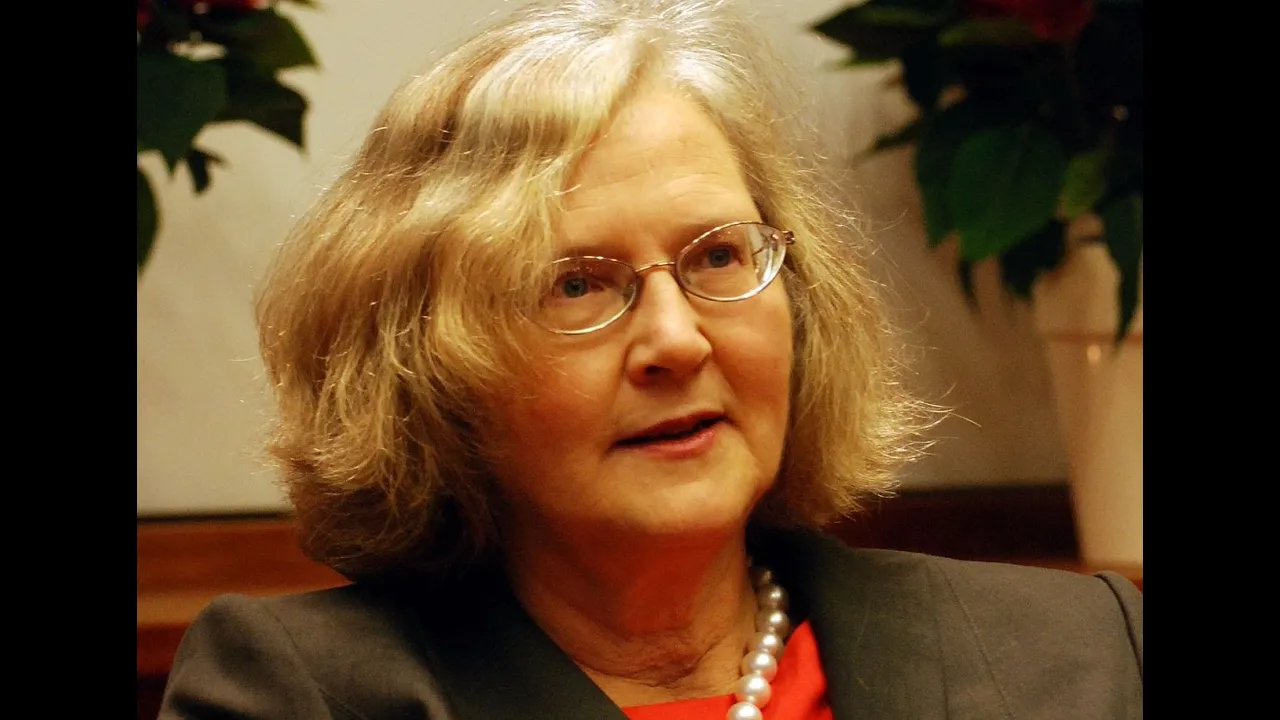
puzzle in the newspaper and and I I got this letter saying that I was a candidate for some sort of mysterious job number 10 Elizabeth Blackburn when I was a teenager a school teacher said to me what's a nice girl like you doing going into science after earning degrees in Australia and England Elizabeth Blackburn immigrated to America eventually joining the molecular biology department at the University of California Bur so if the shoelace tip gets too short as it does in the case of tiers in the course of natural wear and tear then it'll eventually disappear
and um the fraying can begin while there Blackburn and her colleagues discovered the enzyme tarase which solved the issue of how chromosomes can be copied repeatedly without degrading Blackburn and her colleagues discovered that taras also plays a key role and maybe the greatest threat to our longevity cancer the taras programs the the tiir at the ends of the chromosome to shorten after replication thus protecting its structure and genetic information and the tiir shortness that you can see is predicting a higher chance of somebody dying in the future this discovery has potential applications in areas such
as understanding the molecular process of death curing cancer and reducing aging and tiamas might be important in aging from these very common causes of mortality for her findings Blackburn was awarded the 2009 Nobel Prize in physiology or medicine and I think you know everybody at some stages fascinated when when you grow up you you're fascinated by certain things and and then you either grow out of it or you don't and I didn't really grow out of it number nine Rachel Carson man's attitude toward nature is today critically important simply because we have now acquired a
fateful power to all and to destroy nature it's rare for a single environmentalist to make an impact in our industrial world but Rachel Carson did just that for me the combination of this sort of to me New Concept of evidence-based Popular Science an American biologist and author Carson was especially notable for writing a book entitled Silent Spring which helped educate the greater populace on the dangers of pesticides that was the first book that really made a difference in terms of the politics the nature writers were doing to quell the storm caused by its alarmed citizens
the US government was forced to take action Nationwide banss on harmful pesticides were implemented most notably DDT due to Carson's exposes who knows how many lives were saved human and otherwise as a result of Carson's efforts we have to remember that children born today are exposed to these chemicals from birth perhaps even before birth now what is going to happen to them in adult life as a result of that exposure she was awarded the presidential medal of freedom in 1980 16 years after her death and so 50 years ago she was making points that are
still valid today and also are still being ignored today number eight Barbara mclintoch there was no question in my mind that the information I had received was so strong that there was no way of draing any other conclusion bar MTO accomplished more with corn than most of us accomplish in our lifetime the American scientist spent most of her professional life studying maze genetics which culminated in the discovery of jumping genes she described these very intricate phenomena that people really couldn't grasp in a physical way until many years later these genes can jump to various stages
of cell development thus proving that genes aren't always stationary and don't always adhere to a pre-arranged sequence she was the first person who really saw the the kind of detail that's present in every chromosome the existence of jumping genes is important in understanding inheritance and evolution mto's Discovery was not accepted until the rest of genetics caught up with her findings but she was justly awarded the Nobel Prize in medicine in 1983 therefore when you feel H strongly about something you can't be turned off nobody can hurt you number seven Dorothy hodkin you thought about it
at the time Dorothy but it was I think a very beautiful structure yes Dorothy hodkin developed the way we can now view the structures of infinitesimal molecules the Egypt born biochemist mastered the method of X-ray crystallography which helped us discover the structures of compounds whose molecular makeup was only guessed at up to that point uh you can collect the reflections of the x-rays uh in such a way that with very complicated mathematics you can work out where the atoms are in that molecule hodkin was single-handedly responsible for confirming the structures of penicillin insulin and vitamin
B12 as well as popularizing the X-ray technique that is used to this day the shape of the molecules in our bodies determines how they work and so if you understand these three-dimensional shapes um you can design better drugs and and learn a lot more about how they work for her highly important work hodkin won the Nobel Prize in chemistry in 1964 she's the only British woman ever to have won a Nobel Prize for a science subject number six previ monini in in 1986 this Italian neurologist earned the Nobel Prize in physiology or medicine for co-discoverers
of certain neurons which are pseudo proteins that regulate cellular growth as the first of its kind to be discovered the nerve growth factor was isolated by Levi manachini in 1952 however just like with Barbara mlto the significance of her Discovery was not made clear until decades later it was very for long time practically ignores the problem because of her findings science has a broader knowledge of how neurodegenerative diseases are caused and conversely how they can be stopped what about if a transplant in the same article I wrote the tumor not into the embryo but far
away from the embryo in the Corto membrane number five shanang known respectfully as the Chinese Madame cury Woo's contributions to science are varied and abundant after immigrating to America she joined the Manhattan Project where her work helped create the first nuclear weapons but the Manhattan Project is responsible for Humanity gaining a lot of information about the atom and really quickly her most significant contribution to the project was the separation of uranium into two isotopes that can better conduct fishing reactions to enrich uranium for the first atomic bomb Engineers buil IMM gaseous diffusion plants the capital
ized in the differing speeds Woo is also famous for disproving the law of conservation of parity which found that mirroring particles aren't always symmetrical for this discovery Woo's colleagues who conducted the experiments won the Nobel Prize in physics while she remained curiously unrecognized who helped in the development of improved GE counters for measuring radioactivity and her book beta Decay is still used by nuclear physicists to this day number four Gertrude B Ellen and I guess the most important advice I have to give is that they mustn't be easily discouraged born in New York City in
1918 gerud B Ellen was a biochemist and pharmacologist whose work in drug research was prolific from my point of view her leg Legacy is the entire field of antiviral chemotherapy after bouncing around various medical organizations Ellen landed at Burrow's welcome pharmaceutical company and headed the experimental therapy division it was there that she did her best work the thing that was so exciting in addition to finding drugs was the fact that we discovered so much about the biochemistry that led us on to make other drugs Ellen helped develop purinethol and a the first successful drugs for
leukemia and AIDS respectively with a folic acid antagonist plus mercaptopurine we could at least prolong their lives for a year and sometimes even as long as two years she also developed treatments for other ailments such as menitis and malaria she has changed the whole way way that people are cared for and so millions of people literally will have been treated with her medicines all over the world she was awarded the 1988 Nobel Prize in physiology or medicine for her life-saving treatments and I try to tell them how rewarding it's been not just because of the
Nobel Prize but because of the people we've helped I mean I meet people today who have kidney transplants who are still taking imuran number three Lisa miter Lisa became the first woman in Germany ever to have the title of Professor the Austrian physicist Lisa mner was part of a small research team that discovered nuclear fishing by noting the energy released by splitting uranium atoms now Einstein predicted it but he didn't know how to unleash it here was Lisa miter and OT FR saying this is how we do it this led to the invention of nuclear
power by way of nuclear reactors which generate a large percentage of the world's electricity a power station produces steam which drives a turbine and the turbine rotates the shaft of a generator which generates electricity nuclear fishing is also how highlevel explosives like atomic bombs work unfortunately like many women in those days Miner's exploits were overshadowed by those of her male counterparts and she was snubbed when the Nobel Prize in physics was presented to her colleague OT Han for six years OT Han had been insisting that the discovery belonged to chemistry and not to physics in
other words it belonged to him and stman and not to Lisa miter number two Rosalyn Franklin using x-ray defraction techniques on crystallized fibers of DNA that involve exposures lasting hundreds of hours Franklin was able to separate patterns that had baffled other researchers most people know that Watson and Crick discovered the structure of DNA but most people don't know that rosn Franklin laid the groundwork for their Discovery Franklin's groundbreaking research on the structures of various viruses proteins and acids by using x-ray defraction Imaging resulted in the discovery of the DNA double helix in her x-ray defraction
work Roslin joins the small band of the human race for whom tiny specks of matter are as real as billiard balls unfairly Watson and Crick would win the Nobel Prize and Franklin was left unmentioned what she perhaps didn't know is how much of her data they had known in order to build that model it wasn't until long after her death that people took notice of her integral role in the discovery as it was her photo of DNA that produced The Very idea of the Helix it is Roslin Franklin's experimental framework a collection of evidence painstakingly
accumulated over 2 years that guides Watson and Crick to solve the structure of DNA before we unveil our top pick here are a few honorable mentions you know I've spent most of my early life studying chimpanzees and I used to think they were very like us but nicer and then I found that they have a dark side so you know they're capable of violence brutality and War and so it's possible that we've brought that with us all through our Evolution Caroline hersel was a German British astronomer her most important contribution to astronomy was the discovery
of several comets quik's breakthrough in 1964 was discovering the technology for spinning fibers with very high strength and stiffness a discovery that turned out to be the foundation of the Kevlar fiber my appointment to the chair of physics at the open University doubled the number of female professors of physics in the country from one to two we're now somewhere about 60 out of several hundred Define and describe what autism is I mean autism is a neurological disorder where there's differences in the development of the brain it ranges all the way from a child that's going
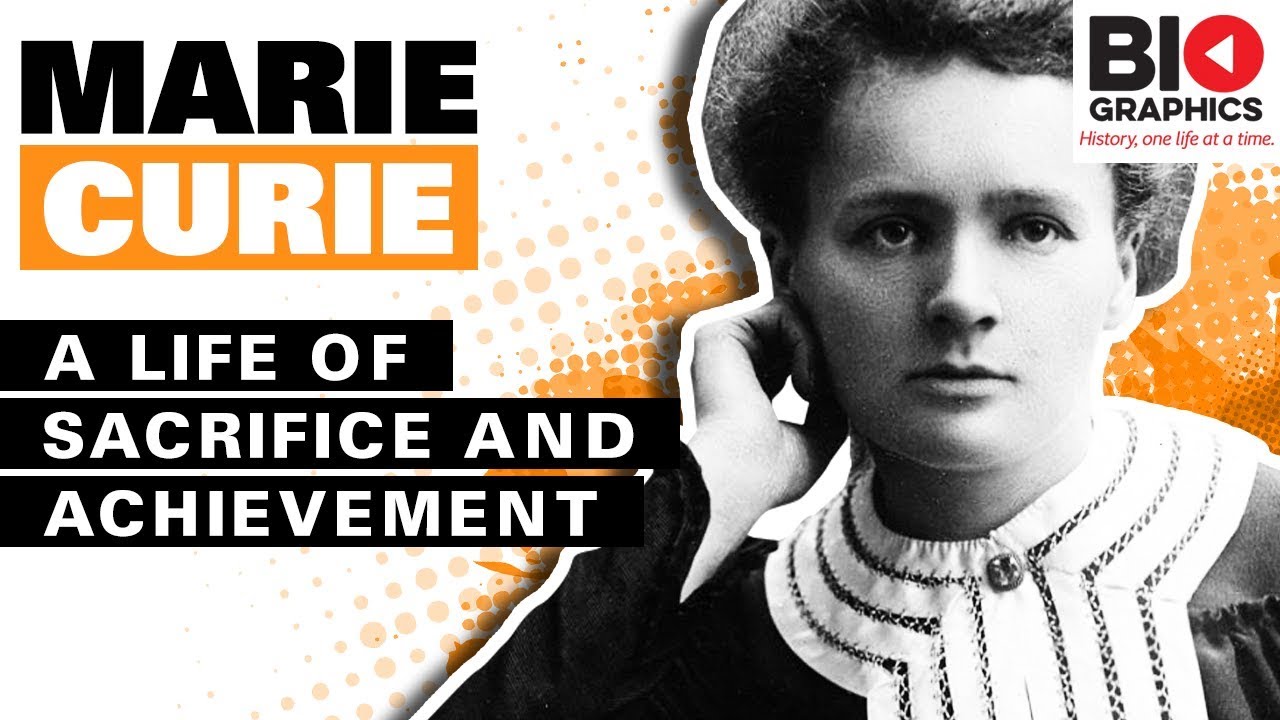
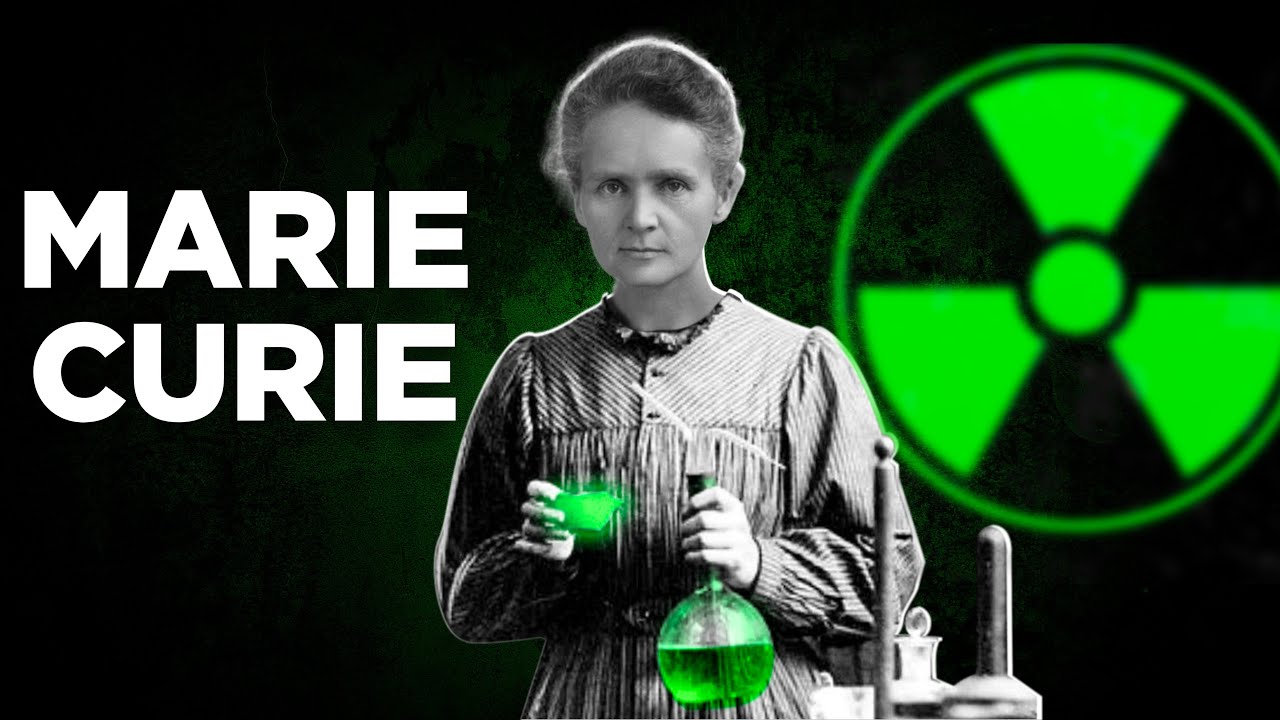
to remain nonverbal for the rest of his life with a lot of handicaps up to Geniuses uh you know Silicon Valley that do computer things Tesla who invented the power plant she realized that beor Stones were actually fossilized feces now known as copper lights which became hugely important in understanding the structure of prehistoric ecosystem number one Mary cury Madame cury she was a remarkable woman who dedicated her life to research until she died from radiation poisoning it couldn't have been anyone else Mary Cy discoverer of radium pioneered the study of radioactivity identified its wide range
of uses and effects effect and popularize the knowledge of radiation additionally C and her husband discovered the element polonium and expounded on the research of x-rays curri was the first woman to win the Nobel Prize the first person and only woman to win twice and the only person to win for separate science categories C and her husband were absolutely single-minded in the pursuit of their Research In fact when they were awarded the Nobel Prize they refused to go and accept the prize personally because it would interfere with their research her daughter Irene would continue in
the family's footsteps as she earned the Nobel Prize in chemistry in 1935 for the discovery of artificial radioactivity can we focus we have got to get the curies back together do you agree with our list who's your favorite female scientist I mean um there's hardly a time when I talk anywhere that there isn't somebody in the audience who has benefited from one of the drugs for more informative top tense published daily be sure to subscribe to to M Mojo finally that wasn't enough which it should have been this is madam cury killing herself by discovering
radium who although she was a naturalized French citizen was polish by birth [Music]