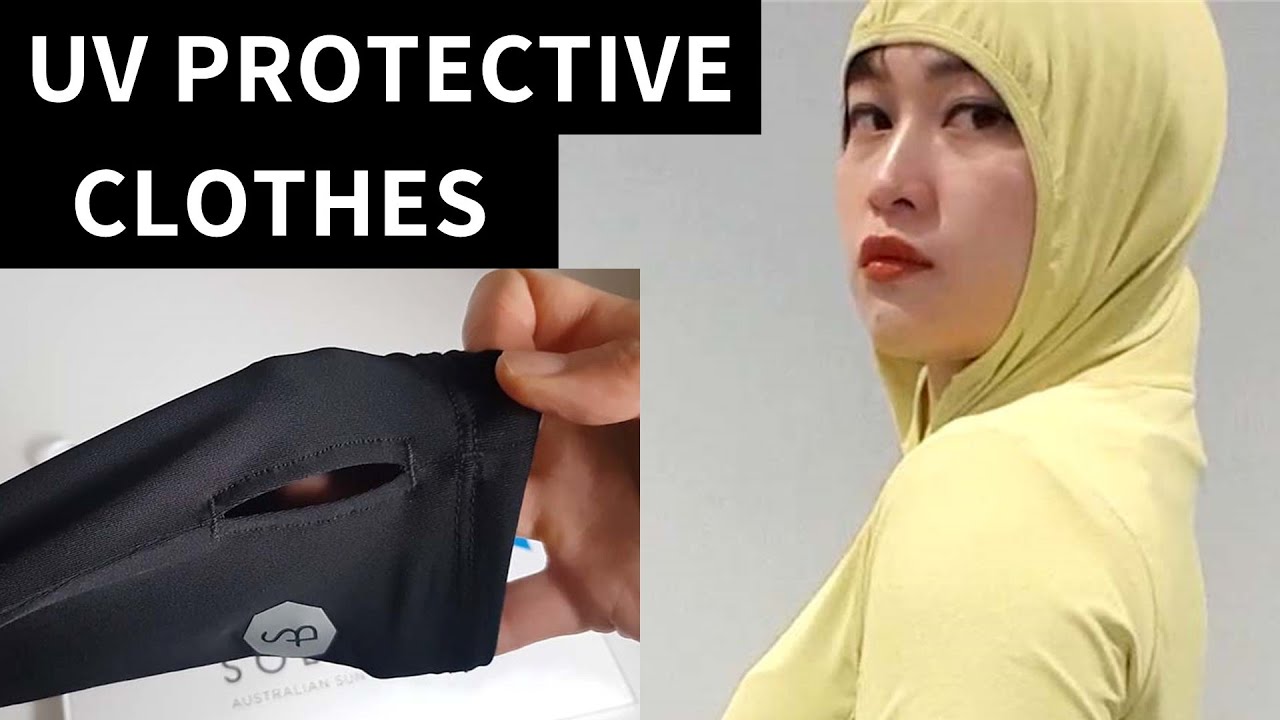
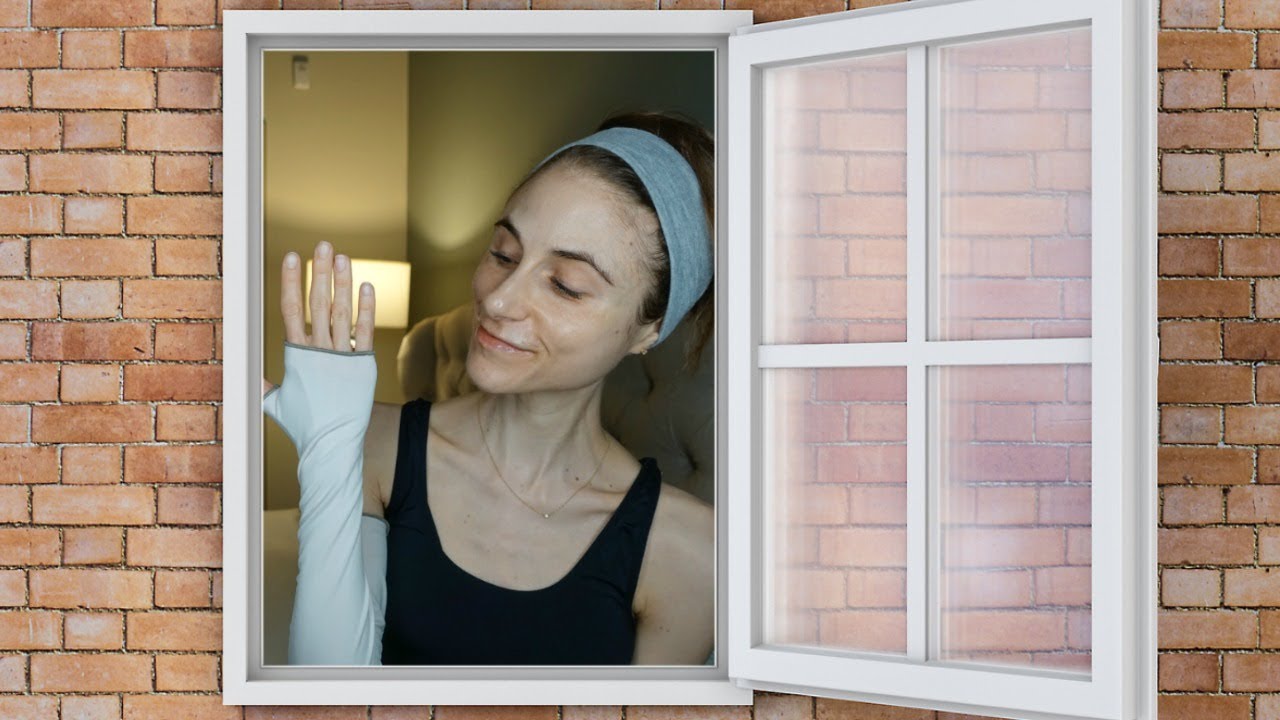
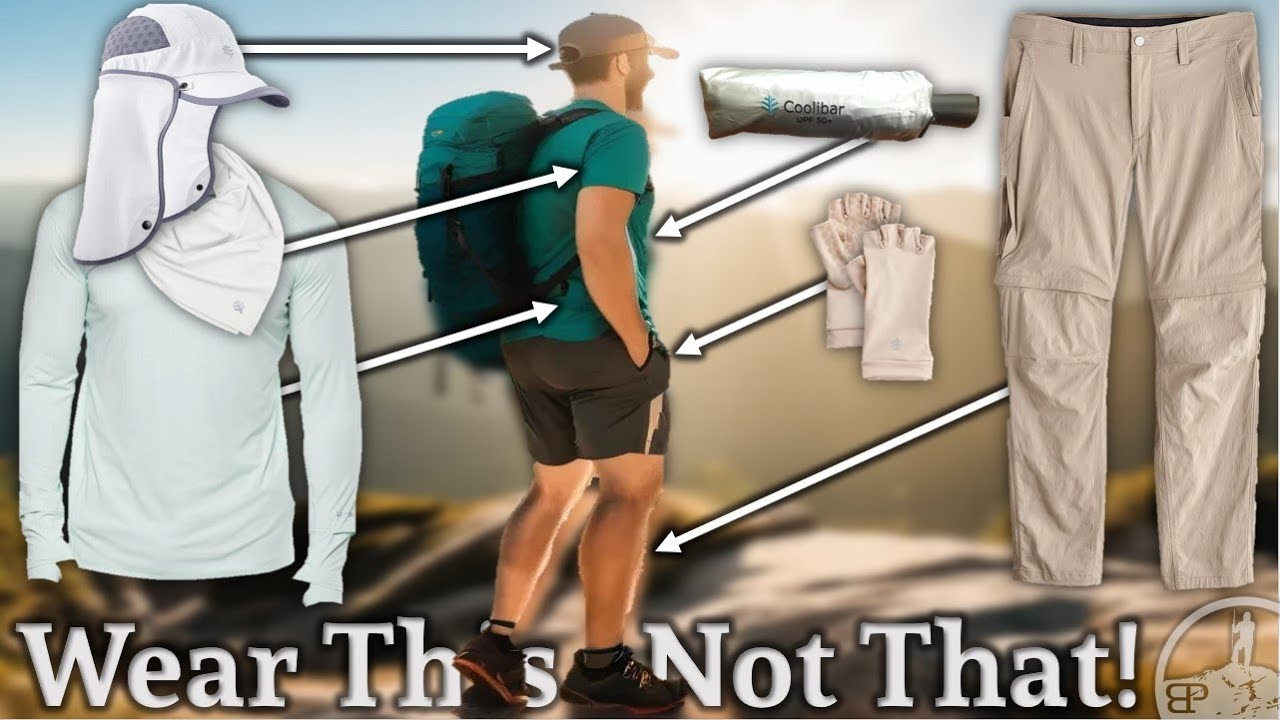
well hey guys welcome back to the Friday QA I'm just wearing my Eclipse UPF 50 shirt here today appropriate for the video as you can tell from the title and thumbnail today I'm going to be answering all of your questions about Sun protective clothing and what types of fabrics help keep our skin safe from the damaging effects of ultraviolet radiation if you're new here welcome my name is Andrea I am a dermatologist and I film some fun vlogs of my life as well as a lot of skincare focused content so if that type of thing
is of interest to you then please subscribe for all of the fun but anyways moving right along to recap a little bit for those of you who are new ultraviolet radiation comes from the Sun it is not the same as visible light in other words visible light that comes from the Sun is the light that we see with our eyes and we detect as daylight ultraviolet radiation however we don't ever appreciate with our eyeballs we don't ever detect that in our brain but it is the component of Sun that directly has biologic consequences on our
skin and our overall health ultraviolet radiation is broken down into different categories there is UVB which is the category of ultraviolet light that directly damages the DNA and our skin leads to skin cancers and also burns our skin that is what is responsible for a sunburn UVA on the other hand is another component of ultraviolet light that comes from the Sun that unlike UVB penetrates much more deeply into our skin damages the deeper layers of the skin leading to wrinkles and photo aging of the skin not only that UVA suppresses the immune system and affects
the immune system in the skin can trigger a variety of inflammatory skin to condition can also contribute to post inflammasome flama torii hyperpigmentation dis pigmentation and melasma visible light does have some impact on our skin health as well particularly for those of you out there with hyperpigmentation we now know that broader wavelengths visible light out into the blue and violet range can actually contribute to persistence of melasma and hyperpigmentation photo protection involves both the use of a broad-spectrum sunscreen as well as sun protective clothing some protective clothing is that which is manufactured from UV protecting
fabrics that are designed to block transmission of ultraviolet light through the fabric so that the wearer is protected underneath the fabric UPF is very similar to SPF of our sunscreens SPF of our sunscreens just to recap reflects the ability of the sunscreen to protect us mostly from UVB and the consequence of UV UVB namely a burn okay so SPF and our sunscreens reflects the ability of the sunscreen to protect us from a burn UPF and in fabrics and treated fabrics reflects the ability of the fabric to protect us largely from the biologic consequence of the
UVB penetrating the fabric namely a burn alright so they're very they're very similar concepts and you a universal protective factor of 15 is is fairly decent coverage however 30 is obviously much better an Universal protective factor of 50/50 is kind of the upper limit of where the rating system falls anything that's 50 is superior and wonderful water fabrics will be rated as 50 plus because they claim to supersede the 50 threshold and per Australian guidelines Sun protective clothing has to not only demonstrate a UPF but it also has to the fabric also has to maintain
that UPF for two years of normal wear and tear up so day to day washing you know we car excuse me weekly washing of the clothing for two years after two years still has to have that that UPF so clothing companies that you know tout UPF standards and and claim to follow Australian Australian guidelines and Australian regulations that are here in the United States are presumably following this rubric for example Coolibar claims to to follow the standards set by Australia and demonstrating the efficacy of their fabrics in protecting protecting the skin now as many of
you have pointed out a lot of the UPS clothing is it's pretty expensive prevent it may not be in your budget Cooley bar in particular you know they they they they make their their claim for the price point of their products and that they have a lifetime guarantee and that they have been certified by the Skin Cancer Foundation and they follow the Australian standards and you know that sort of thing but you know do you have to go out and buy an internal cooling bar wardrobe what for enjoying outdoor activities the answer is no there's
a very good chance that there are clothes there's already clothing in your closet or dresser that can offer you a similar UPF protection it just depends on the variety of things as far as the features of the fabrics that are used and the and that sort of thing so what factors affect how fabric are an article of clothing protects your skin against against ultraviolet radiation first of all the material I'll talk a little bit more about that how they the material is constructed and if you have washed it numerous times and the fabric has shrunk
that actually increases the UPF because it shrinks down the pores that allow UV to penetrate so having having washed the clothing and put it through a dryer in it allowed it to shrink it increases the the universal protective factor of the fabric alone how the any finishing that is put on the fabric itself a lot of fact fabrics are treated with things and depending on what they're treated with that can play a role the color if the fabric was dyed that can definitely play a role and then importantly the moisture content of the fabric wet
fabrics allow more UV light to go through than dry fabrics very important for you to be aware particularly while you're out by the pool and you know at the beach this summer what fabrics are good and reliable the fabric that offers the best protection against UV on its own is actually 100% polyester that's because polyester has a bend what's called a benzene ring in it and that is actually like a sunscreen all right so 100% polyester is is wonderful then obviously the weave of the fabric plays a huge role tighter weave fabrics like denim for
example helped a lot obviously don't allow any light to pass through and are going to give you better protection than sheer fabrics a good test of this is to hold the fabric up to a window and if light comes visible light comes through chances are you know obviously ultraviolet light is going to come through and it is not going to be your best bet I also mentioned the treatment how the fabrics were treated a lot of fabrics are bleached and unbleached fabrics unbleached Cotton's offer better protection than bleaching bleaching allows more light to penetrate in
addition to a 100% polyester unfortunately the best the other best best fabric is merino wool have fun with that here in Texas this summer who wants to be donning a a 100% merino wool cloak nobody all right you will overheat very very quickly so a hundred percent merino wool like in a baseball cap for example really really excellent protection the color of the fabric is paramount black and blue better than white and lighter colors so because I want to be donning a black wool suit all summer long all right you all definitely definitely be in
the House of Pain the other tip with your fabrics is that looser fitting fabrics are actually better because when they drape and fold on themselves the the excess fabric it doubles up alright unlike unlike layering SPS putting putting a thicker and thicker and thicker layer of SPF 30 on your face at the sunscreen you're never going to it's all you're going to get to 90 with 3 applications of an SPF 30 with your Sun protective clothing however you can compound the protection just by having the fabric fold over on itself and while that may not
be super relevant for your clothing when you're at the beach towels and things like that keep that in mind if you have a young child a baby under a you know in a obviously don't have kids in a in a pram in a stroller this is parameter anyways you know the fabrics that that you're covering the baby in do I do appreciate the fact that when it's doubled up it increases the the universal protective factor of the fabric and then satin-finish silk also offers very good protection as well alright so the silks that are that
have a sateen finish much better but fabrics that offer poor protection are like a standard particularly bleached white cotton t-shirt very very poor protection like in a man's undershirt Nenana know that that is kind of like a you know a UPF of two I mean it's it's not giving you any protection bleached cotton in particular you know allows more light to go through viscous shear fabrics you know kind of gauzy material not good enough definitely and then undyed fabrics less protection fabrics that are dyed and give you better protection because a lot of the dyes
similar to polyester have these ring-like structures that can actually absorb ultraviolet radiation similar to chemicals screens that dies in your fabrics like amylin dyes and a lot of blue fabrics and the dyes used to dye things black that that can give you a better protection the other the other tip that I will give you I mentioned the the hydration of the fabric if the fabric gets wet that increases the amount of UV that will penetrate through so what's really important for you and your family and your young children is that when you're at the beach
or if you you're out playing and what if they go out and play in one of those fountains they often have in a park and they get wet they should put on dry clothing and you know change out of the wet clothing and put on dry clothing immediately I know you don't always plan for these things but do be aware that wants the Clos that one's clothing gets wet it allows more ultraviolet light to come through so change change out to dry clothing definitely and you know for me personally investing in Coolibar has been incredibly
worthwhile they don't know I exist I'm not sponsored by them I simply I mean I've been buying their clothing for years long before us on YouTube it lasts forever the quality is amazing you know I don't I don't do my own you know I don't have a spectrophotometer to actually measure the efficacy of of the UPF in their clothing but there was one small small study that looked at one of the kids bathing suits from Coolibar and it does in fact offer the UPF that they that they claim and so that was that was independently
demonstrated by by you know a group of dermatologists in a small study so I have a lot of confidence in their products it's been a good investment for me I do recognize that it's expensive another option outside of buying the UPF clothing or you know buying a whole new wardrobe is adat as a dye that you can buy by rich called SunGard sun guard is actually tennis or the chemical filter that is proof for use in sunscreens in Europe and Japan and other countries that is a phenomenal UV blocker Sun guard is a dye that
is basically tennis orb it's a colorless dye that you puttin on your wash I'll link it down below it's made by Brett it's pretty inexpensive and I believe it it will impart a universal protective factor of about 30 to it fabric so it'll take on males a male's white t-shirt for example like an undershirt that I was ragging on earlier from a5 and UPF of 5 to a 30 so you know it's a good way to amp up what you already have it gets you it lasts for about 20 washes which is pretty good and
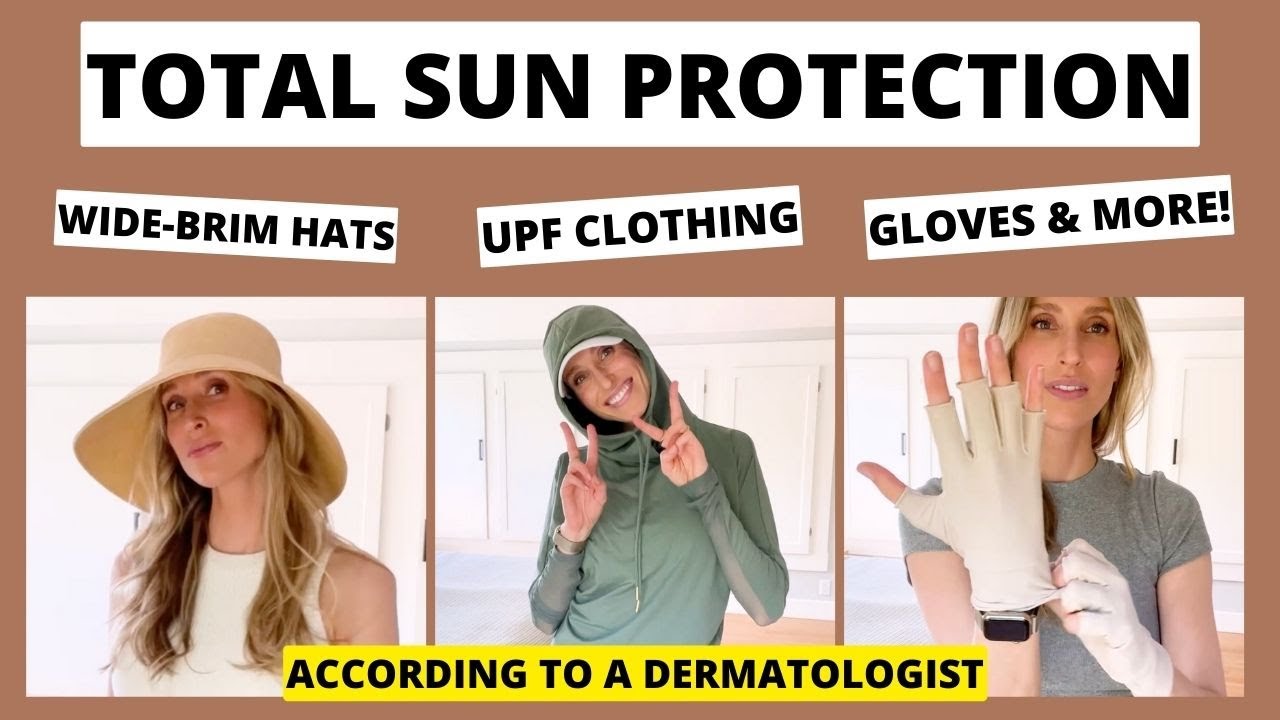
all you need to do is put it in with your in your washing machine on a warm or hot cycle for one wash and you know that treats the fabric so that is another option and when I strongly encourage it's a more affordable approach than investing in a whole new a whole new wardrobe then the other article of some protective clothing that is key and everyone's wardrobe is a Sun protective hat specifically a hat with a seven centimeter brim and the reason I say this is that we know from studies that ice at a hat
with 7 centimeter of brim we'll get you a UPF of an SPF of 7 on your forehead and roughly 5 on your cheeks as well as an average of 3 on your nose all right so that that compounds your sunscreen on your face and gives you better protection the other reason for the Sun protective hat is protecting your scalp ok it's really if people don't like wearing sunscreen in their their scalp I've mentioned in my other videos that liquid sunscreens are an option but it's really hard to put sunscreen in your scalp all the time
particularly for day to day use but when you're walking across a parking lot with an exposed scalp I mean that is a recipe for sun damaged skin cancers in the scalp are incredibly common and a nuisance for you the individual who suffers from them because they the management of can be a little bit more complicated the skin up there there's less there's less to play play around with as far as removing the skin cancer and covering up the whole so the surgeon has to be more clever and borrow skin from other areas it can be
very difficult to remove and pain for you the individual hair does protect the scalp a little bit but not a hundred percent for sure but if you have lost your hair or have bald spots bald patches areas of hair loss hair thinning really really really important you know if you have male or female pattern hair loss definitely you need to be wearing the hat out there for schwöre then the last point that I will make about Sun protective clothing that I'm sure I'll get some questions about I haven't gotten gotten yet visible white I already
mentioned is the light that we see with our eyes different colors tells us it's daylight out and if you'll recall the beginning of this video and if you followed any number of my videos particularly those about hyperpigmentation dark spots in melasma you will appreciate the fact that visible light particularly in the blues - violet range can contribute to persistence of hyperpigmentation now we know that sunscreens that contain zinc or titanium dioxide as well as the inactive ingredient iron oxides can get you some coverage into those those wavelengths of visible light but what about some protective
clothing does the UPF of a fabric reflect visible does that mean that it gives you good protection against visible light turns out not so much which is unfortunate alright there is one small study that I found that looks at this because I was curious about it myself polyester we know as I said is the best for giving you protection against the wavelengths of ultraviolet light that lead to a burn and so polyester fabrics are going to have the highest UPF unfortunately polyester fabrics do less well of protecting against visible light that can lead to you
hyperpigmentation and melasma in this study for and in this study for visible light it turns out that fabrics that are nylon made out of flax which I didn't even really know as a fabric component that I guess flax is offered better protection against visible light than those that than those that were polyester so that is just one study that I found about visible light and fabric protection I tell you this because I advocate for people particularly with melasma if they're going out like skiing to protect their their face using a face shield really really helpful
for protecting against UV light you'll get the fabrics been treated in as UPF 50 you know you can feel confident in at least but do you be aware that based on the study that may not may not protect you against those visible wavelengths that also contribute to Yuma la semaine hyperpigmentation so in other words you should still wear wear a sunscreen to help protect against that I wouldn't just rely on the face shield alone but the face shield is is a very important additional measure but you can see this is a face shield a neck
and face shield that Coolibar makes I mean it's basically like a gray to bright I have this but I've never worn it because it's a little hot but this is designed to protect your neck and then for you to be able to to put it up over your face so like you know when you're on the golf course or out you know playing tennis outside you know you can pull this up over your face and have protection on it this protects the lower half of the face but you know like I just said as far
as the protection against visible light I'm not you know it's hard to say for sure that this that this gets you gets you that complete protection against that blue light so do you be aware of that but anyways guys the take-home point here is that like sunscreen Sun protective clothing does also have shortcomings on it on its own so neither are good enough alone you need to wear the sun's along with the Sun protective clothing and you need to be aware of when peak sun exposure hours are depending on where in the world you are
in the time of day a good a good app that I like is Coppertone makes one I mean there are tons of them that will help tell you the UV index that is a helpful clue to just kind of be aware of ooh it's gonna go out and run errands and be outside but UV index right now is is 11 maybe I will wait until this evening you know it can kind of help you in that way definitely check that out if you have a disease like lupus for sure I mean these are really really
important for your health well for everybody they're important for protecting against photo aging of the skin and skin cancer as well as that gosh darn sunburn that nobody wants but anyways I hope this video is helpful and kind of addressing your questions to you better guide you and help you navigate some protective clothing and whether or not it's something that you want to invest in or is necessary you know buying the Coolibar stuff certainly isn't my rationale personally as a consumer for buying it is that a lot of their fabrics are lightweight and water repellent
so they work well with an active lifestyle and I just had a good experience with them but definitely do not need to invest in that a huge fan of that writ die as you know kind of a at least at least washing your beach towels in that and your bathing suits and t-shirts clothing I think it can be helpful pretty inexpensive and it gets you just be aware of the number of washes set that you've done with with the clothing after you have after you after you've incubated it in the dye and whether or not
you need to reach read it but I think that's that's another really great option but you know with all that being said have a fun summer in your black merino wool suit but if you liked this video give it a thumbs up share it with your friends and as always don't forget sunscreen and subscribe [Music]