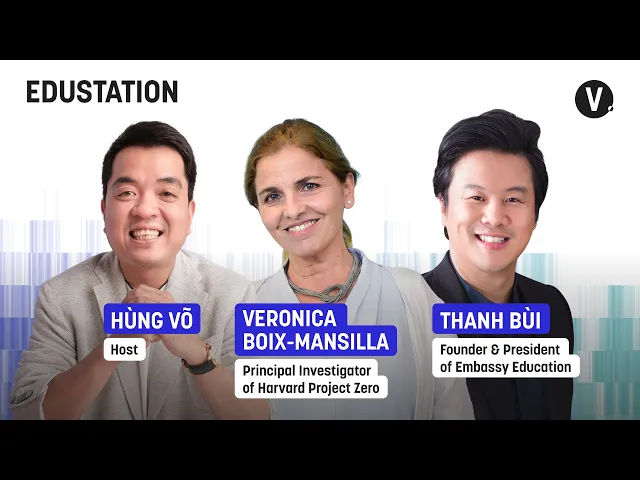
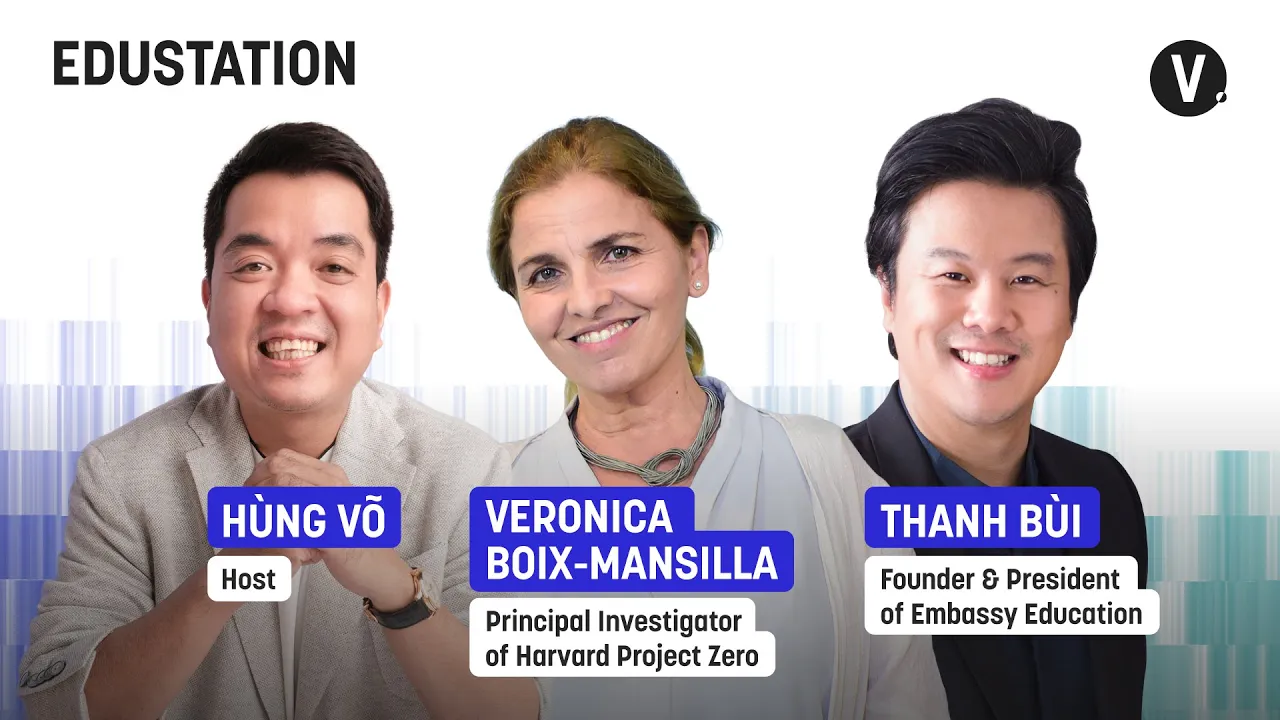
[Music] foreign foreign [Music] hello very nice to be here yeah very nice to meet you and we are very grateful to have you on education and uh thank you for organizing your time although i understand that you are on holiday now and and again we are very grateful for for the effort to have booth to share with education and the vietnamese audience about the importance of education from the productive of project network have a terror thanks for that very careful oh thank you thank you so much for having me i think that it is um
i am uh always very um eager to support you know the work that you and you know that hanbori and so many others are doing in education right now especially in vietnam where the opportunities are immense yeah thank you thank you veronica bye learning foreign very my very first question for you is how do you think about the future of learning especially in the world we have a very fast pay very complex changing and very interrelated like today and tomorrow well thank you thank you for this uh minor question we're beginning with today um i
would say that my vision or my views on the future of learning are deeply rooted in the work that we have done at harvard project zero for many many years um where we understand the very purpose of education as the nurturing and the development of human potential all of human potential and we will come back to this sort of human capacity to think quantitatively to tell stories to produce works of art to produce music and together with that the purpose of education is to contribute to the well-being of societies so when we think about those
two aspects of education those two main purposes of education in a changing world what we see is that it becomes extremely necessary that our educational approaches respond directly to our times in education we tend to find solutions to problems that emerged a century ago and the future of education requires that we take the pulse of contemporary societies we understand the fast changing pace in which we live and we rethink what matters most for children to learn and what human capacity will be most important so for example i think that an education for the future needs
to prepare young people to work and to live in context of uncertainty in context of change we're no longer in a society where we could pick a textbook that encodes all of what there is to know about biology or about music about and memorize that the world's demands that we move beyond established forms of knowledge of fixed forms of knowledge that we understand the disciplines as lenses through which we can see more about the world in which we live and we can find better solutions for living together in the future we found that very two
key works of the context of uh the world today and tomorrow is uh uncertainty and a lot of changes so that we cannot find it's uh in the way traditionally like before from textbook or something that we can we have enough knowledge or enough information to to cope with the changes the kid needs to respond very differently from the past and if we think about it this we might would you like me to expand a little bit on that yes please please yes we if we think about it this um this involves um the nurturing
of a much more creative human being a person who is able to find solutions a person who is able to think for themselves a person who's able to collaborate with others to address local and global issues if we open the windows of our schools and our homes and we see the world around us we see enormous economic interdependence we see enormous movement of people from country to country from region to region we see enormous cultural encounters associated with migration patterns all around the world we see climate instability and that impacting people in very different ways
you know whether it is in the delta south of saigon or ho chi minh city or whether it is in the coasts of south africa so these are issues that are precious uh for which we need to find collective and transnational solutions about which we need to collaborate and doing this work invites us as educators to be not in the background but in the forefront of preparing the next generations for this work uh preparing the next generation of environmental activists uh preparing the next generation of individuals who are able to have empathy for others preparing
the next generation of collaborators who are able to collaborate across difference across culture over time and i think that this makes it so that for us working in the field of education uh it's uh it's an uncertain time but it is also an exciting time uh when we can focus on what children bring to this world when they arrive when we can see in children they're full of their human potential and when we can honor that with our practice and unfold it and nurture it over time i think when we think about the future of
education that we need to rethink quite fundamentally the very perennial questions about education who is our learner what matters most to learn to teach and to learn how do people learn best how do we know we're making progress so these are questions that existed in education for this and over over the centuries and today what we need to do is to offer new responses to these questions for example we used to think that learners were the children who were expected to acquire a lot of information about the world encoded fixed information in history and math
in languages and so forth today we realize that learning happens along the lifespan and that what we need is young people who are able to continue to learn to learn how to learn to be creative and deep in their learning i think we need to we used to think that education was very much about the cognitive aspects of learning you know how children perform in math how children perform in writing our children and now we realize that we need to be thinking about children and youth and ourselves in much more comprehensive ways that we need
not only to consider our cognitive capacities but also our social emotional capacities and our ethical minds and our participatory civic minds so with all these minds that we um that we that we have as human beings and honoring those um we have a really important invitation to rethink who the child is how to engage the child and his or her context as a beginning point of rethinking learners and learning you speak like magic [Music] i think that you have mentioned the importance of i i see a lot of very new elements i say new element
we compare with what vietnamese education has been focusing on so far to pick up some important keywords and also something i think that will resend a lot of insight for the audience family care creatively by solution you mentioned the kids need to be empathetic you mentioned they need get to learn a lot and you know a lot about collaboration and they need also need to care about the global and local excel why why they need to to to to cares about these things and and how much difference today and tomorrow compared with what we have
experienced in the last one or two decades when we can that's a great question um i think that what we have come to understand is that our capacity to recycle materials uh in saigon in ho chi minh city today has an impact on the well-being of the lives of people in a very very far distant place in the world because of our interconnectedness that has been the outcome of globalization and that has enabled so many people to have better lives to have access to more education uh to have better standards of living to extend you
know the lifespan uh and the life expectancy of uh of so many people around the world so globalization has given us that opportunity in a way at the same time it has illuminated for us how interdependent we are how our behaviors that our individual behaviors have an impact on people who live on another side of the planet people whom we may not ever meet so understanding that matters because um because it gives new meaning to the ways in which we carry uh our lives and it allows for young people to make decisions decisions about what
they buy and what they don't buy decisions about how they engage with nature decisions about um let me give you an example that i think is particularly beautiful so we are having a shortage of contact with nature on the part of children um compared to generations in the past children used to play in nature much much more than today and today they're much more connected they see nature through video games or through videos or through um so it's a mediated relationship that children have with nature today and yet the protection of a natural environment is
fundamental for the survival of our species so all of these um tragic uh situations of you know climate change and and um and climate and stability and extreme weather events and so forth are very much associated with the ways in which our societies have impacted nature over the last many decades so in a way preparing our children for the future if we understand that nature used to be a place of solace but may become for many children the forces that took away their home or caused this flood or caused this dry this dry span that
that led people to move away from the home the relationship between children and nature will be more problematic because the wind the river the ocean you know the sun will not be sort of as easily you know sources of joy so this means so the question for us then as educators is so what do we do with with our awareness of this development right so how do we engage uh young people in a way that will um that will uh nurture their love for nature and their care for other species and the care for the
environment to care for trees and plants and and for our well-being and harmony with the environment and i know that this is sometimes a concern that is secondary to the concern of eradicating poverty or developing developing economically in latin america the environmental movements arrived later for example than the movements towards economic growth and that's understandable what i think is that as we prepare generations for the future and we as adults understand the complexity of our relationship with nature and the desperate need for protection of the natural environment then then we can do things differently with
children and nature for example we can call attention to the fact that there is trash or pollution in the river and we can invite children to imagine solutions this is one of the things that we did with with um embassy education uh recently children ages you know four or five uh were um looking at pictures of the river right next to norad you know on malcolm river and um and they noticed that there was that there was a piece of trash floating there and what i thought was really very beautiful is that that could have
been a comment in passing but the teacher paid attention to this observation on the part of children and zoomed into that and said let's figure out why this trash is there and let us figure out what creative solutions we might have to make sure that there is no more trash in the river and the trooping created all sorts of imaginary machines and filters and you know um machines that would pick up the trash as they identified it some children created the possibility of finding the themes that through this trash in the in the in the
river but there were all sorts of different sort of human technological imaginary magical solutions that they came up with and they were young children and normally young children have you know historically young children did not have to worry about or did not engage in trying to find a solution for the trash uh in the river and this is happening in vietnam today but it is also happening all over the world right so the children are beginning to engage much much more seriously with the environment and bringing the full of their imagination so so here we
have an opportunity out of a very simple engagement with an image of the river and a little bit of trash floating on it i think it was a bottle or something like that floating on it of a full investigation of causes and consequences and possible solutions that empower the children to begin to think about themselves as the kind of people who will be able to have a voice and find solutions for the well-being of everybody and i think that that message if there is one fundamental message that we might want to hold for children in
education is that through their education with us is that creativity is fundamental to what it means to be a human being um we humans created you know came up with ways to to produce fire we humans created ways to travel around and populate uh the the planet we humans created ways uh in which uh we survived extreme weather we humans created ways to collaborate so it's essential to the human being to be creative and that creativity in a way is a right we have the right to find creative expressive solutions for others we have the
right to express our own experiences and i think the children who grow with that sense of possibility will be the children who who will be especially valuable to our societies in the future and hopefully will also be with children who will lead lives of possibility and will have a greater uh freedom to think and to um and to create the lives that they would like to live for themselves and for others it's very empowering to think about ourselves as essentially creative a creative species philosophy okay um foreign [Music] careful i just try to mention vietnamese
that uh you we you are talking about our belief in and the naturalization is a guardian generation who is very very very different they will be empathetic and very creatively solving the problems they will be feeling the responsible for for the human excel for the trans national for the global excel if we raise them with a good creative education they will be a very different generation and they can change the world in in the variable deep way versus the recent detects we have experience eventually aimed hello because the our country is in uh elijah manson
is we are in the urbanization urban nation is one of our biggest mega trend in the recent decades and also in the fort forthcoming years so uh yes and people will in our country we would even the parents even educated they will put economic growth it can be quote more important than environment excel or some connection to the nature so i would like to steal your brand still more insight on why why connect to nature is that important and indispensable and how it's be a part of creative education and how it how it's been a
part of growing our kids this there's two things that i think are important here one is um countries that have uh grown countries have that have undergone uh difficult periods uh periods of survival like um vietnam like argentina the country that i am from there's one thing that you notice is that there's an enormous amount of entrepreneurialism an enormous amount of you know ways to find new ways to do things so that a one-time survivor can have a little business here one can find a little solution to fix something that is broken there so i
think that it's extremely important that we value this resilience and this entrepreneurial spirit that comes with um living in places where systems don't work always uh very very well where you know i remember growing up with the telephone system collapsing every now and then and and so you develop this resilience which i think is extremely important to value and to honor um i also think that uh historically the countries like my own argentina and um uh and vietnam have really been very concerned with the issues of you know poverty and the well-being of you know
of uh of people and the desire of people to progress economically to have access to health and education uh and so forth so and i think that all of that is extremely uh important and historically uh environmental attention or environmental stewardship has been seen as in tension with economic growth what we see now is that that dichotomy is a little bit false that the fast is going some of the fastest going um industries tend to be sort of industries that are recycling or regenerating um ways in which we can replace fossil fuels we had very
recently united airlines with the first full flight on biodiesel which which is an incredible accomplishment so we have so economic growth and environmental protection are not uh in tension with one another on the very very contrary and one can advance economic growth create new um create new uh industries create new jobs create new opportunities for life in ways that are aligned with um with um with the protection of the environment and i think that this is really the way in which the world is moving out of sheer necessity because we see the costs too of
not doing so when it comes to our role as educators i believe we need to we need to find a way to remind children that finding the solution to picking up the bottle on the river you know next to the city is in a way part of becoming sort of a sort of independent thing for a creative thinker and that too is part of contributing to the economic growth and data participation of more people in the national economy and the transnational economies so i see that there's a great opportunity at the intersection of these young
people working in vietnam today you know might be um or you know aspiring to have jobs in vietnam uh today might be very likely to be collaborating with people from outside of vietnam who also have ideas about the environment and the environmental protection one of the things that we um that we're very interested in fostering is you know as tan uh will speak to probably at some point is this idea of uh of advancing uh locally rooted global competence that's the young people who are able to really understand where they come from the natural environments
that they come where they come from the social and cultural environment where they come from and have that identity well established and together with that also have an open mind to understand other environments other needs other problems other cultures and i think that it is in this coexistence of love for the local as well as you know aspiration in the global that that that we see the convergence of environmental industries or environmental values or environmental citizenship and the possibility of economic world yeah okay thank you very much effectively now i'm going to be right back
in here now so [Music] for my information i know that when project have a zero set up it there's very rare information about how learning x will improve about creativity and i understand that project zero begins every project that's sick to understand the way in which the bi work in and with the app okay can you explain it uh to us in more details and how how lo how project xero have studied about it how how how it created found out uh the connection between uh learning about acts with creativity so uh president zero many
people ask you know why we call ourselves project zero and it is thanks to the philosopher nelson whitman who had two young students you know howard gardner and david perkins and they were interesting he was interested in looking at how i think that you mentioned that earlier how the mind works with the arts with music with visual arts um with dance um and um and at the time there had been many people philosophers who had still and psychologists who had studied the role of the mind and the arts but particularly from uh from an emotional
perspective young and freud and so forth so what whitman said is do we know anything empirical about how the mind operates cognitively when we're interpreting art making sense of art creating art and um and these two young students uh went ahead and tried to find what there was and there was very little there was actually nothing that was imperative about it that was a sort of research based to to talk about how the mind works when it encounters the work of art um and how we make sense of words of art and that is how
the project you know goodman said we're going to call we're starting from zero we're going to call this project project zero um and i think that there's something very creative right there about the possibility of embarking in a project that is um that is very new very fresh that recognizes that there is a missing piece in the domain of understanding the human mind and that this project will contribute uh something like that so there were plenty of studies of creativity um associated with that for example uh jessica davis did a study of the development of
creativity and she understands that creativity has a u-shaped curve so children are very very creative when they're little when they're young and then at about the age of seven they become very very linear in their thinking you can see they begin to use a ruler to make lines they need to they begin to copy cartoons they begin to copy copy copy and then some children evolve later on to become creative again to sort of break the norms and the rules that they've learned in this period of low creativity so to speak uh in order to
break so part of the so part of the the lesson of that particular study was that creativity in a way is not merely doing something that is creative per se it's really interrupting something that exists it's like doing something that is new but to do something that is new you also need to understand some of the parameters of what is of what there is in order to break them so um so the challenge of nurturing or the opportunity to nurture young children's creativity involves both creating conditions for them to come up with solutions imaginary solutions
and also adding a little bit of constraint you know so what if our budget is limited or what if we only have these materials to work with what if we so that as children work with constraints they they can sharpen the creative solutions so in a way when the children very naturally become less creative so to speak uh there's a story about that that is about schools really not favoring creativity which i think is right um schools don't typically favor creativity and i think that that's a problem um but but there's also uh the desire
on the part of the child who's sixth and seventh to understand how letters work and understand how numbers work understand how you represent how do you create a straight line so providing children with some of these constraints enhances the creativity as well so that's one thing i said creativity um i think that we have come to conclude that creativity is really about working with constraints as well it's like freedom with constraints so that that freedom can be sort of deep deep and seriously um so that's one that's one of the things that i thought was
you know particularly interesting of course the whole theory of multiple intelligences came out of the world the early work at project zero and here is about human potential and while sometimes we might think that creativity only happens in the arts yes it certainly happens in the arts the arts are very much about creating something that's new creating expressing ourselves they're about intervening uh the societies the landscapes the cities around us it's about creating experiences for others um and clearly creativity is piperable visible there but mathematics is also creative and physics is also created we have
today sort of a new telescope floating uh being in space it's because physicists and uh and experts in optics and experts in space science and so forth have been able to move the boundaries of what we know and come up with new solutions so when we think about creativity i think that we need to think about it in the arts for sure but also in science also in language also in literature also in you know in in mathematics you know there are many possible ways to solve a problem in mathematics and i think the children
understanding that are children who are better prepared to find solutions to the problems later on uh in the in the world um so i'd say one lesson learned is creativity operates really well with deliberate constraints and second big lesson is creativity happens in unique ways across domains and it is not clear that being creative in the arts will make us creative in mathematics i think that children need to experience creativity and the possibility of multiple solutions all across you know the different domains clearly we will children will have a disposition to being um creative and
the experience of creating and the joy of creating if they engage in the arts and i think that that's extremely extremely important and we also can sort of help them understand that they can also be creative in mathematics where the messages that they may be receiving are there's only one way to solve this problem there's only one way to combine these you know elements in this uh and this particular function or algorithm and so forth so um so that's that's another sort of big lesson that we have learned over the years um i would say
a third big lesson has to do with more recent work around the role of ethics and creativity because earlier i was saying that we humans came up with you know with ways to produce fire we humans came up with ways to travel around the world and populate the planet um so that involves enormous amounts of creativity and resourcefulness and it's very much the essence of who we are but we humans have also used this fire to kill other humans and that is really not quite right so creativity and ethics need to go hand in hand
educating for creativity um without ethics might lead to um to creative people who don't care to create people who might use their creativity in ways that are not producing to better societies whereas nurturing creativity together with virtues and to you know why use creativity in particular ways and why not use our creativity in other ways is i think very very important it's a great deal of more recent work that howard gardner has been living on what he calls the good work project is very much about that it's about how to advance a humane creativity um
creativity forms of creativity that are um that really involve ethical uh behaviors um another the final i think the final lesson that we see from creativity studies in uh at project zero these days uh comes from the work of you know collaborative creativity and this question of is creativity a matter of an individual was picasso working alone or was there a whole structure of you know the times in which he lived and the people with whom he interacted and the people who quietly supported him that were part of the reasons why picasso became because so
here our understanding of both the untold stories of the supporting structures that make an individual uh this visible creator um and the very told stories of the ways in which creators gather creators and people who are creative they they look for one another they look to be challenged they look to be more they look for um so that that coexistence of dialogues and that creativity happens in dialogue and it rarely happens by an individual standing alone um even when we think about michelangelo we think about others who who might think about michelangelo think about others
who might come across as individuals highly creative and yet their time made it so that creativity was possible so in thinking about creativity um mihaly chicks and mihaly who's a philosopher and psychologist whose work i admire enormously says that you know fertility happens at the intersection of an individual's capacity and human potential for music for art for language for math for um for looking at patterns in nature a domain a particular system of thought that exists in a particular time in history whether it is you know jazz or rock or hip hop or you name
it um and a field which is a community of people who are engaged in this particular space and time and recognize this creative energy and contribute to the creative energy so um what i like about this work and this research is the situated nature of creativity doesn't only happen in one person's mind that it is a social phenomenon as well um actually i i tried to go further from from one of the victory lessons you mentioned recently talking about constraint also be a sort of inspiring creativity america so uh coming back to our country come
back back to vietnam education i think you have a lot of insight about becoming education thanks to rojak harvard cereal in vietnam what do you think which a lot of constraint once we should focus uh in the next five or ten years so that we can elaborate more relevant creative at competency or more future competency for for for the kids and for the natural reason i think uh that's a that's a really great question um i think we need to there will be questions i love them i think that um i think we need to
think about a few really important things one so one for me at least is one is we we need to be thinking about teachers uh we need to be thinking about teachers and to nurture the creativity of teachers to um it is very difficult to nurture creativity um if we ourselves as adults are very very very structured so how can we um really nurture the creativity of teachers by uh not only inviting them to really understand the work of teaching and learning understand the theories of teaching and learning understand what needs to be and this
is but also have this i that can see more about what's happening in the classroom what's happening with children and i that is trained to see the human potential in children and the children in front of them and are able to then nurture this human potential with expertise so we want teachers who um teachers who can experiment with practice they can try new things and they can have therefore also like an inquiry mindset like a mindset of what happens if i try this approach what happens if i give all the children a blank page versus
a page with a particular provocation and how does this work so all of this experimentation and teaching that is informed by a preparation of teachers but fundamentally rooted in the teachers becoming experimented becoming students of their practice becoming students of the creative opportunities in the classroom with the children i think that that's really really important it matters that their teachers understand the creative process i think the teachers recognize when students are in what um chicks and mihaly called flow when in a classroom you lose a sense of time because because children are creating producing with
materials they're making something that represents something else for example very recently we had the children were invited to make bridges fantasy imaginary bridges that would connect us while we are apart with coving you know so what would be the bridge what would this bridge look like you know can we make a bridge out of the materials recycled materials coming and we're talking about early childhood right so can we make it so as the children are creating these bridges time disappears they're engaged in the activity they're engaged in and producing and advancing this imaginary bridge that
might be made of little pop sticks might be made of you know cartoons might be of a cardboard it might be made of of a variety of different materials and the stories associated with these bridges that go from one computer to the other computer so that in zoom conversations when teachers and children and family members meet um the bridge can be brought to you know brought to you to life teachers understand that they can feel flow when it happens and bringing a classroom to moments of flow is is is really a very powerful thing so
how do we prepare teachers to do that to create moments of flow when learning is happening and time sort of disappears and it's not about the activity but it's about the deep engagement with a problem with an issue with a creation that matters so teachers moderate enormous the other part that i think is very very important is how we rethink the environments in which children grow because it's very difficult and we cannot teach creativity by saying okay be creative and hear the five steps to being creative right because that is not essential it's a contradiction
but what we can do is to create environments that foster creativity and here what we can do is to create what we would call a culture of creativity in a classroom so there are classrooms and there's spaces and learning where you walk in and you see that there's something going on there that is free that is creative that that takes advantage of opportunities you see it on the walls you see the kids work on the walls you see multiple possible solutions to a given problem on the walls where the kids solutions are being honored and
the messages the kids are getting is that if creative thought matters it doesn't go into a drawer it goes onto the wall for everybody to see so creating cultures of creativity involves that involves looking at the space and the environment and what the space the message is that the space sends to children quietly but very loudly about whether or not it can change their mind they can experiment you know if your child walks into a classroom like that all of the seats like this was you know were were where there's no individuality there's no opportunity
for dialogue but the signal of the space is already you're sick you're quiet and you listen to what somebody else is talking about um that's a very strong message about you know what you're allowed to do in that space and what is possible what's value so space matters enormously the routines matter a lot we have plenty of routines and classrooms about where the children are supposed to put their backpacks where and how they're supposed to sit in what order they're supposed to speak what kinds of questions they're supposed to ask so i would say that
in a culture of creativity we sort of flip these routines for being routines about creativity so for example if we were to say uh how else could we do this a very simple question very simple question that when asked many times throughout the year becomes a habitual question a habit of considering other ways of thinking about something or what's another perspective on this and so when teachers instill this language of what's it for the perspective of this how else could we do this how else could we say this um and that becomes the way in
which uh children talk and interact um in the classroom we're instilling habits of mind we're not perhaps instilling the three the three rules about how to be creative but we're insanely a habitual way of thinking by which by the end of the year the children are the ones asking oh how else can we do this is there another perspective of this can we do it differently you know so can we say this differently so in creating environment where there's a culture of creativity the space speaks about creativity value and creativity routines and the language that
we use speaks value valuing creativity the relationships and the models that we have who is a model in the classroom who is viewed as an exemplar in the classroom is picasso showing up anywhere or if you know um it's a vietnamese you know um artist that is particularly you know particularly inspiring to children you know um showing up as part of the wall is like a civic activist uh who uh who who came up with new ways of thinking about things inspiring you know children uh in the classroom i think that the models and the
people we hold up as inspiration are really really important too in the construction of these cultures of of creativity in classrooms what are the opportunities that children have to be creative i'm reminded of ron berger who has you know remember um him telling this is this he used to be an incredible teacher and he's now uh the leader of um of expeditionary learning and and he started his fourth grade classroom with an empty classroom and he says look here we have a problem we need furniture we need tables we need chairs i don't know where
they are let's go figure this out let's go try to figure out how we build our classroom where do we want to have the seats where do we want to have the chair we don't want to have the blackboard who has a blackboard that we can that we can that we can that we can get and what are going to be our norms as to how we work as a community moving forward so the first full week is to build this classroom together and i think that there's something really powerful about that you know children
arriving uh to the opportunity of of creating uh the classroom where they will uh where they will live because that's a classroom that has meaning for them um so so there are many ways in which paying attention to the environments that foster creativity is is helpful and i would say that the reason why it matters that we pay attention to the environment is because if you think about creativity not as a skill only like something we know how to do so to speak but as a disposition which is uh more like the type of person
we are becoming you know more creative human beings then then that type of learning which is not like the practice of the skill but the becoming a certain kind of human being becoming a more creative individual or becoming a more creative community that type of learning happens primarily through acculturation happens primarily through the air we breathe in a particular environment when we look at the most long-lasting learning the learning that remains over time beyond the lesson beyond the unit beyond the explicit curriculum and these values these ways of being that that were part of the
air of our school part of the care of a family and were part of the culture where we come from and that we absorb them not because somebody tells us that we become um vietnamese we become argentinian or north american or by virtue of breathing this air so in education again being an educator today is fabulous because we have the opportunity to create environments that will nurture these kinds of creative individuals that we would like you know that that the world will need in the future and that will lead um more exciting lives now for
uh for our children that will give them more freedom as to what to do with their time how to fulfill their expectations how to fulfill their potential and and and self-realize um whether they work um in whether they work in a bank they work you know in a you know as a clerk they work in uh in a company they work in a theater they work in whatever whatever job they might have or whatever work they might do um there's a there's a big difference between i think uh leaving your life uh in rote and
leaving you're leaving your life with the possibility of self-expression and creativity and new solutions and um and i would like to i would venture that um that leading a life that is creative that allows for self-expression so trying new things might result in a life better lived and we have so much time on this planet and on this earth and um and whether it is for self-expression or whether it is for figuring out ways of living better or whether it is because we commit to addressing important problems or issues in the world um creativity is
at the center of all of that foreign foreign the reason also my last question for you have to say although i give you very tough and very big question you even coming back with a bigger and more inspiring and more resourceful answer we are really enlightened with veronica and thank you thank you for your time again and again we really treasure the hours you spend in your holiday for education and for vietnamese audience we believe that many audience uh who will watch this broadcast will feel enlightened and learn a lot from you and thank you
for for for starting with us and thank you for leading the project cover cereal i think it's a very meaningful project and thank you for giving us a lot of enlightened information and i hope that you you can recontinue your holiday in a very good mood and feel some some meaningfulness during our conversation today thank you for that thank you thank you so so much as i um as i always say you know i i try to be quite selective about you know the people i worked with and um and i would say that when
pontan came to visit us at project zero and he shared some of his views and education the possibility of really engaging many people to try to uh to and he described the opportunity in vietnam the power of the vietnamese society the the desire for new ways of thinking about education um that inspired several of us and i think that that's something that we're pursuing we're very very grateful that we can that we can do this work together and and that that you are thinking not only about a small project and um in in one school
but that you're really really thinking about shaping the narrative or at least informing or exciting the narrative about what it means to educate the 21st century uh and vietnam everybody has a lot to learn we all have a lot to learn whether we are researchers or parents or teachers or school administrators and being in this dialogue i think is absolutely essential so i commend you for this effort of really bringing people into dialogue about some of these ideas and i'm again very grateful for what you do so thank you yeah yeah thank you very much
thank you veronica hope to see you in person someday and enjoy your holiday thank you thank you thank you very much home [Laughter] um foreign um [Music] global competencies zero foreign [Music] foreign foreign um um okay um up live [Music] [Music] you