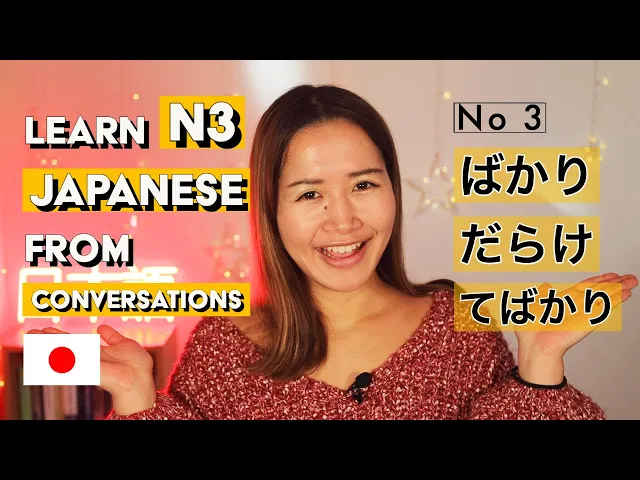
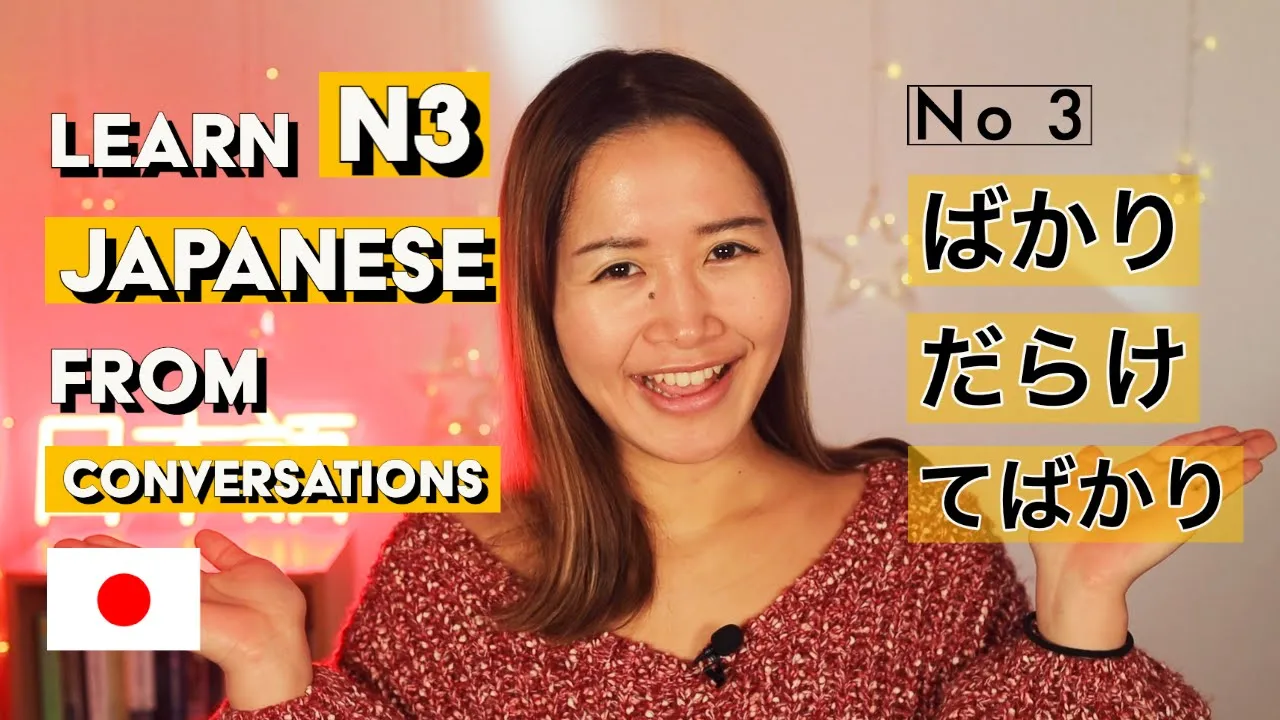
どっちも、同じものがたくさんあるという意味があります。 Both of these means there are many of the same things. でも、ニュアンスと使い方が少し違うので、 But the nuance and usage are a little different, so 今日は、その違いを教えたいと思います。 Today, I would like to teach you the difference. じゃあ、ちょっと会話を聞いてください。 Okay, please listen to the conversation.
この会話では、東京の話をして(い)たんですけど、 In this conversation, we were talking about Tokyo, まず「だらけ」から説明すると、 First, I’ll explain "Darake”, ほとんどいつも、ネガティブなニュアンスで使われます。 It is almost always used in a negative nuance. 「嫌なものが、たくさんある」というニュアンスで、よく使われます。 It is often used with the nuance, "There are a lot of things that I don't like”. もし、次の文につなげたい場合は、 If you want to connect it to the next sentence, こんなふうに、次の文につなげたい場合は「だらけで」を使います。 If you want to connect to the next sentence like this, use "Darake de”.
他によく「だらけ」と一緒に使う単語は、 Other words often used with "Darake" are OK!じゃあ、次は「ばかり」は、どんなときに使うかを説明します。 OK! Next, I'll explain when "Bakari" is used. ネガティブなニュアンスで使われることも多いけど、 It's often used in a negative nuance, but いつもネガティブなニュアンスで使われるわけではないです。 It's not always used in a negative nuance.
ネガティブなニュアンスでも使えるし、 It can be used in a negative nuance, and ポジティブな意味のときも使えます。 It can also be used for positive meanings. 「ばかり」のあとに何か言いたいときは、 If you want to say something after "Bakari", 「だらけで」と同じですね。 Same as “Darake de”. というふうに、文をつなげることができます。 You can connect sentences like this.
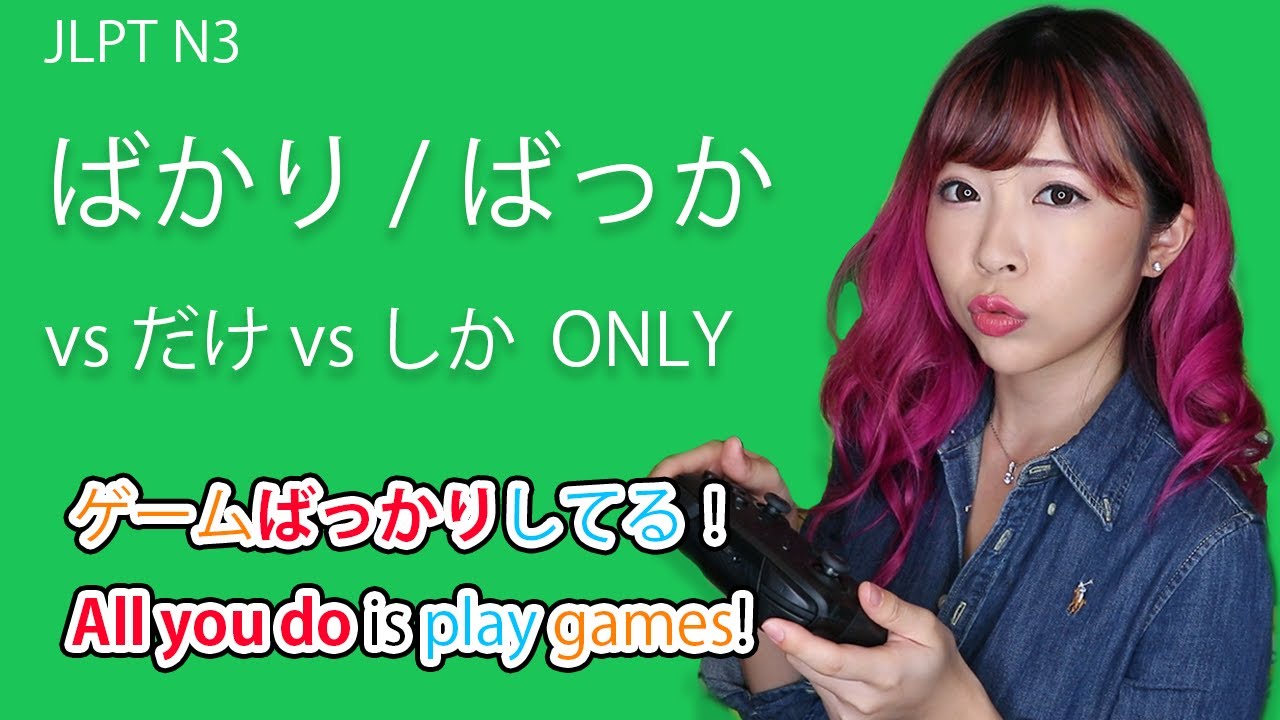
で、よくネイティブは強調(きょうちょう)するために「ばかり」の代わりに、 And, native speakers often substitute the word "Bakari" for emphasis, この「ばっかり」っていうのは、 This “Bakkari”, カジュアルに話すときも、ていねいに話すときも使われます。 It is used both in casual speech and in polite speech. あと、カジュアルな場面(ばめん)では、 And, in a casual situation, これは、カジュアルな言い方なので、 This is a casual way of saying, so 友達と話して(い)るときに使ってください。 Use it when you’re talking to your friend. で、あと、大切なのは、 And also, it’s important that よくネガティブなニュアンスで使われます。 It is frequently used in a negative nuance.
これを言うとき、話し手は、それはよくないと思っています。 When the speaker says this, the speaker thinks it is not a good idea. 「ばっかり」に変えたほうが、もっと強く強調することができます。 You could change it to "Bakkari" for stronger emphasis. 今の例文みたいに、人のことを言うときにも使えるし、 Just like the example sentence, it can be used to refer to a person.
. . 自分のことを言うときにも使えます。 You can also use it to refer to yourself.
だから「よく 〜していて、それはよくない」と言いたいときに、 So when you want to say, "I frequently do this and it's not good," you can use NOUN ばかり ーて(い)る。/ています。と言います。 NOUN bakari – teiru. で、気をつけてほしいのは、 And, please be cautious, 「だらけ」は、NOUN+だらけの形でしか使えないので、 “Darake” can only be used with the form of “NOUN +だらけ”, so 気をつけてください。 please be careful. あと、よく使う形は、 Also, the form we often use is that これも、ネガティブなニュアンスがあって、 This, too, has a negative nuance, 「いつもーしている/ 何回もーしている」という意味です。 It means, “He/she always doing…” 英語の”All one does is…” に似ています。 It is similar to "All one does is.
. . " in English.
「てばかり」のあとに、何か言いたかったら、 If you want to say something after "Te bakari", この「サボる」っていう言葉は、 The word “Saboru”, フランス語の“Sabotage” という言葉からきています。 It comes from the French word "sabotage". これは「てばかり」と同じ意味です。 This is the same meaning as “Te bakari”. まとめると「Noun+だらけ」はネガティブなニュアンスで、 To summarize, “Noun + darake” is a negative nuance, 「何かがたくさんある」と言いたいときに使います。 It’s used when you want to say, “There’s a lot of something”.
で「Noun +ばかり」は「何かがたくさんある」と言いたいときに使います。 And “Noun + bakari” is used when you want to say "there is a lot of something". 「雨ばっかり」みたいに、ネガティブな意味で使うことのほうが多いけど、 It's used more often in a negative sense, like "It’s always raining”, but ポジティブな意味でも使えます。 It can also be used in a positive meaning. あと「NOUN ばかりして(い)る」 と「てform +ばかり」は、 And, “NOUN bakari shiteiru” and “Te-form + bakari” are いつもそれをしていて、よくないと言いたいときに使われます。 It is used when you are always doing that and you want to say it is not good.
あと、もう一つだけ教えたいのは、 And one more thing that I want to teach is, 「まみれ」は「だらけ」に似ているけど、 “Mamire” and “Darake” sound similar, but 何かが体にくっついていて、不快(ふかい)なときに、よく使われます。 It is often used when something is sticking to the body and is uncomfortable. 今から英語の文を言うので、 Now I'm going to say English sentence, so 皆さんは、日本語でなんて言うか考えてください! Please think of how you would say it in Japanese! もしもっと日本語の文法を勉強したいという人は、 If you're interested in learning more about Japanese grammar, たくさんの人が「もっと、自分の日本語に自信が持てるようになった」とか、 A lot of people say, "I'm more confident in my Japanese," or 「『発音がよくなった』と、先生にほめられました」とか "My teacher complimented me on my pronunciation”, or 「もっとボキャブラリーが増えて、本当に嬉しいです」とか言ってくれました。 "I'm really happy that I have more vocabulary”.
もし興味があったら、聞いてみてください。 If you’re interested, please listen to it. 最後まで見てくださって、ありがとうございました。 Thank you so much for watching this until last. もし興味があったら、無料のサンプルオーディオを聞いてみてください。 If you are interested, please listen to the free sample audio.
もし日本人同士の会話がもっと聞きたいという人は、 If you are interested in hearing more conversations between Japanese people, ぜひ、Podcastも聞いてみてください。 Please listen to the Podcast as well. 最後まで見てくださって、ありがとうございました。 Thank you very much for watching to the end. また、次の動画で会いましょう。 See you in the next video.