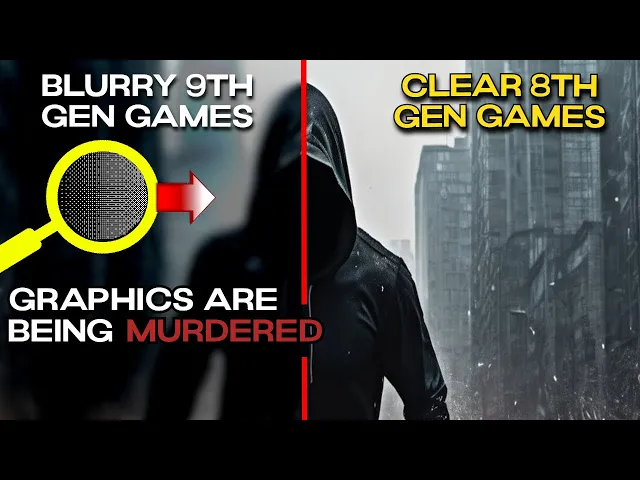
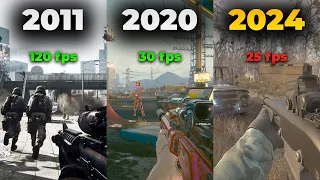
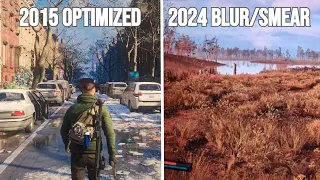
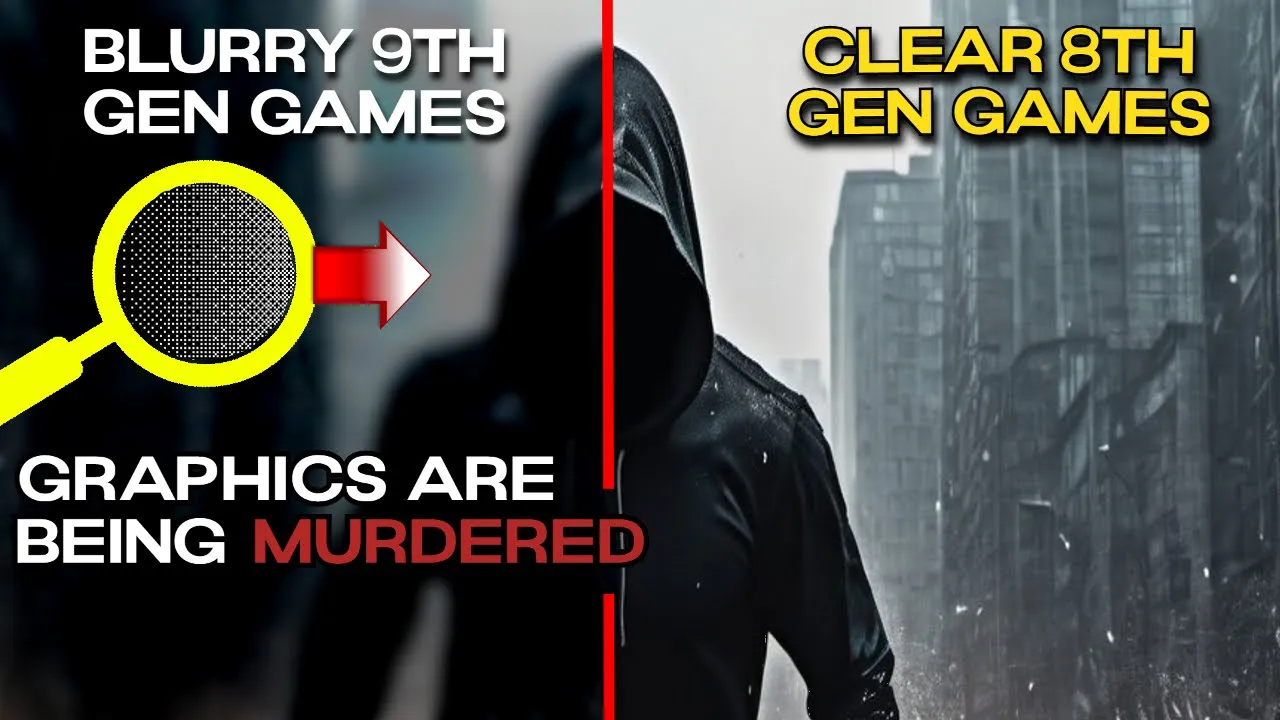
this is an investigative report addressing the most negative aspects affecting modern game development specifically the deteriation of realistic graphics and the manufactured increasing Computing cost I am Kevin Jimenez the founder of threat interactive a new game Production Studio aiming to unlock the full potential this next generation of gaming can provide and we'll show just how by the end of this video there are three interconnected factors that need to be addressed creativity performance and visuals let's begin with creativity several videos online are already bringing awareness to the decreasing quality of gameplay open worlds and the microtransactions affecting the majority of games the two biggest video game makers in America now make most of their money not from people buying games but on subscriptions and spending within those games in fact Electronic Arts and tikto interactive both make a staggering 75% of their money from what's called microtransactions however I personally Lo the popular critique the photo realistic games are not fun they lack art style and we need worse Graphics to fix it this defe this attitude is a byproduct of modern development not visual progress as industry game developers veterans put it one thing you do is 10 things you don't currently Graphics dominate the DU list leaving gameplay and art style in the don't category Graphics are currently in a chaotic state but once the entire developer industry can easily create highly performing photo realism within their engines competition can begin to solely focus on Art Direction and gameplay but recent opportunities for outstanding games with captivating stories and incredible gameplay have been tarnished by the next two factors 30 FPS on next gen consoles is unacceptable for many reasons it appears choppy and promotes a Reliance on accessibility such as motion blur 30 FPS also induces extreme jutter and motion on numerous screens with only 30 frames the quality of gameplay logic and basic responsiveness falls short especially when tons of other titles offer that same basic responsiveness there are numerous eighth generation console titles that ran near photo realistic visuals at 60 FPS and that was on 2013 2 terlop Hardware so 30 FPS titles like Spider-Man PS4 are kind of excused here but modern studios are turning out these half-baked games with absurd requirements creating an illusion that 13 teraflop 2021 architecture isn't powerful enough for basic photo realistic performance standards set years ago this leads us to our final issue the basic standard of 60 FPS is only offered at the cost of our next and biggest problem visuals I firmly advocate for photo realism but the industry is advancing in it in a manner that is worthless during basic movement through a caner in realtime rendering a graphics programming scapegoat that is destroying every game in its path it's called TAA and that stands for temporal anti-aliasing and this includes upscales there are great videos trying to bring awareness about this but digital Foundry has an ignorant video that is quickly spreading inaccurate information that is damaging realtime rendering I will expose false narratives as as that show why TAA has ruined modern optimization Trends in conjunction with an abusive use of the power offered in current generation consoles TAA and upscaler stem from anti-aliasing effects that aim to mimic the benefits of 4K plus rendering because 4K 60 FPS on affordable Hardware including that generation consoles isn't feasible true 4K or higher rendering ensures smooth edges in objects better sampling and textures thin objects and specular highlights as you decrease the resolution stair stepping El liasing emerges and thin details on meshes and specular highlight lighting breaks apart fxa addresses stair spping for a cheap cost but introduces noticeable blur on the entire image smaa eliminates these same edges without any blur making it much more Superior in fact the only Advantage 4K down sample to 1080p versus 1080p with just SMA applied is thin detail and specular sampling but modern TAA is designed to run at any resolution by jittering the rendering view in eight or more positions as frames are generated after Pixel reprojection Logic is calculated and designed the past frames are combined creating an 8K resolution addressing thin undersampled objects and specular highlighting but all versions of these designs have several issues temporal designs are destructive to object or character motion within view the problems I'm about to show aren't usually visible under a slower threshold of motion which is why the industry markets with slow cinematic trailers or graphical showcases but motion produced from gameplay gets annihilated with ghosting blur and smearing visuals this is why still or slow image quality comparisons by Major Tech influencers are both worthless and misleading what's the point in playing a realistic game that looks like this during basic player interactions you to compression conveniently hides these effects of TAA and is usually mistaken for video compression artifacts the 4k on YouTube resembles native uncompressed 1080p more than actual native uncompressed 4K chances are you're playing games through an HDMI or better meaning your game's image quality is uncompressed temporal Solutions in motion deg grade resolutions similar to low bit rate video compression so having ta on your gam plays like adding compression to your gaming experience because of current Hardware prices that aren't changing anytime soon 1080P and 1440p remain the most consumer friendly Target resolutions but TAA ruins these resolutions the most TAA and UPS scalers not only ruin affordable gaming resolutions but also damage luxury resolutions for those with Enthusiast grade graphic gpus TAA and ups scalers are often bundled with ugly sharpeners that fail to fix ghosting or restore the original Clarity and detail Stripped Away from smearing the the ftaa subreddit up until the creation of the r/ motion Clarity subreddit remained the only online community where consumers could finally speak loud against the industry's oxymoron s on realistic graphics and they've listed hundreds of games with Force TAA with recent titles throwing out traditional AA options for upscaling methods only remember the smaa versus 4K comparisons earlier you could get the same sampling quality on thin and specular by re using a single pass frame which means long ghosting Trails blur and smearing could be eliminated I have personally compiled several pieces of data showing these temporal methods could be redesigned to prevent all these hideous motion issues which are listed in the video description but clear and good TAA will never become mainstream because the smear nature of current temporal Solutions are being exploited to cover up lazy and cheap development practices in hundreds of game titles if you can fully disable temporal Solutions you are punished severely with numerous rendering problems temporal dithering and frame blending dependent rendering aspects Bloom soft Shadows denoise replacement for Ray Trace Shadows ambient occlusion screen space contact Shadows vegetation fur hair screen space Reflections Global illumination translucent materials clouds dithering to high geometric camera clipping mesh introductions and Ray Trace Reflections strip away TAA in several engines and these effects transform into an incomprehensible mess or reveal a poor approach to an aspect of rendering these are the supposed fixes and optimizations offered by temporal antialising and ups scalers but an industry Lie perpetuated by digital Founders TAA video is a claim that TAA and UPS scalers enable developers to optimize these Effects by rendering them at lower resolutions allowing TAA to smooth them with supposedly no cost but if you do some digging you'll discover older deferred titles from under a decade ago rendering the same basic effects independently of temporal frames miring with similar or better performance and or similar better visual quality and guess what if you need extra performance from a demanding feature that feature can be programmed to run out a lower resolution and or include its own temporal accumulation without blurring the Entre ire frame modern implementations of last gen's basic visuals perform more poorly because Studios Leverage The Power of ninth generation consoles to cut Financial cost on legitimate optimization processes for faster releases the financial savings don't end there though TAA and upscales enable Studios to save money by integrating these popular and fully develop temporal algorithms into their engines instead of investing in the development of genuinely High performing and self-resolving effects since TAA a large portion of rendering advancement p papers tie in TAA or mentioned in upscaler such as dlss as a required condition to solve some issue with the design speaking of dlss people only label it better than native because dlss is always compared to Native with TAA applied anything compared to the worst case scenario will appear improved the so-called best ta algorithms are needlessly expensive and and brand specific first I have a bone to pick with daa daa uses too many pass frames of reconstruction which causes two problems long ghosting trails and significant blurring in motion compared to Native with SMA or stationary output it also fails to smooth stair stepping in motion compared to smaa applying circus method with the newest dll provides much better results even though both examples are rendered at 1080p but circus method isn't cheap D at 1080p on a desktop 12 GB 360 cost 75 milliseconds cus method bumps it up to 2. 44 milliseconds image quality is far from poor but its proprietary nature cost and blue moon AI mistakes makes it unreliable for the industry xss 1. 3 native AA mode suffers from the same problems as dlia but cost 1.
44 milliseconds at 108p on the same machine applying circus method gets image quality almost indistinguishable from circus method dlss but cost 4. 6 milliseconds next is unreal's TSR it's a little more complex because it implements circus method natively but I give it the fairest shot possible by using U 5. 4 is more optimized implementation it's easy to appear Superior to unreal's TAA but TSR suffers from a specific hazy fizal appearance that video compression doesn't present well enough to pair with my criticism of that aspect but besides whether or not you think it looks fine or not the biggest issue again is the cost when set by the maximum quality settings for anti-aliasing it puts TSR 10 times the the cost of TAA and stands around 3 milliseconds on a 3060 at Native 1080p that's the difference between 60 FPS and 50 FPS still not convinced it's too expensive let's look at the DCA ta again from 2017 these are PS4 timings and they didn't go with SMA because of the cost combined with temporal reprojection so they went with a sharpened fxa fallback for their two-frame ta instead but what if they used smaa instead we would get 36 milliseconds versus both unreasonable TSR timings with such a low base cost and these results at 30 FPS if we wanted to keep AA cost under 1 millisecond on Modern affordable Hardware we could catapult the quality even further with 60 FPS and use that 73 milliseconds of Headroom with aspects such as SMA or Advanced motion vectors meanwhile if TSR was put under the same scenario on screen I guarantee you it would look like a slime show even at 60 FPS these are TAA design requisites that must be combined to keep TAA computations cost low and stop it from producing the poor image quality we've settled it for for more than a decade now but effect dependency is preventing progress unare has long been founded on this dependency and still heavily does u5 is set to worsen this industry problem because it's going to dominate the production of titles coming this generation and epic and its Partners like CD project red have no concern over this matter the unreal documentation goes so far to claim that fxa results in a loss of fidelity compared to their temporal methods which you should be aware by now is only a half truth they also provide misleading information about TSR presenting it as a method to achieve near 4K quality with just 1080p input of course they showcased this with a stationary example in reality 540p with sufficient temporal jittering accumulation can resolve an 8K resolution image with a stationary camera out of context fairy tales like this are damaging game development another out of context narrative epic games is post is that nanite has a faster way to render geometry and aims to eliminate this LOD popping Association nanite does not increase performance unless you abuse your scene with extreme overdraw I've compiled many tests on the specific unreal forms thread that proves this Nana can cost as much as next gen lighting and Poppin will still remain a part of your gaming experience because Shadows skeletal meshes foilage and open world petitions will still introduce pop even Brian Carris has stated nanite can have worst performance on optimizing meshes but stated uses still enable it to save dis space this come is a perfect example showing epic games flawed position on what modern games really need it doesn't matter if your highly detailed open world game is 100 megabytes but can't perform at a decent resolution and frame rate optimized meses don't even require nanite compression but students who use nanite Save themselves money by not investing in quality lods and not investing in mes introduction transitional effects that would give you better results s a good practice used on optimized game meshes is the use of M maps for subpixel detail such as the words on these pixel Stones Nan encourages and is designed to render sub pixel detail geometrically instead of textures which causes extreme pixel crawl and artifacting which you guessed it can only be fixed by intense temporal frame smearing creating a manufactured and limited scenario or flawed TAA appears as a better option I understand the time and quality issues related to making good LS but nana is the worst solution to this problem u5 will dominate all other options because this engine excels in support I'm talking asset packages formatted specifically for unreal hundreds of documentations shared public content overwhelming Logic support epic games provides hundreds of free basic but high quality assets when you use onreal every major thirdparty vendor with game related offer always prioritizes support for unreal unre offers a unique amount of suppor of critical tools for basic workflows like animation and debuggers it's intuitive to use in comparison with competitor UI and programming designs for Studios finding individuals to hire is Made Easy due to the widespread popularity and Adoption of the engine it's an advantage unreal has acquired to by simply existing as long it has the way it has that makes it the go-to for software and digital media but the engine designs and its leadership should not be at the Forefront of nextg Graphics development for critical reasons I'll outline right now epic provides 30 FPS presets in unreal because they don't believe it's inadequate on Ninth generation consoles look at fortnite 5.