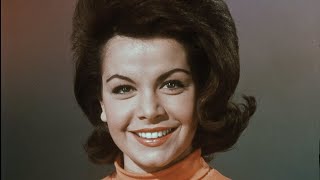
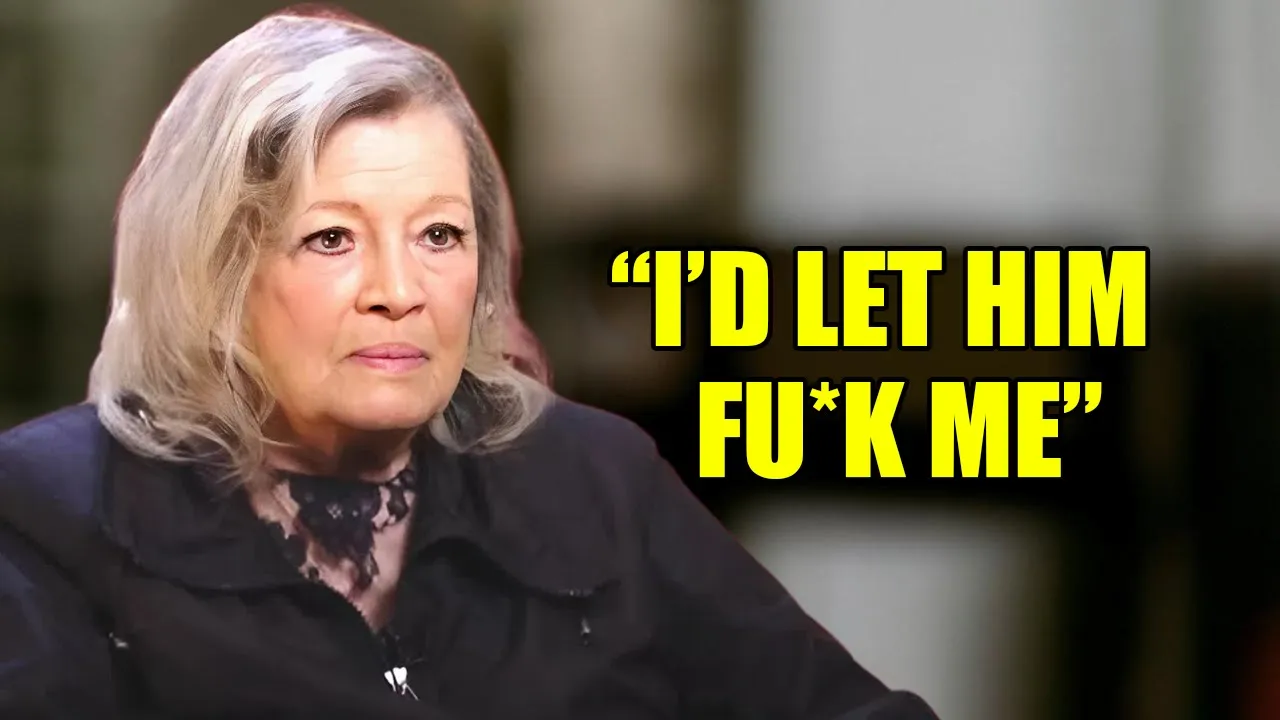
And you know nowadays they have six, seven, and 11ish episodes for a series, right? >> Angie Dickinson was never just another beautiful woman in Hollywood. She was desire, confident, unapologetic, and fully aware of the effect she had on men and women alike.
In an era when actresses were expected to smile politely and say nothing, Angie did the opposite. She spoke honestly. She flirted boldly.
and she never pretended she didn't know what she wanted. Behind the glamorous photos, the tight dresses, and the unforgettable screen presence, Angie Dickinson lived with a rare kind of freedom. She believed attraction was not a weakness, but a truth.
And over the years, she quietly admitted that certain people stirred something in her so deeply it caught even her by surprise. These were not reckless confessions. They were reflections of a woman who understood chemistry, power, and longing better than most.
Tonight, we're revealing the six people. Angie Dickinson openly admitted she couldn't resist, and why each one left a lasting mark on her heart. Number one, Frank Sinatra, the man who made desire feel dangerous.
Frank Sinatra was not simply a singer, an actor, or a legend. To Angie Dickinson, he was something far more unsettling. A man who could walk into a room and quietly rearrange the emotional balance of every woman inside it.
Sinatra didn't flirt loudly. He didn't chase. He waited.
And that was precisely what made him irresistible. Angie once admitted that being around Frank felt like standing too close to a flame. There was warmth, charm, humor, but also danger.
Sinatra's confidence wasn't performative. It was lived in. He spoke as if he already knew the ending of every conversation.
And somehow he was usually right. What attracted Angie most wasn't his fame. It was his vulnerability hidden beneath bravado.
Frank could be tender one moment and distant the next. That unpredictability created a tension Angie found intoxicating. She once joked that Frank didn't need to touch you to leave a mark.
his voice alone could do that. Their chemistry, whether on screen or in the same social circles, was undeniable. Yet, what made Frank unforgettable was that he never tried to possess Angie.
He let her want him. And for a woman as independent as Angie Dickinson, that restraint made the desire burn even hotter. Number two, Dean Martin.
The man who made her feel beautiful without trying. If Frank Sinatra was danger, Dean Martin was comfort wrapped in charm. Dean didn't overwhelm Angie.
He disarmed her. His attraction wasn't intense or dark. It was smooth, warm, and deceptively effortless.
Angie often said that Dean had a way of making women feel seen without being examined. He listened. He laughed easily.
He made flirtation feel playful rather than strategic. Around Dean Martin, Angie felt relaxed. And that relaxation became its own form of attraction.
Dean's appeal lay in how little he tried. His voice, his posture, his quiet confidence, it all suggested a man who wasn't competing with anyone. And for Angie, who lived in a world of ambition and ego, that was refreshing.
She once described Dean as the kind of man who made you forget you were being desired until you realized you were smiling for no reason. There was no pressure, no games, just chemistry that felt natural, mutual, and safe. In many ways, Dean represented the kind of intimacy Angie rarely found in Hollywood.
Warmth without control, attraction without expectation, and that made him unforgettable. Number three, John F. Kennedy.
The power that pulled her in. John F. Kennedy was unlike anyone Angie Dickinson had ever encountered.
He wasn't an entertainer. He wasn't chasing applause. He carried authority effortlessly, and that alone changed the way people responded to him.
Angie never claimed she was drawn to Kennedy because of politics. What captivated her was presence. When JFK entered a room, the energy shifted, conversations slowed, attention narrowed, and Angie, like many women of her era, felt that pull immediately.
She once admitted that Kennedy had a way of making you feel like the most important person in the room, even if you knew he was doing it to everyone else. That illusion of intimacy, combined with his intelligence and charisma, was deeply seductive. There was also something forbidden about the attraction.
JFK existed in a world Angie could observe but never fully enter, and that distance intensified the desire. She didn't fantasize about possession, only proximity. For Angie Dickinson, Kennedy represented a rare blend of intellect, power, and vulnerability.
A man who carried the weight of a nation, yet still looked like he wanted to escape it. That contradiction stayed with her long after their paths crossed. Number four, Bert Reynolds.
The man who embodied pure masculine confidence. By the time Bert Reynolds entered Angie Dickinson's orbit, Hollywood was changing. Masculinity was no longer polished and formal.
It was physical, unapologetic, and boldly visible. And Bert Reynolds represented that shift better than anyone. Angie didn't hide her reaction to Bert.
She once admitted that being near him felt different from being near other men. Bert didn't rely on mystery or power. His attraction came from certainty.
He knew who he was. He knew what effect he had. And he was completely at ease with both.
What intrigued Angie most was Bert's blend of strength and humor. He wasn't stiff or intimidating. He laughed loudly, teased freely, and moved through the world as if nothing could truly threaten him.
That confidence made him magnetic. Angie later reflected that Bert represented a kind of desire that was immediate and physical, but not shallow. There was sincerity beneath the bravado.
He didn't pretend to be deeper than he was, and that honesty made him refreshing. In Bert Reynolds, Angie saw a man who didn't need control, mystery, or dominance to be irresistible. He simply existed fully as himself, and sometimes that was more than enough.
Number five, Marlon Brando. The man she knew she should avoid. Marlon Brando was never safe, and Angie Dickinson knew that from the very beginning.
Brando didn't charm in conventional ways. He unsettled. He disrupted.
He pulled people out of balance simply by being present. For Angie, he represented the kind of attraction that didn't feel good but felt impossible to ignore. She once described Brando as emotionally dangerous.
There was brilliance in him, yes, but also chaos. He could be deeply sensitive one moment and emotionally unavailable the next. That unpredictability created a tension Angie found both fascinating and frightening.
Unlike other men on this list, Brando didn't make Angie feel admired. He made her feel seen, truly seen, and that level of exposure was uncomfortable, but it was also intoxicating. Angie later admitted that she kept her distance from Brando intentionally, not because the attraction wasn't there, but because it was too strong.
She understood that getting closer would mean losing control. In Marlon Brando, Angie saw a mirror of her own emotional depth and perhaps a warning. Some desires, she realized, are meant to be acknowledged, not acted upon.
Number six, the unexpected confession. When Angie admitted desire knows no gender late in her life, Angie Dickinson surprised many by speaking openly about something she had rarely discussed before her attraction to women. She didn't frame it as a label.
She didn't call it an identity. She described it simply as truth. Angie admitted that there were moments when she felt drawn to women with strong presence, intelligence, and physical confidence.
One name stood out not because of scandal, but because of honesty. A woman whose beauty felt undeniable, whose energy felt powerful enough to stop Angie in her tracks. "I noticed her," Angie said quietly.
"And I didn't question why. " "This final confession wasn't about sexuality. It was about freedom.
" "Angie believed attraction was human before it was political or definitional. Desire to her didn't need explanation. It only needed honesty.
By sharing this, Angie Dickinson completed her story not as a symbol, but as a fully realized woman, one who allowed herself to feel without fear, without apology, and without shame. In the end, Angie Dickinson's story is not about scandal, temptation, or rebellion. It is about honesty.
a rare fearless honesty that few women of her generation were allowed to express, let alone admit publicly. Angie never framed desire as something shameful. She saw it as proof of being alive, of being present, of still feeling curiosity, attraction, and emotional pull in a world that often expected women to become silent with age.
The six people she openly acknowledged were not trophies or conquests. They were moments, brief sparks that revealed what she valued most. Confidence, intelligence, emotional depth, authenticity, and freedom.
What makes her story resonate so deeply today is its restraint. Angie didn't act on every desire. She understood the difference between wanting and choosing, between acknowledging attraction and letting it define your life.
That balance between passion and self-respect is what made her powerful. For audiences who have lived long enough to understand complexity, Angie Dickinson represents something rare. A woman who embraced desire without losing dignity, who spoke truth without cruelty, and who proved that attraction does not expire with youth.
It simply evolves. Now, we'd love to hear from you. Which of Angie Dickinson's confessions surprised you the most?
Did any of these names change the way you see her iconic image? Share your thoughts in the comments below. If you enjoy classic Hollywood stories told with depth, honesty, and respect, don't forget to like this video and subscribe to the channel because behind every legend, there is a human story.
And those stories deserve to be told truthfully.