Have you ever felt like you're working harder than everyone around you, but somehow you're still falling behind? Maybe you're the first one in the office and the last one to leave, but your results don't match your effort. Maybe you work 12-hour days while your colleague works 6 hours and gets promoted instead of you.
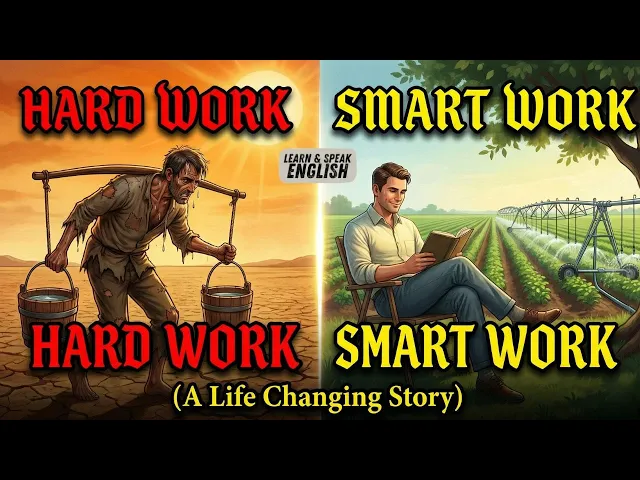
Or maybe you're exhausted, burnt out, barely sleeping, yet you [music] watch others succeed with what looks like half your struggle. If you've ever wondered why hard work isn't enough, if you're tired of being tired with nothing to show for it, then this story will change how you work forever. Because once [music] there was a farmer who almost destroyed his life by working too hard until one encounter taught him the difference between effort [music] and strategy.
Stay with me until the end. In a farming valley where families had worked the land for generations, there lived a 32-year-old farmer named [music] Thomas. Thomas owned a modest 10acre farm that he had inherited from his [music] father.
And Thomas believed in one thing above all else, hard work. Every morning, Thomas woke up at 4:00 a. m.
before the sun touched the horizon. He worked his fields with his bare hands, refusing to spend money on modern tools. My grandfather did it this way.
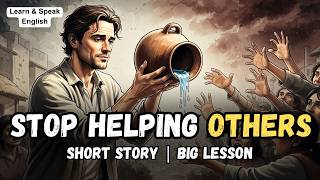
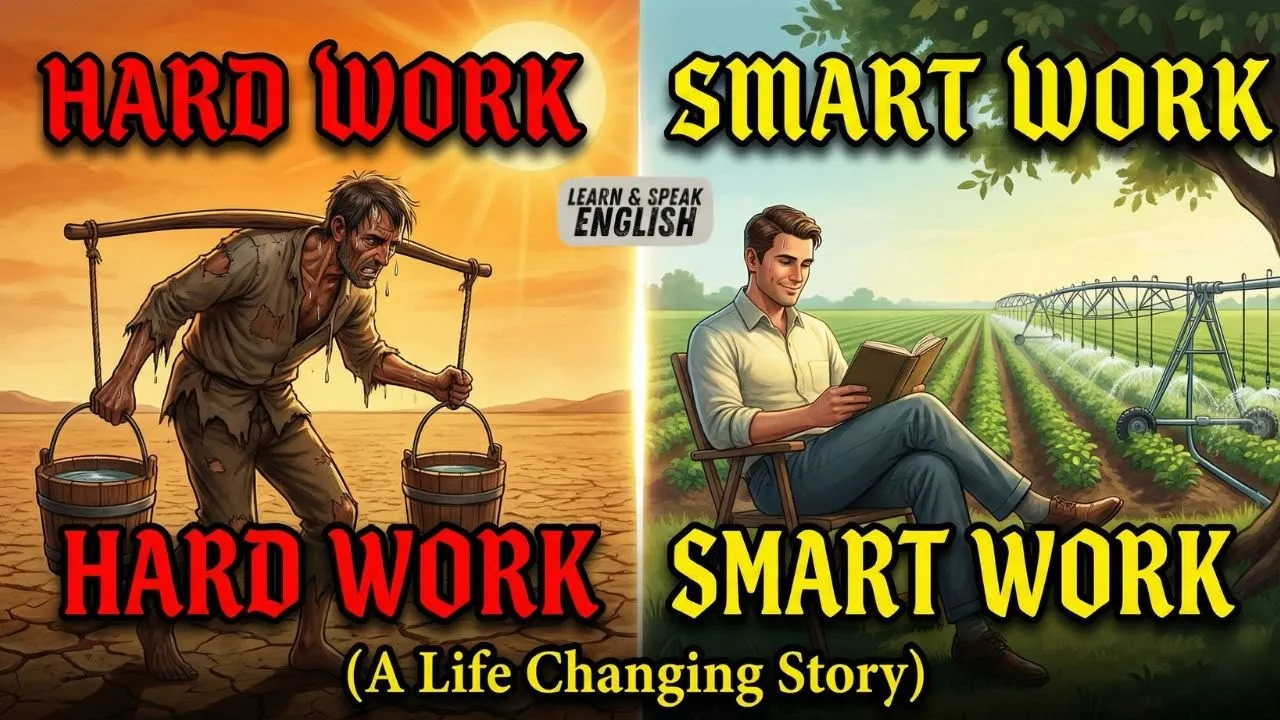
He [music] would say, "Hard work is the only honest way. " He planted every seed by hand. [music] He watered every row with a bucket.
He pulled every weed himself. From sunrise to sunset, Thomas worked. His hands were calloused and bleeding.
His back [music] achd constantly, but he wore his exhaustion like a badge of honor. At night, he would collapse into bed, too tired to eat [music] properly, too tired to spend time with his wife, Sarah. She would look at him with worried eyes and say, "Thomas, you're killing yourself.
There has to be a better way. " But Thomas would shake his head. Sarah, success requires sacrifice.
Hard work never fails. I just need to work harder. The neighboring farmers watched Thomas with a mixture of admiration and pity.
That man works like three men, they [music] would say. If hard work alone could make someone rich, Thomas would be a millionaire. But the truth was darker.
[music] Despite working twice as many hours as his neighbors, Thomas's farm produced barely enough to survive. Every harvest [music] was a struggle. Every season brought him closer to debt.
His crops were average. [music] His yield was mediocre. And worst of all, he had no time, no energy, and no life outside of work.
Next to Thomas's farm lived a man named Richard. Richard was the same age, had [music] the same size farm, even started with less money than Thomas. But something was different.
Richard worked from 8:00 a. m. to 2:00 p.
m. , just 6 hours a day. He used modern irrigation systems, hired part-time help during harvest, [music] and spent his evenings reading, relaxing, and traveling with his family.
And somehow, [music] Richard's farm produced twice what Thomas's did. This fact haunted Thomas [music] every single night. One brutal summer, a drought hit the valley.
Water became scarce. [music] Every farmer faced the same challenge. how to keep crops alive with limited resources.
Thomas decided [music] to work even harder. He woke up at 3:00 a. m.
instead of 4:00 a. m. He carried water buckets from [music] a distant well, making 50 trips a day.
His body screamed in protest, but he pushed through. Hard work never fails, he repeated to himself like a prayer. Meanwhile, Richard simply adjusted his irrigation system to deliver water more efficiently during cooler hours, losing minimal moisture to evaporation.
On the 15th day of this grueling routine, something inside Thomas broke. He was carrying his 40th bucket of water when his vision blurred. [music] His legs gave out.
The bucket slipped from his hands, spilling precious water into the dust. Thomas fell to his knees, gasping for air, [music] his heart pounding irregularly. Sarah found him there, collapsed between rows of dying crops, too exhausted to even stand.
The doctor's words were clear. Mr Thomas, [music] your body is shutting down. You're dehydrated, sleepdeprived, and on the edge of a heart attack.
If you continue like this, you won't see [music] next harvest. Not because of the drought, because you'll be dead. That night, lying in bed with IV fluids dripping into his arm, Thomas [music] stared at the ceiling and felt something he had never felt before.
Defeat. Not [music] defeat from the drought. Not defeat from the circumstances, but defeat from the realization that his entire belief system, [music] the very foundation of his life, might be wrong," he [music] whispered to Sarah.
"I did everything right. I worked harder than anyone. I sacrificed everything.
Why am I failing? " Sarah held his hand gently and said, "Maybe, my love, hard work isn't the answer. Maybe there's something you haven't learned yet.
That sentence haunted Thomas [music] all night. 3 days later, when Thomas was strong enough to walk, he did something he had been too proud [music] to do for years. He knocked on Richard's door, Richard opened it with a surprised smile.
Thomas, I heard about your collapse. Come in, [music] please. They sat on Richard's porch overlooking his thriving farm.
Thomas looked at the green, healthy crops, twice [music] the density of his own struggling fields, and felt a mix of envy and curiosity. [music] Richard, Thomas began, his voice humble for the first time. "I need to understand.
I work twice your hours. I pour everything I have into my farm. But you you work half the time and produce double the results.
How? Richard was quiet for a moment, then stood up. Come, let me show you something.
They walked to Richard's tool shed. Richard picked [music] up two axes, one old and dull, one sharp and gleaming. Thomas, imagine two wood cutters competing [music] to chop down trees.
The first wood cutter swings his axe for 12 hours straight, never stopping, never resting. He believes that [music] more effort means more trees. Richard handed Thomas the dull axe and pointed [music] to a thick log.
Try it. Thomas swung. The axe bounced [music] off, barely making a dent.
He swung again and again. After 10 swings, he was breathing [music] hard and the log had a shallow cut. Richard took the sharp axe and swung once.
It bit deep into the wood. Three more swings and the log split in two. The second wood cutter, Richard continued, works for 10 hours, but every hour he stops for 10 minutes to sharpen his axe.
His competitor mocks him. You're wasting time. Keep swinging.
[music] But by the end of the day, the second wood cutter has cut down twice as many trees. Richard looked [music] Thomas in the eyes. You are the first wood cutter, my friend.
You've been swinging a dull axe for years, wondering why your hands are bleeding, but the tree isn't falling. Richard walked Thomas through his [music] farm, explaining three principles. First, systems over effort.
I don't carry water in buckets. I installed a drip irrigation system that delivers water directly to roots with zero waste. It cost money up front, but now it works automatically while I sleep.
You spend 6 hours hauling water. My system does the same job in 10 minutes. Second, focus over hustle.
I grow only two crops that thrive in our soil. You grow five different crops, spreading your attention thin. I master two [music] things.
You struggle with five, I produce excellence. [music] You produce mediocrity. Third, rest is part of the [music] strategy.
My brain is fresh every day because I sleep 8 hours, exercise, and take breaks. [music] I make better decisions. I spot problems early.
I innovate. You're so exhausted [music] you can't think straight. You make mistakes that cost more time to fix.
Richard [music] placed a hand on Thomas's shoulder. Thomas, you're not [music] failing because you don't work hard enough. You're failing because you only know how to work hard.
There's a difference between motion and progress. Between being busy [music] and being effective, he pointed to the fields. Hard [music] work is the foundation.
I respect that. But hard work without strategy is just suffering. It's time to sharpen your axe.
Thomas returned home that evening with a mind full of questions and a heart full of something new. Hope. For the first time in years, he didn't immediately rush to his fields.
Instead, he sat down with Sarah [music] and a notebook. "Teach me to think differently," he said. The next [music] morning, Thomas did something radical.
He worked for 4 hours, then stopped. He used that time to research irrigation systems. He visited the local agricultural office.
He talked to suppliers. He made a plan. Within 2 weeks, he had sold an old tractor he never used [music] and bought a basic drip irrigation system.
Installing it took 3 days, [music] but once it was running, his water delivery time dropped from 6 hours a day to 20 minutes. The time he saved, he invested in improving his soil, studying [music] crop patterns, and actually planning instead of just reacting. Thomas reduced his crop varieties from 5 to two, the ones that grew best in his soil and sold for the highest price.
Instead of being mediocre at five things, he became excellent at two. He hired a [music] neighbor's teenage son to help during peak season, paying him fairly. Thomas realized one hour of strategic planning created more value than 10 hours of mindless labor.
But the most profound change wasn't in his [music] farm. It was in his life. For the first time in years, [music] Thomas had dinner with Sarah.
They talked, they laughed. He had energy to play with his children. He started [music] exercising in the mornings, which made him stronger and more focused during work hours.
His friends noticed, [music] "Thomas, you're working less, but you look healthier, happier. " Thomas would smile and say, "I'm working smarter. Turns out you can't think clearly when you're exhausted.
" 6 months later, the next harvest came. Thomas' fields, now efficiently irrigated and properly managed, [music] produced 40% more than his previous best year. Not because he worked harder, but because every hour of work was strategic, focused, and effective.
He worked 7 hours a day instead of 15. But those seven hours produced more than his 15 ever did. Richard came over one evening [music] and walked through Thomas's transformed farm.
He nodded with approval and said, "You learned the lesson, my friend. Now [music] you're not just a hard worker, you're a smart worker. " Thomas clasped Richard's hand.
Thank you for showing me there's more than one way to build something great. My friend, Thomas's story is not just about farming. It's about every person who believes that suffering equals success.
That if you're not exhausted, [music] you're not trying hard enough. Here's the truth. Our culture doesn't tell you.
Hard work is necessary, but it's not sufficient. The most successful people in the world don't work the most hours. They [music] work the smartest hours.
Remember three things. First, [music] before you work harder, ask if there's a system that could work smarter. Don't carry water in buckets if you can build a pipeline.
Don't manually do what technology can automate. Don't [music] brute force what strategy can solve. Second, focus beats hustle.
Stop trying to do everything. Choose two or three things that create the most value [music] and become excellent at those. Mastery in a few areas beats mediocrity in many.
Third, rest is not the opposite of productivity. It's part of it. A tired mind makes expensive [music] mistakes.
A rested mind sees opportunities. You cannot think strategically when you're running on fumes. So, here's your challenge.
Look at your work this week. Find the one task you spend the most time on. Ask yourself, is there a smarter way to do this?
A system I could build? A tool I could use? A person I could delegate to?
Then take one afternoon, [music] just one, to implement a smarter system instead of just working harder. Because here's what Thomas learned and what you need to know. You are not a machine designed to [music] run until it breaks.
You are a human with a brilliant mind capable of creating leverage. Stop swinging the dull axe. It's time to sharpen it.
If this story hit home, if you've been grinding yourself into exhaustion, give this video a like and share it with someone who needs permission to work smarter, [music] not just harder. Drp a comment. What's one task you're going to optimize this week?
Let's share strategies [music] and learn from each other. I'll be back next week with another story to transform how you think about success. Until then, remember, [music] strategy beats exhaustion.
Every single [music] time your best work happens when your mind is sharp, not when [music] your body is broken.