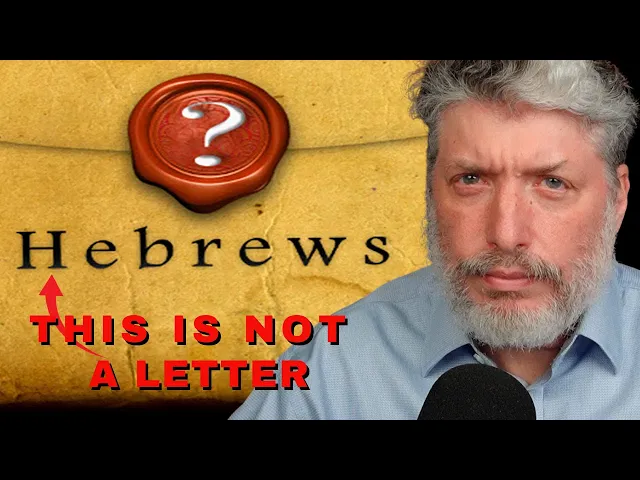
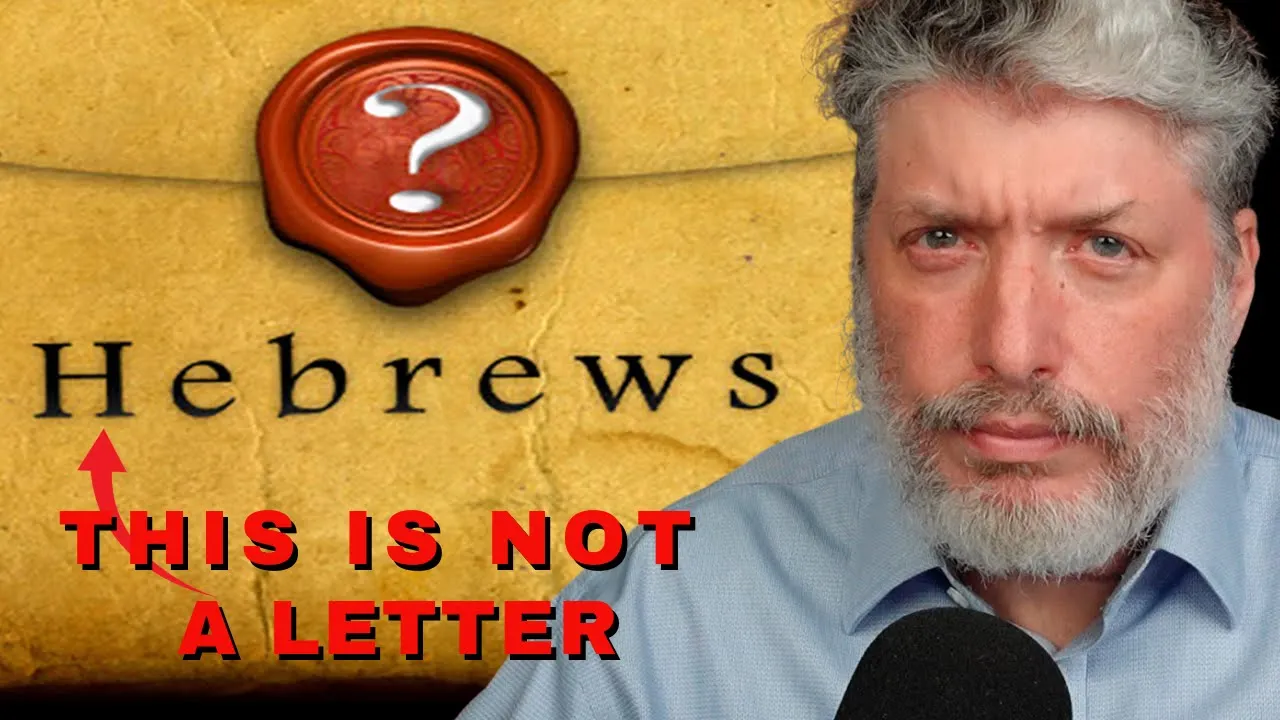
I'm calling it The Book of Hebrews and not the epistle to the Hebrews why cuz it's not an epistle and I don't know how that got in there it's not a letter it's a [Music] scream actually I think I've got Wayne next Wayne are you with me now I'm with you got the neighbors mixed up over there thank you go ahead you're live on the air go right ahead okay hello and good morning my uh my question is coming out of uh Hebrews chapter 1 I've been looking at it real deep and comparing all the
uh citations that are quoted here with the Jewish text and in the fifth verse of Hebrews 1 it says that uh the latter part of it says that I will be a father to I will be his father and he will be my son but when you go and look at the p passage it goes on to say that and when he commits iniquity I will discipline him more or less so I don't know if this was a common practice in uh Antiquity to take a passage like this and just quote it partially but even
so if you look at this passage and you go look at chapter 4:1 15 it says Jesus was without sin so quoting this verse from my from Samuel and then saying that in the fourth chapter seems to contradict each other I'm really a very lucky man that I have such such viewers and quers such sweet people out there really sweet Hebrews chapter 1 is here to tell us why it's a whole new set of rules that's how Hebrews 1 begins Hebrews chapter 1 verse 1 and two says that in the old days it went this
way you went to the prophets but now we have Jesus so it's a whole new game the passage you're quoting from is Hebrews 1 ver5 which does something very interesting and that is that we're going to find out that the author the book of Hebrews did not thought that uh that Jesus is not an angel and he's superior to the angels okay this is really important because you just blck that away because Christians frequently are going to say that an angel of the Lord in the Hebrew Bible is Jesus the Hebrews argues against that and
this is the passage where Hebrews is making that argument the book of Hebrew and I'm calling it The Book of Hebrews and not the epistle to the Hebrews why because it's not an epistle and I don't know how that got in there so it's it's not a letter it's a screed it's a it's a insane sermon that's all it is so it's they called the epistle to the Hebrews but it is not a letter okay it is not a letter I actually had a Christian once correct me and said it's it's not the book of
Hebrews the epistle Hebrew I said why is it an epistle he couldn't answer me it isn't an epistle they quot that I don't know how that got in there so in verse five the author we don't know who wrote it's written anonymously Church fathers convince themselves that Paul wrote it and they included it in the Canon it's one of those books that the church fathers argued over but it is very well written much better written than Paul's letters it's very systematic it's very well organized much Paul's letters are Paul was all over the place he
was a very temperamental fellow whoever wrote Hebrews was not did not have the temperament to P totally different but let's stay focused here so in verse five so the author is saying that Jes that the angels that are inferior to Jesus that's what it says in verse so you want to make sure in context in verse 5 it says to prove what he just said in verse four that Jesus superiority and say to which Angels did God ever say you my son today I've have begotten you or I'll be to you a father you'll be
to me a son so there's really two verses being quoted here one of them is Psalm 2:7 where it's King David so it's not to the Messiah at all now King David was anointed so be care careful it's such a game so King David does say I mean it's actually Psalm 2 is called the enthronement psalm because King David says that anointed me God anointed king David while Saul was still alive as a punishment to Saul King David was anointed he didn't all throne but he was already anointed by Samuel while sha was King today
I have begotten you so if it's today that means I thought the Jesus was forever eternity doesn't make any sense okay so that's one misquote the second misquote is the it's Part B of Hebrews 15 where it says and I will be his father and he'll be to me a son Hebrews intend to say what are you talking about where is there ever a time where it says this about an angel so that's the Hebrews is saying in his unique way the angels have never spoken of this way but again you are completely correct this
is completely misappropriate that means in truth Hebrews saying that Messiah is not an angel is correct he's saying it about Jesus for his own christological reasons book of Hebrews is written around the year 64 it's written let's say a decade before The Book of Mark it's the temple Still Standing the war with Rome did not yet begin the temple is fired up in Full full Glory at that time so you're quite right in 2 Samuel chapter 7 verse 12-16 Hashem promised David that um that the davidic dynasty will never be destroyed ever is very important
to know this that the God made a covenant with David that although he may have children you're quite right who will sin and I will punish them personally but I will never take away the Royal Throne from your descendants as I did with your predecessor that sha got it that's the context so you're quite right so how could this be talking about Jesus I mean it's but people I I being honest with you I don't mean anything but Christians don't look this up I don't I really don't think I really don't think if there are
two billion Christians on this planet I don't think more than one in 500 know what I've just shared with you they forget the fact that he's ripping out of context that even what Hebrews one is talking they just don't know they don't know their own Bible they certainly don't know the book of Hebrews they don't know they memorize a few verses John 3:16 Isaiah 53 and that's the end of it the truth Christians do not know they just know Jesus loves you and you can go to heaven if you believe in this religion so you're
right so Hebrews rips out of because if what Hebrew saying is you'll be to me a son and he's referring the context by the way of 2 Samuel chapter 7 it's good to know is that uh David asked to build a temple Nathan the prophet made a mistake and actually said David go ahead build it God told them wait go back and let me can build it for whatever reason and and but he makes a davidic covenant this not the only place in t with he says I promise you that the The Throne will always
remain in your family and you'll have a son who'll build a house of my name and if he sins I'll punish him personally but I won't take it away how could this be Jesus Jesus cl to Christianity never sined was sinless and died for our sins and open this is open christology where Paul speaks about in his letters he used without sin anyways you know the story so I'm glad you looked it up but you looking it up like actually doing the forensics on this is not something that Christians do and it's really a good
idea to look it up anyways thank you so much for your question if you enjoy this program please like And subscribe [Music] [Applause] [Music]