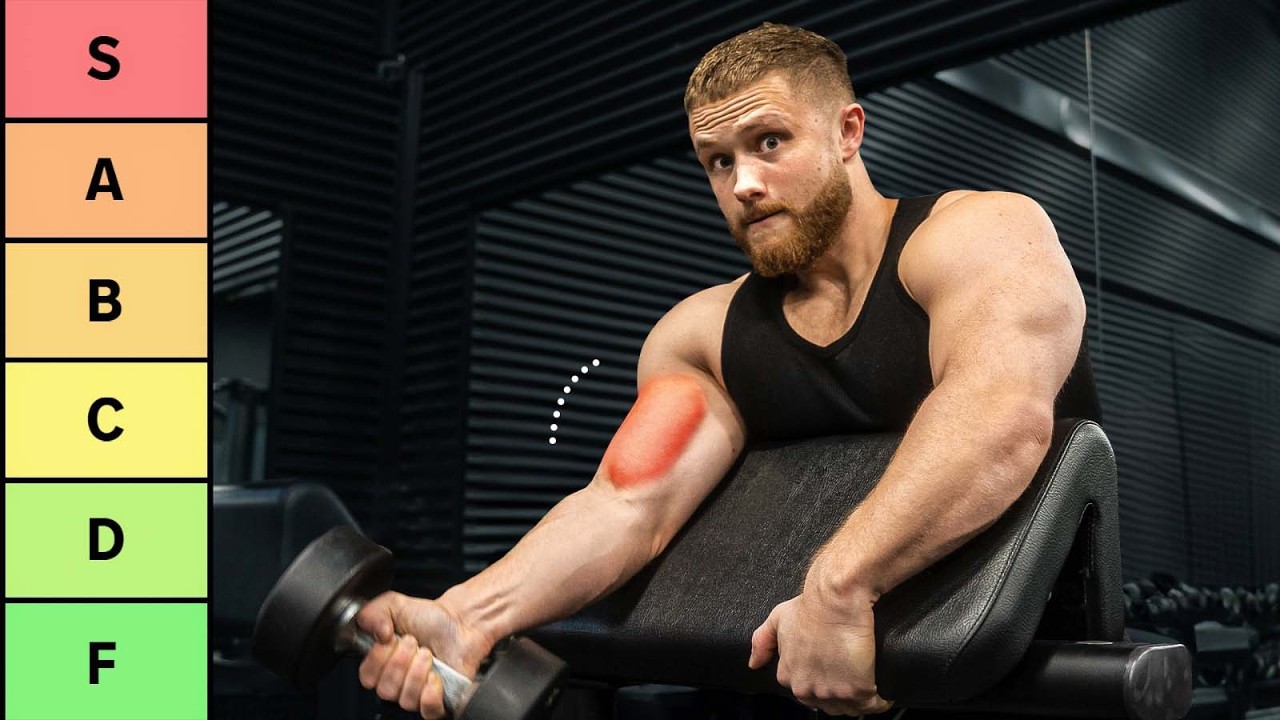
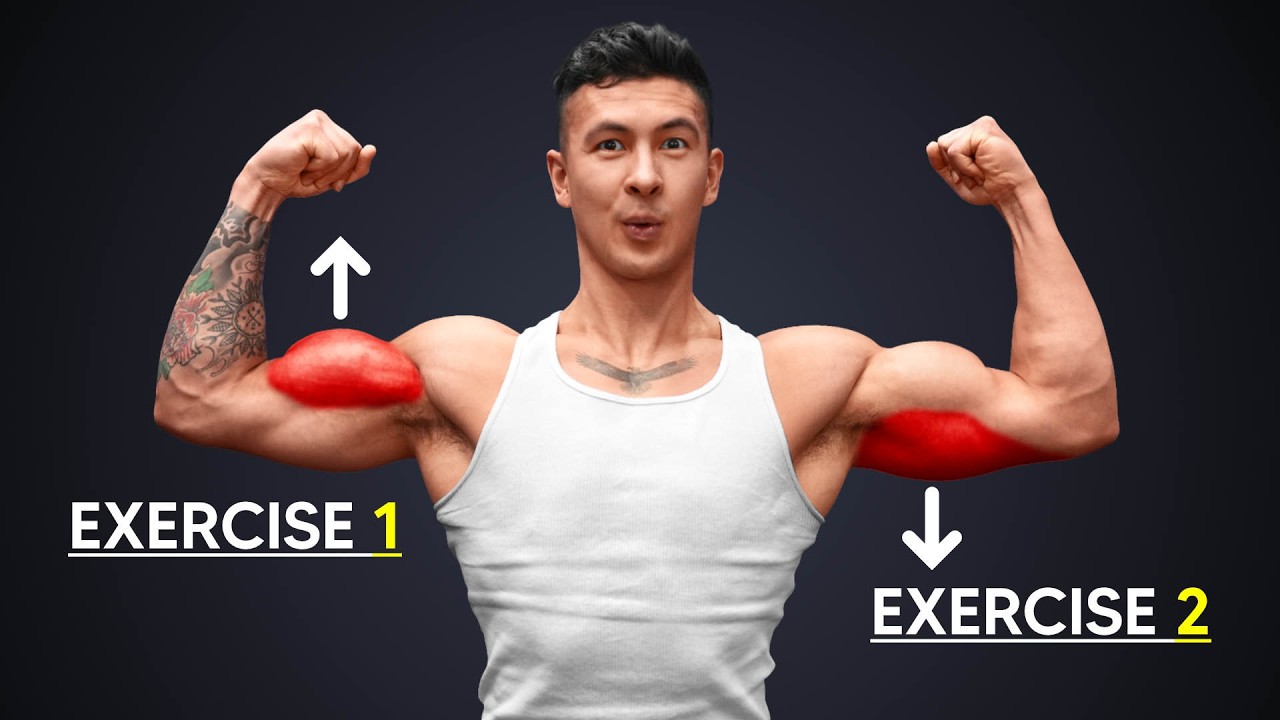
welcome to the house of hypertrophy how can you train to maximize biceps hypertrophy a brand new study is the first ever to explore an interesting idea let me explain the scientific literature has multiple examples of training muscles at longer lengths producing greater hypertrophy than shorter lengths thus exercises that place our shoulder into an extended position which effectively lengthens the biceps could be highly effective indeed we have evidence that incline coals produce greater overall biceps hypertrophy than preach toos but does more training at longer muscle lengths produce more hypertrophy or is it okay or possibly even
Superior to have some training at shorter muscle lengths this is what the brand new study explored let's dive in seven individuals with an average of 5 and a half years of training experience were recruited I know what you're thinking just seven individuals that's close to nothing there's no denying that's true but the researchers did two important things firstly each subject trained both conditions will'll dissect the training details in a moment but one arm was randomly assigned to train entirely at long muscle lengths while the other arm trained with an even mix of long and short
lengths I say this often but having the same subjects in both conditions reduces the influence of genetics nutrition and outside lifestyle factors on the results also there is no transfer in growth between between Limbs and there was an even balance of dominant arms in each condition meaning that the overall results are not confounded by this secondly the subjects trained for 8 weeks had a following 6 to 8 week wash out period and then had the arms randomly assigned to train either condition for another 8 weeks therefore the number of observations is the same as having
14 subjects in a typical study so the researcher certainly did a good job of getting the most out of the seven trained individuals during both 8we training blocks the subjects train twice per week as mentioned one arm was assigned to train entirely with long muscle lengths this involved performing six sets on this lengthen cable curl each session the other arm trained with an even mix of long and short lengths performing three sets on the lengthened cable curl and three sets on this shortened cable curl each session every set was trained to momentary failure in the
8 to 12 rep range the authors noted most subjects tended to fail on the lengthen curl near the start of the curl and the shorten curl at the later portion of the curl loads were adjusted whenever necessary to stay in this rep range the researchers took multiple hypertrophy measurements elbow flexor cross-sectional area elbow flexor thickness at 33% and 66% of the muscle length and arm circumference at 30 50 and 70% of arm length the reason I said Elbo flexer is that these measurements technically included both the biceps and Brach yis both condition I conditions meaningfully
increased elbow flexor cross-sectional area with the gains tending to be better for the long condition however the difference between groups did not exceed the region of practical equivalence which was defined by the typical measurement eror leading the authors to classify this as no difference both conditions numerically increased elbow flexor thickness at both regions but the growth wasn't considered meaningful as the increases did not exceed the region of practical equivalence from this it's unsurprising there was no differences between the conditions for changes in thickness this might confuse some of you how come cross-sectional area meaningfully increased
for both groups while muscle thickness did not it could be because the thickness measurements were just measured at two regions measurement error or because the researcher's method for measuring thickness was novel and hasn't yet been validated finally the long condition numerically increased arm circumference at all regions whereas this wasn't the case for the Mixed condition so the growth tended to be greater for the long condition with the difference being considered meaningful especially at the 70% region since the differences comfortably exceeded the region of practical equivalence so what do these findings tell us allow me to
present two ways you could interpret these findings the first perspective says we cannot say there was a difference between conditions this is because although cross-sectional area increases favored the long condition the difference was not large enough to exce ceed the typical measurement error and although the arm circumference gains favored the long condition circumference is simply a far more imprecise estimate of growth than muscle cross-sectional area or thickness so the circumference result should be taken with a grain of salt the second perspective is closer to saying the long condition grew more because of the trends in
cross-sectional area and circumference results to further strengthen this you could point out that although the researchers took steps to get the most out of the seven subjects it is still underpowered we're also not talking about a program entirely with long length exercises versus short-length exercises rather long versus mixed training so the differences in the training program were modest and expecting detectable differences in growth particularly in well-trained individuals is hard to ask with a small sample size these aren't the only interpretations you could have and at the end of the day we're merely talking about one
study but I am leaning towards the second perspective I think it's plausible that if there was a larger sample size more detectable differences may have been found but I do reserve the right to be wrong on this in a situation like this it can be all too easy to question the researchers but conducting research isn't easy you never know what you'll find you can imagine it's challenging to recruit trained individuals willing to train each arm differently and risk imbalances so I commend the researchers I still view this study as valuable and there are some things
we can be reasonably confident about considering these results and the results of multiple other exercise comparison studies it's clear notable hypertrophy can be achieved with virtually any typical exercise provided your training hard enough and with sufficient volume if there are differences in growth between the long and mixed conditions we're most likely not talking about enormous differences so if you enjoy a mix of long and short length training you can rest assured you'll still grow and [Music] progress science is ultimately a cumulative process relying on multiple studies to build a comprehensive understanding of a topic the
biceps research is still developing and it's not sufficient enough yet to draw exact and confident conclusions having said that based on what we do have I think it's a good idea to at least include or have a shoulder extended curl in your rotation we mentioned this last video where we saw evidence in incline Coes May produce greater overall biceps hypertrophy than preacha Co with another paper possibly suggesting incline Co even grow an upper region of the biceps more than regular barbell coals we did see however preacher Coes possibly elicit greater brachialis and break your radialis
growth feel free to check out the video for more details considering this some may have been wondering if the mix condition since it involved a shoulder Flex cable Cur could have seen more brachialis and Brach radialis growth this is difficult to know since the researchers did not separately examine these muscles plus the resistance challenge also differs between cable and freeway preacher calls as time goes by we'll get more research comparing various exercises it will be interesting to see comparisons on shoulder extended cable and incline CO as well as more comparisons involving the standard bbell curl
and other variations we will be updating you at the house of hyry whenever new dat comes along but right now there's not much else that can be said if you're not a fan of any shoulder extended Co or if you enjoy a mixture of different C variations in your program that's more than fine and I would not stress at all you're absolutely still going to make gains if you're looking for an exceedingly effective customized muscle building program our exceptionally rated partner the alpha progression app can help you no other app gets close to creating personalized
programs as comprehensive and well-rounded input key details such as what equipment you have if you want to emphasize some muscles more than others and how often and how long you're able to train for this generally takes less than a minute the training philosophy is based on the latest scientific literature but further customizations can easily be done reorder swap out remove or add exercises change any training variable or add things such as supersets during workouts there's a built-in warm-up set calculator and rest Interval Timer track each set with the app and the app also provides Progressive
overload recommendations to assist you and there's a nice workout summary at the end of course the app automatically logs and displays your progression across time if you're unsure about exercise technique there are straightforward video and text instructions on over 600 exercises the reviews from tens of thousands is a testament to its exceptional quality but we would love to know what you think the link in the comments and description gives you a free 2E trial plus 20% off a subscription if you do continue thank you for making it to the end feel free to check out
another one of the videos at the house of hypertrophy