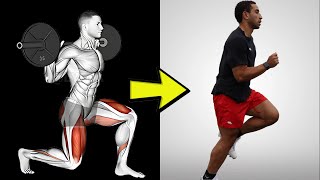
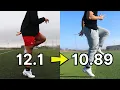
If your goal is to improve your 100 meter to 400 meter sprint times, then this video is going to give you a full guide on how to develop your sprint speed for track and field. I've trained athletes to run 10. 2 in the 100 meter, 10.
5 in the 100 meter, and over 10 athletes go sub 111 in the 100 meter dash with multiple athletes also going sub 50 seconds in the 400 meter dash and guys going 21 seconds in the 200 meter dash. So, in this video, I'm going to teach you every quality you need to build to improve your track and field sprint times. So, make sure you watch until the end of the video to get that sample periodization plan.
Chapter one, the absolute fundamental to speed development. Have you ever wondered why you train a lot but never get faster? You're most likely missing the first base fundamental.
This fundamental is called the said principle. Research shows that the most important thing for sprint performance is sprinting with something called max intent, which means you need to be sprinting above your 95% threshold. Max effort sprinting is the number one way to develop speed for multiple reasons.
Research shows it has the highest forces. the body can possibly handle. Your glutes, quads, and calves are taking all the way up to seven times your body weight in forces, and they are higher than anything that is seen in the weight room.
And the velocity of sprinting is so high that no other exercise can possibly replicate it. But these explosiveness benefits are only seen when you sprint above 95% intensity or output. And to be more specific, you need to be sprinting at 97 to 100% intensity and output.
For example, if your 40 yard is 5. 0 0 seconds, then 100% of your speed is 5. 0 seconds in the 40 yard.
So, if you sprinted and ran a time of 5. 4 seconds, then that means you were fatigued and not able to reach your 95% threshold. And to your body, this is conditioning and not developing fast switch fibers or any quality of explosiveness.
Now, what if I told you that 90% of athletes are actually sprinting under this 95% threshold every session? But now, this brings us to the exercises. There are two very simple and easy ways to get max intent and sprint above 95% of your output consistently.
The first way is timed sprints. And I'm going to give you a list of a few great ways to do this consistently from cheapest to most expensive. The number one way to time your sprints for free is with your phone.
But recording yourself in using the photos apps or coes is actually pretty accurate. Usually within 0. 1 to 0.
3 seconds of accuracy. To do this iPhone setup, you need to set up two shoes or two cones. The first cone is where your starting line is.
Then you want to measure out in steps around 10 to 40 yards. So measure it out to whatever distance you're going to be sprinting. Then set up the phone on the floor with a tripod or another shoe to record yourself sprinting from the start line to the finish line.
And then when it comes to timing yourself, you want to go to the photos app or coach's eye and then click the edit button. You're going to start the timer when the hips or the hands move the first time. Then you're going to end the timer when your hips pass the second cone.
Then you're going to subtract the end time by the start time and write this down your notes app consistently. That way you can track your time session to session to track if you're progressing monthtomonth. The second portion is non-free but cheaper.
Now cheap is different to everybody. So don't take this as a disrespectful way. My number one way for a cheap way to time yourself consistently is the skills timing system.
You can find this on Amazon or Dicks and most my athletes on the speed academy are using this to time themselves during their training sessions. One of the other cheap options that is pretty solid is Jaku. To be fair, I got Jaku for free, but this video is not sponsored.
I think Jaku is a great option for athletes who can afford it and want to get sprint times in small spaces. What's cool about Jaku is that essentially you're just putting on a watch and then you're setting up a phone and a different little tripod that comes with it. One of the cons of Jaku, besides that it drops your times, that it might not be the best option for upright sprinting like flying tens.
Flying tense is a really important exercise for max velocity that we're going to cover later. Jaku doesn't really have a good way to test your flying tents correctly. Another decently priced option is Dasher.
Now, we're going to get into the most expensive and best options. The number one option is usually going to be the freelap timing gate system. There is thousands of ways you can use freelap, but just look up freel.
See if the price range fits for you. It's around the $500 to $1,000 range, and it's easily one of the best ways. Next ones I like is GPS monitoring.
They're essentially those GPS bras you see people like Le Spellman use. There's multiple brands you can get GPS monitoring for. They're not cheap.
They're going to be $500 to $1,000. All these products ranging from zero dollars to most expensive are great ways to track your speed gains over time. The second way to get max intent and probably the best way for most athletes is racing.
Have you ever wondered why most of the world records and personal best happen at NFL combines and track meets? Well, there's multiple reasons, but one of the main reasons is adrenaline and the desire to win. This brings athletes well above the 95% threshold and helps them recruit max fast twitch muscle fibers.
So, in training, we want to compete or race two to three times per week or at least one time per week to ensure a balanced and consistent approach to your speed development. Now, the most common question I get is, "What if your training partner or the person you're racing is significantly faster than you, significantly slower than you, or you guys are equal speed, but you don't have a third person to start you guys off the line. If your training partner and you are around equal speed, then just start on the line and have a desired distance to sprint around 10 to 40 yards.
Then search up on YouTube track and field ready set go. Then click one of the most viewed videos to start it off and then put the phone on the floor and get ready to race off that ready set go. If you have a friend who is slower than you, then have them start in front of you 5 to 20 yards.
You guys should be almost equal by the end of the sprinting distance and nobody should be blowing each other out by over 10 yards. If your training partner is faster than you, then start 5 to 20 yards in front of them and follow the same video ready, set, go process to start your guys' race off. Now that you know how to sprint with proper intent to even be in the ballpark for improvement, once you master the fundamental of volume, you'll get results like my athletes on the speed academy who used to struggle to get faster and now he's breaking PRs every month.
Part two. Have you ever been told that hard work makes you better? Well, that applies to everything besides athleticism training.
You see, there are multiple categories of sprint training. And the amount of volume you need to get better to stimulate them is less than you think. The categories I'm going to cover in this video is acceleration training, max velocity training, and speed endurance/topend speed training.
Chapter two, how to train for acceleration speed. These acceleration sprints are going to consist of shorter sprint distances, but higher overall volumes per session. This will be anywhere of 10 to 40 yards of max effort or time sprinting and a total session volume of 80 to 250 yards of max effort sprints.
As a general rule of thumb, you usually never want to go much past 8 to 10 max effort reps. And then the sweet spot for volume, in my opinion, is around 120 to 150 yards of total sprinting. Each rep needs to be max intent with around 1 to two minutes of rest per 10 yards covered in the sprint.
It's common to see workouts from me programmed about four to six reps of 20 to 30 yards. Examples would be six times 20 yards as a workout where you do six time sprints for 20 yards of distance with high rest between each rep around 2 to 4 minutes. Getting in your volume there is crucial for sprinting faster.
when an athlete can no longer apply horizontal force into the track, which again shows the monumental importance of powerful push while sprinting. Generally speaking, 20 to 50 meters represents the distance which an athlete can train acceleration with novice and slower athletes using shorter distances here and more advanced faster athletes being able to utilize longer distances. And for acceleration sprint training, I would only do these sessions probably about one to three times per week.
Now, there are two types of acceleration you need to develop in your training. Early acceleration applies to most team sport scenarios since it focuses on how fast you are in the first one to five steps. Late acceleration is more of a track and field focus, but it's still extremely important in sports like football, soccer, rugby, and baseball.
If your goal is to target early acceleration, then keeping your sprints under 20 yards and doing more work in the 5 to 15 yard range will be good for you. Even if you don't hit the volume, as long as you're getting in around six to 10 max effort reps, this is also a good time to mention stuff like medball sprints and heavier sled sprints around 20 to 50% body weight to overload the early acceleration qualities you need to be explosive. You can even do sprints that put you in deep positions and have ton of spinal engine benefits, but also at a basic level, it just puts you in deeper shin angles.
Some of the best versions of this would be push-up sprints, broad jumps into sprints, kneeling sprints, and even hill sprints. Now, for late acceleration, anything after 15 yards to 30 to 50 yards is when people stop accelerating and we're hitting true top-end speed or max velocity phase. Some alternative sprint variations I'd throw in here would be lighter sled sprints around 10 to 20% body weight, medball jump sprints, bounce into short excel sprints, falling sprints, or drop in sprints.
Now that you understand the basics of acceleration training, you need to improve your max velocity threshold to also improve your acceleration potential. Chapter 3, how to train for max velocity speed. This is the absolute fastest speed you could possibly hit.
We want to do this in every sport, and we will primarily be training this with something called flying sprints. Flying sprints are a great tool for teaching athletes to improve their maximal running velocity. But the only way they work well is with a set of timing gates, which means we can stop those reps once we drop off in speed around 1 to 3%.
You would probably only go backwards from adding in the extra volume, which can be measured when you time your sprints. Like we talked about earlier in this video, for upright sprints, you need much less volume than you think, around 4 to 10 reps of either 10 to 30 yard flies or 30 to 40 yard sprints. In terms of total volume session, it can be as little as 40 total yards, but usually we don't want to surpass 200 total yards of max effort upright sprints.
Somewhere in the 120 to 150 yard range is the best. Now, back to flying sprints. For the buildup of the fly sprints, we want around 10 to 30 yards.
If you're advanced, and by that I mean around 4. 5 or sub100 meter, then a farther sprint isn't a bad option. around 40 to 60 yard time sprints or flying 30s is the farthest I'd go for max velocity development.
A good example of what we do in the speed academy is just four times 10 yard flies with a 20 yard buildup. Then 2 * 40 yard sprints once again timed or raced. Also for max velocity sprinting, I would only do these type of sessions one to two times per week.
Chapter four, how to train for speed endurance or what some people might call top and speed. Now you need to know not every single athlete needs this. If you're a slow athlete, then there's no reason to add endurance if you have no speed.
But if you're a track athlete who needs some speed endurance, then it might be worth adding this type of training as a third sprint session per week. Speed endurance training refers to the maximum speed work where an athlete sprints to hold their maximum velocity to the point where they would typically start slowing down. Most athletes can only hold their max velocity for about 1 to 4 seconds.
Generally, this training is how long athletes can hold their speed with little drop off. The sweet spot here in my opinion is around 25 seconds or less of max effort sprinting. For speed endurance, I suggest doing max effort sprints for longer distances around 60 to 150 m.
Push this out to 200 to 250 yards if you have some speed. All you need is max effort sprinting past 6 seconds with high rest. A good example of what I would program for my athletes who've done this and done this would be three to five times 150 meters max effort sprints with six to eight minute rest between each set.
We don't want to be doing too much long sprinting because we're going to be developing poor mechanics, slow twitch muscle fibers, and beating down the athletes nervous system. And yes, this is one of the best or the number one way to develop endurance for soccer, football, basketball, and track and field 100 to 400 meter athletes. Another sprint variation that's very common in the track and field world is going to be tempo running.
Now, I fall more in line with the Tony Holler viewpoint that most athletes are not going to need tempo running until maybe their preeason or inseason. This is because we need to spend most of our year trying to develop as much speed as humanly possible. I know it's common practice for most coaches to do tempo sprinting.
So, I'm going to give you the guidelines if you were to use tempo sprinting. That way, you don't screw yourself up by doing too much of it, but just know that in my programs, I personally do not like using tempo sprinting almost ever. If we're trying to improve endurance, I'm going to do sprint endurance instead.
Now, tempo sprinting is going to be repeated sprints around 60 to 70% of your maximum sprint speed. And these are going to be done with short rest intervals around 1 to 3 minutes. Understand that tempo sprints are not maximal in nature, but they can be helpful at helping athletes improve their capacity and recovery and even allow for better top-end speed through complimentary effects.
Now, like I said earlier, if you are a 60 to 100 meter sprinter, I would suggest leaving tempo out until late offseason or even your preseason if you need those elastic contacts for your ankle complex. We're just going to do extensive pogo series that I program in all of my workouts. Athletes need to remember that the number one limiting factor of becoming a better track and field athlete is your pure sprint speed.
If you are not fast enough in the 100 to 400 meter dash, you will have no chance of winning that race. For pure sprint speed, we want to maximize training without creating fatigue from too much volume of slower submaximal efforts. So, if you're struggling to win a race and you realize that the second half of your sprint is lacking, that's going to be speed endurance and max velocity focus, not submaximal tempo work.
At the end of the day, you can still do tempo. It's not going to make you a terrible athlete, but it's not going to transform you either. So, here are my guidelines for proper sprint tempo work.
That way, you don't run yourself into the ground and ruin everything else. For tempo sprint guidelines, I suggest never really going past 250 m of total distance per sprint. And the sweet spot being around 60 to 150 m and total volume per workout being around 600 m to,200 m of 1 to three minutes of rest between each effort and each effort being around 60 to 70% of your max intensity.
An example workout that I would program for athletes on the speed academy would be something like 6* 100 meter sprints at 60 to 70% of our max intensity with about 1 to 2 minutes of rest between each tempo sprint. Now, for all the athletes who skip to this part to do long-term periodization, this is not exactly how I would do the periodization in my Speed Academy program, but this is a general guideline that's going to get you 90% of the way there. Um, periodization is a really complex topic.
So, if you want a full video on it, I'm totally cool with talking about it for like 30 minutes straight unscripted. So, this is long-term programming in your early off season, which should be around anywhere from 2 to 4 months. We're going to focus on acceleration two times per week with heavier sled loads on one of the days.
max velocity one time per week with a little bit bigger focus on technical work because we don't want to sprint with bad technique for the whole year and then an optional tempo one to two times per week. But if you're a 60 to 100 meter sprinter, I would try to avoid doing tempo in your early offseason. For early offseason, the overall focus is going to be developing relative strength, heavier resistance sprints, general force production, eccentric strength, and lastly, low intensity and slow stretch shorting cycle pietrics to build the elastic base.
This phase is going to be focusing on raising your potential for overall sprint and power outputs. Now, for the late offseason, we're going to be doing acceleration one times per week, max velocity one time per week, and a combo of acceleration plus max velocity one time per week with an optional tempo sprint one to two times per week. But we're going to start to balance the focus of eccentric and concentric rate of force development.
We're going to do lighter resistive sprints for our acceleration days, higher intensity fast ground contact time plyometrics, and start to introduce a bit of higher velocity lifting to realize that potential that you built in the first early offseason. If you're a 200 to 400 meter sprinter and you're in your late offseason, this is how I would change it. Acceleration one times per week, max velocity one times per week, speed endurance one times per week, and an optional tempo sprint one to two times per week.
For the preseason, I suggest doing acceleration day one time per week, a max velocity day one time per week, starting to push those longer distances of the 40 to 60 meter sprints and the 20 to 30 meter flies. Speed endurance one time per week. And these distances, we're going to slowly move from the 60 to 100 meter distances and start to try to touch the 120 to 150 m sprints around the pre-season time.
And you can do tempo one to two times per week if needed. And these distances are going to be around 100 to 200 m per sprint. This general focus is going to be lower volume lifting with a higher focus on power development and higher velocity lifting and more specificity.
So think more core squats over deep squats, higher quality plyometrics with faster ground contact times versus versus slow ground contact time plyometrics. And we are going to try to help consolidate all the gains before the season starts. Now for the early inseason, we just need to make sure that we're doing maximum sprinting two times per week.
We want to maintain our strength, usually with overcoming isometric pushes and concentric only lifting. We want to maintain our elasticity with extensive plyometrics. Most high school and college coaches will have you do the intensive pometrics like your bounding and deaf jumps, but make sure you get those extensive pometrics in if you're not doing a lot of long sprinting.
From there, the athletes are going to be subject to the demands of their coaches. You can't really do much about it. But what good coaches should be doing from here is a heavy focus on power development, high velocity power work in true plyometric training like pure bounding and longer sprint distances per sprint like 30 m excels and 50 m max velocity sprints and making sure that we're upping the racing volume.
We introduce more racing in the late offseason and preseason, but during the early inseason, almost every sprint you're doing should be some form of a race if it's maximal effort. Late in season, we're going to be focusing on peing our sprint speed qualities. We want to be sprinting around one to two times per week and maximum three times per week.
And obviously we're going to be focusing on lower volume excels and lower volume max velocity sprint work. Then lower volume weight room training mainly focusing on power development. And try to remove a lot of the eccentric training since eccentric is going to lead to more muscle damage which is going to impair on your sprint mechanics and your overall outputs when you're doing your sprint sessions.
And when it comes to all training in general, we want to minimize fatigue as much as possible. The workouts during your late inseason when you're trying to peak should be as easy as humanly possible. You should be leaving the track wanting to do more almost every time you work out.
You're going to start to see during this phase, we want to focus on more D loads almost every other week and maybe get athletes to go to the weight room maybe one to two step. And when it comes to the weight room, athletes might be going zero to two times per week versus three to four times per week that we were doing in the earlier phases. We want to avoid fatigue at all costs.
So when you're racing at competition, you feel like you're hitting PRs every single time. This is a general periodization model that I suggest for most athletes who are trying to keep it simple and have a good structured plan for their whole entire year. But this is not how I do periodization for my speed academy program.
For my speed academy athletes, we focus on building pure speed development four to six months out of the year. I tell most of the athletes to not add any conditioning until they're preeason or in season. So, we're spending most of the year doing high velocity work, high power development, and even developing our relative strength at the same time and doing our sprint development four to eight months out of the year versus the traditional 2 to four months out of the year.
And if you program all this stuff correctly, you're going to see the most gains possible because you're going to come into your season running 10. 6, for example. And your coach might run you to the ground.
You leave the season running 10. 8. But if you come into the season running 11.
4, that coach is not going to get you down to 10. 6 unless he knows what he's doing. So, you get to put all the onus on yourself by getting as fast as possible.
And then if you're a little bit unconditioned, which you won't be unconditioned, but if you're a little bit unconditioned, you can let your coach run you into the ground with all the conditioning. And then you'll be ready for your races when time comes. So, if you want that full sprint training program, that year-long program that we do to transform athletes to run times like 10.
2, 2 10. 5 and 100 meter and multiple guides to go sub 111 100 meter. Click the top link in the description or the pin comment to develop your speed and get a little bit of training advice from me today.
Now you know how to develop your speed, you need to know how to train in the weight room to sprint faster. So now that you know how to develop your speed for track and field, you need to know how you need to know how to develop your strength in the weight room. So, watch this video right here on how to strength train for speed development.