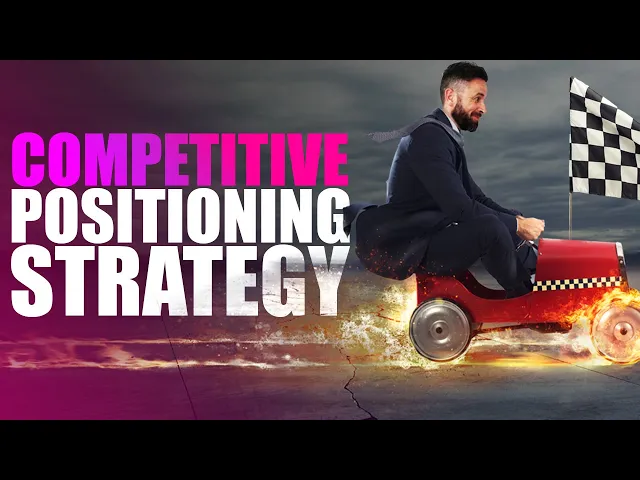
What's up brand builders Stephen Houraghan here at BrandMasterAcademy.com and in this video you're going to learn how to create a competitive positioning strategy with this seven-step framework so you can stop waiting around in the hope that your audience will choose you and create something that will actually influence their decision now if you're new to the channel and you want to build brands that go beyond the visuals and the logo using strategy psychology and creative thinking then you're in the right place hit that subscribe button and the notification bell if you want to fast track your
results make sure you grab the pro brand strategy blueprint it's a free download and the link is in the description now i created a video on what competitive positioning is if you haven't seen that I'll leave a link in the description below but essentially competitive positioning or a competitive positioning strategy is the strategy that a brand uses to give their audience a compelling reason to choose them so that they compete or be competitive in the market it's easy to assume just because the founders or the leaders of the business understand the value that they bring
to the market that the audience will just get it too but for the most part they don't they don't just get it and it's also easy to assume that just because you have a solution to the market problems that that's enough and that's not enough either and this is where competitive positioning comes in it forces you to look at the market from the audience's shoes in order to define a unique a compelling and of course a competitive reason for your audience to choose you of your competition so why is competitive positioning so important well the
reality is when consumers choose one brand over another there are defining factors in their decision making process one of the biggest mistakes of business owners and brand builders around the world make is assuming that their visual brand is enough to appeal to their audience and quite simply it's not consumers make buying decisions every day and many of those decisions are made subconsciously but that doesn't mean that there's no reason behind that decision subconscious are not for every buying decision there's a defining reason for that purchase brands that overlook competitive positioning overlook the requirement to provide
the audience with that compelling reason they assume that the visual brand will be enough to attract or that their audience will come up with their own compelling reason but they won't if you don't give your audience a compelling reason they'll find a brand that will the most important decision making factors for consumers in a given market segment is largely dependent on the people within that segment and the outcome that they're after for example within the car market a growing family with a limited budget is a market segment that needs to be served examples of their
most important decision making factors could include price size or space fuel economy reliability now the brands operating in that space need to define the decision-making factors that they want to be best known for then communicate those factors consistently until they build that reputation so how do you go about developing a competitive position for your brand well defining a competitive position in the market is easier said than done if you want a house with ocean views chances are somebody is already living on your perfect plot of land but where competitive positioning differs from physical positioning is
in there are no limitations to creativity now extremely competitive markets are disrupted every year by innovative brands with new ideas and new approaches now some use groundbreakingly innovative technology but others simply find a new way to provide a better end-to-end experience to their audience ultimately all define a competitive position to give their audience a defining reason to choose them over their competitors now there are no guarantees here there are no quick fixes and there are no silver bullets but there is a proven process that you can follow to increase your chances of finding a competitive
edge over your competition step one define your market segments now when it comes time to define your position in the market then you need to give your audience a compelling reason but there is one rule that must not be overlooked you cannot mean everything to everyone the broader the market you try to appeal to the more diluted your message becomes the more focused and specific your market the easier it is to be more relevant now the first step to achieving this is to exclude all of the people that you don't need to appeal to by
segmenting the market using key categories for example instead of targeting men you would look to add much more specificity to enhance the focus on that specific group of people such as stylish single businessmen in their 20s step two uncover your market demographics now once you've categorized your market segments it's time to get to know them now the demographics of your audience will give you that window into the circumstances and the situations of their lives so you want to aim to uncover the demographics that define their day-to-day circumstances so you're talking their age their gender their
ethnicity their geographic location education level income family status etc now although this information doesn't tell you too much about their behavior it does bring together the circumstances of their lives and it really starts to bring a bit of tangibility to them as well step number three uncover your market psychographics now the demographics you uncovered in the previous step begins to shine a light on their lives though you do need to dig a little deeper with psychographics before you can begin to understand them as people now psychographics uncover the preferences and the surface level behaviors of
your audience to give you an insight into their mind psychographics include interests hobbies lifestyles sports music food beliefs values religion etc when you couple psychographics with your demographics your audience comes to life through the detail and gives you a clear picture on who your target market segment is step number four develop and refine your audience avatar so by this step you'll have clarity on who your audience is but you're not done yet all of the information that you've gathered about their circumstances of their lives and their surface level behaviors it will give you clarity but
you need to understand how to best resonate with who they are and this is where their goals their desires and their fears provide you with the tools to make human connections when you know where they're going what's standing in their way the emotions that are attached to the journey that they're on you have the means to resonate with who they are and what they're feeling step number five research your competitors now as I mentioned earlier effective competitive positioning hinges on your understanding of the competitive landscape by definition you can't define a competitive advantage without knowing
the competitive nature of your competition your target market is already flirting with your competitors and some have gone even further at the very least your potential customers know who your competitors are and the value that they can bring to their lives when you understand the reasons that your audience choose your competitors and more importantly why they may not then you're much better positioned to find gaps and opportunities in the market step number six define your differentiation strategy now defining your differentiation strategy isn't rocket science but it's no cakewalk either there's no beautiful untouched sunny patch
of grass amongst all those noisy competitors so if you want to find a compelling difference then you have to look more closely where others haven't maybe your target market would prefer shorter turnaround times or maybe they don't have a problem with the turnaround times and instead they want a more guided experience the difference that you define becomes the cornerstone of your position and the key messages that your brand places into the market and step number seven craft your positioning statement now a positioning statement is not a piece of marketing or website copy to tell your
audience what you mean and why you're different instead it's a tool of influence to influence your messaging to the market so that they learn the key messages and what you want them to know about your brand over time now your positioning statement should include the following elements it should include the audience the challenge and the pain point the key benefit the competitive alternative and the unique point of difference now once you've crafted this positioning statement it becomes a guide for all brand messaging in order to influence where the audience positions your brand in their mind
now look as I mentioned before this isn't a guarantee or silver bullet it's simply a framework that covers some of the most critical considerations now most businesses don't do this which is why most businesses sound like they're all saying the same thing but don't do the same as everybody else if you take the time to do it for your business or on behalf of your client you put yourself into the top minority of brands that think strategically and competitively and ultimately they're the brands that escape the pack and they speak directly to their audience and
they become competitive in the market now if you want to learn more about positioning approaches and how some of the biggest brands in the world position their brands then this video will help you out until next time brand like a master and I'll see you in the next video you

![How To Create A Brand Strategy [Proven 14-Step Framework]](https://img.youtube.com/vi/D3Tu3w67Adc/maxresdefault.jpg)



![9 Effective Brand Positioning Strategy Approaches [In 2023]](https://img.youtube.com/vi/HuXyBR_ZvPI/maxresdefault.jpg)



![What Is Brand Positioning? [With Examples]](https://img.youtube.com/vi/Rcv-J6534oE/maxresdefault.jpg)