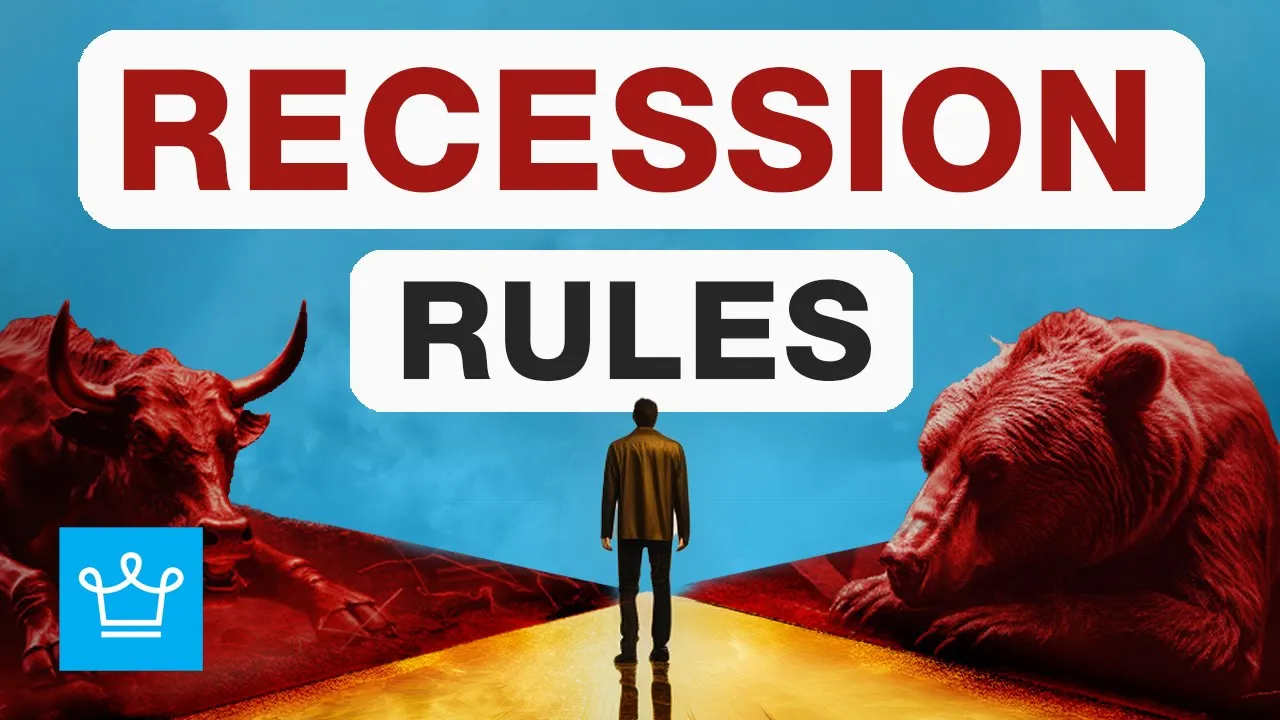
The economy is a game of musical chairs. The chairs are money. When a recession starts, the music stops and some people and companies are left without a chair.
That's the situation until the music starts up again. Recessions are periods. Of time where the velocity of money goes down.
Money doesn't change hands as fast, so there's just less of it. Flowing around for you. To capture.
This causes people to hold on to available cash, which means businesses get less money and can no longer invest in. Growth or support the current. Workforce.
People lose jobs so they have even less money to spend on the economy, and the spiral keeps spiraling. But not everyone suffers in times of recession. Actually, this is when the sharks come out to feed themselves, and by the end of this video, you'll learn the rules that millionaires and billionaires swear by during economic downturns.
Here are 15 recession money rules. First up, sit on your available cash. Cash is king.
Because cash becomes scarce. Being illiquid at the wrong time can cost you your financial security. For the future.
During economic downturns, cash becomes more than currency. It becomes your shield. Safeguarding your investments and securing your peace of mind.
Everyone hates keeping cash in the bank, dripping value to inflation until the economy crashes. Rich people are okay with losing a couple of percentage points every year, knowing they'll be the only ones able. To afford to buy anything when the market drops 40%.
Unlike poor people. They can afford to sit on their cash. If you're in the middle, you might want to postpone some big spending decisions and play chess while everyone else is playing checkers.
No high interest debt, but keep the low interest. Since things are uncertain, the value of capital goes up, which means it becomes incredibly expensive to borrow. Borrowing at high interest during a recession is like trying to swim with weights on your ankles.
Eventually it'll pull you under. Don't touch debt. Just ride it through with whatever income you do have.
We'll break down the income at the very end of the video, so wait for that. Recessions are an amazing time to renegotiate debts and contracts. People are scared they might never get their money back, so they're willing to give you favorable terms.
It's the same the other way around. The one giving out the loan becomes predatory. So if you're looking to make money, become the.
Predator, not the. Prey. Recessions are the best time to structure deals as debt over equity.
Debt deals come with tax advantages as debt is a write off. Provide simpler exits for investors. If you get equity and the business goes under, you lose everything.
With debt, you have some flexible committee on recouping your capital. Plus, if you're an investor and you want to have your cake and eat it too, you can structure deals as convertible debt, meaning you could either get paid back or convert it into equity at a later date when the economy. Returns to normal.
The strong. Will eat the. Weak for pennies.
On the dollar to consolidate power. Recessions are the economy's way of ridding itself of parasites. The pretenders those who got a little too big despite their inability to hunt.
Since these businesses lack solid economics. They won't make it. The weak will either lose.
Everything or. Minimize their losses and sell to the bigger players who are able to outlive the winter. That's when the big kahuna come out and buy them out for cheap so they increase their market share.
This is how the power consolidates in the hands of a few. You can see it in the rise of mergers and acquisitions activity among large corporations in the higher closure rates for small businesses compared to larger enterprises. After eight over two.
Hundred thousand small businesses shut down completely. You can see it in the. Growth in market share for dominant.
Players. Not only do they acquire. Smaller players, but they are the only.
Ones able to do business. For example, Amazon's revenues went up 38% in the first year of COVID. You can see it in disproportionate access to financing because they have privileged access to money.
And lastly, you can see it in the shift in employment patterns from small to large businesses. Since only the big businesses are still alive. They get to suck up all the talent available in the market that is now.
No longer in play for smaller players. When the economy gets back going. The rich get richer off the.
Assets. And the market share. They gained while everyone else was just trying to stay afloat.
Looking at that list, there might be gold for you, even if you're not one of the big players yet. Brain over heart. During recessions, rationality ensures survival.
This is the difference between professionals and pretenders. The right call is the right call, even if it doesn't feel like it. Instincts are.
A great. Add on. But look, numbers don't lie.
Look at the. Scoreboard and make the. Necessary adjustments.
If cutting 20. Percent of your employees ensures survival. Of the ship, you better get some scissors.
Emotional decisions make you feel good in the moment, but if the entire ship sinks, you'll all drown anyway. Emotions cloud the path to prosperity. It's also less stressful to know you've made the right objective call when you make data driven decisions that account for the long term vision of the project.
The moment becomes just a chapter in what the business is looking to become once the sun rises again. Do what the rich do and don't look back. Hedge your bets.
Okay. Make your plays and then just sit back and watch. Since 2021, investors have lost.
Trillions. In volatile markets. But if that wasn't bad enough, JPMorgan bullish.
By the end of the year, 99% of Americans will actually be financially worse off. Than they were. Pre-pandemic.
So rich people learn their lesson. They learn to use alternative asset classes to hedge their investments against recessions. They allocate a portion of their.
Wealth and industries that. Are recession. Proof.
They just wait it out and watch their wealth go up. A generation from generation. In fact, 20.
23 was the first year that more new. Billionaires got their wealth through inheritance than through their own entrepreneurship. To people like them, it's barely even news when markets go under.
They don't have to stress. About their. Portfolios or ask their bosses for a raise.
They've got a sensibly, uncorrelated assets like fine art to give them an extra. Layer of protection. Because, look, data suggests this market moves that a completely different pace than others.
And our sponsors at Masterworks are offering you this one of a kind investment from the. Comfort of your own home. Investing in art could give you growth potential in an asset class without the traditional stock market volatility.
And that's why, as of. February, over. 900,000 users have signed up so.
Far. And while. Past.
Performance isn't indicative of. Future returns. Out.
Of their 300. Plus offerings, each of their sales thus far has delivered a profit to investors. Returns like 14.
6%. 17. 8%.
21. 5%. And more popular offerings have sometimes even sold out within minutes.
Rich people have access to these kinds of protections that regular people don't because there's a lot of red tape and you need someone on the inside to let you in. But since you're an Alux subscriber, if you go to. masterworks.
art/alux right now, you can begin investing along with the super rich. masterworks. art/alux Or just click the link in the description.
You will make one or two decisive moves. Rich people have a skill that most people do not. They're patient with their plays.
They wait and they wait until it becomes obvious to them it's time to act. Warren Buffett. He sat on the sidelines.
For eight years without. Making any plays while being ridiculed by all the financial media as going soft. But given his age, he had.
Acquired a skill. All the young hedge funds lacked patience. Berkshire Hathaway waited.
The pandemic went into full swing, and when everything was at its lowest, guess who was sitting on $150 billion in cash? Uncle Warren was. They started picking up great companies at massive discounts.
So learn to. Wait. Pay attention to the market that you understand.
Don't try to be fancy with it and don't go after things if you don't know how they work. Do not try to get a small piece of everything. Don't buy a studio apartment, a little bit of stocks, a vending machine business, some crypto.
Because, look, you'll be spreading yourself too thin over things you have no control over. Or at least. Don't have a deep understanding of.
If you're a farmer. Sitting on cash and prices are below what you know you can exploit than that by land or cattle during a recession. That's it.
If you make one good play during. The 3 to 4 years while a. Recession is in full swing, you will.
Outperform everyone. Else. And on this point, be prepared to buy in bulk if you know what you're doing.
You don't need to diversify. You just need to do volume on what is clearly a win to you when the opportunity presents itself. Go all freakin.
In, okay, Because you might never get this opportunity again. The larger the. Volume, the better the deal you can get.
Reality is negotiable, and the best time to negotiate is when everything is looking grim. If it's a good deal, don't buy one apartment at 20% discount. Buy the building at a 45% discount.
You're looking for undervalued food value. It's on sale because they need the cash. People who sell things during a recession do it out of immediate need.
They have a sense. Of. Urgency.
Rich people can afford to wait it out. So time, cash and closing fast are incredibly valuable at this stage. This strategy applies to everything you'll do in life.
It's always. Cheaper to buy. In bulk.
Something important to remember. Though, is to be opportunistic but cautious. While it's important to seize opportunities, it is equally as critical to conduct a thorough due diligence.
Not all deals are as they. Seem, and there will be. People trying to take advantage of dumb money.
Okay, but you are smarter than that. DCA is the name of the game. DCA stands for dollar cost averaging.
It means buying regularly without caring about what the market is doing. This strategy. Outperforms.
Professionals who are trying to time the market. The biggest mistake middle class people make when deciding to invest is they think investing is a one time thing. You make an investment and that's it.
Well, that's not how it works. Investing is a continuous process and it picks up speed when you find yourself in a recession. That's when the rich double down.
They buy more. This lowers your overall average. Cost per investment and increases how much more profit you'll make.
It might make the difference between making a profit and losing money. If you bought bitcoin at 50 K watched it drop to 17 K and didn't buy any more for you to make a profit, you'll have. To wait a little bit longer.
But those who were in the market have already two and a half x that investment. It's the same with stocks, with the S&P 500. With everything that carries.
A long term value. And speaking of trying to time the market, don't the dip will keep on dipping. If your fundamental thesis is still valid.
If you're looking at it through the lens of long term investing, whenever the price drops, you're happy because you're getting a discount. As long as you don't bet the. Farm on the short term, you'll.
Probably be okay. This requires. Self-control.
Don't panic. Sell. Stay informed, but don't overreact.
A big mistake newbies make is to make long term decisions based on what they momentarily see on the news. Sure, keep an eye on market trends, but resist. The urge to make a knee jerk.
Reactions based on every piece of news. The news is how the rich manipulate retail investors into. Parting with their.
Investments. Think of every dip as a separate investment you're making. Each one will provide different returns.
Some dips will become profitable in weeks, others and months, while others take years. Your time horizon matters here. Your ability.
To control your impulses will. Make or break. Your future.
Don't try to. Outsmart the market. Don't sell now in order to buy lower.
A week from now, you're not a magician. Okay. Don't risk it.
Treated as a piggy bank where you only put money in and vow to not take it out unless you have no other option. Or you feel. Like it's getting a bit heavy.
Fortune and. Wealth are. Built in recessions.
Here's the biggest realization we've had in the past two decades. You don't have to score every day. You just need to.
Score when it matters. So what we're about to. Show you is something only a handful of people have ever seen.
And once you see this, a light bulb will. Go off in your head and your world will never. Be the same.
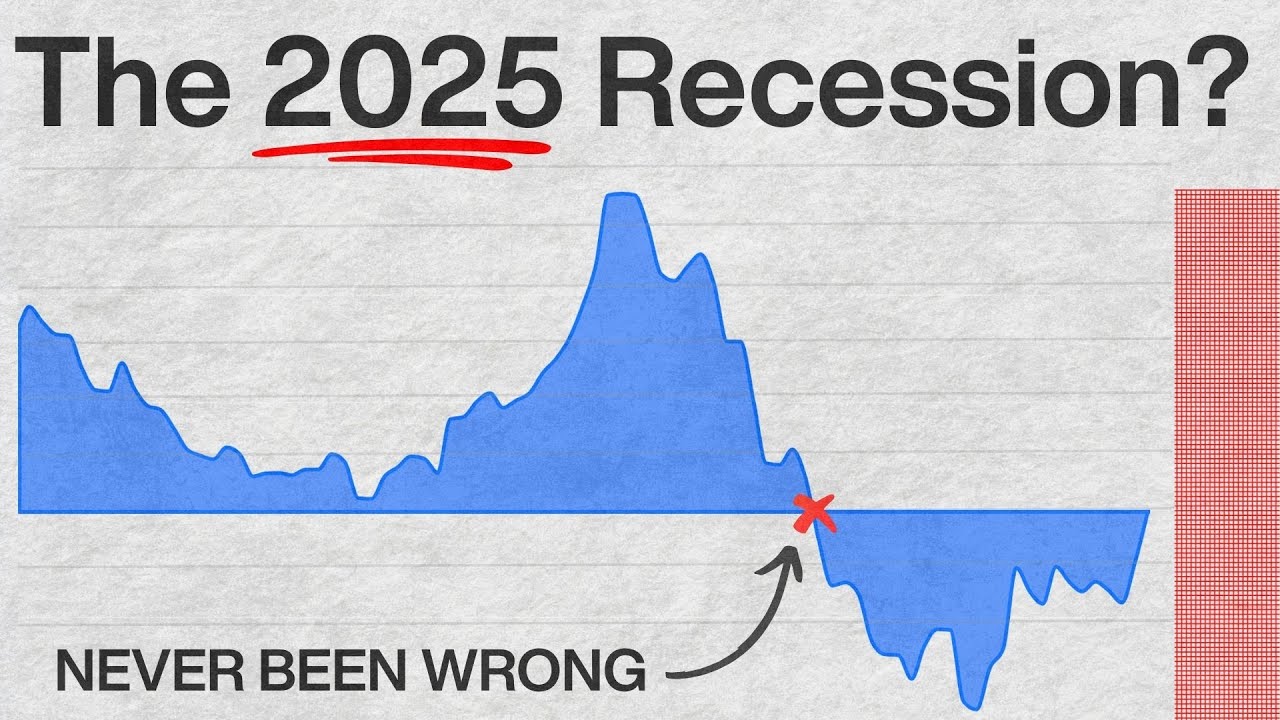
Are you ready for this Boom. This is the US economy after every single recession. Pay attention to this graph one every ten.
Years or so, like freakin. Clockwork. Pay attention to the distance between recessions.
Pay attention to what happens after. That. Bottom has hit.
You get 69 months of growth. After a recession, the returns are usually 25 to 50% across the board in that time frame. Just look at how short these recessions are time wise.
When you zoom out, the average recession only lasts about ten months and then you get half a decade of unobstructed growth. Once you drill this. Graph into your mind, it's impossible for you to be poor.
You know what will happen ahead of time. Just wait your turn. No need to do anything fancy at all.
When the recession starts by the S&P 500 every month for the ten months the recession will likely last a single recession. Where you're an active player. Is enough to move you higher up the wealth hierarchy.
These are the kinds of insights everyone Rich is taught at some point by someone richer than them. That's how the. Game is rigged.
They've seen the graph that you haven't. They're ready when the numbers go red. The only way to.
Build your. Wealth during this recession is to know what to. Look for.
And to get educated about what actions you need to take. Go to alux. com/app and get yourself.
a yearly subscription. You'll have access to everything the rich are paying hundreds of thousands of. Dollars for at a fraction.
Of the cost. We are on track to create 1000 millionaires from scratch, and we want you to be next. Invest in yourself today and go to a lock stock.
Com slash app. Don't increase prices and don't buy dumb things. If you've been out of the house lately, you realize that everything is getting more expensive.
And the average person. Has less money to spend in a recession. That toggle gets turned up a notch.
The worst thing you could do is to increase your prices because you'll lose more clients than you'll make out of the additional income from the increase. One of our. Portfolio.
Companies that was doing e-commerce in the fashion industry was adamant on increasing prices through the pandemic in hopes they would be able to make up for the loss and consumer purchases by catering to an existing fan base. Fans are great until you. Charge them more.
For something they used to pay less for. It backfired and that took them. 24 months to learn their.
Lesson. Go back to the old price and we looked for ways to optimize the production cost instead. When cash is so valuable, you have to treat it with respect or it'll leave you and other parts that you.
Actually care about. If we're in a recession, don't go buying a new car. Don't get the fancy clothes or the exotic holidays.
Conserve your capital instead. Deploy it wisely toward income generating assets. Once the recession is over, those assets will pay for the cars, clothes and holidays.
Time to get thrifty. The biggest companies that came out of the 2008 recession. Were.
Price sensitive companies. Airbnb was cheaper than a hotel. Believe it or not, Uber used to be cheaper than a cab.
Netflix saw its inflection point and the list is long. Your business should go into thrift mode. Instead of buying new pencils, you should sharpen the ones you already have.
No more esthetic upgrades. Your employees don't need newer laptops or cars. The existing ones will do just fine if you have to spend, do it from a lifetime value perspective.
Meaning if your investment won't last you a lifetime, don't do it. Rebalance your portfolio. What do rich people.
Mean when they say this? Well, simply. Put, not everything that makes up your wealth will.
Be hit the same. Not all sectors are hit the same. Looking at your stock portfolio.
If your tech investments are booming, but all your travel stocks are temporarily down because of COVID. Well, move some of that tech money this way. Your entire.
Wealth should be organized. According to your. Personal.
Knowledge and experience. We call it the expertise ratio. If your expertise is split 70%.
Real estate. 30%. Stocks, then that's how you should go about it.
Try to stick to your ratio of competence once a year. Look at your portfolio. And check to see if you deviated from it.
If so, move some. Money around or. Add to the under-invested side until balance.
Is restored. Unrealized loss isn't really a loss. If this.
Is your first rodeo, the first time going through a recession. Can be tough. But calm down, okay?
We'll go through this together. You got in at a time. Of market exuberance.
You heard left and right about people making a killing for as long as you live. Remember this? Okay.
It's not a loss until you exit the position at a loss. And the flip side of the coin is true as well. Just because the app says you've made 20.
Percent returns. This month doesn't mean that you should go out of pocket and buy bottle service without exiting that position. First.
This is the logarithmic. Chart of the American economy tracked through the S&P 500 for the past 60 years. If you wait long enough, you'll.
Make your money. Back and then some just don't throw in the towel and take the pill. This is why the smartest people on Wall Street say time in the market beats timing the market.
And lastly, solidify your income. Or you'll drown. If there is a one.
Holy Grail that will be. Able to keep you afloat no matter what it is your personal ability to monetize your skill set on an individual level. This means how good you are at your job.
Plus demand for your skill set compared to the rest that are competing for the same work on a business owner. Or investor level. This means how.
Good of a resource manager. Are you in relation to what you were able to build? If you build something solid, it'll keep on cash.
Flowing for you. You need money coming in no matter what. Monitor cash flow religiously, understanding.
Where every dollar. Comes from and. Where your.
Money goes can reveal opportunities to improve. Your overall. Financial health.
You can't simply outlast a recession from your savings. That money is for opportunities the way we want you to think about this final point is that no matter what happens with the market, you can expect next month to bring in the same kind of money you did this month. This gives you predictability and a solid.
Resource number. To base your decisions on your ability to control your income, to solidify it is what will allow you to. Outperform those who were on.
The sidelines. Now, since we've got people from all around. The world here with.
Us, let's take the pulse of the planet. Does it feel like a recession. Where you're living?
Let us know in the comments. And of course, you stuck with us until the end and you're getting a bonus. This is the real test.
For your network. Rich people always say your network is your net worth. Well, when recession hits, you'll find out who.
Your real friends are. It's also an extremely good moment in time to build a. Lasting.
Relationships. If you're in a position to help out someone who'll play a. Key role in your long term.
Vision, this is a moment. Where you can arbitrage. Power.
You'll get access. You'll get sway at a much lower price point than any other time. In your life.
Doors that would have never been open for. You might be unlocked with just a little bit of wind in the sails of the right person. So play the long game and look after your family's long term interests.
And since at this point, it's just the true allocators left, we believe. That we're in a. Recession right now already.
All the layoffs we're seeing left and right confirm that. But something strange is happening. This is an election year in the U.
S. and in many other countries around the world. A big election year.
So we believe that most governments in. Power are actually. Artificially inflating the economy's numbers just so that the population reflects them on an individual level.
There's a state of uneasiness. Deep down, people know that things aren't going well. But if you look at the earnings calls that companies have been releasing these past three weeks, every big business is crushing it.
So how does that happen? Why does it taste like shit? But the scoreboard says everything's going great.
Well, we have a special. Story for you to. Illustrate what we believe is happening.
Okay, so here goes. Two economists are walking through. The forest.
And come across some bear. Shit. One says to the other, Hey, I'll give you a hundred bucks to eat that.
He thinks about it and he does it. They keep on walking and they find some. More bear shit.
The other economist says to the first one, I'll give you $100 to eat that. And the first one does as well. They keep on walking and one of them says, Did we just both.
Eat bear shit for free? And the other one says, No, no, we just increase the GDP. Of the forest by.
200 bucks. If you. Think we're.
All about to step in some bear shit as soon as the elections are over, please write the word bear in the comments. You are. The smartest ones out of our community and we really want.
To hear what you think will happen in the next 24 months. Until next time I like Sir. Take care.