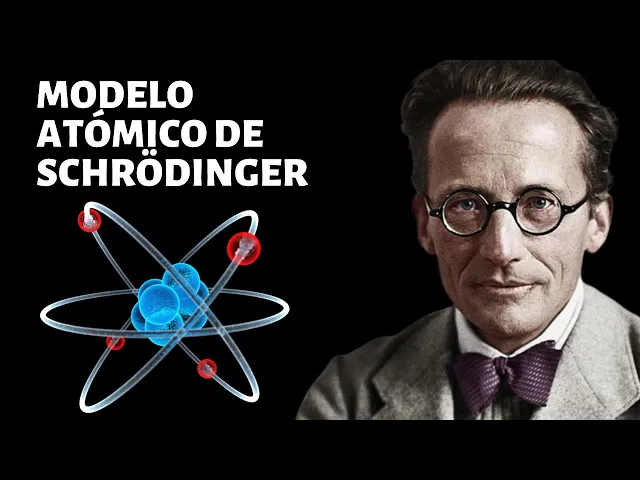
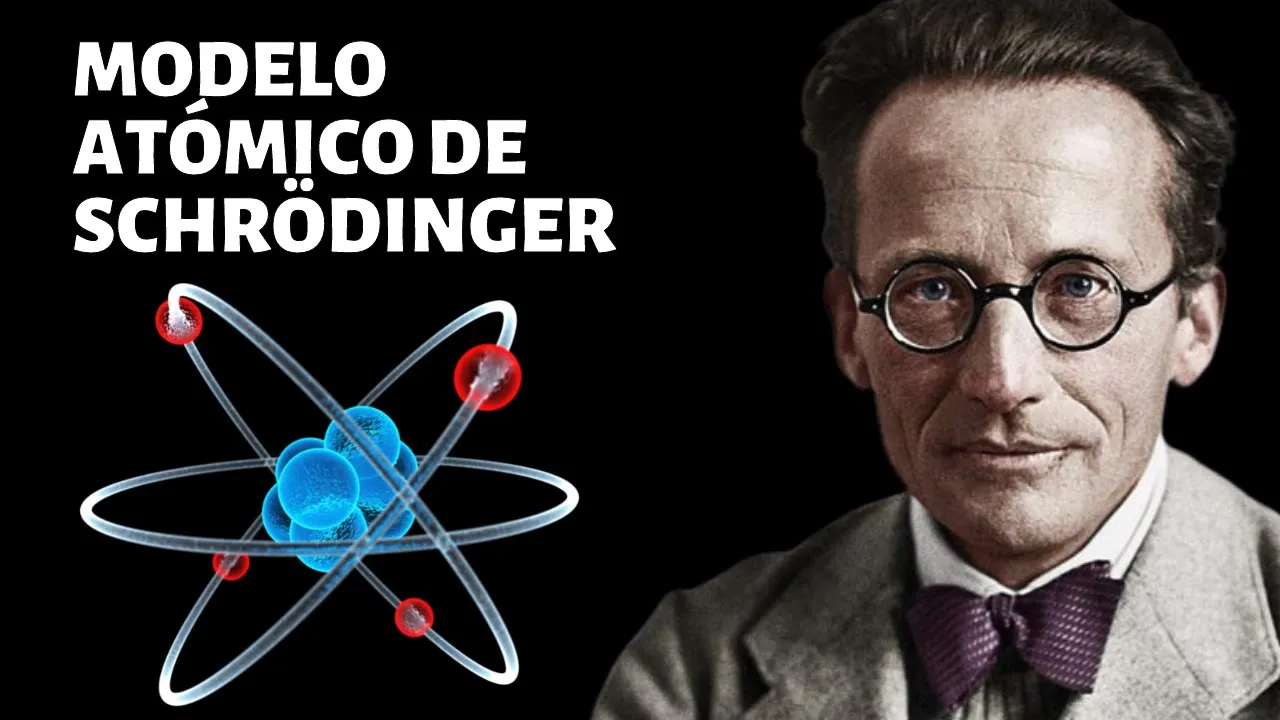
Hi how are you? I hope great. Today I will explain Schrödinger's atomic model, its characteristics and postulates.
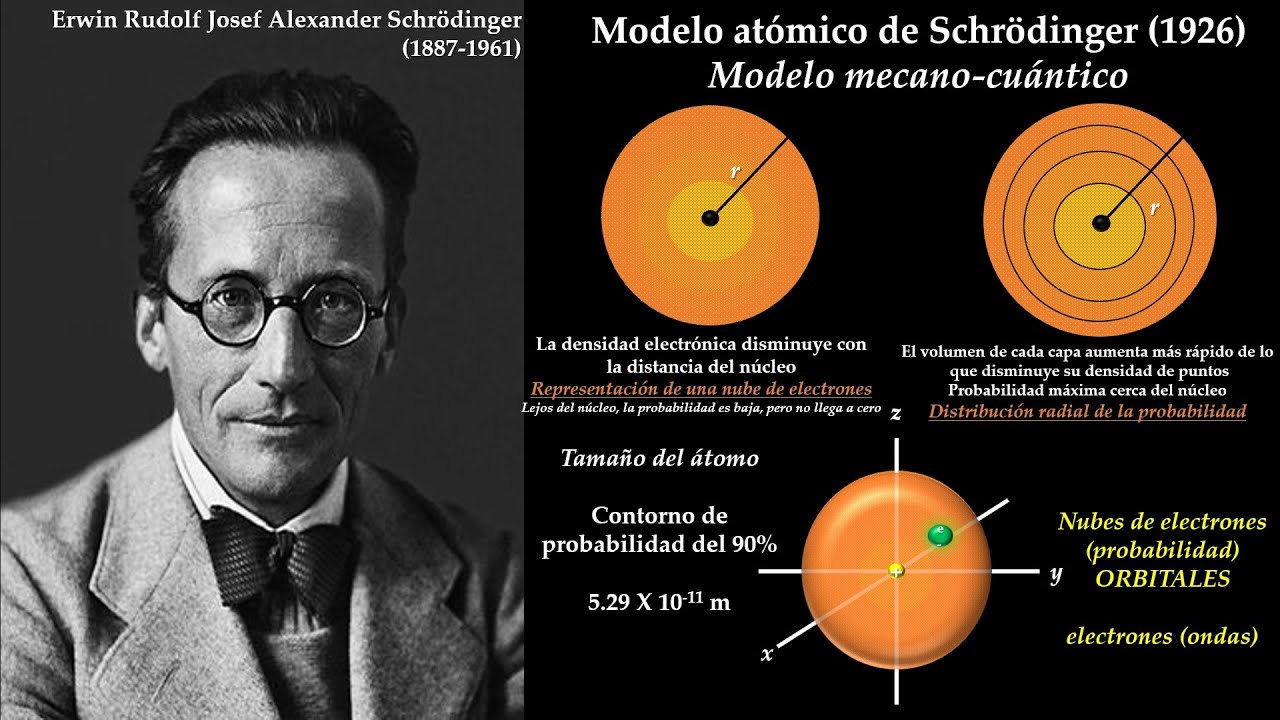
But before we start, give me a like and subscribe if you haven't already. Schrödinger's atomic model is a proposal for the functioning and structure of the atom developed by Erwin Schrödinger in 1926. It is known as the quantum mechanical model of the atom, and it describes the wave behavior of the electron.
To do this, the prominent Austrian physicist was based on the Broglie hypothesis, who stated that each moving particle is associated with a wave and can behave as such. Schrödinger suggested that the movement of the electrons in the atom corresponded to the wave-particle duality, and consequently, the electrons could move around the nucleus as standing waves. Schrödinger, who was awarded the Nobel Prize in 1933 for his contributions to atomic theory, developed the equation of the same name to calculate the probability that an electron is in a specific position.
Characteristics of the Schrödinger atomic model -This model of the atom describes the movement of electrons as standing waves. -Electrons move constantly, that is, they do not have a fixed or defined position within the atom. -This model does not predict the location of the electron, nor does it describe the route it takes within the atom.
It only establishes a zone of probability to locate the electron. -These areas of probability are called atomic orbitals. The orbitals describe a translational movement around the nucleus of the atom.
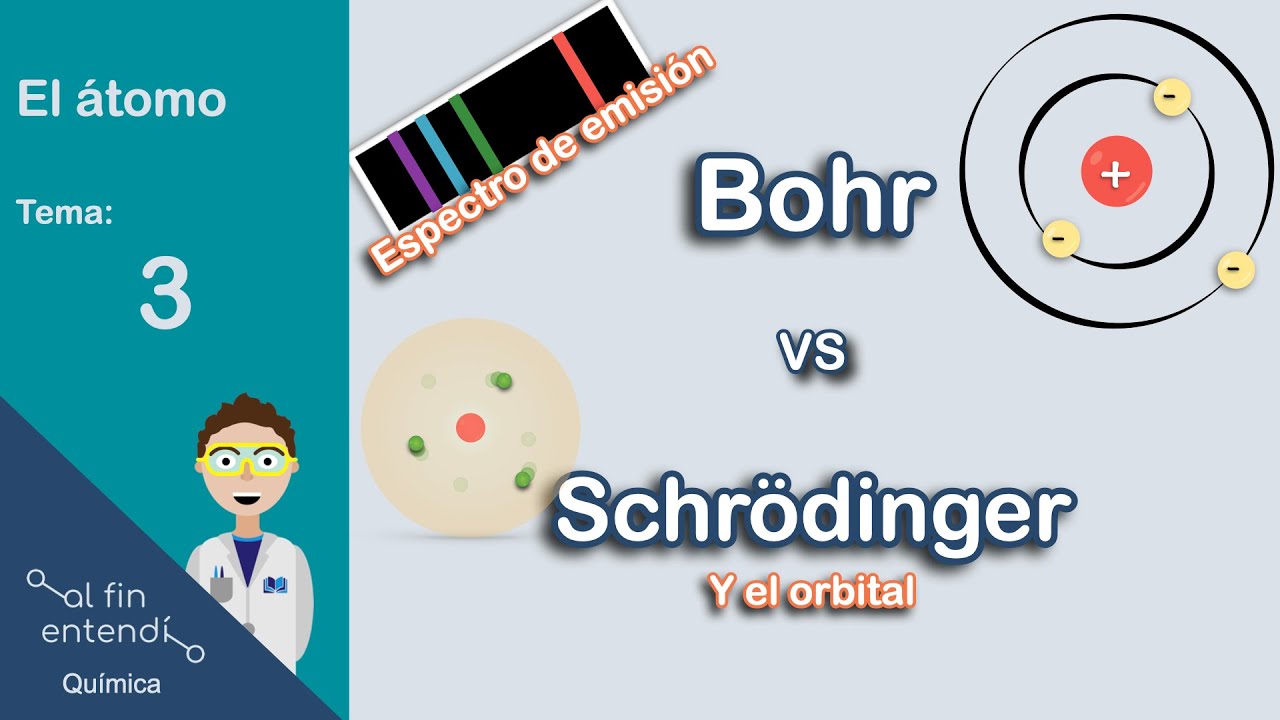
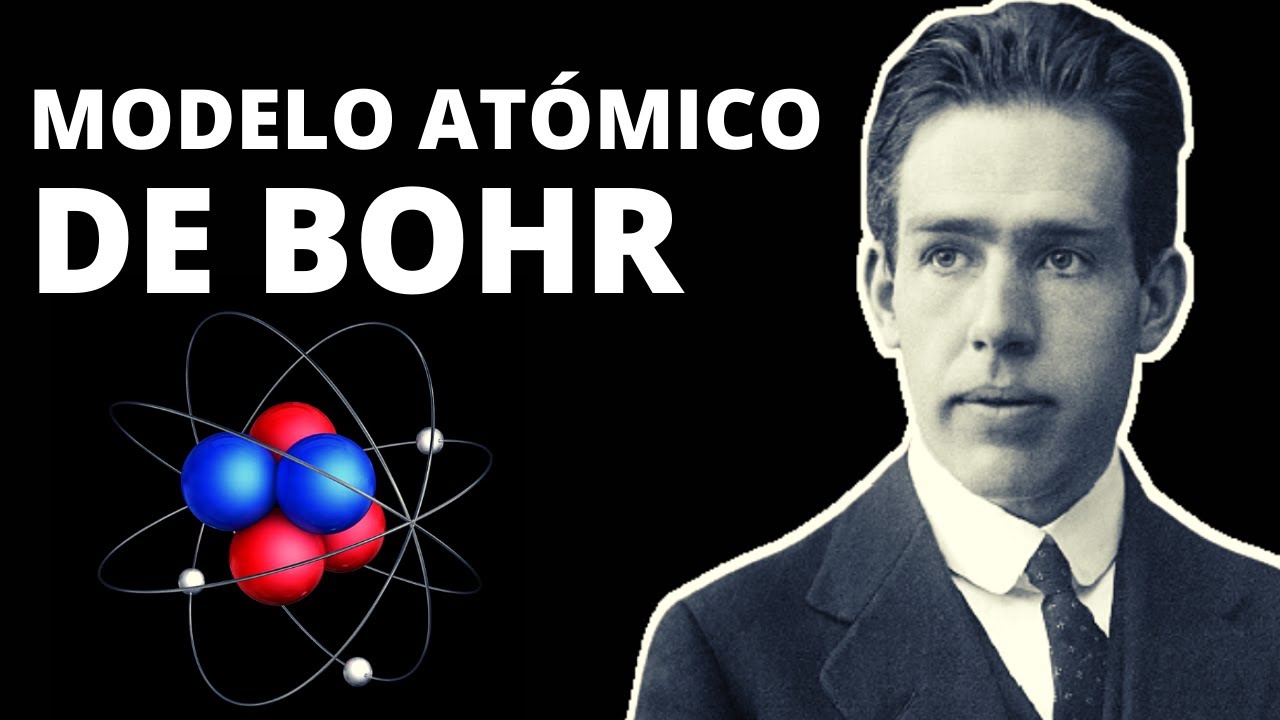
-These atomic orbitals have different energy levels and sublevels, and can be defined between electron clouds. -The model does not contemplate the stability of the nucleus, it only refers to explaining the quantum mechanics associated with the movement of electrons within the atom. Experiment Schrödinger's atomic model is based on the Broglie hypothesis, as well as on the previous atomic models of Bohr and Sommerfeld.
Broglie proposed that just as waves have properties of particles, particles have properties of waves, having an associated wavelength. Something that generated a lot of expectation at the time, with Albert Einstein himself endorsing his theory. However, de Broglie's theory had a shortcoming, which was that the meaning of the idea itself was not very well understood: an electron can be a wave, but of what?
It is then that the figure of Schrödinger appears to give an answer. To do this, the Austrian physicist relied on Young's experiment, and based on his own observations, he developed the mathematical expression that bears his name. Here are the scientific foundations of this atomic model: Young's experiment: the first demonstration of wave-particle duality Broglie's hypothesis about the wave and corpuscular nature of matter can be demonstrated by Young's experiment, also known as double slit.
The English scientist Thomas Young laid the foundations for Schrödinger's atomic model when he carried out an experiment in 1801 to verify the wave nature of light. During his experimentation, Young split the emission of a light beam passing through a small hole through an observation chamber. This division is achieved by using a 0.
2 millimeter card, placed parallel to the beam. The design of the experiment was made so that the light beam was wider than the card, so when the card was placed horizontally, the beam was divided into two approximately equal parts. The output of the light beams was directed by means of a mirror.
Both beams of light hit a wall in a dark room. There, the pattern of interference between both waves was evident, with which it was demonstrated that light could behave both as a particle and as a wave. A century later, Albert Einstein reinforced the idea using the principles of quantum mechanics.
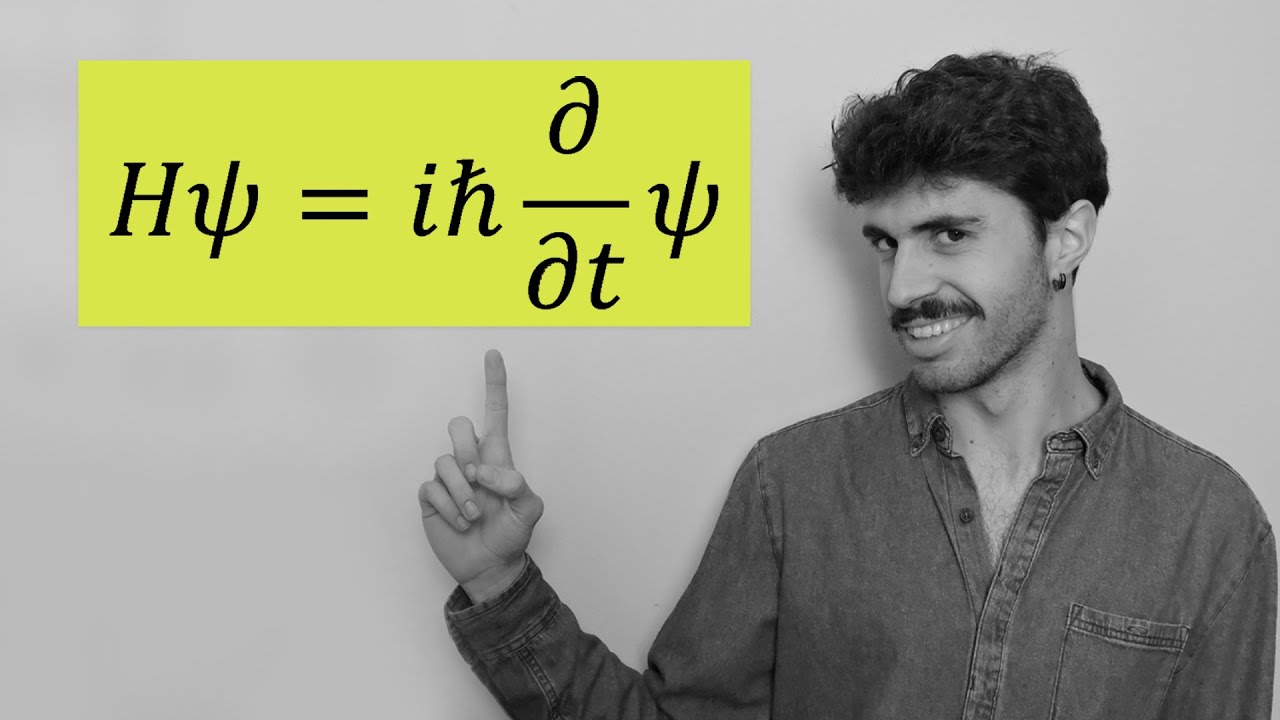
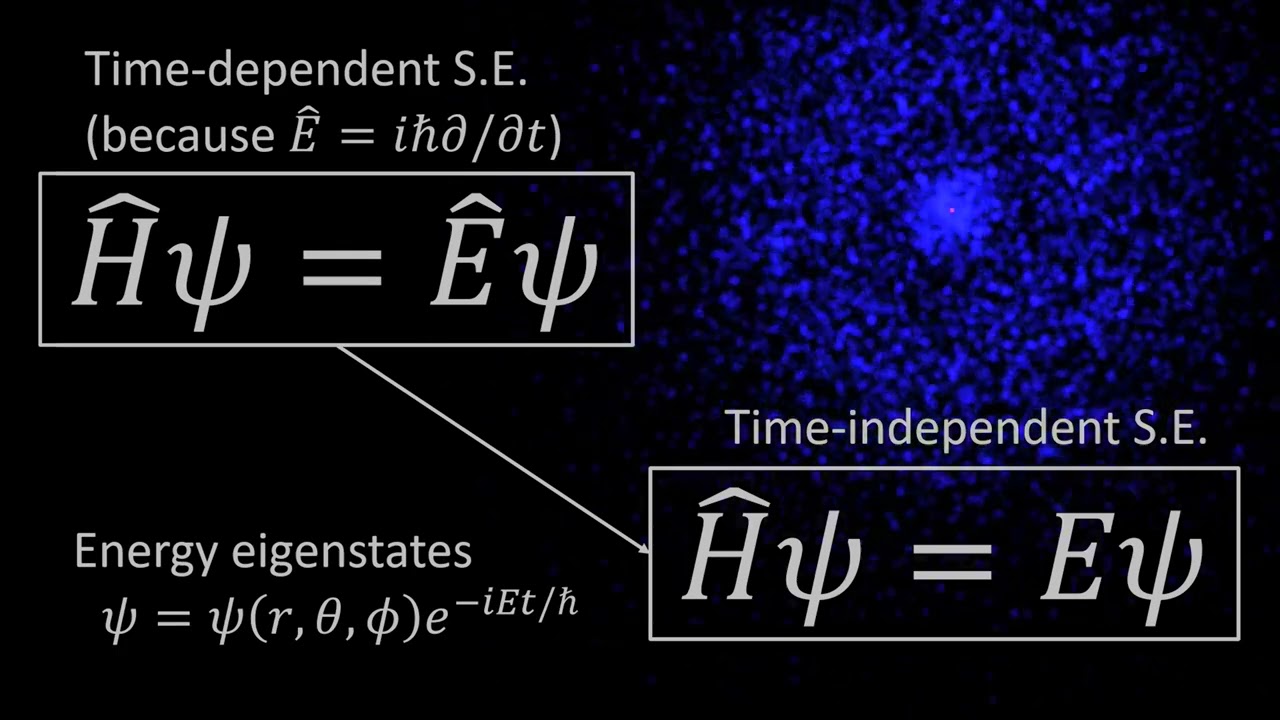
Schrödinger's equation Schrödinger developed two mathematical models, differentiating what happens depending on whether the quantum state changes with time or not. For atomic analysis, Schrödinger published the time-independent Schrödinger equation at the end of 1926, which is based on wave functions behaving like standing waves. This implies that the wave does not move, its nodes, that is, its balance points, serve as a pivot so that the rest of the structure moves around them, describing a certain frequency and amplitude.
Schrödinger defined the waves that describe the electrons as stationary or orbital states, and they are associated, in turn, with different energy levels. The time-independent Schrödinger equation is as follows: Where: E: proportionality constant. Ψ: wave function of the quantum system.
Η ̂: Hamiltonian operator. The time-independent Schrödinger equation is used when the observable that represents the total energy of the system, known as the Hamiltonian operator, does not depend on time. However, the function that describes the total wave motion will always depend on time.
The Schrödinger equation indicates that if we have a wave function Ψ, and the Hamiltonian operator acts on it, the proportionality constant E represents the total energy of the quantum system in one of its stationary states. Applied to the Schrödinger atomic model, if the electron moves in a defined space, we have discrete values of energy, and if the electron moves freely in space, we have continuous intervals of energy. From the mathematical point of view, there are several solutions for the Schrödinger equation, each solution implies a different value for the proportionality constant E.
According to the Heisenberg uncertainty principle, it is not possible to estimate the position or the energy of an electron . Consequently, scientists recognize that the estimate of the location of the electron within the atom is inaccurate. Postulates of the Schrödinger atomic model The postulates of the Schrödinger atomic model are the following: -Electrons behave as standing waves that are distributed in space according to the wave function Ψ.
-Electrons move within the atom describing orbitals. These are zones where the probability of finding an electron is considerably higher. The referred probability is proportional to the square of the wave function Ψ2.
The electronic configuration of the Schrödinguer atomic model explains the periodic properties of atoms and the bonds they form. However, Schrödinger's atomic model does not consider the spin of the electrons, nor does it consider the variations in the behavior of fast electrons due to relativistic effects. We have now reached the end of this topic.
As a practical exercise to check what you have learned, I suggest you leave 2 of the postulates of this atomic model in the comments. Give me a like if you have learned or you liked it and subscribe. I wish you a happy day.
See you soon!