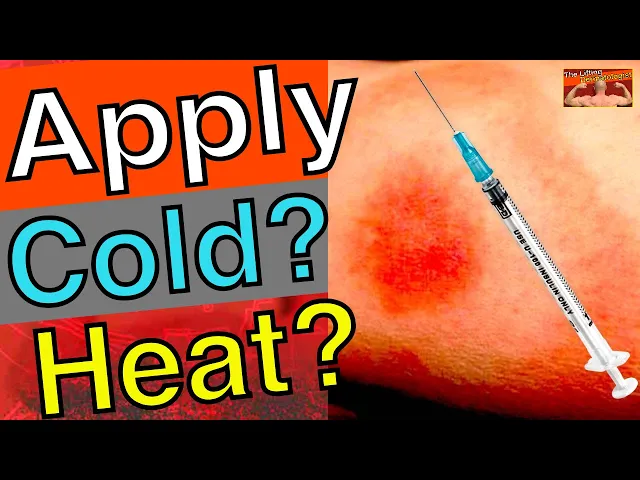
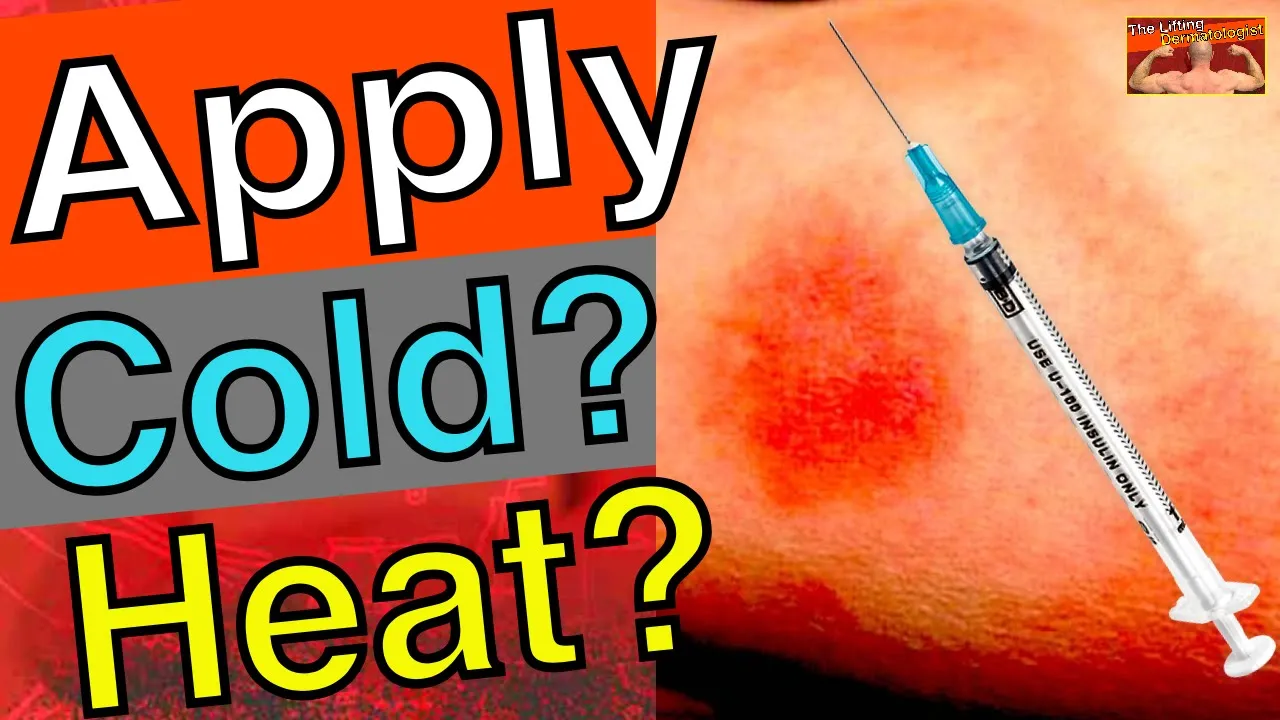
Most common side effects from injections are at the site of the injection itself, whether this concerns injecting testosterone for a TRT protocol, vaccinations in babies and young children, or injection biological drugs for inflammatory diseases like rheumatoid arthritis, Crohn's disease, or psoriasis. Being a dermatologist I am asked very frequently how to treat these local skin reactions. In this video I will answer the question: do we have to apply cold or heat?
(Please like and subscribe. Thank you! And hit that notification bell so you won’t miss anything.
) First, when we’re talking local reactions to injections, we are not considering infectious complications (that will need antibiotics as a treatment), but either acute or delayed inflammatory local reactions. These local responses can be acute/immediate or delayed, or both. The mechanisms are also variable and often vary with the substance in the injection.
All of these reactions are self-limited and are generally treated with cold or warm compresses, symptomatic treatment with antihistamines if itching, and corticosteroid topically to reduce warmth, erythema and tenderness, particularly if the reaction progressed over several days. I do not generally suggest oral corticosteroids, although this may be of some benefit. I sometimes suggest oral non-steroidal anti-inflammatory therapy as well.
But, the question remains: do we need to apply cold or heat in the treatment of local injection reactions? Ice versus heat: it’s an age-old question. How do you know when to use ice and when to use heat on a painful skin reaction?
Well, let me present you the facts, and then you can draw your own conclusion. Heat Brings more blood to the area where it is applied. Reduces joint stiffness and muscle spasms, which makes it useful when muscles are tight.
Should NOT be used for the first 48 hours after an injury. Cold Eases pain by numbing the affected area. Reduces swelling and inflammation.
Reduces bleeding. So, The age-old question can be answered best after taking into account the type of injury (acute versus chronic) and the timing of treatment (in the first 2 days, or after that). After hearing all of that, the conclusion can easily be drawn that cold is recommended in the first 48hours of appearance of the skin reaction.
It is especially helpful to reduce swelling and control pain. Ice is most effective when it is applied early and often for the first 48 hours. Heat is great for sore muscles and joint pain, which are typical of chronic injuries.
, but not so much for acute, inflammatory skin reactions to injections. A few more tips on applying cold to the skin reaction: Dampen a towel with cold water. Fold it and place it in a plastic, sealable bag.
Place the bag in the freezer for 15 minutes. Remove it from the freezer and place it on the affected area. Do not use ice longer than 20 minutes at a time.
More time spent icing does not mean more relief. Be sure the area goes numb, then make sure the skin returns completely back to normal before reapplying. If you keep on experiencing trouble injecting your TRT, you might consider switching to compounded transscrotal testosterone cream, which in my opinion, and in the opinion of many experts, is an ideal method of TRT delivery.
I have made several videos on that topic. Click here next to check these videos out right now.