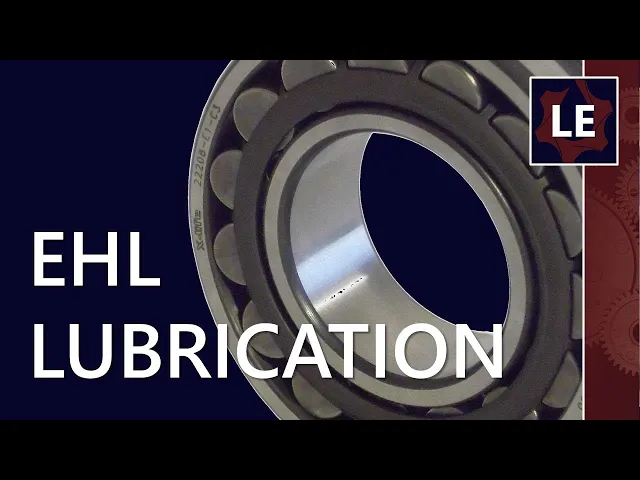
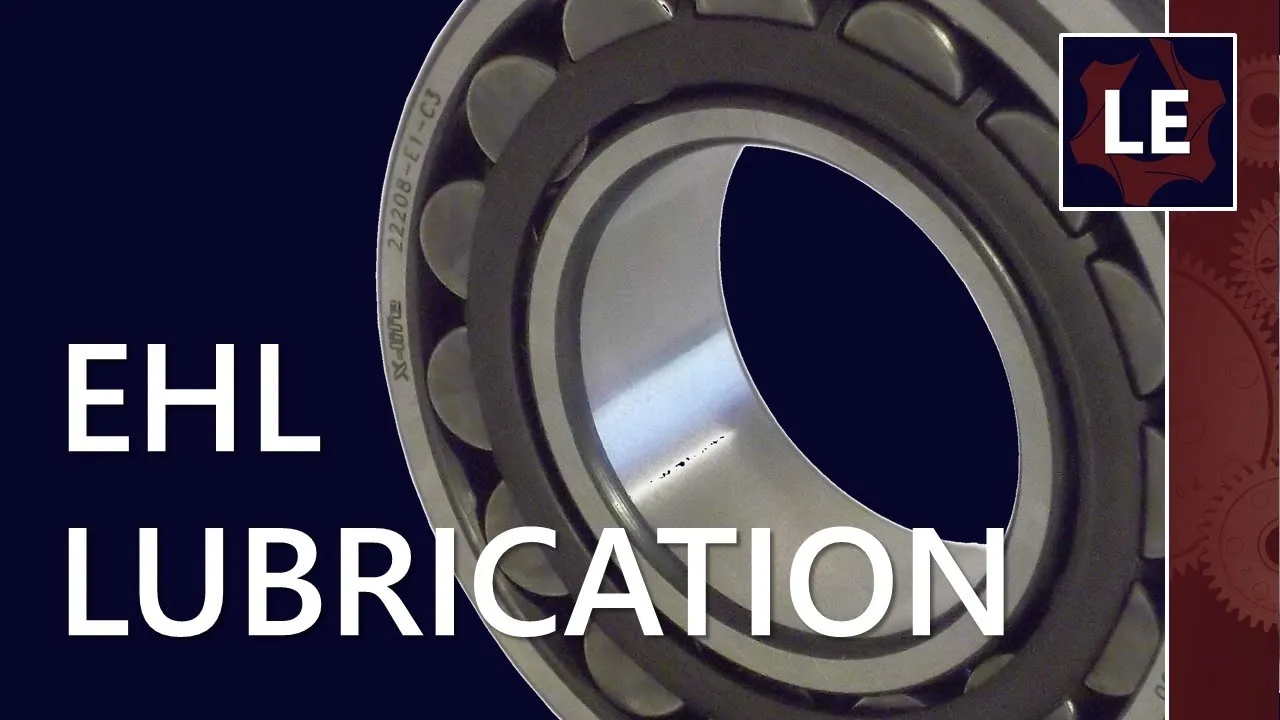
good day everyone welcome to lubrication explained in this video we're going to talk about ehl lubrication so that's elasto-hydrodynamic lubrication sometimes also known as ehd lubrication so if you remember back in our video about the stribec curve we talked about the relationship between zn on p which takes into account viscosity speed and load and how it relates to the coefficient of friction and the curve had a kind of a minimum point but everything to the right of that minimum point is what we call the hydrodynamic lubrication regime where the two surfaces that are being lubricated
are fully separated by the lubricant film well if we to take hydrodynamic and we put elasto in front of it you get ehl lubrication elasto hydrodynamic lubrication and that refers the elasto of that refers to the fact that one or both of those surfaces so that is the machine surfaces actually deform as part of this lubrication regime specifically we're talking about gears bearings and cams this is where it really comes into its own understanding it is is pretty crucial in understanding how these perform in service so let's take probably the most common of these scenarios
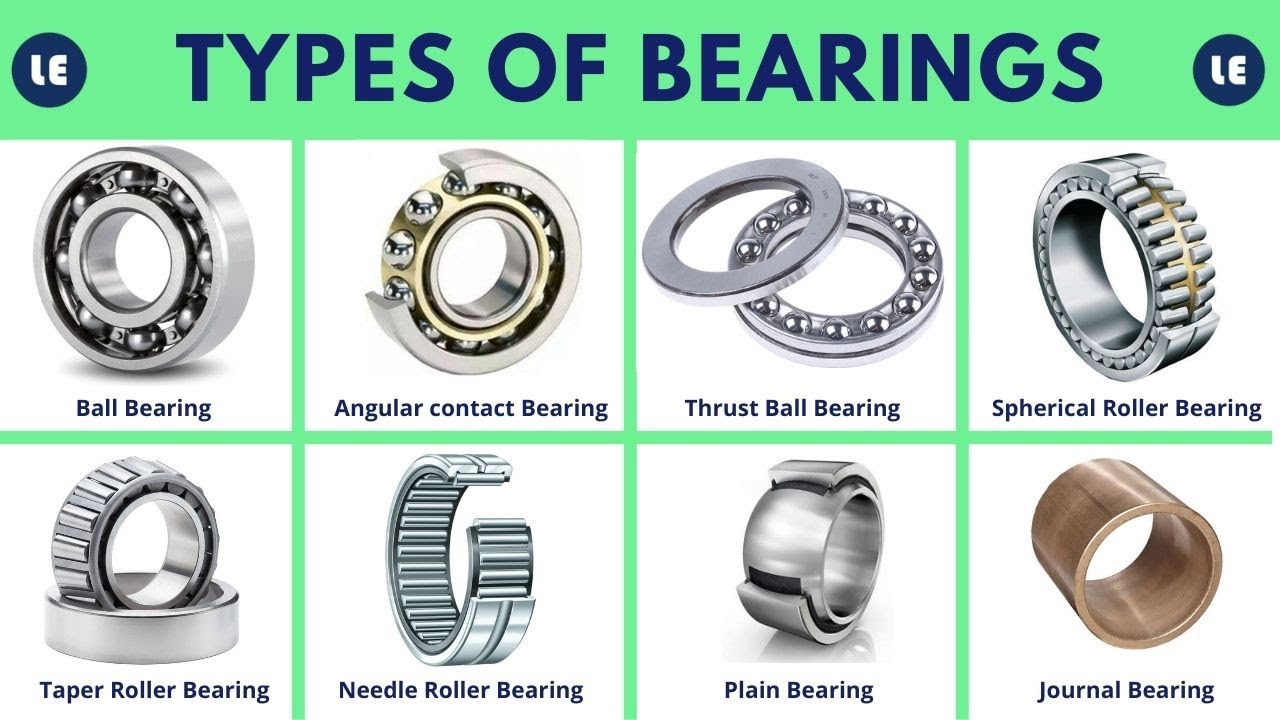
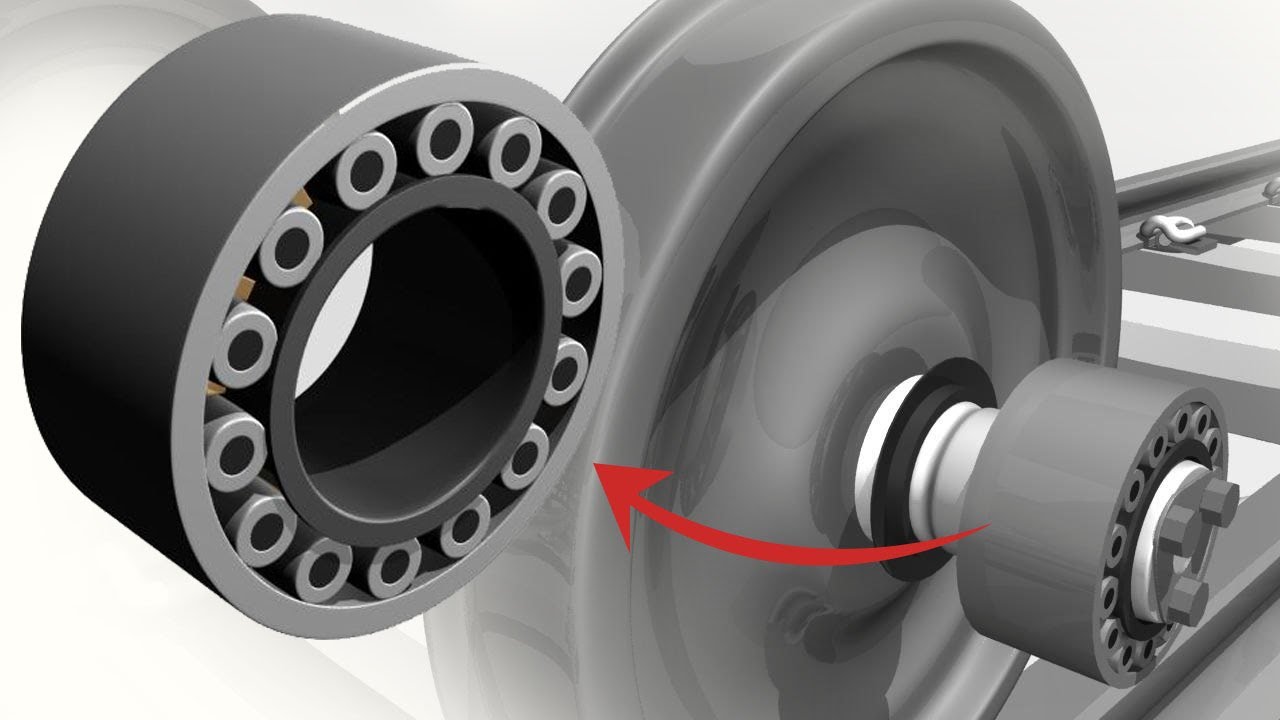
maybe the most well known so that would be a a bearing and in this case we're looking at a rolling element bearing with let's say it's a spherical roller bearings or cylindrical roller bearings so in this case we're going to say that the inner shaft is the one that rotates so we've got the inner races rotating and of course the rolling element bearings are also rotating so we looked at what happens at the interface between those two um initially we probably have metal on metal contact and as the speed builds up we get the formation
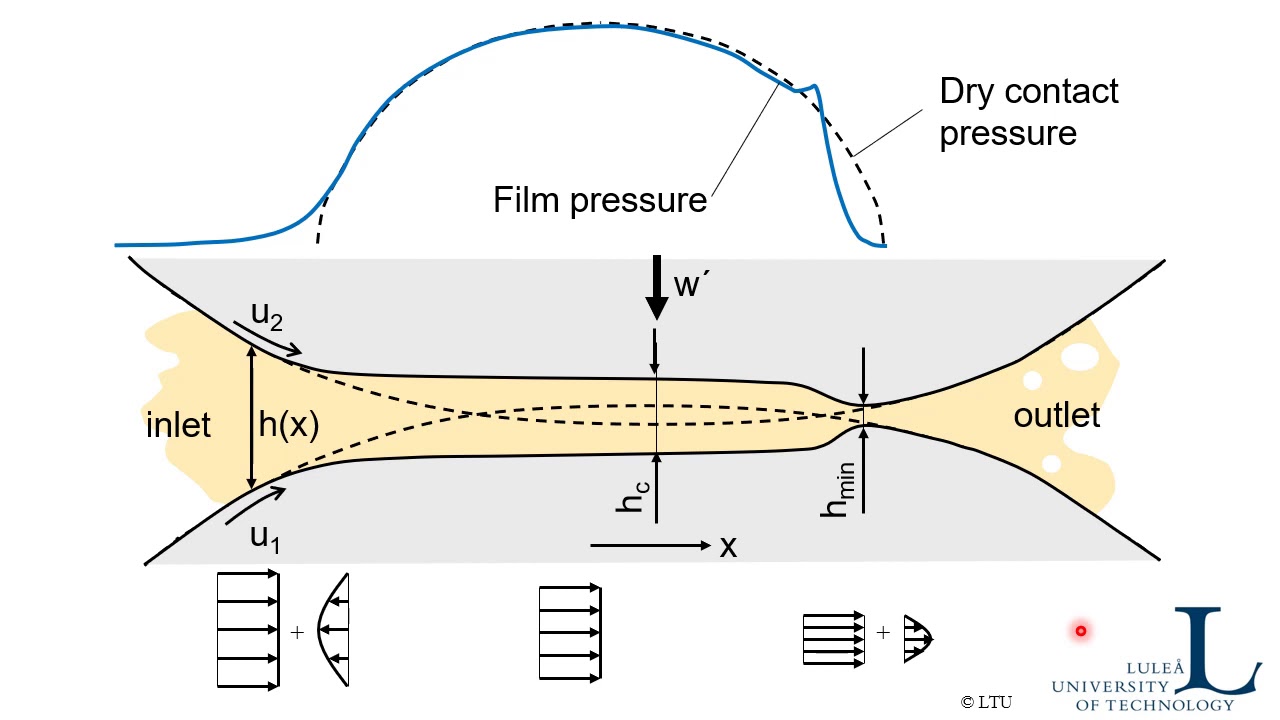
of a lubricant film that then separates the two surfaces and this probably happens around kind of 10 to 15 rpm if you were to look at a particle level model of what happens to the particles as they try to force themselves into that gap well because the gap gets smaller and smaller only some particles are going to make it through others get kind of forced back upon themselves and what this does is it increases the pressure of the lubricant between the two surfaces so between the rolling element and the race now what we know of
the pressure viscosity relationship for lubricants is that as pressure increases viscosity also increases now it's not necessarily a linear relationship like i'm showing here but it's important to know that the viscosity will go up what that means is that in this area the viscosity is going to be very high so high in fact that the lubricant resembles a glass so it's kind of this amorphous solid and it is actually so solid that it's able to support extreme loads to the point where the metal surface of the rolling element usually deforms so if this was a
spherical or cylindrical roller bearing it would actually flatten out where it where the contact zone is the other thing that is characteristic of this is the pressure profile so if we were to look at the pressure profile across this contact you would see it increase and then come back down again on the other side now this is assuming perfectly flat surfaces we know of course that there are surface disparities and where those occurred we would see spikes in the pressure profile as well so going back to that striabet curve we are talking about the hydrodynamic
lubrication regime but one thing that's really important to understand as part of ehl theory is something known as specific film thickness sometimes it gets represented by the greek letter lambda now specific film thickness helps us to make calculations and select a lubricant viscosity which is going to put us into the elasto-hydrodynamic lubrication regime so let's start with the foundational concept of lambda first we need to understand that between the two lubricated surfaces there is a film thickness h right and this refers to basically the average film thickness across the contact zone you also have two
numbers that refer to the surface roughness now the surface roughnesses don't necessarily match right so the surface roughness of a of a race would probably be very different to the surface roughness of a of a roller but if you combine the two of these we get what we call the specific film thickness so it's the thickness of the film divided by the root mean square of both of the surface roughnesses now this root mean square is sometimes also called the composite surface roughness because it takes into account the surface roughness of both of those contacts
now if we were to think of this another way we've got film thickness over surface roughness and film thickness is directly related to viscosity while surface roughness is directly related to the manner in which the equipment was machined right now we don't have any more control over the machining because once the piece is manufactured it's done we do have control over the viscosity though so if we want to select an ideal value of lambda and we have the machining at method then we can choose an appropriate viscosity for our lubricant all right so how does
it relate to the life of our bearing and ultimately the protection of our bearing if we plotted lambda on the x-axis and looked at what we could call a life extension factor so you know relative to a normal case how much longer could i extend the life of my bearing the curve kind of resembles an s curve and what we find is that at a lambda of 2 right that's basically where the curve starts to flatten out so 2 we generally say is the optimum specific film thickness for a rolling element bearing and the reason
for this is because if you were to go a little bit further down so a smaller specific film thickness the life extension really really drops off quite quickly and the reason for this is if we were to map this across to the stribet curve a lambda of one or anywhere between let's say zero and one and a half represents us being in the mixed and boundary lubrication regimes so that's where of course the two lubricated surfaces are coming into contact with each other and we are reliant on the anti-wear and the ep additive packages to
protect our bearing as we go up to two what that's actually doing is it's putting us into the hydrodynamic part of the stribet curve right but if we were to increase lambda to get us more bearing life okay what that does is it puts us further up the striabit curve and what we know from the striabit curve is as we increase z like the viscosity term all we are doing is increasing the coefficient of friction so we are extending the life of our bearing but we are using much more energy to do it and that's
why a lambda of 2 represents kind of an ideal state where the friction is low but we have extended the life of our bearing almost to its maximum point so here's a question for you would we ever want a lambda greater than two let's say you know three or four sure we might want that in instances where we have shock loading in our application excessive vibration or we have stop start operations now why would that be going back to our our diagram of specific film thickness if we have vibrations and shock loading in those instances
the apparent film thickness is much smaller right because in in a shock loaded situation we have temporarily increased the load on our bearing and therefore the two contact surfaces are getting closer together and that reduces our apparent film thickness so to ensure that the surfaces remain apart we want to choose a higher specific film thickness so the question might be for you if you are the operator of a bearing or a gear or a cam can i do these calculations myself so yes and no the calculations require a few things we require the surface roughness
of your machined part the load speed temperature and dimensions of the operations and the pressure viscosity relationship of the lubricant that you are using and this one is the sticking point the pressure viscosity relationship of most lubricants is something that is held by the lubricant manufacturers so you know shell or mobile for example will have um measured the pressure viscosity relationship of pretty much all of their lubricants that's really the sticking point because understanding how the viscosity of the lubricant changes as it gets to that extreme pressure scenario in between two contact zones is really
key to selecting a lubricant with the correct bulk viscosity so really you you as the operator are making a decision over whether you let's say for example use a 220 or a 320 senesto gear oil so ultimately what it comes down to is talk to your lubricant provider they should be doing these calculations for you even though that they are the ones who are doing their calculations for you i hope that this has been really helpful in giving you an understanding of the background of ehl theory i might do a little bit more of a
deep dive on calculating lubricant parameters maybe sometime in the future but for the moment i hope this has been helpful if you have any questions or comments please leave them leave them in the comment section below this has been lubrication explained