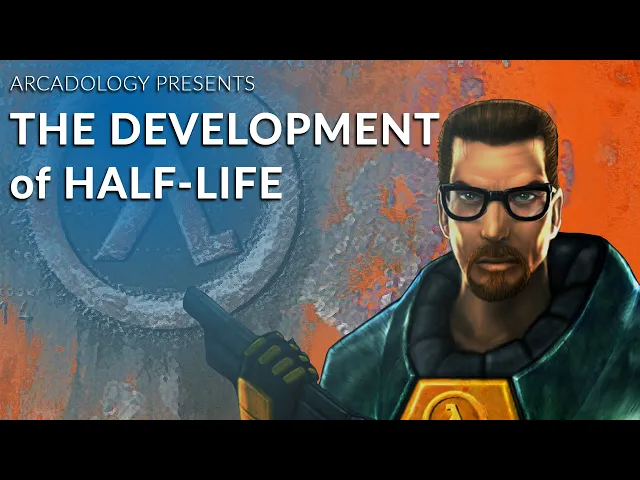
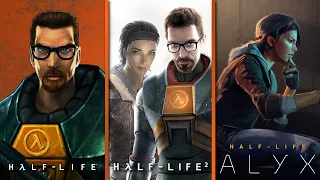
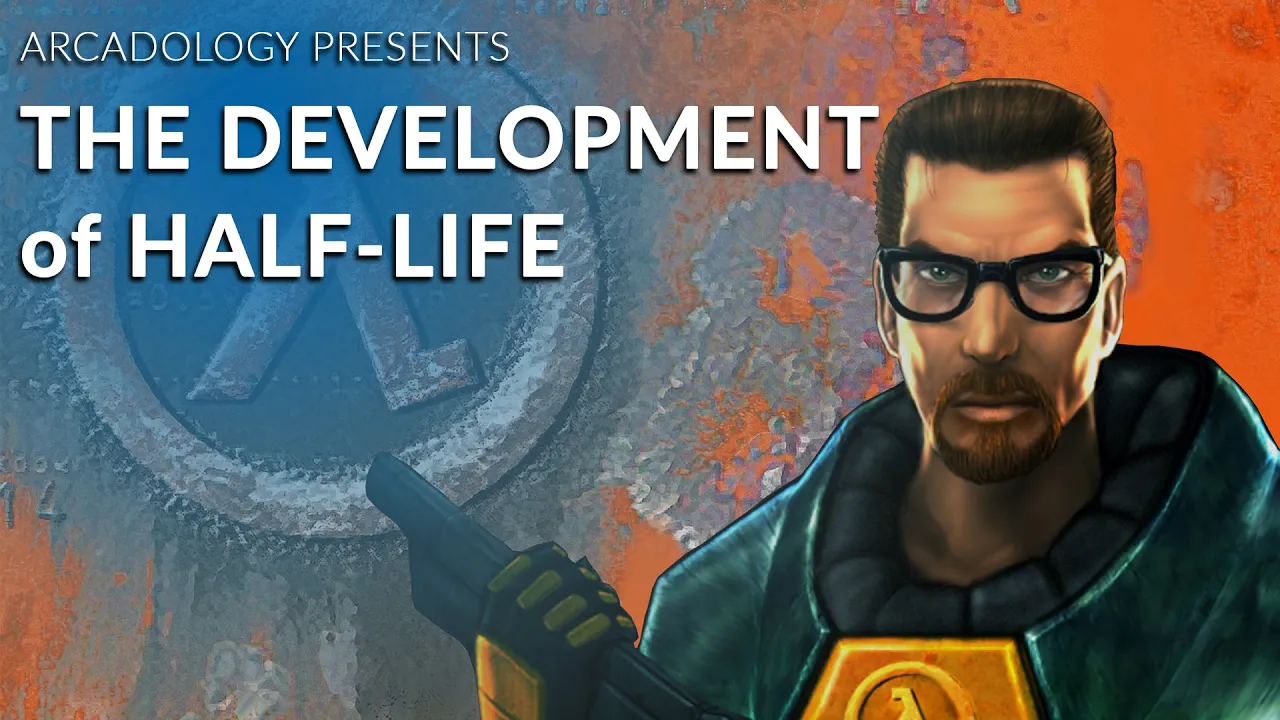
20 years ago this month in 1998 a start-up named valve released half-life and it would change the face of gaming the game inspired by doom another FPS that turned the Hobby on its head would make valve a power player in the industry and none of it would have happened if it weren't for the era of the Microsoft millionaires welcome to arcade ology the development of half-life gabe newell is a Harvard dropout who went to work for Microsoft however in the early 80s when he started the company was not nearly the powerhouse it is today his
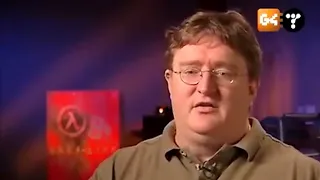
story of starting at the company is very reminiscent of others in the early days of the software industry he was constantly at the office visiting his older brother who had gotten a job there to the point of aggravating Steve Ballmer according to Newell Ballmer finally said to him one day well if you're going to be spending all your time hanging out here you need to do something useful soon Gabe was working for the company I learned more in three months with those guys at Microsoft than I did the entire time I was at Harvard in
Harvard I learned how to drink beer while doing a handstand in the snow which you know was a useful skill but not nearly as useful as how to actually develop software so it's understandable from Gabe's point of view wide trading the Harvard Crimson for a job at Microsoft made sense he spent more than a decade at the company working on early versions of Windows this period of time in microsoft's history is known as the era of the Microsoft millionaires in the early years employees receive stock options as part of the compensation package not just programmers
and salespeople but all the way down to janitors during this time the company would generate nearly 10,000 millionaires all living in the Seattle Washington area in a Washington Post article on the topic Roberto power mentions it knocked our economy out of kilter you got really high levels of consumer spending houses cars both that were not sustainable you got all kinds of investments that were predicated on a fantasy that this flow of money would go on forever Roberta Power economist Washington State Employment Security Department this is not totally related to the history of valve except that
gabe newell and co-founder Mike Harrington were part of this wave of millionaires and inspired by fellow Microsoft alum Michael Abrash who left to work on quake for its software they decided to start their own company in 1996 one of the first things Newell and Harrington did was pay Abrash a visit at its software according to a brash in an interview with GameSpot the ed guys were not too thrilled to have the meeting let's put it this way it wasn't like when Nine Inch Nails came to visit that was a cool thing these were guys that
worked on stuff like Microsoft Bob and home automation you're not going to walk into the coolest game company on the face of the earth and have the guys say wow nice to hang out with you Michael Abrash the idea was to learn what they could from it and build upon the hard work that Carmack and team had already put into the engine rather than starting from scratch they were trying to be realistic about their prospects when we sat down and looked at it the areas that we wanted to be innovative for first-person action games did
not require us to be innovative in the areas where John had already done a lot of work it would have been too much to go from 0 to 25 people and have a stable team to build an engine at the same time Harrington and Newell went back to Seattle and incorporated the company on the same day that Newell was set to be married they settled on the name valve because it wasn't overtly extreme which is a good thing because if there is one thing about the 90s is how extreme everything was the first two people
hired at valve came from a list of names Gabe and Harrington had acquired at did Steve Bond and John Guthrie were Floridians who ran a quake fan site and also had deep knowledge of the quake engine the newly formed valve flew them up to Seattle and offer them a job the rest of the team soon followed suit with Newell and Harrington prying programmers and developers away from companies like 3d realms shiny and Microsoft Newell and Harrington have been working feverishly through their checklist with the company formed the game engine acquired and a team built the
next thing they needed was a publisher in present day through valve steam platform game developers have the ability to self publish but back in the 90s finding a publisher to defray the costs and help produce the physical copies of the game was mandatory for a sense of large-scale success the catch-22 however was that publishers were wary about working with companies that had no past work to show or at this point even a demo after many fruitless meetings they finally found their partner in ceará online hen Williams the founder of ceará received the email himself and
it was perfect timing Sierra had been looking to get into the first person shooter market when they were contacted by Newell it rarely snows in Seattle but the day that valve was set to meet with Sierra the city was covered in snow most places were closed but the Vowell team was determined and drove over to Sierra's office in Mike Harrington's four-wheel-drive car Ken Williams was the only person to make it into the office that day at Sierra and 20 minutes into the presentation he was sold Williams wasn't going to be at Sierra for much longer
however and Scott Lynch the person who took over the valve relationship at Sierra wanted to be very clear with what the expectations from valve were what we all wanted to see was valve take the technology as a foundation and add something new when they started talking about telling a story and creating a persistent world it was pretty obvious they weren't going to do a mission pack with a quake engine Scott Lynch during development Valve's first game would be known as quiver most likely a nod to the quake engine that it was built on the idea
was to get a game out as quickly as possible Newell and Harrington had received that advice from their visit a did because otherwise they could end up bankrupting themselves the team was initially inspired by the Stephen King story the mist and refined the concept until the story was about Gordon Freeman in the black Mesa research facility Newell wanted the company to really focus on providing a more story based exploration rather than straight action for a long time 3d action games seem to keep treading down the same path an increasing focus on a narrow definition of
game play and a focus on the rendering instead of the gameplay valve would hire novelist Marc Laidlaw to help shape the story into what it would ultimately be the big first-person shooters of the day were usually flimsy on plot and character development John Carmack famously said story in a game is like story in a porn movie it's expected to be there but it's not important this is a pretty common opinion the systems are the most important part and when looking at the game through the lens of the actual players experience however that being said that
does not mean that those same gameplay systems cannot be used in service to a story and if the story is going to be there why not try to make it a good one Laidlaw put it like this and a lot of shooters for all you know you could be a weapon walking around a level it's pretty clear in half-life that's not the case much of what they had planned for the game would not work in the quake engine out of the box the engine had not been designed for characters to be able to speak to
rectify this they modeled the characters using skeletal animation and birdwell and Kelly Bailey worked secretly to design a way to get the characters mouths to actually move and floored everyone when they did as the game continued development the gaming public started to become more aware of it the first screenshots of the game were released in May of 1997 and they didn't show a whole lot then at e3 1997 a gameplay trailer was released and although the team received positive feedback they were not totally happy with the product they did not feel that it would be
able to be released by Christmas of that year and upon further inspection decided that they needed to break everything apart that they had done take the pieces and start over again on a post on Gamasutra Ken Birdwell outlined what they felt about the original version and the process by which the new version of the game was designed what they came to realize with a half-life as it was was no better than a quake total conversion basically quake with different graphics they knew that adding just a few more months to the development cycle would results in
a game that was more polished but not any better one of the first steps after deciding to scrap the original version of the game was to see what worked and what didn't the team designed a single level that had all the design elements and technology that they had created over the previous year for the initial version of the game once the exercise was complete they moved on to the next version of the game with a design led by a committee there is no lead game designer on half-life or director that many present-day games have instead
what they had was referred to as the Cabal the Cabal was a cross-disciplinary team that would spend several hours a day several days a week working out the high-level details of the level design as well as scripted elements this team included three engineers a level designer a writer and an animator it wasn't clear that egos could be suppressed enough to get anything done the opposite was true the people involved were tired of working in isolation and were energized by the collaborative process and the resulting designs had a consistent level of polish in depth that hadn't
been seen before the main cabal would have a rotating membership to ensure a cross-section of the company was represented and to prevent burnout according to Birdwell collaborative teams sprung up in other departments to solve smaller problems once the success of the cabal became evident after the first month they had compiled a 200 page design document and appointed someone to manage it playtesting started in the third month of the redu sierra the publisher handled pulling in players from the area and during each session a member of the cabal the level designer and occasionally an engineer would
sit silently and observe the player and take notes ultimately there were over 200 play test sessions with each session giving the team an average of 100 action items that is about 20,000 action items that were generated from the play test sessions alone the use of data and the design of the game was fascinating according to Birdwell they began tracking every data point as players played through the game and graphed them for example when they saw that a player would go through a level with too much health for too long they made the determination that the
level was too easy or if there was too much time between encounters too boring as they fine-tune the levels the collaborative process became common for the level designers as well although each level had a lead level designer the other level designers would ultimately make tweaks and edits as well heard well mentions this worked because each of the designers had a particular strengths that they could bring to the table whether that be enemy placement or the geometry of the level at the risk of opening old wounds this quote from Ken Birdwell made me chuckle the more
I thought about it the net result is that we throw out just about everything all the AI was gone and we gutted the levels in reality half-life got delayed because of half-life the game is really half-life 2 it's an incredible game so with that logic half-life 2 was half-life 3 all kidding aside the development of the first half-life game can show just how easy it is to let games slide down the calendar with the initial expectation of spring 1998 the game quickly found itself being pushed out the door finally around Thanksgiving 1998 back then however
valve was working under the pressure of being a start-up as well and managing the relationship with Sierra there's little external motivation for a present-day valve to rush anything they don't want to do which possibly is one explanation for half-life 3 but enough present-day talk at the 1998 III valve demoed a brand new version of half-life and once again expectations went through the roof it would take the dreaded crunch though and scrapping parts of the game in order to make it to its final release in November of 1998 the opening of the game became somewhat famous
with the player character Gordon Freeman riding the tram on his way into work we see the Black Mesa research facility before any sort of disaster has occurred according to writer Marc Laidlaw the idea came to him and level designer Brett Johnson when they were reviewing the opening level Marc was curious to see what the level would look like without the destruction the result was the opening sequence we all know today unfortunately there aren't a whole lot of records of half-life's development process everything that I've mentioned so far are the anecdotes and recollections of people that
worked on the project in 2017 Eric Johnson revealed in an interview with Gamasutra that the VSS or shadow copies of the previous versions of development had been lost these things happen of course and when one is making history they are often not aware of it in the same interview gabe newell mentioned from his days at microsoft that they couldn't rebuild version 1.0 of windows due to hex code editing that haven't done to the source copy of the software for the sake of gaming historic preservation though the source code for the half-life engine gold source is
still available half-life's game plays seems familiar for those who have played first person shooters recently but in the mid to late 90s the control schemes for first-person shooters were not quite solidified for example early first-person shooters like doom and Duke Nukem 3d released only a few years earlier used Direction arrows even quake which added mouse support still use the direction arrow for motion half-life used the WASD controls that are probably the most common shooter control scheme today according to an article on PC gamer WASD was popularized by a quake player Dennis Thresh Fong I'm certainly
not going to take credit for the creation of WASD I stumbled across it I'm sure other people started using it as well just based on what was comfortable for them I definitely think I helped popularize it with a certain set of gamers particularly the ones that played first-person shooters while quite - added a standard keyboard configuration file that allowed to quickly bind the controls - wasd it was still not the default configuration it wasn't until half-life's use of it as the default followed by quake three using it as the default the following year that the
control scheme became the standard by which shooters operate today the game's story as mentioned above focuses on gordon freeman a young scientist working at the Black Mesa research facility during an experiment that he's involved in a portal to another dimension filled with ghastly and aggressive creatures is open soon Black Mesa is under assault from these beings and Gordon wearing his HEV suit and wielding a crowbar has to find a way to survive unlike other shooters of the era much of the plot is relayed to Gordon by way of encounters with NPCs such as other scientists
who have managed to survive Gordon's journey through the game evolves at its starting point he is simply trying to survive the invasion then it becomes clear that the government is attempting to cover up the incident by sending in the Marines Gordon takes it upon himself to find a way to end it ultimately being teleported into the other dimension to destroy the creature that is keeping the portal between two worlds open sales for the game went way beyond expectations Newell mentioned in an interview in 1999 that they had only expected and budgeted for around 180,000 lifetime
units sold for the game but within eight weeks of its release the game had eclipsed the half-million mark in terms of critical reception the game received incredible reviews and has since been recognized as one of the greatest games of all time much like the game that inspired it doom half-life had tremendous support from the modding community perhaps the most famous half-life mod is counter-strike the mod developed by Jess Cliffe and Minli was eventually acquired by valve and the duo were hired as game developers counter-strike however is a big enough topic that it deserves a video
of its own team fortress has a very similar story starting as a mod developed her quake which was ported to half life after valve hired the development team over time it had been tweaked enough to be referred to as Team Fortress 1.5 the base game would have several expansions developed by Gearbox Software opposing forces put the player in control of a marine while blue shift featured a security guard named Barney Calhoun the name by the way is derived from what the valve team referred to the security guard models as this itself was a reference to
the Don Knotts character from The Andy Griffith Show Barney Fife when half-life 2 was released valve released a new version of the original game called half-life source he used the new engine The Source engine to render the game the re-release didn't blow anyone away but it got some enthusiasts to consider what it would be like to fully remake the game the overhaul called black mesa has been in development for years and has switched engine versions several times in order to keep up with Valve's releases in 2015 an early access version of the game was released
and recently the team behind the game known as the crowbar collective have announced that Black Mesa Zen will be released in 2019 we are all aware of the current standing of half-life after the second episode of half-life 2 we've seen scant news about any further development in the series meanwhile games like counter-strike and dota 2 have taken the lead for valve as well as the money they earn from the steam platform as I said earlier half-life 3 has no external motivating factors the drive to create it has to come from within additionally shortly before I
started putting this video together there were rumors that valve was working on their own virtual reality headset and possibly a half-life game to go with it the nature of this game though is still unclear but consensus is that it would be a prequel to half-life given Valve's history and the Internet's ability to read into things just a bit too much I would take any rumors with a grain of salt until there is some sort of official announcement in the meantime let's lift a crowbar to Gordon Freeman's original adventure and celebrate 20 years of half-life that's
all for today if you enjoyed this content please like and subscribe my name is Kevin and you've been watching archaeology take care everyone [Music] [Music] [Music]