Maybe becky knows we are recording this for future use if becky can pop on or write interface we're recording okay here we go welcome everyone thank you for joining us this morning for the Abel's training this is the assessment of basic language and learning skills and it has been revised once my name is Jenna Radtke and I'm the behavior analyst or a board certified Behavior analyst at DC ba with the Ottawa Catholic school board and I'm joined today by my colleague Marilyn Greene who's also a behavior analyst with the Ottawa Catholic school board and we're
really excited to bring you this Abel's training this morning as well as tomorrow morning the structure of the training will be if you could just mute your microphone and turn off your video that would be great and we'll remind you of that every now And again the structure of the training will be I will lead this morning session and Marilyn will monitor the chat box so if you have any questions please feel free to write them in the chat box and Marilyn will answer them in written format back to you so that everyone can see
the response if she feels like it's something she wants to flag for me to have a more open discussion about then she'll do that and we can you can talk About that the session is recorded once again so we can use this for hopefully future online training opportunities the Abel's training we've done it two or three times now but always in person so all of the activities are meant to be very hands-on and interactive while we're together so we've tried to modify them as many of them as possible to be able to do together online
today so bear with us as we work through that because it's the first time that we're Not doing it live in person we will take a break around 10:15 or 10:30 wherever it's natural to take a break we'll take a 15-minute break and then we'll hop back on and continue until about 11:30 and from 11:30 to 12 we r going to have a really great open answer period where we can discuss what we've learned so far with the Able's and then tomorrow Maryland will take the lead and I will monitor the chat box and we'll
have the same structure from 9 to 11:30 we'll go Through the slides with a break around 10:15 or 10:30 and then we'll have a discussion period from 11:30 to 12 so again feel free to mute your microphone and you can turn off your video if you wish as well get comfy cozy and sherry morning with us that would be great ok so I'm just gonna move my video our board respectfully acknowledges that we are located on the ancestral traditional and Unseeded indigenous territory of the Algonquian people's whose on whose territory we pray learn play and
work and if you would join me in prayer that would be great in the name of the Father the Son the Holy Spirit comin ever-present God you called us to be in relationship with one another and promised to dwell wherever two or three are gathered in our community we are many different people we come from many different places we Have many different cultures open our hearts that we may be bold in finding the riches of inclusion and the treasures of diversity among us we pray in faith comments thank you very much ok so the materials
needed for today if you have the Abel's assessment book then you want to make sure you have that with you we know that the majority of you won't have this so that's totally fine we've designed the training to be very Friendly to anyone with or without materials so this would be handy if you've got it you can you can take it out it does come with the second book that looks very similar and it's called the scoring instructions and IEP development guide we won't be using that other book today but just so you know there
are two books that look very similar you'll also need a paper and a pencil if you'd like to take notes or for some of the activities we'll have You jot things down if you have on hand a yellow marker and a red marker that's great because we're gonna be practicing filling in some Abel's grids and again if you don't have that or that's that you don't have the sheets printed for that that's totally fine we can still bring you through the learning just the same by modeling those things for you and while we were sharing
this presentation we've shared with you a Google folder With a whole bunch of documents in it so there's this slide deck in PDF format that you could print if you want it there's an able an online ables grid so when you're filling in the online Able's grid you can just right click and fiddle with different colors or you can print that and color it in on on paper there's a detailed summary sheet of the Able's which we won't I don't think show you today but you will have that and it basically puts all the Different
Abel's goals on there really quick and handy sheet there's the Abel's assessment checklist so it's a checklist we've developed to help remind you of all of the steps to completing the Abel's assessment so that you're not missing anything then there are data sheets for 10 common starter skills so Marilyn will bring you through those tomorrow so if you don't have those printed that's totally fine and those we just made to make it easier for you if You wanted to dive into doing a little bit of abel then you will know where to start and then
there's the activity 1 printout again if you don't have it printed don't stress don't worry we're gonna work through it together but this in general is the materials that you might need to to get started ok so we know that some of you have never heard of the Abel's this is the first time you're hearing about the Assessment of basic language and learning skills some of you are more familiar with the Abel's but our goal today is really to show you a continuum of practice so your involvement with this tool can vary and it will
vary so some of you are going to feel comfortable after this training to dip your toe in meaning when a clinical environment when an ABA clinical environment gives you or the parent gives you an Abel's grid you will know what to do with it oftentimes we hear from resource teachers or teachers and they say I have this grid and it came from an ABA clinical setting and and I don't know what to do with it and I don't know what it means so hopefully after today you will better be able to use that assessment data
and that assessment information to help inform your practice with your student and that would be sort of dipping your toe in if you want to Waive in slowly then you might want to start with one skill and run an assessment on that skill and fill in the grid or just make some learning goals based on some of that assessment data and you can dive right into you could hypothetically do a full Able's assessment on with your student but keep in mind in a clinical setting when students attend full time hours basically it can take a
couple of months to do a full Able's of Abel's assessment So it is a very comprehensive tool so we love this tool it's an it's amazing but diving right in might be a little bit difficult after just 2 morning's of training so hopefully you'll be at least willing to dip your toe in at the end of this so this is our training agenda that we're going to be covering for the next two days we're gonna start with what is the Abel's what is the assessment of basic language and learning skills why Should we use the
Abel's how does this tool relate to the kindergarten assessment class so hopefully most of you know that the Ottawa Catholic school board has currently 11 assessment program classrooms in different schools for JK and SK students and they are supported pretty heavily by behavior analysts and we use the Abel's in those classrooms to help us assess where a lot of our students are out with Their skills so we're going to tell you why that relates so nicely to the profile student that go into those classrooms and then we're going to talk about how this tool relates
to the kindergarten program so we're gonna walk you through that and in the live training there's a lot of activities where we use the kindergarten program as well as the Able's but we're just gonna walk you through those over the next two mornings then we're going to talk about How to use the Abel's are how to actually conduct an Abel's assessment with a student then Maryland is going to talk to you about the ten common starter skills what we've done here is we've picked ten Abel's goals that are either typically what we start with with
students or their common things we see on your IEP is so we're gonna show you how we might use enables to help assess those skills and then really really quickly I think we have one slide that Touches on Abels and the IEP so just like I said before the Abel's does come with a second book that's called the scoring instructions an IEP development guide but of course you will use your ministry standard IEP documents to help guide how you write IEP goals so this is the agenda and we're gonna dive right into what is the
tables are okay so this is the book here and you'll see the second book there is the scoring instructions in IEP development guide And this whole entire book can be used for to assess a student across many different domains and you know a couple hundred different skills so it's a very very comprehensive tool and it was designed by James Partington who is a BC VAD so he is a behavior analyst and this is a very common assessment tool that's used in clinical ABA settings and it's becoming to be a little bit more common in some
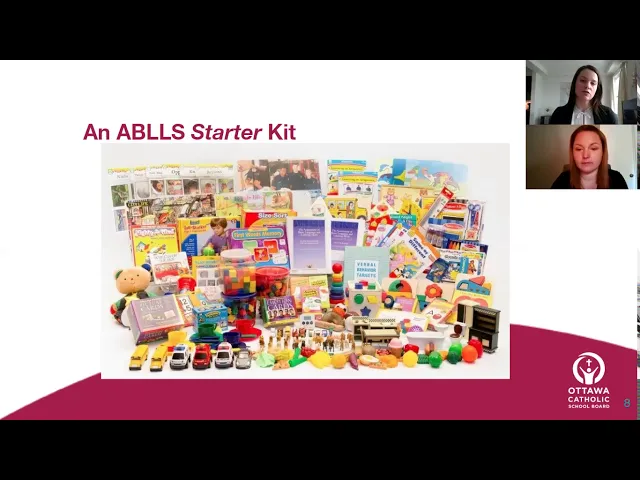
of our settings so there it's very common for When we're writing a behavior plan for example a behavior reduction plan for it to include skill acquisition goals and when we're trying to see where our student is at with some of those skills we will often turn to the Able's assessment to help us kind of determine where our student is at with skills so you will see and hear about the ables when the behavior team is involved with your student in your school Okay so this is the Abel starter kit so you can buy these kind
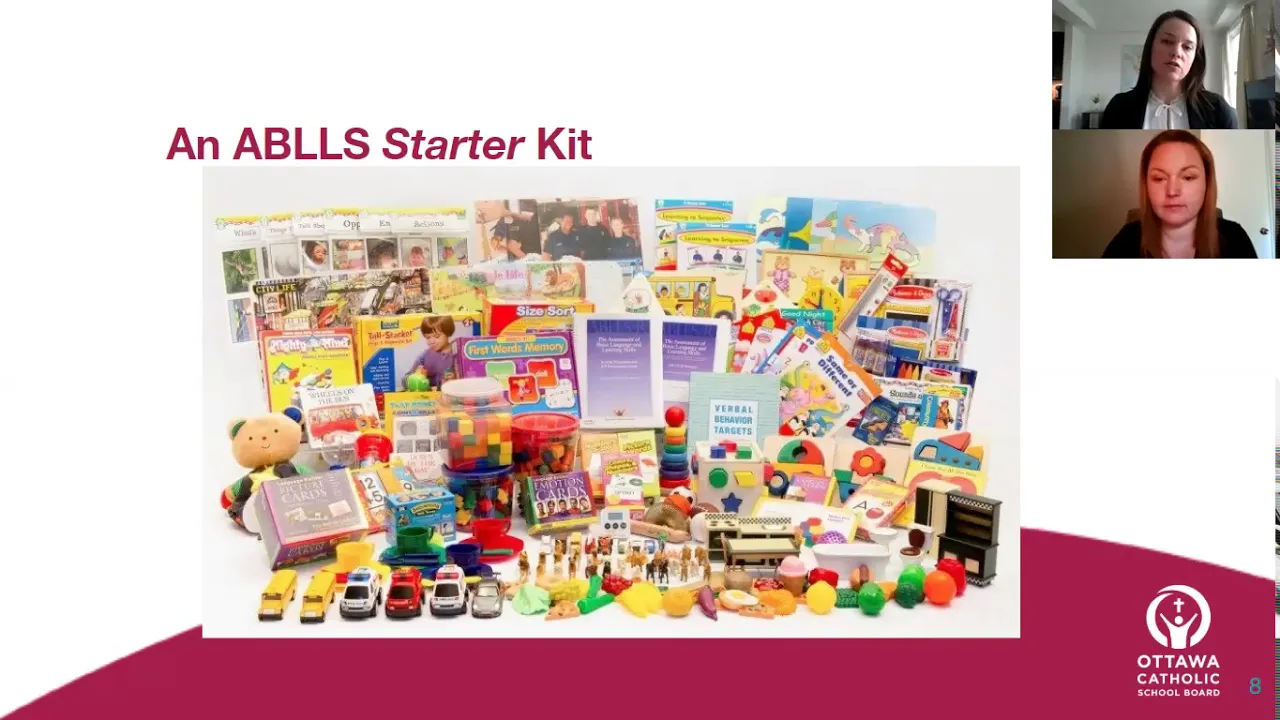
of kits online you don't need them of course when you work in a school because most of your kindergarten classrooms or primary classrooms will have a mix of different materials that you can use to probe all kinds of different Abel's skills the important thing to notice this is just a starter kit because of course you want to make sure that you're not limiting the amount of things you're using when You're probing if a student has a skill or not and you this kind of gives you a bit of a flavor of all kinds of skills
that the Abel's can be used to help you sort of assess so another thing that's really important to mention here is that the Abel's when when the full Abel's grid is full for a student it goes up to about the age five or six so that means the average five or six year old will have every skill or almost every skill that is in that is featured in the Abel's guide so that kind of gives you an idea of the age range that this touches there are lots of other ABA assessment tools that we use
that speak to older students like the assessment of functional living skills the apples which is written by the same authors and it it's it covers a different variety of skills but this is the assessment the Abel starter kit so the behavior analysts do share an Abel starter kit at the office and we often Just pull things from your classroom to help us do assessments in the with the natural environment materials how are we doing so far Marilyn so intervention also that in the back of the Abel's book it does tell you what materials you'll need
for each assessment which we'll go into a little bit further but if you're looking to kind of conduct one of the Abo's domains it actually says what materials you need so if you did need to purchase anything You great okay so what is the Able's we took this right out of the Abel's book it's an assessment curriculum guide and skill tracking system for children with autism and other language delays this assessment does not prioritize the skills that may be important for a particular students development or suggests that is necessary for all of them to be
included in programming so When you conduct a full comprehensive Abel's assessment you're going to see a lot of areas where you could go with your programming so this this Abel's assessment is not suggesting that you tackle all of those at once nor does it give you an indication of where to start hopefully over the next two mornings Marilyn and I can help you with that through our experience with the tool and our experience teaching kids with autism and other language delays for a boat I Would say 15 years we've both been in the field doing
this so we'll hopefully be able to give you some starter ideas of where to go and what kind of skills would be a great priority to start with so before you start with any kind of enables assessment a lot of students who are in a private ABA or applied behavior analysis setting so they're getting private AV therapy they would have enables or they would have a very similar tool called a BB maps so what You want to do first is you want to get a copy of that through the parent or guardian of that student
because of course you don't want to reinvent the wheel you're not going to redo an assessment that has already been completed for a student and in clinical environments they do the initial assessment and then they repeat the Abel's assessment every six months so this is this is a photo here of what the Abel's grid looks like and it looks like The student has had three different assessment periods gray being the beginning then six months later was the blue and then six months later was the red so you can see here that this continues to be
updated every six months or so so if you have a grid like this and you want some support with what to do next can contact your behavior analyst or your behavior consultant to help you determine which skills to target and which ones are Already mastered we also have itinerant resource teachers in the special education and student services department and most of them have attended Abel's training some of them have more experience with the Abel's tool and so they would be very valuable as well to help you out in terms of taking a look at this
and seeing where your student is at I will say that last year I worked for the school team and they were really struggling with Teaching a little girl how to wash her hands and in collaboration with the parents we were we reached out to the private ABA provider we realized she had actually mastered the scale of washing and drying her hands totally independently about two years prior and both parents and the private a be a provider reported that she was maintaining that skill independently in every other environment and what was interesting was at school it
was full Physically prompted and so we were able to take a step back and run an assessment on those two Abel's goals washing and drying hands and seed that that she was becoming prompt dependent because of the environment that she was in so early on in the school year they had started to prompt her and they just kind of never really stopped so of course she just learned to hold out her hands and wait for them to wash her hands and so we were able to kind of Take a step back and really assess that
skill on its own and really it was this able spread that helped us figure out that she had the skill and had been maintaining it in other environments for a long time so something like that isn't a generalization issue it's not the student not understanding how to do the skill in a new environment it was really a prompt dependency issue that was developed very early on so I would say of course as with all students With our students with autism and other language delays we want to ensure that we're not assuming competence in an area
and we're not assuming incompetence in an area we really want to assess so often times you'll hear behavior analysts say assess don't guess when when it comes to the skill of our student so really reaching out and partnering with parents and getting a copy of this assessment can be very valuable useful for you Okay so let's take a look at the able czar this is the one of the first pages it's the table of contents okay so it's right here if you have the book go ahead and open it to this page if not it
the picture is here for you to reference I'm gonna spend a few minutes on this slide because I really like how its laid out and I like that it gives us an in-depth look of what we're about to dive into so there's four main areas basic learner skills assessment is a Huge part of the Able's it's a through P as you can see then academic skills assessment is Q through T so those are the things you are really good at assessing and really good at teaching right reading skills math skills writing skills spelling self-help skills
assessment is next and then it ends with motor skills assessment so as you can see by the subheadings this tool is very very comprehensive across many domains of Learning and it goes a through Z so a is cooperation and reinforcer effectiveness so that covers everything from taking a reinforcer when offered so we take for granted the fact that many students if you hand them their favorite thing they're going to take it from you but there are students that they're not there yet with their cooperation and so we need to assess where the wrapper and that
would be a 1 and that the a domain goes all the way up to include weighting Skills and choosing between reinforcers so that's really a good starting point B is visual performance so that's everything from puzzles and goes up to sequencing and other more complex visual performance skills C is receptive language so that starts with responding to your name following routine instructions going all the way up to receptively identifying elements of complex pictures d is imitation the d domain is a Critical domain because as you will know if you attended the ABA in your classroom
conference from the OCS be in the spring Tracy Lindblad talked extensively about how a lot of our students they don't have imitation skills so if you're teaching a student through modeling techniques that's not going to be effective for some of our students that don't have strong imitation skills so by explicitly assessing where they're at With their imitation it can really help inform what kind of tools and strategies you're using to teach so imitations feels as imitation with objects imitating others imitating gross and fine motor skills imitating mouth movements head movements all kinds of different imitation
skills he is vocal imitation so that starts with can your student vocally imitate sounds and it goes through words and phrases and it gets more complex because again if you Have vocal imitation and that's n you can use modeling to help teach language which makes it so much easier to teach F is requesting so you know if you know ABA and you if you're on our Google+ community we talked a lot about requesting because it's really a gateway skill that helps open up so much other language and learning we call that manding in ABA so
requesting is everything from being able to answer yes no questions to requesting with Sentences or phrases or single word so in pretty complex requesting so high FS involve requesting using who what where when how and those type of skills G is labeling so labeling the things in my environment it starts with labeling reinforcers do I know that this is my phone and can I label it when asked so H is inter verbal so intervals are conversation skills so that that goes everywhere from can you fill in you know words to your favorite Song can you
answer personal identification questions all the way up to really complex introvert will skills that summer for five and six-year-olds are are very very good at J is syntax and grammar so it gets into the nitty-gritty of some of those other vocal skills K is play and leisure so that's can you that starts with can the student explore the environment that they're in does that look like when we're assessing that - sharing - Parallel play - you know the length of time that they can be independent with with leisure skills so l social interaction so that
L really is teaching greetings to teaching to return a greeting teaching to initiate a greeting all of those types of skills and it goes you know pretty extensively up to other types of social interaction skills Emma's group instruction so how is your student doing when they're Sitting in a group sitting at circle time or other types of group instructions and they're not specifically being given an individual instruction unfortunately a lot of our kiddos a lot of our students they become very prompt dependent on an individual instruction because if they have a support sometimes what happens
in the classroom is the teacher gives a group instruction and the student is waiting for an individual Instruction so the EEA comes over and individually tells them their very own instruction so a lot of our students they're they're really struggling with those group instruction skills which of course really hinders their ability to be independent without a support and is following classroom routines so you teachers know all about this can they line up when asked can they take their math book when asked can they follow just the general routines in the Classroom P is generalized responding
so that's can they generalize a lot of the skills that are happening between a and n so as you can see basic learner skills assessment those are some really good starter skills that you can use the Abel's to help you assess and they come before working on a lot of academic skills because it's more difficult to teach reading math writing spelling etc skills if you don't have some really solid beginning skills in all of these Other domains so self-help skills covers dressing skills eating skills grooming skills so brushing your teeth brushing your hair washing your
hands and toileting skills as well and the gross and fine motor skills really are cover a variety of different gross and fine motor skills to really get a sense of where your students out where their strengths are and where their deficits are so as a whole this table of Contents tells you which page to flip to to start really diving into each of these sections so at the risk of overwhelming you I've shown you this table of contents to show you how in depth and how lengthy be able assessment tool can be however today we're
just gonna walk you through understanding the tool and then tomorrow maryland's really going to dive into how to use it as an assessment so bear with us and know that dipping your toe in is Just attending this training and getting more familiar with the Able's tool we're not going to ask you to go out in September and complete a full comprehensive Able's assessment using all of these skills we had a great question so the question was that a lot of the skills seem kind of oriented towards to kindergarten that we do have kindergarten and both
of our topics so my answer to the this person and but I think it's relevant for Everyone to understand is that although some of these skills may seem like skills that you're teaching a kindergarten student this is valuable from anyone to 2 years old to high school if in fact you do need to assess and teach this specific skill so would you do a full labels assessment on a high school student possibly not however I've worked with many high school students who don't have any functional language they can't request what they Want they can't request
with a need and they can't request any information so that would be found under the F skills I've also met with many high school students who have cooperation issues so they're not able to wait for things or they're not able to wait their turn or I'm simply choosing between multiple reinforcers be difficult so although you may not do a focus the Able's assessment or a high school student or an older student we definitely use the assessment To it assess the specific skill that we're going to teach and then it helps us to guide which ones
we should teach and those are all really good points Marilyn you're right I've worked with students who are 13 we have full comprehensive Abel's assessments with because their developmental level is not in line or at the same level as their chronological age so some students are really lacking and you'll see when we go through the age comparison chart for Each of these but some students are even though they might be much older than five or six have a lot of deficits in these areas and so the Able's is still a really great assessment tool to
help us figure out where exactly they're at and where to go next so I'll also say that you know when when I worked in a clinical ABA setting we had a lot of students with a lot of different age ranges and when students you know were filling up their Able's we Would then switch to school preparedness skills in other ways right we would start teaching more advanced reading math writing skills to prepare them to integrate into the into the typical classroom more readily and more easily but a lot of our students if they're missing especially
this basic learner skills assessment area and they have huge deficits here regardless of age we really need to take a look back at this skills assessment and and and start Targeting some of these skills it's never too late to teach these skills so you know I've worked with an 18 year old that was that had some some significant deficits in the basic learner skills assessment and that's where we had to start with that student to really start bringing them along before we could really tackle academics because he was really struggling with with the basic academics
so yeah that was a great question thank you for Sharing that one okay so remember there's four main sections basic learning skills academic skills self-help skills and motor skills and these are the general sections in be able to where you're going to find those areas this isn't Abel's grid so if you have an Abel's book with you page right after the table of contents there are three pages that make up the Abel's grid okay so I know it looks kind of crazy if You've never seen this before but we're gonna walk you through what this
what this means and what this looks like so in the top left hand corner is the student's name you're gonna write the assessor so Marilyn Greene the date what's today's date June something-or-other Cove in nineteen day number ninety or something and you're gonna color code that top box so the top box can be any color you can start with red or blue or green whatever So that when you're assessing your student you know okay this is the date of the initial assessment and these are all the blocks we were able to color in based on
where we're student is at and tomorrow Marilyn's gonna go in detail with you about how to complete the assessment so we're not just coloring them in based on what we think the student might be able to do we're actually formally assessing where they're at before we color in Boxes but if you can see here at the bottom of the screen there's a reinforcer effectiveness and cooperation and then there's the age tower that goes all the way up so it starts with a 1 it goes all the way up to a 19 which means there's 19
different skills that are broken down in the Able's that are part of cooperation and reinforcer effectiveness the other thing you'll notice is take a look at a one down here in the left hand corner there Are two boxes meaning there's two levels of that skill so there's level one which you would color in the first box if your student has that master and you would color in the second box that they have the level two part of that skill master and some of these if you go up to a three has four boxes meaning there's
four levels of that skill so you can see how in-depth and comprehensive this tool is because not only does it break down cooperation reinforcer effectiveness Into nineteen different areas but each of those skills are broken into between two and four sort of mini skills or component skills and this is how we slowly build our students progress like to orient your attention to see receptive language so look how tall goes all the way up to see 57 there's a ton of receptive skills that are sort of those behavioral cusp type skills meaning that if your student
is learning really good receptive language then There that are able to learn through you giving them instructions and explaining things to them right and if you look at motor imitation if we look at the D tau it goes to D 27 again motor imitation can be one of those really great behavioral costs if your student learns to imitate that means they're going to start to learn through modeling observing your behavior observing their peers and imitating those behaviors and those Skills so we have a student that has in our initial assessment very low or no C
skills or D skills we know that there's no point right now in targeting some of our genes and our H's and other skills because first we need to get this kiddo learning some receptive language and some motor imitation so for very early learners you'll see that those are some areas that you know we really hone in on to begin so here's all and G and H you'll see are Another two tall towers because man typical neurotypical five and six year olds they can label a lot they can have a very complex discussions about things and
so those skills can get can get very high up there as well so I'm going to show you the next one which is J through R and these towers aren't quite as tall except social interaction again right this is a really important one because we know that one of the areas of deficit for our students with Autism is in the social interaction domain so we're always targeting skills in here that will help our student be more successful because again if you're the more social you are the more you're looking to and attending to and engaging
with other people the easier it is for us to teach you all kinds of academic skills that come usually after more comprehensive Able's skills are learned and then the last one so again these are the first these are three different Pages in your Abel's book the last one here covers the s all the way to the Zed and so the important thing is for writing for example a lot of our kiddos who don't have like a pencil grip we would not start with a writing writing goal being holding a pencil we would start with can
your student make a mark on paper because some of these students don't yet know or understand cause and effect Okay so what that means is they're not necessarily understanding that when I have a marker or bingo dabber or a piece of chalk or a crayon that that these things are going to have an impact if I put them on a piece of paper why that's important is because cause and effect are some of our earliest play skills are early as exploring our environment skills so s1 you'll see in the bottom Left hand corner with writing
starts with can your student learn that there's a cause and effect that happens when you have a writing tool or a paintbrush and it goes on paper okay so and then it goes all the way up from there so another thing I want to point out here hold on is these little dots do you see these little dots here s1 s2 s3 between the the Able's code and the actual grid these dots we fill in when We've assessed the student but they don't yet have any of the levels of skills in that area so for
example s1 I've assessed my student can mark on paper independently when I give them a writing tool but they can't they don't do the first part of s1 and they don't do the second part of s1 but I did in fact assess it so I would color that in the same color as my color code for this assessment date so if my color code for the initial assessment is red I'm going To color that little dot in red okay so that next time I know oh I did assess it and they didn't have it versus
I never assess it when you're completing a Naples assessment you only assess until the student starts to show that they have deficits in that area so for us I'm not going to if my student doesn't mark on paper I'm not going to start assessing if they can trace lines and if they can write their name independently and different things Like that because they don't even have the initial skill of taking a tool and putting it to paper so hopefully that makes sense so when you're doing a comprehensive Able's assessment you're not assessing like all the
way up to see 49 or c57 you're assessing the first few scenes to see where your student falls and if they've got those skills and you're filling in some boxes that's amazing that's awesome that's really exciting then you could say okay now We're going to assess the next few scenes to see where my students receptive language kind of plateaus now one of the areas of exception here is sometimes students have what we call splinter skills splinter skills mean that they may have c1 through let's say c10 pretty much filled in and they're Able's and then
BAM they've got c-51 and so if you suspect that your student has some really interesting splinter skills you can go ahead and include Those type of skills on your Abel's assessment to capture what that student splinter skills look like and splinter skills are always very interesting sometimes they relate to perseverate of interests or things like that where your student has had a high motivation to focus on or learn those skills so how are we doing so far Marilyn in our chat box great we've had some really great questions so we had some questions about Would
you teach every skill in progression so I said we are going to go further into progression so that if that question wasn't fully answered we would get back to it in a minute but I think we will answer that pretty well we're also having a few questions about how to baseline so I'm just telling people I'm so excited that they are interested and they promise you we are going to teach you how to do that we're just kind of and the other question was more of a Comment that I had that I thought was really
interesting was these skills seem like they're not heavily weighted in the academic portion and the reason for that my comment was that these are kind of our skills that we teach in order for you to be able to learn other skills so they're kind of the skills to learn to learn and so without being able to have a child sit and cooperate with you without having some basic requesting skills it's going to be very difficult To go any further and teach math and reading and writing in anything like that because we don't have that basic
cooperation in order to get their attention long enough so a lot of these early learner skills you can see how it's so heavily weighted in a and B and C and D and E and F those are those skills that once we teach those then we can teach a whole bunch of other things and a lot of those skills are what we call behavioral cusps once they have Those then the windows are open for a lot more teaching that's right I'm going to show you some some Abel's grids in a few minutes here that are
filled in and we're gonna we're gonna help you learn to analyze what that means for your student because like Marilyn said we're gonna see some of those behavioral Casas filled in as soon as those behavioral cusps are filled in then every six months you're not just seeing a few more skills learned you're seeing a ton of More skills learned and it's beautiful when you start seeing grids like that it gives me like goosebumps because your student is rocking and that means you're rocking at teaching them in those areas so that's really exciting and especially sorry
I was gonna say especially skills like cooperation because once you can have them sit with you and and even if it's for a few seconds and it doesn't have to necessarily be at a table but once you can get their attention for a Few minutes and cooperate under those contingencies then you can teach them a lot of other skills you have their attention and imitation once we can teach a child to imitate us reliably then they will start imitating us more and those modeling prompts will be so much more effective they will also start imitating
their peers because as we know young kids imitate their peers almost to their detriment sometimes but that how they learned so many skills so once we Have those early skills targeted and filled in a little bit more you're going to really see a huge jump in to other skills so Marylander my I have only worked together for three years but we read each other's minds because that's exactly what I was going to say about the cooperation it's not a by accident that cooperation and reinforcer effectiveness is a it's where one really because that's the relationship
building you want your student running towards You because you signal reinforcement because you have reinforcement you are reinforcing and of course we all know you can learn from people that you like and that you run toward much better and easier than when they don't signal reinforcement to you and you don't really want to be around them so that's good that's there's no mistake that we start there for sure in relationship as as as you know if you're familiar with ABA is really the Foundation of all of our teaching and learning when we're using applied behavior
analysis and you know this as t as educators in the classroom a good relationship means that you're gonna get so much further with your students so a lot of that what we call pairing or relationship building is really critical and a lot of that happens in the a domain when we're actually teaching okay so let's look inside so this is the able scoring instructions and IEP Development guide I don't have my copy of that guide with me but it does look very similar to this except it just says able scoring instructions and IEP development guide
here and so what I want to orient your attention to on this one is just that it does go in-depth and it teaches you how to score you're able so we're going to teach you that too but this gives you really a well-written layout of how to score and then how to turn that into an IEP goal now we're not Going to get into that in the next two days that's not our area of expertise in terms of the IEP and the the average school board policy on those things but this this document can really
help you one of the ways it can help you is it gives you the able scores so on an l1 skill for example your student was scoring at a level 3 the first update six months later they were scoring at a level four the second update level you probably didn't need to Assess it again because your student had mastered the highest level so you can see an l1 on the initial score three boxes can you see my mouse Marilyn when I'm yep perfect okay so you see we filled in three boxes because on our initial
assessment our student had three out of the four levels of l1 as a skill which is great and then on our first update we colored in the fourth box so now our student is rocking l1 and it's not Uncommon for you to see your student to have some levels of l1 some levels of l2 l3 and then six months later build a more in depth or a deeper learning of that skill and then on our second update you can see the student here learned the rest of the l2 so the important thing here to note
is that with neurotypical learners we don't need to explicitly teach a lot of these basic learning skills right they're learning them because they Already have really good imitation skills really great receptive language their expressive language is booming I know I had been in the field for almost a decade before I had my first daughter and went hit when I was on maternity leave with Hannah I could not believe the skills she just knew because I was so used to explicitly having to teach kids how to turn the page of a book how to explore toys
in their environment how to imitate sounds I mean she was just Watching us constantly and trying things out and I was amazed at the level of of imitation skills that she she had and she and you know it was also reassuring because I knew that that meant that she was going to learn things much more easily than so many of the students that I had worked with in the past okay so that's that's just a quick glance into what the IEP development guide and the scoring instructions can give you which is a really good Breakdown
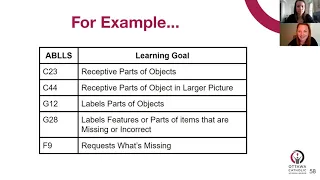
of exactly what we're doing but Marilyn are gonna walk you through that together so don't panic okay we're here so first we're going to take a look at the a domain okay it is on page one it looks like this and this is what every page and the whole Able's assessment looks like okay first you have your task down the left hand side a 1 a 2 a 3 a 4 those correspond with those towers those Able's towers Okay and then it tells you the score so the first a 1 is out of 2 which
means it has two boxes on our grid and then we're gonna look at our task name take a reinforcer when offered again we take for granted that many of our students of course they're gonna take a pokemon card when you hand it to them because they love pokemon or of course they're gonna take whatever hey I was thinking cold Pepsi but hopefully our students are drinking Pepsi that's my Reinforcer so I'm gonna take a Pepsi we hand it to me but there are a lot of students who will score zero on this so then you
have the task objective here the task objective describes it a little bit more in-depth when offered a known reinforcing item or activity the student will take the item and use the item that's what that means that's what a 1 is all about the question you have to ask yourself when you hold out and offer a known Reinforcer sheeples at the phone will they take it so that tells you and then the question really indicates to you how can I set this up to assess if my student does it you just walk by and you pulled
out the phone they should take it if that's a reinforcer for them example so they take the M&M and they eat it the criteria so the in order to fill in both boxes your student needs to take it within three seconds all the time because think about it what's your Highest reinforcer go ahead and write in the chat box what is your top reinforcer that if someone held it out you you would snatch that up you you wouldn't probably wait too long if it was a really good reinforcer I see Marilyn smiling so I think
there's some good answers happening mine's Pepsi if you offered me a Pepsi I'm probably gonna grab it there's a lot of edibles here So we often will probe a one with a variety of items okay so yes with their preferred edibles yes with their preferred toys but a lot of our students who fit into this profile are not necessarily reinforced by toys they they don't know how to play with toys they don't use toys functionally some of them and some who do it's great we can totally use toys but I'm not surprised that a lot
of our a-one items because their primary reinforcers primary Reinforcers are food drink err right our secondary reinforcers are things that we only enjoy because we've been taught how to find enjoyment from them so toys and TV and different things like that so I'm not surprised that their primary reinforcers so of course you would take that within three seconds pretty much all the time right and then the level one when you're coloring in only one box of the Able's grid it's either not all the time or it takes you More than three seconds to respond so
Marilyn came into one of our assessment classes with me last year and we ran a second enables assessment with a student for like half of a day and the student was a very early learner so it didn't take us very long to work through all the different domains with her but I can tell you that taking a reinforcer when offered she did not have that skill so it's really hard when we're trying to teach you to reward you wow you did it If you don't have the skill of taking the reinforcer that we're trying to
use to as a motivator for you to give us some of those juicy skills so we had to start with teaching her to take reinforcer so she would approach reinforces in the environment but because the reinforcer for this student was paired so let's say she loves pens and that's a reinforcer for and she - spin pens and watch them spin or something if I have it because I am NOT A reinforcer and in fact she doesn't want to approach other people she has serious deficits in her social interaction she's not as likely to come and
get the pen from me even though I'm holding it up to her as she is when it's on a neutral stimulus like a desk or a floor table so so it's not surprising to us sometimes when these students with especially more severe autism are not taking reinforces when offered okay so we want them to be able to take it from Us because that helps us build a relationship then they start seeing Jen or Marilyn and they say hey she's got my pen that I like to flick around I'm gonna go toward her not away from
her does this make sense this helps us build relationships with some of those really early learners and in clinical environments you'll see programs run like called the social approach or different programs like that where we are literally teaching students just to Approach us to get something good and we're not asked we're not talking to them we're not asking them to do things we're not touching them it's just we want them we take data on how often they're approaching us and when they start approaching us more than it's like now we can get into the juice
of teaching and try to teach them something while they're here before we hand over their bits no sorry any teacher does that note if You have a student who that truly is not getting a one before moving on forward what you might want to do is stop and pare yourself heavily because it might be a matter if they don't have a skill and it might be a matter of you are not prepared well enough to have any instruction of control to ask anything of the child for them to respond and the same would go is
if you have a child who's engaging an extreme problem behavior enables assessment might not be Where I would start I would often start with pairing and you know maintaining some of those behaviors getting them a little bit under control and then move further into an assessment so just on that side note if you have those students that you can't get any responsiveness any cooperation then pairing is probably where you need to start before you go in that's right and we have specific ways that we can teach you how to pair I Don't know if we
have any videos on the ABA training Google+ community yet on pairing but if not that's something that we could definitely work on the other thing I want to I want to mention while we're on this a domain is that you'll see the notes call it modified just means it was modified from the original Able's before it was revised and sometimes here they'll say new if it was a newer skill added in this edition and sometimes here It'll it'll tell you what appendix to go to for more information or for a very detailed list of skills
to probe so that is very interesting as well so here's the thing with enables assessment some people say that sorry hold on there we go some people say that you know I don't know if it's because he doesn't have the skill that he's not evoke yet or that he just won't so is it That it's a skill deficit it's a can-do I can't do it I don't know how or is it it won't do I know how but I just won't and that's where the relationship comes in that Maryland's talking about and either way on
enables assessment if you're not doing it if you're not taking the reinforcer within three seconds I'm still scoring it as a zero because that's the reality of what the baseline data is telling you is that you're not doing it either because you can't or you Won't it doesn't really matter which one it is you are still scoring as a zero and then what happens is six months later when we're filling in the first box or the second box of the a domain it means that we've worked really hard to either teach you how to do
it because it was a can't do or to develop a relationship with you to get you to cooperate enough to take a reinforcer from us which is the won't do so either way we're filling that in and we're Seeing that the student is making progress so hopefully that makes sense we're gonna dive into activity number one so we did include activity number one the the data sheets for you in the Google folder so if you have time to print that out that is excellent that's great it's going to make it easier for you to participate
if not don't stress don't worry we're going to walk you through it we're gonna teach you this error lessly Meaning we're not gonna let you mess it up so don't stress okay there's no test here nor can we see you if you're looking a little puzzled so don't worry okay so this is a look find and graph so what we're gonna practice here is looking at some raw data some some some data on where our students at find out what tables goal that that relates to and then we're gonna actually practice filling in the graph
that goes with it so also if you print it off your unable Grid that is excellent if you have a red and yellow marker or any two colors really doesn't matter a pen would be fine then we're gonna actually practice coloring those in so when we do this live if we do this quite extensively and everybody practices doing this skill okay so we're gonna start here here's the domain receptive so this is going to be a receptive skill the specific skill is response to name so we have a student named Mohammed we know that we
want to Were we've assessed the receptive domain can Muhammad respond to his name and the master of criteria is that he does require some prompts to respond to his name when someone says Mohammed there is some prompting required to get him to respond so we need to figure out what Abel school this is so what we do here is we look at our grid okay what's our receptive grid receptive language so that's the C domain so we're Gonna flip to the C domain in our book and we're gonna try to find what skill it is
that has responds to name and if you can see here it is c1 so in the goal section we're going to write c1 now what level is our student at well let's take a look at what the what the criteria column is telling us about c1 so level two is that they look or come to respond to their name at least 80% of the time level one is required some prompting to respond so right in the chat box what Level is your student at or they at see one level one they're requiring some prompting or
are they at see one level two and they're looking and coming eighty percent of the time when we're calling their name so what do we think Marilyn oh I think you're on mute to unmute first okay mostly level one number one c1 yes yeah so we're seal on level one so on your tracking grid what would that look like so our initial Assessment is today's date we're gonna color it in red color color code is red we're gonna find c1 and we're gonna color in the first box red does this make sense so again we
haven't taught you how we're gonna do the assessment yet to come up with this information because we want you just to understand how this guide works so we're gonna have c1 colored in easy peasy right so the next one is labeling so if we look at our grid for those of you who Have your grip where is labeling hopefully you're finding it here labeling is G that's all the G is okay so labels reinforcer so I'm gonna find my G column G and let's see where is labels reinforcers obits G 1 G 1 is the
skill labels reinforcers and they can't label any of the reinforcers so even though Billy loves phones if I say hey honey what is this called what is this he can't tell me oh that's a phone even Though he loves flippin pens as his favorite thing to do if I say what's this and he can't tell me the pen so he's getting 0 because I'm I'm baselining this or I'm assessing this across multiple items and multiple activities okay so trampoline that the bicycle all the different things your student loves to do can they label what they
are so 0 so again there's four sections of criteria here level 4 is 10 or more labels level 3 is 6 labels level 2 is 4 labels and level 1 is to the tables so what level does my student have for G 1 if they can't label anything after reinforcers are they level 1 2 3 4 or 0 so mostly people saying the zero if you people are saying fill in the dot which is great yes this is where on your agreed you're gonna fill in that dot because I assess it but Mohammed's not there
yet so we had another question saying do you need to Fill in the dot for the first one as well so typically we fill in the dot if you get a zero because if there's nothing filled in in the grid what we want to do is fill in the dot to say we actually did test it and it was zero not just we never tested it so if there's nothing it means it was never tested it was never filled in there's no jobs if there's a dot it means it was tested but nothing was filled
in otherwise you would fill in to the level that they're At so for example see one out level one would have the first one filled in so you wouldn't need to also put the dot because we know that you tested that that's right so it's good people are saying he's not at level one yet so we're just gonna fill in the dot that's perfect visual performance now what what letter corresponds to visual performance those of you who have your book or you have your printer it's B yeah B so we're gonna find B in our
book And we're gonna see what a single inset puzzle is like there we go get b1 and I'm not sure about your writing on it I think it's every time you touch it with your book cuz it's a touchscreen maybe I don't know oh gosh I'm not sure okay well I'm gonna stop doing that okay so b1 is single inset puzzle and where your students are right now is they can't wait any time you give them Any kind of single insect puzzle and you give them all the pieces in a big pile they can put
five of them in totally independently without any help or any prompts okay so what goal is that we know it's b1 what level is that okay so level four so the most advanced level of that skill is places five pieces presented by a group by looking and positioning so it's level four so when go back to our b1 section we're gonna color in all four boxes red because this Is our initial assessment does this make sense for everybody did okay we're gonna quickly do requesting requesting or manding request we know is the F domain right
the F tower if you're looking at your your grid I'm gonna flip to F request by indicating well look at that as F one request by indicating I'm just gonna read this to you so for example pointing the student will be able to specifically indicate items in activities which he wants by Pointing to pulling to or standing by the particular items without using words or sign language so a lot of our kiddos do this right especially when they're non-vocal they take your hand and they pull you over to things that's a skill that's a beautiful
wonderful skill that we can build on that's F one that's the first way that they start to indicate to you that I want this okay so our student is doing it about five times a day with three different items So they're pulling you when they want the iPads they're pulling you to the kitchen when they want the cookies and they're pulling into the bathroom when they have to go be okay so criteria there's two boxes and your Abel's Creed here the second quiz here is a total of at least five requests per day which include
at least three different items or activities so our master criteria is pretty amazing so we're gonna be able to color in both Boxes of our f1 so here's what that data looks like and my coloring is still there I don't know how to erase the coloring that I just did I have no idea it's really interesting that I did that we can't erase feel free to write it in the chat box and let us know how to fix what I just did so this is what your Abel's tracking grid will look like so if you
printed this off and did it with us that's fantastic if not we have it here for you so my student Name is up here the Assessors gender odd cap the date is September 2018 and the color code is red so on this is all my initial assessments for b1 B C F and G so you were right with the G which is color in the red dot so this is basically how we take assessment data and how we use the Able's to help us graph that assessment data and then eventually analyze and interpret what it
all means okay So the next part of this let's say it's four months later or six months later now our student because we've made goals based on that data now our student is coming along and see one aren't they now they're looking 81% of the time which is level two so now we get to coloring level two let's say with a yellow marker okay labeling now we're labeling with 12 different reinforcers so we're at our highest level of labeling reinforcers which is great Because I believe that criteria was ten receptive so now we're doing a
different receptive skill follow instructions to interrupt instruction in enjoyable context meaning I love the sand table I'm already playing at the sand table and you tell me to pour the sand and I do it so three or more activities without prompts so the same thing we would do here we would first find the goal in receptive what sea is it I don't know off the top of my head Take a look follow instructions an enjoyable activity at sea - and the level is the highest level is level for at least three activities without prompts so
your student is doing that so they are all level four so that means when they're standing on the trampoline and you save jump yeah they start jumping so they understand that within context of my enjoyable activity so they're having their snack and you say pick up the Cucumber I pick up the cucumber and they eat it good job buddy so now you know that those things that things your student can already do labeling so common Jack so mug Penn foam shirt 53 different objects is what your student can do so again labeling is the G
section of your Able's we're gonna find common objects and and we're gonna see what your student can label The goal and then what level they're at and same with visual so visual performance is the B section of your labels shape shorter I think it's B - and can they put in four pieces using look and locate so are they turning the shapes order to see where does the circle fit the cylinder fit am I looking at the top of it okay um so where we would fit here is these are the levels that our student
is that with all of these goals And so if you have enables grid with you you're gonna use a different color you're gonna use possibly yellow that's the color we use and you're gonna go ahead and you're gonna fill in okay this is the second time I'm assessing so I'm gonna find these things that I'm gonna start filling them in okay so now I'm gonna show you what that looks like oh the yellow is filled in here so you can see that we Have a pretty early learner here we have a learner's at had some
very few skills and now we're slowly building on those skills okay and we don't just want to assess that the skills that we've been explicitly teaching our student because maybe just maybe without explicit instruction without a lesson plan in mind they're learning some skills and some other towers or some other areas or within that domain and that's really Beautiful because that means that your student is learning without intensive teaching that in and of itself is one of the able schools I can't remember which goal it is but Candace didn't learn without explicitly being taught so
if you're filling in Naples goals and you're like man we didn't even target that this kids on fire that's a beautiful thing that's a behavioral cusp that means if your student can learn was that explicitly being taught you 20 Trials a day to respond to their name with very specific reinforcements in place and they've they're just picking that up from their environment that means they probably have some strong D skills they probably have some strong C skills but if you're filling in your grid every six months and your student is only moving in the areas
that you're explicitly teaching that's totally okay but it means man we have to really expand the Number of skills that were explicitly teaching to our student so the Able's grid can give us a lot of information we're gonna practice fully filled in grids and taking a look at them so six more months you're gonna go to green because in our legend here we we assigned green okay so Marilyn how are we doing with activity 1 do we have any questions no we just have some amazing people saying this is why data is so important so
I Love that yeah and we also have a way to fix your screen so we'll do that on break and this might be a natural time to take a break it's 10 after 10 and when we dive into a new section so let's do that alright so one hopefully your break was great we have about another hour to go and then we're going to open it up to a to a more of an open discussion question-and-answer period but keep writing your questions in the box we are Going to get to how to conduct enables assessment
and where to start because I know that this can be very overwhelming to to look at but at first we're gonna dive more into helping you understand how to assess a graph or how to analyze a graph once it's given to you by more of them like a clinical ABA setting because most of your kiddos who are in those settings do have those graphs those grids already filled in which is beautiful because Then you don't have to do all of that assessing and like I mentioned before sometimes you're gonna see those grids and say there's
no way this kiddo can do all this stuff they're not showing it in our environment and sometimes that's a generalization issue because your kiddo is having a hard time generalizing between what I'm in this environment with this stimuli and and these people I'm gonna I'm gonna do these skills and then when I'm in a new environment they Might not be able to as easily those skills but sometimes it's an issue where we we over prompt or we assume that the learner can or can't do certain things and then it works to our detriment because we
all as humans learn very quickly what to be prompt dependent about and what not to so myself Maryland I've worked very closely together since our first day at the board a few years ago And she will know when I'm around Maryland my troubleshooting is pretty much this because I am prompt dependent I'm like Marilyn help me how do I open that where is that located so she so I know that when I'm in the presence of some stimuli I can be prompt dependent right and she may say Jen knows nothing about technology she's so prompt
dependent on me that's a teaching air and that's because Marilyn helps me too much right that's not a learner error That's not my fault Marilyn that's your fault and so that happens with some of our students too so we we want to make sure that you know they're actually able to show their skill set okay so what we're going to show you now let's see you can't get my slide to move here here we go let's move it this way okay so what we're gonna show you now is four different Able's grids of neurotypical two-year-old
three-year-old Four-year-old and five-year-old just to give you a sense and of course every child is very very different so this is by no means of standardized assessment it's it's actually not supposed to be a standardized assessment it does not the Able's does not aim to compare Billy with Mohammed with Emily okay that's not what this this assessment tool is supposed to do this assessment tool is supposed to compare Billy - Billy - Billy across an amount of time And Mohammed - Mohammed - Mohammed across amount of time so keep that in mind but the reason
why we thought this was valuable to show you is because these are the developmental patterns that that neurotypical kids do follow and these come directly from the Abel's website I think it's behavior Partington behavior analyst calm or something if you just write ables you'll come up with the website so these are drawn directly from those and what they did was they Took groups of kids neurotypical kids and they scored full Abel's assessments on them to see okay where are we falling on average so let's first take a look at a two-year-old so this is a
two-year-old hopefully everybody can see this and this is just an initial assessment if you take a random two-year-olds and you do this assessment so see how they have emerging skills in almost every domain and they don't have complete skills yet in every Specific skill but they have beginner skills so this is two-year-olds okay this is where I was so amazed when I had my my first daughter less amazed with my second cuz I was used to it but when when Hannah was born and going through toddlerhood I couldn't believe this stuff she was just coming
out with right so look at the ages all of those relationships those beginning relationship skills are building and they're strong and the receptive skills Are really strong and the motor imitation skills are really emerging so teaching a grid like this is beautiful these are a lot of behavioral cusps that a two-year-old has that makes it really easy to teach them so many other skills and see how our receptive language here is really filled in compared to our labeling and our inter verbals this is why we really want to strengthen receptive skills oftentimes when I'm consulting
on a case and talking to the Educators about that the goals they've established for students a lot of times their labeling goals I want them to label the friends in his class I want them to interfer but I want them to say hello to people and talk and answer questions and when i go back and i probe some of these c skills they're not strong and developmentally yours you're receptive language has to be strong usually before we can start working on our g and h skills so sometimes I'm Telling teams let's take a step back
and see if you show this kiddo pictures of the kids in his class can say touch does your student know to touch a Mima do they have the receptive skill even though they have the ability to talk before we start working on labeling your friends oh sorry I was gonna say look I know high for a two-year-old the imitation vocal and motor are very high and their functional language is already quite High for two I mean we have to consider that a two-year-old only has so many words but at this point they can do things
like request what they want in need at a very high level and those imitation skills in both vocal so the vocal of imitation and motor imitation those are the skills that are allowing a two-year-old to continuously learn and again like I mean everyone's been around where you two-year-olds dropped you know a swear word you're like oh my gosh Right because you can't imagine that they've learned that when you said it maybe twice um but they have those skills to learn that because they already have those invitations because it's such a young age if you look
at a skill like f6 this to a two-year-old would have three out of four levels f6 is requesting when things are not present that is that is an amazing skill a lot of our grids that we're going to look at will have empty F6 because unless I see a pin pen in my visual field I might not know that it exists okay if I have certain developmental delays I don't necessarily know that it's an option to ask for that or an option or that it's an option to be in my environment unless it's physically present
so skills like that always really impressed me when I see that kiddos have that because that again that's a behavioral cost you understand that something exists when it's not in Your visual field and that's an option to request that think about how critical that is when I go to the Starbucks drive-thru I don't see what I'm asking for necessarily but I know that it exists from my learning history so that tells us sometimes a lot about a student this is our second page of our two-year-old Abel's grid so do you see group instruction classroom routines
that's totally typical for those not to be There yet but look at the social interaction right so our kiddos that are delayed they have deaf social interaction again that's gonna hinder how they learn and what they learn and our play and leisure skills man do they have a really nice grid there and then down here you'll see here writing so they can mark on paper they understand that if I put the finger down on paper there's a cause-and-effect relationship to what I'm doing that is bridging into Understanding that you know writing and all of those
other skills are hard coming along ok so next I'm going to show you the three-year-old Wow from 2 to 3 right when I first saw this I was I was so impressed look at this so our a so we're have a cooperative student who understands reinforcement contingencies they understand that if this happens then this good thing can happen Afterward receptive language the motor imitation the requesting look at how much they can request requesting is huge and it comes before a lot of these upper G skills and caught all these inter verbal skills this is why
when we are taking an ABA approach to learning and creating goals for student we are almost always starting with can they request can they ask for what they need and what they want and again look at This f6 beautiful filled in so so nice and be visual performance that's okay that that's just still emerging right because that is the hand-eye coordination that is a lot of those skills involved fine motor skills that are still emerging now look at the social skills and the play skills they're booming and now we start to see syntax and grammar
starting to be filled in these J's are starting to emerge okay so again if you have a student who Developmentally is a year old two years old six months old what are you expecting from them what kind of goals are you're setting versus what's realistic for their developmental level and look at the generalized responding for peace so they can learn something in one environment and they are doing that across almost all environments like P is almost entirely filled in so this means the we teach a child to wash their hands At age three we don't
then need to teach them that this skill applies when you go to the bathroom at McDonald's or when you're at daycare or when your grandma's house this skill generalized very well for these students because they didn't need to be explicitly taught that so that's why when we're programming for some of the special ed students that were working for or working with we are generalized sorry we're putting generalization as part of the goal that We make sure that we're crossing multiple environments so that's why we actually have those generalization goals in a lot of our skill
acquisition because we know for a fact that those pieces are often not filled in like that and we have to actually plan for generalization verse verses it just emerging as a developmental goal and if you look at the P 1 through 6 these are the task names ok generalizing across stimuli so this is a phone but this Other thing over here is also a phone ok generalizing across instructors so when Marilyn asked me to do something is the same as if Jen asked me to do something some of our students that's a whole new skill
it's like they have to learn it all over again generalizing across environments from home school use of skills in a group so that's p4 so when I'm in a group setting can I still have oak the same skills or does the level of distraction and Movement and and all those things does that prevent me from being able to look to show you those skills generalizing response forms so the way in which I respond to you is generalized across forms and generalizing of language skills as p6 so you can see that's this the typical three-year-olds really
rock in here okay and then we go down here I'm not gross motor skills are booming fine motor skills are really starting and Eating and grooming and toileting and dressing all of these things are really starting to boom okay now we're gonna look at a your a typical four year old guys this is their JK student they have some serious things filled in here requesting all of their apps are full all of their requests skills who what when how do I do this help me please they're requesting for assistance the requesting stop it don't do
this I Don't want you to take my blocks or whatever um much before the labeling skills in inter verbal so again think about the goals you're setting for your students and do they have a good foundation of they're requesting again look at their local imitation which helping them learn more language because they can imitate motor imitations they're they're observing their environment and able to do those things look at these cooperative little kiddos Right they understand reinforcement contingencies and they're receptive language so once again the these this is a really good guide to show us where
our kids are booming when they're four okay so down here generalizes findings full play leisure social interaction and there's this some other starting group instruction skills okay maybe not a classroom routines yet there still need to learn those things but their group instructions coming Along and then look down here things are starting to really fill in with the self-help domain remember self-help is U V W X they're really starting to be a little independent little guys and gals okay now let's look at a five-year-old okay their five-year-old so five-year-old now is filling in the G's
and H's a year after sometimes where they already Had all their FS the requesting was super solid before they really started to fill in those high G's and ages okay let's go down there we go so five-year-olds are starting to read they've got some really good mat some basic math things going on which is like the art don't mean the math one is everything from receptively identifying numbers to expressly identifying numbers to beginning adding skills to matching groups of things with An item so like if you have a group of pens and the number five
you'd be able to see if it matches or not those kind of things are all there things are skills that's right so take a look at it's beautiful this beautiful Abel's good okay and then look gross motor fine motor dressing eating all of those things are really coming along nicely so again even for a five-year-old look at the breadth of skills they've already developed before They're working on things like the high writing skills spelling skills reading and writing and math skills okay so let's go back into here [Music] let's see okay so does anyone have
any questions looking at the skills tracking for each developmental age or sorry chronological age of a neurotypical kiddo no questions yet oh so they were saying that it helps with When working with multiple students to identify areas of strengths and needs more quickly absolutely we also had a comment that some of our students we work with seem to exhibit really high academic skills so you're like wow he can read and he can read his name and he can you know do me basic math or maybe even some advanced math depending on their levels of interest
um but what they're still lacking is like wow my student actually can't wait you can't Wait for five seconds but he can write his name and write a paragraph right and here's some of the reason why that happens because when kids start school there's such a focus on developing those skills explicitly teaching reading writing all of those skills or sometimes if it's a perseverate of interest your student really likes letters and they're really into it and they're highly motivated by that content they learn it much quicker So because it's explicitly taught and in school we're
not usually explicitly teaching waiting cooperation those some of those were said early receptive skills like responding to our name because we're not explicitly teaching it we're sort of hoping the kiddo learns it through modeling and observation without necessarily realizing we have to take a step back because even when a student becomes strong in in some academic skills but there's they continuously are Missing those really good foundations basic learning skills that will eventually fall apart so I have students on my caseload Ameri know this is the same for you where they reach a plateau where they
academically are capable of a lot because they've been explicitly taught but because they're missing those attending skills they're they're no longer able to sit and attend and and like you said wait and communicate at a level that that helps them continuously Learn so their academics then starts to fall apart and that's of course where we can sometimes see some pretty manager behaviors because we're expecting where we're thinking the student can do it but they they're really missing so many of the the skills in between so that connect to some some of the other things that
I agree Jen 100% and so some of the questions from a p.m. standpoint what would the top a reading level be equivalent so I have read that and again This is just reading that it was a p.m. 4 to 6 which is about where they enter grade one possibly Louise or Joann someone one of the educators could help me here to see if that's correct but I believe it's a p.m. 4 to 6 is what I've read but of course everyone you know every Able's would be different because it is comparing child to child so
that we're definitely going across them oh thank you Heather I didn't realize your hair Thank you it is personally that every child is different so we might need a grade one who can read at a you know very high rpm level and definitely some of our learners because reading is part of their interest they have very high reading skills but it doesn't necessarily mean that they have all the other skills I do my tables open to the Q section the last Q section the reading section and I'm going to tell you because I'm not an
educator what that Equates to but I'm going to tell you what the skills look like and then you guys will solidify this information okay so Q 15 is reads and follow simple instructions to do actions so for example the highest level is read at least 20 sentences and perform at least six different actions from the sentence so if the sentence says go to the door and take off your shoes the student can comprehend what that says and then follow the directions that it Says reads and follow simple instructions on worksheets so write your name [Music]
let me see what some of the examples are circle all the birds okay cue 17 which is the highest reading on the Able's is read passengers and answer comprehension questions so the student will be able to read sentences and answer questions regarding the sentence so for example the student Reads the man was sitting on a brown horse and then answers the question who was sitting on the horse so for anyone who is familiar with like group learning like language for learning or those programs that's what they practice a lot right like choral responding who was
sitting on the horse Billy was sitting on the horse so the man was sitting on the horse whatever the answer is yeah so is that is that true that that's that p.m. level No we thought it was a helpful response and Heather did agree that it was approximately a 4 to 6 depending on yes and Louise is saying you would still complete a p.m. assessment I think someone was just asking to kind of see approximately what level we would be comparing it to you never want the Able's to take take the place an academic assessment
that you our school already is using and certainly Not for academic skill so when you're getting in a clinical environment yes of course we would use the cues and the R's and the essays when were teaching those things but in a school system the Able's is much more valuable to you in those early learning assessment from the a - I think it's the end and the self-help and the gross and fine motor than it is for academics right because this tool is used a lot in for those things in a clinical environment where we're not
Educators and that's not our specialty but in a school system absolutely use your p.m. hopefully this somehow cores of course bonds are correlates to that in the wait for you yes so there was one other question did you want to yes sorry the other question was is it possible that after being away from the child or the child being away from school for a while that they lose some of the skills so yes we can never say that it's not possible that someone would lose the Skills however if this skill was taught and mastered and
generalized often what happens is it still is not entirely lost it just hasn't been a contingency that that skill would be practiced on a regular basis and reinforced on a regular basis so often we don't often I'm not going to say that we don't we teach skills because sometimes we do but often what happens is we actually just need to practice that skill and maintain it a little bit better for a little bit And then it will come back to the levels as a worker in the eye and again that would depend on how long
they were away from school where they practicing annuities goes when they are away from school because you know parents are doing some of these things at home as well so it would definitely depend on the student but it is possible that a student regress and lose some of the skills that they previously had and we would look into multiple factors as to Why that is and then how to reteach it if needed that's right okay so next we're gonna look at two different Sam sample tracking grids before I show them to you I'm you're gonna
see them twice throughout the presentation right now you're going to see them and we're just gonna talk a very generally about what it is that we're looking at later we're gonna actually analyze the data and we're Gonna get you to tell us what do you know about the student based on what the Able's grid shows about their learning trajectory because that's something that's very important that we can learn so this first one here again up in the level in the left hand corner is where you would see the legend it's it's a fuzz Doh because
it has personal information in it so you'll see if the initial assessment was yellow so look at all the skills that this kid Have had on their yellow on their initial assessment to me this is light bulb moment like this is amazing then six months later roughly the rad skills are filled in and then we look at the blue skills filled in six months after that so we're not going to analyze this yet come back to it but just this is an example of something you might get from an ABA clinical setting and so many
teachers have said to me I've seen that before and I just Shove it in a file or something cuz I don't know what it is and I don't know how to interpret it because you're not gonna get a full book from you from the clinical setting you're just gonna get the grid and of course you're not gonna get that directly from the clinical setting you're going to get that through the parents so if the parents have their student yeah or their child in that setting that it's a valuable thing to say don't do they have
enables great Could I can I get a copy from you and we can help you sort of analyze this so there's a lot I already know about my student just got a quick look over but we're gonna dive deeper into looking at this and where the splinter skills are so where they had random skills really really high up for example I'm looking at the gaps where are their biggest deficits in language um and we can sort of start to determine a bit of a rate of learning when we look at a Really well filled enables
great we can see how quickly is your student learning because if you're doing the assessment every six months then we get one you can see a really clean progress it can be valuable as well to ask parents if the provider is willing to share like their ISP or their service plan with you because that actually explains each skill that they've taught so it can help you if you don't have the book available because it will go Through and say you know responding to named waiting and it will actually tell you all that's right so here's
a second one so we started with red red it was our initial assessment so again this is telling us a lot about our student because what they did here was they actually assessed everything you see all the red dots all the way up they assessed every single thing just to see if there was maybe a splinter skill Happening there um and then they did yellow which was this six months later Green was six months later blue was six months later so we're gonna again we're gonna come back to this to analyze and we just did
a little overwhelm you would to much a grid people's grid right away oh but take a look at this let it sink in a little bit about what kind of learner this is and where they're at and again it doesn't matter to us if this is a Three year old a seven year old ten year old a thirteen year old because we're not comparing them to anybody else we're only comparing them to their own progress because it's the skills are broken down so so minutely we can really see some beautiful gains and areas where if
we weren't taking this type of data or we're assessing this specifically we might not be able to see for example if you're teaching a student what would be Equivalent to I think it's m1 Maryland sitting in a small group if you're teaching that and your goal is 10 minutes and on your initial assessment it's not filled in at all because your student is lasting 20 seconds at in a small group before they leave six months later if you're just still assessing though are they sitting at ten minutes nope six months after they sitting at ten
minutes nope but if you Were to break down that type of skill into smaller increments based on your data you would see progress because now we're explicitly teaching them when we're putting ABA intervention in place that encourages them and allows them to sit for one minute now you're like wow in six months we've gone from twenty seconds to a minute we're making some progress here so it very much helps you to look at an able script to make realistic goals because you don't want Your student three years in a row to be on the same
the same goal to have the same goal for something like that because if the illusion is gonna be they're not making progress and sometimes depending on if you're teaching it effectively or not they might not be making progress for three years they might still always be at 20 seconds so we want to make sure that we're we're using this data effectively so now that they're not sorry I was Gonna say often if they're not making that progress it's simply because there's a skill before it and we'll talk about progression coming up next they don't have
and without actually mastering that skill they may actually never learn this skill that we have so this helps you to know it have the prerequisite skills in order to teach the skill that you're starting so true okay we're gonna do a quick let's review so I want you to write in the chat box Your response if you're to try to write it to the whole group no problem just direct it to Marilyn Greene you can instead of respond to everyone you can put respond to Marilyn so she can see what your answer is and no
one else will see so let's take a look here the able czar is one a kindergarten curriculum to an assessment tool curriculum guide and skill tracking system three an assessment tool for kids with autism or for I have no idea I'm watching Netflix In the background which is okay you don't have to write number four Tamara if you don't want her to know lots of Tears one for know I'm joking but lots of all tears everyone's got this yeah okay you're right yes and it's an assessment tool a curriculum guide and a skills tracking system
so it is not a kindergarten curriculum you have a kindergarten program that highlights the skills that are set up by the province Of Ontario to make as a priority what the Able's can do is help you assess where your students are at guide where to go next in your kindergarten program or grade one curriculum or grade two curriculum again because we some students and those grades are still at these level of skills and help you better track the skills and it's not just for kids with autism it's kids with developmental delays language delays etc okay
so how many sections how many main Sections are in the Able's four twenty eight or nine go ahead and write in the chat box little bit of a mixed pot here we have some fours we have some twenty-eight okay there's four main sections so it's basic learner assessment it's on the academic skills it's the gross motor skills and it's the self-help skills there are four main sections all of these are domains in the Able's our assessment except one labeling to Visual performance three toileting or for advanced engineering everyone seems to be quite aware that advanced
engineering is not a mean to me right because that's not a priority right now with these kiddos right so if that's your IEP goal and you're looking at Abel's Assassin you got to change the IEP goal okay so yeah labeling visual performance boiling those are all things that are captured in the Abel's assessment Perfect okay so people might have been a little bit confused the last time so the 28th answer might have been that people were thinking of all the different domains not the sections hey there are 25 domains so for some reason it randomly
skips what is it oh oh skipped yeah it randomly skip so we're not sure why if someone does know that but so there's 25 domains and then four sections which may have been some Condition okay so last one for the review the reason for this Abel's our training is one to force you to use the Abel's tool in your classroom to to increase your awareness and comfort level with this tool or three because Becky told us all we had to do it you everyone thinks becky told them oh no no queue is is across the
board good to increase your awareness and comfort Level with this tool okay so next what you understand a little bit more about what the Able's is next we're gonna go into why use it so hopefully you've already has some ideas of hawai and how this might be a valuable tool for you to dip your toe into or wade in a little bit slowly but we're gonna go through that as well so the first reason is this curriculum guide emphasizes skills that are important for being able to learn to learn and in the Able's our guide
it Really talks about that extensively it talks about you know prerequisite skills that bridge into the kindergarten program or other curriculums that you're running with your student I have students on my caseload right now grade 3 grade 4 grade 5 where we are looking at Abel's goals because they are simply missing they have deficits in some major domains of the Able's and so we need to teach them some imitation skills we need to teach them some respect receptive Language some cooperation skills in order to then be able to build on some of the more traditional
ways that we're teaching our students and help them be truly integrated into the classroom in a way that makes sense for them and is meaningful in their lives ok so teaching these skills most often results in the student developing several important related skills for example when teaching a student to request so manding right the one word Manding that we start with the student is also being reinforced for attending to the educator cooperating with prompts vocal imitation skills attending to praise and facial expressions and tone of voice so there are so many other skills that your
student is learning when we're teaching them to mand and if you want to know more about manding specifically we have a series of videos on the Google+ community that talk about manding but it is also one of our 10 Common starter skills that Marilyn will review tomorrow morning so don't worry if you're not sure how to teach how we're gonna get to that ok or how to assess it okay so there's ppm 140 which is the Ministry of Education mandate to quote offer students with ASD special programs and services including where appropriate special education programs
using ABA methods so ppm 140 was created in 2007 when we do presentations and we Reference ppm 140 there's an awful lot of people have never heard of it before and weren't aware that ABA and incorporating ABA where appropriate with their students with ASD was really important I will note you can use the Abel's though for students who don't have autism anyone that you're working with that has to build some of those prereqs feels this could be an important tool so the Abel's also measures and tracks These prerequisite skills as entry points to the kindergarten
program so oftentimes when your student isn't at the level where they're able to engage in some of the learning and the kindergarten program because I'm missing those prerequisites this gives you a really concrete way to measure track those skills and then when you're reporting on your IEP you're reporting on your students progress see where we're it where it relates and again Marilyn's going to review that with you tomorrow and compare sort of how some of the Abel's goals feed into the kindergarten program and vice-versa and the last thing that well the last point we have
as to why to use the Abel's are is it can help you analyze data and in applied behavior analysis data you know is king so we always want to see what is our data showing us we don't want to observe a student and maybe a we don't Report on observations like we do in a typical learning environment we would take data on everything that we are seeing to ensure that our own bias aren't aren't clouding what we're doing when we're reporting so it can help you choose the next skill in a progression we're going to
do a progression activity in a minute you can see the students rate of learning in what areas are they really booming what areas are their strengths so if your Student has a huge strength in respect in your C tower you can do receptive to tact transfers or receptive to inter verbal transfers what I mean by that is when we're working with you and your student has really strong receptive skills we can help you use that as a teaching tool to then teach them a more difficult skill so I won't get into that more into detail
during this presentation but it is an important thing that behavior analyst Can help you with so it also can help you plan IEP goals that are based on data to make them more achievable and measurable so we can make them a little bit more fine-tuned okay so let's review we got one one review question here the Abel's assessment tool can help you to one look at the big picture of your students development across many domains to map out a progression of skills so where to start and where to go next when your Students moving along
three use it as a data based way to help inform your IEP and program development but not in place of or for all of the above well I can't hear you mayor but you're excited I can tell sorry I've been muting while I'm typing so that you don't hear click click click people are answering for before you even started they were they knew this one yay so it can help you so hopefully you now know why you should try to incorporate Some of this stuff next we're going to talk about how this tool relates to
the kindergarten class I did mentioned earlier this morning that they convert assessment classes there's 11 of them in our board currently at a variety of different elementary schools and we're going to review here like we did when we were preparing this what the criteria is to enter kindergarten assessment class versus what the Able's tool and curriculum Guide can really offer you so hopefully you'll see here why that's such a nice fit and why we are supporting those teachers and those EA's in those classrooms so heavily with helping use the Able's so this is the first
page this is all pulled from the 2017-2018 special education report so on the left-hand side over here it's criteria for placement in the assessment program and on the right hand side it's how the Ables relates to that so psychology is one of the headings a diagnosis is generalized developmental delay that impacts a wide range of behavior so it could be global as a developmental delay and intellectual disability genetic disorders autism spectrum disorders etc so the eatables is an assessment and curriculum guide and skill tracking system for children with autism other developmental disabilities so that's a
match right ding ding that's a match so The next section is speech and language student may have a severe to profound receptive and expressive language delayed students may be nonverbal or as we say maybe non-vocal a significant difficulties with social language and interacting with peers may be accompanied by articulation and/or motor speech disorders so again look at all the basic learner skills assessments that relate to those things requesting labeling vocal imitation receptive Language etc the next section to the left the criteria for placing the assessment program school readiness skills and self-help skills so significant delays
and self-help skills brushing I'm sorry dressing eating toileting as well as grooming minimal safety awareness inability to follow familiar routines and significant delays in fine and gross motor skills well lo and behold look at the three Other big sections of our evils they speak too directly to those so when Marilyn we first started working with assessment teachers and assessment classes and we looked to the special education report we were like Able's because if rich is so nicely into what the goals are in those assessment programs and they and we're going to talk about in a
minute how nicely they fit with the kindergarten program goals as well so behavior and conduct issues Might not be the primary presenting problem oops and so cooperation and reinforcer effectiveness and requesting are often two of the the key things that we focus on when we're talking about any kind of behavior or / conduct issues and the last page here social-emotional needs so difficulties with self-regulation delayed social skills minimal imitative or sorry initiative or self-advocacy skills so this brings us Back to the basic learner skills assessment profile so everything from like a2n these are the key
ones that we pulled out as areas where you'd want to assess to make some specific goals for your students I'm an academic still significant cross curricular academic delays student requires considerable modifications and accommodations made to their academic program as well as alternative program expectations so again look at our Academic skills assessment and our basic learner skills assessment those those visual performance so again hopefully this highlights for you why we are supporting those classrooms and in adopting more Able's as a tool next we're gonna cover how does this tool relate to the kindergarten program so I'll
give you a warning ahead of time that typically when we do this section there are a lot of hands-on activities so each table would have copies of the Abel's each table would have copies of the kindergarten program and what we have you do is we first have you pick some Abel skills and say well where do they fit into the kindergarten program like what are the entry points here and then we have you do the opposite activity where we give you some kindergarten program expectations and we say okay well figure it out what comes beforehand
what are the prerequisite skills that we would need from be able To help inform that so we we kind of go through activities to help you use them and compare in comparison to one another so let's dive into that so typically we have both of these so it's okay if you don't have this in front of you don't need them and remember it doesn't matter what the age your student is just because they're not currently in kindergarten doesn't mean that you might not be targeting some skills that may be Similar to some of the kindergarten
curriculum goals if your student isn't developmentally at the chronological age that they are so don't I mean we do definitely focus on this is in kindergarten how does it relate to the kindergarten guide but you can definitely relate this to any student regardless of what their ages it would be the same process yeah okay so what we do here is this is the kindergarten program overall Expectations so for example we pulled out number three and I do want to say here Louise cross and who hopefully is out there somewhere give us a shout out Louise
if you're there helped Marilyn and I developed this for serial she's here hi Louise helped us to develop this because as an educator she has the expertise in understanding the kindergarten program and what the expectations mean how they translate how they're typically assessed All of those things she's an itinerant resource teacher for those of you who don't know I mean we have a whole bunch of them in the special ed department and so she really helped us develop this presentation and make sense of this right because Marilyn and I are not experts in and the
kindergarten program whatsoever so for here number three identify and use social skills and play in other contexts so what kind of prerequisite skills would we be looking At well a lot of K domain L domain D F H right those are things that will really help us figure out how we break that kyndra and expectation down even further and what specific skills do our students need to be learning how can we use this tool to assess those we pulled number one for another example communicates with others in a variety of ways for a variety of
purposes in a variety of contexts so of course the eed FGH il those are all things that if you Have a grid already from a clinical environment or you want to take some of those sections and do some assessment with your student with a very very specific - or many skills then we can see ok how do they how do they relate to the overall expectation number 28 demonstrated awareness of their surroundings so this could be a variety of different Able's domains depending on your student right and the goals that you have but these are
some Things you might want to pull to be able to look at those tools then we have number seven at the bottom participate actively and regularly in a variety of activities that require the application hoops of movement concepts so as a behavior analyst when I'm a number seven I say don't know what you need because I'm so used to such specific language that you know gives criteria and contacts and conditions under which behavior needs to happen in order for us To consider it quote/unquote mastered behavior right or mastered skill so what was valuable to do
is read this through the lens of an educator with the assistance of an educator for us to understand well what able schools make sense to help us bridge into this and these are the ones that we came up with so visual performance receptive language and when you dive more into all of those specific areas of the Able's you see that it's it is all about participating Actively what do we mean by actively what do we mean by regularly right what do we mean by a variety of activities well these can all help you depending on
the goals you've chosen to really bridge into that and assess where is my student so then so we have you do this live in the live presentation we give you these kindergarten program overall expectations and you guys as a team would go through the Abel's expectations and try to search for like what what Makes sense so you get to know this guide in a different way when it when it's a hands-on activity of course so the next one we do the opposite so your student it looks like your student is working on touching his own
pieces of clothing so like rich or shirts rich of socks where's your hat right the kindergarten program overall expectations that could be related to this as demonstrates awareness of their own health and well-being Many of our students they don't understand how to receptively so see 22 so it's a receptive skill so touch your own not not what is this what is this that's that would be an expressive goal that would be under the G section so that could be the way that it bridges into the kindergarten program G 11 labels items using a carrier phrase
so that is a pen instead of just saying pen or you know I have a mug would be the Carrier phrase and there's a lot of different kindergarten program overall expectations that could feed into so h 5 answering questions regarding personal information so what school do you go to who are you what's your phone number you know what's your name so that could be communicating with others in a variety of ways that could be demonstrating awareness of your own well-being and health demonstrating a sense of identity right And positive self-image so same with Q for
labels sounds of letters so you would say like what sound does T make and you want the student to give you the sound so these are all ways that these can be related to each other do we have any questions so far mayor we're going to just have enough time probably to do the analysis of the two tracking grids you saw earlier and then depending on where we're at with time we might We probably won't start the progression of the skills activity because it's a lengthier activity but it's very interesting or we might just do
the first example just to give you a taste of what what you're gonna wake up to tomorrow morning and dive in because that's that's a super awesome activity I love that one sorry so my question I did have was we've done a lot of work you and I and with movies about Working on the curriculum goal lining up with able schools but have we gone into the elementary sector anymore like between one and six um especially for the academic parts I said we have not gotten to that but if anyone is hoping to tackle that
Louise Joanne how there anyone we would love to be a part of that because that's definitely something that again they can relate and help you assess on what scope they need in order to target the actual curricular goals um So if any of you choose to take that on please call us that's right because the Abel's really does for those higher grades speak more to prerequisite skills for the curriculum rather than maybe jaws directly relate to some of the skills that are in the kindergarten program and that's okay it just means that your student that
might fall under sort of more alternative goals right under the IEP so it might not be directly related In some ways or it might be it just depends on the skill and it depends on what the specific goal is for your student and people are saying that this would be especially helpful for people coming out of assessment into grade one how to align those goals yes definitely yes and people are saying even though um some people are so sorry some students are working at more became the guard level they're still accessing the elementary curriculum so
it would be Nice on how to link some of those schools to the old page that's great that's really great feedback actually because we're always looking for ways to continue to grow and where to go next with these type of presentations oh that's amazing um okay so we're gonna go ahead and try to analyze or start analyzing some of these grids so I'm gonna do this one with you we already saw this one remember so this student was being Assessed every four months so in September of 2018 they did the initial assessment in yellow and
if you see here a lot of these yellow skills are relating to behavioral cusps or those critical skills so beginning a skills so cooperation reinforcer effectiveness visual performance goes was great they have some beginning of receptive language but they had the beginning of many different skills which is great okay that's a really good sign because It means we just build over from what they already have started imitation they didn't have a lot of yellow imitation skills which you don't need to be worried about that if that's your student profile but it just does tell us
that modeling is not going to be an effective teaching strategy to teach a lot of these other skills okay because they just didn't have a lot of imitation skills we need to heavily target in the six months between or the Four months between September and January imitation skills because we know that if we can teach our students to imitate them we can teach them through modeling which is probably the most common way that kids are learning without being explicitly taught things okay requesting they didn't have a lot of requesting and so we really want to
be targeting that as well so we don't show you on these analysis grades we're only Just showing you the first page of the labels assessment and that's because to us that's the most critical section because it these are the skills that are teaching you to learn how to learn okay like the Able's it says so in the chat box can you tell me what you think this means about the students rate of learning that in the initial assessment they had a ton of skills they gathered some in red but they gathered an even fewer In
the last four months of the assessment so what are you observing about this student a plateau someone said okay yeah they got less in the last assessments in the last few months yep so sometimes what happens is in a clinical environment when we get to a point where when we are doing new Able's assessments our students are not gaining a whole lot of skills and I'm not saying This student is there yet because they do have some blue filled in like this is this is pretty good but if you're getting to a point where in
the next four months and the next four months you're getting less and less things sometimes the focus becomes more on assessment of functional living skills okay so we go away from trying to catch them up to learn how to learn to bridge into academic skills and we say okay our student is plateauing I guess you could Say or they're there at a point where developing further skills in certain domains at this point anyway can be put on more of a pause and we can shift our focus more to those those daily living skills okay so
the offals gets into the assessment of functional living skills I think it goes all the way up till age 20 or something but it's it focuses on what do they need to know to be as independent as possible in their lives okay so can they make themselves Breakfast can they get themselves fully dressed in the morning can they ride a city bus like as they get older can they understand you know certain social cues in their environment so it becomes much more about daily living and less about catching them up learning how to learn toward
academics so this could be a student that may or may not be going in that direction with some really really good basic learning skills from this Assessment tool so that's that's a good point I want to look sorry six cf6 here how it's blank what do you think that tells us why is that a predictable thing that we see f6 is blank and there's not a lot of H filled in remember what I told you about f6 it's requesting things that are not in my visual feel so it's pretty abstract right I don't see so
I'm not asking for it age skills all of these conversation skills these intervals They can be very abstract a lot of times those intervals are things that are abstract skills and they're not concrete tangible things that I can talk to you about and that's why some of our higher G's which again becomes more abstract they're struggling okay and so I would try to tackle or to teach f6 with my learner to get them to start understanding in a highly reinforcing situation I really want a Pepsi but oops it went out of you but don't worry
it Still exists you can still ask for it's still an option even though it's we're getting a little bit more abstract sorry America ahead did you have a it was there another question no I'm just some of the great common so people are also saying some of the yellow depending on how old the student was when they first did this say they were three or four they had three or four years to learn some of those skills not four months so the yellow wasn't just Learning over four months which I think that's a great comment
um also people were saying you're getting into some of the higher concepts those things that are not as abstract or things that are more abstract can be harder for some of our learners with ASD um [Music] sorry I'm just reading oh that there is a steady movement forward and some of these skills are harder to teach and harder to generalize so that you could Understand that some of these skills might not teach earth be taught as quickly as some zeros I know I'm reading through the models like which ones do I pick so many good
yeah someone else was asking I think he mentioned the apples so we haven't done apples training yet however we do have copies so if you're working with one of the behavior analysts we're happy to kind of go through that if we need to for one of your students so contact us That may be an interesting project to do an apples training as well absolutely okay so we're gonna go through the last grid here so again this student was assessed about every four months starting with red so this was their initial assessment so you see all
the red dots were assess what they not have the skills and you see some very beginning a skills so some cooperation with reinforced effectiveness so they were taking reinforced or some of the Time right some of these beginning see skills so sometimes they were responding to their name things like that following some fifteen instructions requesting f1 so they're not asking you for things this is not a highly vocal student on initial assessment okay because they're doing no labeling no inter verbals almost no requesting so all they're doing is really dragging you to something some of
the time when they want something that's the limit to their Request so this looks like a non vocal student and then yellow is the next four months then green is the next four months and then blue is the next four months so tell us in the chat box what is this Abel's tracking grid telling us about our students little more Oh making steady progress yes oh my goodness the progress is booming in the green and blue zones right improving cards yeah yeah improving superfast I don't know if Every single green skill here would have been
explicitly targeted in four months which means your learner is probably learning without explicit teaching in these areas which is a huge indicator major learning success here ooh I like this comment once they learn some skills the other ones just you know exploded does anyone remember what that's called what is our little catchphrase for those important skills that open up learning for other skills Behavioral Becky you cheater [Laughter] take a look here the red whenever under had the red and initial these are not really behavioral cusps are very very early learning skills okay but they're there
and we're gonna build on them and then look at the yellow once the yellow starts filling in again once they really started learning how to imitate how to vocally imitate how to request how do I get what I want from the environment Around me boom it's no surprise that green and blue totally just flew up for our student and our little learner here it is filling in Abel's like crazy again goosebumps right when you see a able spirit like this like this is beauty yes people are saying teaching some skills open up the world for
them to learn a whole bunch of other skills yeah and depending on the age of the student they may still be considered an early learner right you can have a full label Screen but if you're fifteen you know that that's gonna give you different information than if this was a four year old okay four year old they're ready to integrate into their classroom probably with minimal support because look at the inter verbals look at the labeling perceptive I mean this is beautiful so I had a question about a couple of the gaps so yes there's
some gaps further up which they just might not have acquired That yet but something like h3 is sign language so it's not even something that we would for a verbal learner and because it's it's not something that we're going to target to teach them and so there are some gaps along the way that either are just higher skills that they don't have but that h3 big line there of white is because it's it's appropriate language and and it doesn't mean you have to go back and OH next we have to teach all these white boxes
no That's not true you don't have to do that you can take a grid-like profile like this and just jump right into typical modalities of teaching classroom and go to town you don't need to explicitly pull your student to fill in every little white box that's not necessary yes another question we will show you oh sorry sorry sorry another question was can you use this for a student with pecs oh absolutely of course you can the learner does not need To be vocal in order to complete enables assessment there would definitely be things like a
coax where they're not going to fill in of course but there's lots of other skills that they would have and then eventually when they move to higher level packs so phase four phase five basics they start commenting and commenting with different attributes so there you could actually go back and assess some of the skills that you may not have been able to assess when they Were on phase one two three and paksas the picture exchange communication system so it's not meaning visual schedule or first end board are you showing pictures to the student to help
them try to get them to understand what you're saying PACS picture exchange communication system is when they have a binder with a picture on it and they give you the picture when they want to request something so why that's important because in phase one an pecs Is an ABA communication system right it's all founded and applied behavior analysis by a behavior analyst and enough self you've got married I don't know why marrying matter but they got married so that was great um but requesting so what phase one and two is requesting and phase two is
built in some more social goals because you have to go to people you have to go find the people in the room and go request phase three is discrimination so it requires More of these C skills over here right and we don't teach it through imitation because we're teaching it through direct prompting so we so you can teach packs to a learner that doesn't have imitation skills at all it doesn't have receptive skills at all that's okay you can have a very early learner and start and have great successful packs and then when we get
into sentences and those kind of things commenting that's when we're getting into our G's or ages and when we Assess if we would like to start pecs with a student the first thing I do is I go in and I try to establish some anding with them I try to see under highly motivating situations can my student vocally imitate so that is our e section so if I have the pen and my student is reaching for that pen is desperate for that pen some of my first assessments amending I'm spending a couple of mornings with
that tuner afternoons a couple of hours and I'm trying to say Pen and I'm trying to see is my student trying to imitate even if it's an approximation to the word pen if so this kid's got some vocal imitation I can teach verbal demanding or I can at least try to teach more demanding for a period of time and see where we go if I assess that in my student has no vocal imitation then I'm not going to teach mandate because you need imitation in order to teach language in that way if my student Is
not showing that skill yet growth mindset so not yet then we would go to packs build up some of these other skills around it because packs is still modeling language so if your student starts to emerge in some imitations vocal imitation skills then boom we can we can get that going but that's this does kind of follow the curve of how pecs progresses through some of these skills so I do want to show you now We we shall do the Able's book okay assessment of basic language of learning skills that comes with the IEP development
guide and scoring instructions book what we also have here a b c ba by the name of Tammy Fraser I don't know her but she's lovely apparently she made these amazing books she made two books okay so do you see what these are the able skill acquisition program manual so when many of we're asking the question But how do I teach the skill so now that the Able's has told me okay I have to teach f6 requesting without things in my visual field or c1 response to name how the heck do I teach it these
are your lesson plans for every single Abel's goals I know if you're as excited as I am look at me I'm like data sheets and graphs and everything there's data sheets for each one yeah so you can flip through and again a lot of our assessment teams Were supporting them spruce through looking at some of these lesson plans because when you're creating your lesson plan you can pull from some of these things okay so let's take c7 for example it'll tell you the task code in the book it's okay if you can't read this the
program is follow instructions in routine situations so it's time to line up sit down pull out your books etc sanford canada it'll tell you what the teaching objective is the student will Independently and correctly follow an instruction - and non-preferred activity when the activity is presently occurring so that's the teaching objective it'll tell you what materials you need how to set up the teaching trials what kind of data to take as well as gives you the data sheet this is beautiful it tells you the teaching steps how to set up the prompting hierarchy so how
am I going to vote this behavior from my student to reinforce what to do when they make an Error so every single program has a correction procedure it has suggested teaching strategies that might be effective given the skill and then acquisition mastery criteria so it would say something like three consecutive sessions or three consecutive days 80% or more across two different instructors so it could be ones the year ones the teacher one spreadsheet joins English teacher etc um etc right and so it gives you and it Even tells you how to baseline it how do
I assess this skill so on the back of every program page it'll tell you exactly how to baseline the skill to then fill in the able school for that skill so these books are by Tammy Fraser you see BA and they're called able skill acquisition program manual so these are beautiful because in clinical environments they write all of this from scratch so I feel like this book and of course you can't ever take a lesson plan As you guys know we were differentiating for students and just blanket and roll it out for every student you
do need to individualize these programs for your students so if you have a non vocal student and there's an instruction in here that involves them giving a vocal response well you might need to pray in Stormin and collaborate with people with your IR TS your itinerant resource team your behavior analyst your behavior consultants around how can we teach this In a different way and individualize it for our specific students so I'll give you a heads-up of what's coming up tomorrow morning before we dive into our question and answer period for the next 20 minutes or
so tomorrow Marilyn's going to start with giving a lot of hands-on activities around progression of skills so we're gonna give you Abel's skills all mixed up and you're gonna try to say what would I start with then what would I teach next then what would I Teach next and put them in order of what you think the progression is this is one of my favorite activities to run when we're doing Abel's training because people have lightbulb moments oh my gosh I've been trying to just go forever you mean these three prerequisites we're missing I gotta
go back and we're like yeah go back go back because I means you're gonna see more progress with your student right so we'll do a lot of progression at M Examples and we're gonna dive into how to conduct an Abel's assessment so Mary Lou's gonna walk you through step by step she's also going to show you ten common starter skills and Marilyn and I made videos like two years ago with our own children you'll see our little kiddos where we show you an Abel's assessment we pretend to do enables assessment on a specific goal with
our kids which of course has its flaws because Our kiddos at the time had a lot of these skills so you'll see us working through it the videos aren't perfect but that's a good thing we want you to see how assessments can sometimes go awry or how we can forget how to know some of the golden rules and then we'll we'll wrap it up by giving you some tips and tricks about how to remember how to assess and then we'll quickly give you it's like one page of how you can incorporate the Able's into your
IEP without losing sight of the fact that you are teaching the Ontario curriculum or the kindergarten program and that you have a whole bunch of assessment tools already in your repertoire as educators that you are obviously going to be pulling on as well when you're assessing your students so we want to stress that the Able's is not a replacement assessment for other things that you already know that you're doing but it also is not a clinical Assessment tool it is a it is an all students assessment tool that can be used in many environments ok
so do we have any questions comments so I mean the main question here was how do we get copies of these so I did put the link of the Able's guides as well as the assessment as well as the nurse or the acquisition manuals um people are asking if we have access to these in the schools we don't have a lot of copies so if you're working directly The behavior analyst we all do have our own um but it might be a great resource for your school to buy I can't dictate what you do buy
but they're about 130 dollars and likely can be used for years and years across multiple students so it is a great resource it gives you the skill acquisition and step-by-step with the data sheet um so it does you know creates I mean you know uniform teaching across the board which is someone's Comments as well which I liked yes the assessment classes do have access to one because they all work in tandem with at least one behavior analyst um some of the other questions yes I will add them someone's asking if I can add all these
links to the Google+ community so I absolutely will do that the general term for these resources is they're the able skill acquisition guides so you can just write that in Google we'll definitely put the So that was most of the questions that's been going on now everyone is very excited about these books and everybody write in the chat box yes or no have you ever seen an Abel's grade before today do you have any students at your school um or otherwise where you have seen enables grid before today honestly it's about it 5050 okay damn
it awesome and do are we are we meeting our goal do you feel more comfortable taking a look at these grids trying to Analyze them getting more control with the tables assessment tool getting more and more comfortable yes great learning they're gonna need some practice yes this is not something you learn overnight I remember the first Abel's assessment I saw I was like I'm never going to be able to do that and Here I am ten years later doing them and that's why we want you to dip your toe in right dipping your toe in
is Attending this training is is requesting from parents if they have a private a be a provider to take a look at the grid to pull in when behavior consult her behavior analyst is in your school or an IRT is in your building hey can you help me take a quick look at this grid um and and kind of tell me if I'm on the right track with interpreting what it means right that's dipping your toe in so that's stuff that I think we can all do next year and hopefully feel a little Bit more
comfortable with and then tomorrow we're gonna cover a little bit more wading into the pool so like okay how am I actually going to assess how am I gonna pick a skill conduct an assessment and have a sense of what's what to do next absolutely awesome so before we let you go could you write in the chat box if you have anything you're hoping to learn tomorrow just so that we can make sure that our Slides act in our presentation for tomorrow reflects everything you want to know because there might some things that we're gonna
get to which is great and there might be some things with one planning to touch on but we will go out of our way to to mention also if you're thinking now okay you guys are going to teach me how to read enables and how to conduct an assessment but then how do I teach some of these skills well you're in luck because you Can come to a be a level three because that is entirely what a be a level three is how to teach able skills using APA so we go through the ABCs of
teaching instead of the ABCs of problem behavior that's so yes just to clarify if someone is saying should an EI ask parents I think it's best that you go through the teacher and the resource teacher to UM speak to the parents that way um just so that no lines are crossed and all the dot you know all the I's are dotted and T's across or whatever like that is because it is assessment data you know highly personal data so you want to make sure that it's going in through the right channels people are asking about
ABA level one two three when are they available next I'm not a hundred percent sure I'm sorry I can't give you that date I mean of course we typically would do them in person but Jen and I have been talking about possibly maybe doing a virtual one But I'm not sure when we will have time to be doing that but as soon as we know when that is available we will put it on the Google bus can when saying yeah it's a virtual one please Jen I think I just accidentally signed us up to do
I'm game if you're game I mean we have to pick a sunny day because then we've got a kick our families out I know I know this nice quiet sessions where we can really engage with the material and the people just great yeah a lot of People are saying they took one and two but haven't done three yet so that's a possibility at least to run a three and don't forget on the Google+ community we do have very short like five minute video clips on how to teach manding how to teach responding to name how
to teach gosh what are somethings cuz waiting so we do have very short kind of clips that are they're not gonna give you a comprehensive idea of how to do it but They're gonna give you a little bit of a flavor of how we might approach a skill like that so hopefully you can you can explore the Google+ community share it with other people that you work with so that you are on the same page and how you're gonna approach them and again we do have these things to help you that give you the lesson
plan basically all written out for you and it's all very colloquial language so it's things that are Designed to be understood and followed by anybody so I think you for now what we're gonna do is say goodbye for the recording but we will be here for a couple extra minute so thank you so much for everyone coming it's amazing to see this many people and we will see you tomorrow morning but again we will stay on for a few extra minutes in case you haven't you