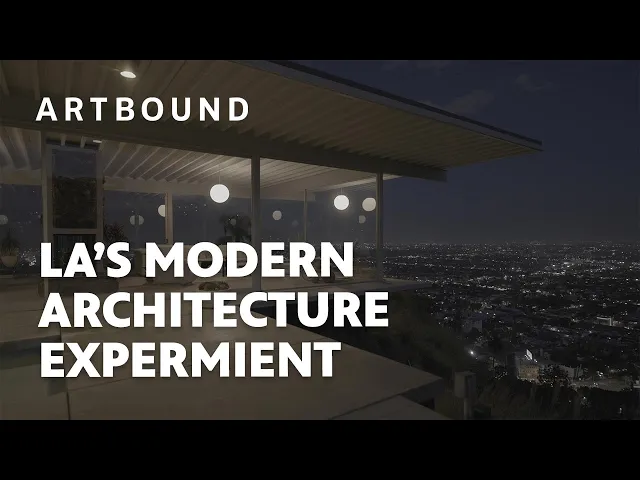
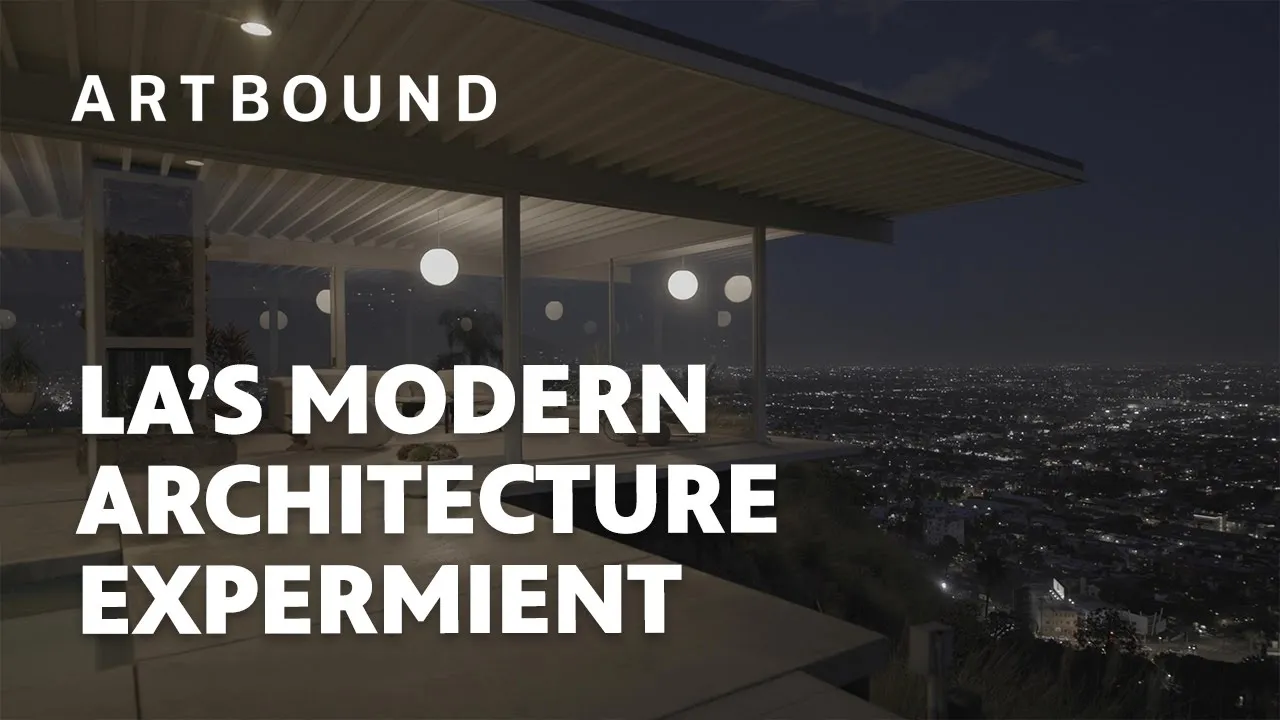
art and architecture was a magazine from the early 1940s to the late 60s edited by John and tenser and the case study House program was the most essential part of arts and architecture magazine the case study House program was a series of experimental modern house prototypes it succeeded in producing some of the key works of 20th century residential architecture a handful of which we consider iconic today [Music] [Applause] [Music] this program was made possible in part by a grant from the Los Angeles County Board of Supervisors through the department of arts and culture the city
of Los Angeles Department of cultural Affairs and the National Endowment for the [Music] Arts everyone has a different idea of what a home is a home provides shelter it provides a place to cook food a home is an area that you can live well in and you can entertain well it's about the comfort of knowing that people you love are near you with you home is where you can walk in the front door and say this is me if the home makes the people feel good then you have a nice home it's where you feel
rooted where you can be calm and Serene and I think when it's welld designed it takes it to the next level architecture affects your life in a positive way I can tell you firsthand that living here definitely makes me happy Architects really like to say that architecture is a social art and it is a social art because it's for people this was really an idea that became very strong in the years after the war a pent up demand for housing developed during that time and many Architects and people like John Anza the editor of arts
and architecture magazine were interested in these issues and began to think about what they could do it really was the sort of combination of a lot of really really interesting Minds being very aware of what was happening and John and tensa who saw that he could actually provide the perfect platform the case study House program was a series of experimental modern house prototypes envisioned to provide New Alternatives to post-war housing that would be improvements upon what was previously available to the typical American family it was not just an architecture that was being promoted it was
a lifestyle there's something about these houses that just enlivens the spirit it's more than just a house it has really the the history which is interesting you look nowaday to modern houses you see some of the elements that have been tried out here 60 years ago these houses definitely glur the lines between it's a place where you live and it's your house but it's also a piece of art was arts and architecture for a reason that it did bring these two things together you look around at these spaces and these houses and they're beautiful there
also this idea that living with art it's a much better everyday experience [Music] Southern California has a fairly long history of architecture that can be described as protom modern it is the location of some of the key works of early modern architecture in the United States many of the architects who came to California from other places from the East Coast the Midwest from Europe were really profoundly impacted by the climate here they realized that it was possible to Build architecture that really took advantage of the outdoors in a way that was quite unprecedented many of
them the ones who had come from Europe especially were trained in and conversant with International style modernism there were various architects who wrote different manifestos and what they thought the modern house should be the biggest thing was that it had to be a historic it had to be an arch Ure or a language of its time embracing the advantages of industrialism and methods of production so just the growing in size of a pane of glass led to Great advancements in modern architecture also at the beginning of the 20th century there is this Awakening of people
being much more conscious about health and healthy living and healthy building this of course was realized in the work of Architects Like Richard neitra with the design of his Level Health house which was very much about an extreme ideal of helpful living and that was actually the first stealing glass house here in California Dr loville was a fan of indoor outdoor living even his bedrooms were open porches in that house Dr Philip Lovel is a health promotion kind of doctor and celebrated the fact that he had finished this house and figured out how to make
this is a teachable moment for the public before the owners occupied it they had the public come through for a couple of weeks thousands of people came and that was to show you how to live healthier and a better life it was definitely a period in terms of Architects and designers who were coming here to collaborate with other people that were also like let's come up with new ideas about how to do design or housing people in so it was like a Melting Pot in terms of different skill sets different interests different backgrounds all coming
together there was a sense of Promise in California at one time it was considered a beacon for a brighter way of life California the land of sunshine and swimming pools and Sleek geometry carved out below its mountains someone like John an tensel who came from a more traditional upbringing found a really different way of life in [Music] California and tenza was an extremely interesting person who had a broad range of knowledge and he had dabbled in a number of different things before he ended up becoming the editor for arts and architecture he came from a
family of means so finding a regular job or making a living in a conventional way was not at all of interest to him nor was it necessary his mother was from a mining Dynasty his father was an attorney he was somebody that had deep thoughts about a lot of different aspects of society and he was interested in a lot of different cultural phenomena I guess you'd say he was a polymath somebody that was interested in a lot of different things and wanted to share his excitement with other people Esa McCoy the architectural historian described intensa
once as a man with a polished mind and Polished shoes he was really interested in modernism and modern architecture and had commissioned a house for himself in 1937 by the architect Harwell Hamilton Harris that he lived in for a while and all of this time he was becoming friendly with and educating himself about what else was going on in Los Angeles he subsequently got a job at California arts and architecture magazine which was a sort of skinnier magazine it was not focused on modernism and it was intended to a very gener readership it was more
like a house and garden variety magazine and it treated a number of different architectural Styles and topics that would be of interest to homem Makers and homeowners it was really a domestic magazine for people that were interested in houses and tenza purchased it in 1938 and then over the next couple of years started to transform it into a vehicle for spreading information about about modernism when Anza took it on he really began to promote modern architecture and he brought in a lot more about the Arts whether it was Furniture Pottery contemporary theater contemporary music he
was interested in all those things all things modern were of interest to John intenza he did away with californ in the title he called it just arts and architecture he wanted it to be much more International in its Outlook did not want this to be just California and he transformed it visually he invited some of the most Avant guard young graphic designers to design covers for the magazine it was really important for Anza to be able to immediately communicate the sense of extreme commitment to modernism you see that especially in the designs of Ray e
the aine had this editorial board which included people like Charles and Ray eem Charles and Ray e were people who changed the world but in ways that people still don't always appreciate they did hundreds of different chair designs they're still in production they did some of the First music videos ever they made a film called powers of 10 and that's basically what Google Earth is except for you can do it everywhere for Charles and Ray the purpose of design was to make a difference in a way so Charles and Ray were very intimately part of
the whole experience of arts and architecture magazine until like the late 40s Charles was on the editorial board Ray designed many beautiful covers both of them contributed articles it was where some of the first articles about them's Furniture appeared Charles said intenza is a really amazing guy he's one of the few people really fighting for the cause out here and the cause in this sense was sort of the larger idea of what design architecture can be it was a community of people who were passionate about these new ideas and arts and architecture magazine became a
Lifeline to a bright future John intenza was also very socially and politically Progressive and you see a really wide range of topics addressed from this very Progressive socially expansive point of view during the Depression years there was not a lot of building being done things were expensive there became a lack of affordable housing and then of course once World War II began everything was diverted toward assisting the war effort so a pent up demand for housing developed and many Architects and people like John and tenza began to think about what they could do in the
aftermath of World War II during the War years and tenza wrote a number of opinion pieces in arts and architecture magazine about this there were texts about prefabrication there were writings about what was the postwar house what would that mean what would it mean to live differently or what could it mean to live differently in the years after World War II in America people started saying well what are we going to do when all these GIS come back and how are we going to house them this whole relationship went from a world where nobody could
really afford to build to 4 years later millions of GIS are coming back that's a pretty short time for such a radical transition there was this understanding that there was a housing shortage that was going to happen and arts and architecture actually in 1943 they did a competition for postwar housing there were very prominent architects who collaborated or submitted projects for this 1943 comp competition it was important for intensa to have a pragmatic approach to these paper projects in a way and to give people an actual setting and Forum to put their ideas forward I
think in that respect he was very American in that he envisioned an actual practical application of ideas that were being talked about during the late depression and wartime years there were a number of European precedents for the idea of building demonstration houses and showing them to the public or to potential Builders and such was the case with the venhoff seedl in stutgart Germany in the 1920s which consisted of a number of houses or housing and the venhoff sidung brought together designs by a number of Architects who are now wellknown but at that time were young
and experimental and presented ways of housing that were based on the incorporation of industrial prefabricated processes all of this was meant to Showcase a better way to live arts and architecture magazine editor John intenza and a lot of interesting Architects and designers affiliated with it said well what if we asked smart Architects to design structures with a hypothetical client in mind but design it in as universal way as possible because most opinion both profound and laded in terms of postwar housing is nothing but speculation in the form of talk and reams of paper it occurs
to us that it might be a good idea to get down to cases and at least make a beginning in the Gathering of the mass of material that must eventually result in what we know as house postwar house postwar house postwar agreeing that the whole matter is surrounded by conditions over which few of us have any control certainly we can develop a point of view and do some organized thinking which might come to a practical end it is with that in mind that we now announce the project we have called the case study House program
the case study House program the case study House [Music] program the house must be capable of duplication and in no sense being an individual performance every consideration will be given to new materials and new techniques in house construction all Eight houses will be open to the public for a period of 6 to8 weeks and thereafter an attempt will be made to secure and report to see how successfully the job has been done we hope it will be understood and accepted as a sincere attempt not merely to preview but to assist in giving some direction to
the creative thinking and housing being done by good Architects and good manufacturers whose joint objective is good housing good housing good [Music] housing in January 1945 when that was published the world was still going on hadn't ended yet and nobody knew how soon anything would get back to normal and what would normal be so I think it was right for intensa to acknowledge that and signal that the results couldn't be entirely predicted but he was going to do what he could to map out a situation that could conceivably result in some kind of improvement and
Innovative thinking and approaches when John anena launched the case study House program he invited eight architects to each take on a different case study house problem and to problem solve toward a solution he gave each architect a number and each architect set about you know beginning their project in the pages of the magazine he reported on the status of a new case study design and his idea was to Chronicle each design as it evolved as it was eventually built every month they published a new or two new projects and there were some incredibly interesting really
out there proposals I mean Ral robson's green belt hous is this really beautiful idea of a house that was built around a large garden and there's a fantastic rendering of the father Coming Home by helicopter and he's looking down at his house or the project that Whitney Smith did where he proposed a covered outdoor space in the center as the living room with these sort of Pavilion docked onto that which would contain bedrooms I mean this such an interesting Concept in particular for a house in this climate a kind of futuristic thinking was part of
what some of the early case study Architects had in mind some of them were so Visionary that they never actually found clients to undertake even aversion some of the first Eight houses were not built because of all of the uncertainties in the immediate aftermath of World War I things lagged and there was quite a delay in getting many of these or any of these projects off the ground there were shortages of building materials there were delays in the availability of construction materials that's why the numbering system got off because they thought it would be just
one house a year but you see they plant a house and then the owner would decide that you know with Rising costs not to go ahead so that didn't work numbering by the year in most cases though the house wouldn't be finished in time and so it would have to be renumbered or it would throw the numbering system out [Music] for [Music] [Music] the early houses in the program were of a wide variety each architect desired to use materials that were new or developed through industrial processes but it was really difficult to achieve for instance
steel was very difficult to come by so many of The Architects ended up using wood for their designs and they ended up using a somewhat more traditional or conventional sort of post and beam framing system or a panel system just because it was simpler and more [Music] pragmatic case study house number 18 was originally designed by Rodney [Music] Walker Rodney was the Bohemian of the group he was the most independent interest interestingly three of his houses were actually part of the case study program I think the reason for that is that he was really utilizing
materials that were the most coste effective and he was concerned with building the property really from the ground up so he would grade the site he would design the house and he would oversee building it as well and that resulted in efficiencies with which I think were attracted to in tenza this house its exterior is done and scored plywood a very interesting and unique material for the time [Music] [Music] period these houses have their own personalities because they were each built for a specific period for a specific person or for a demonstration such as this
each work of architecture to live in it today requires certain compromises and it's a small house in the cas House program the model is the single family house the single family house in its own little garden there were a number of different client scenarios that were proposed by The Architects and they were all different most of the houses did end up being one-offs for the particular clients and for particular sites where they were built the Charles and Ray eams house is an interesting [Music] example and in the case of Charles Ray the hypothetical client was
a working couple with grown children because our mother was already away at college and so that's who they were designing for it described them but there are other people on the planet who are working couples who have grown children intensa purchased a plot of land in Pacific Palisades on a bluff overlooking the ocean John Nena's idea was to purchase this Bluff so that multiple case study houses could be built here so it would serve as an incubator in tenza decided it was crazy to do this whole program and not get a house for himself and
that's where case study house number nine came from their original plan for this house was to build a bridge house that was kind of conventionally spectacular emphasize the access to the view and really make a statement and then they realized they were doing what Architects very often do which is to find a beautiful site and destroy it with the building Charles and Ry decided that they really thought what was important was to look at the idea of a structure to think about how you could use materials that were off the shelf that didn't need to
be really adapted to build their home and we're sitting in an example that was really the first one to really be thinking that way they used this existing system that was commonly used in industrial buildings [Music] in the design they use all off-the-shelf available stock Parts including exposed steel decking and Factory sash windows things that were common place in the building of a factory but were quite foreign to the building of residential architecture [Music] through the skillful way in which the components were combined to enclose the greatest amount of space possible yielding a double height
pavilion-like structure they were able to have the Armature for an environment in which they could live and work seamlessly for them life and work all kind of blended into one so their idea was to have living quarters and then a studio space in close proximity an important concept for Charles and Ray was this idea of Designing the best for the most for the least and that's a really great quote because it really applies obviously to their Furniture but Charles and Ray also felt this house was a continuation of that idea the statement the best for
the most for the least is a really wonderful example of how the case study Architects were thinking at that time but the early years of the program were a bit of a struggle in that respect and it wasn't really until the Charles and Ray e house that the true promise of the program began to be realized when the earliest houses were built and tenzo felt that if people weren't able to actually see and experience these homes they wouldn't know all the benefits that come along with living in a modern house apparently there were more than
300,000 people that toured some of the early case study houses when they were opened up and they were only open on weekends for a limited period of time in the late' 40s in a 6-month period 368,000 I mean I I think the population of LA was like a million at that time that's not an elitist experience and tensa was very Savvy in how he set about promoting the case study houses in the pages of the magazine he chose not just to feature the designs by each architect but he also really wanted to make a full-blown
case for all aspects of modernism interspersed between the various essays on numerous topics were a number of advertisements the advertisements in arts and architecture are really striking to look at because they cover a broad range of [Music] products what's great about having a case study house is there's no guess work cuz everything's documented who supplied the steel doors who supplied the light fixtures who supplied the tiles cuz everyone that supplied the materials wanted Credit in the magazine so like it's cool to find out who made anything in this house in connection with the case study
House program there were a number of Furnishings fixtures building materials all kinds of elements that could be included in the interior of a home or as part of its construction the kitchens of these houses for instance were to be fitted with the most up-to-date objects and appliances that would be labor saving for the inhabitants that would really help people on the path to a new way of living in the postwar era which has also sometimes been talked about as the era of the servantless house and this was all made possible in part through the way
the houses were designed to be you know sort of more open in plan to be more simple and to have these kinds of features and fittings and products and objects that made living in the houses easier when I moved in the oven was like a 70s 80s oven and because of arts and architecture I was able to find out exactly the model of the oven and we had it refurbished and I put it in once that oven went in the kitchen I was like H so much better if you were you were restoring a Ferrari
from the ' 50s would you go and put new modern 22-in wheels on it like it would look [Music] ridiculous part of anza's approach with the case study house program was to invite manufacturers to have their designs publicized in exchange for what was called a merit specified Arrangement so that their products would be used in the houses in exchange for a discounted rate which would make the houses more economical to be constructed and [Music] built when it came to the case study House program my parents didn't know anything about it so when it was presented
to him and Pierre said I can get you into this and you're going to have some cost benefits to it my dad was all ears they struggled to get this place built if it wasn't for the case study program I don't know if they would have been able to do it cuz the steel was all donated at cost if you had to pay full price I don't know if they could have got it done by my parents bought this lot with a $100 bill and a handshake they would come up here on weekends and work
on the lot get it graded cuz my parents couldn't afford to hire people to do that my dad short It Up by visiting construction sites all around Los Angeles in his converto and he would load up concrete blocks in his car and drive them up to the house and then he spent probably 2 and a half almost 3 years laying that concrete all around the perimeter but it ended up giving him more buildable Space by doing so he basically said that I want to be able to stand in the living room and look at my
view with only turning my head I don't want anything obstructing it I don't want walls I want [Music] glass they ended up having three different Architects come up some of the Architects that came up were building with wood still so they're looking at that going you cannot build in wood and put this size glass in the house it won't work we can't build it wood will never support it they were kind of feeling down it's like no one wants to build this this is our dream house we want to raise our family here so my
mom was looking through the heral examiner and she came across an article on pier kig where he was building with steel and glass and so they contacted Pierre and Pierre came up and he was just young guy but he was so gung-ho he was a renegade just like my father and he came up here and said we could do [Music] this The Next Step was to get funding to build the house and they kept getting turned down because no one wanted to finance anything up here in the Hills thought it was too dangerous the engineering
technology that we have today wasn't around that they were using technology built for flat land versus Hillside it cropped up a few problems pools sliding down Hills mountains giving away so Pierre decided that okay I'm going to see if I can find somebody and sure enough he found a bank called Broadway Federal Savings Al loone it's a blackowned bank and they're the only ones that said yes I'll fund it what was so interesting is that at that time the HOAs up here said that people of color can't live up here but here's a bank that's
blackowned willing to fund a white couple's Dreamhouse I just find that amazing the architect Paul Williams is actually on the board and I think that he had something to do with the funding on that the house from start to finish took a year the framing of all the steel went up in a single day with three guys I think structurally it's held up the tested time pretty well companies like Bethlehem Steel and glass company they all got ads in arts and architecture magazine so the companies benefited [Music] Pierre blurred the lines of indoor outdoor living
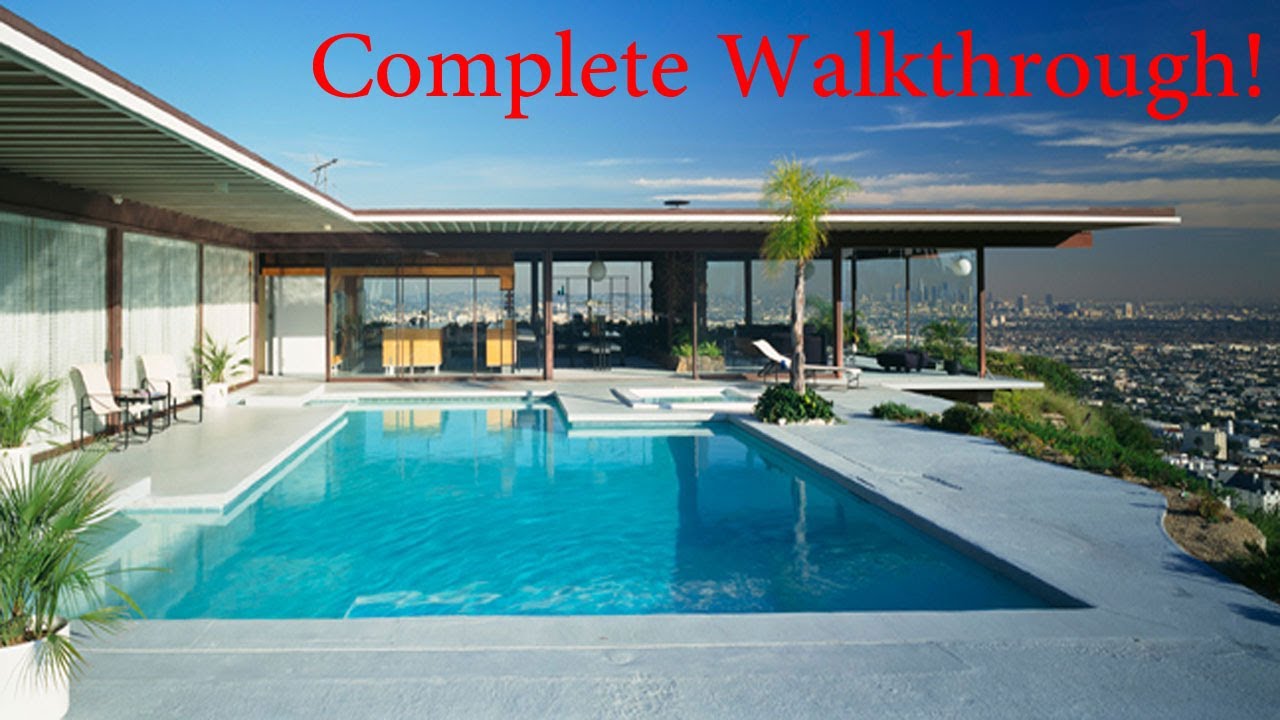
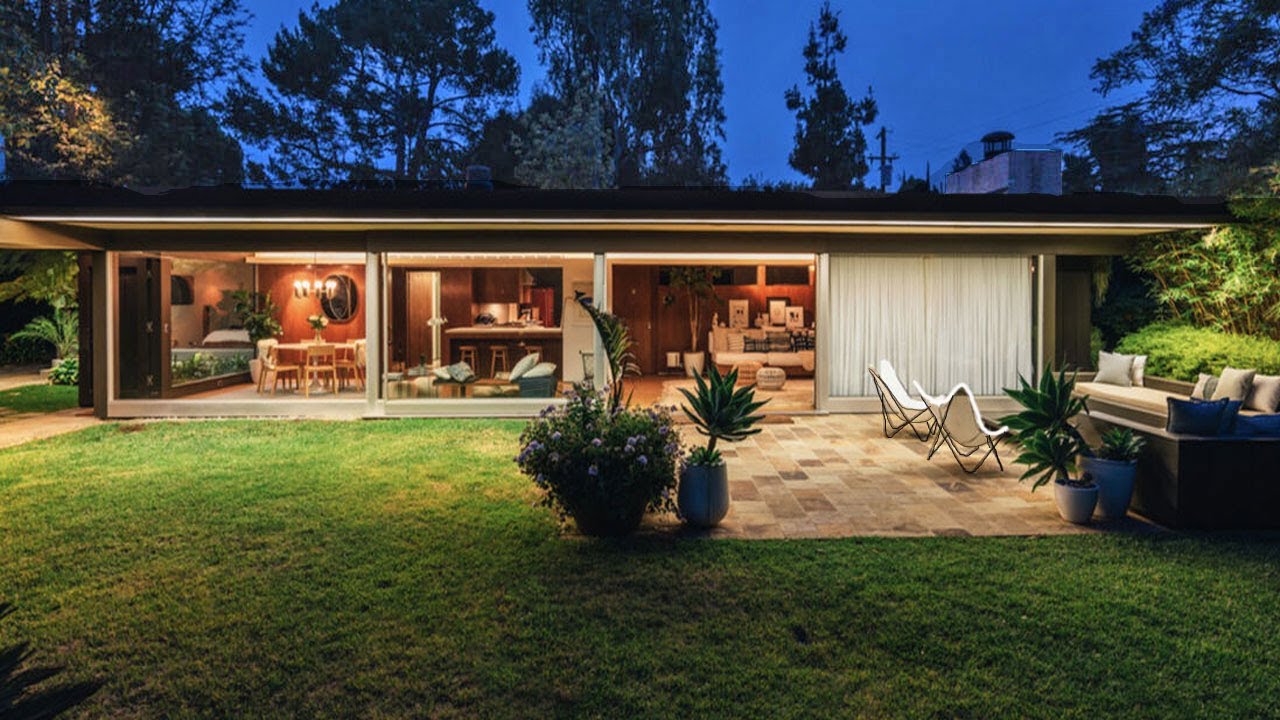
the house is 2300 ft but when you consider the courtyard the pool area which is an extension of the house it becomes a much bigger place the ability to be inside outside at the same time is amazing to be able to open a sliding door and have the inside and the outside right there it just Blends at that point and I just love [Music] that all of these houses were incredibly sexy it was not just an architecture that was being promoted was a lifestyle and it had to do with being in Southern California it's always
nice weather you have a swimming pool and they were photographed most of them by julus Schulman in a way that was all about people wanted to live like that and Schulman was very much part of the whole apparatus of kind of promoting the case study program and making this known to the rest of the world and he unlike many other photographers always insisted on having people in the photographs he wanted to show the houses as environments that were lived in and give people an idea of how they were used and it was a way to
also bring scale to the photographs before they opened the house to the Touring that had to been done through the case study House program Julia Schulman came up to start taking pictures of the house all the photos you see of the house were all taken in one day and one night I had been setting up the camera inside the living room I walked outside just curious to see what the house looked like the girls were seeing there I suddenly saw this composition so I ran to the house and said let's go bring the camera out
here quickly we got much better composition my assistant set the lights replac them with flash bulbs then I called to them you'll be sitting in the dark so keep talking if you want to and then all the flash blops go off at one time that's it I mean that just like a masterpiece image Julius made the house famous he once said I didn't capture a real estate shot I captured a mood a moment a feeling and I think that's why it's so impactful because it Spurs on people's imaginations it was an amazing photo and it
was sheer accident the ironic thing is is that photo never appeared in arts and architecture magazine a lot of the other ones did but that one did not at the beginning when the case study program was announced it was all about building a very affordable house building inexpensively building a house that could be duplicated in reality that was pretty difficult to achieve and most of the houses did end up being one-offs or singular examples for the particular clients and for particular sites where they were built there's only one house that was duplicated that's a Jr
Davidson house later there were a few examples of multi-unit projects like the a Quincy Jones was supposed to be I think 200 units or the killing worth Triad [Music] Tony amanta the Builder who was a dear friend of John andanzas owned 80 Lots on Mount solidad he asked John if he would be interested in doing a case study House in La Hoya John said absolutely they sat outside in the dirt trying to decide which of the Lots would work and I know this is absolutely true because Tony told me the story more than once they
got blind drunk un really cheap red wine and they couldn't choose a lot so they would do three and that's how it became the Triad it's a great house it really is works well human engineering Wise It's well put together we can walk from one room to the other and have literally glass everywhere and what we put outside is important so it's not just a house it's what's outside the outside inside working together Joseph did a lot of entertaining it would not be unusual for him to call me at 3:00 in the afternoon and tell
me that he was bringing a half a dozen people home for dinner we always had large Christmas open houses and his birthday celebrations were gigantic the house is good for entertaining it really really is just to open everything up and use the entire space what John and tenza was doing with that magazine was extraordinary I think it made an incredible difference with architecture and not only with architecture but with the Art of Living [Music] each of the houses is slightly different this house house SE is the smallest the one across the street is the largest
and I think in many ways probably the more traditional in the way it's laid out the one across the driveway house B I think would be difficult to live in the way that it's laid out many years ago we agreed with each other that this one was the one that worked the house SE I've always been sort of astonished that house was not picked up by a developer the plan because it's such a simple plan and it works so well and it would work so well in the development and tenza really did want all the
houses to be replicable he wanted to influence the building industry and he desired to see tracks of case study houses instead of the conventionally built tracks that proliferated across the United States most of the houses from the program are in LA and this is the only one in Northern [Music] California was early 60s this neighborhood didn't exist people were moving outside of San Francisco starting to commute into the city for work and this neighborhood was the product of that my dad was a captain with tww in the early pioneering days of a jet age and
my mother was an air Hostess and the two of them decided they wanted to move out to this area and then they heard about this house being built and they were very drawn to that the idea of using steel was really intriguing to my father I think my father and my mother both really appreciated what steel could do for a home and there was kind of a lot of talk about the future homes being steel and it was kind of a really magical time in history living in a house like this it opened you up
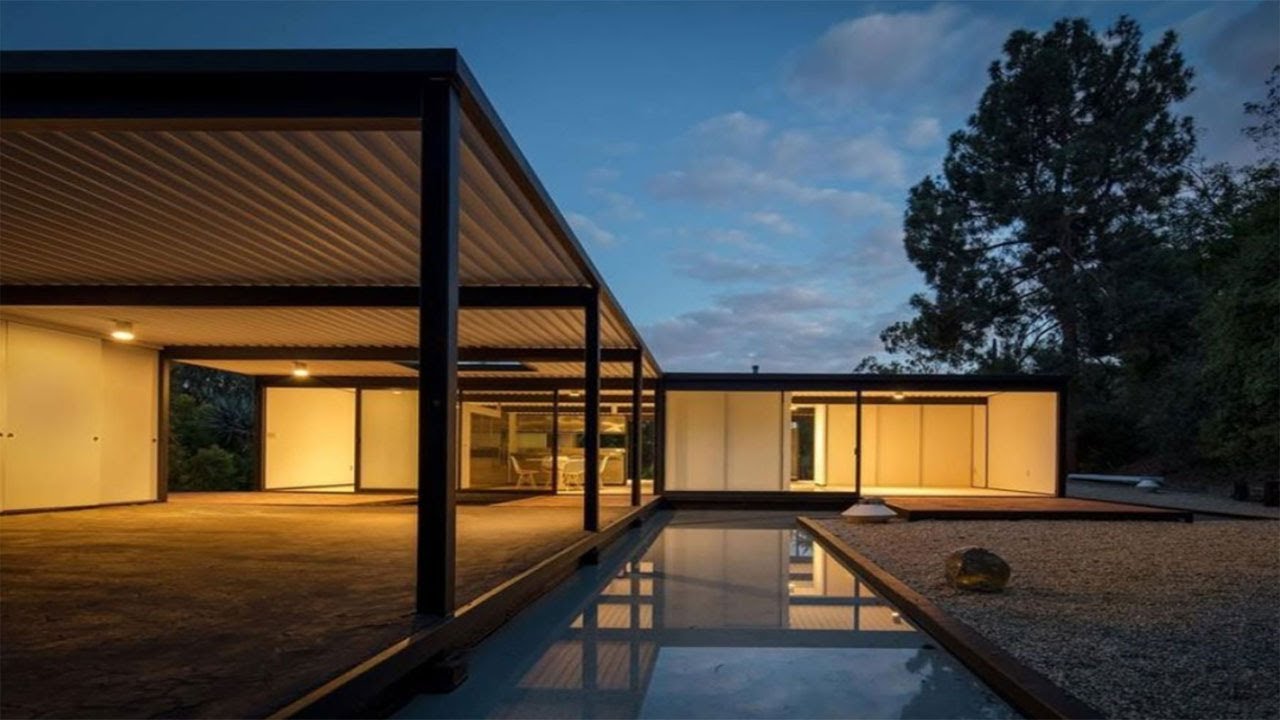
to a kind of a different way of thinking it really helped me to understand understand the idea of not limiting yourself what distinguishes this case study house was that they wanted to explore how you can build on a Hill California has a lot of hillsides Builders don't really like it because it's very expensive to build Foundation excavation Etc so the developers in partnership with Bethlehem Steel tried to show how you could use a steel to build residential spaces they used only a few foundations here along the Hillside and then used pre-fabricated steel with a long
span up to 28 ft so they could really have this big open floor plan that we can see here now and this was the entire structure so all the other things that you see like Windows Doors walls partitions they're not really structural so you could reconfigure the house if needed [Music] the architect Beverly Thor he was quite interested to try out different things what you actually see that makes the floors and the roof is really a special construction you have basically these 2x4s put on edge that are spanning between our steel beams because you cannot
have a normal plywood floor because 10 foot is too far for it and we love them a lot we have them in all of the rooms and gives a wonderful atmosphere that really contrasts very well with a relatively technical steel I remember walking into the house and then after checking it out standing here and saying like I think this is the coolest house we've ever been to you realize it's more than just the house it has really the the history which is interesting that they really try to build something that could be model for other
houses other developments and you see them now if you look nowaday to modern houses you see some of the elements that have been tried out here 60 years ago we know it's not a house like any other one as the program developed over time and Architects were able to use industrially derived components such as steel it became a challenge because there were not that many workmen trained in how to work with steel and developers found that it was cheaper to continue to build housing using conventional construction techniques which primarily consisted of wood framing and there
was also the fact that many members of the public preferred conventionally appearing houses this was a popular perception at the time you know you have to be careful with those people that live in houses with flat roofs they're communists [Music] so the liberal bent for these houses gave them a bad R areas like Wonderland Park or Gregory a social housing did espouse liberal ideas which have become to be completely accepted nowadays but back in the 50s it was taboo I think also the large track builders having in-house designers became common after the' 60s and70s and
they went with the period Revival revivals on the chap unfortunately there's too much of that and it doesn't give you the life and the freedom that these houses do and tenza eventually decided to leave LA and take a job in Chicago as the head of the Graham foundation for advanced studies in the Fine Arts and he decided that you know he wanted to shift gears at that point in his career and he may have felt his job was done or he may have just felt tired about what was happening he had put a lot of
his own money into the magazine and he was able to keep it afloat for a long time when he turned it over to David Travers who continued the direction of the magazine and continued the program it stayed quite the same but it wasn't too much longer that the magazine lasted after intenso left [Music] I think that one has to make a little bit of distinction between what the case study House program said it wanted to do and what it actually did certainly some of the better know case study houses were beautifully crafted individual buildings and
they were not necessarily less expensive than other houses that were built at the time but maybe even more important was the aesthetic agenda that was being pushed it was about sort of introducing modernism to Southern California and also introducing Southern California design to the rest of the world my very favorite statement by Esther McCoy about arts and architecture magazine is when she described it as a magazine as flat as a tortilla and as Sleek as a Bugatti without Financial backing and minimal advertising became the greatest force in the dissemination of information about California and I
think that is a beautiful statement because that really does say it all about this slender magazine that had this outsized [Music] impact Esther McCoy is an extremely important figure in the history of Los Angeles mid-century modern architecture she worked for a while as a draftsman in the office of architect RM Schindler she was also a very good writer and she began to become a kind of spokesperson for modernism Ester McCoy really was the first to say hey remember there was a case study program she ended up writing the first book on the case study houses
it was called modern California houses and it was the first publication that actually laid out the case study House program as a kind of concrete identity other than arts and architecture magazine I was really lucky I had Esther McCoy as a mentor it was always my dream to be involved in architectural publishing and journalism so she said well you should revive arts and architecture and I'll introduce you to David [Music] Travers I published a Revival of arts and architecture Magazine from 1980 to 1985 doing that was kind of a dream come true for me David
Travers he hadn't published it in quite a while because it stopped in 1967 it had been like 12 years since he published it he asked Esther and me to put together a guide to modern architecture in the United States and then she encouraged him to let me use the name arth and architecture putting the magazine together was a lot of fun we did it as themed issues the first one was about California the second one was about Texas we did one on landscape we were looking at postmodern architecture in the'80s you know it's really funny
because when I was publishing arts and architecture I had been a juror on the design for the San Juan Capistrano Library the library had been built by the time that John and tenza moved to La Hoya and Esther and I took him to see it and he hated it because it was so different than modernism but that's what people were doing in the80s there were a lot of experiments going on I mean I'm sure that John didn't like Frank Gary's work either anyway we never made any money on it I didn't know anything about business
but it was fun while it lasted [Music] in 1989 the Museum of Contemporary Art in Los Angeles unveiled an exhibition about the case stady House program it was called blueprints for modern living history and Legacy of the case study houses this was about 20 years after the last of the case study houses had been built so in that intervening 20 years a lot had changed architectural tastes had moved on modernism had been replaced by postmodernism I was asked to be the curator of that exhibition and I had the ability to meet and talk with people
like Esther McCoy who was part of our advisory team for the project and crystallize ideas for how an exhibition could best communicate about these houses to the visiting public of our time I think none of us had any idea that the exhibition would end up becoming so impactful and contributing in the way that it did to a kind of Renaissance of modernism that continues to grow and flower and I also find it to be extremely important that many of the buyers and owners of these houses now care for them and want to keep them restored
in a way that is respectful of their architectural Origins to me these homes are just as important as a Picasso painting or anything that's like a fine piece of art and there's only so many of them so many houses get destroyed someone buys a house like oh we're going to put a modern kitchen in it or even a modern stove there's so much Beauty in the original things in these houses and so if they all get remodled there's going to be no original examples of of these homes anymore Craig Elwood did three case study houses
one of them was remodeled and turned into a Spanish house and the other one was remodeled and turned into a John Wolf house like 15 years after it was built so this is the only case study house by craiga that's still around it needs to continue on we were very very lucky that the house only had one own owner who understood the value of the house so they took extremely good care of it we want to follow in this stewardship and keep as much original as possible so for instance we restored a 1962 intercom that
we can use to communicate between the different rooms in the building this house really hasn't evolved too much and the closer we can get it to day one when it was built the better we still got rabbit ear on the roof for a television they're not used but I think it's part of the house now maintaining any house is a job especially when it's a house that was built using in part experimental materials there's no way of being able to tell how long that material will last how it will fail how you could repair it
or whether you could repair it and it's important because one of the things that delighted Charles and Ray were these textures those surprises that Charles would refer to the surprises of the reflections and the shadows and I love that understanding that many visitors today arrive at when they visit this house and they go oh what we want we call the 250 year plan we want in 250 years when you come here you can have this Rich experience our mom used to say that this is three-dimensional Source material at the 's house that people whether they
look in it or walk in it or whatever they're learning I actually will sit and on some tours just to catch people's expressions and emotions when they come through the door and if you've never seen it before in person then it does hit you pretty hard and that's why my sister and I have been running these tours since 2009 cuz we want people to see it it'd be a crime to close this place up and that's the way we're kind of carrying on my mom's Legacy she was willing to open that door over there to
anybody who was willing to knock on it we need to promote modern architecture more I I think it's still a very great architecture that could be built today and anyone interested to see it we always happy to share it and I think that's part of the real lesson with what they were trying to do in the first place was show us what housing and living could be like but it's also the idea that we need to keep them so we still learn from them over time and hopefully everyone continues to appreciate them protect them preserve
them as time goes [Music] on architecture magazine should have a conscience and one of the things is really interesting about what ensa did with arts and architecture was talking about the way that people lived and the way that they should live he was actually wanting to directly intervene and influence by doing the case study House program and that was kind of radical it would be radical today quite honestly I think the program if you just look at on face value it didn't hit all of its marks but it's undeniable in terms of what this program
was espousing to do and what it did in its lasting Legacy I think the case study program opened a lot of people's eyes of what can be done I mean a steel glass house perched a high above the city one Corner levitating over nothing it's an imaginary thing that it only can be done on a drawing but here is a living full-size house that people live in we have enormous challenges that we need to address as a society Architects typically are good at problem solving so that's where when we look at challenges that we face
today I mean how do we provide affordable housing for an exploding population how do we provide public transportation in a city that is drowning in car traffic how do we think of building in an environmentally sensitive way these are challenges where we as Architects have very much to contribute what the case study program and its Legacy remind us of is there's no substitute for doing so they did 25 buildings they did design 10 more and when you design them and put them out in the world you learn things things you can't possibly learn from a
rendering we have to be patient and willing to try things that may not work because we'll find some things that will work and we may not learn those lessons till those things are up for a few years the K program was a commitment by a lot of people and we should celebrate that and do more of it [Music] [Music] this program was made possible in part by a grant from the Los Angeles County Board of Supervisors through the department of arts and culture the city of Los Angeles Department of cultural Affairs and the National Endowment
for the Arts