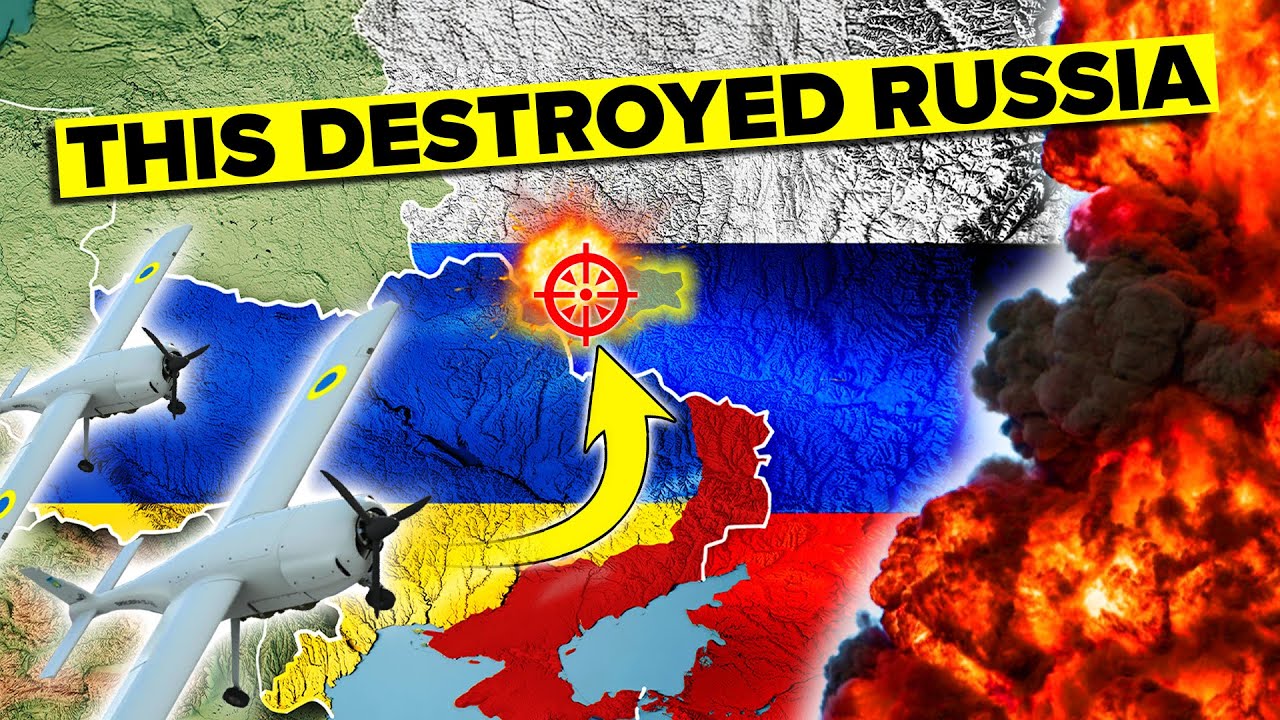
What’s the most devastating way to cripple Russia’s war machine? Ukraine has the answer: take out the lifeblood of its military operations—oil. With precision drone strikes, Ukraine has been methodically targeting Russia’s oil refineries, hitting Putin where it hurts the most.
These strikes don’t just disrupt fuel supplies to the front lines; they also deliver a crushing blow to Russia’s economy, which is still propped up by its oil industry despite Western sanctions. And the latest strike may be Ukraine’s most daring yet. On January 11, Ukraine launched a long-range drone attack on the Taneco oil refinery, one of Russia’s largest and most modern facilities.
The strike sent shockwaves through Russian territory—both literally and figuratively—showing that even deep within its borders, Putin’s resources aren’t safe. In this video, we’re diving into the details of this strike, the wider impact of Ukraine’s refinery attacks, and how this bold strategy is reshaping the war. Let’s start with what went down at Taneco.
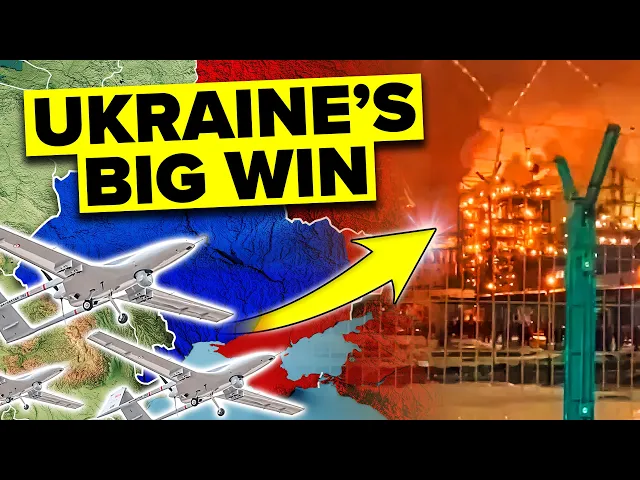
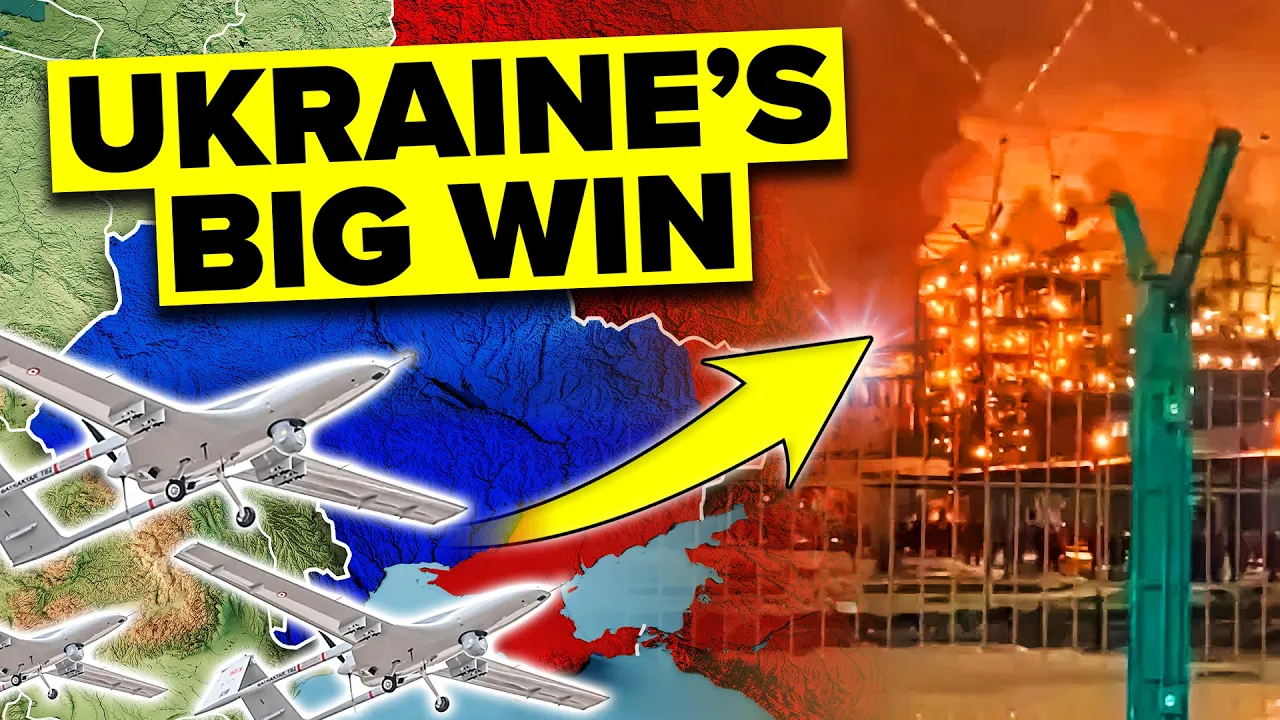
January 11 saw Ukraine conduct an impressive drone attack that targeted the Taneco oil refinery in the city of Nizhnekamsk. Located over 800 miles into Russian territory, the strike shows Putin that Ukraine is not only capable of decimating Russia’s oil-producing capacity, but it’s also getting braver and more capable of hurting Russia deep into its own territory. Taneco is also an important target because it’s an extremely large refinery that is considered one of the most modern in Russia.
When operating at peak capacity, the refinery has the ability to handle 16 million tons of crude oil annually. It turns that crude oil into products – chiefly petroleum-based – that it can either sell to other nations or use to fuel the tanks and vehicles it’s using to attack Ukraine. And this industry has been growing for Russia even amidst Western sanctions.
In 2022, Russia’s diesel industry grew by 6%, dropping to 3. 4% growth in 2023. We saw the same pattern for gasoline – 4.
3% growth in 2022 versus 2. 8% growth a year later. Though the scale of growth is declining, there’s still no denying that Russia is selling more of its refined oil products year-on-year.
That means losing a massive refinery like Taneco is bound to hurt. That’s 16 million tons of crude oil that Russia can’t turn into other products. So, it’s either forced to sell that crude as it is, generating less money in the process, or it has to place it into its ever-dwindling storage until it’s able to transport it to another refining facility.
Both are massive blows to Russia. Footage published in the aftermath of the Taneco strike shows the refinery ablaze. But, of course, Russia’s propaganda machine has been churning in the days since the strike.
The press service of the Republic of Tatarstan – which is home to the refinery and is part of Russia’s Volga Federal District – claimed that there hadn’t been a fire at the plant at all, despite what the footage shows. Rather, the plant’s administrators had been carrying out what the press office dubbed a “mock evacuation. ” Those glowing lights you see in the footage aren’t fire, the press office claims.
They were lit by employees themselves as part of standard evacuation procedures. Strangely, Tatarstan’s press office didn’t feel the need to explain why the glowing was accompanied by smoke in the released footage. Perhaps the refinery’s evacuation drills are so in-depth that the plant’s owners actually set fire to parts of the building – all of which are filled with highly combustible materials – to make the drill seem as close to a real emergency as possible.
Or, as the authorities in Tatarstan claim, the glow might come from another source. “The orange glow in the sky is caused by the operation of flares, which are an integral part of the enterprise’s technological process,” claimed the press office. Perhaps.
But flares don’t cause powerful orange glows to emit from every window in a building, as we see in the local footage of the strike. Far more plausible is that Ukraine has completed a successful drone strike on the Taneco plant and what we see in the footage is at least part of the refinery going up in smoke, potentially costing Russia millions of tons in refined oil products or crude oil that’s waiting to be refined. The Kyiv Independent provided more details about the attack.
It reported that the leader of Ukraine’s Center for Countering Disinformation – Andrii Kovalenko – had both confirmed the strike and explained why Ukraine carried it out. “The refinery plays a key role in providing fuel to the Russian military,” says Kovalenko. “Taking out refineries and oil depots directly affects Russia’s ability to wage an intensive war.
” Newsweek also reports that the strike led to employees evacuating the Taneco refinery – likely giving rise to the evacuation drill cover story – along with flights being grounded at four airports—Nizhnekamsk, Izhevsk, Kirov, and Ufa. That’s an important point. Russia wouldn’t ground flights from an airport unless it thought that drone attacks were either a possibility or happening.
An evacuation drill at the Taneco refinery wouldn’t be cause to delay airplanes located miles away, which only adds credence to Ukraine’s claims of a successful strike. Combined with the local footage of the refinery going up in smoke, we can only come to one conclusion: Ukraine hit the Taneco plant and Russia is lying about it. So, why does this strike matter?
Kovalenko already gave one of the reasons. By taking out Taneco, Ukraine limits Russia’s ability to send refined oil products – crucially diesel and gasoline – to its soldiers on the front lines. It’s likely most of those products are making their way into Ukraine’s Donetsk region, where Putin spent much of 2024 pushing to gain more territory.
Russia’s efforts were successful, albeit on a smaller scale than Putin would have liked, during the year as it managed to gain around 1,544 square miles of territory. But those gains came at a massive loss of manpower – Russia paid a price of 430,000 soldiers in 2024. By taking out Taneco, Ukraine is able to minimize the pressure Putin’s forces are placing upon it in the Donetsk region.
Those forces will have less fuel incoming, which means assaults that might have made use of tanks and armored vehicles before now have to be conducted on foot. That makes Russia’s soldiers more vulnerable to Ukraine’s defenses, allowing Ukraine to add significantly more to Russia’s casualty rate. So, Ukraine faces less formidable attacks and is able to twist the manpower problem knife into Putin’s side all as a result of destroying a key oil refinery.
And it gets worse for Putin. The drone strike on the Taneco refinery is far from the first Ukraine has used to target Russia’s oil production industry. It’s not even the first time Ukraine has targeted Taneco.
The refinery has gone up in smoke before. On April 2, 2024, Reuters reported that a single Ukrainian drone had managed to penetrate Taneco’s defenses to hit the refinery. That strike was less impactful than the one that occurred in January 2025.
The drone apparently managed to hit a single unit that processes around 155,000 barrels of crude oil daily. Unfortunately for Ukraine, the damage caused wasn’t critical and Russia managed to get the unit up and running again soon after. Still, this earlier strike shows that Taneco has been on Ukraine’s radar for a while.
If Ukraine had managed to take out that single unit altogether, it would have cut the Taneco refinery's capacity by 21,700 tons of crude oil per day, amounting to 7. 95 million of the 16 million tons of crude that flow through the plant annually. As it stood, the April drone strike managed to hit unit CDU-7 and caused a small fire.
But Russia’s state news agency RIA claims the fire was extinguished within 20 minutes, with the unit being operational again soon after. Still, there was potential. Taking out that single unit would have cut Taneco’s refining capacity in half.
A larger drone strike, such as the one conducted in January, could not only target CDU-7 again but take out several other refining units to really put the squeeze on Russia. We’ve also seen Ukraine carry out drone attacks on other Russian oil facilities. About a month after its first attempt to hit the refinery in Taneco, Ukraine switched its sights to an oil processing plant in the Bashkiria region.
If anything, this strike was even more impressive than the two on the Taneco plant. A Ukrainian drone managed to travel around 932 miles – breaking the record for how far a drone had penetrated into Russia in the process – to hit the Gazprom-owned facility. Ukraine called it the longest-ranged attack it had conducted on Russia up to that point.
And again, Ukraine was targeting one of Russia’s largest oil refining and petrochemical production plants. Footage from the strike shows the drone hitting a catalytic cracking unit, which is used in refining to break down the hydrocarbon molecules in crude oil into smaller molecules used to create petroleum products. The unit is seen emitting smoke in several videos.
Though the attack didn’t destroy any of the oil at the facility, it did take out a key component used to convert that oil into usable fuel. The goal was clearly the same – reduce pressure on Ukrainian forces defending territory by making it harder for Russia to get fuel to the front lines. There’s more.
April 2024 didn’t just see Ukraine carry out a strike against the Taneco plant. It also sent drones to hit a Slavyansk oil refinery in the Krasnodar region of Russia. You could argue that this particular strike was the most successful of those we’ve covered so far.
The plant was forced to suspend several of its operations due to fires caused at the facility. Eduard Trudnev, who’s the security director of Slavyansk, was even forced to speak to Russia’s TASS news agency to confirm the attack. “The work of the Slavyansk plant has been partially suspended,” he said in the wake of the drone assault.
“Exactly 10 UAVs (or unmanned aerial vehicles) flew directly into the plant. There was a strong fire. ” The fact that Russia was forced to admit that this strike caused a fire likely means that it was even more successful than Trudnev claims.
That appears to have been confirmed by a government official in Krasnodar, who confirmed via Telegram that the drone attack missed the refinery’s storage facilities but did manage to cause some damage to a distillation tower. These towers separate crude oil into different “fractions” from which various refined products can be created. So, yet again, we see Ukraine taking out a key cog in a Russian oil refinery machine to hamper its ability to send much-needed fuel to the front lines.
By now, you’re likely starting to see a pattern. Ukraine launches a drone strike, typically targeting a part of a Russian oil refinery that’s vital to the production of much-needed fuel. That strike is successful, though Russia will try to downplay it, and Ukraine gets to relieve some pressure on its embattled soldiers.
It’s clear that drone attacks are working. But what is Russia doing to combat Ukraine’s clever tactic? Radio Free Europe shared some of Russia’s tactics in May 2024, which Putin appeared to implement in response to the strike on the Gazprom refinery in the Bashkiria region.
Russia’s Energy Ministry says that it’s planning – and has likely already installed – missile systems at some of the refineries that it believes are likely to be targeted. The often state-owned companies that operate the refineries are also taking action. They’re covering potential targets with metallic nets to protect them against drones, a haphazard measure implemented because Russia can’t spare many air defenses from its own military stockpiles.
There are also reports of refinery owners creating their own mobile air defense groups. But these are little more than teams of people armed with machine guns and tasked with shooting drones out of the skies before they reach their targets. That’s hardly a good defense against fast-moving and accurate drones that can easily evade reactionary machine gun fire.
And as the January 2025 attack on the Taneco oil refinery shows us, whatever measures are in place to protect these vital facilities clearly aren’t working. Ukraine’s long-range drones can evade Russia’s defensive measures and cause some serious damage. So, we’re left with two more questions to answer in this video: Why is Ukraine dedicating so many of its drone resources to these refinery strikes and are there any downsides to the country's focus on Russia's oil industry?
We’ve covered some aspects of the “why” already. Every attack on a Russian oil refinery potentially reduces the facility’s capacity, which in turn weakens Russian troops on the front lines and relieves the pressure placed on Ukraine’s defenders. But there’s more to it than that.
As the Carnegie Endowment explains, oil is a mainstay of Russia’s economy and is still key to allowing Putin to keep his war machine churning. Not only does every attack on an oil refinery hit Russia in its collective pocketbook, but each attack also allows Ukraine to score a symbolic victory against its opponent. It’s showing that it can take out Russia’s most valuable resources even from far behind the Ukraine war’s front lines.
As for why it’s choosing refineries rather than any of Russia’s vast oil fields, The Carnegie Endowment says that this is all down to convenience. Many of Russia’s oil fields are massive and located in far-off Siberia. They have minimal equipment to target and are so vast that it’s hard to pin down a good location to strike.
By contrast, Russian oil refineries cost tens of billions of dollars to build and are necessary to turn the oil extracted from the fields into actual usable products. So, by striking the refineries, Ukraine hits targets that are more densely packed with important equipment and forces Russia into rebuilding at a time when it can ill afford to spend money. Ukraine also has the opportunity to inflict pain on everyday Russians with these refinery attacks.
After all, it’s not just Russian soldiers who use the petroleum products these facilities produce. Russians who aren't on the front lines need these refined products to fuel their cars and power their homes. Refineries are also responsible for producing plane fuel, meaning Ukraine has an opportunity to ground a lot of aircraft with each of its refinery attacks.
Beyond these inconveniences, stymieing the flow of refined oil products into Russia itself also leads to higher prices. In the week between November 26 and December 2, 2024, prices of both resources rose by 0. 4%.
Such increases have occurred consistently during Putin’s “special military operation” in Ukraine and are encouraged by every refinery strike that lessens the availability of refined oil products. Add those increases to a Russia that is already in the grip of a cost-of-living crisis and you see that the refinery attacks don’t just relieve pressure on Ukraine’s forces. They create internal pressure for Putin at home.
Russia’s already dealing with a base interest rate of 21% - making it harder for people to borrow money – and inflation that reached 9. 5% by the end of 2024. Tack reductions in supply onto that already high inflation rate and it’s not just the Russian war machine that feels the financial pinch due to Ukraine’s refinery strikes.
It’s everyday Russians – a group Ukraine likely hopes will place pressure on Putin to end his war before it reduces their standards of living even further. Kyiv can even argue that these strikes are achieving what the West set out to do by implementing sanctions on Russia. Those sanctions, though effective in the long run, haven’t been as effective as they might have been because Russia has managed to find other avenues through which to sell its oil.
Until recently, there was still solid trade in Russian oil inside Europe, with many of Russia’s non-Western customers, such as China and India, still buying in droves. More sanctions will limit that particular flow, but Ukraine will argue that its refinery strikes have reduced Russian refining capacity by 900,000 barrels per day as of May 2024, and have caused even more damage since. In other words, they're a perfect complement to the Western sanctions already in place.
Russia also doesn’t have unlimited storage capacity for its crude oil. Though there is no specific “use by date” on crude oil, improper storage leads to the resource breaking down, making it unsuitable for refining into the petroleum products that Russia really needs. With Russia’s crude oil storage capacity already nearing breaking point, each strike on a refinery means that the crude oil at that refinery becomes less useful.
Russia either keeps it there and risks degradation or it sells it on, meaning it can’t use that oil to create gasoline and diesel. This is a hurdle Russia can overcome. It can move more crude oil from storage to make up for that lost at its refineries.
But doing that costs money and forces further delays, all feeding back into Ukraine’s main goals of using its refinery strikes to hurt Russian soldiers on the front lines and Russian people when it comes to their cost of living. All of these benefits are reason enough for Ukraine to want to continue its refinery strikes. However, it does face some challenges.
With President-Elect Donald Trump only days away from taking office at the time of creating this video, Ukraine is likely to want to carry out as many of these refinery strikes as it can quickly. Trump has talked about negotiating peace between Russia and Ukraine, though his timeline has grown from the day he takes office to several months into his term. Ukraine will want to destroy as much of Russia’s oil refining capacity as possible before those talks take place, damaging Russia’s economy further so Kyiv has more leverage when it’s time to negotiate.
It’s also possible that Trump may pressure Ukraine to cease its strikes, especially as he was already “incredibly concerned” about the escalation that President Joe Biden’s decision to allow Ukraine to attack Russian targets inside Russia with American-made missiles created. Granted, Ukraine’s refinery strikes seem to be predominantly carried out with its own drones, meaning it has less incentive to listen to Trump if he asks them to stop. But disapproval from a major Western power – and Ukraine’s biggest partner in terms of military aid contributions – could mean that Ukraine at least slows down its refinery attacks to appease Trump.
Ukraine also runs the constant risk of Russia replying to its oil refinery strikes with attacks on similar facilities in Ukraine. It’s already conducted some strikes, including a September 2023 attack on the Kremenchuk oil refinery, followed by another in February 2024. The Carnegie Endowment says this is the only major refinery still operational in Ukraine during the war, with the Kremlin clearly trying to get a measure of revenge for Ukraine’s strikes.
It’s also worth noting that Russia has attacked Ukraine’s electrical infrastructure multiple times, aiming to inflict the same kind of pain on Ukraine’s citizens as Ukraine’s refinery strikes inflict on Russia. So, these refinery strikes aren’t all one-way traffic. Russian retaliation is always possible, with the Kremlin specifically targeting the likes of generation units at the DniproGES hydro station to remind Ukraine that it can hurt Kyiv on the energy front too.
Will these two factors be enough to stop Ukraine from sending drones to Russian oil refineries? The January 2025 strike tells us that it isn’t. Rather, it’s more likely that we’ll see several more of these types of attacks in the immediate weeks after Donald Trump takes office, with Ukraine looking to inflict as much damage as it can.
But what do you think about Ukraine’s Taneco oil refinery strike and its general strategy of targeting Russia’s oil? Has the strategy proved as effective as Ukraine had hoped? Will Donald Trump's taking office lead to Ukraine facing pressure to stop these attacks?
Share your thoughts in the comments below and thank you for watching this video. Now go check out Ukrainian War Cripples Russia Forever! or click this other video instead!