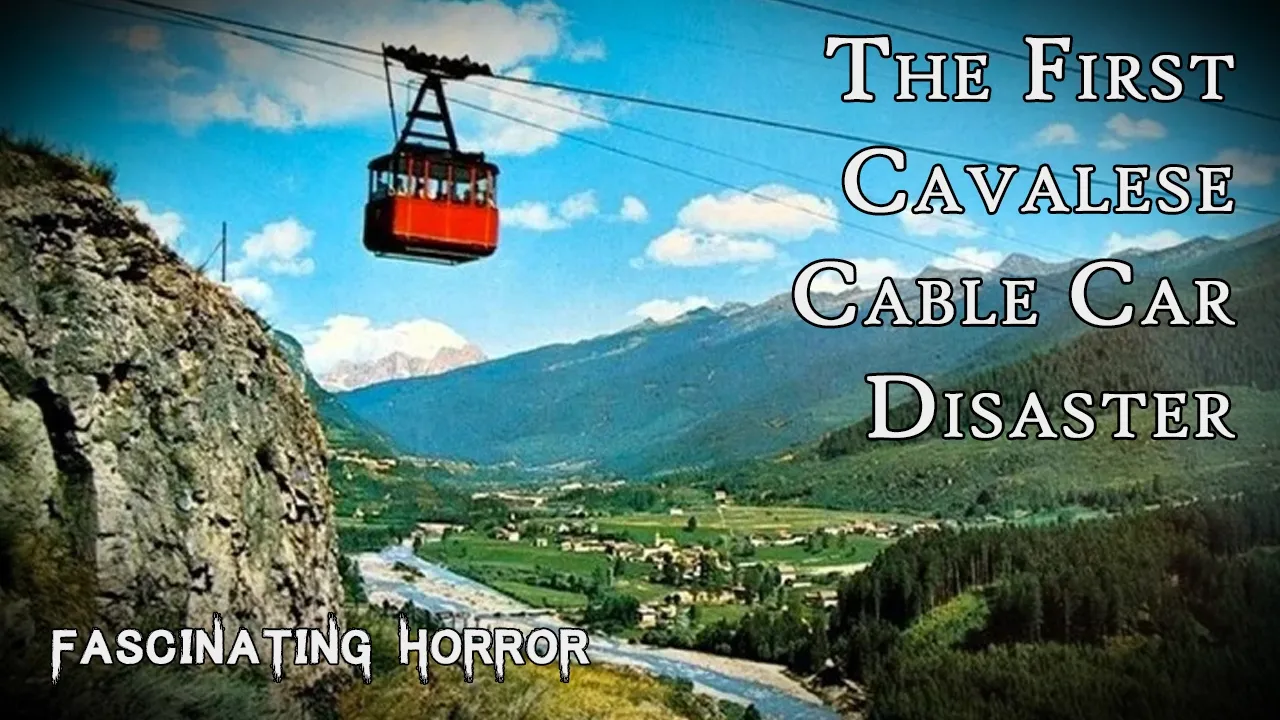
[Music] on the 9th of March 1976 a cable car operator at an Italian ski resort was riding in an otherwise empty Gondola when he caught sight of something worrying out the window some way away Sparks were pouring from the cables something he knew immediately was very very wrong he rushed to pick up the crew telephone in the gondola and Report what he was seeing not yet aware that he was about to witness one of the worst Cable Car disasters in history since the end of the second world war the Italian town of cavaly has been
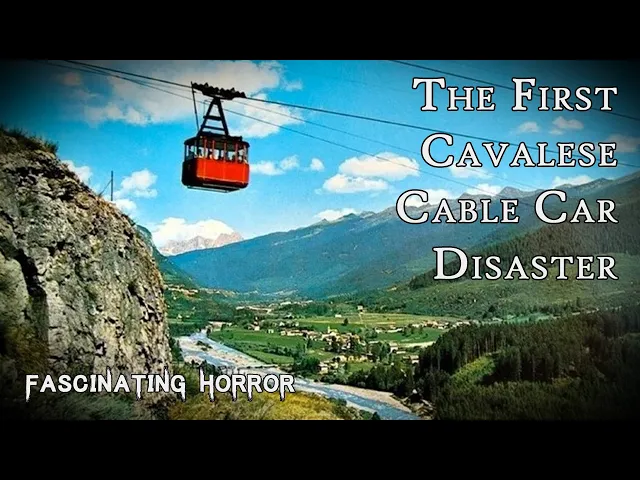
growing in size and developing its tourism industry within the town itself are numerous religious and historical sites but it is not for these that most people visit rather it is because cavaly is perfectly situated at the base of the lagorai mountain chain during the winter months usually from around April to around November these mountains are covered with snow the nearest mountain alpe ches is particularly known for its many and varied ski slopes tourists come from all over the world for the opportunity to ski there and many of them stay in hotels and lodges in cavaly
from cavales visitors can easily access the upper slopes of the mountain by riding up in a series of cable cars a gondola first carries visitors down into the valley before another takes them up to a Midway Station where they can change to a third cable car to ride the rest of the way up to the cheres mountain station from there a range of smaller ski lifts delivers visitors to the top of different slopes this cable car system was built in the 1960s as tourism became more and more prom minent for the town for many years
it ran without incident carrying hundreds of people each day during the winter season on the 9th of March 1976 at around 5:00 p.m. the cable car system was in use when it came to an unexpected stop in the control room halfway up the mountain seasonal worker caros Schweitzer was unsure what to do he was new to the job and hadn't encountered this situation before his training had been quite minimal fully trained and licensed workers cost significantly more to employ and so the company which managed the lift system had been using unlicensed workers for some shifts
in order to save money Schweitzer used a telephone to contact one of his colleagues and asked for advice he was informed that the cable car had stopped due to the activation of an automated safety system this was something that happened frequently whenever the system detected any kind of unusual situation given that it had happened many times before schwitzer was advised to restart the cable car he hung up the phone used a key to disable the safety system and restarted the cable car less than a minute later caros Schweitzer heard a deafening sound the windows of
the control room overlooked the lower part of the lift system and so he was able to look out and see that one of the cables had snapped the end of the broken cable flew back towards the control room shattering the windows and forcing schwitzer to take shelter under a control panel he was unhe hurt but the implication of the broken cable was clear a catastrophic accident had occurred not far from the control room a fully loaded Gondola was approaching the lowermost station when the cable broke 14-year-old Alesandra pisana was in the gondola along with several
of her friends as part of a school trip the gondola she was in fell around 70 M or 230 ft to the ground below she later described the experience I was going down with my two friends Franchesca and Giovani we stood at the front of the cabin facing cavaly the ride seemed normal until we reached the middle Pyon when the car suddenly stopped we stood still for maybe a minute then it started again someone in the cabin started laughing someone said Hooch as the rocking got stronger they all laughed as if it were a game
then there was a loud noise I knew immediately something dangerous was happening I clung to Franchesca then the cabin jerked backwards and I felt lifted then pulled on again by the legs I couldn't breathe the fool the experts say did not last more than 3 or 4 seconds 4 seconds before it crashed someone saw death run towards him certainly those who were near the windows saw it as the cable car cabins are very panoramic 4 seconds are a moment but there are also an eternity I thought I was going to die after hitting the ground
everyone seemed to stop screaming and I heard only my voice then I passed out but then woke up before help arrived I tried to talk to Franchesca but she wasn't speaking I saw Giovani crouched on the ground with his face in his hands and crying a child was screaming mom a man's voice was saying I'm going back to Milan immediately I'm going home then he fell silent forever there also was a woman's voice I want my son and she too fell silent I tried to open the door in the roof of the cabin help shortly
arrived and I wanted to call my mother to tell her I was okay next I was being taken to a hospital though Alexandra's memories were mainly of the fool the accident was somewhat more complicated when the gondol hit the ground the lightweight body of the gondol was crushed beneath the much heavier Carriage assembly compounding the damage from the fool then for up to a minute after the fool the cable car system continued to run dragging the badly damaged Gondola and its occupants along the ground it only fin finally came to a stop when caros Schweitzer
in the control room recovered his composure and deactivated the system rescue workers converged on the site but soon found that there was little they could do there had been 43 people in the gondola 42 people died during or shortly after the impact leaving Alesandra pisana as the sole survivor she had been protected from Fatal injury at least in part by the bodies of her friends and fellow passengers surrounding her an investigation into the accident was launched the failure of the cable surprised even the most experienced Cable Car operators the steel cable was 52 mm or
just over 2 in thick and was more than capable of holding the weight of the gondola and all its passengers in normal circumstances it was noted that on this day the gondola had been slightly overloaded it its normal operational capacity was 40 people but 43 had been allowed to ride enough of these passengers had been children however that the operator who loaded the gondola didn't consider it a risk and indeed although it was technically against protocol the extra Riders did not increase the weight of the gondola to the point that it could possibly have broken
the cable upon close examination it became clear that the cable had broken due to Fric with another cable as well as the moving cable that carried the gondolas along the course of the cable car there was another stationary cable that ran from pylon to pylon to provide support and stability the moving cable had come into contact with the stationary cable indeed it had fully overlapped with it this might have happened due to a combination of wind passenger movement in the gondola and the slightly increased weight of the gondola on that particular trip when the cables
came into contact the automatic safety system detected this and shut the cable car down minutes later however it was restarted by operator caros Schweitzer it began running again with the automatic safety system disabled and the two cables grinding against one another the only other gondola on the system was at this time moving up the mountain it had only a single passenger another cable car operating who was heading for the control room this individual reported seeing Sparks emanating from the place where the cables crossed and hearing a loud grinding noise he immediately attempted to use a
telephone in his Gondola to call the control room but tragically this telephone did not work after running for less than a minute with the cables overlapped the moving cable broke due to friction the gondola in which the operator rode came to an abrupt halt but the section it was running on remained intact and it did not fall on the other side of the system however the cable collapsed and a fully loaded Gondola plunged to the ground through the investigation it became evident that the automated safety system was often Switched Off the key which allowed operators
to switch it off was supposed to be stored securely either kept by a supervisor or placed in an emergency cabinet it should have been used very rarely and only by workers with suitable training and competency however when examined it was clear that the key had been used many times to the point that it was worn down from having been so frequently handled workers clearly had been frequently switching off the automated safety system it was also found that the settings of the cable car system had been altered so that the system ran faster than was recommended
by the manufacturer this had been done intentionally to shorten the journey time and reduce cues at either end of the system one result of this increase in speed was that there was more movement in the cables and consequently more contact between the cables and more frequent activations of the automated safety system with the automated system kicking in so frequently workers had come to regard it as a routine occurrence of no particular consequence turning off the automated safety system had slowly become a normal part of their work rather than something that was a rare and unusual
occurrence all of this was mostly unknown to caros Schweitzer he was a postal worker taking a break from his regular job to do some seasonal work in the mountains at the time of the accident he had been in the role for just a few weeks he had received minimal training and was not licensed as part of the investigation he was asked to attempt the test that he would have had to take to become a licensed operator he was unable to pass the test following a trial caros Schweitzer was jailed for 3 years for his role
in the disaster he was released after 9 months three other cable car operators and managers also received similar prison sentences over the months that followed the cable car system was repaired and rebuilt though the accident was a source of great pain and sadness for many of the residents of cavaly the Town remained dependent on tourism for its economy people from all over the world continued to visit and to enjoy everything that the town and its surroundings had to offer the 1976 Cable Car disaster would not however be the last time that a disaster would shatter
the peace and happiness of the community the sole survivor of the accident Al Andra pisana eventually made a full recovery after 5 years of regular surgeries and Rehabilitation she was able to live a normal life she became a journalist and by most accounts lived happily until her death from illness in 2009 in an interview in 1998 she spoke briefly of having survived the accident describing how decades later she still experienced moments of unease I can't say how my life has changed she said I'm not at all Reckless I'm careful when I take the car I
feel uncomfortable on PLS maybe it's the fear that stays with you forever [Music] oh