My father wanted to bring his favorite food which is ice cream to China He felt that real ice cream had a lot of vitamins, Calcium. It's good for the body. He brought it in 1990 and worked with the Beijing Agricultural Department.
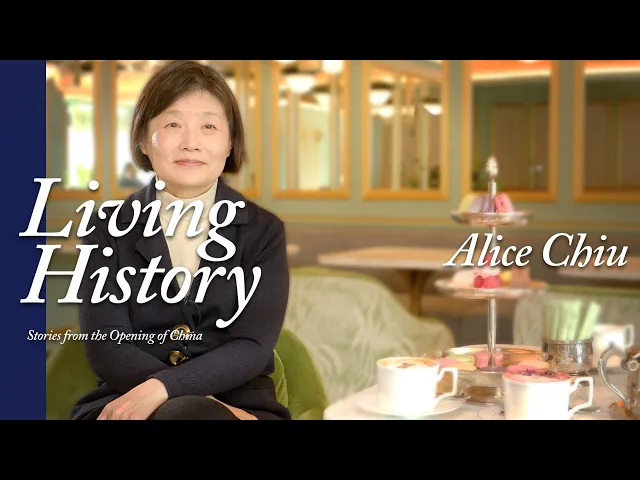
We were the first brand that they had brought in and I was very fortunate to grow up with that, with people who had vision. At the time when my father came to China I was like “Are you crazy? ” Today we are speaking with Alice Chiu.
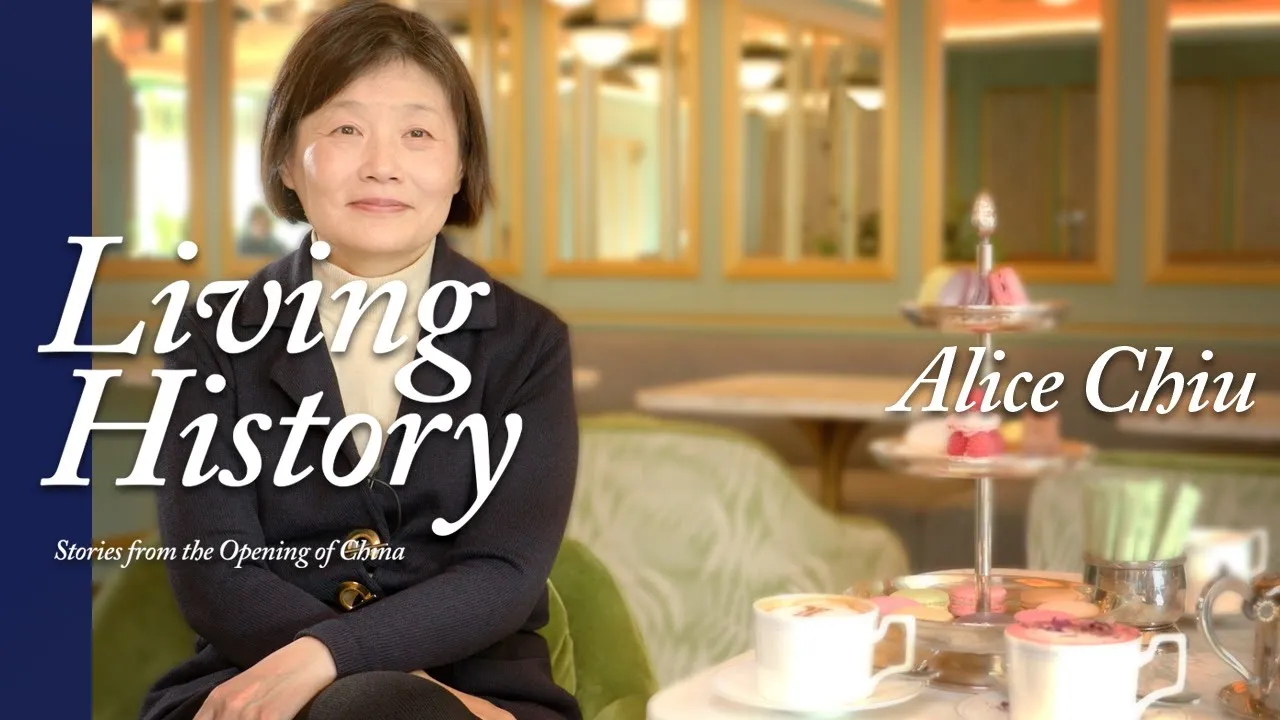
In 1991 she came with her father to China, the founder of Baxi ice cream. Having grown up in California, China in those days was a huge adjustment for Alice. But she figured it out and found her own success.
Alice had a front row seat to the changes in the food and beverage business in China. She helped bring both Häagen Dazs and Starbucks to China and most recently the elegant chain Laduree. We are very glad to speak with her today, Alice Chiu, Welcome!
Thank you for having me! So tell me about coming to China in 1991. I believe you told me there was not even a McDonald’s?
There wasn't. I almost starved. I was straight out of university, just graduated.
My parents came in 1990 to start Baxi. Baxi was launched in 1991. I came straight out of San Jose State University.
I grew up in Atherton, California, close to Stanford University. It's a very nice area. then coming here, although we lived in one of the best hotels at the time it was a Russian hotel, the Friendship Hotel in Beijing in 1991, it was a big adjustment because at the time I didn't even speak Chinese.
So if you have a Chinese face and you don't speak Chinese People look at you weird. So I came with the plant manager of Dryers. My father had hired the plant manager of Dryers Ice Cream from the US to come to China to help build the Baxi Brand and at the time it was being built in Beijing and he bought, at the time, the best ice cream equipment in the world, from Denmark.
Alfa Laval Hoyer, which also makes Tetra pack, so in 1991 we had already a top-notch factory. It was my first time, well, not in China, my parents came in ‘86 when China first opened up for a tour but it was my first time really working because I was straight out of university and we were… I grew up in a completely white neighborhood. So coming to China was a huge adjustment for me.
What was it like for you to come to China in 1991? You said before everybody around you was white and suddenly everybody looked Asian, looked similar? What kind of reactions would you get?
How did you make friends? How did it make you feel? So at the time most of my friends were Expats, were Americans.
It was easier for me to relate, there wasn't a huge Expat community but we worked with the Beijing Agriculture Department at the time and they actually had a few brands. They brought in Andrew’s, the jam, they eventually brought in McDonald's, and Simplot, who makes the French Fries for McDonald's worldwide. There were a few expats just within that group.
In the beginning I tried to immerse myself, I tried to find myself in the Chinese culture and I decided that did not make me happy so be who I am, I'm Chinese-American and I just gave up immersing myself in the Chinese culture and just take it as it comes. It took me about 10 years to actually be content. I'm very content now, living in China.
I'm very fortunate. I hate to say this but I've been here for 30 years 33 years, oh my gosh! Since 1991.
It did take me a while to find myself. To find my own space, my own place and be happy. I'm very happy here now.
I'm very fortunate. I think if I didn't come here I would not be where I am now. All the brands – the US is very saturated, I'm sure you know.
I’d probably be a middle manager somewhere. working in hopefully a big company, maybe. But here: I've seen China grow, I've seen China change.
I would say in 1991 “Every time I go back to the US” “I would go once a year, for one month” “I’d come back and there's a new building. ” China builds so quickly! I’ve seen the culture, the history, the people change as they accept western brands, a little bit of the western lifestyle.
And China has become a lot more open. So I'm very happy to be here. I would not have seen history if I didn't come.
I came because I felt obligated at the time. You know, I'm here in the US, partying. I had two sports cars at the time and my parents are in China.
I'm the favorite. So I came, because I felt obligated to and I don't regret it. Maybe in the beginning it was very difficult but I never regretted the decision to come.
I think I've met people from all over the world and I meet you guys. I would never meet all these different people. When I was at Baxi they sent Danish engineers in and I met the Danish engineers.
I've grown and seen things. I think if I were in the US I would never be as exposed because American people, I did, think the world revolves around the sun, revolves around the US. I think coming to China I've seen more, done more, and I'm very fortunate to be here.
I think a lot of people in China have childhood memories but what was it like for you guys to start this when the country had very little experience with free markets, private enterprises? Yes, at the time, my father came in 1990, I came in 1991. How it all started: he actually had retired for 10 years before coming to China.
And he said “Family meeting! ” “I want to bring my favorite food to the motherland. ” Because I went to the US when I was 2 years old I said “Where is the motherland?
” Not jokingly! I was actually serious. Because I grew up in the US.
I mean, I was Chinese-American. So my father wanted to bring his favorite food, which is ice cream, to China. He felt that real ice cream had a lot of vitamins, Calcium.
It's good for the body. So he brought it in 1990. He worked with the Beijing Agricultural Department, who is now Sanyuan Milk.
We were the first brand that they had brought in. I was very fortunate to grow up with that, to grow up with people who had vision. At the time, when my father came to China, I was like “Are you crazy?
” “HaHa, are you nuts? ” Look at what China is today, right? the infrastructure, the roads, the brands, for example: I saw a news article about Yum!
and KFC. Now China is I think 45% of their global revenues. but when we came in 1991 there were very few private restaurants, even Chinese private restaurants.
I came from a background of Michelin star restaurants, eating San Francisco, my father was a huge foodie. So I came from a background of a lot of diversity in the food I ate. When I came here and there was no McDonald's I was like “Oh my gosh!
” But I've seen the country grow I've seen the brands grow, I've seen the market grow and the market now is just so open, to new brands, to new investors. I'm just so happy that I could be a part of it. You mentioned the Department of Agriculture was the supplier for Baxi in those days?
No, the Department of Agriculture was my father's Joint Venture partner because in those days you cannot be a WFOE which means “Wholly-owned foreign Enterprise. ” You had to have some Chinese investment, A minimum of 5% I think at the time. My father had invested 70% in Baxi Ice Cream and the Beijing Department of Agriculture BAIC, now they changed their name to Sanyuan Milk they made themselves a corporation, they had 30%.
The uncles who brought them who was a part of my father's joint venture partner they were so supportive and they also taught me a lot about business that I think I would have never learned if I was still in the US. So a little story about McDonald's: When they brought in McDonald's, I call him Uncle Xing he was the one who negotiated with McDonald's. So he took me under his wing and he brought me to the McDonald's negotiations and told them I was a translator although my Chinese wasn’t so good at the time.
And then he bought a real translator and the McDonald's guy was like “Why does this person have two translators? ” He brought me to the negotiations to see how he negotiated with McDonald's. I still remember to this day that first meeting.
It was in 1992, I think. The McDonald's guy had said “You know, we don't want any conflict of interest. ” “McDonald's, when you set it up” “cannot buy anything from your subsidiary companies.
” And Uncle Xing said “I agree. Write that in the contract. ” “You cannot buy anything from our subsidiary companies.
” And McDonald's was like “Wait a minute! ” “There's something wrong with this. ” Because he was the Agriculture Department.
You have to buy everything from him. Chicken, beef, vegetables. So in the end, of course, that was not written in the contract because at the time there was no one else you can buy from.
I mean as a global F&B company. I still remember that tidbit from 1992. I think I'm just very fortunate.
What did you learn from the uncles who were doing business here in China and what did they learn from you? I learned a lot from the uncles in the government at the time I don't know if they learned anything from me. I felt a spoiled brat from California coming into China Americans, we think we're all that.
We still think we're all that. I'm Chinese-American, I know how we think. And when I came in I would say I was a little bit arrogant.
Not a little bit. A lot! You know, I came from a good background.
I was very fortunate in in the US. I had sports cars, shopped very young at major brands, Ferragamo, that type of thing. So I came in a spoiled brat and I thought I knew everything.
I think I Learned from the Chinese people a lot. I've obviously grown, I've been traumatized, so to tell you the truth me now - I don't think I would be friends with me back then because I would be like “Who is this arrogant spoiled brat sitting in front of me? ” I literally, I don't think I would be friends with myself.
So I Learned a lot from the uncles. I felt that they were very educated. In 1991, when people thought China was still a third-world country, I thought that.
I met all these people who were in the government, who were very refined and very knowledgeable and very open to global news, to global policies and I learned a lot. I opened my eyes. I think that the uncles were very open to a California spoiled brat and they taught me a lot.
the uncle from the Beijing Agriculture Department, even in his 70s he would tell me stories about when he first joined the Agriculture Department. Even in his 70s he took me cherry picking one day in Beijing and he climbed to the top of the tree. I like “Oh Xing!
What are you doing up there? ” He's like “I'm from the Agriculture Department. ” “Of course I can do this!
” They're very humble, even though they were very high up the food chain. I met the Vice Mayor of Beijing. I just thought they were very humble.
They were not hard to approach. I didn't feel they were intimidating. They were just very open and open to teach me new things.
So as I keep saying, I am very fortunate. Yes. So now you have made the connections, you have the machines, what happens next?
You have to launch the product. You have to go to market. With Baxi, we came in, we had the joint venture partner.
We have the equipment from Denmark, which was amazing by the way. I learned so much and we brought in the plant manager. So then with Baxi, we had to get the recipes, the formulas right.
The formula obviously is from the US, the ingredients, in the beginning, we also imported from the US. The strawberries, the cocoa powder. The cocoa powder was actually from South Africa.
All the ingredients were imported until we could find the ingredients here. The next thing was pricing strategy, marketing positioning in 1991. So when we first came out of course we had the small cups to buy, Baxi cups, which is 50 grams.
Then we had the three gallons for hotels, restaurants, entertainment. So the the small Baxi cups we sold for (at 1991) 3. 8 RMB.
And it caused a ruckus. Because. .
. “Are you crazy selling for 3. 80?
” Because at the time there was an ice cream “Xin Da Lu” which doesn't exist anymore. It was 50 cents – Wu Mao Tian. But we were made 100% from dairy and they were made from ice cream powder.
and I think what my father, when he launched, we also launched in the American Embassy, so when we launched what he wanted to tell the public was “This is dairy. ” “It's good for your kids, it's got Calcium. ” And one of the things that Chinese people even in the US always had was either lactose intolerance or Calcium deficiencies.
Bone density was a problem for Chinese people, whether you’re in the US or in China, so when my father when we launched, he was educating. How do you educate the market? Why are you 3.
80 RMB, right? And at the time in 1993 there was a television soap opera called 我爱我家 (I love My Home) and my mother actually made friends with them. My mother got Baxi into China world, into the government.
So we got into “Wo Ai Wo Jia” and one of the stars will always wear a Baxi T-shirt and be eating Baxi ice cream because it was summertime. At the time nobody knew about product positioning in TVs. We were just: it was summertime, they were hot.
We just kept supplying them ice. I mean we knew about product placement. But he would just keep eating ice cream on the soap opera.
So that actually shot Baxi to a new level and people would try it. Obviously Baxi has been on the market for about 30 years now. my father got older, of course, and he was around 75, 76.
We sold our share, 70% to Baskin Robbins at the time and in ‘99 Baskin Robbins sold their share to Sanyuan. So now it's 100% state-owned by Sanyuan. You must be very proud.
I am. I'm very proud. I'm proud of my parents.
They're part of history and one of the things I mentioned to Chris was I'm afraid that people will forget who founded Baxi, Why Baxi is here. I think 99% of the people don't know. Maybe even in the company itself don't know.
So I'm very proud to be part of that. I'm very proud my parents had the guts to come to China in 1990. I think my parents had vision.
At the time I was kicking and screaming. I felt obligated. I didn't come out of “Let's go to Hollywood!
” or something. But I'm glad I'm here. So what happened after Baxi?
I think after Baxi you decided to strike out on your own? Yes, so after Baxi I went over to Häagen Dazs. At the time Häagen Dazs had just, in 1997, launched in Shanghai.
And in 1997 Häagen Dazs spent 20 million RMB. That's a lot of money! To do a three-month TV advertisement on “My Fair Princess.
” I don't know you remember that TV show. We were primetime. It was hot back then.
We had three TV commercials a night and we were in the supermarkets, so sales of course during those three months went up. but after the TV advertisement stopped the sales went down. So we had internal discussions, internal meetings.
Do we spend another 20 million on TV advertisements? Or do we take these 20 million and open stores? We can open 3-5 stores, we can have them for 3-5 years, with these 20 Million and it could be a live billboard.
So obviously we opened our first store in Nanjing Dong Lu as a live billboard Everything was very luxurious. Our Tagline at the time was “An affordable luxury. ” What we came up with were ice cream creations.
Because Chinese people like to share. So the ice cream creations were 200 RMB at the time - in 1997. So it's basically: we wanted to show you an affordable luxury.
It's where the movie stars ate. We weren't saying “come to our stores” we would say “look at our stores. ” it's “Go to the supermarket and buy what the movie stars eat” for 75 RMB for a pint instead of 200 RMB.
So it's a good deal. Häagen Dazs used the stores as a marketing tool. It came from the marketing budget.
The stores did not have to make money. it was just a life billboard and that's what we wanted it to be. When we launched the first Häagen Dazs store in Beijing in 国际俱乐部, next to St.
Regis, I'm from the US I like all these ancient Chinese, Kung Fu movies and all of this. So we came up with this launch where one or two months before we launched the store we had people dressed up in ancient Chinese costumes like Huang Hou Queen's costume and they would be out in the major areas in Beijing handing out pamphlets: “The Queen is not happy what would make the Queen happy? ” So we had a whole one page advertisement in the Beijing Evening News.
At the time people read newspapers. So we had a one page advertisement. “The Queen is not happy.
What would make the queen happy? ” And we had 任贤齐Ren Xianqi, at the time A Taiwanese singer who sang 曾志伟 Zeng Zhiwei. So he was on the radio advertisement: “I will be here on this date” “If you can guess what would make the Queen happy you can see me.
” He was at the launch that day. We had held the launch in the parking lot and we had to hire 100 security guards because we knew there would be a lot of people there. We did this little skit where the king and queen with concubines would walk up to the throne and the audience is facing the throne.
so first you would have acrobats come in to try to make the Queen happy We made it into a show for the audience, of course To try to make the queen happy and of course she's still not happy. We had Shaolin Kung Fu people come in and do a Kung fu act. And that did not make the Queen happy.
So finally, we had Marco Polo come in with a 2m long ice-carved dragon boat with Häagen Dazs ice cream on top of it. And they took Häagen Dazs ice cream and fed it to the Queen and she smiled and it made the Queen happy. So all of a sudden the concubines tore off their costumes and had Häagen Dazs T-shirts.
Then 任贤齐 Ren Xianqi jumped out and sings a song: “I'm so happy. ” Then of course sings 心太软 Xin tai ruan, his famous song at the time. And that's how we launched Häagen Dazs in Beijing At this point we would like to take a moment to tell you about our project.
The period between China's Opening in 1979 under Deng Xiao Ping and the 2010 Shanghai Expo deserves to be remembered. We want to collect the memories that Chinese, Americans and other foreigners made together during these times. We hope you will subscribe to our channel to see many more interviews like this one in the coming weeks.
If you, too have a story that you think needs to be remembered we would very much like to hear from you. And we would like to thank the US Consulate in Shanghai for their generous support. Without their sponsorship we would not have been able to start this channel.
You said in the beginning you didn't like Chinese food and it took you a while to like Chinese food. How did you discover it and what became your favorite Chinese food? When I was young, I grew up in California.
I grew up in California, so California is very diversified. There is Japanese, Italian, French, American, obviously and Chinese. And I still love Chinese-American food.
You know, the Chinese sweet and sour. My team laughs at me when I order sweet and sour pork but I still do love Chinese food now. so in the beginning, when my mom finally realized I'm raising an American kid, she's like “this won't do!
” So she would make food for me ike 葱油饼 - spring onion pancake she would make it with peanut butter without the tone, to sort of transition me. it was a peanut butter youbing cake. pancake transition me and then finally go to 葱油饼 Cong you bing So she kind of fooled me that way.
She would make these more American-Chinese foods, then slowly transition me to Chinese. she made pot stickers, which I love and then made it into dumplings. so she had like 葱油饼 made with peanut butter.
It's actually quite good! You guys should try it sometime. And then used green onion in the end.
She would use products like that to transition me over. She would do oatmeal with milk and then finally do congee with sugar in it and then transition me to normal congee. You know, like savory congee.
The one with pork and 皮蛋瘦肉 with the century egg and the pork. So she would transition me over. But, of course, coming to China I started to eat more Chinese food and have more exposure to the different regions of Chinese food.
What's your favorite Chinese food today? Beijing duck! My favorite Chinese food ever since I was a kid was -IS- Beijing duck.
It’s one thing Chinese people may be spoiled with and they may not know you can in China go to any restaurant and order Beijing Duck like this but in the U. S. you had to, when I was younger, you have to order Beijing Duck 24 to 48 hours ahead of time.
So when we ate Beijing Duck it was for special occasions. So in my mind Beijing Duck brings happiness. Special occasions and celebrations.
I still love Beijing Duck to this day and I'm still amazed I can go into any restaurant and order a Beijing Duck right now Tell me about making friends. Family comes with you. But when you are an expat, when you come somewhere else, you have to do something very difficult: to make new friends as an adult.
Yes. How did you break the ice with people here? When I first came I wanted to try to immerse myself into Chinese culture.
When I first came I actually worked in Baxi in production. Like scrubbing floors! Not many people knew I was the owner’s daughter.
I actually came with the plant manager from Dryer’s. And they thought I was his translator except I couldn't speak Chinese. They're like “What kind of translator is this?
” My first friends were actually Chinese people that worked in production in Baxi. Also the Danish engineers who built the factory. So when I first came I made friends with the factory workers and I worked in factory.
I scrubbed floors. I knew how to run the machines in the factories. It was fun.
These huge 10 ton stainless steel canisters. We were scrubbing them and I learned a lot. My first friends were the factory workers.
Then I found that you cannot be so close with your with the employees. It's difficult to draw the line so you sort of have to put yourself out there to make friends. You have to be sort of outgoing, which I'm not by nature but it did make me more outgoing to be able to meet different people and hear those stories.
It's amazing to hear how people came here, why they came here, how the people ended up in Beijing with the brands that they were with. Where they came from, I thought their stories were amazing. You meet a lot of different people.
I even met Hillary Clinton. March 8th in the ‘90s. And the Secret Service people were so nice.
Because we served her ice cream. I would never have met those people if I stayed in the US. I've met people from all over the world, even movie stars.
It's amazing Which movie stars? I have to ask! Well, they probably don't remember but, as I told you, I didn't know I was Chinese in the beginning until I was 9.
I literally thought I was white because I grew up in an all-white neighborhood. Then my parents found out, figured out that this kid is not Chinese. So they got me into Bruce Lee movies.
I love Bruce Lee. And then eventually I got into Jackie Chan movies in the US. You know, they had English.
I got into Jackie. I was able to meet Jackie Chan here in China. He’s amazing, he's a very sweet guy.
Very approachable. I met NAME NAME NAME which is part of the Jackie Chan crowd and then NAME NAME I mentioned the singer and I met a few others, Chinese stars, the stars from Wo Ai Wo Jia, everybody was very nice I think you also told me that people were very attracted to Western brands, to something like Hard Rock Cafe, things like that? Oh yes, at the time, it was very early on, people were very attracted to the new brands that came in, like Hard Rock Café.
When Hard Rock Cafe came, I mean it's passe now, but when Hard Rock Cafe came into Beijing, I think it was in 1997-98 in Beijing and it was really the Hard Rock Café, I mean they had Eric Clapton come to Hard Rock Cafe and they really brought Rock n’Roll people in and people had to wait two hours to get into Hard Rock Café, at the time I got to know the Hard Rock Cafe management because we supplied ice cream to Hard Rock Cafe. So it was amazing, I would have friends call me at midnight and say “Alice, I know you know people at the Hard Rock Café. ” “We’re in a two-hour line, get us in!
” and I would say “No! ” and hang up. Because there were no real American foods on the street.
In the hotels yes. But not on the street, so Hard Rock Café came in with Buffalo wings and all my favorite American food and of course they had a huge bar, which at the time was very difficult to find in Beijing. So Hard Rock Cafe made a ton of money.
I was told that they got all their Capex back in the first year. They made a ton of money. They had their dinner, their meal times, you know, lunch, dinner, but they also had the bar times after 8pm.
They charged you an entrance fee and you’d get a free beer or soft drink with that entrance fee and then you would buy alcohol in there. So it would turn almost into a nightclub after 8 pm. There would be dancing they’d move the tables.
At the time there was nothing else like it. So Hard Rock Cafe did great at that time. Then, of course, they didn't change, then there was a lot of other competition so that it sort of died off.
How did people's expectations change? In the F&B industry, over the years I've been here in 30 years in the F&B industry there has been so much change. With the with the changes in the F&B industry I think in the beginning, when there wasn't a lot of competition people were just amazed by whatever came into the market.
At that time, like Hard Rock Café, you can just put like any restaurant name and it will be packed. But over the years, in 1999 we launched the first Starbucks in China. So now a 32 RMB cup of coffee is very common.
And most people think you opened the first Starbucks, it must have been so easy. No, it was not. Nobody knew who Starbucks was at the time, so we had to build the foundation, educate the market as my father educated the market with Baxi.
educating the market with Häagen Dazs, with Starbucks, every brand that came in you have to educate the market. and the market obviously has become much more sophisticated. Right now, the expectations from the target consumer is also much higher.
We have Da Vittorio, we have Michelin 3 star restaurants, we have UV, by the way I'm so amazed with Paul Pairet, so a shout-out to Paul Pairet, I want to go to your UV restaurant sometime I love Polux by the way, so it's just made the expectation of the quality of the food. Thirty years later it’s much higher. it took thirty years in time and it was step by step.
Nothing came overnight. Starbucks has been in the market for over 25 years and they've only really been popular in the last I would say maybe 15 years. It took a good 5 to 10 years for Starbucks to get popular.
When we first launched Starbucks we were one of the first international franchisees. So my boss David Sun, he was very famous in Taiwan, he brought McDonald's in 1986 to Taiwan and See’s Candies, Hard Rock Cafe to Taiwan. So he was very well-known in the F&B industry and I was very fortunate to work with him.
I learned a lot and he brought Starbucks to Beijing. When we first launch Starbucks we did not launch Starbucks as “This is coffee! ” “Learn how to drink coffee.
” We launched Starbucks as “We are a lifestyle from the US. ” We are a brand, so having the Starbucks logo on your desk makes you more sophisticated. It's like having an LV purse.
We were launching an experience, a lifestyle. We were the team that opened the Forbidden City store. That's a whole other story!
It's completely different from what the news made it out to be. Well, there was an article in the Washington Post that said “There's A New Stink In The Forbidden City” “It's the Smell of Coffee. ” So in the news they made it like Starbucks forced its way into the Forbidden City.
Remember: this is the Forbidden City! It's owned by the Beijing government. You cannot force your way into the Forbidden City.
And in the beginning they asked us to come in. I did not want to go in because I did not feel that the Forbidden City had our demographics. Because at the time our demographics were high-end, white-collar expats.
Forbidden City is tourist, right? It's tourists and it's Chinese tourists who’ll never come back. So why would they come into the Forbidden City?
To see the beautiful Forbidden City and spent like 20-30 RMB on coffee? If I were them, I would rather buy a souvenir from the Forbidden City They made Starbucks go into the Forbidden City. They asked David and David of course, being my boss said “Just open that stores, no complaints.
” “Just do it. ” So we opened Starbucks, opened the 20 square meter store. It was very difficult because everything is ancient.
You can't really touch anything. It was our most expensive store, insurance wise, because the insurance brokers were like “If you spill coffee onto that sidewalk” “it's 1,000 years old or 500 years old and will cost us a fortune. ” So the insurance was rate was horrendous there.
So the Forbidden City: we were asked. Starbucks was asked to go into the Forbidden City and personally at the time I was not a huge fan of going in because I just felt it was not the demographics of Starbucks.