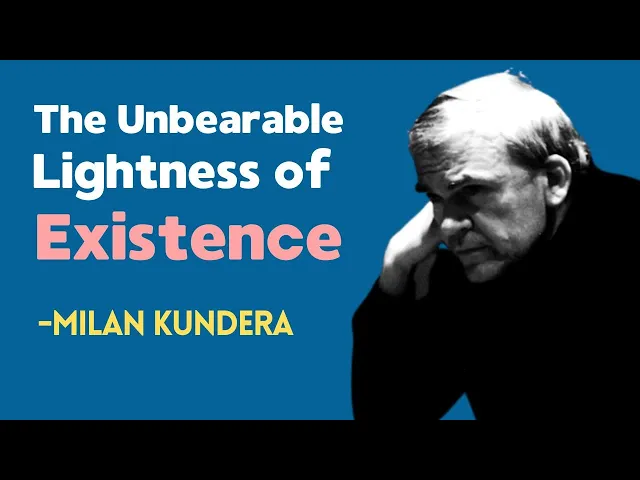
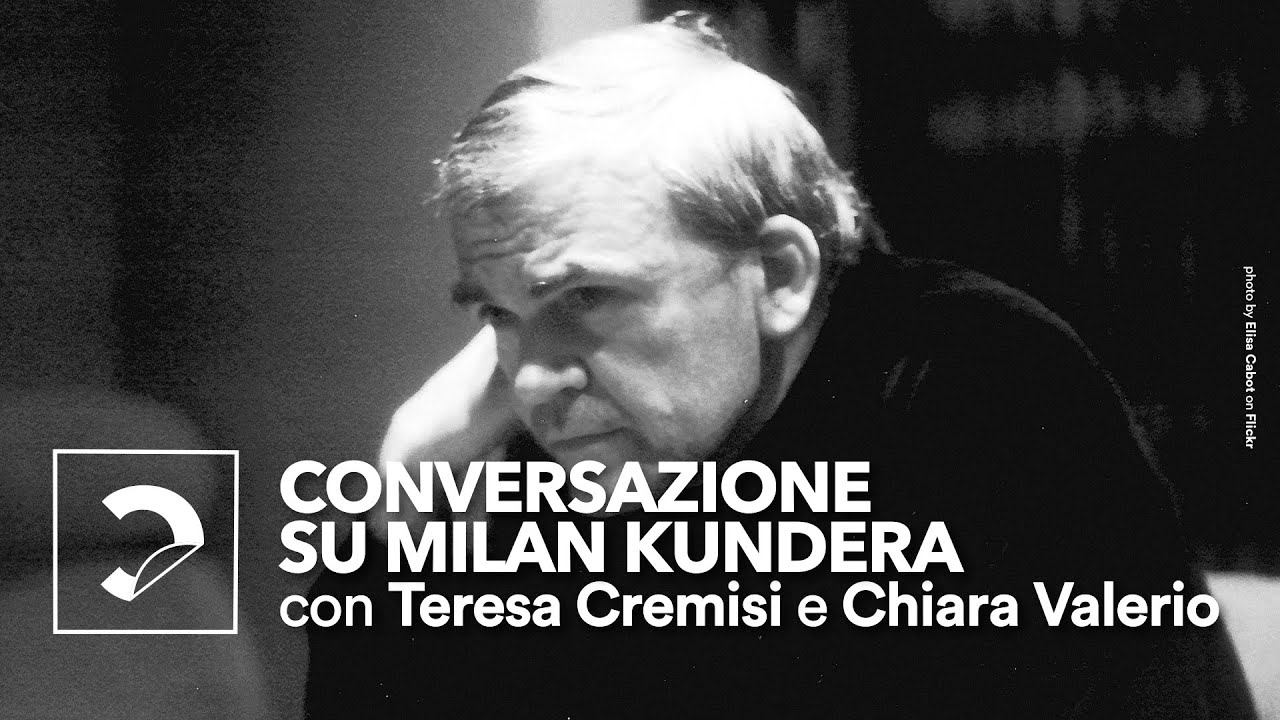
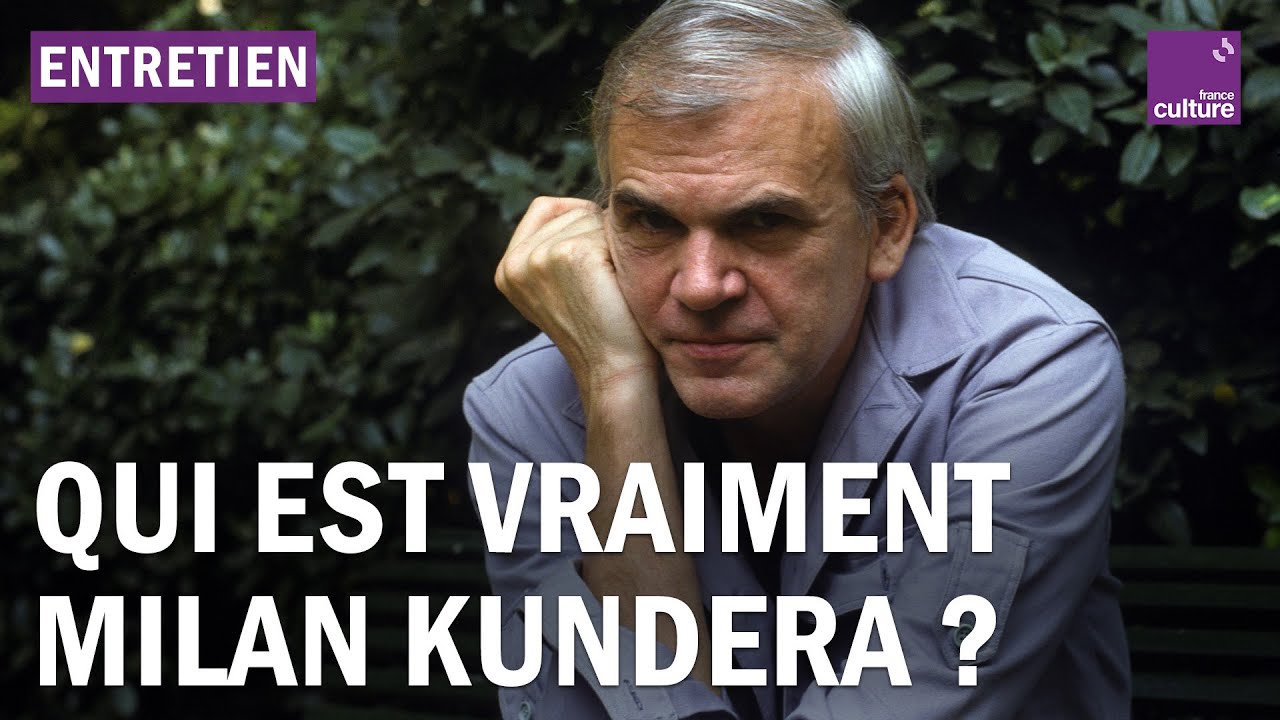
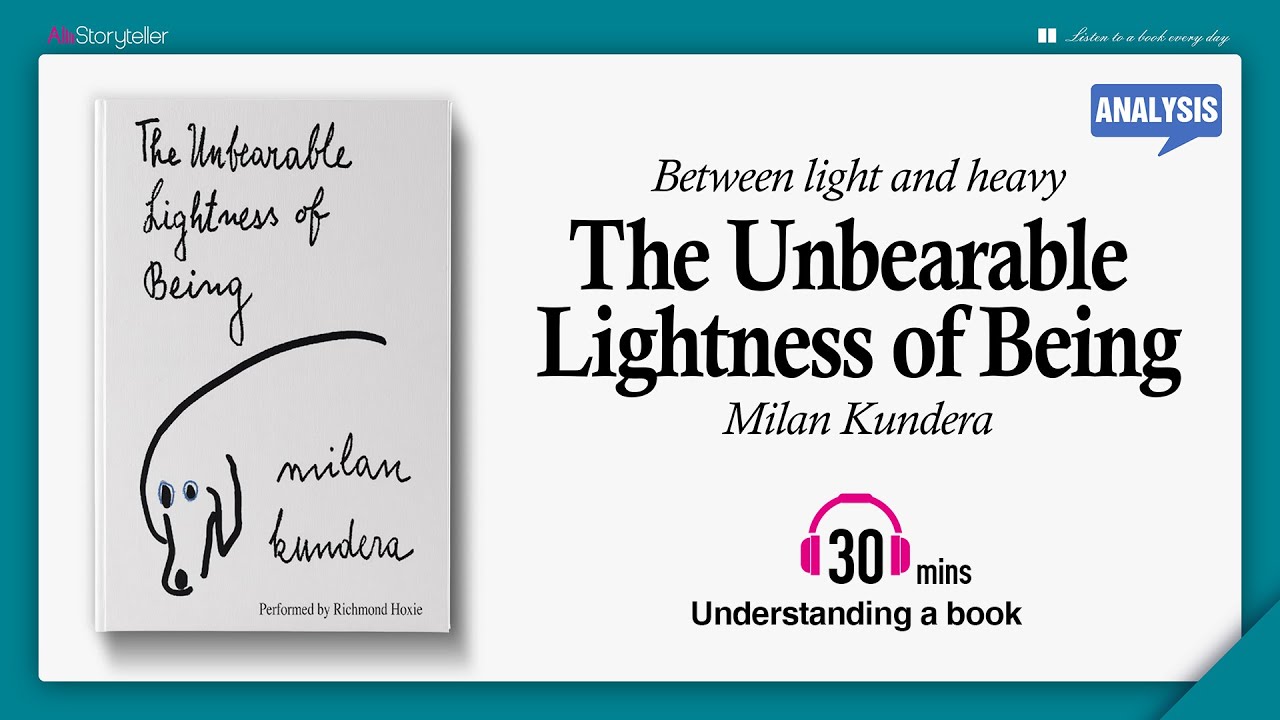
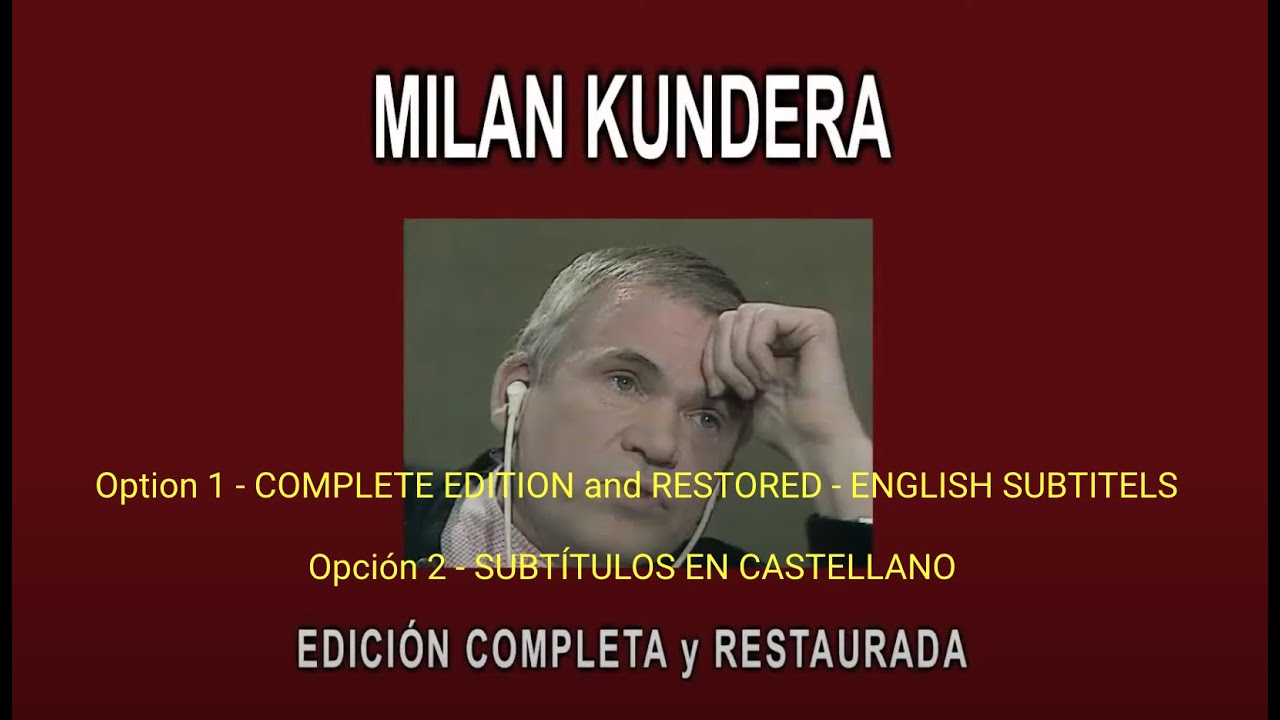
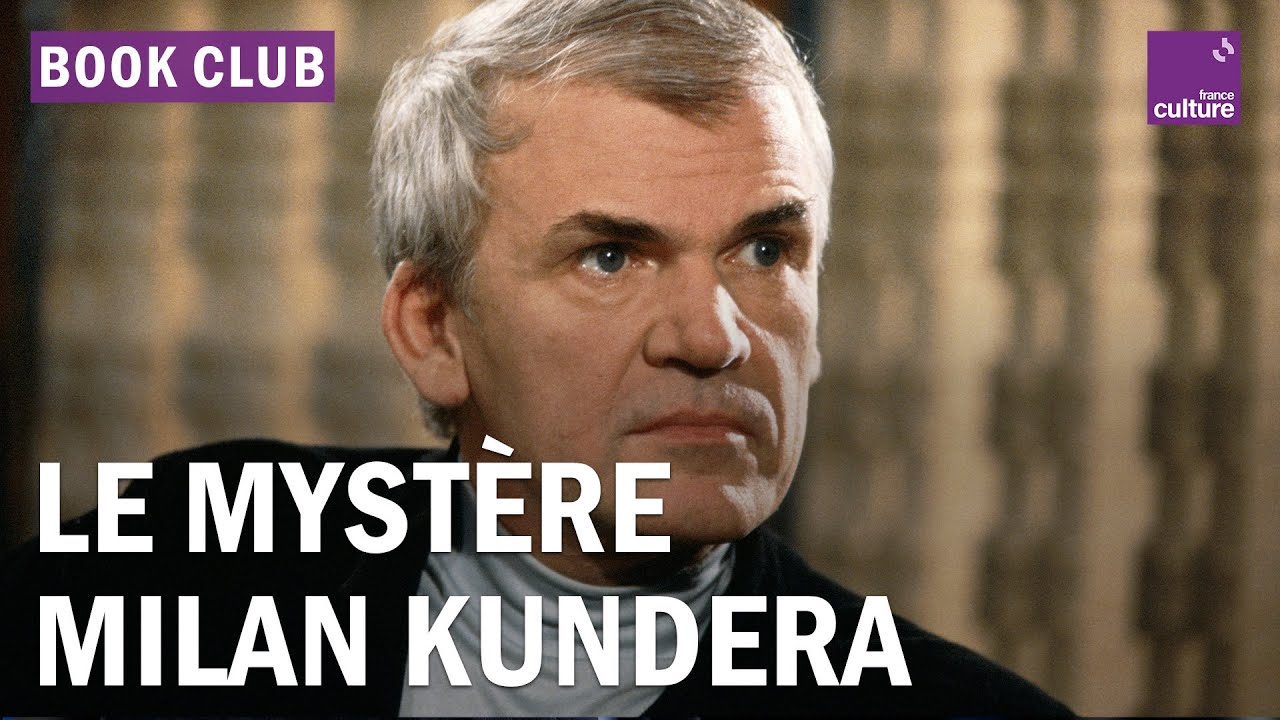
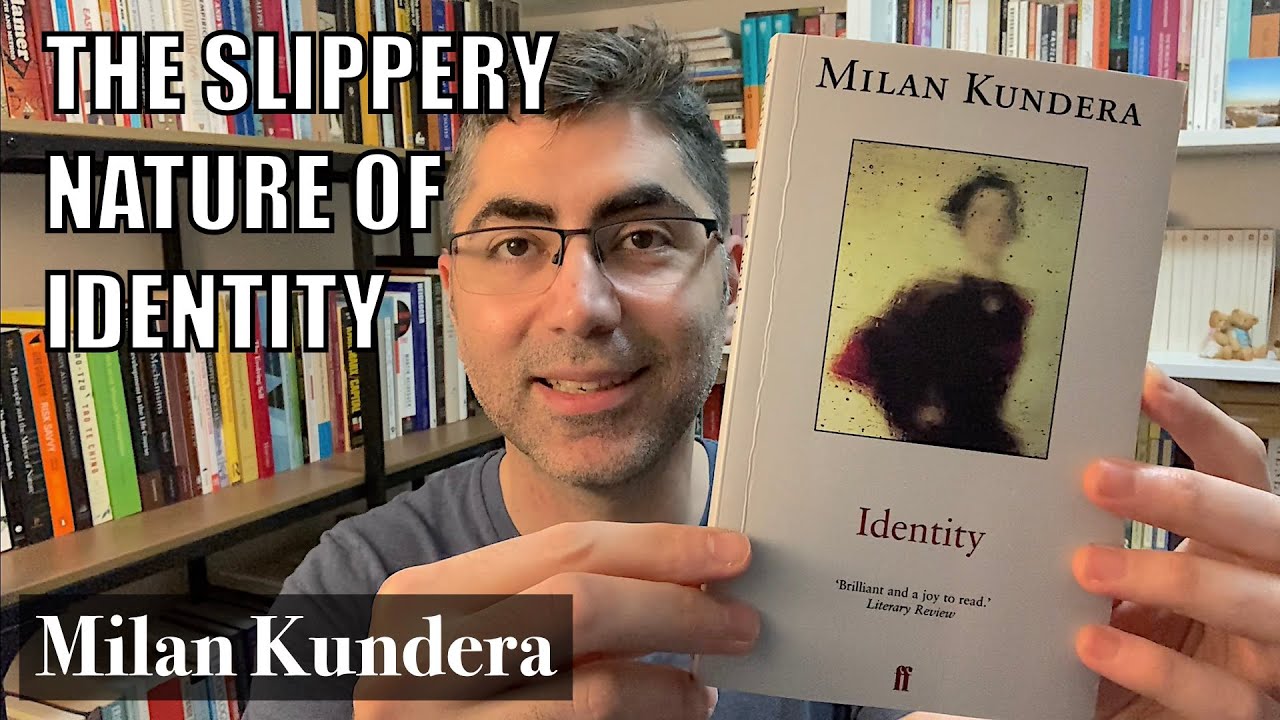
when you think of famous Czech writers from Kafka is perhaps the most well-known name but he didn't write in check he wrote all his books in German so technically he wasn't a Czech writer then who is the most famous Czech writer Milan kunderes perhaps the second most famous writer from that country but he is a problem he was technically French and wrote and published some of his books in French first not only that he actually considered himself to be a French writer but why I'll answer that question later but first let me tell you about his life his novels and style of writing and why he's considered one of the most important writers from Central Europe melanchondale was born in 1929 and passed away in 2023 although he was born in the Czech Republic back then Czechoslovakia he lived his last 50 years in France where he became a French citizen in 1981. he was born into a middle class family his father being a Pianist and his mother a teacher thanks to his father the Influence of Music can be found in his writing despite his interest in music when aged 18 instead of joining an orchestra he joined the Communist Party of Czechoslovakia in 1947. you could say communist party is perhaps a bit similar to an orchestra led by one conductor and all the members act in uniform fashion however despite being a devout party member his interest was in the creative Endeavor so he enrolled to study film in the capital Prague perhaps his creative mind was in much of a use at the party that it relies on Conformity he was expelled from the Communist Party in 1950.
two years later he started teaching world literature at the Prague Performing Arts Academy teaching literature is one thing but being part of a group is another thing also he had a grand ambition of changing the Ponte and who knows thinking he could change the country as well in 1956 he rejoined the Communist Party a second marriage is set to last longer but it didn't it wasn't his height because he was a tall man at 6-1 or 185 centimeter it was because he had some radical ideas and wanted to reform the Communist party for example he wanted Czechoslovakia to have a uniquely different identity compared to other nations like Russia Poland to the East and France and Germany to the West his dream of making Czechoslovakia and stand strong and independent was crushed when the Soviet Banks rolled on the streets of pierog in 1968. it wasn't Putin that time because he was only 16 back then it was Leonard Brezhnev he was worried that the Czechs and slovaks were becoming too liberal in their ideas and possibly leaving the Warsaw packed and worst yet becoming a NATO sphere of influence the Warsaw Pact members led by burjnev took a preemptive measure to a stop at all seeing his dream of Reform crushed by the Soviet tanks and later the government Banning his books he made a trip to Paris to get away from all the drama and headaches in Paris instead of falling in love with the city he made some new friends among those friends one name stood out it was Claude galimart from the publishing giant galimart who published the likes of Marcel Bruce and Albert Camus incidentally claude's cousin Michelle galimar died in the same car crash that killed Albert Camus in 1960. Claude galimar being a shrewd businessman saw a talent in Milan kondera so he persuaded him to move to Paris where he could publish freely so in 1975 he moved to France his earlier books were written in Czech but later he exclusively wrote in French he died in 2023 age 94.
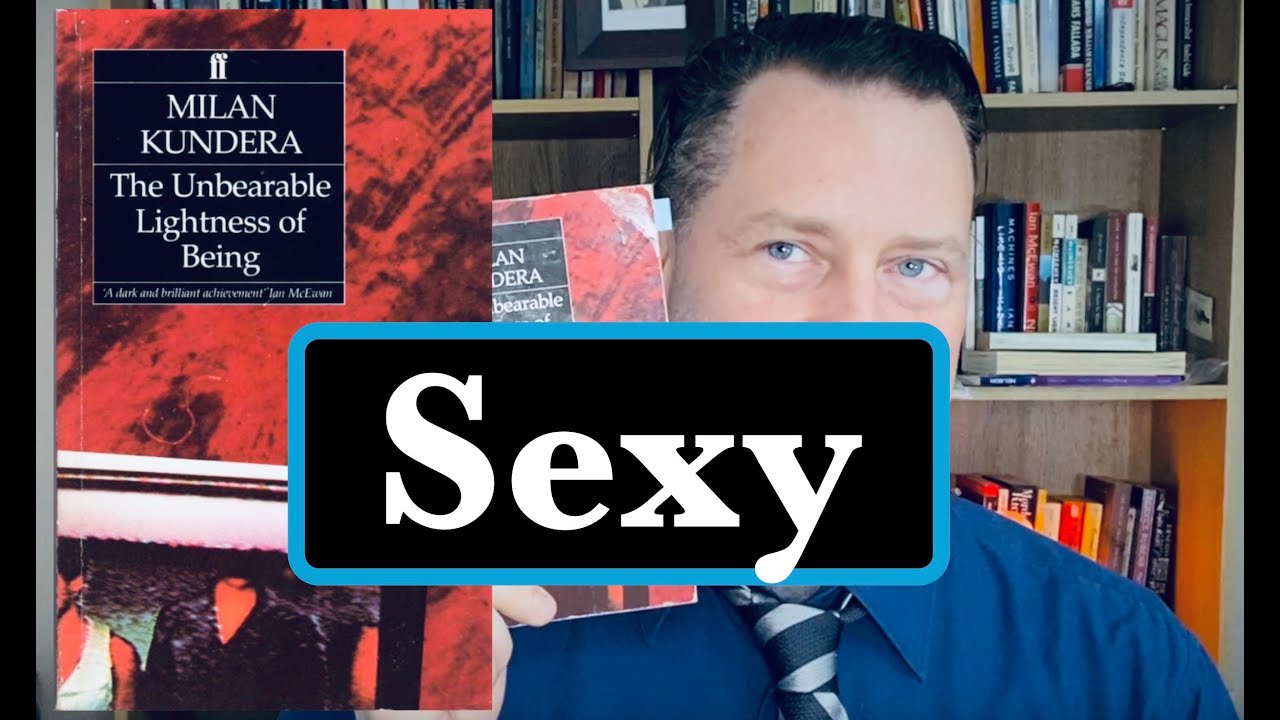
he wrote 10 novels two short story collections three poetry Collections and seven books of non-fiction mainly about literature and the Art of writing he also wrote numerous essays and newspaper articles here I'll discuss three of his best works kundara's first novel the joke was published in 1967 in which he tells the story of his expulsion from the Communist party over a silly joke he makes at a school to impress a girl back then optimism about the future was the main selling point of Communism just like Christianity selling heaven in their afterlife the protagonist Ludwig makes a joke comparing optimism to Opium alluding to the famous quote by Karl Marx that religion is the opiate of the masses in other words the Communist optimism is just another religion that promises a good future like heaven however his joke is betrayed by the girl who fills it's her duty to report it to the party now no longer at school he is drafted to the military service almost akin to a labor camp whenever he has a chance to take a leave he tries to chat up girls but his attempt to sleep with a girl fails at the very last minute so his past life is nothing but serious of failures and betrayals now years later he's a scientist but he has not forgotten those days he wants to take revenge how well the only way he can take revenge is to seduce his enemy's wife when he finally sleeps with her she tells him that she is separated from her husband and now she is ready to divorce him their sexual relationship has little or no impact on their marriage because it was over long before so he fails in his attempt to take a genuine Revenge so his whole life seems like one big joke the fact that he remembers all those years is funny itself we all hold grudges some for long and some for a short time but Ludwig has a very long-term memory the novel has a Slavic pessimistic tone at the very start there is the quote optimism is the Opium of mankind a healthy Spirit stinks of stupid people visiting Eastern Europe would often notice that generally people don't smile reading this novel you understand why Marxism inspired by a German Karl Marx advocated an optimistic future took a strong route in Eastern Europe and this novel shows that the root was very much artificial imposed from above in other words it's a joke played on millions of people published in 1979 the book of laughter and forgetting is not your typical novel it seems more like a collection of short stories than a cohesive novel part 1 titled lost letters tell the story of a man who dated an ugly woman in an attempt to erase the memory he destroys her love letters but in Kafkaesque twist he is arrested and jailed for years not just that his family and friends also spent time in jail the lesson is don't try to erase the love you once had for an ugly woman this part is basically trying to make fun of how we change at times we fall in love with an ugly woman and years later we laugh at ourselves and the same way as celebrities loved by everyone and then upon some Revelation they are banished in part 4 the last letters again resurface this time the letters belong to a woman who is desperate to get them first tamina's hopes rest on a female friend to bring the letters from Rock but the friend's emotions get the better of her and she cancels the trip then Tamina uses her sexuality to recruit a man for the job after the sex Clarity hits the man and he refuses to help the letters remain lost part 5 of this book is about litost a kind of misery induced torment only known to the Czech people you could say it's a Slavic thing you can see this in the works of Dostoevsky too the story is about a student who falls in love with a girl but despite his attempt he's unable to rekindle his love it is the unrequited love present in many dossky's short stories the same is true and some of turgenev's stories it's hard to characterize the book as the book is a mix of many stories the only theme that runs through the book is failure the failure to get rid of bad memories the failure to get your letters and Diaries the failure to consummate your love in my video on France Kafka I just discuss that failure perhaps best characterized kafka's Works in life and this book also depicts failure in the face of utter failure you cannot do anything except either love or forget hence the title of the book is laughter and forgetting published in 1984 the unbearable likeness of being is Milan kundera's most well-known book set in the 1960s and 1970s in perog it tells the story of Tomas a married surgeon who apart from cutting people's bodies sleeps with a lot of different women he has turned weaponizing into an art form or you could say he weaponizes with the Precision of a brain surgeon also I should point out that kundera wrote the book after living in France for almost 10 years France is known for its great womanizer it's being as an art form most famously depicted in the 1782 novel The Dangerous liaison by Lac loss when the Soviets invade pierog in 1968 Thomas has to stop his surgery in weaponizing so he flees to Switzerland while there he continues his hobby of sleeping with a variety of women when his wife is fed up with eating swiss cheese every day and wants to return to parag because she used to find meaning in her job as a photographer while now sitting and doing nothing Tomas has a difficult choice to make should he stay or follow her finally he realizes he loves his wife too much so he returns to Prague thinking he can return to his surgeon job but unfortunately the authorities strip him off all his medical license after he refuses to sign a document renouncing his past article he wrote against the regime now no longer a surgeon but being a resourceful man Tomas gets a job as a window cleaner now while unable to do surgery he continues in his bedroom fun if you get my terrible innuendo incidentally the English singer George formby's famous 1936 song is titled when I'm cleaning windows as an innuendo it's perhaps unlikely kundera heard this song anyway he uses window cleaning and in order to sleep with women his wife too decides to have an affair one to get a taste of it and two to get Thomas stop his conquests but it turns out she feels worse after doing it it is not for her and also the man she sleeps with turns out to be a spy she then persuades Thomas to move to the countryside just as the couple are getting their lives back together the ultimate tragedy hits them they both die in a car accident just like that at the heart of the novel is this idea that life is so insignificant even meaningless in the face of how old the universe is but more importantly that everything in the universe is repeated endlessly and Nietzsche's philosophy the Eternal recurrence is the idea that while time is infinite matter which we are part of is finite in other words since time is forever Mata must recur or repeat itself as a life form our individual life comes meaningless and the vastness of the universe and infinite time I've discussed Nature's philosophy in great detail in my video on his book Thus Spoke zoratustra but kundera argues against Nichi and eternal recurrence quote human life occurs only once and the reason we cannot determine which of our decisions are good and which bad is that in a given situation we can make only one decision we are not granted a second third or fourth life in which to compare various decisions Nietzsche was influenced by Eastern philosophy of Hinduism so he accepted the cyclical nature of life for kundera a proud European however everything moves in a linear fashion so everything we do is unique and cannot be repeated quote and therein lies the whole of man's plight human time does not turn in a circle it runs ahead in a straight line that's why man cannot be happy happiness is the longing for repetition in other words we only live once so you might as well do what you love kundera's protagonist Tomas uses his time to sow his seeds as far and wide as possible by Sleeping with many women the idea that everything happens once and you cannot return to that same thing gives him the freedom to do what he enjoys which is having multiple sex partners which is a male imperative from a biological perspective because of human sexual dimorphism the two genders must meet and corporate continually species this sexual imperative gives rise to a concept such as love quote he suddenly recalled from Plato's Symposium people were hermaphrodites until God split them in two and now all the halves wander the world seeking One Another Love is a longing for the half of ourselves we have lost Thomas's wives however has no such imperative to spread her eggs around instead she loves raising cattle reading books and surprisingly feels disgusted by her own body she even accepts that men are wired to be the conquerors because the imperative to find a mate falls on male's shoulders not females it's no surprise that women prefer commitment while men prefer casual relationships Thomas would have been lethal in the age of Tinder at one point a conversation between a couple reveals a difference between the Sexes the woman says love is a battle and she's prepared to fight to the end the man says he's not willing to fight such battle the old adage that women love to have love while men love to have sex but there's a paradox here while loving sex might be two different things here even sex has a story itself before sex and after sex Tomas is like two different people he loves the promise of Freedom sex offers it's a release both mentally and physically but after the ACT he's there seems to be a heaviness he feels he reminded me of the Japanese classic the tale of Genji in which the womanizing prince feels a kind of Anguish after every sexual Conquest despite this anguish Genji however cannot stop chasing more women Thomas is a bit similar here sex offers him Freedom released from the heaviness of life but post sex Clarity brings the heaviness back so there's the Paradox apart from Nature's philosophy you can also see jean-paul's heart's assertion that life has no meaning or Essence at the heart of existence is nothingness for thought this nothingness is an opportunity for each individual to carve a unique meaning for himself or herself but for kundera these nothingness can be unbearable to destruct himself Tomas uses sex or chasing a multitude of women as an escape from this unbearable lightness of existence from a purely evolutionary perspective we have one job to survive until puberty in order to reproduce since men don't have to deal with pregnancy and childbirth they can have an endless number of Partners but not all men can do this so tamas is in a way and an exceptional man smart educated has a prestigious job good income dashingly handsome Etc so women are attracted to him Leo tolstoy's influence can also be seen in the novel first there's a female dog named karenin perhaps named after the husband of Anna Karenina who is a creature of habit and hates change Ironically in tolstoy's novel his wife left him because he was too boring he however Thomas's wife is going nowhere despite his endless infidelity I guess perhaps because he is entertaining other women while karenin was a faithful and devoured husband the second influence is the title of this novel may have come from tolstoy's War and Peace this phrase is uttered after the death of Prince Andre balconski in War and Peace the scene of countless people dying for no good reason is depicted to show the insignificance of human life in the face of history when Wars are over people talk about Victory not the countless dead soldiers it is history that is significant not the individual men who die ultimately conderas and bearable likeness of being is about Freedom versus responsibility freedom is lightness and responsibility is heaviness but when we try to avoid all responsibility it brings its own heaviness so life is just a paradox for example freedom is not freedom without responsibility as soon as you take responsibility for one thing or make one choice you free yourself from all other responsibilities or choices you're stuck with one decision one choice and one responsibility that is a form of Freedom as well as and freedom in most of his novels tragedy is a common theme the biggest tragedy is of course authoritarianism that doesn't allow people to breathe freely in the face of such Darkness we saw in the works of his fellow Countryman Franz Kafka the reaction is often to love and kunder's works it's tragedy that triggers comedy another important theme is individual Freedom against the regime when it comes to the battle between individual and the authorities there's only one winner prison stares at anyone who dares to challenge the regime in kunder's work an individual life is significant valuable and important despite the fact history doesn't think so totalitarianism doesn't care about the individual as it focuses on the totality the collective and the group another theme common in kunder's work is existentialism Martin Heidegger's philosophy posits that life's between two lines birth and death in other words we have a finite amount of space and time so condera takes this idea on board a lot of his characters are displaced torn between two different places this makes sense because he was exiled to France after living half of his life in Czech Slovakia could being in a foreign country means walking a tightrope high above the ground without the net afforded a person by the country where he has his family colleagues and friends and where he can easily say what he has to say in a language he has known from childhood politically too he wrote about the light of Central Europe somehow suspended between the liberal West and the Communist East he wished he could put Central Europe on its own pedestal so spending space is one Element but suspended in time is another common theme in his writing a lot of his characters are torn between past and present and the joke Ludwig cannot Escape his past mistreatment and even tries to take revenge on those who did him wrong in the book of laughter and forgetting the same is true about tamino who is desperate to get back her letters and Diaries of her past but somehow all her attempts fail which brings me to another common theme in his work kundera admired Franz Kafka if one thing they have in common apart from their country of birth it is the theme of failure Kafka failed to marry failed to have kids and failed a writer in his lifetime in his novels too individuals fail against the authorities he even failed to destroy his books as he instructed his friend to burn them in kunder's work failures everywhere Tamina fails to get her letters Ludwig failed to take revenge tamas fails to love his wife and his wife fails to convince him to stop weaponizing despite the pessimism that permeates in his work he sheds light on into the psyche of our shared human condition that life is not a Disney fairy tale while the unbearable lightness of being is his most famous novel I personally think the joke is his best work simply because it is his first novel it has a unique voice and is written in a very honest way I think kundera's style is to have an idea topic or concept and then mold a character that fits that idea concept or Topic in other words he Rhymes Like a philosopher or a historian rather than a creative novelist greatest novelist or Storyteller start with a character and then try to expose their ideas and concept through difficulties and challenges and their life journey in other words humans come first and ideas come second and literature while in philosophy ideas tend to be first and characters tend to be secondary I think condero was stuck in a philosophical rational skin rather than an emotional creative skin I think the joke is his best character-driven novel perhaps he wrote it just to tell a story that was raw honestly unique and later he told stories primarily of ideas and less of people I think he was a better philosopher than Storyteller even he was a better critic than fiction writer I think kundera felt more liberated in his non-fiction Than Fiction work I think his fiction feels very restricted constrained in his characters or books to represent an idea Concept in his fiction condera appears more like a puppeteer than a free-flowing creative writer line Dostoevsky or Haruki murakami if you want to be a writer or if you like literature and art in general you will enjoy his essays more than his novels two of my favorite collections are encounter and the curtain the ashes are short and often very insightful on European writers and artists condera was a proud European in his SS he celebrates that now back to the question I posed at the beginning why did he want to be known as a French writer not a Czech writer the first reason is a bit technical between 1981 and 2019 he only held a French citizenship because Czechoslovakia revoked his citizenship in 1979 as a result for two years Between 1979 and 1981 he was stateless until he was granted French citizenship in 1981.