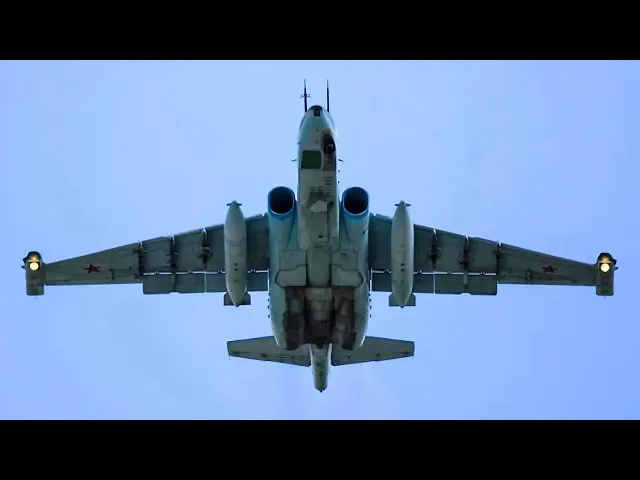
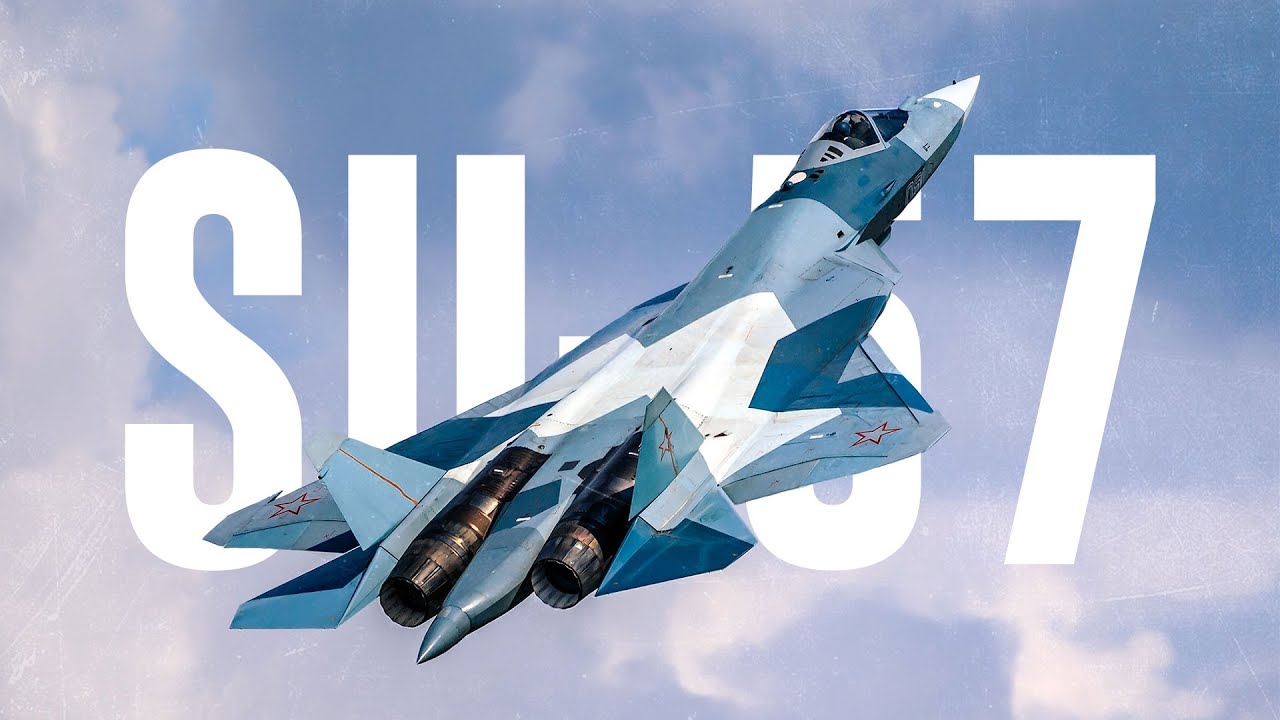
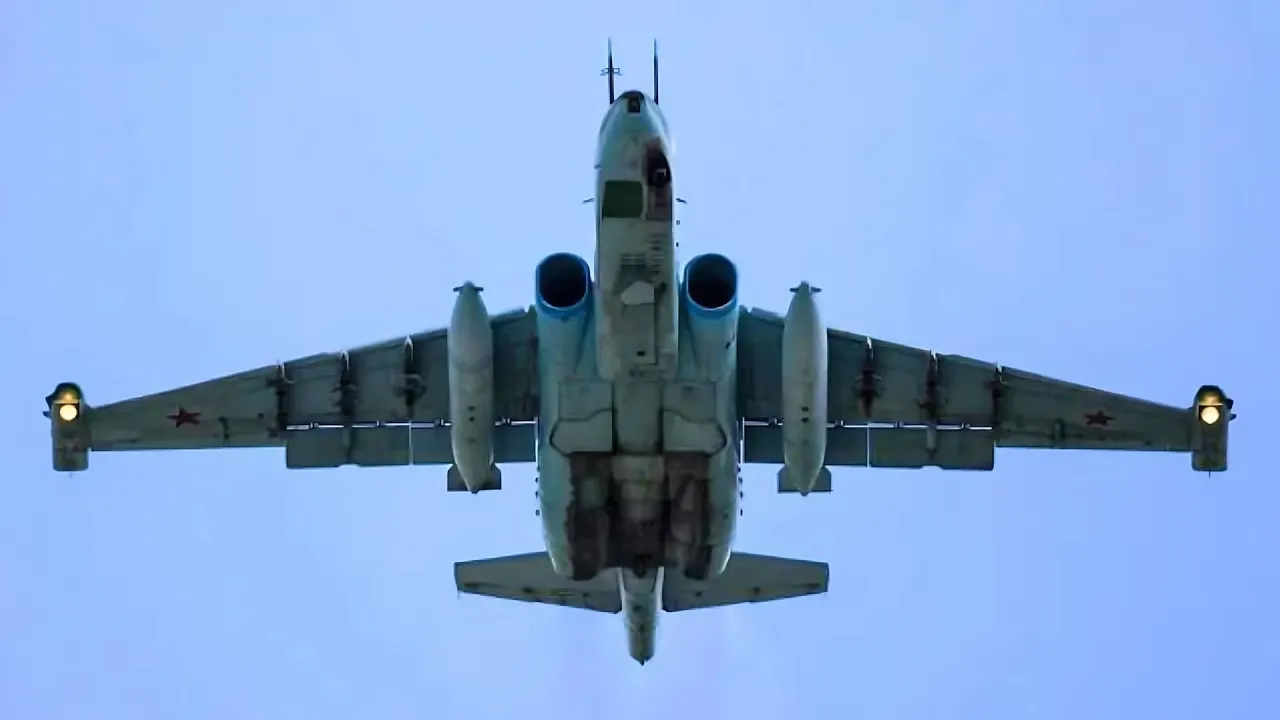
In the contested skies over Ukraine in 2024, a Soviet-era Sukhoi Su-25 streaks across the sky, its familiar silhouette unchanged since the days of the Cold War. But as it approaches its target, something is different, as the pilot releases not Russian-made munitions but a NATO-approved French Hammer-guided bomb. Born in the 1970s as the USSR's answer to the American A-10 Warthog, the Sukhoi Su-25 was built to survive intense ground fire during close support missions.
Its twin R-95Sh engines, each producing 9,900 pounds of thrust, push it to speeds over 600 miles per hour. With thick armor plating shielding the cockpit and a powerful twin-barrel autocannon that can fire 3,000 rounds per minute, the model has proven its worth in dozens of conflicts around the world. From Soviet factories to desert battlefields and now carrying Western-made weapons over Eastern Europe, the Su-25 has evolved far beyond its creators' expectations.
Today, in Ukraine's contested airspace, this modern-day "Flying Tank" continues to adapt. As these battle-hardened aircraft crisscross the skies, they fly for both sides of the conflict. The same robust airframe that once symbolized the Soviet might now embodies the complexities of 21st-century warfare, serving in ways its designers never envisioned.
As the Cold War reached its zenith in the 1960s, the United States Air Force poured resources into strategic bombers for nuclear deterrence, while the Soviet Air Force, or VVS, focused on supporting ground armies through its Frontal Aviation branch. By the late 1960s, Soviet military leaders faced a stark realization: their existing fleet of fighter bombers - the Su-7, Su-17, MiG-21, and MiG-23 - excelled in high-speed engagements and strategic strikes but fell short in the crucial realm of close air support. The Vietnam War had exposed a critical gap for an aircraft that could plunge into chaos, withstand punishment, and deliver devastating blows to support troops locked in ground combat.
These front-line missions demanded a level of precision and resilience that the current Soviet aircraft simply couldn't provide. Soviet minds turned to a World War 2 legend for inspiration, the Ilyushin Il-2. This propeller-driven 'flying tank' had proved its worth in the iconic Battle of Kursk in 1943.
Heavily armored and bristling with cannons, rockets, and bombs, the model decimated Nazi tanks and shattered enemy morale. Now, as East-West tensions simmered at their highest point, the Soviets sought to recapture that spirit in a modern design. In March 1969, with the stakes higher than ever, the Soviet Air Force issued a challenge, calling for a new close-support aircraft built for the unforgiving realities of modern warfare.
The competition drew entries from the titans of Soviet aviation: Sukhoi, Yakovlev, Ilyushin, and Mikoyan. After intense scrutiny, the Sukhoi Design Bureau emerged triumphant with their T-8 model. Six years of rigorous development lay ahead, but the foundation was laid for the aircraft that would ultimately be renamed Su-25 and would soon prove its worth on battlefields across the globe.
Meanwhile, on the other side of the Atlantic, the United States was simultaneously developing its own response to such a challenge. The Sukhoi Su-25, a subsonic, single-seat, twin-engine jet aircraft, was designed to obliterate enemy armor if the Cold War turned hot, ready to unleash devastation on the North German Plain, where massive tank battles were anticipated between NATO and Warsaw Pact forces. Codenamed Rook, this modern Flying Tank’s development coincided with the United States Air Force's A-10 Thunderbolt program, and while the Su-25 shares some design philosophies with its American counterpart, it emerged as a distinctly Soviet solution - smaller, faster, but with a shorter range and lighter payload capacity.
Two R-95Sh turbojet engines, each producing 9,900 pounds of thrust, power the aircraft to a top speed of 605 miles per hour. With a wingspan of 47. 1 feet and a height of 15.
7 feet, the Su-25 can reach a maximum takeoff weight of 38,800 pounds. Designed for low-altitude flying to evade long-range surface-to-air missiles, the Su-25 was vulnerable to anti-aircraft guns. To counter this, it was equipped with up to twenty-five millimeters of armor plating encasing the cockpit.
The Su-25's true standout weapon is the Gryazev-Shipunov GSh-30-2 30mm twin-barrel autocannon, which can fire up to 3,000 rounds per minute. Additionally, the aircraft can carry a payload of up to 9,700 pounds on its ten external hardpoints, including unguided rockets, bombs, and air-to-ground missiles like the Kh-25 and Kh-29. It can also be outfitted with R-60 air-to-air missiles for even more self-defense.
The single-pilot cockpit layout is optimized for battlefield awareness, with simple and durable avionics suited to low-altitude operations. A nose-mounted laser rangefinder assists with target acquisition, ensuring all shells hit their mark. Following a successful maiden flight on February 22, 1975, production of the Su-25 began in 1978 at a factory in Tbilisi, Georgia, just a few years after the A-10 entered service.
The following year, eager to see if this new war machine was all it was cracked up to be, top Soviet leadership decided to send the model to a brutal terrain with relentless insurgency to be put to the ultimate test. The Su-25 was armed with a substantial array of weapons specifically designed to obliterate enemy troops—and that firepower was exactly what was needed in the Soviet-Afghan war, where Russia intervened to support Afghanistan's communist government against insurgent groups known as the Mujahideen, backed by the West. In 1979, before its official introduction into service, two prototype Su-25s were dispatched to Afghanistan to undergo real combat testing.
Within weeks, the model delivered on its close air support promises, proving its lethality by decimating Mujahideen convoys, fortified positions, camps and bases, artillery positions, infrastructure, enemy personnel, and more, becoming a total game-changer in the early stages of the war. Once the Su-25 officially entered service, beginning with an initial air unit in 1981, it quickly became the Communist’s workhorse fixed-wing attack aircraft, frequently teaming up with Mi-24 attack helicopters to deliver devastating air support for Soviet armored units. However, as the war dragged on and the NATO-backed enemy began to receive American and other Western technology, the new airborne weapons also exposed some major vulnerabilities.
The main issue was that its twin engines were positioned too close together, and while they could operate independently, if one was damaged, fire from the destroyed engine would rapidly consume and take out the other. But there was another major hurdle to the soviet Flying Tank: Western firepower technology. While a sturdy steel firewall and powerful fire suppression system helped, the Su-25 close air support aircraft couldn't turn the tide of the war by itself, especially when the CIA-supplied Stinger surface-to-air missiles were introduced.
These portable, infrared-guided, and highly accurate 3-mile range weapons proved lethal against low-flying aircraft. And though the Soviets gave the Su-25 model the call sign "Rook," their adversary NATO bestowed upon it a much less imposing designation: the "Frogfoot. " Still, the USSR deployed more than 50 Frogfoots to support their troops throughout the eight-year conflict.
On average, each aircraft performed 360 sorties a year, considerably higher than any other combat aircraft in Afghanistan from any side. Soviet pilots flew a total of 60,000 sorties, delivering a range of munitions, including free-falling and laser-guided bombs, missiles, and unguided rockets, losing 20 in combat operations. Despite its many shortcomings and faults, there was no denying the very capable Su-25 Frogfoot became a significant asset to the Soviet Air Force, and over a dozen countries adopted the model and saw action in conflicts across Central Africa, Eastern Europe, and the Middle East, with varying degrees of success.
Well over a thousand Sukhoi Su-25s, along with many variants, have been built since 1978. Despite the challenges and vulnerabilities exposed in Afghanistan, Soviet pilots generally held the Su-25 in high regard. Known for its durability, the Frogfoot earned a reputation as an aircraft that could absorb significant damage and still bring its pilot back home, solidifying its status as a reliable workhorse in the Soviet Air Force.
During the Iran-Iraq War in the 1980s, the Iraqi Air Force became the first non-Warsaw Pact nation to operate this model, which performed effectively against Iranian armor. Out of approximately 70 aircraft, only a single one was lost to Iranian air defenses. However, the situation changed drastically during the 1990-1991 Persian Gulf War, when Iraqi squadrons of these jets suffered heavy losses.
Rather than being shot down in combat, many were destroyed on the ground by the U. S. -led Coalition's overwhelming air superiority.
The only two that managed to get airborne were quickly engaged and destroyed by F-15Cs. Following the dissolution of the Soviet Union in 1991, Su-25s were inherited by the air forces of the newly formed successor states. Those that didn't use Frogfoots in their own local conflicts—such as both sides in the Nagorno-Karabakh war—often exported them to nations that did.
As a result, Frogfoots have seen combat in various countries, including Macedonia, Ethiopia, Sudan, Côte d'Ivoire, and even Georgia, where most of them were built. Russian Su-25s were active again during the 1994 Chechnya campaign, flying more than 5,000 strike sorties. Early in the conflict, they helped eliminate Chechen aircraft on the ground and bombed the Presidential Palace in Grozny with anti-concrete munitions before engaging in a broader bombing campaign.
Four were lost to missiles and flak. The Su-25s were also prominent in the Second Chechen War in 1999, with only one being lost. Modern Su-25s have undergone significant upgrades since the early 2000s to enhance their combat effectiveness and survivability.
These updates to the Flying Tanks include advanced threat detection systems, modernized avionics, improved countermeasures, and the ability to deploy precision-guided munitions, ensuring the aircraft remains a versatile and powerful asset in modern conflicts. Much more recently, since late 2015, a dozen modernized Russian Su-25SMs have been active in Syria as part of Russia's military intervention. These aircraft have carried out close air support missions against ISIS and rebel groups opposing Assad's government, dropping over 6,000 bombs during these operations.
But the most prolific use of the Frogfoot has undeniably been in Russia's War on Ukraine. During the 2014 annexation of Crimea and the subsequent war in Eastern Ukraine, both Russian and Ukrainian forces unleashed their Su-25 fleets for close air support missions. These rugged aircraft struck armored columns, fortified positions, and supply convoys in heavily contested regions.
In a years-long conflict marked by shifting frontlines and urban skirmishes, the Su-25's ability to deliver precise firepower at low altitudes made it an invaluable asset on both sides. As the conflict simmered with sporadic flare-ups, the Su-25 maintained an active, if low-intensity, presence. However, the stakes dramatically increased in February 2022 when the situation erupted into a full-scale invasion.
With both nations wielding battle-ready Frogfoots in their arsenals, and in order to prevent friendly fire incidents, each side applied distinctive liveries to their aircraft: the Russians opted for dark browns, greens, and prominent white Z markings, while the Ukrainians chose a multi-grey digital camouflage adorned with blue and yellow stripes. Other than the paint jobs, these Frogfoots had evolved far beyond their 1960s origins. Ukrainian variants now boasted SN-3307 satellite navigation systems integrated with new ASP-17BTs8-M2 optical sights.
Digital computers nestled in their cockpits aided navigation and targeting, pushing these aging warbirds into the 21st century. Russian Su-25s saw similar modernization efforts, though the specifics of their upgrades remained closely guarded. Since the onset of the war, Russia's air losses mounted alarmingly.
At least 350 military airframes - roughly 10% of their total fleet - fell from the skies, with Frogfoots among the casualties. Kyiv's arsenal of advanced Western-supplied weapons, particularly man-portable air defense systems, took a heavy toll on these low-flying attackers. As the conflict in Ukraine dragged on, the Su-25s in Ukrainian service continued to demonstrate their worth.
However, the relentless pace of combat operations began to show. The Ukrainian Frogfoot fleet, heavily worn from extensive use, depleted its stockpiles of unguided munitions at an alarming rate. Faced with dwindling supplies, Ukraine turned to its Western allies.
In an unexpected turn of events for this Soviet-made aircraft, Kyiv's Frogfoots now carry Western weapons. The transformation began with a substantial transfer of 4,000 Zuni unguided rockets in early 2023. As these stocks depleted, the aircraft transitioned to deploying French Hammer-guided bombs.
These precision-guided munitions strike targets with high accuracy and are equipped with GPS and infrared seekers that allow the engagement of both stationary and moving targets while minimizing collateral damage. However, the relentless pace of combat has exacted a heavy price. Battle-ready Frogfoots grow increasingly scarce, their airframes stressed by constant sorties and exposure to enemy fire.
With this diminishing fleet, Ukraine has begun exploring new avenues to maintain its close air support capabilities. In a move that would have seemed unthinkable only a few decades ago, Ukraine is now eyeing the acquisition of A-10 Warthogs to fill the gap left by its aging Su-25 fleet. Unlike the Soviet-made model, which remains in active service with several air forces, the American aircraft has been gradually withdrawn from frontline use since the early 2000s.
The US Air Force has even considered retiring the entire A-10 fleet by the late 2020s, potentially making these aircraft available for transfer to allies. If this plan comes to fruition, it would mark an extraordinary evolution in the theater of war—from Soviet-built close air support aircraft to their American counterparts operating on the same battlefield. As the conflict continues to evolve, so too does the role of these veteran aircraft, writing new chapters in their already lengthy operational histories.