Hey Petunia, want to do something REALLY fun? I'm already doing something fun. Well…this is an even MORE fun game.
If it’s educational, I’m going to politely disagree. Pleaaaaase? It’s a perfect way to practice our knowledge of cell types and have fun at the same time.
I don’t think that’s as motivating as you think it is. I’ll buy you pizza. Fine.
YAY! I promise this will be so fun! So I have this stack of cards here.
You’re going to draw a card and then I have to guess the card. Okaay. I CAN’T LOOK AT IT, DON’T FORGET.
Ok you know there are a lot of guessing games like this with celebrities and music and household objects? . .
. household objects? Well, this is more exciting.
Because it’s cell types. So the guesser asks questions. The questions they ask have to be yes/no type questions and the fewer the questions they ask, the better- but the guesser can only name their answer once.
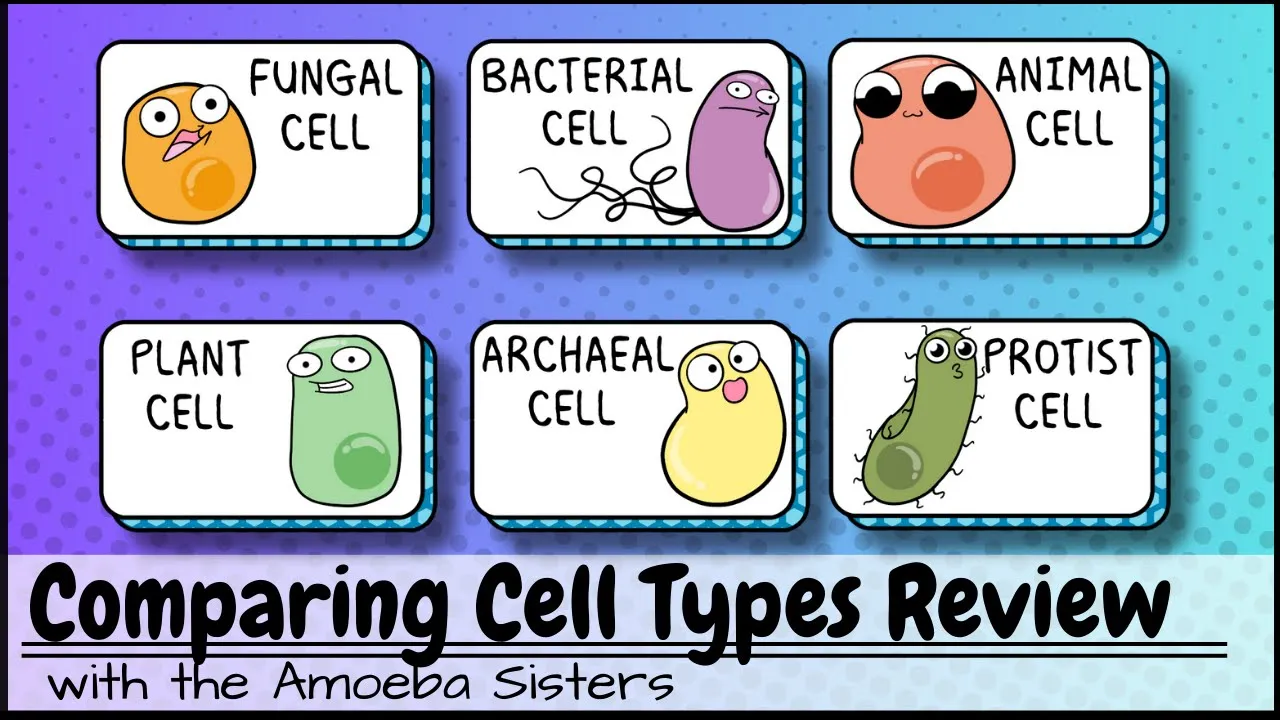
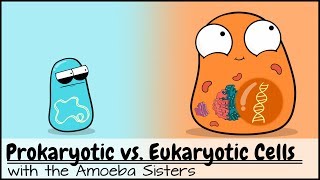
And there are only 6 cards total - a general fungal cell, bacterial cell, animal cell, plant cell, archaeal cell, and a “protist” cell although “protist” is such an informal category, as I’ve mentioned before. If you consider a 6 kingdom system, these tend to be the cells of the organisms in those kingdoms. But I prefer focusing on domains instead.
You can also organize them into the three domains. Is this all relevant to the game instructions? Well… Okay question.
I love questions! How come some of these could actually be a whole entire organism but others are just - one cell - of an organism? GREAT point, Petunia!
To understand that I must explain: some organisms are multicellular - they’re organisms made of many cells - and some organisms are unicellular, meaning they’re only made of ONE cell. Animals are multicellular organisms. That means the animal - the whole entire organism itself - is made up of many cells.
Now, let’s consider a fungus. Like a mushroom. This mushroom is an organism made up of many cells.
It’s multicellular; it’s a multicellular fungus. BUT there are some fungi that are single-celled, meaning the organism itself is unicellular. Like yeast.
Yeast is an example of a unicellular organism - fungus that consists of one cell. Our focus in this game is of the individual cell though - each of these cards has one general cell on it. With that, let’s start!
Drw a card! Okay. So you have the card, you’re familiar with what’s on the card?
Uh, I think so. Okay, does it - generally - have a cell wall? That’s…different from the membrane, right?
Yes, remember all cells have a membrane. This is outside of the membrane. It’s a protective structure.
Does it generally have it? Well now your “generally” is making me nervous. There are sometimes exceptions - biology is full of fascinating exceptions - think of my generally as in most cases.
Ok, sure, it’s got a cell wall. A nucleus? Nope.
I know that one. Ok I’ve narrowed it down, Petunia. That makes it a prokaryote.
And there are only two in that card deck that are prokaryotes. Could E. coli be an example of the cell on your card?
That sounds like an app or something. E. coli is a common type of microbe and one that can make you sick.
It can cause food poisoning, for example. OH. Then yes.
Bacterium! ! It’s a bacterial cell.
Fascinating cell type. While some can make us sick, I want to add, many others are very helpful to organisms and ecosystems. Yep, you got it.
Good job. Now, I draw a card. Ok, you go!
Oh, is it that rectangle one I draw sometimes? You know, Petunia, you have to be careful with that question. I see where you’re going with this but you know cells can have diverse shapes in all categories.
I will say in diagrams, yes, this cell is often drawn as a rectangle. Mainly to indicate it is rigid, as it has a cell wall. But consider the shape of a guard cell that might be found on an underside of a leaf - it doesn’t have to be rectangular.
Plant cell. You…don’t you want to ask anymore questions? Like, does it have a chloroplast, for example?
Which it generally will - autotrophs make their own food, and autotrophic plant cells use chloroplasts to do that. Nope. Hey, I only needed to ask one question and I got it.
Guess that means I’m winning. Drw a CARD, Petunia. Sure.
Is it eukaryotic? Ummm. Does it have a nucleus?
Yes. Ok then it IS an eukaryotic cell as that’s a feature of eukaryotic cells. Ok, so the organism it makes up must be a eukaryote then.
Next question: does this cell have a cell wall? Pretty sure it’s a no. Ok.
So would you ONLY find this type of cell in multicellular organisms, meaning you would not find this cell in a unicellular organism? Hmmm, pretty sure you actually said in your monologue before we started this game that these cells would only be in multicellular organisms. So, yes?
Animal cell! ! Nice, got it.
So. . .
here’s the score. That should only count as 3 because I had to clarify that it was an eukaryotic cell. Not my fault if you choose to overshare.
This is a fascinating one! Hmmm. Is it gross?
That’s pretty subjective, Petunia. Some can break down dead and decaying matter - if it’s a decomposer - definitely can’t do photosynthesis. In fact, by consuming organic matter, another vocab word to know is that: it’is a heterotroph.
Does it make up multicellular things, multicellular –organisms–? Most organisms this cell would make up are multicellular but there are still unicellular organisms with this cell type, too. Ookay.
Welp. Don’t really know what else to ask. Keep the curiosity- you must be curious about this cell.
Eeeeh. How about you ask - does it have a cell wall? …Does it have a cell wall?
YES! This cell has a cell wall. And the wall is made of chitin!
Ohhhh I remember that because I could never pronounce it right… Is it a fungal cell? Yes, and Petunia that’s such a great example of how you turned your mistake into a memorable learning moment. Yay.
Ok, two left. I’m ready. Does it have a –hmm– is it an autotrophic cell, meaning, it makes its own food?
I’m pretty sure SOME of them can. Oh actually both of the remaining cards have that possibility. Note to self: not a good question.
Ok, is it a prokaryotic cell? No. Ok, so that means it’s a eukaryotic cell and would be found in a eukaryote.
Considering what is left in the deck, it has to be a protist. Yep. Which is our category!
Amoebas like us. And Paramecia. And Euglenas!
Aww, Gus that’s you. You know if we had started with this card, it would have been really hard with this very informal group. Some make up multicellular organisms; some make up unicellular organisms.
There are heterotrophic protist cells; there are autotrophic protist cells. Some protist cells have cell walls; some don’t. Uh huh.
Well, there’s just one card, so I guess I’m done. Wait, no, we have to finish! But, Pinky, we know what it is.
Please? ? Fine, but you draw the last card.
Okay! Go ahead, I’m ready. Archael cell.
…You didn’t even ask a question. I didn’t need to. Anyway, I win.
Had a great time. Pizza please. Archaea are single-celled prokaryotes that generally have a cell wall though their cell wall is different from bacteria.
Many archaea are extremophiles but they don’t have to be; many also are not. And by the way, bacteria can be extremophiles too. Pinky, this sounds a lot like NOT ordering pizza.
That’s because we haven’t gotten to the BONUS round! Wut. I have here, a CHART.
Is this what you were doing all night? ! So, in each row, look, empty boxes for you to fill in!
These empty boxes were mentioned at some point in the video so you may need to think back on our conversation. After you fill them in, I can check them for you and you can use it to check your understanding! [PAUSE VIDEO] And here they are filled in!
These are in general by the way as there are some exceptions. If you want to learn more about cell types or the vocabulary here, you can always review these in our cell videos in our biology playlist. Well, that’s it for the Amoeba Sisters, and we remind you to stay curious.

![How Cells Become Specialized [Featuring Stem Cells]](https://img.youtube.com/vi/t3g26p9Mh_k/mqdefault.jpg)