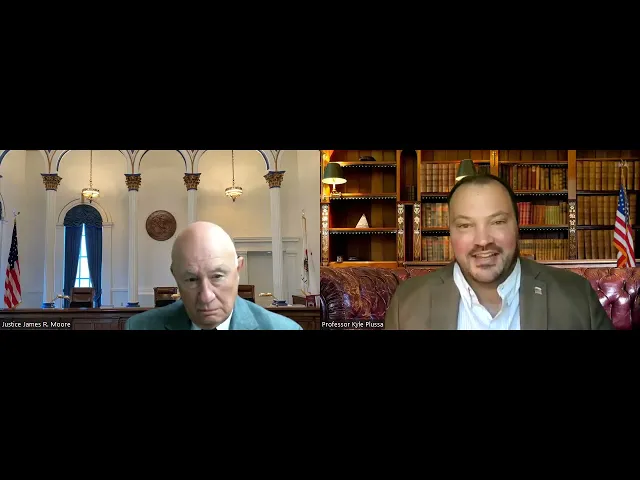
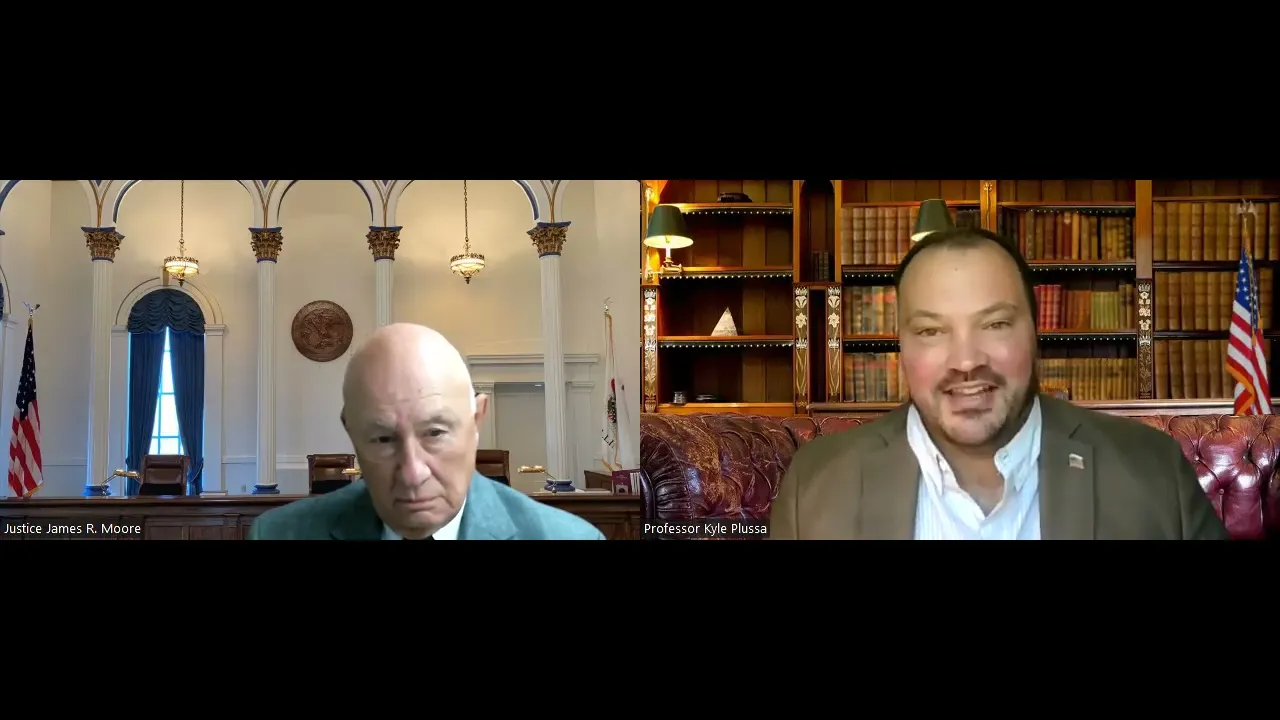
[Music] thank you good morning everyone I'm Kyle plusa the host of Justice Community conversations uh today's episode features a guest who's actually a Justice himself from the Judiciary we have Justice James R Moore the state of Illinois Appellate Court's Justice from the fifth district which covers the southern 48 of their 102 counties in Illinois and thank you all for tuning in and thank you justice Moore for joining me today I know you're scheduled to keep you very busy sir how are you doing this morning I'm very good how about you all right excellent excellent well
we we do appreciate your time and support here for this this project uh so for those unfamiliar with the format happened happening joining in for the first time this isn't as much of a structured podcast interview as it's what I call it a conversation with a member of our Justice Community this is nonpartisan non-political and non-marketing we'll focus on a few current issues in criminal justice today and then look at your individual career path Justice more in the journey you've taken to become the leader you are as we begin here with Justice James R Moore
your constitutional position and function as a seated justice of a Statewide appellate court is is very different than than most of our guests and and some may be listening and unfamiliar to what that specifically means could you share a brief overview of your many duties and and what you focus on From the Bench well the Appellate Court is a court of General jurisdiction that hears all appeals uh from trial courts in our area that it covers those 48 counties and that includes uh any type of case they are appealable as of right after final judgment
and then it's not everything criminal cases exactly it's not just criminal case you also hear civil small claims under their family other court matters exactly exactly and in the State of Florida we have the county courts that hear the the misdemeanor criminal offenses um and and small claim we have the circuit courts that hear felony criminal offenses and and more larger Financial claims uh and then we have our district courts of appeal and finally the state supreme court so you're right in there in that appellate uh checks and balances position um you're seated at the
state level as a state level Justice of a major Court in our country uh what are some of the unknowns of your daily tasks your functions you do daily when you go to work each morning Justice well uh what a lot of people wouldn't realize is that uh a judge has staff and the good deal of what I do is interact with my staff I have three lawyers that work for me as law Clerks I'm absolutely and I'm sure they have to have some education in law and criminal justice and and Injustice studies as well
um what are some of the the big highlights of your career and the big moments to help you get to where you are today sir well I don't know if you could uh say there were a big highlight other than the fact that there was a just a long career that prepared me for the position I started out working for the city of Carbondale Illinois as an assistant City attorney that goes back to 1977 when I graduated law school and uh worked there two years and then I started my own law firm in my own
hometown of Carterville and I was there from 77 to 2000 now excuse me from 79 to 2007 when I was appointed to the Circuit Court and in Illinois uh [Music] judges it's kind of a combination between appointments and elections and I was originally appointed and then I had to run for election to keep my seat and then subsequent elections are retention elections so you don't have to run on a partisan ballot on a subsequent election so I was originally appointed and elected then retained and then I was assigned to the Appellate Court then I ran
for an open seat and was elected and that's where I am now I was elected in 2016 was originally appointed to the Appellate Court in 2014. now is that election at this at the Appellate Court level is that a Statewide election or just in those 48 counties that you uh oversee yes just in the district where uh I covered and now is your is your current term is that a lifetime appointment now or is it you have to run for retention no it's a 10-year term 10 years okay cool cool um well it sounds like
all those different chapters could be made into a movie if they were to make a movie about the life and career of Justice James R Moore what actor would you want to play your part sir one of my favorite actors of modern times is Cillian Murphy uh he's the guy that plays Oppenheimer and for those of you that have ever watched it I agree to be a fan of his watching him in peaky blinders on playing the role Tommy Shelby uh and I don't say I want him to be playing my life I just like
him as an accurate all right well I know all of your work in in your career didn't happen overnight um it should be known that we you and I have known each other for a very long time uh several decades at least uh we've seen each other's lives and careers grow into what they are today um but for those who don't know you growing up in or after that that early school that law school or pre-law uh it's important to dream what was your in-game goal your dreams back then that were out on the horizon
I just wanted to have a law practice that would support my family I was very family oriented and still am and uh being a lawyer in a small town was uh the way I was able to live and support my family it wasn't any bigger than that at the time I never expected to ever be a judge when I first started yeah it's it's been very important to have that that value system of a family and why we do what we do um speaking to that we are all met with different challenges in in your
career Journey your career path were there any unexpected challenges especially in that in that early developmental stages of undergraduate study well early challenge that I had was losing my dad when I was very young and he was my best friend so that uh made me have to approach life in a far more grown up kind of a way than I was prepared to at a young age I was only uh I think I was only 21 when he died that's the age of many of our many of our viewers and my students but I I
know getting through that had to be difficult and one of the ways we get through our challenges is self-talk and I'm not I'm not talking about hearing someone else's voices in your head that may proceed a mental health commitment but what kind of self-talk did you have back then to keep going and what do you tell yourself today whenever you met with adversity well uh I was not uh a believer in God at that time and uh so it really made me question my whole way of looking at the world and uh through all that
I did uh come to believe in God and believe that uh he is the creator of the universe and that uh Christ is his only son and that changed my whole way of thinking about everything and indeed that that moral Outlook when that when that moral compass comes into play it can definitely stir our perspective up a little bit um and we know in any line of work especially in the criminal justice or just the justice and legal field it hinges upon individual accountability this is where one choice one decision can change at all we
we all everyone makes mistakes but here one dumb move can end all of the many years of hard work that we've put in had this path in law and the Judiciary not worked out what was your backup plan well I had a a scholarship in a different field also I had a doctor's degree plan for a master's in economics that was a free ride to uh graduate school and economics and I ended up having to turn that down to go to law school well this this this field and in our lives this is field is
full of surprises I'm sure that was a surprise to you what were some other surprises you found in this in working in this field well there's a lot more tedium to being a lawyer than uh you get from TV and movies uh everything's all exciting but uh on the screen but it's not that way in in real life there's a lot more elbow grease involved than just simply knuckling down and doing your research and getting prepared so you can be terrified to go to court the first time in fact you see the background where I'm
sitting in the courtroom that uh where I sit and of course it's a very historic Courthouse where uh Lincoln actually did argue a case so uh when I'm sitting there I have Lincoln's picture on the wall and I'm very honored to be in a place where uh our great president actually um attended court and argued a case and uh I can remember the first time I appeared in that Court as a young lawyer to argue a case on appeal and uh I remember my knees were actually quivering a little bit as I stood before the
court to argue when I was only in my early 20s and uh but my advice is preparation overcomes fear and once you get once you're fully prepared and engaged then that sort of takes away that fear of the moment absolutely and I know that you speak of the quivering the first time we step into that courtroom whether it's a county level or or above and in in the 16th circuit where I first walked in as an officer um being uh subpoenaed to testify I was rather intimidated because all I'd known really is what we see
on TV the arguing and the hi gotcha and um they're so it's such a contrast what we call the courtroom work group that so many defense attorneys prosecutors judges they all really work together kind of process cases in a civilized manner uh for the in the interest of justice and also in the interest of the defendant it's it's very uh it's not as uh adversarial as I ever thought and it made me very comfortable to where I've obtained a subject matter expert rating in three judicial circuits in the state in multiple areas and now know
I love going to court I I'm I terrified defense attorneys because I actually enjoy it and I love giving testimony and so forth but on the flip side though uh justice more um two pleasant surprises I'm sure that that moment walking into the same footsteps where Abraham Lincoln stood um had to be a pleasant surprise but to me at least in this in this industry is how strong and United at least the law enforcement and the Finn Blue Line family is not just in Florida but Across the Nation the entire world even this Outlook of
being a big family is a main reason why I've been very successful in court and in my interviews is I'm looking at them as I'm just speaking to members of my family who I'm not I've not met yet have there been any pleasant surprises that made you smile on this journey well over the course of a long career uh you do meet some very fine people and uh I was able to benefit from a lot of very experienced lawyers that were quite willing to take me under their wing and uh answer my questions and help
teach me what they knew and uh I don't know if the law Community is is that focused like it used to be um back in the early in the late 70s when I started but it was a privilege to be a part of that community yeah so I I'm a common theme of A lot of my guests and then that kind of questioning is is on mentorship and seeking advice and counsel from those who are senior to us experienced and learning from their Lessons Learned um let's shift now to power words uh one word that's
written in Sharpie on the Post-it note on my dress that I see every single morning is perspective and that's because that's what changed after you know of my my incident where I was hit by the impaired driver driving just a regular truck and and I was left in a coma for a very long time and a long recovery but after that emergence is a shift in perspective how I look at everything and that's what each day is all about aside from your awesome title of being a Justice what is Justice Moore's one power word if
you wanted to see each one to start the right way well I don't know it's a power word but it's uh I would say it's it's faith we are we are members of the Human family and I start the morning with the Lord's Prayer now that is a great way to I'm sorry that's a great way to begin and and having that that moral that spiritual component to our work and not just a religious look at um a certain Faith but also a faith in purpose and a faith in the goodness of people in our
society we all focus on the news and the rhetoric going around social media and the actual face-to-face contact that eye contact and the it restores your faith in the goodness of people um stress is something we all face and in every industry whether it's law or criminal justice but especially in this field what about your duties stress you out today sir well I have a big responsibilities I mean we decide uh make major decisions about people's lives and uh sometimes we affirm a sentence that basically keeps a person in prison for the rest of their
life and uh so you do I don't know have to have perspective on that that you want to get it right and uh you realize the enormity how those decisions on that person's life yeah and I I see that um a team can always accomplish more than any one individual and I see that the chairs behind you judge are Justice more as is three I think there's three are you on a bench with three other or two other suicide cases as a uh a pelt as an appellate court in three judges panelists which is something
you don't have at the trial judge level so you have a lot more time to examine the record reflect and talk to other judges on your panel about how the case should be resolved now like juries does your decision have to be unanimous or is its best two out of three no it only takes two for a decision okay okay I mean sometimes I've been dissented against sometimes I'm the dissenter understood understood well going back to the team especially your team of legal Scholars that working with you in your office what character qualities do you
look for in new members joining that team well for one thing they are all uh highly accomplished uh particularly from their legal education we typically only hire the top students to work uh in an appellate office as a law Clerk understood and you you you you you may not see as much of this at your level as we do with the local entry levels of the courts but diving into a topic that we discuss in my criminal justice studies is the concept of police or even Court legitimacy this is often inclusively Sovereign citizens movement uh
the approach to challenging The Authority they believe doesn't apply to them what are your thoughts on how we deal as an industry with individuals or groups who question police or Court legitimacy and Authority Well everybody's entitled to present their cases they see fit sometimes people present uh arguments that uh are kind of irrelevant and don't get them very far and uh they can that choose to be their own lawyer if they want to that's their right under the Constitution sometimes people choose very poorly to do that absolutely that is that is correct but going out
and I'm really excited for this question you're going into a little bit of legal Theory the central theme of The Justice and legal studies courses that I teach is a balance between the individual freedom and the security of society and the these balance hinges upon individual responsibility as officers and as Citizens and this this concept is termed in in the textbook says the Crime Control model or the due process model or perspectives on jurisprudence a term you're familiar with that's the theory of law itself one centers upon the victims rights and the reduction of criminal
offenses and the other focuses on defendant rights and the reduction of criminal offenders I link every element of my material back to this these two lenses that we look at speaking to your thoughts on this concept balancing Security in society and individual freedoms how do you believe our our next generation of leaders coming up now harness this balance I don't know the answer to that question uh that's uh depends upon a lot of what is being taught and I can't uh I can't answer that question I've not been in the classroom to see what that
is that I understand I understand it also differs greatly as part of the separation of powers in this country is the the system of the states every state has a different statute set of laws that govern those courts and the courts of your level versus mine um career paths in in criminal justice and law they're all facing Staffing shortages uh recruiting drought as it is calls I know up in Chicago where we're near where you are is facing the same thing and also we all struggle with employees wait a second it's important to get it
straight that uh I can drive to Nashville Tennessee where I go to the doctor and be back home and about the same time it takes me to drive one way to Chicago I'm pretty far from Chicago where I live yes yes judge and I'm sure you you your mindset may be rather different than a lot of those in Chicago that's one of the reasons we get along so well but the the the industry in in its in itself is facing a employer retention struggle and that's due to a lot burnout it has its sources but
I believe some of the strain is caused by a biased coverage of police officers and focus on their misconduct now make no mistake about it every sworn professional in every field uh in this industry sees the tragic death of George Floyd as a reminder of our at least officers statutory duty to intervene when the face of misconduct but equally ingrained in my mind as that image was is the images of our American cities burning to the ground during absolute riots during the summer of 2020. these Knights of Anarchy were not peaceful protests as the media
has called them and now an equally uh disturbing mostly peaceful mostly peacefully that's what they can know them sometimes when they're holding a sign versus throwing a brick yes yes but the an equally disregarder standing in front of a burning building with the caption mostly peaceful yes I'm sure there there's a lot of images online from and I remember those that it haunts me sometimes but an equally disturbing stain on American history regarding criminal justice also happened in 2020 and that was the self-proclaimed Chas chop autonomous Zone in Seattle Washington where Emergency Services police EMS
and fire rescue were not allowed to enter drugs rape violence murder destruction all ran free Anarchy was the rule of the day just as certain police actions are misconduct so can be certain inaction like that every everyone agrees that misconduct is bad in all of its forms we have the freedom to act or not to act but we must face the consequences of our choice freedom and security balance upon individual responsibility as Citizens and as officers and lawyers what are your thoughts on this balance between freedom security and responsibility well uh it is an axiomatic
statement that with much in Liberty comes much responsibility so we can't maintain an ordered Society of Liberty without a responsible citizenry that keeps that order and if we uh don't have it then we'll lose our Liberty that's absolutely right they kind of co-dependent upon each other now I I've been studying a cons this concept of police misconduct for a number of years I believe last eight years even running some more statistics just last week and the research is profound that the data trend is rather remarkable but what's equally remarkable here is the reporting disparity in
that we're not seeing this on the air anywhere now this is just my research as an individual scholar it's not been empirically studied or peer-reviewed it's taken from the analysis here in the State of Florida from the reports of of by the state on professional compliance and the our health department on quality assurance covering doctors and police officers over the last decade and since 2013 there's been 7 000 approximately 7 000 complaints filed with the State against allegations of police misconduct by its officers and in that same time over 43 000 complaints have been filed
against the further State against doctors for medical misconduct and now that's a difference in thirty three thousand three thirty five thousand more complaints about misconduct by doctors than police officers now Skeptics would say that this is because there's more Physicians than there are cops and I expected that so I looked at those numbers too and there are more doctors than officers about a thousand a thousand more doctors and officers here in Florida yet there's been 35 000 more complaints and now there's a great difference here in Florida between the outcomes of the two investigations and
in two Fields the only common data variable to link between them and study is probable cause that's the legal term of it's finding probable do the investigators for the state find probable cause to launch an investigation into misconduct allegations based on the complaints received and those results here are 36 to over 50. in a one decade average there's been 36 percent of the time probable cause existed to actually investigate the police officer whereas in that same period of time over half more than 50 percent of the time doctors complaints had probable cause to investigate them
for misconduct and that's not counting nurses or practitioners that's that's doctors Physicians and I went a little deeper Justice more in that for that Summer of Love That season of Anarchy in 2020 I I went further to look at actual allegations that were sustained in the different categories and just 41 percent of those investigations with PC into police officers 41 of those were sustained and in that same year of the of the more than 50 percent of Investigations where doctors had PC against them over 70 of those investigations were sustained and I I don't remember
I I any of this since 2020 to date correct me if I'm wrong but zero is the number zero is the number of riots we've had about medical doctors that's zero protests against medical misconduct there's been zero media coverage on this and there's even been zero second thought whenever a member of the public season a police officer versus a physician in public my question for you uh justice Morris not whether you're going to go to your next doctor's appointment down in Nashville but speaking to the allegations of police misconduct or even judicial misconduct with attorneys
what do you suggest professionals do in how they can try to combat these false allegations of misconduct well I don't know what the police can do other than just do their job and do it well and do do it correctly they have really little control over what is said about them in the news media and that's where a lot of this comes from that that's absolutely correct I know at least out in Florida there's been a tremendous push with all of my other guests being the sheriffs and Chiefs of police is the body worn cameras
are a great common denominator to kind of cut out the he said she said and really look at what he did she did and it was it's a very uh invaluable tool so now as we begin to close a few more questions here on on advice we all must seek wisdom from leaders we look up to those who've been there done that especially those who've done it well and rather well like you have sir so what advice do you have Justice more for someone wanting to follow in your footsteps to be an attorney and even
maybe a judge or Justice someday well uh find good mentors and uh get advice from people that have done it and uh listen I mean seek them out they'll actually be helpful to you and that's one important aspect of how to learn and how to grow and sometimes you get in a uh like in a police force you'll find somebody on the police force that has a lot of experience and they'll teach you they'll train you so that's the best way uh to learn practicalities and then that is a big part of why I've begun
this project this Justice Community conversations because I'm a big believer in that mentorship and that seeking wisdom from those who've been there done that and done it well and and now now finally uh just as age is not celebrated in years in my book but in levels of life experience one's length of service in their career is a measure of their experience and wisdom they've learned along the way what advice do you have for yourself looking back to when you were just beginning to set out and face this big real world like so many of
our viewers are in their early 20s what would you tell Young Justice Moore as he's starting out about the road ahead uh I would uh apply the same thing I just said about mentorship and uh find people you can learn from and uh and also the importance of diligence and self-discipline is important and it absolutely is but that's going to be all the time we have today for our episode our special guest Justice James R Moore for the state of Illinois Appellate Court as always thank you again Justice Moore for your time and your support
in joining me for this project as we support our future generation of Criminal Justice leaders I hope all of you have learned something again today this is just season one of my series uh I hope to have you on again sir and everything in this time of course okay thank you all for tuning in and this has been Justice Community conversations I'm Kyle palusa signing off thank you