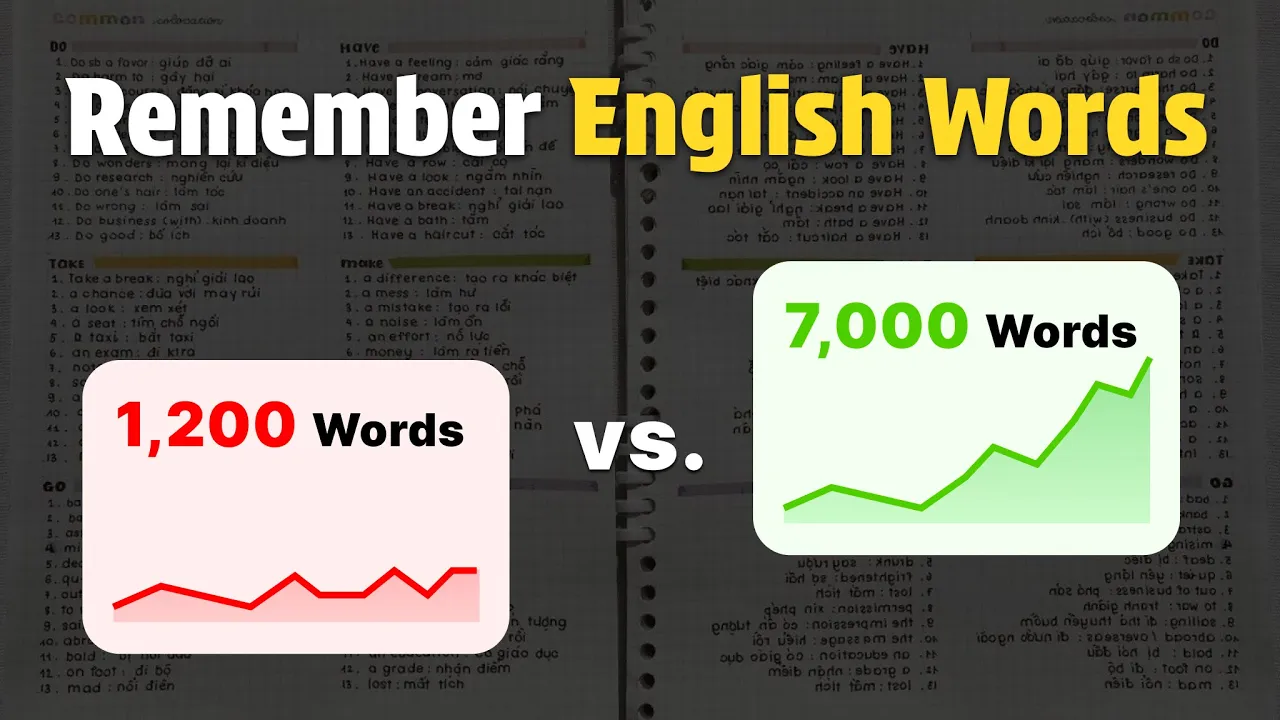
[Music] hey everyone welcome back to daily native English so how do you usually memorize new English vocabulary do you put words together and memorize them one by one or maybe you look up an unfamiliar word and write it down hm I think a lot of people do that yeah but I bet many of us can relate to this have you ever learned a new word only to forget it the very next day it's so frustrating isn't it for sure it's like you know the word but the moment you try to use it it's gone exactly
and that's one reason why so many Learners struggle with vocabulary they memorize words in isolation but without context or real life practice it's harder to remember them right and that's what we're diving into today ways to actually retain those words we'll share six science back techniques that you probably haven't heard of before yep before we dive in we have something special to help you take your skills even further that's right if you're serious about mastering daily English conversations we've got not one but two amazing ebooks to guide you through real life situations and help you
practice the right phrases first up we've got 16 skills to handle any English conversation it's a situation-based guide that walks you through the core skills you need to speak confidently in all kinds of scenarios whether you're making requests resolving conflicts or telling a good story yeah this book teaches you those key transferable skills that you can use in almost any conversation you'll learn through real dialogues classic expressions and practical tips on how to handle tricky situations it's designed for both beginners and intermediates so it's perfect no matter where you're at and it doesn't stop there
we also have 400 must know questions and answers for daily conversations this ebook is packed with 400 essential questions you'll encounter in daily life everything from casual chats to more serious talks about social issues and each question comes with a native likee sample answer plus you'll get key phrases and explanations that will help you expand your vocabulary and understand how to respond naturally in different situations so if you want to boost your confidence and Tackle conversations with ease these ebooks are for you you'll learn real life phrases and techniques that'll stick with you just like
we've been talking about today head over to our website to grab your copy and start mastering everyday conversations today trust us you'll be glad you did so let's get into today's episode six ways you've never heard of all right let's kick things off with this one use the word in five different ways now I know it sounds like a bit of a challenge but trust me it's super effective the idea is to really get familiar with a word by using it in different contexts throughout your day yeah it's not just about memorizing the word once
and forgetting it the goal is to integrate it into your daily life so for example let's say you're learning the word intriguing it means interesting in a mysterious or captivating way you could start by using it in a conversation like that movie had such an intriguing plot it's a great way to bring the word into a natural context that's a great example you can also use the word in writing maybe keep a journal or even just write a few sentences about your day for example you could write the new restaurant we went to had an
intriguing menu with lots of unusual dishes that way you're not just thinking about the word you're also practicing writing it down which helps reinforce your memory I love that and what about social media you're on Instagram right so let's say you're scrolling through posts and you see something that catches your attention you could leave a comment saying this post is really intriguing or maybe you share something on your feed and describe it as intriguing social media is is such a good way to use new vocabulary in a more casual everyday way right and here's another
one selft talk it sounds a little strange but trust me it's super helpful just look around you and describe something using the new word for example you might be sitting in a coffee shop and you could say to yourself this coffee smells intriguing there's a hint of caramel in it by speaking it out loud it helps helps your brain remember it in a more natural way I love the idea of selft talk it's such a simple trick but it works wonders and finally teaching now you don't have to be a teacher to do this but
it's so powerful try explaining the word to someone else or even to yourself out loud you could say so intriguing means something that catches your attention in a mysterious or exciting way like the book I reading right now is really intriguing because of the plot twist teaching forces you to understand the word better so it'll stick with you longer yes teaching it is one of the best ways to make sure you really understand the word so if you can use the word in five different ways conversation writing social media self-talk and teaching you're giving your
brain lots of chances to remember it in various contexts absolutely and by doing this you're not just memorizing the word you're really learning how to use it in real life situations it'll come naturally to you when you need it and that's the key to building your vocabulary in a way that actually sticks yep so next time you learn a new word give this technique a try don't just memorize it use it in as many different ways as you can throughout the day you'll be surprised how quickly it sticks all right moving on to the next
technique group words by theme not alphabetically now I know a lot of us are used to learning vocabulary by just going through long word lists in alphabetical order right but that's not the most effective way yeah that's true it's kind of like trying to memorize random pieces of a puzzle without knowing what the picture looks like grouping words by theme makes it way easier to remember because it gives them context for for example if you're learning food related words you could group them together Savor devour Bland scrumptious you're learning a whole set of words that
relate to a specific topic so your brain can connect them more easily like if you're thinking about food you can picture a delicious meal and the words just make sense together it's like they belong to the same family and you can do the same thing with emotions instead of just memorizing words like happy sad angry you can group them into themes like ecstatic anxious Furious content each word adds a little more detail and Nuance to your understanding of emotions I love that and it works for pretty much every category for example in the workplace theme
you could group words like deadline multitask productivity burnout these words are all related to work and when you think about them together it's way easier to remember the meaning of each one yep and the great thing about grouping words by themes is that it gives you a deeper understanding of the topic you're not just memorizing random words you're learning how they all fit together for example if you're trying to describe a busy day at work you can use words like multitask and productivity but also burnout when talking about how you feel at the end of
the day it all flows together that's such a good point so here is a challenge for you pick a theme like personality for example how many words can you think of in English that describe personality traits hm that's a good one you could think of words like friendly kind sweet and generous but there are so many more maybe outgoing introverted shy or confident yeah so take a moment and think about as many personality related words as you can and hey don't just keep them to yourself share them in the comments let's all memorize them together
yes it's fun to share what you've learned and see what others come up with too plus the more you practice using these words in context the more naturally they'll come to you when speaking so challenge accepted everyone group your words by theme share your list and let's get better at remembering them together it's all about making learning more connected and meaningful okay this one's really powerful because instead of just memorizing words on their own you get to pair them up with their opposites this helps your brain make stronger connections yeah it's like learning two sides
of the same coin when you learn a word and it's opposite together it helps you understand it much more clearly like take generous and stingy are two opposite ways of describing how someone handles money right when you think about generous you can instantly picture someone who's giving maybe donating to charity or buying gifts for others but then when you think of Stingy you get the opposite a person who's reluctant to share or give the contrast helps the meanings stick in your mind I love that another good example is transparent and deceptive trans transp arent means
clear honest and open while deceptive refers to being misleading or dishonest when you know both you can better understand the concept of honesty or trickery totally and then there's diligent and lazy if you're diligent you work hard and put effort into everything you do on the other hand if you're lazy you avoid work or put in the minimum effort by comparing the two it's much easier to understand what each word really means and this approach works for all kinds of words not just adjectives even with verbs opposites can help you learn faster for example expand
versus shrink or agree versus disagree so true and it doesn't just help you learn new words it also improves your understanding of situations let's say you're describing a person's work ethic if you know diligent and lazy you'll know exactly how to describe them the two opposites give you a clear picture of what someone's attitude or behavior is like right and it makes your vocabulary more flexible you can switch between opposites in conversations which makes you sound way more natural and fluent absolutely and hey what if you're not learning adjectives right now well don't worry even
if you're focusing on other types of words opposites still work you can practice with nouns verbs or even adverbs so remember learn words with their opposites it's a simple but super effective way to improve your vocabulary all right learn phrases not just words this is something a lot of Learners Overlook you see when you focus on individual words it's much harder to remember them but when you learn words in context as part of a phrase they become so much easier to recall like instead of just memorizing the word acquire which by itself is a bit
abstract you should learn the phrase acquire new skills it's much more practical and easier to remember because you've got a situation attached to it yeah I totally agree acquir on its own doesn't tell you much but when you think of acquir new skills you instantly have a mental image of someone learning something like picking up a new hobby or mastering a new tool it's way more meaningful and the best part is is when you learn phrases like that you're already thinking about how to use the word in real conversations so when you're actually speaking you
won't just be searching for the word you'll already know exactly how to use it right for example let's say you're learning the word improve if you only memorize improve it's kind of vague but if you learn the phrase improve my English or improve my skills suddenly you have a whole range of situations where you can use it and it feels much more natural yes and think about it when you learn phrases you're also learning grammar patterns which is so helpful for example I need to or I want to followed by a verb if you know
these common phrases you're not just learning vocabulary you're also learning how to structure sentences in English so true learning phrases helps you sound more fluent because you're using real language it's not about memorizing a word list it's about building up your toolkit for conversations and you can start by focusing on the most common phrases in different situations like greetings ordering food or talking about your day once you know those you'll feel more confident in any conversation so instead of stressing over every single word try learning useful phrases that you can actually use in real life
situations your memory will thank you speak and write with the words this one is all about using what you've learned as soon as possible the sooner you use a new word the better you'll remember it yep exactly the best way to really make a word stick is by immediately putting it into practice so let's say you've just learned a new word write a short story with it even if it's just a few sentences it helps you use the word in context yeah writing is a great way to practice for example if you learned the word
thrilling you could write a short story about a roller coaster ride or an exciting Adventure putting the word into a story gives you a clear picture of how it fits into real situations and don't stop there after you've written it speak it out loud create at least five sentences using that word this is super important because speaking helps with memory and makes it easier to recall the word in conversation oh for sure I love saying the sentences out loud it really helps the word feel natural for example with thrilling I might say that movie was
thrilling or I had a thrilling experience at the concert last night the more you say it the more confident you get with it absolutely and don't forget about using the word in a real conversation this is key try to find an opportunity to use it in your daily chats even if you're just talking to yourself it could be as simple as saying that was a thrilling match oh I like that idea the more you use a word the more it becomes a part of your vocabulary it doesn't just stay a random word you learned it
becomes something you can use comfortably in any conversation right and it doesn't have to be perfect even if you make a mistake or don't get it exactly right just keep practicing the more you speak and write with the words the easier it gets to remember them so remember don't wait as soon as you learn a new word start using it in writing speaking and conversations the sooner you put it into action the stronger it will stick in your memory and now the final technique think in English this one might sound a little strange at first
but trust me it works wonders for improving vocabulary and fluency yeah it's all about forcing yourself to describe things around you in English even if it's just in your head like if you're walking down the street look at a tree and think this tree has dense foliage it doesn't have to be fancy or complex just describe what you see it's like giving yourself manyi practice sessions throughout the day by doing this you're constantly reminding your brain of the words You' learned and how to use them right and the more you do it the easier it
becomes to think in English naturally eventually you won't have to translate from your native language anymore you'll just think in English yep and don't worry about being perfect it's not about making complete sentences every time it's about getting used to hearing and thinking in English like if you're in a cafe you might think the coffee is hot and smells amazing just simple stuff like that it's kind of like exercising a muscle isn't it the more you work it the stronger it gets the more you think in English the more natural it feels to speak it
and it's a great way to make English feel like a part of your daily life not just something you study for a few hours so start by describing things you see around you and pay attention to what words come to mind yeah and once you start thinking in English you'll notice that the words and phrases you've been learning start to come up more easily in conversations it's like you've built a natural connection with them and of course by combining all these techniques using words in different ways grouping them by theme learning opposites practicing phrases and
thinking in English your vocabulary will grow and stick much faster totally and with all these methods you'll feel way more confident using those words in real conversations so guys which technique do you think you'll try first I'm curious yeah let us know in the comments and don't forget to check out the two ebooks we have for you they will help you tremendously to improve your speaking keep at it and soon English will feel like second nature [Music]