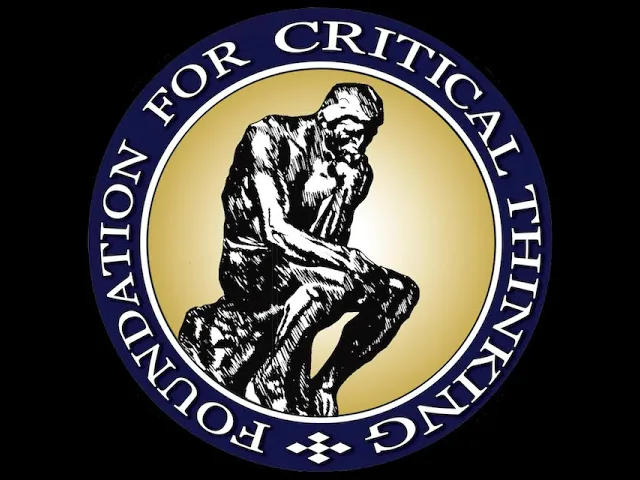
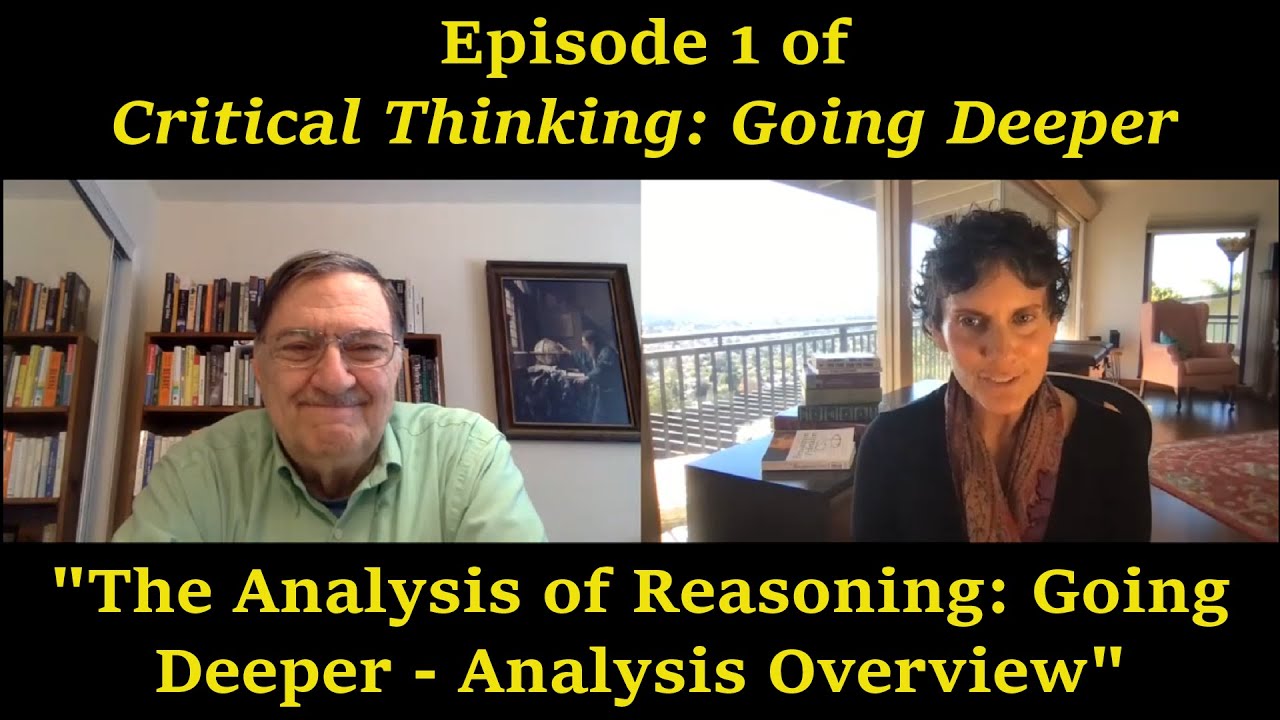
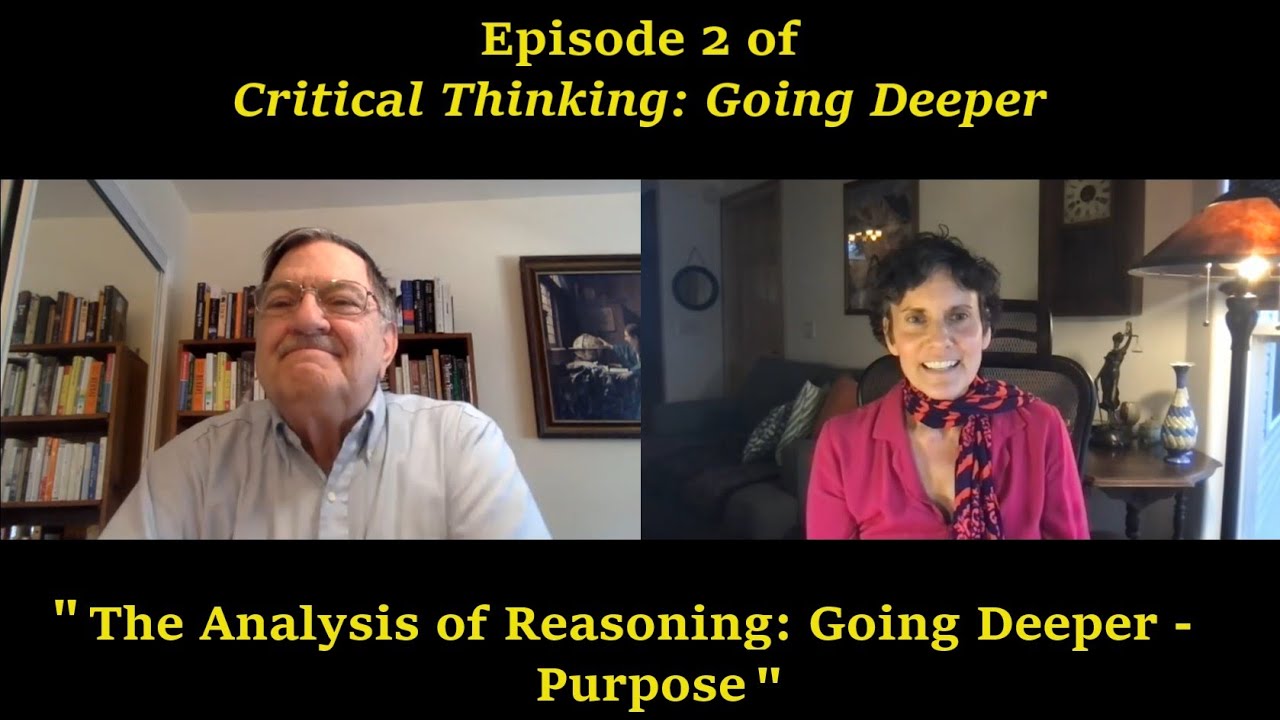
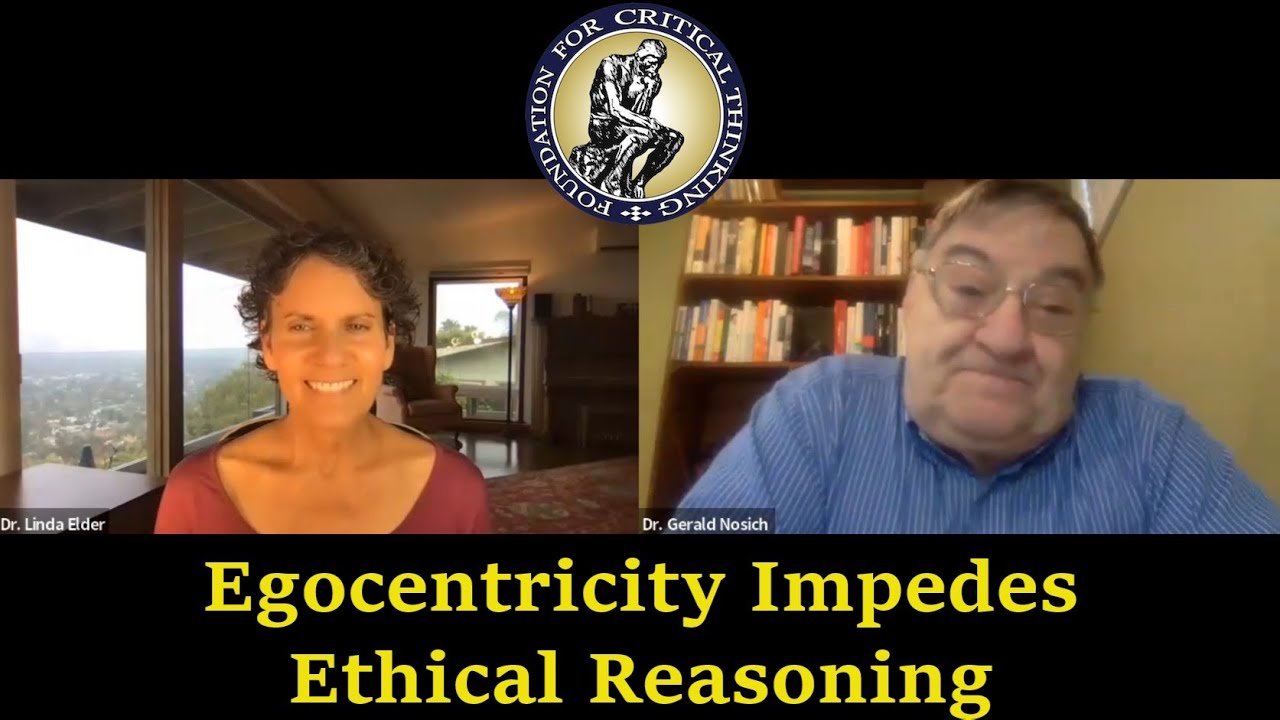
Hello I'm Linda Elder welcome to this podcast I'm here with my colleague Dr Gerald nosich hello Gerald hi Linda good to be with you again we are coming to you from the foundation for critical thinking which is a 501c3 nonprofit organization in California you can join our community at criticalthinking community.org we are focused in this series on the analysis Of reasoning going deeper we think of the analysis of reasoning we also think of the elements of reasoning so we could say the elements of reasoning going deeper and that this means we're assuming that you have
some beginning knowledge of the elements of reasoning before um listening to this podcast or viewing it but but in any case we're going to in this session be focused on Questions in reasoning so we're going to be exploring the element of reasoning questions and we're going to burrow into this a bit and see how we can use questions in ways we don't tend to we can employ uh questions in deeper ways so that we can uh think better across the domains of our lives so let's start if we could Gerald with the the the role
of questions in human life how do you view the role of Questions in human life well uh I view questions as essential I I could almost say the most essential part of reasoning about life but I would probably have to take it back that's too sweeping but it's at least it's at least essential um questions are what Drive our reasoning and thus our and to the extent that reasoning drives Our Lives questioning underlies everything so without questions there's nothing for Me to explore or investigate or think about I at first have to see it kind
of as a question something to look for and one thing that seems important to me about that is the difference between having questions ex explicitly and having questions only implicitly in the in the back of our minds um so for instance when when my son Matt was uh was an adolescent he wanted to learn about how to how to navigate an airport and get on The Right Flight and Everything like that and uh I could have taught him and a way I did some of that but what I asked him to do is to to
ask himself so what question should I be asking at any particular moment right and that helped him a lot because that meant he was formulating the question asking it and then finding out answers or partial answers to the questions so if you just think about going through an airport you're confronting questions all over the place where is my flight what Line do I stand in how do I get through airport security in the quickest possible way you're confronting all kinds of questions but most of the time much of the time those questions are just unarticulated
they're just way inside us and so we go through kind of on autopilot and an assumption I make is that by and large most of the time the more explicit our questions are the better so I see questions as underlying all aspects of our lives and with Reasoning through aspects of Our Lives it's very important for the questions to be explicit our articulated to the extent that I can do that so and by the way your example uh of uh working with your son focused on working with your son reminded me of the example of
Socrates oh the what Socrates I believe in part was doing was trying to create methodologies for questioning m He trying to figure out how do we get to the best answers and it seems to me I'm Socrates for the moment it seems to me that the best way to get to the best answers is through the best questions right yeah and his way of teaching which was fundamentally through inquiry right is something that we should really study as as teachers as instructors because in other words Imagine a a k through 12 school system who fundamental
one of their fundamental purposes is to teach students how to ask the kinds of questions you were helping your son learn to ask as a routine um matter of fact in other words what we do here is we we focus on questions what we do in the school is we teach you how to ask good questions we're more concerned about your questions than we are about your Answers because we we want to make sure you know how to ask questions you know when to ask a given question and when to not ask a given question
um so that that that example of Socrates comes back again and again to me yeah and I'm glad you said especially about the the teaching part that one of the things we're doing is teaching students to ask questions and there are in my experience there questions fall into a large number of varieties but Here are two many times we I could get my students to ask questions in the class like about the discipline or about what we're studying or what what about what an author means and there I could focus on what makes it a
good question like what's the author's main point is a is a good question and what reasons or evidence does the author give to support her main point those are also very good questions they're good questions because they go to the heart of the matter and That's a lot of what it is I was teaching but there's a very different sense quite different sense I think of what it means to ask a good question and I'd say that at the at the at the root what makes something a good question is it's a question I really
want to know the answer to to and I have a feeling that in school a lot of the time students are asking questions be for teachers who promote question asking are asking questions Because they're in that school mode they're in the questioning mode in class but that's different from really caring about what the answer to that question is um uh yeah so yes yeah a lot yet sorry go ahead yeah I want students to be interested in the in the subjects we're we're learning about uh I can't always control that and questions often provoke that
but still there are some pro-or questions that students ask well I want to I want to jump in there Because you said I think you said that their students tend to be asking the questions that they're supposed to be asking so to speak but I was wondering whether you could even say that they're asking the questions right in other words they're not really asking the question questions in this case they're actually just answering the questions that have been formulated for them but the important questions that you face in life are not going to be formulated
for You they're going to be formulated by your by you and if you're not formulating those important questions yeah how are you living your life yeah yeah I I I think that that's that's exactly right right something in a way similar goes on with I taught philosophy of the Arts and uh my students did really well I'd give them questions essay questions on their exams and they would do really well it would Be a very nice reasoning it took me years to realize that much of the reasoning the excellent reasoning that I saw in my
student answers it was excellent a lot because it was my own reasoning that they were they were G giving back to me and I found that if I asked them questions that on an exam say that were that we had not covered in the course but were like the ones we'd covered in the course they were often no better at answering those questions once The course was over that at the beginning in fact what they did is they reverted back to their to their old to they reverted back to their the the way they reasoned
about it before they had ever taken the course that kind of natural implicit way we have of reasoning and so so the way that relates to what you've just said is I would ask them okay so in ethics I might say okay how would a utilitarian view this and uh so I'm asking a question about ethics Seemingly but the question I'm really asking is would you please repeat back to me what I told you about utilitarianism I wasn't really asking them to Think Through utilitarianism so I had to change the mode well so so the
the the the idea here one of them that I'm getting is that if you're if you are thinking critically then you're asking good questions and you're asking them yourself you on your own accord you are you may have somebody may have Raised the issue with you right and they may have given you the idea but if you don't take it up or let's say when you take up the idea take it seriously you ask the questions that emerge from that you ask those questions then you're in a position to pursue the answers to them but
if you're not generating any questions because you don't know how to generate questions even though you're in a class where you're being asked to generate questions the professor is Still inadvertently teaching you to follow his ideas because of the patterns that you're bringing the students are bringing to the setting that and so it's a yeah it's complex but the but the thing I but the thing that I want to against stress is that thinking as you said is driven by questions and if we if if if if I am not generating powerful questions for myself
then I'm not then I'm not really In charge of my life right yeah right because because then I'm being I'm kind I'm going with the flow I'm being blown in this or that direction because I'm going with other people's questions or the questions that they're for sort of I'm I'm soaking up from them um and so the like take an perfect sort of Paradigm case of an example Say gang members they're um they're soaking up ideas from one another they're they're asking the same kinds of questions They're they're all willing to stay within th that
question range right so how do we get up ahead of this other gang how do we let them know we're boss how do we keep people in the group you know questions like that so the question clusters that you're living within are the question clusters that are guiding the quality of your life that's another way of saying it so so can I ask you a a a personal question what's uh what would you say is A powerful question that uh that guides your life or has shaped your life that you personally have asked that is
an interesting question I think that the most one of the most significant questions that has guided my life is how can I do something to help the world become more rational better I would have said before I had the tools of critical thinking the language I would have said how can I contribute to making the world A better place uhuh and I have a deep belief that we can be rational creatures and that we can solve the problems that we face so that I think is has been a guiding nice yeah very nice yeah um
what would what would you say well uh off the top of my head I'd say I don't have one as deep and all encompassing as yours is but a question again it has to do with age for me and and that is the question is how can I make life for me and my family better um Where I could spell out kind of what better better is um and that's a that's a in one sense that's a question that guided much of my life with my family but there's another sense in which I don't I
didn't ask it until maybe I was 45 that is it never occurred to me as an explicit question I'm hoping I did things in that direction but it helped a great deal for me to to ask it explicitly because now I could I could apply critical thing I could apply Creative thing I think what are some actual ways of doing this that I have not yet considered what are the implications of doing it this way or that way so asking it of myself explicitly just opened up all these Avenues of my life many of which
were then further questions H yeah so so then that that that's um that's an interesting activity I think everyone should pause and do that you know just just write down a short list of the Questions that have mainly guided your life to this point yeah yeah and what are the questions that are guiding your life right now into the future yeah and so some people don't I think most people don't Ser think seriously about questions because they don't have the tools to think seriously about questions and they when did when was the last time somebody
on the streets was talking to someone else about questions I mean it's just not something that we do in life is Something it is what Socrates was saying that we do need to do we need to do it regularly and I'm going to if I'm Socrates I'm going to cost you on the street I'm going to be doing it to you every time I see you and um so questions have been brushed under the rug in terms of our use of theory of questions to improve um human life and the the lives that we affect
as hum so we just as a beginning place then we can start to think more seriously About just the concept of questions and the role we're giving it in our lives and whether we're taking command of our questions or whether we're just going along with the questions around us and as you say most of these are at the implicit level that's another problem because then we don't even really even we don't really even know the questions that we are being driven by because it's at the implicit level so if it's at that level then we're
really in trouble so we Don't have any idea what we're doing here because we don't know what the questions are that we're asking that we're answering so that's a good starting Place yeah it's difficult to learn there's that there's that stepping back move right that reflective move where you step back from the issue that's confronting you and you and you ask yourself not about the issue but you ask yourself what question should I be Asking about the issue that that's that that stepping back that reflective step seems to me to be characteristic of critical thinking
and it's hard to do um I'm not saying that's the only way of thinking well but it's it's hard to do um hard to do especially as a daily practice well I think too we we sometimes we we may say well I am I am asking questions okay so let me give you example so you're in a in a a romantic relationship let's say and you're having Some kind of problem and you ask so let's say you say okay so I I saw this video on the importance of asking questions and going deeper so I'm
going to ask this person certain questions and I'm G to ask them questions about their purpose and I'm gonna ask them questions about information they're using so you know I'm making some moves like that but actually um not that those are bad moves those are as it were reasonable Moves In themselves but maybe in Context the question the the the main question I should be asking is should I be even in this relationship oh right right you see so we we can't obviously we don't want an academic approach to the questions in a way that
can disconnects it from reality so in other words you say okay well I'm going to ask some good questions right now but maybe you're not even facing the real issue here so maybe the real question the most Important question is what is the issue here that I need to face or deal [Music] with and so there there okay then that brings in the willingness right intellectual courage right to face the questions that I need to ask myself right sometimes we're not asking the questions because we can't as it were stand the answer or we fear
the answer that's right we don't want to Have to deal with something I just don't want to be bothered so yeah it's not the best relationship but you know it's better than some you know so right right right yeah um yeah about romantic relationships um the uh so there's a section in my in my second book uh in which I give an analysis of marriage like what assumptions are you making and and then I answer them what are some of the implications and consequences what's your point of view Using elements of reasoning well someone at
the foundation gave a workshop to a elementary school teachers in South Africa and uh they these were all women and uh he had them read that section about uh questions I can ask about my marriage and they were just quite taken with those questions and they went home to their husbands and asked so what assumptions are you making about our marriage and the husbands were taken back by by the question what's your Point of view on on our on our marriage and uh or a concept what what is your concept of being married what do
you what do you mean by that and it was it was just very enlightening I'm not sure always in a positive way but but at least uh initially they were taking a back but I think there were very good questions and so that so that leads to then some of the the critical thinking Concepts that we can Utilize in let's say further understanding the role of questions and thinking so for example let's take the elements of reasoning we can we can we can talk about the elements of reasoning and their relationship to questions we talk
about intellectual standards and their relationship to questions and intellectual virtues and their relationship to questions and the barriers in their relationship questions and then other we can take other Approaches to questions as well so just B just just jumping in then with the elements of reasoning so each of the elements of reasoning lends itself to questions that can be asked based on those elements of reasoning so could you give us a few examples Gerald and any of the elements yeah so uh so there are eight elements that we talk about or eight categories of elements
um Uh assumptions is one and so I can always ask what are my assumptions in this particular situation I could also ask what are what are the assumptions being made by the other person I don't need to ask them I can kind of reason it out for myself maybe imperfectly but I can ask are my assumptions valid or invalid right I mean are they well founded or not a lot of times people are against assumptions but of course we make assumptions all the time and They're perfectly okay so that's uh that's assumptions but the same
holds for any of the other elements of reasoning um like what information do I have about this situation and another important question that bears on that is what information about the situation do I not have but that I need oftentimes the information that I have is much more prominent to me than the and the information I don't have and haven't quite noticed that I don't have Something similar holds with regard to interpretation conclusions how am I interpreting this situation that's just a great question because you oftentimes for most of us we just look at the
world and see it seemingly as it is I see the situation as it is I see how my family is is responding to me I see how the students are responding to me I don't quite realize that that seeing that this is the way it is is really an interpretation it's really a conclusion I'm drawing based on well in the case of students looking at their faces as they in class or how they they're talking in small groups I can I can see them doing that are they talking on the topic that I may not
have such good information about so seeing the world in terms of how am I interpreting this and I am I interpreting it accurately and clearly and fairly those are those are good basic Questions uh about the elements of reasoning in this case interpretation conclusion and uh and there are questions that we don't usually ask but they open up whole areas of insight into the world around me um here's a teacher-like example um I will sometimes have a student at the end of a class 40 students in the class who will say it was completely unclear
I the whole class whole class was unclear and uh I for many years would just be I'd just be not Heartbroken but along that D along that path I'd feel it oh my goodness I was very unclear in CL class that I didn't convey it and so think of it that think of that this is one student out of 40 who said something to me and I'm drawing conclusions Inside Me based on one student's testimony one student's response to me so I began sending out having passing out in class A A Student Response and I'd
find out how many Students thought it was going too fast too slow what it was clear unclear what was clear and what wasn't clear and students could fill out this form anonymously in maybe like two or three minutes and then I'd report out because not only did I unconsciously take that one student's comment as representative of everyone's but that student also took his or her interpretation as representative of everyone's the person didn't just say it was unclear to me but It was unclear that is as if it was unclear to everyone and so by hearing
other students interpretations their conclusions it kind of made a nice corrective effort for me as well as for the students so I've gone off about ter interpretations but well the yes go ahead well I was going to just say just say that so in the original when the student first said this to you your your question probably was something Like oh I wonder how I can do a better job of reaching the students then yeah right you went to that question right an unconscious level most likely and then you had a little time to think
about it and then you thought wait a minute uh maybe I'm asking the wrong question this is probably still happening at the unconscious level for you I'm guessing so then you you become a little it starts to become a little more clear like the move you should make that would Give you the data that you need right make that decision so then the question is transformed to how can I find find out what the students actually do think indeed yeah and that's that yeah um that's a question about accuracy um of one of the standards
of course but oftentimes our exploring of the elements sends us there almost directly how can I find out if these I mentioned assumptions what are the assumptions the other person is making how can I find Out if these are the assumptions the other person is making right um well and it's interesting because as I was trying try to explain that just now it was sort of fun because I said I was I think probably at the unconscious level so that that that points to the fact that we are as you said earlier we're we're sort
of constantly asking questions or at least routinely they're mainly at the unconscious level so imagine being able To step back up from that and see all of that in other words so as you go through the day try to do this ask yourself throughout the day every few seconds what's my question right now what is my question right now what is my question right now just to become more aware of the fact that we're asking questions right what is my question right now what is my question right now so then that and we could do
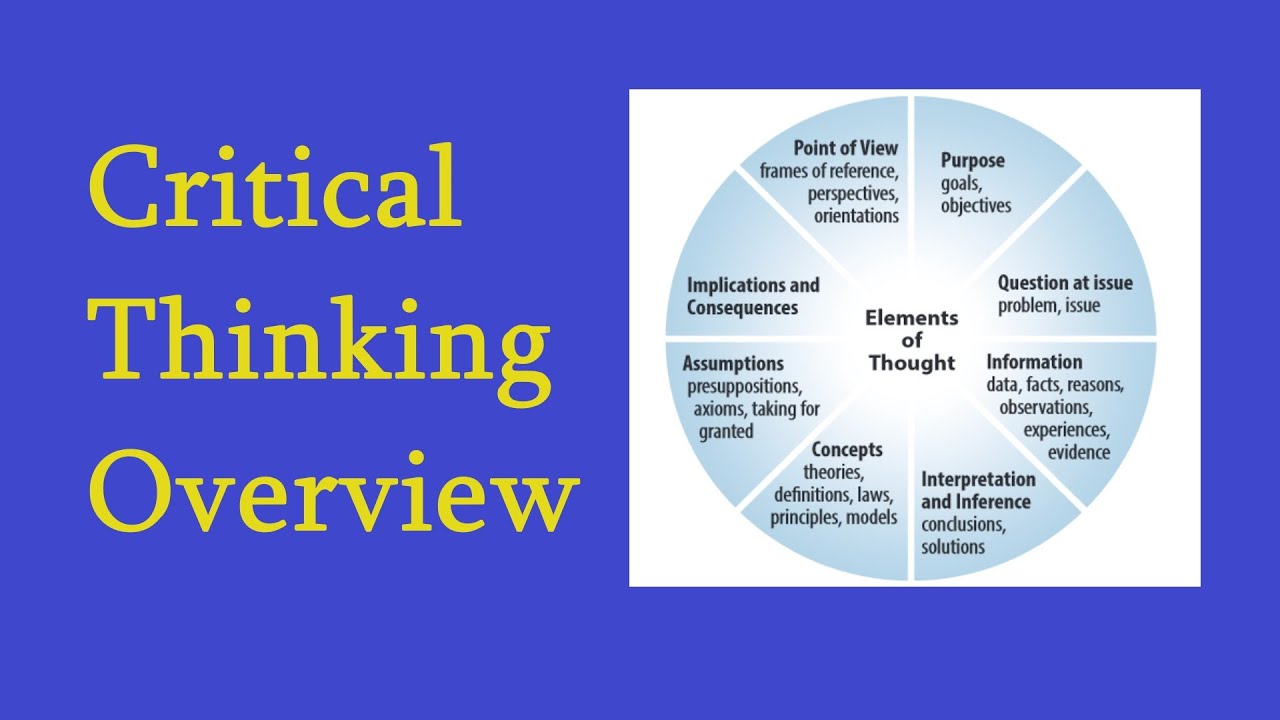
that of course with the other elements of reasoning as well and Again just to give a recap very quickly so the idea that we are focusing on when we talk about the elements of reasoning is that there are eight elements embedded in all reasoning we have a purpose we ask questions which we're focusing on here we use information we make inferences based on that information and based on the assumptions which we're making which is another element of reasoning we use Concepts to guide our reasoning which are all which Also inform and are connected with our
assumptions right and those are connected with our point of view which is another element of reasoning and all of this leads to implications and when we act on our Behavior our thinking we end up with consequences so basically we we we've boiled the re the elements of reasoning down Richard Paul did years ago and then we are continuing the work boiling this down to the eight elements so we're Burrowing into these eight elements we're focusing on questions right now and so if we take any of the elements of reasoning if we take purpose if we
take questions if we take any of the elements we can ask questions based on that element right so even questions so if I'm in the domain of questions and the elements of reing say well what are some questions we could ask about questions so one is what is the question an issue What is the real question versus what is the question that I think I'm pursuing something like that right right that's a possibility or what are the questions embedded in this question or is there a better question for us to be focusing on right now
than the one we're focusing on in fact right right right and and if you think of like this kind of like a a discussion like this we are as we move from one topic to another we're asking a Host of questions like is it time to move on have we developed this enough do we need more examples here we're we're doing that underneath our thinking yeah yeah uh a thing that's kind of that I Ponder a lot is is is kind of the what I consider almost a fact and that that is that people can
get along many people can get along fairly well without knowing even about the elements of reasoning or without actively pursuing critical thinking some people Can get along very well with it uh as we see by thinking looking at thinkers and great thinkers in history I I mean they they may have considered the elements of reasoning kind of implicitly but they didn't have them in front of them so we can get along pretty well without doing it expli itly much of the time but I always have this very strong sense that we can make our lives
and our thinking very much better by asking questions related to the elements Of reasoning so that I might do it okay um I might get along make my f use my example earlier to make my family's life better I might do that okay without ever explicitly asking myself the question but as soon as I I articulate the question how can I make my family's life better oh all these roads open up for me that I didn't have before that I was just I don't want to say blundering down but just kind of Meandering down these
paths without kind of knowing Where it is I was going without asking the question of what lies ahead so um I'm always I'm puzzled by puzzled by that I think that's a lot of people's resistance to asking questions that that they they feel often times incorrectly I'm doing okay now without asking many questions and often they're not doing so well um yes I was going to I'm glad you ended with that because I thought that it was you open that up it was I felt it was a a little misleading we can Basically get along
without explicitly the tools of critical thinking or here we're focusing on the elements of reasoning right and I don't I don't I don't I don't think of it that way the way that I think of it is that certainly I agree we would have to agree that a considerable amount of of excellent thinking has been done without explicit knowledge of the theory of critical thinking within every field of Study but that those people are the Rarities right so take literature so we have the classics if you think about the the the classics even if we
stretch the list of agreed upon Classics it's still a pretty small group in comparison to all the Publications that have been produced so these people were thinking critically to some degree to to a high degree in certain areas not necessarily in all areas so take someone like Dickens Dickens was very good at Revealing pathologies in terms of uh of of institutions people and so that that's one example so he was very good at that but he wasn't so good at creating the cre the character who was high who's highly rational we don't really have that
example from Dickens we have a lot of critique which is very well done and this is what we tend to see in literature the critique the show revealing the problems in human Societies in human thinking right and to add to that just to go on the part not I thought I think two the ESS was excellent revealing the problems in the institutions in late Victorian England but I don't remember any time when he actually proposed a good strong way of making things better his emphasis was never seemed to be on that c not in the
novels but as far as I could tell not in his thinking much either even outside of the Novels so again there uh that there's a spotty nature to our thinking exactly so so we know that there are many there are countless examples of criticality occurring in human life the question is is it enough to uh sustain us and help us live at a level of self-fulfillment I mean for All Humans right see we're so far from that reality and mostly people in or half of the world's population are asking the Question where's my next meal
coming from right or will I get health care if I need it or do I need to run for my life right now with my whole family and leave everything behind me I mean it's just the wars and all of that so this means that these people never have a chance at right the kind of work in the kind of world that we're trying to help create yeah yeah yes so we we have so we we can look at any of the elements of reasoning Again and we can ask question based questions based on those
elements we've given multiple examples of that we can ask well what are the implications I'm facing in this situation if I make this decision throwing in on Concepts what are the key Concepts driving my life right now what are the key Concepts driving my professional life what are the key ideas F uh guiding my my role as a parent my role as a teacher my role is In this intimate relationship what ideas am I bringing into this setting and are those ideas reasonable and does this other person have the same ideas of the same thing
so to speak or there are we diverse ing in our ideas so there is there is there are unlimited numbers of questions we can ask when we understand the elements of reasoning and for those who want to go further uh we suggest that you look at the thinkers guide to analytic thinking And their multiple resources on the elements of reasoning on our website so let's move on then to intellectual standards so so intellectual standards are the thinking the standards by which thinking is judged by critical thinkers basically so if we take the term critical thinking
well thinking is reasoning in the way that we're conceptualizing thinking right now with in this context and the critical the term critical brings Criteria that we need to adhere to to be thinking at a high level of quality some of these intellectual standards just to name them uh are Clarity accuracy relevance breadth depth logicalness fairness sufficiency and there are many others these are some that we begin with justifiability so we can take any of these intellectual standards and we can ask questions based on these standards As well right so can you give a few examples
of that Gerald yeah um one thing that I that I find quite striking is the way that asking a the question about the standards makes us can make us think in a in a really a quite different way so if I just ask you an ordinary question like uh how did you spend the last three four hours uh just just and I ask you just just tell me about it and so you tell me about it now I say exactly the same question but I assert One of insert one of the standards I say tell
me what you did in the last three or four hours but be as accurate as possible that to me if somebody ask it that way it puts me in an entirely different frame of mind about how to ask how how to answer what I've done in the last three or four hours the last three or four hours under the first question I just casually give you my answers once you say be as accurate as you can accuracy being the standard I now think Okay well how about this well no that is generates all these questions
something similar happens if I take the standard of precision um so I ask you so be as as precise as possible about what happened in the last four hours you see that when people get in an automobile accident they have to fill out this form or the the the the police officer asks and what exactly what happened or what exactly happened and you have to fill out the Form in writing or online so that it's actual words not just casual talking and you got to be extraordinarily precise well person hit the left side of my
car and then I ask you the front the door the rear on the the left hand side so asking so describe your last four hours but be as precise as possible it changes my whole way of thinking about it um so that that's I think true for all the standards and there's this great thing about the standards too that we can if We're get if we're a Droid about them you can do it in casual conversation and it makes it very much richer so imagine sitting around thanks the the table Thanksgiving all your family members
and friends are around and someone starts making a point and you can ask well clar here's a Clarity question can you give me an example of that it's not confrontational it's not putting them on the spot it's not saying I disagree and you're wrong can you give me an example Of that or about Precision can you give me some the details of that or sufficiency so do you think that's a full answer or is that only a partial answer to the political problems you've been talking about um and each of those sends us to a
different frame of mind and I think changes the way we answer to a great degree so the standards are are to begin question yes yes I was thinking of your first example tell us what you've done the last three or four hours Something like that and you added first the standard of accuracy and then Precision so accuracy means get it right make sure every part of it's right Precision means give us a lot of the detail all of the details or some of the details or right we were not clear about how many details the
person wants right but then I was actually thinking when you started adding standards I was going to immediately add the standard of significance right right well if I had Said tell me the tell me what you've done the last four hours Gerald I mean what you done of significance right that's right I breathed in I breathed out I breathed in I breathed out that would not be an appropriate answer because it's unimportant for given the question exactly or you could say to someone now what if you've been reading lately and they say um I've been
reading the local newspaper okay so what have you been reading of Significance ah right and that forces the person to say well maybe nothing right and maybe I need to go and grab a book by cica or I mean so what are you reading of significance and actually that's a it's a good example was a maybe a Freudian slip because cica said read only the best works and read them again and again ohuh so that he he um believed that so so the standards are always are almost always needed as we Move through the day
right and so if I'm if I am preparing for let's say a talk then there are certain things that I need to do in order to perform at a certain level at a high level in my view based on my knowledge and so I've got to ask certain questions like am I am I focusing on the most significant points I could make right what are the most significant points often I'm dealing with Concepts I'll ask what is this concept if I'm Dealing with the concept of creative thinking I might I might ask what is creative
thinking so I might go to the dictionary and look up the word creative first and so then and I connect that to the word thinking and show people the two uh work together so in other words what are the concepts driving this talk how can I what examples am I going to use right and so what I'm saying is that um the the intellectual standards as you said before when you talked about the Elements of reasoning we are we are often adhering to intellectual standards right without realizing it when we don't when we don't have
explicit awareness of intellectual standards so there are many people who are clear accurate relevant broad deep and Etc within certain domains of thought maybe their field of study right for example and they're doing this intuitively they they may not be able to tell us why why they're making this move or what move they're Making but they are adhering to these intellectual standards and so the question is then not do we ever adhere to them because we must or we wouldn't be alive I mean you must sometimes be clear accurate relevant and so forth or You'
just be a basket case so everybody sometimes or frequently or somewhere in between aderes to intellectual standards so the question becomes how can we make our adherence more explicit so in other Words if I'm preparing for a talk so just is a based on this little example that I gave if I'm prep preparing a talk the next time I do I may stop and say remember that conversation you had with Gerald in that podcast so you said you take a little time and you really formulate your questions now you know you're asking these These are
good moves these are com to you intuitively Linda but what is not coming to you intuitively what other questions could Be asked and So based on intellectual standards that matter the elements and they come they go hand inand as We Know yeah and and for me the standards um two of the standards tend to fall into a separate category for me and those are the standards of depth and breadth in that oftentimes clear accurate and relevant and as precise as necessary uh come to me fairly straightforwardly but but depth and Breadth um generate a different
variety of questions for me often now death can mean a lot of different things but one of the main ways we use it is what are some of the complexities what are some of the comp complications of this so if I take even many ordinary questions and I step back from the question a problem I'm having in my life say and I ask okay so what are some of the complexities of this situation that opens up that question opens up avenues that I'd never Thought about before right um uh many people have strong political views
and they have they come on very strong this side or on that side just full force and I do that sometimes as well but then I I ask what are some of the complexities of the situation um well that makes me have a much more refined and intellectual and engage in much more intellectual humility as I try to answer the question um and something is similar with breads how can I look at this from different Points of view because we all tend to be strongly embedded in in our own point of view and I and
when I ask how are other people looking at this or how are other reasonable people looking at this or even if I per think the person's view is unreasonable how many PE in unreasonable in this case how many otherwise reasonable people are viewing in another way and how do they see it that can open things up for me in a in a major way depth and depth and breadth lead well Obviously deeper and more broadly on breath that's that's an interesting uh move that you made there and it made me think about um when we
think about point of view we tend to think about entering reasonable other reasonable points of view that we may be not considering and um one one thing that I do to expand my own own breath I guess of knowledge is I try to read in the works of and biographies of Distinguished thinkers right people who have accomplished at a high level and what what what how do they think about life and how do they think about things and what are their habits what are their intellectual habits so to speak and that that looking at exemple
LS for thinking I think it's a very important um phenomenon that we should engage in much more of as humans because we tend to look at the masses and how they're Behaving I me look at TV look at movies you rarely see portraits of the rational person see even in classic works again like in the in Dickens books you see a lot of the dark side well illuminated but what about the bright side well illuminated so for example take a biography of or the autobiography of Nelson Mandela the autobiography of Nelson Mandela is exemplary because
in it you can see lots of examples of critical Thinking although he's obviously Mandel is not using the the term the term critical them but he's making a lot of the moves licitly and he he you know saying we had this information but we left that information so an example but we also see a considerable amount of intellectual humility in him because he also brings in mistakes that they made in thinking that he made in thinking arrogant that they you know that the fact that they ever got caught was Really their fault they weren't they
weren't thinking well when they were caught and then sent to prison it was a very un that was the most unwise thing thing that I think they did yeah but he so he illuminates how they got caught and how they got became careless oh that's that's interesting I I didn't know that about him but I'm I was in another podcast recently in which someone asked me who in history uh would I say is a critical thinker and uh I Backed away from the question because I I said well with all human beings uh there are
parts of their lives where they think critically and there are parts of their lives where they don't and if I name anyone there people will find numerous examples of how they haven't been critical thinking been critical thinkers or or didn't live up to their ideals I I just recently read something about Gandhi whom I have immense respect for about how his son When Gandhi was younger but his son was around 20 uh so Gandhi must have been 40 at least maybe 50 a son wanted to marry a Muslim woman and the son was a Hindu
and and Gandhi absolutely forbade this and said that this is going to ruin India if his son does it and his son listened to him and broke off the engagement and uh and I thought wow that's so inconsistent with what Gandhi stood for so if I bring up Gandhi as a paragon or as a even as a Partial Paragon someone else on another side can key in on the deficiencies so I always shy away from that uh yeah yeah so let me let me add to that that that's a very a good point and one
that we really need to fully understand that that and so if we ever name an Exemplar we mean an Exemplar in certain areas that we can see clearly or we think we can see right and in other words if you can just take the the the the parts that where the Person excels and learn from those parts you still have to be able to critique the weaknesses in the person indeed so and the this leads us back to the importance of being able to think critically in general terms so that we can distinguish the two
yeah so you could say if so somebody might say to well Linda you're you're going on and on about Mandela being this great thinker but what about the fact that he actually by making all these decisions he in Essence abandoned his family and there isn't any response that I can make to that that's going to be satisfactory because he in fact did that and he in fact did have a responsibility to his children so that but and he also raises that point right and he doesn't really defend himself very well on it but so what
I'm saying is we we've got to be able to look at exemplars and see the exemplary things that they do right and or did and not say but we've got a Torpedo the her whole person because if we do that we'll have we will have no exemplars right yeah umy social psychologists sometimes call that the the Halo effect meaning that if someone is good in some respect that we think High that's very important to us we will Halo the rest of them we'll think that the whole person is is is good or moral or ethical
or or thinking strongly and uh similarly there's a halo effect on the other side If someone is evil or does very bad things we think that person is evil in all respects so um and yet neither of those seems accurate in fact but more than that it's just a simplifi oversimplified view of the way humans are I mean humans are not this univocal kind of thing and and uh not only that but over the course of their life they're clearly not consistent I mean what I thought of as an adolescent is very you we have
to go all the way back To all those decisions and average it all in that's that's not yeah yeah so yeah okay so then we are all imperfectly adhering to intellectual standards that is sometimes we're clear sometimes we're not sometimes we're accurate sometimes we're not sometimes we're giving enough details sometimes we're not sometimes we're thinking within other points of view that are relevant sometimes we're not so then again it comes back to us to each one of Us to be responsible for uh telling the truth to ourselves right about the degree to which we are
adhering to these intellectual standards and this is all related to questions because if we're adhering to these intellectual standards we're asking questions related to those standards though they may be implicit right yeah and and it brings me to a to a kind of gripe I have there there are people around who say you can't uh can't teach Critical thinking you can't St you can't teach critical thinking and I've had I had actually somebody who was Provost at a major university say that to me well of course you can't teach critical people to be critical thinkers
and what what bothers me about it is that it's a it's as if they see critical thinking as this single thing which you either have or don't have so the question is not quite can you teach people to be critical thinkers but can you teach Students say to think more critically than they do now to more often raise questions more often ask about their assumptions or the implications and consequences and the answer to that seems clearly and obviously ye yes and eminently testable in a straightforward way um so uh again it it goes with this
idea of everything fitting together every all the parts of us as humans being a single thing um that seems to be completely Unrealistic yes and when we look at the the literature on Mental Health Health mental well-being and and therapeutic approaches that work what we increasingly are seeing even in the research is that critical thinking leads to lower levels of depression for example and that doesn't mean in every single person in every single case but it means that when people for example and this makes obvious sense when you say it when people make poor life
Decisions and negative implications follow follow depression often follows as well so if we can reverse those decisions or make better decisions to begin with which would even be better um then we can have you we make better life decisions and we'll be less likely to be depressed right and so this is in other words and in any given person may not thinking about the Continuum of learning so or even going up the ladder we may any one of us may Not we may not make it from one side the poor a very poor thinker to
the best thinker in the world we're probably not going to right what if we made it halfway you know what in other words what if we improve considerable degree so you're more very much more often you're accurate very much more often you are logic iCal right and in any case critical thinking has never been had has never been given a chance that's right It's never it's never been utilized in an extensive long-term way to my knowledge really anywhere so that we could then say we've actually tried critical thinking and we know that it doesn't work
we haven't actually tried it so not in on a grand scale and not routinely and not using this Rich toolbox that we have in the paan school of thought so we could talk more about intellectual standards but I think for Anyone who's interested in going further remember we have a thinkers guided intellectual standards and uh and you can sit down and write out each word each intellectual standard's word and then ask yourself what questions could you ask if you understood that that that concept that standard and the same would be true for the elements of
reasoning if I understand purpose and reasoning then what are some questions I can ask based On purpose if I understand significance in reasoning then what are questions I can ask based on significance am I asking the most significant questions in my life right now right right for example uh so those are two um categories of Concepts that we've focused on in relationship to questions now let's move for a few minutes if we could to questions we can ask when we are taking seriously intellectual Virtues and so if I could now I'm reading from how to
study and learn the thinkers of God for students on how to study and learn a discipline okay so let me just give a couple of examples so let's say I want to develop intellectual humility intellectual humility as we know means that we can e that we we can accurately and do accurately distinguish between what we know what we do not know in a given situation and we are very happy to admit what we don't know Assuming that no one is going to harm us by admission but in any case we are willing to admit the
limits of our knowledge and we're Happ we're Happ and you can hear when you listen to good scholars in a field no matter what the question is that they're being asked they don't ever answer any it any other way than they know how to answer it and that is they don't you know well when the person's trying to get them to say more than they know they they never do That they just say well we don't really know the answer to that yet that may be unsatisfactory but we no I can't say for sure right
they don't say what they think when they don't know what the truth is right right and so you can really learn from people that have that kind of intellectual humility so this is one intellectual virtues excuse me one of the intellectual virtues and of course there are others and just to name them very Briefly the ones that we tend to focus on in our cluster our core cluster intellectual courage intellectual empathy intellectual Integrity intellectual perseverance confidence and reason and intellectual autonomy and we can add intellectual discipline intellectual responsibility intellectual curiosity so let just take intellectual
humility again so we can ask questions like this when we're trying to develop intellectual humility in ourselves what Do I really know that's sort of like dayart you know what do I really know but then you could say what do I really know about myself now imagine okay so that's your assignment for today right the answer to the question what do I really know about myself and then you can say about sort of anything about the situation about this other person about my Nation about what is going on in the world what do I Really
know versus what do I think I know yeah um it that it's very it a couple of the question question you raised there just uh strike me uh about intellectual humility I don't want to say intellectual humility is my favorite of the traits that there's something kind of ridiculous about saying that and my favorite changes from moment to moment but that maybe intellectual humility is one I inclined to from when I was very Young that I inclined to in a very strong way maybe more than to the others but um I just get often impressed
impressed with how much I don't know even about the things that I know the most about um someone in a in a here's not one I know a lot about but some I was asked in a podcast uh having to do with the military did I did I see um the he said the disaster in Afghanistan as a as a critical thinking error and I said you Know I really can't answer I just don't know the information that the decision makers had in front of them when they made the decisions they made and I don't
know the assumptions they were making at the time all I get is stuff from the from social media or from the newspapers or from some sources which are not the decision makers and I don't even know how many decision makers there were and whether they all agreed with all these aspects of it and so there's a way which I can't really give you a an answer about the disaster in Afghanistan but maybe I'll be able to find out in 30 years or so when historians have accurate have access to these to these documents so that's
a it's a it's a variety of I don't know even if I have even if I have strong views about what happened in Afghanistan um and again this is something I mentioned earlier in an earlier podcast of ours the re one of the reasons we think it was it was a Failure of critical thinking is that it was so disastrous but that's outcome um that's different from reasoning it through well or not ahead of time um in that if it had turned out well we'd have said oh we reason it through well even with exactly
the same reasoning if the Taliban had acted in a different way say so uh the way things turn out well or badly disastrously or or fabulously is one indicator of how well I've thought it through but it's only One indicator uh success or failure depends on a lot more factors than that um so yeah I I strongly inclined toward intellectual toward the questions prompted by intellectual humility um Richard I remember I I gave a a keynote and Richard was uh really pleased because I said um how much I liked finding out I was wrong about
things and I I really do I just enjoy that tremendously something I believed for a very long time and then I find out that's not true at all and um and it just kind of it just opens things up for me I think oh my goodness that's wonderful um yeah well um I'm wanting to burrow into your your example a bit but I think it's a the example of Afghanistan is a tough example because there were such uh human costs involved and we can't from our perspective know what moves the decision makers were actually in
fact Making we we don't we don't know that so we we do know that certain things could have been done better to save more lives and in any case even if it in in once that had been done let's just say the consequences would have still been horrible for everyone else so in other words there wasn't a way to get everyone out of the country but the United States government did have responsibility to certain people and so We can take the example apart we can examine and I think we can critique parts of what happened
with even with intellectual humility right yeah yeah for me it hinges a lot on how much of those outcomes or the likelihood of those outcomes were reasonable to know ahead of time right not after the fact of course we see it um and uh yeah so and that I I just don't know but I have not I haven't kept up with the literature on the the disaster in Afghanistan either so my well and I think that we did know and we could have done much a much better job and again I think you can bring
intellectual humility into the situation and still know certain things absolutely yeah on the face of them they they seem obvious and in then in some cases you could even then be wrong but your other point about enjoying changing your mind you see this is a very rare trait very few people are happy to say Oh yes I I've believed this for 20 years thank you for telling me that I've been wrong all those years appreciate that you see that because we connect we tend to connect our identities to our ideas which we should not do
so I'm a I'm a person of value in and of myself because I am a person and yet I have certain responsibilities to think as well as I can and when I have an idea that's wrong If I you know if I if I if it's not connected to my identity then I can go oh yeah okay so you've given me another way of thinking about this right it's great I'm so so glad because actually now that I think about it these 20 years I've been using these other ideas they haven't really been serving me
very well yeah um yeah and uh and sometimes it's not so much uh finding out that I was wrong as going back to bread um and that is uh if I take a about during covid-19 wearing wearing a mask being vaccinated getting a boost um strongly in favor of all three of those and and and I think those are I don't want to say completely correct but overall much more correct than not wearing a mask or not getting vaccinated or not getting the the booster but when I began thinking to myself how do how do
those people who haven't done any one of those three things and her against those Three things how are they thinking about it it didn't get me to change my my mind but it got me to explore the ways in which I could at least seemingly reasonably see how well I'm really not it's not reasonable I'm not saying this is me this is the the point of VI I'm thinking through it's really not reasonable for me to believe the CD the the government with respect to these three and look look at the changing information they're giving
us Now to me that changing information is very positive it means they're dealing with certainty and they're giving us the best answer they can at any time but if I don't pay attention to that I can think well you know sometimes they're saying we're a mask sometimes they're saying not wear a mask sometimes they're saying uh uh cleanse all surfaces and then other times they're saying you don't have to do anything about the surfaces so they're just all confused I'm not going to believe them I'm short changing it but I can put myself in a
position where I can see ah I even have analoges like of those in my my own thinking about things that the government has done so um it didn't cause me to change my mind but caused me to see another point of view with more intellectual empathy than I had originally to use another one right and of course there are different reasons why people would refuse a Vaccination right um and the uh the the the point that you made about the the let's say the way the government has behaved and the way that people think about
the government and that we can't trust our government see the the the government in a way gets what they deserve in other words the go our government has Through The Years done Many things that were underhand and were not in the the interest of the people either here or internationally and there are a lot of people then that don't trust the government right and that it makes sense that they don't based on the real evidence that you can read which would show you why you shouldn't trust the government but this question of the vaccination is
a question that is fundamentally a scientific one not a political one in fact it's not a itical Question at all it's a scientific question right and now you could say and the scient and the scientists don't necessarily agree and they've also misled us a few times and and within they came out with one vaccination which actually resulted in certain blood clotting in people that were quite young and then they died and it's early phases well now we know this and now the people coming behind them are not going to die most likely because they're they
know What's happening it's a certain kind of blood clot and they know how to go in and fix it so what I what I'm saying is that and what people don't have to realize is that we're living through a plague that we in a situation that humans have really never lived through exactly in this form and there are parallels going back in history now almost hundred years but most of the people people living now were not aware you know were Not alive then so what I'm saying is this is this is directly related to the
subject of questions because what people are real are are doing is they're making the wrong move by saying you know well why should I go along with the government they make that move they're showing that they don't know what kind of question we're dealing with here and then even though it's a scientific question we realize that the scientists are not necessarily going to agree Especially because we're in early days of the vaccination and so even when you trust let's say the scientists because you have to trust something here and it is a scientific question even
though you trust the scientist it doesn't mean you necessarily would want to be the first person vaccinated that is right and I myself would not and I said early on I will be vac after Millions have been vaccinated now maybe that is a Um a view that lacks courage and certainly it's true but that's what I'm saying is just just just I'm I'm not I'm saying we can't just follow scientists because they say something is true right we follow the data that hopefully has been gathered objectively and when it comes to something like a vaccin
ation is going to be very powerful it makes sense to me to to make sure there's enough data for me personally to say that I'm comfortable With that decision right well and no of though you're completely right that the question of the effectiveness of the VAC of the vaccine or of a booster is a is a scientific question it gets complicated by the fact that the government is the one that tell tells us what the scientists are saying yes so I have to listen so if I listen to the CDC I'm not exactly listening to
the scientists I'm listening to those who report to me what scientists have said and uh with other Government agencies what the EPA says um depends on who gets appointed as head of the EPA by this particular Administration so the guidelines that the EPA scientific guidelines that the EPA puts out change from one Administration to the next because of political considerations so there's that intermediary that the government often plays in relating the scientific findings to me um I can maybe get around that by as someone suggested in a Q&A Webinar I gave a little just a
few days ago um by going to the experts myself and reading the scientific journals but that first that's a huge Enterprise and second of all I'm not that confident that I will come to a better interpretation than the CDC comes to reading those same scientific journals so um it gets comp it is complicated but we in the end we as thinkers need to be able to distinguish between a political and a scientific question and any other Kind of question absolutely and when it's a scientific question we need to know we've got rely on the scientists
who know the most about right this particular issue yes and that is um and it that those scientists may come to us through the CDC or some other website and they may not but basically when we're when we see these scientists agreeing across the world and they're saying the same things Then then that's going to be more powerful to me than when we see uh disagreement right and then we can see them making all kinds of mistakes as well and this adds to the problem for example early on in this pandemic remember we weren't supposed
to wear a mask and I unless you had something right right and to me it never made it was never logical that we shouldn't wear a masks right and and then a few months later it was suddenly the scientist Saying everyone needs to wear a mask well that doesn't help their credibility right so often scientists are making statements when they themselves are not fully um informed but they're behaving as if they were instead of saying we think this is true yeah we're not sure yet this is the best we can do we are not sure
and in that case they should have air on aired on the side of more mask but they air on the other side right so all of these are important for People all of these complexities are important when we think about how to pursue questions yeah and uh and I I was actually maybe at least emphasizing maybe over empathize emphasizing intellectual empathy of how people who would be opposed to vaccinations uh why they might do it I wanted to make the most reasonable case from their point of view I could but in fact my belief is
that many people just pick up their data Such as it is about the effectiveness of the vaccine by looking on social media by talking to their friends uh by sitting around in a coffee shop and hearing what other people have to say so we pick it up in this kind of peac meal uh way from unreliable sources and we then act on that and and that seems to me to be a much more accurate reconstruction for at least why many at least some of the people oppose vaccinations well we are beginning to Get into one
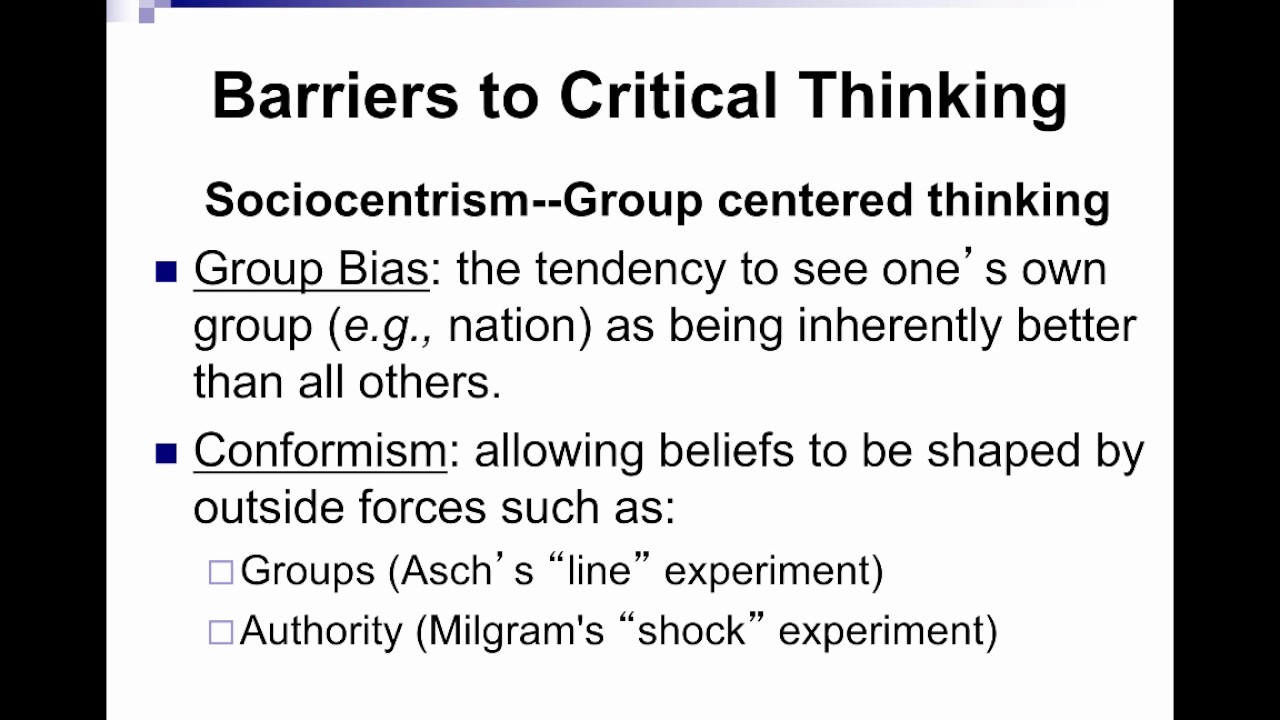
of the intellectual virtues un intellectual humility you started by saying this is a unique uh trait and in a way it it is because if you don't have a considerable amount of intellectual humility then you really can't develop much as a critical thinker because the opposite of intellectual humility is intellectual ual arrogance right so if you're never asking questions and I'll just read a few others that we can ask when we're trying to embody intellectual Humility to what extent do my prejudices or biases influence my thinking or you could say probably a better question to
what extent are my prejudices or biases influencing my thinking right now about X and to what extent have I been indoctrinated into beliefs that may be false well that's a very difficult question to answer but if you say to what extent have I been indoctrinated let's just say into beliefs by groups that I've been thrust Into so I could start with I was thrust into my family and I was thrust into maybe a religious group and I was thrust into a school district to system and so how my I have been indoctrinated in these through
these groups early on and it was even that is going to be difficult to do right and and uh you said thrus into um whereas much more hard-hitting term for me is Born Into so I'm born into my family I can be born into my religious or political or Cultural group and uh those have a have a very deep seated effect on us right because maybe during the first 12 15 years of my life that's really all I know is my culture is my is my family is my religion is my political views uh the
ones I get from my family and so to grow out of that to merge on the other side takes a considerable amount of intellectual humility and that to me takes a great amount of time and intellectual humility I think maybe of All the ver of all the virtues is the one that most directly leads to questions so I ask myself of these structures that I've been born into what do I not know about about my family um right I mean you grow up thinking your parents are always right that they know all the answers and
and so J becomes very obvious that they didn't but but but I could ask myself that question I'm not saying to ask it when you're six years old but ask it sometime during Your life but it's hard when those are at the level assumptions now indeed so that's why these questions are they they make sense and we can see the power in them but how do you get at these beliefs that you or have uncritically accepted right so that we tend to find in a context when we start to develop our thinking and we are
committed to developing our thinking and let's say in a situation I find myself prejudging or something then I can stop And say wait a minute where is that coming from and that may lead me back hopefully to that false or that unreasonable assumption yeah a question I asked I I asked my students often when we worked on intellectual humility was uh so the opening question is take-home assignment what are some things that you believed uh five years ago that now you think are wrong incorrect or um or off center or misleading or something like that
my Students could readily write down a whole bunch of them I was in love with so and so and thought it would last forever and um so huge numbers of them um so then they do that and they find they find that very enlightening but then the next qu the next assignment is what are some things you believe now that you think maybe in five years you might come to think are wrong or misleading or off center or throwing you off and and that's a much more profound Deeper kind of activity and my my students
seem to get a great deal out of it because it caused stepping back into intellect you kind of you you you kind of push them against the wall a bit because you you don't you the first part of it seems sort of easy I mean it's not easy but it's easier than what's to come you've already done that so you proven you've proven this five years later that you you've Chang inste of you're thinking now you're going to have to Prove what you're going to change for the future where you actually don't want to change
anything because you think everything that you believe is accurate right now right and I can ask so what are the odds that everything you believe now is going to turn out to be the same you're gonna believe the same five years from now and yeah so right yeah very yeah so we we have just begun to scratch the surface of going deeper with questions I think we should wrap up for Today and do uh our next part two uh pickup part to with this continuing discussion on how questions help us develop intellectual virtues and then
focus on other ways of going deeper with questions so thank you Gerald thank you Linda wow wonderful enjoy this tremendous yeah it's always a lot of fun and I'll see you next time okay good take care everyone bye




![The SILENCE That DESTROYS EGO - Stoicism's POWER [2024]](https://img.youtube.com/vi/aKX4-Jhqqwo/maxresdefault.jpg)

![How I brainwashed myself to be rich.. [100% results!]](https://img.youtube.com/vi/oRvRE-3KeHw/maxresdefault.jpg)