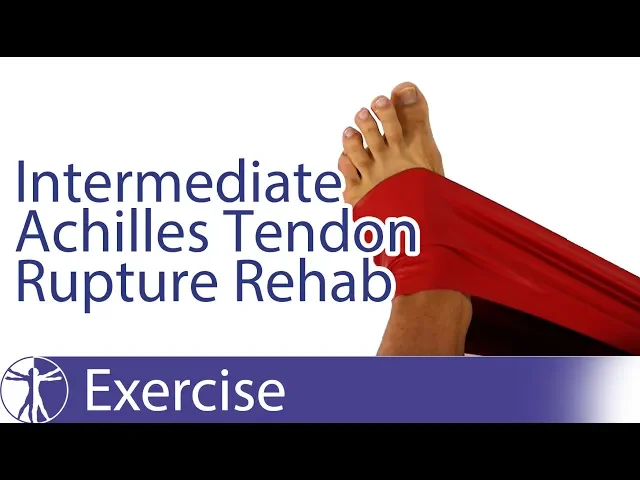
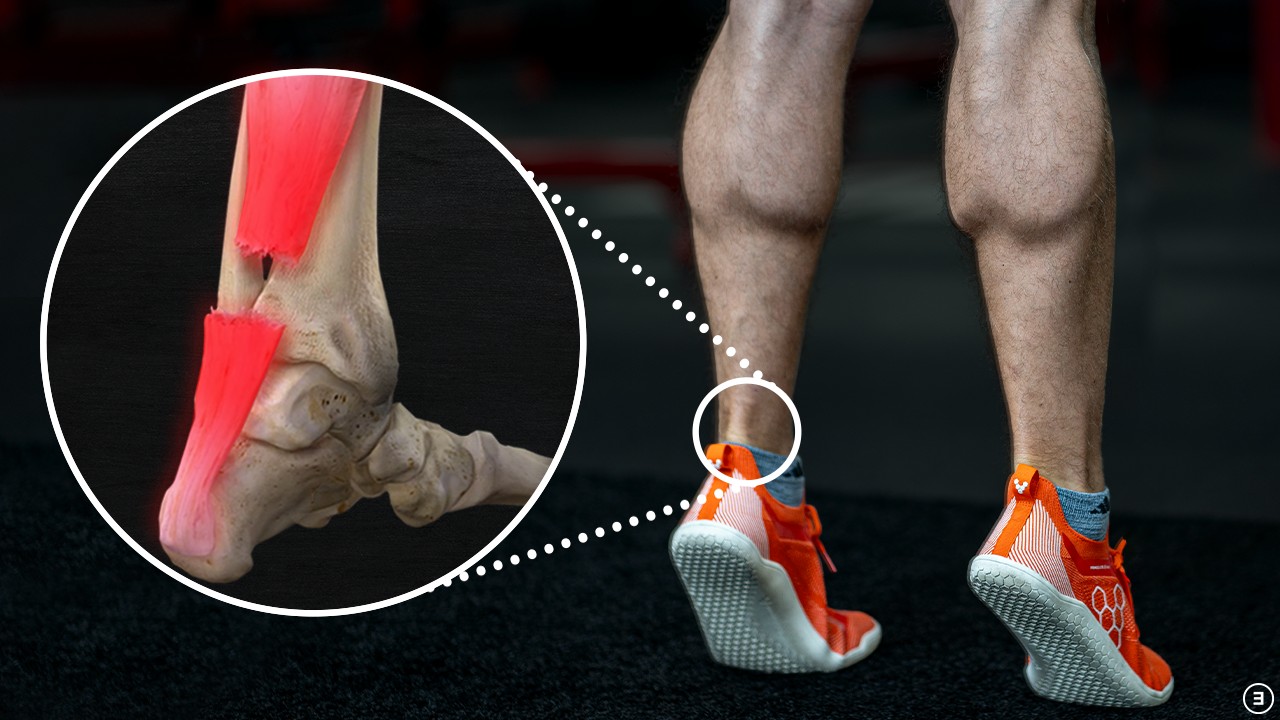
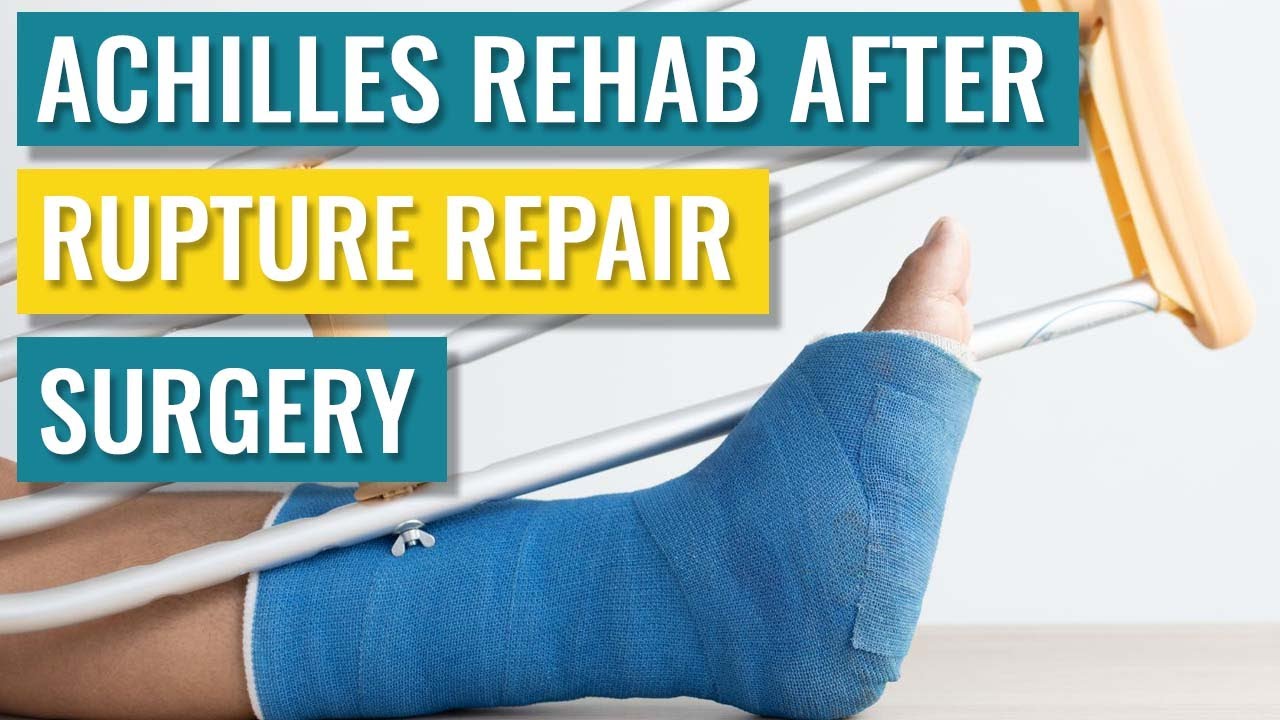
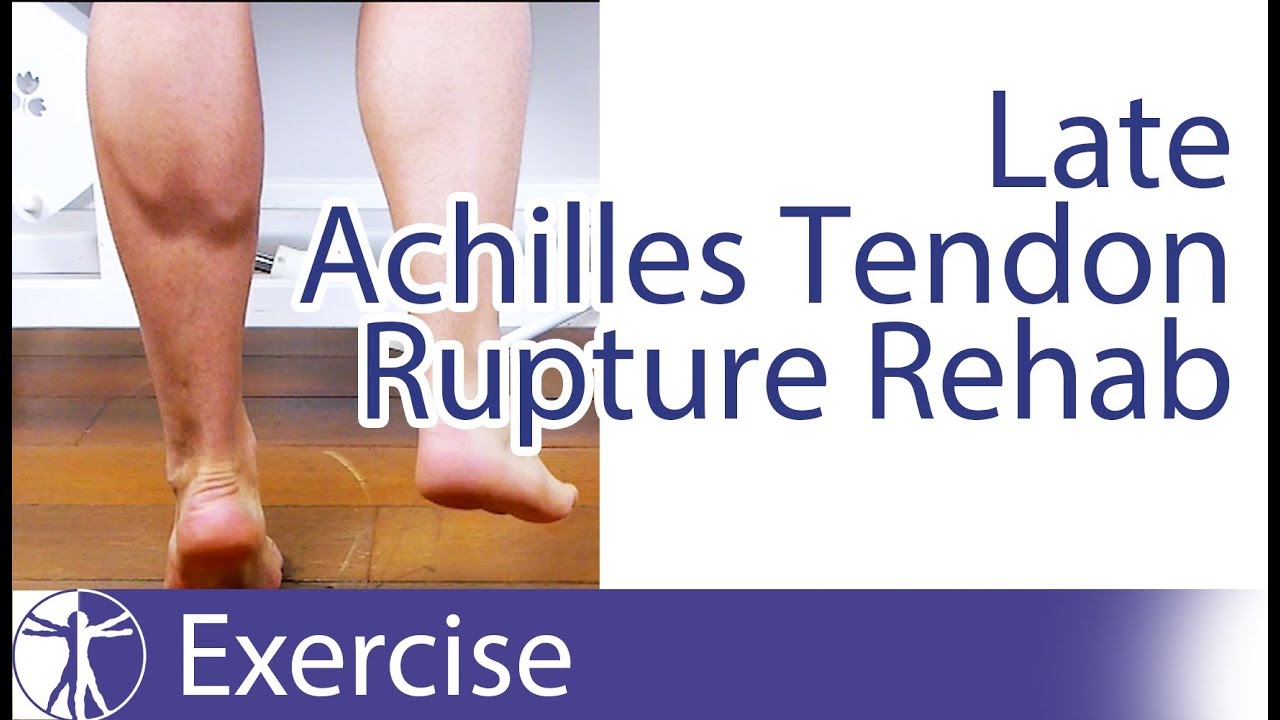
In this video we are going to show you a couple of ideas for the intermediate stage rehab after Achilles tendon rupture repair Get our very own Assessment E-Book and mobile app! Links are in the video description Hi and welcome back to Physiotutors! The Achilles tendon being the biggest and strongest tendon in the human body is formed by the tendons of the soleus and gastrocnemius muscles which both insert at the calcaneus We mostly see ruptures of the Achilles tendon in high impact sports predominantly in the male athlete While a scientific review from the year 2017 showed no significant differences in the outcomes of surgical and conservative management, the re-rupture rate of conservatively managed tendons was higher and conservative management might not be suitable for every injury depending on its severity.
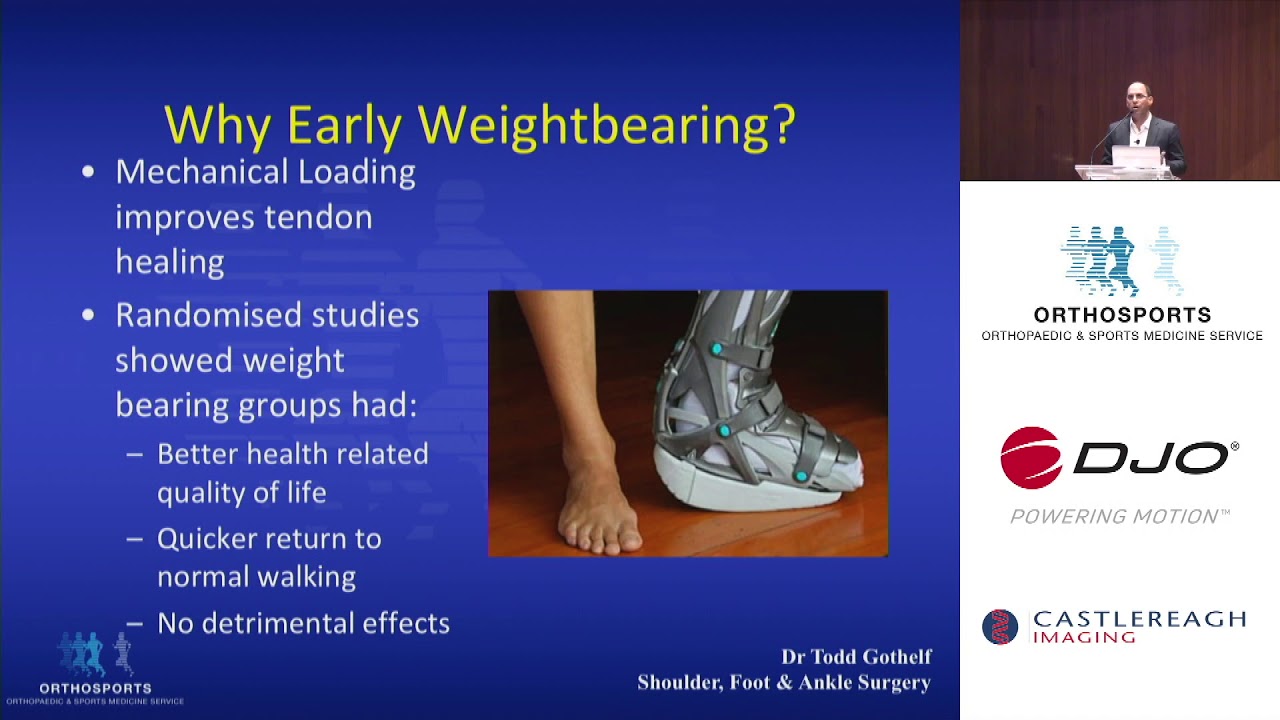
However, there is a clear benefit of an accelerated rear program including early mobilization versus immobilization as has been researched by Brumann and colleagues in 2014 In a previous video we covered what the first two weeks of rehab could look like Having no pain at rest and no increase in swelling the patient may progress to more ankle mobility In the second phase which can last up to three weeks Your goal should be to obtain a neutral ankle position and full plantar flexion range of motion Make sure that the wound is healing properly and swelling continues to decrease, as well as work on restoring a normal gait pattern. You can continue to load the exercises from phase 1. But in phase 2 we are going to focus more closely on the ankle.
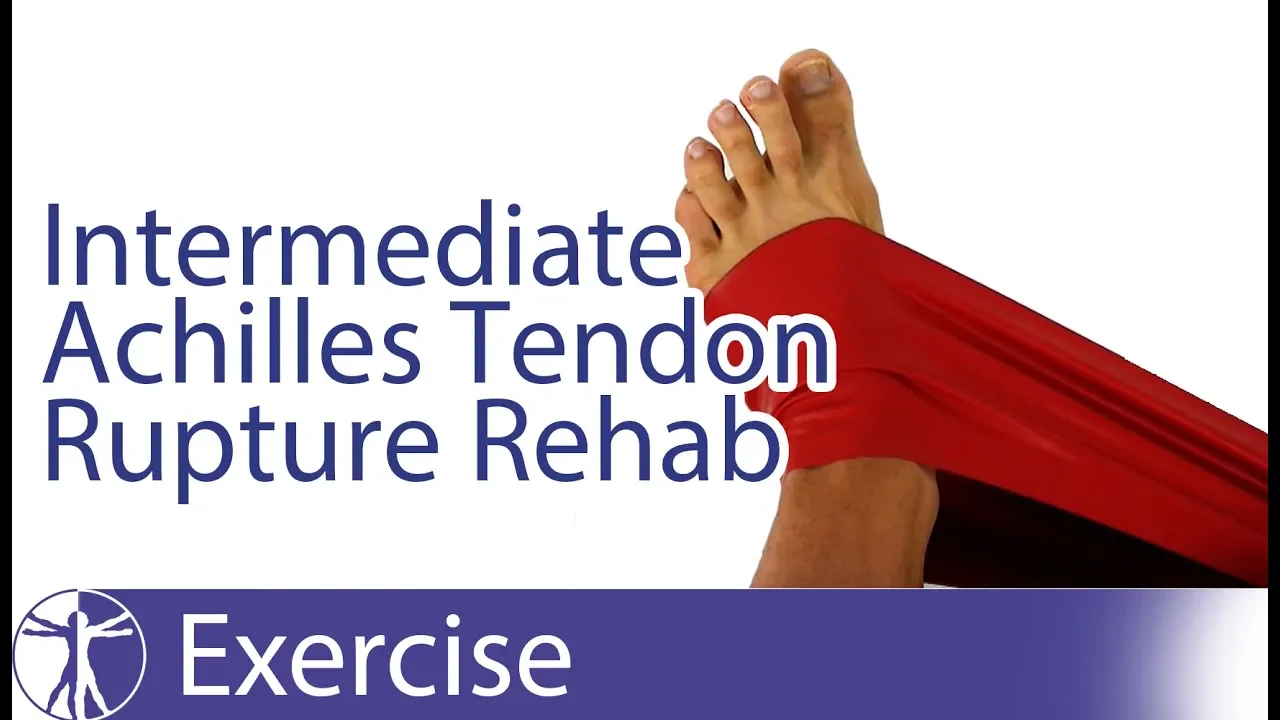
In a non-white bearing position the patient moves the foot into as close as full plantar flexion and returns to neutral position. The patient also moves the foot into supination and into pronation, but not eversion or inversion because we don't want to move into dorsiflexion just yet. You can apply resistance with a thera-band to the previous two movements.
In order to be able to progress to the 3rd phase the patient should be pain-free in rest, achieve neutral ankle dorsiflexion, and any remaining swelling or inflammation should be gone. Check out phase 3 in the video to my left and give this video right here a 'Like' if you found it helpful! If you haven't subscribed to our channel yet, we urge you to do so as it helps us out a lot.
Check the links in the video description for more Physiotutors goodness. And as always this was Andreas for Physiotutors. I'll see you next time.
Bye!