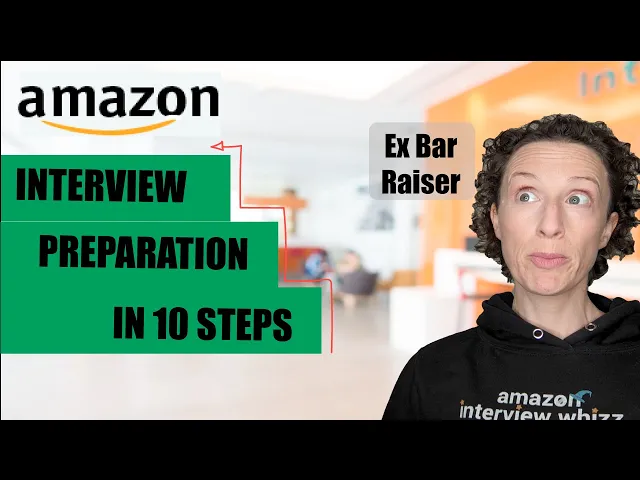
so here is my guide to amazon interview prep in 10 steps i'm gigi i am an ex-senior leader at amazon and i was also a bar raiser so as i said i'm going to take you through my 10 steps do stay until the end for all 10 because every single one of them is very necessary i do have my trusty notes as if you've seen any of my other videos i always do because i want to make sure that i don't miss anything because it would be a problem if i missed one of these 10
steps so let's get going step number one now go back into your career history sit down have a good think have a chat with ex-colleagues and try and think about the things that you did whether they were projects or launches or a product or anything that you delivered an output for a problem that you solved or something along those lines but that you're really proud of something that you think yeah i did good that day that month whatever it is so go back think about those and write them down write down everything that you can
think of that happened from the very moment the things started until the very moment the thing ended so that's step one if you can i guess try and come up with ten i'm gonna go for 10. why don't you proud of okay so then step two park those and go off and study the amazon leadership principles so i'll put some really good free resources down in the description box of this video where you can go and get information about the leadership principles but you really really really i can't emphasize enough really need to study and
understand the leadership principles to the nth degree because they are as i'm sure you'll know you'll have seen in my other videos they are the absolute dna of what goes on in amazon and the reference point against they will judge you at interview so go away and study the leadership principles until you know them like the back of your hand that's step two so then step three becomes once you've studied and you feel that you really really understand the leadership principle pull out those examples that we talked about in step one and have a look
at them and as you read through them identify which maybe one or two if you can of the leadership principles really resonates with each individual example okay so then step four becomes review your job description so i'm telling you to park that yep you've identified which leadership principle or principles best resonates with each individual example now park it go and look at your job description in your job description your hiring manager who would have written the job description will have detailed pretty much the key leadership principles that they really care about in the role now
some hiring managers will literally write them out they need bias for action they need to be able to dive deep sometimes the actual word will be in the job description other times it won't it would just be language that you can infer the leadership principle from so go to your job description and line by line by line go through it to try and identify what the key leadership principles are my general kind of understanding of leadership principles and job descriptions is the more times someone alludes to a leadership principle in a job description the kind
of more top of mind it is for them and therefore the more important it is so have a go at that if you need some support on that go check out in my live playlist there are two videos where i've actually deconstructed people's job descriptions live on air it's terrifying i'm always terrified i'll get it horribly wrong but it's there and you can watch that and that will really really help you understand how you go about deconstructing job descriptions i do offer a service for it the link to which you'll find in the description of
that video but i'm pretty confident follow the video and you should be able to do it yourself so at this point you've deconstructed your job description and you know what appeared to be the key leadership principles for the role okay so that was on step four can't believe we're only on step four so we're going to move on to step five now so step five try and then take or match between the key leadership principles that you have identified in your job description review and those stories that you found and then you identified what the
best one or two leadership principles were so you can see where you have stories to align to the key leadership principles in your job description and where you don't and what the gaps are so if there are gaps really try and challenge yourself is there a way of shaping a great one of your great stories towards that leadership principle even if it wasn't the leadership principle that really stood out when you looked at it the first time ask yourself is there a way of finessing that strong story that you really are proud of for the
leadership principle that is in the job description that you don't currently have an example for so that's the next step now look at the gaps so what leadership principles are missing not only missing from the ones that appear to be the key leadership principles in the job description but also any that were actually kind of missing in the job description but still exist within the 16 amazon leadership principles now broadly speaking each job description will probably have eight to ten key leadership principles in there that's kind of my experience of doing many many job description
deconstructions broadly i find eight to ten but of course there are another six eight to six on top of that so even though you may not necessarily be asked them at interview you do need to be prepared just in case you do so have a look at those leadership principles that are now kind of missing from your examples and go back again into your career history mentally and see if you can think of examples that you can connect to those leadership principles yes they may not be your strongest examples but you need to have some
solid examples to bring for those leadership principles just in case you're asked okay so now hopefully you've got a full range of possible examples that you're going to use the next step then and that's step number seven now i hope is draft them into that star structure situation task action result and please put an eye improvement on the end so i actually recommend a model called starry so situation task action result improvement i do have another video about that if you want to go and deep dive into that a little bit more it's called the
hidden leadership principle that no one else will tell you about but draft them all into a starry structure okay so now step eight of ten we're almost there now step eight of ten is all about editing so look at your starry story and ask yourself is there anything i've written in this story that doesn't add to context i.e it's not important for the person to know this in order to understand the story or doesn't show a behavior if there's anything in your story that isn't contextual or behavioral it's not useful and you should try and
edit it out because it's just a waste of words so go through all of your stories and challenge yourself do i need all of these words that are written in this story if it's not contextual or behavioral get rid of it at that point you should now have a starry example that is the right length for that example i'm asked many times about what the right length for an example is i also have another video about that but my general philosophy is there is no one right length there is simply the right length for that
example as long as you have gotten rid of anything that isn't contextual or behavioral okay so now we're on to step nine so you've now got your stories your starry stories all written down nice and pithy and tight no wasted words etc so step nine is you actually need to develop some answers for the type of introductory questions so you're gonna get introductory questions in your amazon interview in the early rounds they're going to influence the decision to move you forward more than they'll influence the decision to hire you in the final round but nonetheless
you are very likely to get these questions why amazon why this role tell me about yourself walk me through your resume all those types of questions so now go and come up with some answers for those questions again i'm often asked what's the right length for them um you probably need to go into more depth in the early interviews than you will do in the final interviews because in final rounds actually it's much more kind of introductory so early rounds i would say two minutes long final rounds one minute no more move on to the
behavioral questions okay and then finally step number ten practice practice practice practice and practice some more so there is absolutely the most enormous value in doing mock interviews now if if you can and if you can afford it doing a mock interview with somebody who really really understands the amazon process is a very good thing to do because they will give you the nuances that people who don't understand the amazon interview process would have no clue about but lots of people can't do that so that's fine in which case do a mock with a friend
a colleague someone else who understands how interviewing works so they can give you a really good simulation of what an interview is going to feel like and they can ask you those follow-up questions so that you can practice not being thrown off your game if somebody interrupts you mid-flow etc etc and then of course practice on your own record yourself watch yourself back i'm not one that's particularly concerned about when people kind of um are and those types of things they really don't make much of a difference to interview but being able to play back
and hear are you talking really fast because then maybe the interviewer won't understand you or did you forget to say something important because quite often you won't remember if you're just talking out loud to yourself you won't even notice if you've missed something important so please record yourself and play it back to yourself so when you've been through all of those steps and the final step where you've practiced practice practice you should now be in very good shape for your amazon interview so if you enjoyed that and found that helpful please give me a thumbs
up and put a comment in the box below now what you need to do is click on this link here and go and grab yourself one of my free amazon interviewers academy customer obsession master classes watch that and you will nail every single customer obsession question asked of you at your amazon interview or if you'd like to do that later check out this video here for more great amazon interview tips on interview strategy