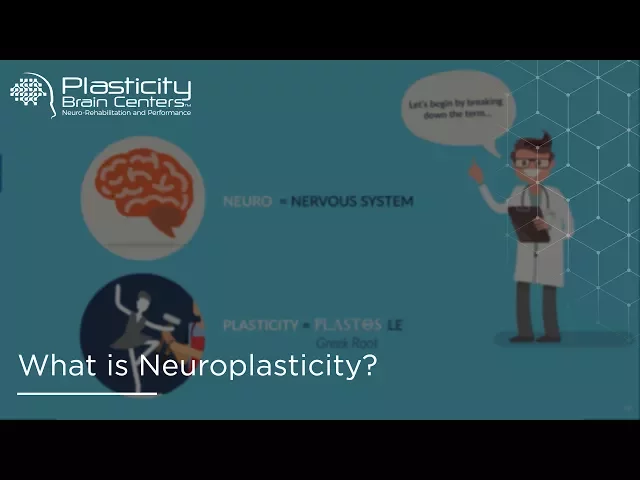
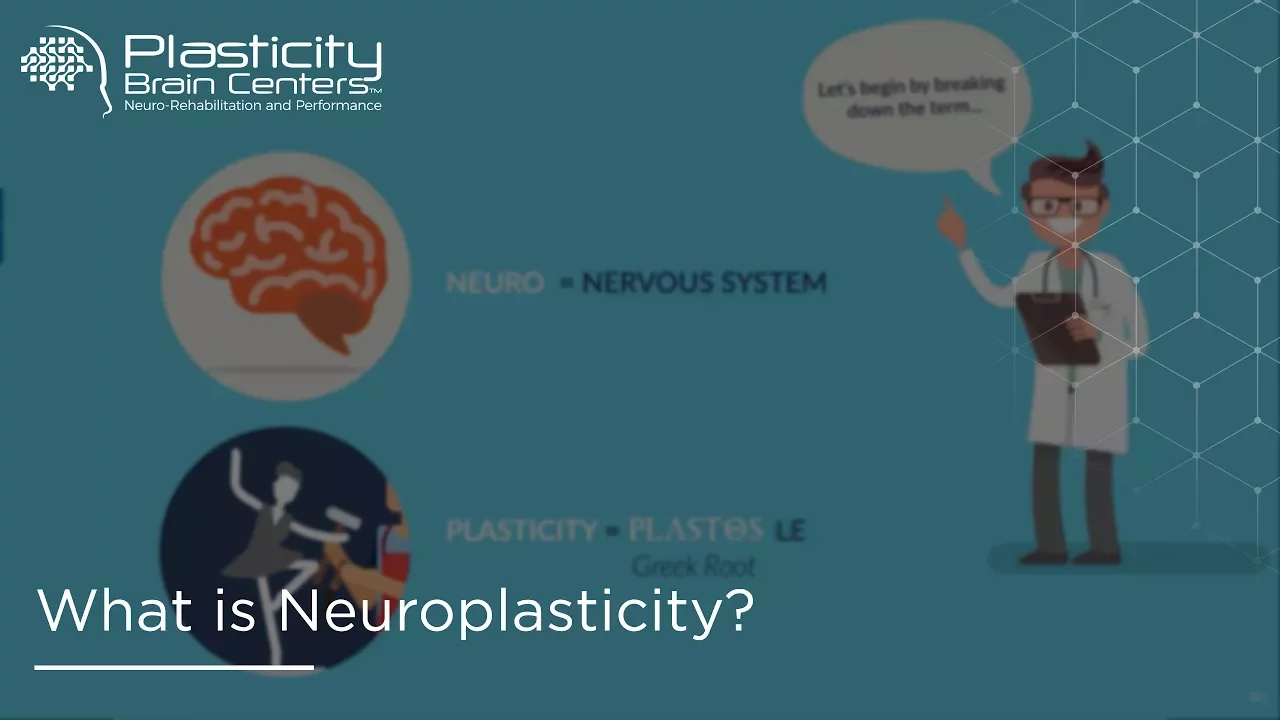
neuroplasticity you hear the term very often these days for smartphone apps Learning Centres rehabilitation centers and even through athletic performance but what does the term really mean well it's keeping simple you break down the term neuro means nervous system which consists of the brain spinal cord and all the nerves that send and receive information to and from the brain and plasticity which comes from the Greek word plasto's meaning moldable so together neuroplasticity means a moldable brain originally introduced by an italian psychiatrist by the name of ernesto loup-garou in 1906 the term neuroplasticity was a way
to describe how the brain can change throughout life to adapt learn and even recover from brain injury but this wasn't the first time that the concept of neuroplasticity was described you may be familiar with the famous experiment in 1904 conducted by a Russian psychologist Ivan Pavlov especial Pavlov was able to essentially rewire the brains of his dogs to salivate at the ringing of a bell he did this by repetitively ringing a bell every single time their food was presented today you probably have personal experience of neuroplasticity and don't even know it as a matter of
fact every time we learn something new we are harnessing the power of neuronal plasticity you may remember when you're back in grade school your teacher told you at the end of the week you're going to have a quiz on all 50 capitals of the United States at the time you probably could recall two maybe three of the capitals of the United States but how are you going to learn all 50 the chances are you probably went home and sat down with your parents and created a deck of flashcards to stay on one side and the
capital to stay on the opposite side you probably looked at the state and then read the capital you did this over and over and over again until you're able to call the capital as soon as you saw the name of the state so what do you and Pavlov's dogs have in common each of you have both experienced the benefits of neuroplasticity you're both exposed to stimulus accurately with enough repetition and intensity to rewire brain function so essentially neuroplasticity can be considered as learning and what's the expression an old dog can always learn new tricks neuroplasticity
takes place every single day of our life regardless of our age or health as long as you're alive your brain will make new connections and you can increase this performance and how neuroplasticity doesn't just apply to cognitive skills it also applies to physical skills don't believe us do you remember the first time you try to ride a bicycle you may have attempted to ride a bike with training wheels then once you practice the knots you may have removed the training wheels and then we're able to ride the bike the process of learning to ride a
bike is a physical process and just like learning information it requires repetition and intensity while you may have already been familiar with the applications of neuroplasticity often people are not familiar with the new applications of neuroplasticity and healthcare plasticity brain centers is one of the leading providers of neuro rehabilitation in the world embracing a receptor based model of neurological rehabilitation by performing a comprehensive neurological assessment they're able to identify either injured or simply inefficient networks in your brain then by introducing specific sensory information with repetitions and intensity over a five-day program they've been able to
increase function increase efficiency and literally rewire the brains of children seniors people with neurological injuries and even high-performance athletes so if you want more information give us a call at plasticity brain centers to find out how we can unleash your brain's potential