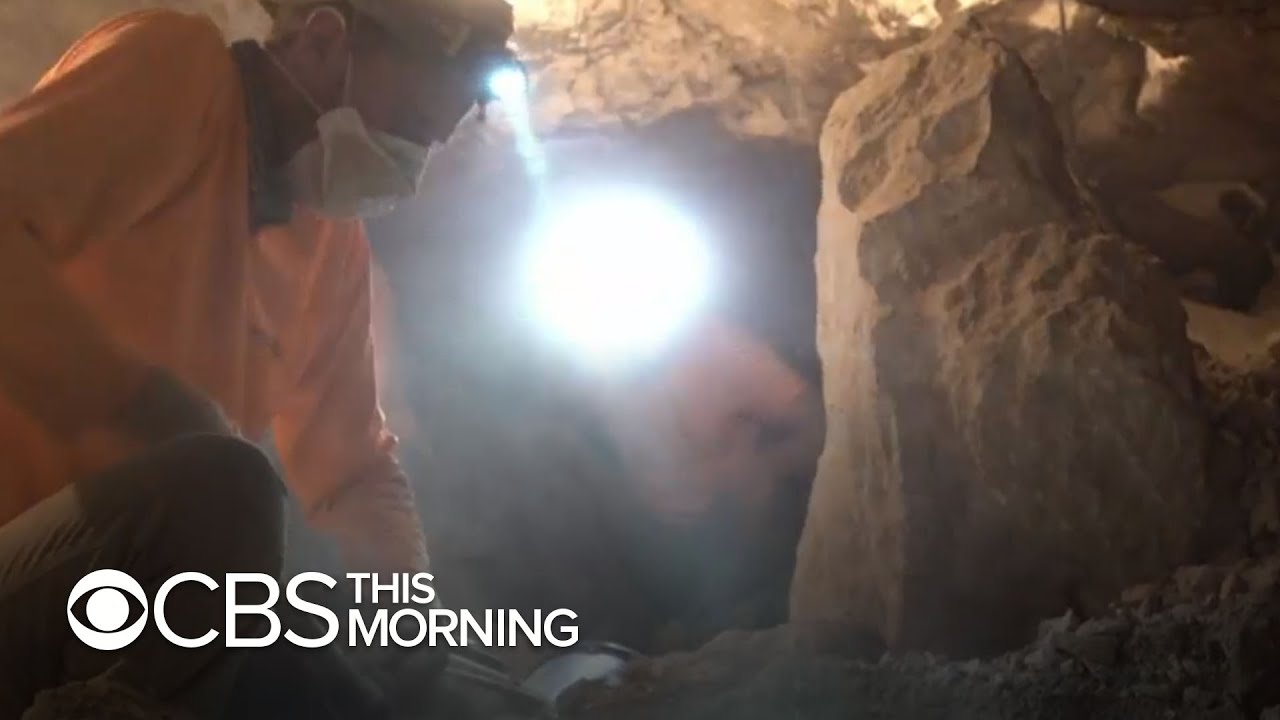
Imagine a book so old and mysterious, containing secrets that humanity has kept hidden for thousands of years. The world has locked away a book, so dangerous, that talks about giants, fallen angels, and ancient knowledge. The book of Enoch, a forgotten text from deep in the ancient past, revealed shocking stories about the early days of the earth, days when angels fell from the sky and did unthinkable things.
These angels weren't the kind and protective beings we imagine. No, they betrayed the heavens, passed forbidden knowledge to humans, and their actions led to chaos and destruction. But why did the Bible leave these stories out, keeping them hidden from generations of people?
In the book, Keepers of the Garden, Dolores Cannon explored the mysteries of human existence, exploring ancient civilizations and hidden histories. She held the belief that the erasure of much of our true history has left us with only fragments of the truth. The book of Enoch recounts the tale of the Watchers, a group of 200 angels tasked with keeping watch over humanity.
But instead of protecting humans, they became fascinated by them. These angels rebelled against their divine orders, descending from heaven to interact with humans. And here's where things get really strange.
They didn't just interact. They taught humans forbidden knowledge, things like astrology, weapon-making, and other advanced skills that were meant to remain hidden. The Watchers also had intimate relationships with human women, resulting in the birth of giants known as the Nephilim.
They described these beings as massive, powerful, and often destructive. In fact, the text claims that the Watchers and their offspring's corruption of humanity led to the Great Flood, which wiped out most of the earth. This story of the Watchers and Nephilim reflects many ancient myths, like those of the Babylonians and Greeks, which describe gods and giants interacting with humans.
But what makes the book so unique is the detailed description of these events and the chilling revelations it contains about the origin of evil in the world. Church leaders debated the book's inclusion in the Bible for centuries. Ultimately, it was left out.
Scholars believed that the book's descriptions of angels and their interactions with humans were too controversial and clashed with the teachings of the Torah, the first five books of the Hebrew Bible. People viewed the Watchers' knowledge as forbidden and found the consequences of their actions—chaos, destruction, and divine punishment—to be too terrifying to accept. The book also touches on the cosmic structure of the universe, explaining things like the movement of the stars and the mysteries of creation.
The book also includes apocalyptic prophecies, foretelling a final judgment that rewards the righteous and casts the wicked into darkness. These themes, of divine punishment and forbidden knowledge, are what give this book its mystic and fearful reputation. As you can see, this isn't just some old book full of strange stories.
It's a warning, a record of the chaos that ensued when divine beings went against the natural order and shared knowledge that humanity wasn't ready for. We all face moments when life seems like it will crush us, and finding answers seems impossible. In those moments, having more understanding, clarity, and guidance can make a difference, and that is exactly what banned scripts, the lost knowledge of Jesus, offers a path to clarity and peace through the hidden teachings of Jesus.
If you are looking for clarity and hope, this e -book could be the lifesaver you need, and the best part is that it is available now as a gift for you to download in the first comment posted, right? It could be what you need for today. One of the key reasons for the book's exclusion from the Bible was its contradictions with the Torah, which is the foundational text of Judaism.
The Torah includes the first five books of the Hebrew Bible, such as Genesis and Exodus, and it lays out the core beliefs and laws of the Jewish faith. However, the book of Enoch introduces concepts that don't appear in the Torah, like detailed descriptions of angelic rebellions and secret knowledge that the Watchers shared with humans. The accepted teachings of the time viewed these ideas as dangerous.
Furthermore, early church leaders like Tertullian and Clement of Alexandria, who lived around 200 A . D. , also expressed concerns about the book.
While they acknowledged its influence and popularity among some early Christian communities, they ultimately decided that its contents were too speculative and unorthodox to be part of the biblical canon. Tertullian, for instance, argued that the book of Enoch contained prophecies about Jesus that couldn't be verified, further fueling doubts about its divine inspiration. Another critical factor in the book's rejection was the fear of its apocalyptic themes.
This book is full of vivid descriptions of the end times, divine judgment, and the ultimate fate of humanity. It talks about angels being punished for their sins and the eventual destruction of the wicked. These ideas, while not entirely absent from the Bible, were presented in such a dramatic and unsettling way in the book of Enoch that many religious leaders felt it was too extreme for ordinary believers to understand or accept.
Despite these concerns, the book did find a place in some religious traditions. For example, it has been included in the Ethiopian Orthodox Church's scriptures, where it is still considered a sacred text today. This shows how, even though the book was rejected by the broader Christian and Jewish communities, it continued to hold significance for certain groups who valued its insights into the supernatural and the divine.
At the core of the controversy surrounding this book is a battle between accepted religious doctrine and the mysteries that lie beyond human understanding. The Watchers, Nephilim, and hidden knowledge in the book present a challenge to the traditional religious narrative, forcing people to confront the possibility that there is much more to the universe than what is written in the standard scriptures. Enoch, the book's main figure, is shown visions of a coming cataclysm.
In these prophecies, the earth is engulfed in devastation, with natural disasters and cosmic upheaval signaling the end of days. But this destruction isn't random. It's the result of the sins committed by the fallen angels, or Watchers, and their giant offspring, the Nephilim.
Their rebellion against the divine order set in motion a series of events that would lead to the eventual downfall of the world. In his vision, the final judgment arrives with terrifying consequences. The wicked, including the fallen angels and their human collaborators, are cast into eternal darkness.
The book vividly describes this punishment, where the forces of evil are bound and banished, never to rise again. This final act of divine justice is portrayed as the ultimate reckoning, a cosmic reset, where the corrupt are swept away, making room for a new, purified world. But the book doesn't just focus on judgment.
It also explores the universal struggle between good and evil, a battle that stretches beyond the earthly realm. The Watchers' rebellion wasn't just about defying God's commands. It was a full-scale war in the heavens, with angels turning against their Creator and seeking power over humanity.
This celestial conflict mirrors many ancient myths, like the war between gods and titans in Greek mythology, but here it's told with a sense of real cosmic stakes. The giants, or Nephilim, are a direct result of this rebellion, and their presence on earth was seen as a sign of impending doom. These beings weren't just massive in size.
They were symbols of the chaos that the Watchers had unleashed. Their destructive actions and the forbidden knowledge they shared with humans led to the Great Flood, which, according to the Book of Enoch, was God's way of wiping the slate clean. Interestingly, the book doesn't just focus on the past.
Its apocalyptic prophecies also look toward the future. Enoch's visions describe a time when the fallen angels will once again face judgment and the righteous will be rewarded. The book predicts a final age of peace and enlightenment, where the faithful are lifted into a new era of light and truth.
This idea of a final, transformative age has echoes in many other religious traditions, including Christianity's concept of the second coming and the end of the world. It's filled with uncertainty and fear, as it suggests that humanity is still under the shadow of the Watchers' rebellion. Many ancient cultures have strikingly similar stories involving divine beings, giants, and catastrophic floods, all pointing toward a universal narrative that crosses geographical and cultural boundaries.
In ancient Greek mythology, we encounter the Titans, colossal beings who once ruled the earth before being overthrown by the Olympian gods. The Titans rose up against the Olympians, resulting in a cosmic struggle for control. They were considered the ancestors of both gods and men, and their eventual defeat led to the current order of gods ruling over the world.
Gilgamesh, a part-divine king, encounters Utnapishtim, a man who survived a great flood sent by the gods to cleanse the earth of corruption, an account that strongly parallels the story of Noah's flood in the Bible. Both texts describe divine beings becoming dissatisfied with humanity's moral decay and responding with a cataclysmic event. Interestingly, some scholars believe that these stories could represent the collective memory of actual ancient events, passed down and mythologized over millennia.
Additionally, modern archaeological discoveries are offering new perspectives. For instance, large humanoid skeletons have been uncovered in different parts of the world, including parts of North America and the Middle East, sparking debates about whether they could be linked to the ancient legends of giants found in texts. The Book of Enoch describes how the Watchers taught early humans forbidden skills such as weapon-making, astronomy, and advanced agriculture.
These ancient sites may offer some physical evidence that early human civilizations had access to a level of knowledge far beyond what was previously believed for their time. The lines between myth, religion, and history are blurring, and this book stands as one of the key texts forcing us to re-evaluate the ancient past. South American cultures such as the Inca and Maya, whose legends speak of gods who descended from the sky and shared forbidden knowledge with humans.
These gods were believed to have taught humans agriculture, mathematics, and the secrets of the stars. The Maya, in particular, developed an incredibly sophisticated calendar based on their understanding of the cosmos, which some believe was far beyond what was possible for the time. This pattern of divine beings interacting with humans, sharing knowledge, and eventually causing destruction repeats across countless cultures and time periods.
It's as if there's a shared ancient memory encoded in human history. A memory of something bigger, something we've only begun to understand. The more we explore and compare it to these other ancient traditions, the more it seems like humanity has been trying to tell the same story over and over again, in different ways.
The universal scale of the book's narrative, where angels, giants, and humans are all pawns in a greater struggle, makes it clear that Enoch's story is about more than just ancient history. It's about the future of humanity and the universe itself. The book asks the reader to consider a world where divine beings are constantly at war, where every action has a ripple effect that could spell the end of days.
If you're finding value in what we're discussing and want to help keep this content coming, consider showing your appreciation by hitting that super thanks button. By doing so, you're helping us continue exploring these captivating topics and bringing you more of the content you love. The stories of fallen angels, giants, and divine judgment offer a glimpse into a world that may be more connected to our own than we'd like to believe.
The book of Enoch challenges us to think beyond what we've been taught and to consider the possibility that there are forces at play that we may never fully understand. The angels' rebellion, the creation of the Nephilim, and the apocalyptic visions of the end times force us to confront some unsettling truths about our world. The idea that there are secrets about our world and our future that we were never meant to know.
But now that the book has resurfaced, these questions are ours to wrestle with. When comparing them with other myths and archaeological findings, we realize that the story of fallen angels, giants, and destruction is not unique. It's part of a broader, global narrative that has spanned centuries and continents.
Whether these stories are purely mythological, or whether they hold some hidden truth about our origins remains to be fully uncovered. The book of Enoch forces us to reconsider everything we think we know about the past and challenges us to explore what might still be waiting to be discovered. The knowledge it contains, whether true, symbolic, or somewhere in between, invites us to reconsider everything we know about our past, our present, and what might be coming next.
Thanks for watching. Be part of our community by subscribing to this channel. Until the next video.











![Only a few days left! Don't be fooled by the darkness. [October 17th]](https://img.youtube.com/vi/77__bf6UZ-0/maxresdefault.jpg)