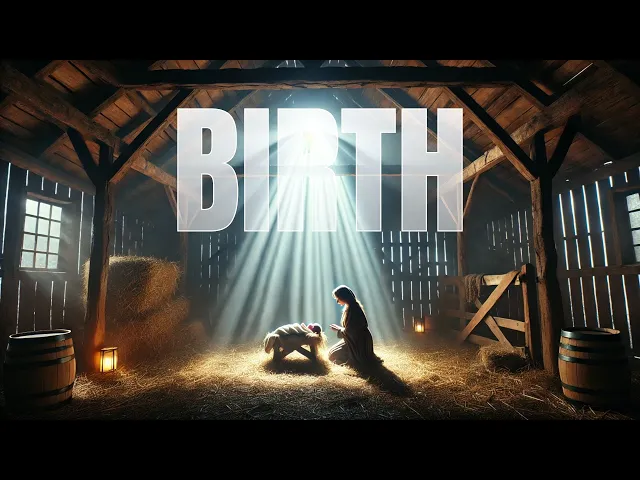
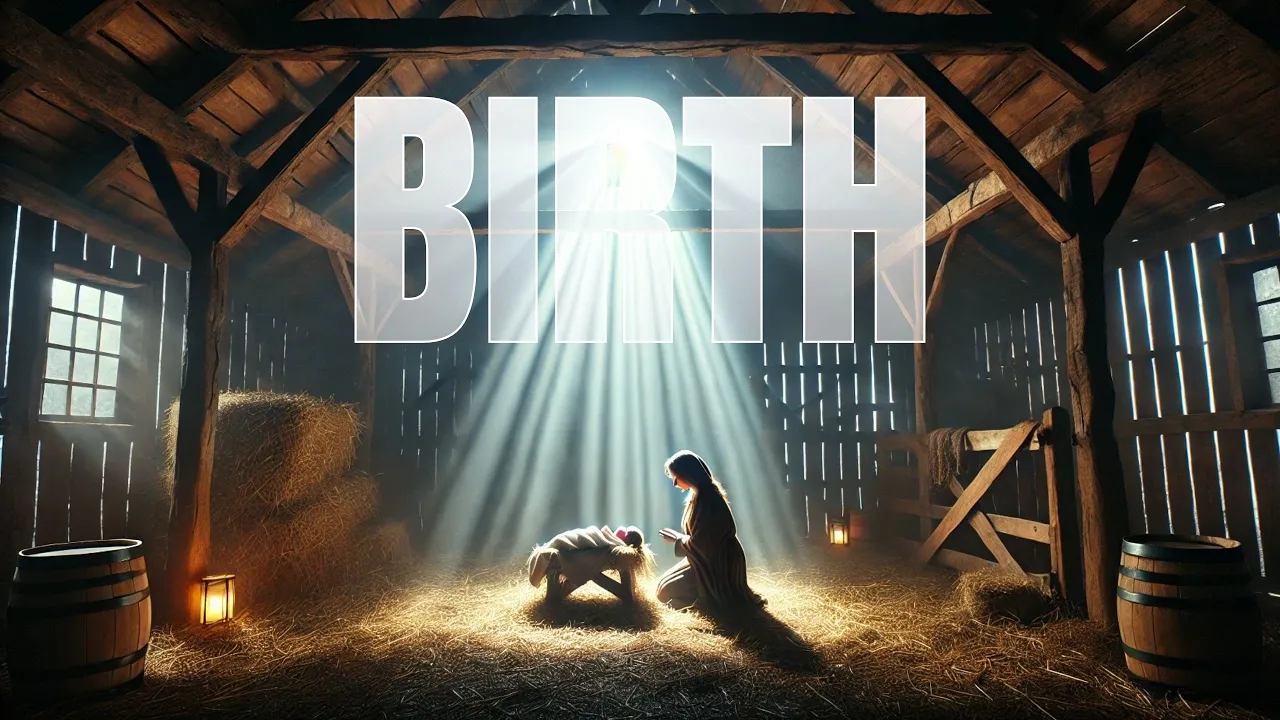
Every year we celebrate Christmas on December 25th because Jesus was born on this date. Right? Wrong.
Not a single gospel mentions this day as the actual birthday of the Christ child. So why do we mark it then? [music] And more importantly, when was Jesus truly born?
Pay close attention because hidden within the Bible are seven clues that reveal the real date of Jesus's [music] birth. Today, we're diving deep into scripture to crack one of history's [music] greatest mysteries. Our first clue comes from the Gospel of Luke.
It tells us that Caesar Augustus issued a decree requiring [music] everyone in the empire to register for a census. This particular registration happened while Corinius governed Syria and forced people to travel back to their ancestral hometowns. The Romans were meticulous about these population [music] counts.
They used them to track citizens and ensure nobody escaped their taxation system. In the Roman Empire, censuses weren't just bureaucratic exercises. They were tools of control, demonstrations of power, [music] reminders that even the humblest lives fell under the emperor's authority.
But while Caesar Augustus believed he controlled the world, God was writing his story through the actions of an earthly government. This census required each person to register in [music] their city of origin, compelling thousands to travel. Among them was a family destined to bring the Savior into his prophesied birthplace.
Bethlehem, Joseph, being a descendant [music] of David's house, had to return there, bringing Mary with him despite her advanced pregnancy. This wasn't a comfortable journey. From Nazareth to Bethlehem stretched roughly 80 [music] m, an exhausting trek even for those in peak physical condition.
let alone a woman about to give birth. What seemed like a logistical complication was actually a [music] perfectly placed piece in the divine puzzle. More than 700 years earlier, the prophet Micah had written that from Bethlehem would come the ruler of Israel.
Now, through a Roman emperor's decree, God was ensuring that prophecy would be fulfilled. Yet, there's a detail many overlook, and it gives us vital clues about the season of Jesus's birth. In Judea, winters bring cold and rain, making long-d distanceance travel on foot or by [music] donkey especially difficult.
It's unlikely the Romans, known for their efficiency, would choose the season to organize a massive population movement. Logic points to the census occurring in spring or autumn when milder weather made moving people easier to manage. These seasons also align with gathering times in the Jewish calendar like harvest periods or festivals, moments when assemblies and travel were already common.
The true marvel is how a [music] tool of imperial control became an instrument for fulfilling God's plan. Caesar Augustus in his desire to govern his [music] vast empire was unknowingly setting the stage for the most transcendent event in human history, the birth of the savior. This census wasn't coincidence.
It was the means God used to bring his son to the exact place at the precise [music] moment. Joseph and Mary didn't know that with each step toward Bethlehem, they were fulfilling prophecy. Caesar Augustus [music] had no idea his decree formed part of the universe creator's plan.
We see how God moves the pieces of history, even the most mundane ones, to accomplish his eternal purposes. Jesus wasn't born where [music] man planned, but where God had determined from eternity. Amid Rome's political [music] control, God's absolute sovereignty was manifesting.
This census serves as a powerful reminder that even in what appears to be human chaos, there's divine design working with perfect precision. Our second clue emerges from a surprising detail [music] about John the Baptist father. We have information about Zechariah, a priest [music] of AJ's division.
One day, while offering incense in the temple, an angel appeared before him with a message that would alter history. his wife Elizabeth, who was barren and elderly, would bear a son. This child would become John the Baptist, the Messiah's forerunner.
But here's what's fascinating. The timing of this occurrence gives us a remarkable key for [music] calculating Jesus's birth. Zechariah's temple duty is one of the most intriguing clues for determining when Jesus arrived.
In Luke's gospel, we read that during King Herod's reign in Judea, there was a priest named Zechariah from Aij's division. While he was performing his priestly [music] service before God according to his divisions order, something extraordinary happened. The priests in Israel were divided into 24 groups or rotations [music] and each group serve in the temple for one week twice annually according to 1 Chronicles [music] 24.
Zechariah belonged to the eighth group. So Aija's turn would fall around May or June. During this time, [music] Zechariah received a visit from the angel Gabriel.
And shortly afterward, Elizabeth became pregnant. [music] Now, Luke 1:26 tells us that 6 months after John's conception, the angel Gabriel visited Mary to announce she would be the [music] mother of Jesus. This places Jesus's conception between November and December.
If we add 9 months from that point, Jesus's birth would have occurred in September or October. What's most astonishing is how this timeline coincide with the feast of tabernacles, [music] one of the most significant celebrations for the Jewish people, commemorating God's presence among his people. Could it be that Jesus, [music] called Emanuel, meaning God with us, was born precisely during this festival?
It's a striking thought that connects theology with the Jewish calendar, as if every detail was calculated by the Lord. Zechariah's account, which seems like an isolated episode, is actually an essential piece of the divine puzzle. Every word in scripture [music] is place of precision, and this apparently small detail shows us once again that God's plan has no margin for error.
The connection between Jesus's birth [music] and Jewish festivals is fascinating. The people of Israel lived marked by a calendar filled with celebrations that not only remembered their history, but also point to something much greater, the arrival of the Messiah. Each of these festivals held [music] profound spiritual meaning, and some fit surprisingly well with the possible timing of Jesus's birth.
As we've seen, Jesus may have been born during the Feast of Tabernacles, one of the most important celebrations in the [music] Jewish calendar. This feast known as Sukkot commemorates a time when God dwelt among his people during the [music] Exodus when the Israelites lived in tents or tabernacles in the wilderness. It was celebrated in autumn between September and October and marked a time of joy, [music] gratitude, and reflection on God's presence among them.
But we have another verse that reinforces this theory. [music] In the first chapter of John's gospel, we read that the word became flesh and [music] dwelt among us. And we beheld his glory.
Glory as of the only begotten [music] from the father, full of grace and truth. You need to know that the word dwelt in the original Greek text can be translated as [music] tabernacled. What better moment for God to come and literally dwell among his people than during this feast.
Moreover, the Jewish festivals didn't only look backward but also prophesied the future. For instance, Passover pointed to Jesus's death as a lamb of God, and Pentecost coincided with the Holy Spirit's arrival. If these significant events align with Jewish festivals, it makes sense to consider that Jesus's birth [music] did too.
Another festival that could coincide with Jesus's birth is Rashana, the Jewish New Year celebrated in autumn. This day marks new beginnings [music] and reflection on God's reign. The sound of the chauffeur which calls for [music] repentance and announces divine sovereignty could have been the perfect context for the birth of the King of Kings.
Jesus coming into the world [music] inaugurated a new era, a new covenant and renewed hope for all humanity. Everything in God's plan is perfectly calculated like a symphony where every note has its exact place. The fact that Jesus's birth could align with Jewish festivals shows us it wasn't an isolated event.
It was profoundly interwoven with history, prophecies, and the spiritual expectations of his people. But pay attention because there are two more biblical clues that emerge after Mary gave birth [music] to Jesus. In Luke's gospel, we find a detail about the night of [music] Jesus's birth that you know, but probably haven't reflected upon deeply enough.
We read that there were shepherds in that region, keeping watch over their flock by night. [music] And behold, an angel of the Lord appeared to them, and the glory of the Lord shone around them, causing great fear. This verse contains an important clue about [music] the season when Jesus was born.
It was nighttime, and the shepherd were outdoors caring for their sheep under the stars. In Judea, December brings cold temperatures, damp nights, and constant [music] rain. It's a season when shepherds, out of necessity, would shelter their flocks indoors, away from [music] open fields.
The idea that they'd be outside watching their sheep in the middle of winter doesn't fit with the customs and climb of the region. This detail leads us to think of a different season. Spring, summer, or autumn are more probable.
In spring, shepherds brought their flocks to the [music] fields because it was lamming season. The weather was pleasant, and the nights, though cool, weren't hostile. In summer, the nights are also warm, and shepherds often took their flocks out of graves at night, taking advantage of the cool air after scorching daytime [music] heat.
Similarly, in autumn during harvest time, shepherds continued caring for their sheep in the fields, enjoying the temperate climate. But in winter, [music] this practice would be uncommon and uncomfortable. What's most fascinating about this verse is [music] how such an apparently insignificant detail can unearth a deeper truth about the season of Jesus's birth.
If the shepherds were outside watching their flocks, everything points to the Savior not [music] being born in December. But there's another clue hidden in that very night. The Star of Bethlehem is one of the most enigmatic and fascinating elements of Jesus's birth narrative.
In Matthew chapter 2, [music] we read that when Jesus was born in Bethlehem of Judea, wise men came from the east of Jerusalem, asking where is he who has been born king of the Jews? For we have seen a star in the east. But what was this star really?
[music] Was a natural phenomenon or a divine event? Or perhaps both. Whatever the [music] answer, this star marked the exact moment when heaven announced that something extraordinary was occurring on Earth.
To understand this mystery, many have attempted to identify astronomical phenomena that coincide with the era of Jesus's [music] birth. One of the most popular theories suggests the star of Bethlehem could have been a planetary conjunction, an event where two planets like Jupiter and Saturn visually align in the sky creating a bright singular point of light. According to astronomical calculations, such a conjunction [music] occurred in the year 7 BC within the time frame when Jesus is [music] believed to have been born.
Another fascinating theory proposes a star could have been a nova or supernova and stellar explosion visible from Earth. These explosions create intense brightness that can last weeks or even [music] months, capturing the attention of anyone looking skyward. However, no definitive record of such an event during that period has been found.
It's also been suggested the star might have been a comet which would have appeared as a moving object in the sky guiding the magi on their journey. [music] But comets were viewed in that era as omens of disaster not hope making this option less [music] likely. What makes this account even more intriguing is that the stars seem to have a specific purpose guiding the magi.
They didn't just observe it. They followed it until arriving at the exact place where the child was. This suggests the star wasn't a common astronomical phenomenon, but something God used supernaturally to announce his son's arrival.
But here's the most surprising detail. [music] The Star of Bethlehem wasn't just a sign in the sky. It was a message for [music] everyone.
The Star of Bethlehem announced to the world that the Savior had arrived. But while religious leaders in Jerusalem ignored the scriptures that proclaimed Messiah, [music] this sign alerted King Herod. When the wise men visited Herod seeking the child, they alerted him to his existence.
Then Herod gave his darkest and most despicable order. But this command left us another clue about the date of Jesus's birth. Bringing us to our sixth piece of evidence, the massacre of the innocent order by King Herod stands [music] as one of the darkest events connected to Jesus's birth.
Matthew recounts how three wise men known as the Magi followed the star in the sky and arrive in Jerusalem. Thinking the king of kings will be in Herod's palace, they asked Herod, "Where is he who has been born king of the Jews? For we have seen [music] a star in the east, and have come to worship him.
" Herod responded, "Go and search carefully for the child. [music] And when you found him, bring me word so that I too may come and worship him. " The three wise men departed from Jerusalem.
But that same night, they awoke startled at the same moment. They had had a dream, [music] a divine warning. They couldn't return to Herod.
Here, Matthew relates what happened next. When Herod realized he'd been deceived by the wise men, he became furious and ordered the killing of all boys 2 [music] years old and under, a brutal and ruthless act. Yet, even in its evil, it reveals another important clue about the timing of Jesus's birth.
This detail allows us to place Jesus's birth in a clearer temple framework. We know Herod died in the year 4 BC, meaning the massacre must have occurred shortly before that date. If Jesus was under 2 years old at that moment, his birth probably took place between the year 6 and 4 BC.
The historical context adds another layer of understanding. Herod was notorious for his paranoia and cruelty. He'd executed members of his own family, including his sons, to protect his throne.
When he heard that a king had been born, his reaction was consistent with his character. [music] Eliminate any threat, no matter how small or innocent. However, what Herod didn't grasp was that this king hadn't come to seize his earthly throne.
Jesus came to inaugurate a heavenly kingdom that cannot be stopped [music] by human power. Nevertheless, Herod didn't know his scheme had already been thwarted. Joseph, warned by an angel in dreams, had fled with Mary and the infant Jesus to Egypt, beyond the reach of the [music] king's fury.
This escape not only saved the world's savior, but also fulfilled another [music] prophecy. When Israel was a child, I loved him, and out of Egypt, I called my son. [music] Even the tears of Bethlehem's mothers, heartbreaking and real, were mentioned by the prophet Jeremiah.
Thus says the Lord, a voice is heard in Rama, lamentation, [music] and bitter weeping. Rachel is weeping for her children. She refuses to be comforted [music] for her children because they are no more.
The most astonishing aspect of this episode is how it fits within God's perfect plan. Amid the darkness of the massacre, God's plan continued advancing, [music] unaltered and unstoppable. The slaughter of the innocents shows us a devastating contrast.
The cruelty of one man against God's perfect design. [music] Herod attempted to use death to stop life. But what he didn't know was that the child he feared so much had come precisely to conquer [music] death.
And precisely the final clue about his birth date is found in his own ministry. When Jesus began his public ministry, he was about 30 years old. Luke chapter 3 gives us this key piece of data.
Jesus himself began his [music] ministry at about 30 years of age. Though this may seem like just a biographical note, it holds a profound connection to the [music] moment of his birth. If we work backwards and start his ministry, we can situate his birth in a much clearer time frame aligned with other historical events [music] mentioned in scripture.
Jesus commences ministry in a very specific context, [music] the government of Tiberius Caesar. Luke 3 tells us this occurred in the 15th year of his reign, which historians place around the year 29 or 30 AD. If Jesus was about 30 years old at that time, this places his birth approximately between the year 6 and 4 BC, which also coincide [music] with the death of Herod the Great, who accorded Matthew was still alive when Jesus was born.
The convergence of these facts gives us solid evidence about the moment when the Savior came into the world. But why about 30 years? This number isn't random.
[music] In Jewish tradition, 30 years was a significant age. It was a minimum age for [music] a priest to begin service in the temple according to Numbers 4. It was also the age when a man was considered to have reached [music] full maturity, ready to assume public responsibilities.
And Jesus, though not a priest according to the Levitical line, presented himself as the eternal high priest, inaugurating a ministry that wouldn't just alter history, but would open a path of salvation for all humanity. The beginning of his ministry marked a before and after, but also leads us to reflect on those years of silence when Jesus lived in Nazareth. What transpired during those 30 years?
Although the Bible [music] remained silent, we can imagine there were years of preparation, obedience, and growth. They weren't wasted years, but the perfect time for Jesus to be ready to fulfill his purpose at the exact moment. Now, let's review the seven clues to establish Jesus's birth date.
John the Baptist conception around June of the year [music] 6 BC implies Jesus was conceived 6 months later in December that same year. This brings his birth [music] to September or October the year 5 BC considering the 9 months of pregnancy. If we interpret the star of Bethlehem as a planetary [music] conjunction or astronomical event, it also situates itself in the time frame of year 6 or 5 BC.
The massacre of the innocents occurred before Herod's death [music] in the year 4 BC, confirming Jesus was born before that date. Additionally, Jesus's age when he initiated his ministry, which began around the year 28 [music] to 30 AD, reinforces that Jesus was born between the year 6 and 4 BC. The detail of shepherds in the field caring for their sheep outdoors suggests it wasn't winter, ruling out December as a probable date.
Caesar Augustus' census also points to a more favorable time for travel like autumn. Lastly, the mention in John chapter 1 that the [music] word dwelt among us could link Jesus's birth with the feast of tabernacles celebrated [music] in September or October. For all these reasons, the clues converge on Jesus's birth taking place in September or October, the year [music] 5 BC, in perfect synchrony with historical events and biblical prophecies.
The question then becomes, why was a different year [music] 1 established from Jesus's birth? There's a reason why year 0 doesn't coincide with the time frame of Jesus's birth between the years 6 and 4 [music] BC. It was due to human error and calculations made centuries after his [music] life when the calendar we use today was established.
Everything began in the 6th century when a monk named Dionius Exiguous attempted to establish the reference point for time, the year of Christ's birth. His intention was noble. He wanted to divide all history into before Christ and after [music] Christ.
Dionius sought to calculate the exact year of Jesus's birth based on historical references and the gospels. However, he didn't have all the precise information we possess today. Dionius bas his calculations on the data available in his time, but he made crucial errors.
He didn't know that Herod the Great, who according to the gospels was alive at the moment of Jesus's birth, had died in the year 4 BC. This means Jesus must have been born [music] before that date. He also didn't consider that there was no year zero in the system.
It jumped directly from 1 BC to [music] 1 AD, a detail that by itself distorts the entire chronology. The ironic part is that although his calculations [music] were erroneous, Dionius's system was quickly adopted and became the foundation of the calendar [music] we still use today. Changing it now would be inconceivable.
Millions of historical documents, events, and celebrations are anchored in this system. So the entire world continues using a year zero that doesn't reflect the actual date of Jesus's birth. But somehow this also has its beauty.
It reminds us that despite our human errors, what matters isn't mathematical precision, but the significance [music] of the event we're trying to mark. The arrival of the savior into the world. It's fascinating to think that [music] even when Dionius made an error in his calculations, his effort managed to reorganize history.
History, after all, continues revolving around him. His intention was to signal humanity's most important moment, the birth of Jesus. And although he failed in some numbers, the impact of a system transcends time.
So why do people think Jesus was born on December [music] 25th? The idea that Jesus was born on December 25th doesn't come from scripture, but from traditions and [music] historical decisions adopted centuries after his birth. During Christianity's first three [music] centuries, there was no consensus about the exact date of Jesus's birth.
And early Christians didn't even celebrate it. their focus was more on his death and resurrection. But then how do we arrive at December 25th as a universally accepted date?
One of the most convincing theories connects this date [music] with pagan celebrations of the winter solstice which took place around December 21st to [music] 25th in the Roman Empire. The festival of Soul Invictus celebrated the sun's rebirth after [music] the year's shortest days. It was a popular festivity symbolizing light's victory over [music] darkness, which connects profoundly with the Christian message of Jesus as the light of the world.
When Christianity became the official religion of the Roman Empire under Constantine [music] in the 4th century, church leaders took advantage of these existing festivities [music] to introduce Christian celebrations. By adopting December 25th as the date of Jesus's birth, they transformed a pagan festival into [music] a Christian celebration. This strategy helped facilitate the cultural transition toward Christianity, allowing new believers to continue with certain traditions while shifting their focus [music] toward the Savior.
Another theory suggests the date was calculated based on the idea that Jesus was conceived on March 25th, a day early Christians associated [music] with the date of his crucifixion. If conception occurred in March, then birth would have taken place 9 months later in December. This calculation isn't based on historical [music] or biblical evidence, but reflects the intention to relate key moments in Jesus's life with the annual cycle.
The date of December 25th has no biblical [music] or historical support as the actual day of Jesus's birth. But this isn't what important. Knowing the [music] exact day Jesus was born isn't the most crucial thing.
In fact, the apostles who live so close to him [music] never celebrated his birth. It doesn't matter if he was born in December, September, or any other month. And many Christians forget what's [music] truly important, what we should really celebrate at Christmas.
If when someone asks you what Christmas celebrates, [music] your answer is a birth of baby Jesus, you need to know this response is incorrect. Because Christmas [music] doesn't celebrate Jesus's birth. No, what we should celebrate at Christmas [music] is the incarnation.
Yes, the incarnation is the greatest [music] miracle ever told. God gave us the greatest gift of love humanity has ever received, salvation, and so we could [music] access it. He became flesh and came into the world to break the power of sin and give us the door to heaven, Jesus Christ.
The truth is that the date [music] matters far less than the meaning behind it. Whether September, October, or December, what transforms everything [music] is that God chose to enter human history. He didn't send a message or an angel.
He came himself. The eternal word took on flesh, fell hunger, experienced exhaustion, knew rejection, and ultimately [music] conquered death. That's what we celebrate.
Not a date on a calendar, but the moment when heaven touched earth, when the infinite [music] became finite, when the creator became creation. This is a message that should echo in our hearts. Not just during one season, but every single day.
The incarnation wasn't just a historical [music] event. It's an ongoing invitation for God to dwell within us, to transform us, [music] to make us carriers of his light in a world that desperately needs hope. So when December comes around or September [music] or any month, remember, you're not just commemorating a birthday.
You're celebrating the fact that God loved you enough to become [music] one of you, to walk where you walk, to understand what you feel, and offer you a way back home. That's the real [music] Christmas. That's a truth worth sharing with everyone you love.
Not the debate over dates, but the undeniable reality that God is [music] with us, Emmanuel, and that changes absolutely everything.